Benefits of Nudity

In today’s society sex and nudity are used to sell products and casual nakedness is frowned upon if not actually criminalised. (Incidentally nudity, per se, is not illegal in the UK.) This is harmful in many ways, body shame being amongst the least of them. So little wonder that naturism is perceived by society as being different, and even a thin cover for rampant sexuality.
Nudism is generally considered the act of being naked, while naturism is a lifestyle which may embrace more than just nudity. Actually I would define both a being lifestyles; it depends on one’s attitude. Both can be social or practised individually, although naturism is generally more social than individual (at least in my estimation) and often encompasses other environmentally aware beliefs. In what follows I’ve been lazy and tend to use the terms “nudism” and “naturism” fairly interchangeably.
I would define myself as a nudist; I am comfortable being nude, both privately and socially, but I’m not one for the wider naturist lifestyle if only from a lack of opportunity and a dislike of the regimentation so often expected by clubs and organisations. I like the ideas of naturism, but clubs etc. don’t work for me; so my nudism tends to be private. I would like that we could live in a world where nudity was accepted anywhere and at any time and we think nothing of practising social nudity with friends and family. Until then I wear clothes to cover other people’s embarrassment.
Nudism and naturism as lifestyles are all too often frowned upon by society; this is often as a result of fear and misunderstanding of what they’re about. Contrary to what many people think, naturism and nudism are definitely not sexual lifestyles; they are holistic, bringing about many physical, mental and societal benefits.


So here are a few of the Benefits of Nudity:

  1. Naturism as Therapy. According to naturists, one of the main benefits of naturism is that it provides an incredible feeling of relaxation. Being naked is more comfortable and removes the restrictions of clothing; it is very sensual (not sexual). This creates a feeling of well-being, which helps to invigorate the body. The feeling of the breeze or sun on your naked body, or of walking barefoot, is very invigorating, and enhances enjoyment of your surroundings. The feeling of euphoria that comes with being totally naked also helps alleviate mental health issues such as stress, anxiety and depression.
  2. Body Acceptance. People are under pressure to live up to the mythical ideal image, and use clothes as a way of hiding their feelings of inferiority. The fear of being naked is a defence mechanism which many people develop (or have imposed on them by parents) to protect themselves from feeling inferior due to their self-perceived imperfections. Naturism helps avoid this by enabling people to better understand that their self-perceived body imperfections are nothing more than part of the glorious diversity of human bodies. This helps people to accept their bodies, and respect those of the others; in turn this has been shown to promote healthier relationships and sexuality.
  3. Self-esteem & Maturity. Clothes are also used by society as an indicator of social status and focus attention on sexuality; partial clothing is considered very sexually stimulating. Naturism on the other hand, focuses attention on the acceptance of the body whatever its perceived imperfections. Shedding clothes makes people familiar with nakedness; it ceases to be something to be scared of. Moreover once people remove their clothes, everyone is equal and very little attention is paid to the social status. All this helps people who engage in naturism be more mature sexually and have enhanced self-esteem.
  4. Tolerance. Naturism advocates self-respect and respect for others, which helps promote tolerance in the society. Clothing promotes a patriarchal society where women are expected to dress according to certain requirements. Naturism advocates the acceptance of other people as equals and helps people to respect their bodies. This helps to eliminate male oriented expectations that are repressive to women and respect for all.
  5. Money and Time. Clothes are a huge expense in terms of money, time spent shopping and environmental damage. Wearing, and needing, fewer clothes is good for your bank balance, your time balance, and for the planet.
  6. Natural Body Processes. People are taught that they are not supposed to expose their bodies. This cultivates body shame, makes people view genitals as “dirty” rather than parts of the body that have important functions. In turn this generates mystery, ignorance and fear about the natural processes of the body, such as adolescence, pregnancy and ageing.
  7. Better Health. Clothing, make-up and the like hinder the basic functions of the skin, including the correct microbial balance. Body crevices become hot, sticky and humid which encourages the growth of (for example) fungal infections. Nudity allows air and sun to the skin, preventing the sticky conditions loved by many pathogens and hence helping maintaining a healthier body. Additionally, and importantly, exposure to sunlight boosts the production of vitamin D.
  8. Healthy sexuality. Many studies show that countries which support naturism have a lower rate of teenage pregnancy and abortion, because naturism promotes the understanding of sexuality and body image. While this will not remove common teenage curiosity with sex, it does help it be more appropriate because of an enhanced awareness of what sex and bodily functions are all about.

At the end of the day, give or take the odd scar or mole, we all know what’s under my, and your, t-shirt and jeans. So really, where is the problem?
See also:
https://zenmischief.com/on-nudity-and-naturism/
https://zenmischief.com/nudity-and-naturism-quotes/
British Naturism
Is there a human “need” for being naked?

Another Daft Meme

OK, so I spotted this meme on Facebook the other day. Although I’ve answered some of these questions before there are some here which are new. So I give you the whoel sequence, which I’ve de-Americanised.

  1. Person you were named after? No-one as far as I know.
  2. Last time you cried? A couple of weeks ago when we lost our 1-year-old boy cat.
  3. Do you like your own handwriting? No; at best it is produced by an arthritic spider.
  4. What is your favourite lunch meat? Cold sausage or garlic salami.
  5. Do you still have your tonsils? Yes. My parents (probably wrongly) refused to let them be removed.
  6. Would you bungee jump? No way – ever.
  7. What is your favourite cereal? Barley growing in the field ready to make malt for beer!
  8. Do you untie your shoes when you take them off? Only if I’m wearing them at the time.
  9. Do you think you’re strong? No; neither physically nor mentally.
  10. Favourite ice cream? Good strawberry or good chocolate.
  11. What is the first thing you notice about someone? Face, head, hair.
  12. Football or baseball? Neither really, but football if I must choose.
  13. What colour trousers are you wearing? The Emperor’s new ones.
  14. Last thing you ate? Banana.
  15. What are you listening to? Silence.
  16. If you were a crayon, what colour would you be? Lime green.
  17. Favourite smell? Coffee, baking bread, frying onions, spices, roses.
  18. Who was the last person you spoke to on the phone? Taxi company.
  19. Tattoo or piercing? Piercing, though I’m happy with both.
  20. Hair Colour? Mostly grey, going on white, but some remaining mid-brown.
  21. Eye colour? Blue.
  22. Favourite food to eat? Curry.
  23. Scary movies or chick flick? Neither; I can’t abide films.
  24. Last movie you saw? It’s so long ago I have absolutely no clue.
  25. What colour shirt are you wearing? Again, the Emperor’s new one.
  26. Favourite holiday? Sun, sea & sand to relax and do nothing (or something if I choose) but not lying around getting grilled.
  27. Beer or wine? Both, but beer preferred.
  28. Night owl or morning person? Neither.
  29. Favourite day of the week? Probably Saturday.

OK, so now it’s your turn. Just cut’n’paste the questions, replace my answers with yours, and post to your blog, Facebook, wherever. Enjoy!

Ten Things

Summer is here. Well at least we’ve had a few glimpses of it. So Ten Things this month has a summery theme.
Ten Summer Things To Do

  1. Eat ice-cream
  2. Watch a cricket match (in person not on TV)
  3. Eat strawberries (and cream, of course)
  4. Sit in the garden (or on the beach) drinking wine
  5. Swim nude
  6. Paddle in the sea
  7. Go to a garden and enjoy the roses
  8. Sit by the river and watch nature and the world go by
  9. Spend a day in the nude – in your garden or on the beach – and enjoy the feel of sun and breeze on your skin
  10. Visit a farm to pick your own strawberries, asparagus etc.

Of course, doing these things is not necessarily restricted to summer, but they’re all better in nice weather. So now we just need the sunshine!

Five Questions, Series 9 #5

So at last, here we are at the last of this ninth series of Five Questions.

★★★★★

Question 5: If you had to marry your “significant other” where you met where would the wedding be?
I’m not sure I can answer this question! No, not because I don’t want to but because I really don’t know exactly where (or when) Noreen and I first met.
Certainly it would have been somewhere on the campus of University of East Anglia in Norwich. But precisely where on campus is a mystery.
There is a good chance that we first met in the lounge bar of The Pub (the student bar) in the Student’s Union building, somewhere between Spring 1974 and early 1976. If not there then in the university residences known as Waveney Terrace, in late 1975/early 1976 when Noreen would have been visiting her then boyfriend for the weekend (she was by then working in London).

That’s when and where we first met, so according to the question that’s where any wedding would have to be. At least somewhere on the UEA campus.
After meeting a handful of times, we then more or less lost touch with each other. We didn’t start going out together until we met up again in Autumn 1978, by which time I was also in London. We actually married in September 1979 in Chiswick.
What about you? Do tell where you first met your significant other. It would be really interesting to know if there are any trends. I bet there are!
★★★★★

OK, so that’s the end of this series of Five Questions. I hope you’ve enjoyed it, maybe learnt something (if only about the oddness of my mind) and possibly even had a think yourself.
As before, if I can find enough good questions I may do another series, perhaps later in the year. So if you have a good question, or something you want to ask, then do please get in touch. And yes you can ask literally anything you like!
Meanwhile, in the words of the great Irish comedian, Dave Allen, “May your god go with you”.

Shoes and Ships, but no Sealing Wax

The last couple of evenings I’ve been reading a small volume produced in 1965 by the Sussex Record Society. It’s by Richard F Dell and titled Rye Port Books; it documents shipping in and out of Rye in East Sussex between 1566 and 1590, ie. a large part of the reign of Elizabeth I. Rye, at this date, had a large harbour which irrevocably silted up around 1600.
While this might sound somewhat dull, they were interesting times (to say the least) when there was essentially a “cold war” between Protestant England and Catholic Europe. Understandably no-one was permitted to leave (or enter) the country without government permission, although many did and not a few were either Catholics fleeing to France or Italy or they were spies for one side or the other (or indeed both).
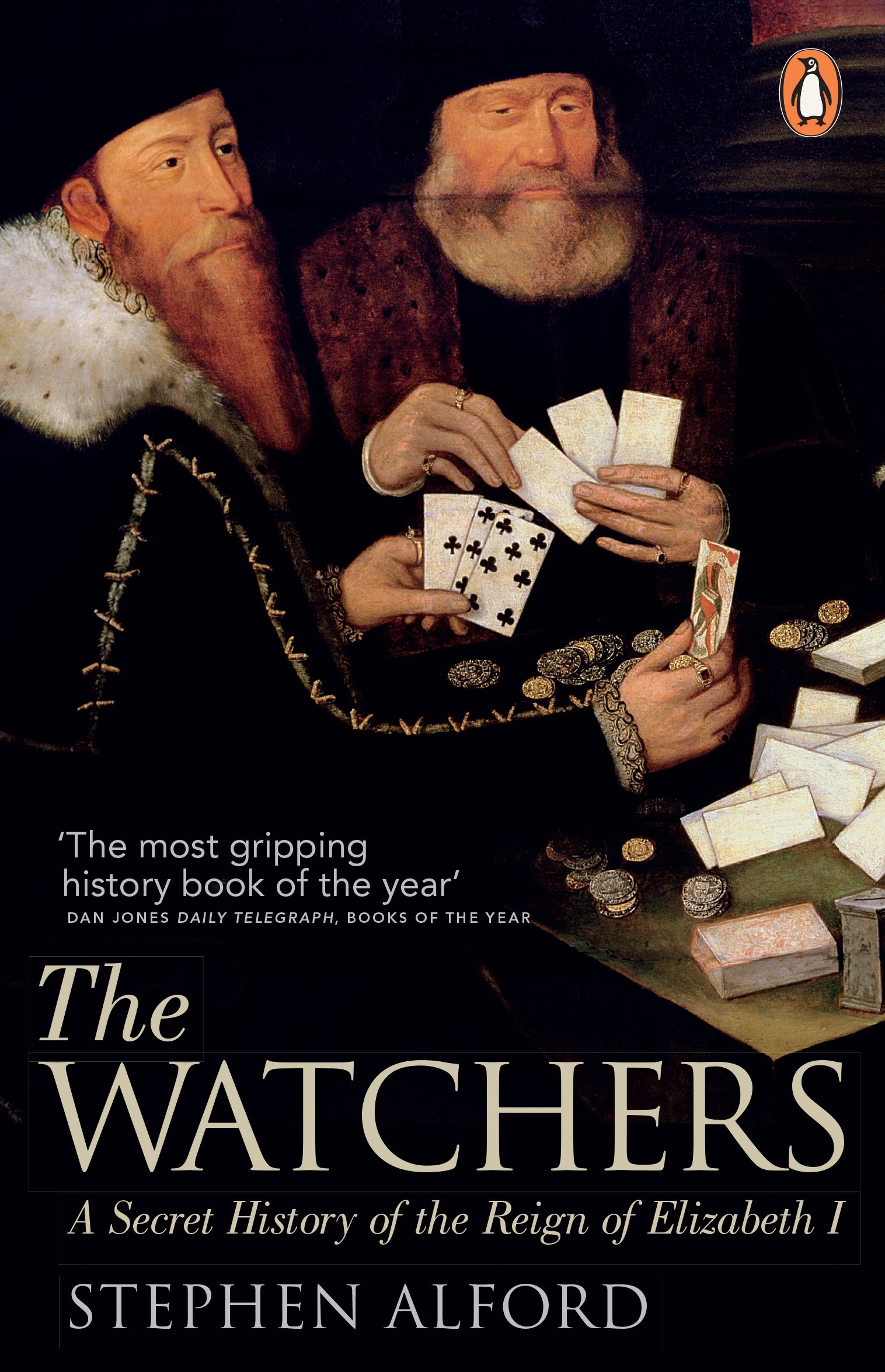
Rye at that time was one of the major ports for both passengers and freight between England and France and the Low Countries. Regrettably there is little detail of people movements in these records, apart from the occasional note of a boat carrying “20 passengers”. This is a shame because even at this date there were immigration officers stationed at every port such as Rye. Their job, as today, was to interrogate and determine the bona fides of all travellers and naturally to detain any they thought might be Catholic insurgents or spies. From reading elsewhere about the spy rings of Elizabethan England (masterminded by Lord Burghley and Sir Francis Walsingham) it is clear there was also a large amount of mail travelling back and forth, mostly being hand-carried by couriers. [For more on this see Stephen Alford, The Watchers: A Secret History of the Reign of Elizabeth I. Review when I’ve finished reading it.]


This book is more about the trade which was happening. Although there are several vessels logged which seem to do nothing but ply back and forth between Rye and Dieppe (the preferred route to France) carrying what today would be called “stuff”, there is also a large amount of goods travelling round the coast of the country, especially between Rye and London, but also as far afield as Newcastle, Spain and Portugal. Remember these are times when the roads were poor, if they existed at all, and a journey from Rye to London by cart carrying goods would take a week or more whereas in good weather a boat could sail between Rye and London in a couple of days. None of the ships involved are of any size; the largest I saw mentioned was 70 tons and they go down to tiny boats of 10 tons; the average is probably around 25-30 tons. These really are tiny boats; the Mary Rose by contrast was rated at 500 tons.

A large section of the book is a line by line summary of every ship which enters or departs Rye over this 35 year period (give or take a few gaps), all constructed from the surviving Elizabethan records in the Sussex County Archive, the National Archives and the Rye Town Records.
Most of the cargo was quite mundane, and perhaps what one might expect: grain of various sorts, wood (ship upon ship full of wood), coal, wool, cloth of various types, wine; and there were many loads which are just recorded as “mixed” so who knows what they contained. Iron appears fairly regularly, and in significant quantities too (the Sussex Downs were an iron smelting centre at this date) and there are several shipments of ordnance including the occasional iron cannon.
But there are some surprising (at least to me) things, such as: lupins, vinegar, apples (from France), oranges and lemons (yes even so; they come in from Spain and Portugal), hops (being traded in both directions), horses (strangely mostly out-bound), cony skins, wolf skins, bricks (being imported from the Low Countries; a single 40 ton ship can carry at least 10,000). And it goes on with nuts, spices, lead, paper, hosiery, cochineal, woad (presumably for use as a dyestuff), herrings (red and white), codfish, quails and scrap brass. Another ship brings in “6 asses”. All of this is, of course, taxed.
But there were several entries which really caught my eye. One cargo is documented as “Mixed inc. tennys bawles”; another contains “French playing cards”. Then there’s a mixed shipment which includes hawks (“6 Tassell hawks, 7 Falcon hawks, 3 Martin hawks, imported by Walter Libon, alien”). Lastlly, there are several shipments of old shoes to London! One can only guess that scrap leather had a value, but for what?
We think we live in interesting times, ship strange goods around in containers, using humongous amounts of oil. But all this was being done by the power of man, horse, tide and wind.
Who said history is dull!

We're Back!

Apologies to all our readers for being off-line for about 24 hours. We were getting phenomenally high traffic to one particular file from a social media site and in consultation with us, decided to take the site off-line while the problem was investigated.

Your Interesting Links

There’s a lot in this month’s edition so let’s get straight in …
Science & Medicine
Medics are now saying that arthroscopic surgery for degenerative knee problems (ie. essentially arthritis) does not actually do any much good.
[TRIGGER WARNING] Breaking the taboo of talking about miscarriage.
Another new study shows that, against expectation, women who source online and use abortion drugs do so with very little need for emergency medical help.


And yet another on reproductive medicine … It seems the folk contraceptive “Thunder God Vine” (Tripterygium wilfordii, above) really does prevent conception.
On the physics of having a shit.
More new research has found that daily small doses of cannabis can slow brain decline with ageing – at least in mice.
And here’s yet another instance where it seems we’ve had it all wrong … apparently eating cheese does not raise the risk of heart attack or stroke.
It has long been thought that the way we categorise colours is cultural, but surprisingly it appears to be genetic.
Sexuality
Porn is allegedly having a “terrifying impact” on men. Girl on the Net lifts the lid and finds the evidence rather thin and attitudes biased.
Is the “Dildo of Damocles” daunting? What does/will happen when sex toys connect to the internet?
Environment
It is estimated that the Fukushima accident gave everyone on the planet radiation exposure equivalent to a single X-ray – although unsurprisingly those in Fukushima received rather more it was unlikely to be more than two year’s worth of background radiation, so tiny in the overall scheme of things.
Hedges are as important for the environment as trees, at least in cities.
In another non-obvious finding, research is showing that beaver dams keep streams cool.
History, Archaeology & Anthropology
There are some amazing things happening in palaeoanthropology at the moment, not least that researchers have discovered how to extract DNA from the soil around archaeological sites.
Another of those amazing pieces of palaeoanthropology is the number and age of the Homo naledi finds in South Africa.

At the other end of Africa, a 4000-year-old funeral garden has been discovered in Egypt.
In a recent, and rather more modern, find a rare medieval text printed by William Caxton has been discovered lurking in University of Reading archives.
One of our favourite London bloggers, diamond geezer, visits the Parisian Catacombs.
Finally in this section, another of our favourite London bloggers, IanVists, explores an abandoned railway tunnel used by the BBC in WW2.
London
Which brings us nicely to London itself … Londonist suggests some of London’s more secret places to visit.
Meanwhile Time Out tells us nine things we mostly didn’t know about Euston Station.
Lifestyle & Personal Development
The Guardian magazine on Saturday 27 May featured Laura Dodsworth’s upcoming book Manhood: The Bare Reality in which 100 men talk about manhood through the lens of “me and my penis” as well as having their manhood photographed.
This a follow-on to Bare Reality: 100 Women, Their Breasts, Their Stories
Pre-order Manhood: The Bare Reality from the publishers Pinter & Martin or from Amazon.
[Full disclosure: I was interviewed for this book and there’s a little bit of me in the article, although unless you know you’ll never find it.]
Following which here’s Lee Kynaston in the Telegraph on male pubic hair grooming. My only question is “Why?”.
The key to happiness is not knowing oneself, but knowing how others see us.
But then scientists and philosophers also doubt the ancient claim that vigorous self-examination makes you a better person.
Food & Drink
WFT is alkaline water? Oh, I see, it’s no different to what comes out of the tap.
If you like sushi, you might no longer as its popularity has brought rise in parasitic infections.
People
I wasn’t quite sure where to put this next item, but it is one for the railway buffs amongst us … Geoff Marshall (no relation) and Vicki Pipe are doing All the Stations: They’re travelling to every train station in mainland UK, documenting and videoing as they go. Their videos are all on the All the Stations channel on YouTube; watch the introductory video first to see what they’re planning.
[Geoff Marshall has twice held the official record for travelling the whole London Underground in the fastest time, so he had to be up for another challenge!]
Shock, Horror, Humour

And very finally here are some stories of what happens when scientists take research specimens through airport security.
More in a month’s time.

Five Questions, Series 9 #4

With question four we’re getting near the end of this series of Five Questions.

★★★★☆

Question 4: How many even prime numbers are there?
I’m not sure if this is a trick question, mathematically, or not.
First let’s be clear what a prime number actually is. It is a integer number which is divisible only by itself and 1. All even numbers (2, 4, 6, …) are divisible by 2. So 2 itself, is therefore the only even numbered prime number. And given that the technical definition of a prime number is that it has to be greater than 1, the answer is that there is just the one even prime. And there is no trick. (See Wikipedia for a fuller description.)
But why might this have been a trick question? Well I thought it might be a trick, because I did wonder about 0. Is 0 odd or even? Well actually it doesn’t matter because dividing 0 by anything you get 0, not 1, which seems to negate the question, regardless of the technical definition of a prime number.