Each month I offer you something to think about to get the brain working. This month …
Why do human mouths not have a backspace key?

Each month I offer you something to think about to get the brain working. This month …
Why do human mouths not have a backspace key?
Here is this month’s collection of assorted quotes.
The Auditors had tried to understand religion, because so much that made no sense whatsoever was done in its name. But it could also excuse practically any kind of eccentricity.
[Terry Pratchett, Thief of Time]
The body’s not a problem to be solved. It is the place we live.
[Unknown]
It’s not necessarily that I’m thinking, “Oh, this object has its own will,” but how do we respect previous relationships that this object had that are still relevant today? Because some of them don’t expire. For example, the material relationship between a stone and the mountain it was a part of. Even if that rock goes away from the mountain, they’re still connected, and they live in a different timeline because mountain time is different from human time.
[Gala Porras-Kim]
The cars usually don’t have what’s called a “soul” until an hour before they’re supposed to have a person driving them. I don’t know all the details, but basically you can’t connect to the car, you can’t do anything with it, you can’t adjust its settings at all until it has a soul. And for some reason they don’t get a soul until an hour before a shift starts.
[Interview with a Waymo Robotaxi Handler]
When everyone is against you, it means that you are absolutely wrong … or absolutely right.
[Albert Guinon]
Nothing can be more contemptible than to suppose Public Records to be true.
[William Blake]
Don’t lie, don’t kill, don’t steal. Don’t use love as a game or weapon. Respect the earth, and don’t abuse its gifts. All are familiar ethics that we somehow forget, or manage to sidestep, when we just don’t feel like thinking about consequences.
[Stephanie JT Russell]
To us, the moment 8:17 A.M. means something – something very important, if it happens to be the starting time of our daily train. To our ancestors, such an odd eccentric instant was without significance – did not even exist. In inventing the locomotive, Watt and Stevenson were part inventors of time.
[Aldous Huxley]
The last irrational, moralistic taboo in America is that of public nudity. There is no difference between an Iranian woman being arrested for going out in the streets without her hair covered and an American woman being arrested for stepping out her front door without a top on. Nobody can give a rational explanation for anti-nudity laws. The government uses, instead, abstract terminology like “disturbing the peace” or “public indecency”. Without realizing it, we criminalize nudity on strictly moral grounds, based on ancient and outdated religious biases that have no place in a modern society.
[https://writersdisease.blogspot.com/2013/04/nudity-is-future.html]
The dildo of consequences rarely arrives lubed.
[unknown]
Here are the answers to this month’s six quiz questions. If in doubt, all should be able to be easily verified online.
British History
Answers were correct when questions were compiled in late 2025.
Remembrance of Things Pasta
Brian Bilston
She blew her fusilli,
my pretty penne,
when she found me watching
daytime tagliatelle.
Je ne spaghetti rien,
I responded in song,
but she did not linguini
for long,
just walked out
without further retort:
a hard lesson to be tortellini,
orzo I thought.
And so here I am,
all on my macaroni,
and now my days
feel cannelloni.
Find this poem online at Brian Bilston’s website
This year our Ten Things column will present a selection of words (of five or more letters) with a different ending each month. This month …
Words Ending in -og
So how many of those words did you know? And how many do you use?
Do what you feel in your heart to be right, for you’ll be criticized anyway.
Eleanor Roosevelt
Each month we’re posing six pub quiz style questions, with a different subject each month.
As always, they’re designed to be tricky but not impossible, so it’s unlikely everyone will know all the answers – just have a bit of fun.
British History
Answers will be posted in 2 weeks time.
Our look at some of the significant happenings 100 years ago this month.
2. Birth. Jan Morris, born James Morris, British travel writer (d.2020)
11. Birth. Thích Nhất Hạnh, Vietnamese Thiền Buddhist monk and peace activist (d.2022)
12. British miners agree to end their strike.
14. AA Milne’s children’s book Winnie-the-Pooh is published in London.

18. Birth. Chuck Berry, American singer-songwriter and guitarist (d.2017)
31. Death. Harry Houdini, Hungarian-born American escapologist. Died of gangrene and peritonitis after his appendix ruptured. (b.1874)
Verily I say unto thee we happen upon that time for considering things being noteworthy but which forsooth I have not described otherwise.
Sunday 6
We’re six days into the month and the fact that this is the first entry shows just how much I’ve been trying to get done. Why is it that senior professionals, who should know better, are totally unable to plan ahead? And they then expect other people to jump to and dig them out of the shit. They seem to forget that “a lack of planning on your part does not constitute a crisis on mine”. Not for the first time I despair of them. I’ve now just about got back to where I should have been this time last week – not that I stand a lot of chance of getting anything done this coming week as the diary keeps getting clogged up.
Monday 7
What a curious day. First we both had mid-morning appointments with Lee, the osteopath. Part of my treatment involved dry needling (see here to find out about it; it isn’t acupuncture) to try to free up my back. N reckoned that I had 22 acupuncture needles in various parts of my back. Before this Lee had spent quite some time trying to remove N’s left shoulder.
Rather than going home we then went for early lunch at Toulous in Bushey Heath; it’s a really good, and quite busy café. We both indulged in their full English breakfast, which is amongst the very best I’ve ever had and not outrageously expensive.
N then had a quick trip round the two nearby charity shops, while I spent a couple of hours sitting on a bench taking photos – like this exemplary piece of parking.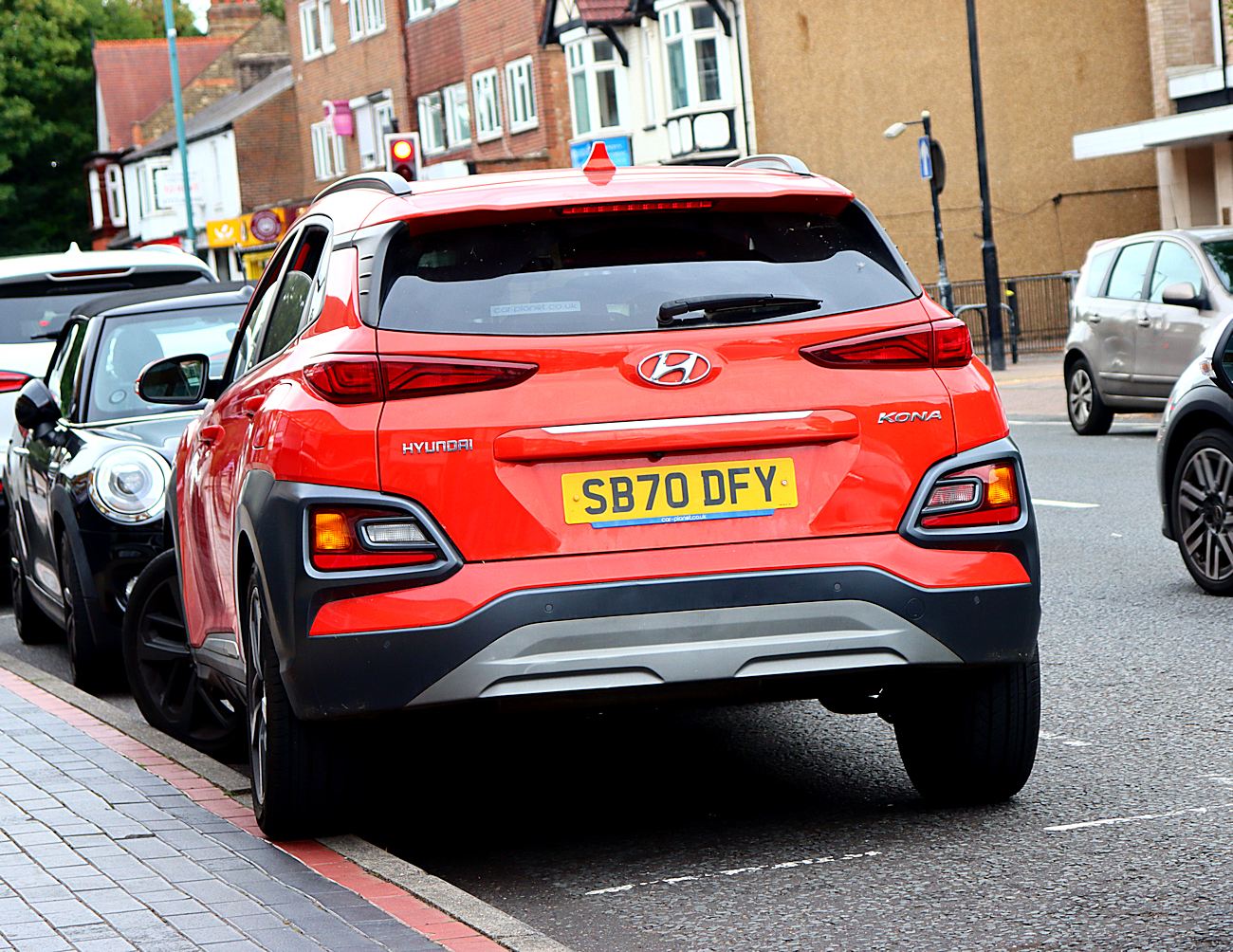 Then it was a 100 metre walk to the dentist where we both had check-ups and hygienist appointments. While N got stung for a filling, I had two very tiny, 1x3mm, shards of tooth removed from my gum – they were obviously left over from the surgery last autumn and had worked their way out; very curious!
So having left home just after 09:00 we got back just after 17:00; and at least £500 poorer.
Tuesday 8
A nice rainy day (at last!); what one of our Irish friends called a “soft day”, which is what it was like when we buried my father. And in great contrast to Saturday 8 September 1979, the day upon which we got married. That’s 47 years – and we still don’t know how we’ve done it!
Thursday 10
We both had one of “those days”. I ended the day more stressed and pissed off than I started.
Friday 11
Another day of unremitting obstruction by the universe. Can I get anything completed? Not a chance. And yet more work comes in: “You may not have time to do this but …”. Then why ask me? Gah!
Saturday 12
Disappointingly not many of us at this morning’s patient group meeting, but some useful discussion nonetheless. Did I, as intended, get the minutes written this afternoon? No, of course not as I went to sleep!
Sunday 13
The gardener cometh? Nay, the gardener feeleth not well, and verily cometh not. I didn’t mind too much as it gave me a chance to catch up a bit; like write the minutes of yesterday’s meeting, and get some urgent updates to the literary society website finally online. Oh, and we had a small amount of rain!
Tuesday 15
Something is very wrong! I actually had a day buggering around and not doing anything work-like. It’s just as tiring though.
Thursday 17
Oh bugger! I’ve put my back out. Properly. Unusually it is the left side of the sacro-iliac, whereas the old injury was to the right side. And I can’t get an osteopath appointment until next Tuesday. Meanwhile I’m even less mobile than normal.
Earlier in the day Tilly was lying on my desk, obstructing work, and I happened to catch this enormous yawn.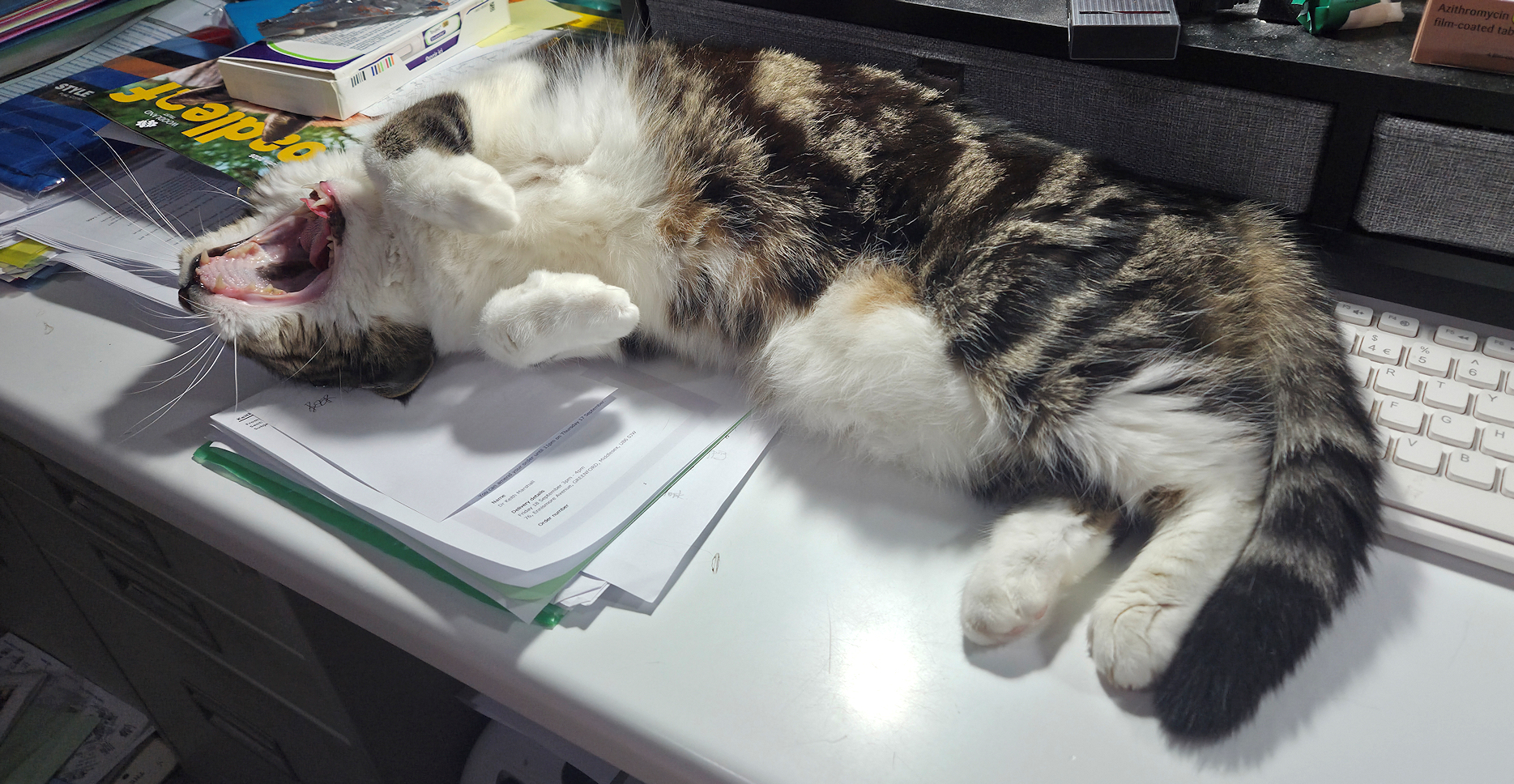 Those teeth are remarkable for a 13 year old cat.
Friday 18
So N had to take Tilly to the vet on her own this morning; my back just wouldn’t. And then we had a possible attack on the literary society email accounts which mopped up several hours, to both deal with it and calm down the inevitable panics. All in all, not a good day.
Tuesday 22
What a crap few days. I’ve been very down and depressed largely I think because of my back – although it has eased a lot over the last 48 hours, and today’s trip to the osteopath has made a big difference; I actually feel reasonably comfortable again. It’ll get another wrench on Friday, which will hopefully settle it completely. Oh and Lee’s going for the record with the dry needling; he got to 24 in my back today.
Wednesday 23
Last evening, and I wasn’t able to photograph it, off to the west (maybe SW) of us there was cloud which looked furrowed, just like a ploughed field. I’ve never seen it before and had to go and look it up. It turns out to be altocumulus undulatus. It was just like in this image from BBC.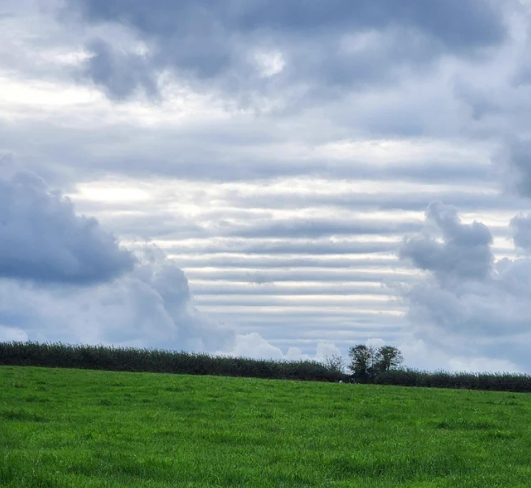 It was clear over us and started a little way off, stretching away to the horizon, and much wider than in this image. Really spectacular.
Friday 25
Another totally disrupted day. Supermarket delivery this morning. A trip to the doctors for a blood test at lunchtime. And the this afternoon a trip to the osteopath, in which Lee broke the record with 34 needles in my back and legs. Well while we’re at it we may as well bugger up the whole day. But why are these things so disruptive? I get nothing done in between them.
Saturday 26
Just after lunch, some good discussion on today’s literary society social call. Although we usually only just manage double figures, they’re worth doing as it is an opportunity for those who can’t make events to keep in touch. And after that … I went to sleep!
Sunday 27
Oh well now there’s a surprise! Heathrow Airport reckon that planning and regulatory issues might delay their third runway by up to four years. So if they get planning permission by 2029 the third runway might open by 2039 (not accounting for slippage). This is excellent. Long-term readers will know my view on air travel and Heathrow. The longer everything is delayed, the greater the chance someone will come to their senses and scrap the whole appalling idea. Although given what’s happened with HS2, I wouldn’t hold my breath.
Wednesday 30
Well what do you know? We ended the month with some rain. Not a lot, about a 30 minute (certainly under an hour) shower this morning. Unfortunately not enough to make much difference. But at least the skies haven’t forgotten how to rain – I was beginning to wonder. This was followed by a lovely sunny afternoon.