Category Archives: topographical

Monthly Links

Our monthly selection of links to items you may have missed …


Science, Technology, Natural World

So what if this Universe was made in somebody else’s laboratory? [LONG READ]

Voyager 1 is way beyond and listening to the stars – but for how long? [LONG READ]

Juno is another space probe which is still working after many more years than expected surveying Jupiter. [LONG READ]

On the curious history of Dark Matter.

There’s a recent, and rather inexplicable, international agreement to abandon leap seconds and maybe sometime impose a leap hour. Two reports, the first from The Guardian, and the second from The Conversation.

Now we mention time, it is being suggested that animal life may be significantly older than we have hitherto thought.

The sexual behaviour of animals (including humans) changes with the advent of autumn.

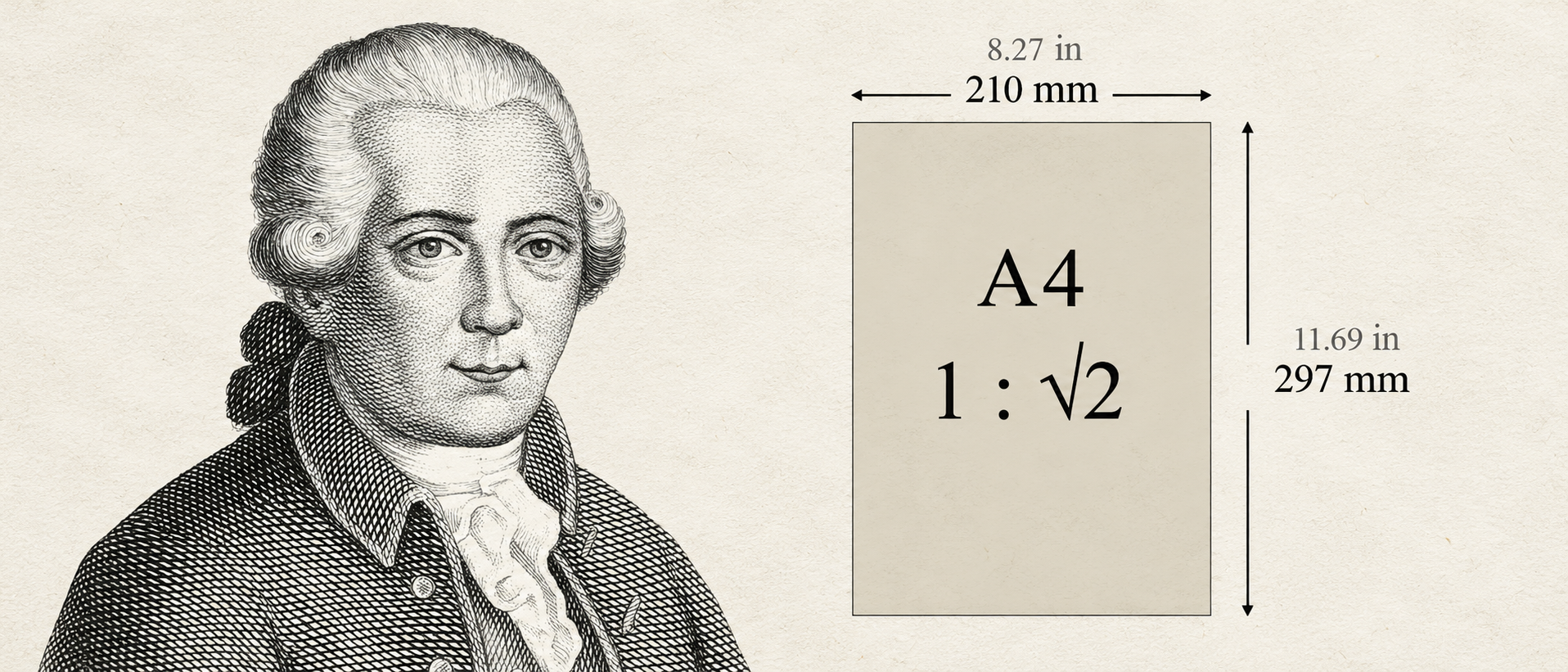
We end this section with something completely different … surprising as it may seem, the humble sheet of A4 paper is one of humanity’s greatest achievements.

Health, Medicine

Flu has kicked off early this year, but how do the various suggested causes stand up to scrutiny?


Sexuality & Relationships

The Dutch, being progressives, have a new word for labia, but will it catch on?

The thoughts of one man on what he feels it’s like to have a foreskin.

So here’s an explainer – for the boys and anyone educating them – about wet dreams … because most of us were never told and had to work it out for ourselves.


Art, Literature, Language, Music

A look at how we talk about pregnancy.

Etymologist Susie Dent takes a look at collective nouns.

So you thought you new English grammar and punctuation? Well here are 19 strange punctuation marks you never imagined you’d need.


History, Archaeology, Anthropology

It appears that the Neanderthals may have been a lot more violent than previously thought.

Archaeologists have found the world’s oldest known shipwreck off the cost of Turkey.

Meanwhile in Scotland archaeologists have uncovered a long suspected major early monastery. [££££]

Now we’re deep into medieval mysteries with the Green Children of Woolpit.

Until the Black Death changed everything, rabbits were a luxury for the wealthy.

Here are a few very odd mediaeval beasts you’ve probably never heard about.

It seems to have been medieval month, because there’s yet more with the discovery of a major leper hospital in Lincoln.

Scholars have recently suggested that their predecessors have been reading the mysterious Voynich Manuscript all wrong, because it has been wrongly bound.

A book of advice for the 14th-century young housewife.

There’s a huge amount of controversy over which is the oldest pub in England, so Dr James Wright has taken a long, detailed look.

We’re gradually coming up to date with some of the most astonishingly bad Puritan names.

So where, and when, was the first flight in England?


London

So now to London proper …

For anyone who is into maps, the Historic Towns Trust has detailed maps of Medieval and Tudor London.

The fields to the north of the City had lots of marks for archery practice; one survives. [££££]

General Roy’s Bollards [££££]

A look at the darker side of wartime Covent Garden.

Finally in this section, a look at a few of London’s secret wartime defences. [££££]


Lifestyle, Personal Development, Beliefs

Now here’s an oddity: the legend of the Mongolian Death Worm.

And finally … why wants to be an ordnance expert? A behind the scenes look at the art of defusing a WW2 bomb and living to tell the tale! [LONG READ]

June Quiz Answers

Here are the answers to this month’s six quiz questions. If in doubt, all should be able to be easily verified online.

Geography

  1. In which country is Angel Falls, the world’s largest waterfall? Venezuela
  2. Switzerland is made up of how many cantons? 26
  3. Which continent has land in all four hemispheres? Africa
  4. In what country is the Chernobyl nuclear plant located? Ukraine
  5. What’s the capital city of Tanzania? Dodoma
  6. Area 51 is located in which American state? Nevada

Answers were correct when questions were compiled in late 2025.

June Quiz Questions

Each month we’re posing six pub quiz style questions, with a different subject each month.
As always, they’re designed to be tricky but not impossible, so it’s unlikely everyone will know all the answers – just have a bit of fun.

Geography

  1. In which country is Angel Falls, the world’s largest waterfall?
  2. Switzerland is made up of how many cantons?
  3. Which continent has land in all four hemispheres?
  4. In what country is the Chernobyl nuclear plant located?
  5. What’s the capital city of Tanzania?
  6. Area 51 is located in which American state?

Answers will be posted in 2 weeks time.

No New Town Here

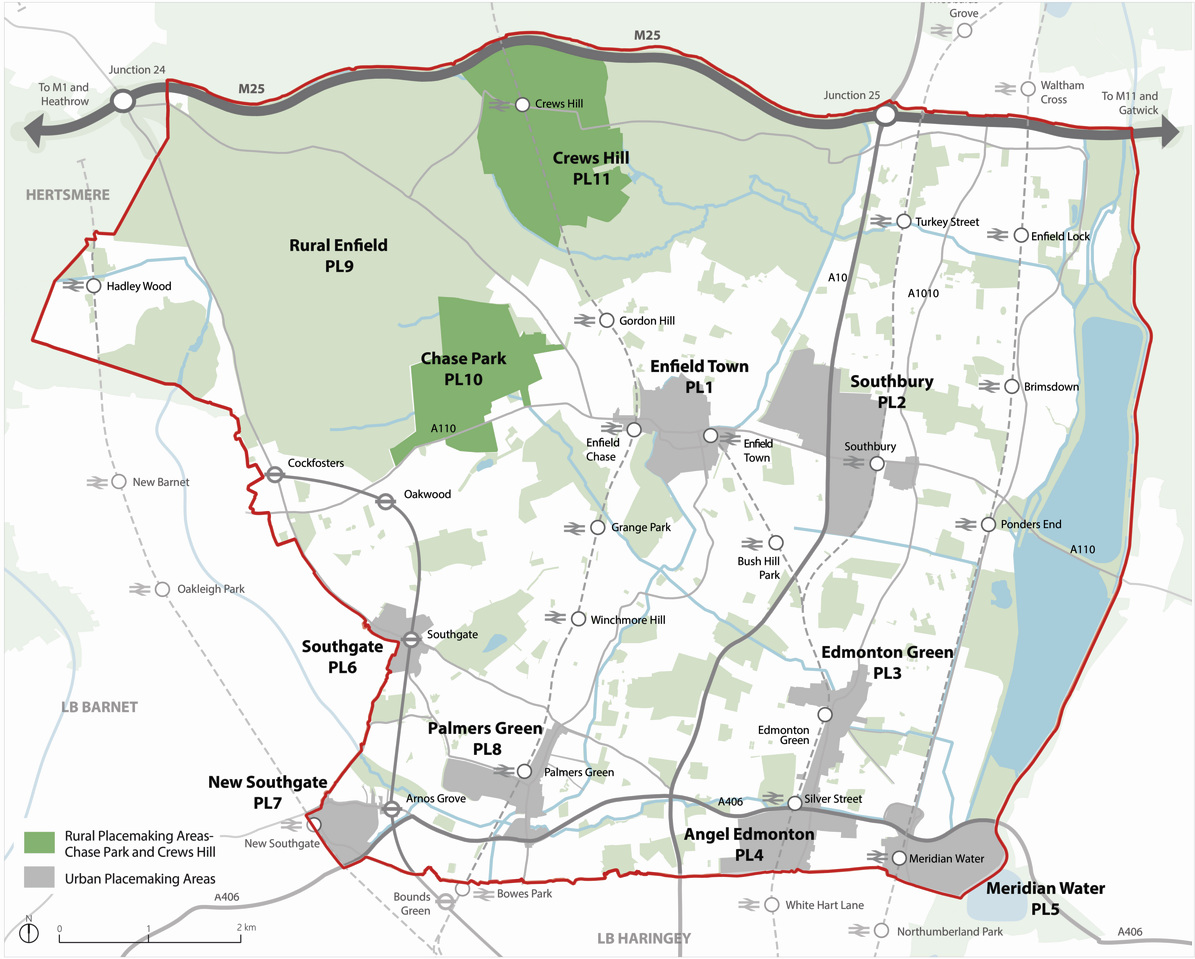
So the London Borough of Enfield – just a couple of boroughs away from me, and close to my home town – has withdrawn from the government’s “new town” programme. Basically the council, which has recently changed from Labour to Conservative run, has told the government there will be no “new town” building on the proposed sites at Crews Hill and Chase Park.

I know the Crews Hill area (although not recently) and it is an open, relatively unbuilt area which is a nationally important horticultural centre, including garden centres and plant nurseries; plus pet shops with reptile and bird specialists; and a popular equestrian centre. Consequently there has been significant local opposition to the government’s plans.

map of London Borough of Enfield
London Borough of Enfield, showing the planned “new town” development areas.
See the Station marked “Grove” at top right: that was where I spent my childhood.
Source: LB Enfield

Most of the two areas is designated Green Belt land, and should therefore be protected from development to ensure a green, environmentally friendly, area around the capital.

country scene
Around Crews Hill Golf Course

The Enfield council now says that the commitment to increase housing (required by the government, and the London Plan) will now concentrate on using brownfield sites and redevelopment of existing facilities.

I strongly believe this is something which needs to be exhausted before there is ever consideration of building on Green Belt or Metropolitan Open Land – which councils are overly prone to chip away at; this little bit won’t matter; and then this bit; and this bit; until the whole is gone, which I’m seeing locally. There seems too little concern for the environment; just more and more development – because it brings in money for the council.

[Aside: I also believe that any building which is less than 50% occupied for, say, three months should be required to be converted into housing. This would not only increase housing but also clamp down on speculative build.]

Enfield’s stance is not (just) a question of NIMBY-ism or party politics, but a strike for common sense, respect for existing communities, and the law.

More power to a council – any council regardless of political persuasion – with the guts to stand up to, and call out, the government. We need more of this if we are to keep the place pleasantly inhabitable and environmentally sound.

There are a number of media reports on the decision, including this from The Guardian.

Monthly Links for November

Christmas is creeping ever closer, but before then we must have this month’s collection of links to items you may have missed.


Science, Technology, Natural World

The first test image from the new Vera C Rubin telescope has found a tail on galaxy M61 (above). [££££]

Meanwhile a rather strange planetary system has been spotted with three planets circling a pair of stars.

The planet which crashed into Earth, thus creating the Moon, came from the Inner Solar System. [££££]

Recently a very tiny asteroid buzzed past very close to Earth.

Here’s a tribute to Betty Webster, the much ignored woman who discovered the first black hole.

Coming back to Earth … How did a medieval Oxford friar use light and colour to find the composition of stars and planets?

A recent scientific study has found that there are four key ages in your brain’s development – and they’re not quite when you think they are!

A curiosity … It seems we have an internal lunar clock (as well as the solar one) and it’s getting disrupted by light pollution.

Scientists now calculate that the first kiss dates back some 21 million years – so it wasn’t between humans! (Sculpture below is by Brancusi)

The diversity of our dog breeds can apparently be traced back to the Stone Age.

They seem to have memory, but what do trees remember? [LONG READ]


Environment & Ecology

In the UK, on the Isle of Wight, the “White-knuckled Wolf Spider” has been rediscovered.

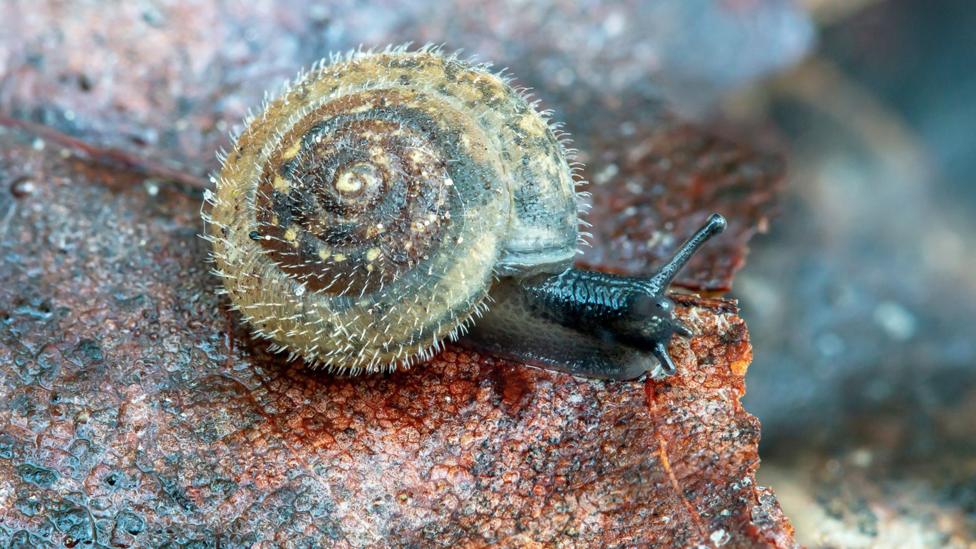
Would you believe that London is home to a hairy snail (above), which is now subject to conservation efforts?

Meanwhile, an exceptionally rare pink grasshopper (below) has been found in New Zealand.


History, Archaeology, Anthropology

Archaeologists have discovered a massive ancient Egyptian fortress in the middle of the desert.

In the UK, the find of several Bronze and Iron Age log boats is revealing details of Fenland prehistory.
From

There’s a project which is mapping ancient Roman roads, and they’ve recently added 60,000 miles from right across the Roman Empire. [££££]

Here’s Going Medieval on the Dark Ages.

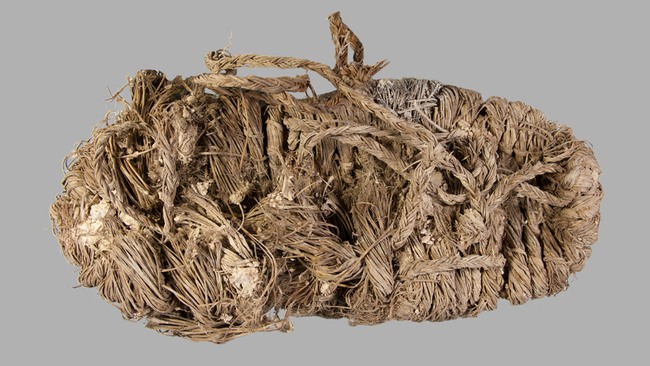
Well who would have thought it? Finds – including 25 shoes (one, below) – from ancient vulture nests are shedding light on 600 years of human history! [££££]


London

As so often our London section is mostly historical …

There’s a new book, The Boroughs of London by Mike Hall and Matt Brown. It’s getting lots of great reviews.

Meanwhile Londonist has an article by Matt Brown on the history of the London Plane Tree. [LONG READ]

Ongoing work under the Houses of Parliament has turned up evidence of prehistoric tools and a lost medieval hall.

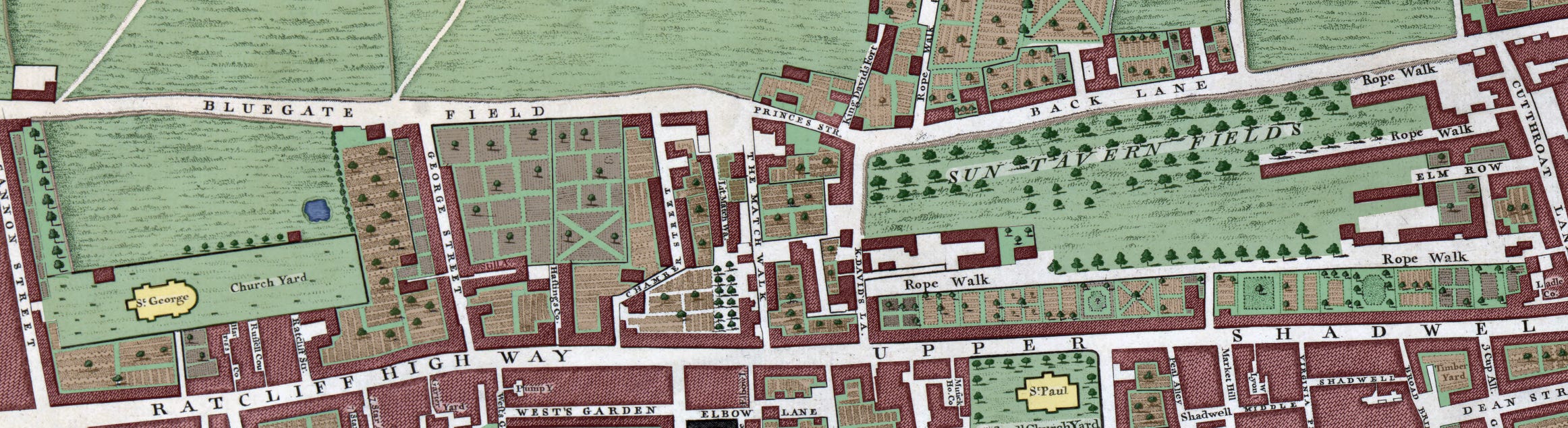
In another Londonist post Matt Brown (again) continues his work revealing the detail in John Rocque’s 1746 map of London by colouring it in. He’s now got to Wapping, Rotherhithe and Shadwell (snippet below). [LONG READ]

Still with Matt Brown, and following on from the previous item, he appears to have found the lost island of Shadwell.

And coming right up to date, the 20-year old gates of City Road Lock on the Regent’s Canal are being replaced, allowing a quick peek at the workings of a lock.


Shock, Horror, Ha ha ha!

And finally, for your delectation, here’s a history of slang for virginity – and some links to similar articles from the same author.


April Quiz Answers

Here are the answers to this month’s five quiz questions. If in doubt, all should be able to be easily verified online.

Geography

  1. There is a very small (180 square miles) landlocked sovereign country between France and Spain with a population of approximately 75,000. What is the name of this country?  Andorra
  2. What is the world’s largest coral reef system?  Great Barrier Reef
  3. What is the only US state that borders just one other?  Maine
  4. What does the Beaufort scale measure?  Wind Strength
  5. On which continent is the volcano Mt Erebus?  Antarctica

Answers were correct when questions were compiled in late 2023.

April Quiz Questions

Each month we’re posing five pub quiz style questions, with a different subject each month. As before, they’re not difficult, but it is unlikely everyone will know all the answers – so hopefully you’ll learn something new, as well as having a bit of fun.

Geography

  1. There is a very small (180 square miles) landlocked sovereign country between France and Spain with a population of approximately 75,000. What is the name of this country?
  2. What is the world’s largest coral reef system?
  3. What is the only US state that borders just one other?
  4. What does the Beaufort scale measure?
  5. On which continent is the volcano Mt Erebus?

Answers will be posted in 2 weeks time.

On Postcards and Penguins

Where is the southernmost post office in the world? Falkland Islands? Patagonia? South Georgia? French Southern and Antarctic Lands?

Nope. None of those. Go even further south to Port Lockroy in Antarctica.

Yes, Port Lockroy, which is on Goudier Island off the coast of the Antarctic Peninsula, has a small post office which handles 70,000 pieces of mail every year – despite being inhabited only during the Antarctic summer season.

Port Lockroy

The bay in which Goudier Island sits is a regular stop off for cruise ships, consequently the Post Office is visited by 18,000 people a year. As well as being a post office, Port Lockroy has a small (tourist) shop, and a small museum; the workers (usually just 4 or 5 during the Antarctic summer) also double as scientists, observing and recording the gentoo penguin population for the British Antarctic Survey.

Port Lockroy Shop

The post office and museum are maintained and operated by the UK Antarctic Heritage Trust (UKAHT), a charity committed to conserving historic buildings on the Antarctic Peninsula. The funds raised from the sale of souvenirs and postage fees go directly to supporting the conservation of UKAHT’s six historical sites in the area.

The 2022-2023 team made this short video during their stay …

It’s a bit of a cheat but you don’t have to go all the way to Antarctica to send a postcard from there! Earlier this autumn UKAHT were selling postcards that would be sent from Antarctica when this season’s team arrived (and had dug the base out from under last winter’s snow). Each postcard cost £20, could be personalised with your message, and sent to anyone anywhere in the world.

So of course I had to do this. I love esoteric things like this. My card arrived about a week ago – much sooner than expected given it’s somewhat byzantine journey (see this blog post). The postcards, like all the base’s supplies from stock for the shop to food, are shipped from the UK to Port Lockroy – in this case in the team’s luggage rather than on a supply ship.

Once stamped and franked the cards are bagged and surrendered to the next (suitable) visiting ship to travel to Stanley in the Falkland Islands (a trip of at least 5 days). From there they take the twice weekly flight to RAF Brize Norton in UK, where they are consigned to Royal Mail for transit to their destination (which could be anywhere in the world).

Here’s my card, front and back …

Port Lockroy Postcard

If you want a postal curiosity, keep an eye out next August/September as UKAHT may again be selling postcards like this to raise funds. You’ll be supporting British heritage in Antarctica, and valuable wildlife and climate research, but also contributing to a handful of young people getting the opportunity of life-changing experience. I shall certainly do this again if the opportunity arises.

June Quiz Answers

Here are the answers to this month’s five quiz questions. If in doubt, all should be able to be easily verified online.

June Quiz Questions: World Geography

  1. Until 1930, what was the Turkish city of Istanbul called? Constantinople
  2. What country has the most islands in the world? Sweden, with 267,570.
  3. What is the largest desert in the world? Antarctica
  4. What country is located between France and Spain? Andorra
  5. What is the smallest country in the world by area? Vatican City at 0.49 sq km

Answers were correct when questions were compiled in late 2022.

June Quiz Questions

Again this year we’re beginning each month with five pub quiz style questions, with a different subject each month. They’re not difficult, but it is unlikely everyone will know all the answers, so hopefully you’ll learn something new, as well as have a bit of fun.

June Quiz Questions: World Geography

  1. Until 1930, what was the Turkish city of Istanbul called?
  2. What country has the most islands in the world?
  3. What is the largest desert in the world?
  4. What country is located between France and Spain?
  5. What is the smallest country in the world by area?

Answers will be posted in 2 weeks time.