Something completely different this month …
Ten Scientific Discoveries that were Later Proven Wrong by Religion:
Category Archives: science
Your Interesting Links
There’s a lot in this month’s “links”, so let’s get right in …
Science & Medicine
For those of you with youngsters interested in science – or even just for yourself – don’t forget the Royal Society’s Summer Science Exhibition in London which runs 4-9 July.

Earthquakes are well known for making big cracks in the ground, but could an earthquake ever crack a planet apart?
So what is the oldest living thing on the Earth? And no, the mother-in-law doesn’t count!
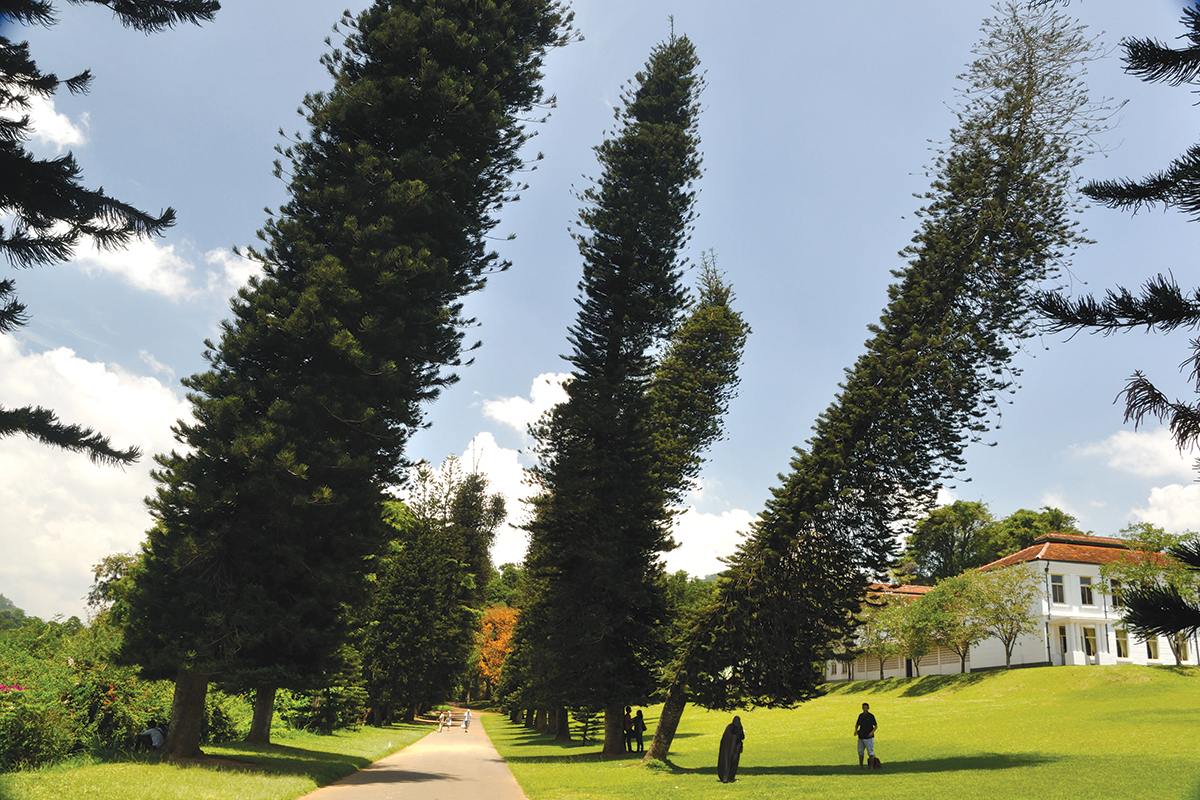
Now this is really odd. It seems that all Cook pine trees lean towards the equator – and dramatically so! Scientists have only just noticed and they don’t understand why.

It seems that jumping spiders can see the moon, their vision is so good.
Well yes, butterflies have sex, but it is a lot more complicated than we imagine.
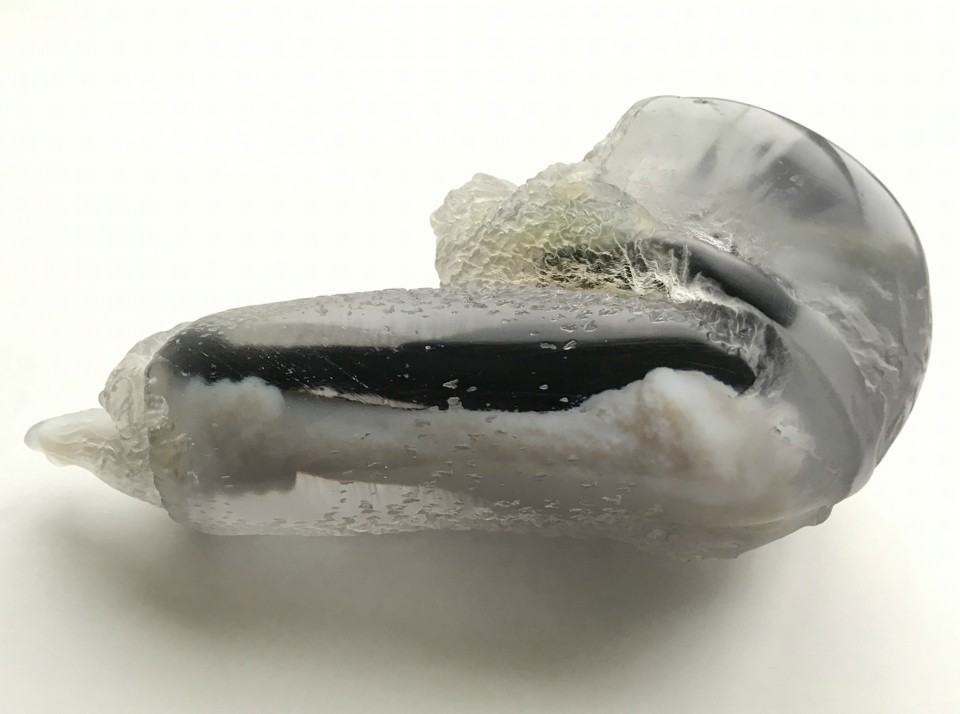
So just why are birds’ eggs egg-shaped? Researchers have finally worked out the real reason.
Want to smell like a dog? Well now you can. Psychologist Alexandra Horowitz is training herself to approach the world in the same olfactory way her dogs do.
From dogs to cats … there have been several articles recently on research which has worked out how cats conquered the world. Here are just two, from IFLscience! and the Smithsonian magazine.
And now to humans. Apparently foetuses turn to follow face-like shapes while still in the womb.
Be afraid, at least if you’re American. It seems the Lone Star Tick is causing people to become allergic to meat, and even causing death; scientists are still trying to work out why.
Finally in this section, one science journalist has weighed up the pros and cons of having a PSA test, and found it wanting.
Sexuality
Suzannah Weiss in Glamour wants to end the expectations of pubic hair grooming.
What happens when illness robs someone of their ability to orgasm.
We’ve known for some time, but now research has provided the evidence, that women are the stronger sex.
Men need to be talking about fertility – male fertility.
Apparently there’s an association between sex in old age and keeping your brain sharp.
Environment
Harry Mount laments the vanishing glory of the suburban front garden all in the worship of the automobile.
Social Sciences, Business, Law
Will Self looks at the need for a Britain to have a written constitution – and offers to write it!
Several years ago, lawyer David Allen Green looked at the effects of the political penchant for banning things.
Language
Here are 35 words which many people use wrongly. Yes, even I fall into one or two of the traps.
History, Archaeology & Anthropology
Apparently there was a huge wooden structure at Avebury. It pre-dated Stonehenge by hundreds of years and was (deliberately?) destroyed by fire.

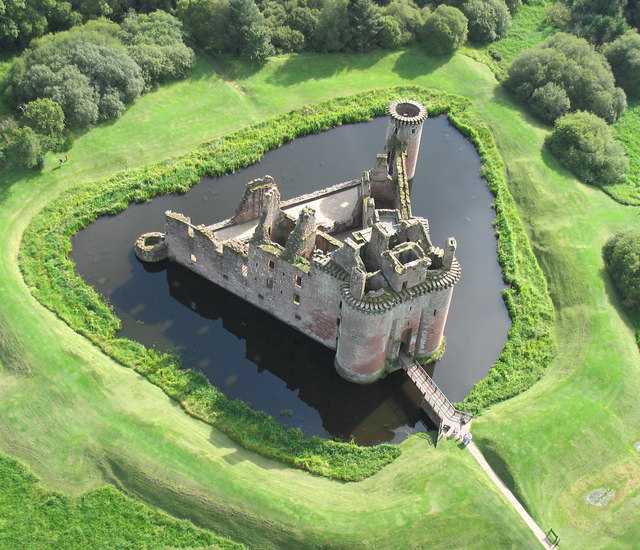
Something many aren’t aware of is that medieval castles were very cleverly designed, even down to the spiral staircases.
So what really did happen at Roswell in 1947.
London
IanVisits goes in search of London’s lost Civil War fortifications.
Also from IanVisits are two items on the London Underground. First a look at possible plans to make gardens in unused ticket offices; and secondly at some of the engineering challenges in taking the heat out of the Underground system.
Lifestyle & Personal Development
Are 16 and 17-year-olds really too young to vote? Dean Burnett, in the Guardian, looks at the evidence.
There are some amazing photos showing the work of Sutherland Macdonald, Victorian Britain’s first professional tattoo artist.
Ada Calhoun, in the Guardian again, looks at how to stay married. Spoiler: don’t get divorced.
People
And finally, Geoff Marshall (who has twice held the record for travelling the whole London Underground in the shortest time) and Vicki Pipe (of the London Transport Museum) are on a record-breaking mission to visit all 2,563 railway stations in mainland Britain this summer – documenting the state of our railways as they go. They started in early May and are already over halfway there. Follow their progress on YouTube, Twitter, Instagram, Facebook and at All the Stations.

Your Interesting Links
There’s a lot in this month’s edition so let’s get straight in …
Science & Medicine
Medics are now saying that arthroscopic surgery for degenerative knee problems (ie. essentially arthritis) does not actually do any much good.
[TRIGGER WARNING] Breaking the taboo of talking about miscarriage.
Another new study shows that, against expectation, women who source online and use abortion drugs do so with very little need for emergency medical help.
And yet another on reproductive medicine … It seems the folk contraceptive “Thunder God Vine” (Tripterygium wilfordii, above) really does prevent conception.
On the physics of having a shit.
More new research has found that daily small doses of cannabis can slow brain decline with ageing – at least in mice.
And here’s yet another instance where it seems we’ve had it all wrong … apparently eating cheese does not raise the risk of heart attack or stroke.
It has long been thought that the way we categorise colours is cultural, but surprisingly it appears to be genetic.
Sexuality
Porn is allegedly having a “terrifying impact” on men. Girl on the Net lifts the lid and finds the evidence rather thin and attitudes biased.
Is the “Dildo of Damocles” daunting? What does/will happen when sex toys connect to the internet?
Environment
It is estimated that the Fukushima accident gave everyone on the planet radiation exposure equivalent to a single X-ray – although unsurprisingly those in Fukushima received rather more it was unlikely to be more than two year’s worth of background radiation, so tiny in the overall scheme of things.
Hedges are as important for the environment as trees, at least in cities.
In another non-obvious finding, research is showing that beaver dams keep streams cool.
History, Archaeology & Anthropology
There are some amazing things happening in palaeoanthropology at the moment, not least that researchers have discovered how to extract DNA from the soil around archaeological sites.
Another of those amazing pieces of palaeoanthropology is the number and age of the Homo naledi finds in South Africa.

At the other end of Africa, a 4000-year-old funeral garden has been discovered in Egypt.
In a recent, and rather more modern, find a rare medieval text printed by William Caxton has been discovered lurking in University of Reading archives.
One of our favourite London bloggers, diamond geezer, visits the Parisian Catacombs.
Finally in this section, another of our favourite London bloggers, IanVists, explores an abandoned railway tunnel used by the BBC in WW2.
London
Which brings us nicely to London itself … Londonist suggests some of London’s more secret places to visit.
Meanwhile Time Out tells us nine things we mostly didn’t know about Euston Station.
Lifestyle & Personal Development
The Guardian magazine on Saturday 27 May featured Laura Dodsworth’s upcoming book Manhood: The Bare Reality in which 100 men talk about manhood through the lens of “me and my penis” as well as having their manhood photographed.
This a follow-on to Bare Reality: 100 Women, Their Breasts, Their Stories
Pre-order Manhood: The Bare Reality from the publishers Pinter & Martin or from Amazon.
[Full disclosure: I was interviewed for this book and there’s a little bit of me in the article, although unless you know you’ll never find it.]
Following which here’s Lee Kynaston in the Telegraph on male pubic hair grooming. My only question is “Why?”.
The key to happiness is not knowing oneself, but knowing how others see us.
But then scientists and philosophers also doubt the ancient claim that vigorous self-examination makes you a better person.
Food & Drink
WFT is alkaline water? Oh, I see, it’s no different to what comes out of the tap.
If you like sushi, you might no longer as its popularity has brought rise in parasitic infections.
People
I wasn’t quite sure where to put this next item, but it is one for the railway buffs amongst us … Geoff Marshall (no relation) and Vicki Pipe are doing All the Stations: They’re travelling to every train station in mainland UK, documenting and videoing as they go. Their videos are all on the All the Stations channel on YouTube; watch the introductory video first to see what they’re planning.
[Geoff Marshall has twice held the official record for travelling the whole London Underground in the fastest time, so he had to be up for another challenge!]
Shock, Horror, Humour

And very finally here are some stories of what happens when scientists take research specimens through airport security.
More in a month’s time.
Five Questions, Series 9 #4
With question four we’re getting near the end of this series of Five Questions.
Question 4: How many even prime numbers are there?
I’m not sure if this is a trick question, mathematically, or not.
First let’s be clear what a prime number actually is. It is a integer number which is divisible only by itself and 1. All even numbers (2, 4, 6, …) are divisible by 2. So 2 itself, is therefore the only even numbered prime number. And given that the technical definition of a prime number is that it has to be greater than 1, the answer is that there is just the one even prime. And there is no trick. (See Wikipedia for a fuller description.)
But why might this have been a trick question? Well I thought it might be a trick, because I did wonder about 0. Is 0 odd or even? Well actually it doesn’t matter because dividing 0 by anything you get 0, not 1, which seems to negate the question, regardless of the technical definition of a prime number.
Something for …
Your Interesting Links
As usual our monthly list of links to interesting items you may have missed the first time around. There’s a lot in this month’s edition, so let’s get going …
Science & Medicine
Here are 101 ridiculous science “facts” which are mostly myth and need to die.
Researchers have worked out the genealogy of our dog breeds, and it isn’t as simple as you might think.
Meanwhile scientists have discovered the world’s largest canary on an isolated island of giants and dwarfs off west Africa.
Changing tack, it turns out the new £5 note isn’t so indestructible – if you’re a determined enough mad scientist.

Wow! A photographer has used black light (ie. UV) to photograph the luminescence emitted by plants. And it is amazing!
Another sort of discovery has led to the finding of lost research notes which undermine dietary advice we’ve been given for the last several decades.
Looking at even older “research” it seems that some of the medical recipes in medieval books may actually work and point the way to new antibiotics.
Sexuality
I wasn’t sure whether to put this here or under “science” but it turns out that unprotected sex may disrupt the microbiome of the vagina. Now there’s a surprise!
A Victorian ivory dildo, with an interesting story, has generated a lot of excitement at an auction in Ireland.
Environment
Max Hooper, the man who worked out how to date old hedgerows, has died at the age of 82.
History
Here’s another which could easily have gone in the science section … Scientists have now worked out how to extract the DNA of ancient hominids from the surrounding dirt.
Turns out we aren’t the first people to be scared of zombies; it seems the mediaevals were too and they did some barbaric things as a result.
It’s well known that the Tudors bathed only about once a year and were very smelly the rest of the time. Turns out that may be another myth as it is possible to go months without bathing and not be smelly. Yes, an intrepid researcher has tried it!
They’ve found, quite by chance, the remains of five lost Archbishops of Canterbury in a small London church. Harry Mount, new editor of The Oldie, was first on the scene.
Lifestyle
Are you a devotee of nail polish? If so here’s a piece on some of the chemistry which makes them work.
Food & Drink
Cheese. That microbial concoction of from milk. Well here’s a guide to the natural microbiology of cheese rind.
Why is ultra-heat-treated (UHT) milk so stable that it is a shelf staple, especially in tropical climes where milk easily spoils?
[Incidentally, UHT milk is always known in our house as “UFO milk” but I have no idea how you might milk a UFO!]
So what really does give beer its bitterness and flavour? While some of it is down to the malt, most seems to originate with the hops.

Why are we masochists? Why is it we love chilli so much when it burns like it does? And how does the burn work?
Shock, Horror, Humour
And finally … someone thought it was a good idea to teach a computer to write cookbooks and invent cocktails. Its recipe ideas are hilariously brilliant. Chocolate pickle sauce anyone?
Your Interesting Links
OK, so here goes with this month’s selection of links to interesting items you might have missed the first time around …
Science & Medicine

Those of you with youngish children … they might like the science magazine Whizz Pop Bang. I wish there had been such a thing when I was young.
Since the 1950s we’ve had the nuclear technology to provide power for perhaps millions of years, without creating humongous, and ever increasing, quantities of radioactive waste. So why aren’t we using it? [VERY LONG READ]
Most of us hate ironing clothes, but you’ll be glad to know that there’s some science which does make it a bit easier.
Changing tack … What is the world’s top predator? Well apart from humans it seems the answer is spiders!
New research suggests that fish evolved in a surprising way before they invaded the land – and it all started with their eyes.

The Thylacine, or Tasmanian Tiger, has been extinct for almost 100 years – or so we think. But there are some new, and credible sounding, sightings in northern Australia (not Tasmania as one would expect). They are sufficiently credible that researchers are following up on them with camera traps. Watch his space; we might get some exciting news.
Those of us who have close relationships with cats know they have wonderful rasp-like tongues. And it turns out those tongues are indeed rather special. [VIDEO]
In a different study researchers are suggesting that cats sailed with the Vikings to conquer the world. As someone commented, I didn’t even know the Vikings had cats!
Still with cats, scientists are doing DNA sequencing on their faecal output to try to understand their gut microbiome. It turns out it is just as variable as the human microbiome.
It’s very unlikely the Neanderthals had domestic cats, but they did share one thing in common with us: dental plaque. By looking at their dental plaque researchers are working out the Neanderthal diet – and again it is highly variable.
While we’re on diet, it’s well known that eating asparagus makes your pee smelly. But not all of us can smell it, because genetics.
Now here’s another real oddball … it seems there is a connection between synesthesia and having absolute musical pitch.
And finally in this section, two posts about things feminine. Firstly Gillian Anderson and Jennifer Nadel talk about their experiences of going through the menopause.
Secondly, news that scientists have created a “lab on a chip” device which mimics the female menstrual cycle, something which could help enormously with research.
Environment
Here’s a look at the environmental impact of pet food manufacture.
History
I love it when new work changes our assumptions about what we know. Here’s news of the archaeological discovery of a Greek tomb which did just that. [LONG READ]
Archaeologists in Egypt have found an unknown statue of Pharaoh Ramses II in the mud under a Cairo slum. Except they haven’t, because it turned out not to be Ramses II but another Pharaoh altogether.
An academic is suggesting that the writings of mediaeval mystic Margery Kempe contain an early recipe for medicinal sweets to cure her religious mania.

In another case of turning what we think we know upside down it looks likely that late medieval (ie. post Black Death) peasant houses survive much more often than we thought, at least in the English Midlands.
While on housing, here’s a potted history of the British bathroom.
Harry Mount, the newly appointed Editor of The Oldie magazine, writes indignantly in the Spectator about how he sees the National Trust dumbing down and spoiling its treasures.
Meanwhile a Dutch researcher has discovered a wonderful collection of 16th-century drawings and watercolours of animals hidden away in the library of the University of Amsterdam.
London
The Londonist takes a look back at photographs of London in 1907.
400 years ago this month Pocahontas died in Gravesend. Our favourite London cabbie, Robert Lordan, looks at six places in the capital which are associated with her.
And Robert Lordan is one of the people featured in a new book For the Love of London on what makes London great by the people who make it great.
Lifestyle
It has long been known that London cabbies have an expanded area of brain associated with mapping, but now it’s been shown that using a satnav switches off the brain’s mapping ability leaving users unable to navigate without their device.
OK, so it is American, but here are eleven everyday objects with unsuspected uses.
On the importance of public loos, and knowing where they are.
People
London Bridge is falling down. What happens when the Queen dies.
Shock, Horror, Humour

And finally, from the School of Shock Horror … enormous insects and where to
Phew, that was a bit of a marathon! More next month.

Worse than Chernobyl
Yesterday, New Scientist posted an interesting news item on the Soviet nuclear tests at Semipalatinsk in Kazakhstan in the 1950s.
The tests were known about, but what’s new is that New Scientist have seen a hitherto unknown secret Soviet document containing scientific evidence of the effects of the tests; something which was hushed up at the time.
Needless to say the tests were conducted with total disregard to the local population. The Soviets knew this – even setting up a (disguised) research institute to monitor the medical effects – but carried on regardless. As a result it seems the effects produced a worse human “disaster” than Chernobyl.
Read the full news item at New Scientist.
Fukushima Latest
Thursday’s Guardian ran another article on the clean-up of Japan’s Fukushima nuclear site following the tsunami six years ago today. They point out, quite correctly, that two robots have now failed in trying to investigate the inside of the Reactor 2 containment vessel. I don’t see why this is such a surprise to everyone, or why quite so much recrimination continues.
Let’s be clear, again, once and for all. The containment at Fukushima did its job. It contained the reactor cores (admittedly only just) under stresses (earthquake and tsunami) way beyond its design specification.
What failed were the cooling systems. And they failed because of major shortcomings in the risk analysis, and therefore the placement and design, of the plant.
Yes, there was a radiation leak – small in comparison to Chernobyl – as a result of fractures in the buildings surrounding the containment vessels. And yes, this is a disaster for the 160,000 people who were evacuated – the disaster is their displacement and, medically, the psychological effects, rather than the risks due to the actual radiation encountered in the time between the leaks and their evacuation.
The tsunami killed around 19,000 people. The radiation, as far as I am aware, has caused zero direct deaths (although a handful have died in accidents during the clean-up operation).
Of course the clean-up is going to take a very long time and be hugely expensive. The radiation level inside the containment vessels is going to be incredibly high – high enough to kill a human within minutes. So without robots there is no way to find out what actually is happening inside; and they will succumb to high radiation levels and blocks in their access routes. And yes there is a huge quantity of contaminated groundwater to contend with. Why would we expect otherwise?
The current estimate is that the clean-up will take 30-40 years and cost $189bn, although many believe this a significant underestimate in both time and money. On that basis one has to ask whether the clean-up should continue, or whether the whole plant should be permanently encased as has been done recently at Chernobyl – but I’ve seen no-one even mentioning this as a possibility. I’d be interested to see some analysis of the possibilities.
Better Nuclear Power
A week ago IFLScience published a very long, and fully referenced, article on a forgotten nuclear power technology which is much more efficient and robust than the current Light Water Reactors (LWR). It is actually a breeder reactor (but one which doesn’t produce weaponable products) called a Molten Salt Reactor (MSR).

As usual what follows is a few extracts by way of the TL;DR summary.
According to the article MSR are not just a better nuclear technology but also beat most other power sources (including most renewables) into a cocked hat.
Today’s cheap, bountiful supplies make it hard to see humanity’s looming energy crisis … Fossil fuels could quench the planet’s deep thirst for energy, but they’d be a temporary fix at best … renewable energy sources like wind and solar, though key parts of a solution, are not silver bullets … Nuclear reactors, on the other hand, fit the bill: They’re dense, reliable, emit no carbon, and – contrary to bitter popular sentiment – are among the safest energy sources on earth. Today, they supply about 20% of America’s energy.
The good news is that a proven solution is at hand – if we want it badly enough.
Called a molten-salt reactor [it] forgoes solid nuclear fuel for a liquid one … in theory, molten-salt reactors can never melt down … It’s reliable, it’s clean, it basically does everything fossil fuel does today … [and produces] energy without emitting carbon … What’s more, feeding a molten-salt reactor a radioactive waste from mining, called thorium (which is three to four times more abundant than uranium), can “breed” as much nuclear fuel as it burns up.
MSR were developed in the early days of the Cold War and the technology was proven in pilot production. However they were never pursued because (a) they didn’t produce weapons grade materials and (b) “not invented here”.
The article follows with a brief analysis of the safety of nuclear energy compared with traditional power generation, and a very brief summary of how nuclear physics works. Followed by an explanation of how MSRs using thorium can “breed” and then use uranium 233 but not weaponable plutonium.

The concept of the breeder reactor was fairly straightforward. It would dramatically increase the chances for fission, boost the flow of neutrons, and breed more fissile fuel from a “fertile” material than the reactor burned up. Breeding U-238 into Pu-239 created an excess of plutonium. Meanwhile, breeding thorium into U-233 broke even, burning up just as much fuel as it made. The choice of fuel makes all the difference. The plutonium fuel cycle is a great way to make weapons. Meanwhile, the thorium fuel cycle can produce almost limitless energy. A fluid-fuelled design [would] eliminate the considerable difficulty of fabricating solid fuelled elements … Liquid fuel also made it easy to remove both useful fission products – for example, for medical procedures, and those that poison nuclear chain reactions.
OK, so what’s the downside? Basically, apart from the proof-of-concept pilot, the technology hasn’t been developed fully. But it could be developed, and probably relatively easily, probably as the Liquid-Fluoride Thorium Reactor (LFTR). And the article lists (some of) the advantages of LFTR:
- Fuel burn-up is extraordinarily high. LFTRs could fission about 99% of their U-233 liquid fuel, compared to a few percent for solid fuel.
- It’s easy to clean up. Solid fuels build up fission products, or new elements generated by the splitting of atoms, which poison fission reactions and often end up being treated as waste. Liquid fuels, meanwhile, can be processed “online” – and the fission products continuously removed, refined, and sold.
- There’s less waste and it’s shorter-lived. For the above reasons, hundreds of times less radioactive waste is left over from LFTR operation compared to LWRs. And what remains requires burial for about 300 years, as opposed to 10,000 years.
- LFTRs operate under safe, normal pressure. All commercial reactors compress water coolant to extreme pressures – upwards of 150 times that found at Earth’s surface. One small breach can lead to a catastrophic explosion. If a LFTR pipe breaks, however, molten salt will only spill on the ground and freeze.
- Environmental contamination is far less likely. LWRs can release gases, fuel, and fission products into the air and water. Molten salt freezes and traps most contaminants.
- LFTRs can be made small and modular. LWRs require giant, reinforced-concrete containment vessels that scale with their operating pressure. LFTRs require small containment structures, so they could be made small – possibly to a size that’d fit [on a truck].
- They should be much cheaper and faster to build. LFTRs don’t require many of the expensive safeguards that LWRs do. Their potential to be modular could also lead to mass manufacture of parts and reduced cost.
- LFTR is immune to meltdowns. Molten salt that overheats will expand, slowing down fission.
- The design is “walk-away safe.” No nuclear power plant today can claim this. LWRs require backup power systems to cool solid fuel at all times. If power is knocked out to a LFTR, a freeze plug melts and lets the molten salt fall into underground containment units, where it freezes and stops fission.
- Electricity output is better. LFTRs are so hot, operating at roughly [1000°C] they can use more advanced heat-to-electricity conversion technologies.
- The excess heat is very useful. It could boil and desalinate ocean water into drinking water, help generate hydrogen for fuel cells, break down organic waste into biofuels, and power industrial processes.
- The “kindling” to start a LFTR is flexible. Burning up old nuclear weapons material is possible, since fissile U-233, U-235, or Pu-239 can be used to start the reactor.
So if thorium reactors are so great, what’s the holdup?
It basically boils down to … The science is easy. The engineering is hard … [which] is true in many, many advanced systems, nuclear and nonnuclear for that matter, where the scientists’ proof of concept is everything to them … To the engineer, getting it to the commercial-viability stage is their goal. And those are two very different hills to climb.
So there is still a long road ahead, but given the apparent advantages isn’t this a technology we should be pursuing? Yes, India and China are already doing so.