Category Archives: science

Your Interesting Links

Wow! What’s everyone been up to, cos there’s an enormous amount in this month’s issue!
Science & Natural World
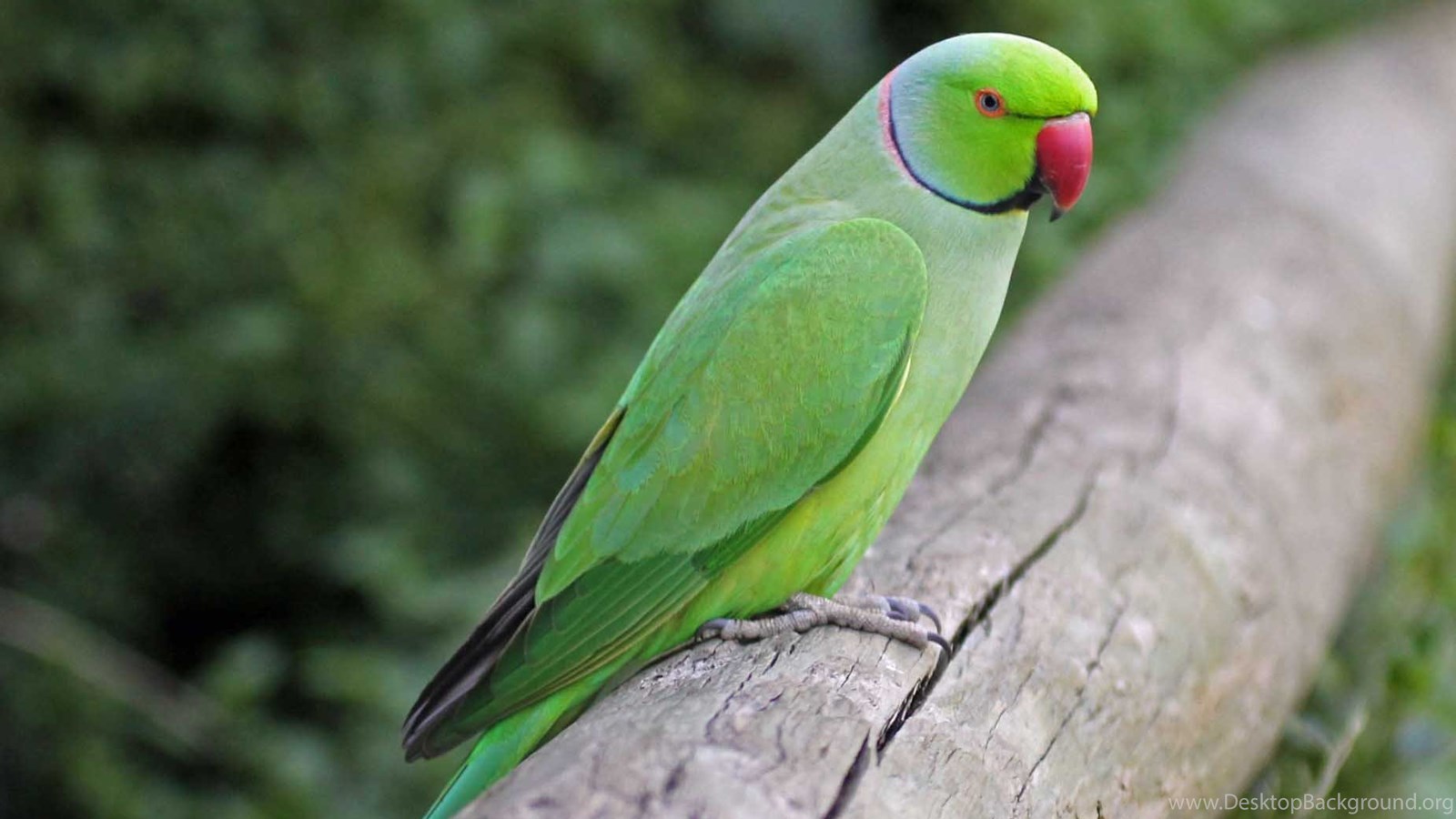
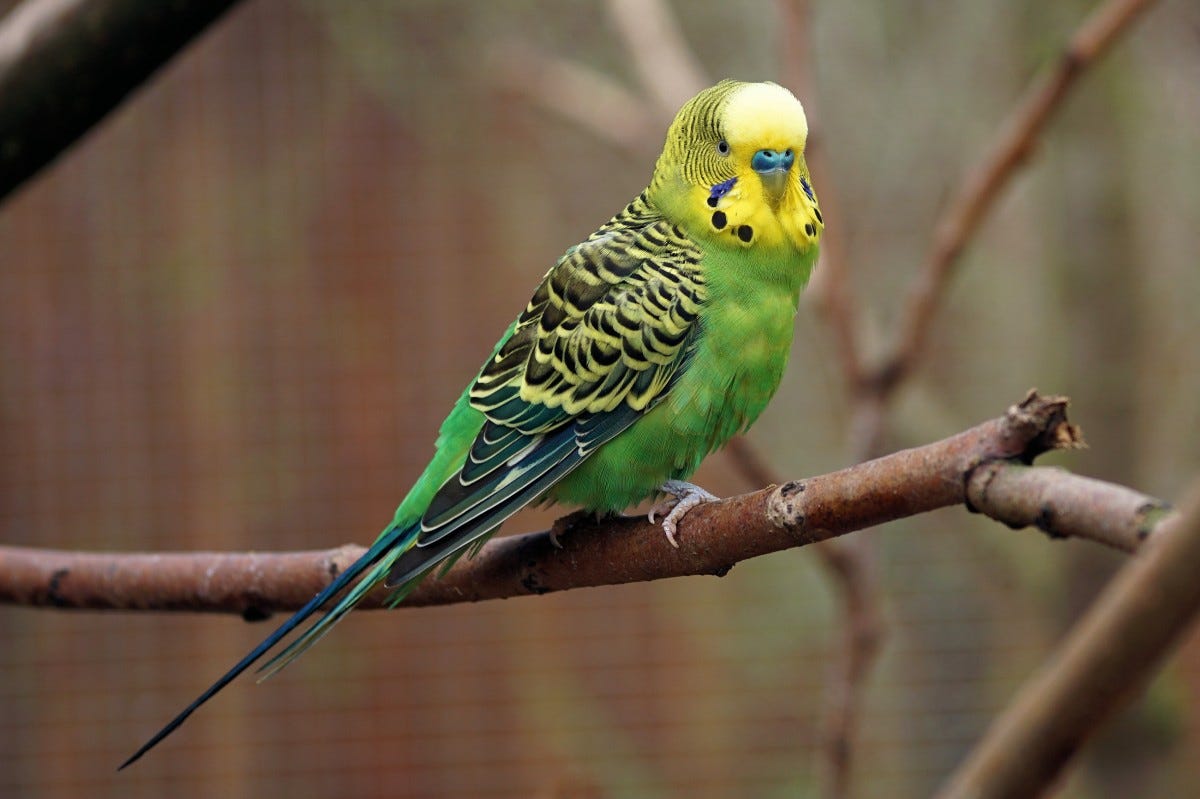
We all know that a vast many parrots and parakeets are bright green. But how did they get this way when so few other creatures are so colourful? [Long read]


Talking of green … there’s a lot more to trees than meets the eye: they have a whole underground communications network. [Long read]
And still with green things … the whole world was changed by a glass terrarium that made it possible to successfully transport plants across the globe.
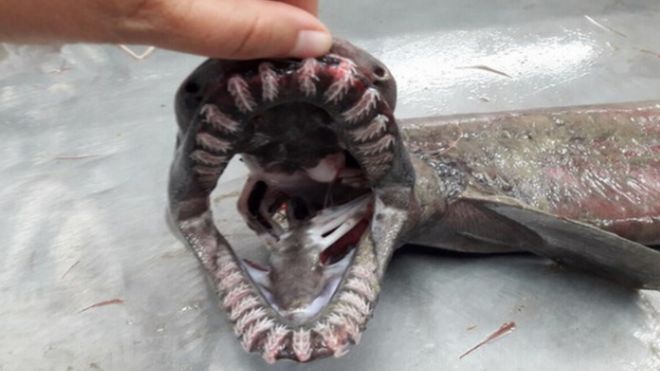
Which brings us to the seas, where a Portuguese trawler has netted a rare, and rather fearsome, “prehistoric shark

Health & Medicine
Many major medical advances have their origins in the military, and especially on the battlefield. Here are six which made the move from battlefield to mainstream medicine.
It had to happen, indeed I’m surprised it hasn’t happened sooner: hospitals in Leicester are pioneering free post mortems using CT scanners.
Why isn’t the flu vaccine as effective as it should be? Because simple biology introduces errors during the manufacturing process.
Our body clocks are incredibly important; and the more researchers look the more important the clocks become. They even switch genes and biological processes on and off at various times of day and this can have important implications for medicine.
Our body clocks are related to sleep. And sleep is still a mystery to be untangled.
Do you suffer from exploding head syndrome? If so there’s a group of researchers who want to hear from you.
And finally for this section, unusual and long lost diseases are crawling out of the permafrost as the climate warms up. [Long read]
Social Sciences, Business, Law
Now here’s a novel way to fix the NHS’s funding problems: legalise cannabis! Like everything else, if you legalise it you can regulate and tax it!
Language
I know I swear quite a lot and now I know why: bad language is good for you.
We all know that turkeys don’t come from Turkey, so how is it that they acquired the name?
Art & Literature
John Donne (right), the early Stuart poet, left us a scurrilous manuscript, of which an original has now been discovered hidden in the archives of Westminster Abbey.
History, Archaeology & Anthropology
We’re a load of drunkards, and have been for a long time. Archaeologists analysing residues on pottery, found near Tbilisi in Georgia, have just pushed back the first known winemaking by around 1000 years to 6000BC.
Meanwhile in Egypt archaeologists have been using cosmic rays to image the guts of the Great Pyramid, and have found a hitherto unknown chamber. Two reports, the first from Scientific American and the second from the Guardian.
Exploring the topography of prehistoric Britain through early drawings.

England’s oldest statute law still in force isn’t Magna Carta (that wasn’t passed into statue law until 1297) but the Statute of Marlborough enacted by Henry III in 1267. Much of it has been repealed over the centuries but there are still extant sections on the recovery of debt and the laying waste of farmland.
A silver ring found in Buckinghamshire has been identified as belonging to the royal falconer, Robert Dormer, who died during the Civil War.
London
A Roman temple beneath the City of London has been restored and opened to give an idea of the apparently blood-curdling rites of the cult of Mithras. [Long read]
So why did the Victorians build a series of small green huts across London?
London has 270 extant Underground stations, and quite a number of disused ones. There are also a number of fictional Underground stations and IanVisits provides us with a list of those which have appeared in film or on TV
Lifestyle & Personal Development
Owen Jones in the Guardian makes a compelling case for why we should all be working a four-day week.
Why has UK life-expectancy plateaued in recent years? Danny Dorling investigates.
Finland is trialling the provision of a basic income for everyone, rather than benefits for some. And it appears to be working.
Here are seven things you should never say or do to disabled people.
Food & Drink
Delia Smith doesn’t like modern cookery, describing it as “poncey” and “chefy”. For once I agree with her.
We’re all supposed to eat two portions of oily fish a week. But many of us don’t. Time to rediscover mackerel, anchovies and the humble Cornish sardine.

Where should you keep your tomatoes? In the fridge or on the windowsill? The Chronicle Flask takes a look at some of the chemistry to come up with an answer.
And on that foodie note, I’ll wish everyone a very merry Christmas and I’ll hope to see you again soon afterwards.

Five Questions, Series 10 #4

And so on to question four and we’re getting towards the end of this tenth series of Five Questions.

★★★★☆

Question 4: Why don’t sheep shrink when it rains?
Because they’re 10% nylon?
But seriously … The real answer is almost certainly to do with the cross-linking of the long-chain protein polymers that make up each hair and the mechanical interlinking between the individual hairs. The more random cross-linking there is, the more the proteins will fold together and the curlier (thus shorter) the hairs. Similarly the more random the mechanical interlinking, the more likely the fibres are to be shorter. Wool has to be processed to remove this interlinking and cross-linking and create straight fibres, which we call unshrunk. Heat, water and mechanical action go to create the randomisation of the linking and thus cause the fibres to shrink in the wash. Now sheep are a natural product; they aren’t processed. Hence their wool is pretty random and effectively pre-shrunk, so they aren’t going to shrink more in the rain.

Your Interesting Links

This month’s large collection of articles encountered which you maybe didn’t want to have missed.
Science & Natural World
First off we must pay our respects to this year’s IgNobel award winners amongst whose investigations were solid and liquid cats, didgeridoos and cheese disgust.
Budburst on many trees is temperature dependent and March temperatures seem to be the key for many. And they’re getting slowly warmer, so budburst is getting earlier.
[Disclosure: I’ve been submitting records to UK phenology research for many years; many more years that the 17 covered by this research. It takes little time and is valuable “citizen science”.]


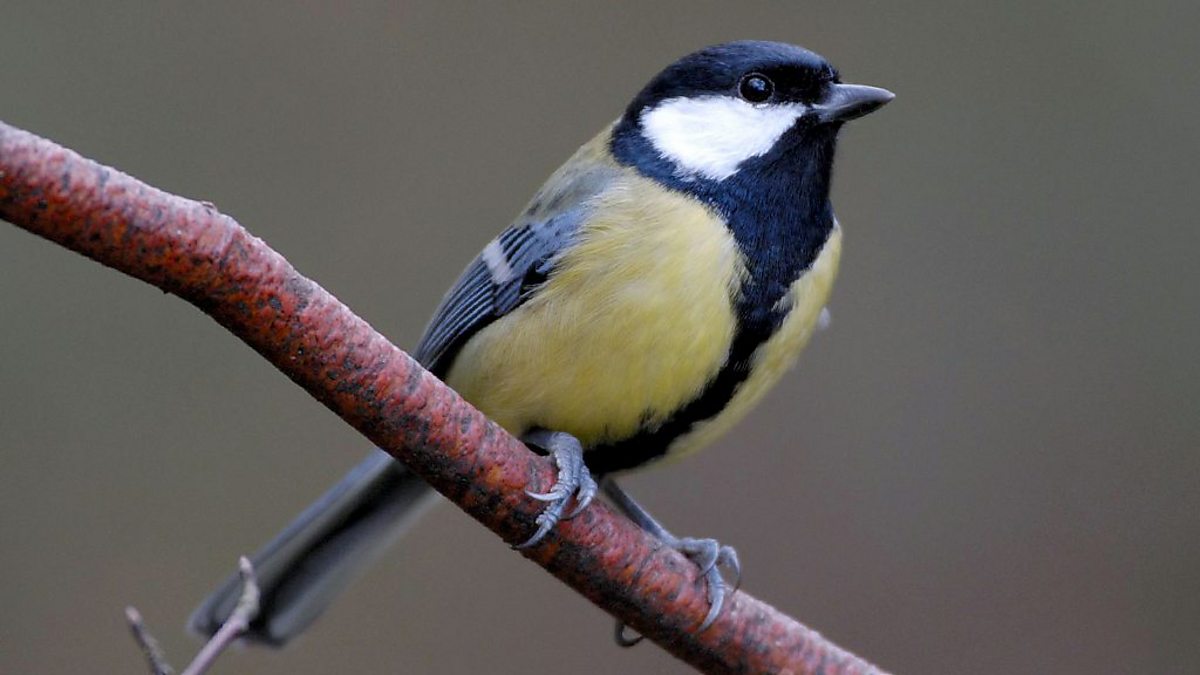
Another curiosity of British wildlife is that some birds (notably Great Tits, above) are evolving longer beaks as this gives them an advantage at garden bird feeders. Here are two complementary reports, one from the Guardian, the other from the BBC.
Now to chemistry … A look at how poisoners could use clothing as a murder weapon.
The aliens are coming! Well maybe not quite, but there is a mysterious object speeding past the sun which could be visitor from another star system.
Health & Medicine
For those who want a little more of a challenge than normal (it contains some relatively simple maths), here’s a very good article on why vaccination is important in preventing epidemics.
Sepsis is a hidden killer, and one which most people know nothing about because it has so successfully continued flying under our radar.
There’s a small study which suggests that the psychoactive drugs in magic mushrooms “reset” the brains of depressed people. [Do NOT try this at home! The study used very controlled doses in a medical environment.]
And now to some curiosities … First off, and not for the squeamish, an historical report of a man with two penises and two bladders.
Synaesthesia is mind-boggling. The first of our two mentions this month is of a woman who lost her sight due to illness and in regaining it had some terrifying sounding synaesthetic effects.
And to boggle the mind even further, this young lady has a range of different types of synaesthesia (compared with the normal one). I just cannot imagine what this is like!
Sexuality
Two different aspects of a relationship without sex. First there are people who are genuinely asexual: they may have romantic partnerships but have no interest or desire to have sex.
At almost the other extreme there are couples who, while still happy together, just stop having sex.
Social Sciences, Business, Law
Forensic science is coming under increasing scrutiny. Not only has fingerprinting never been scientifically evaluated for its reliability, but DNA is accused of frequent flawed techniques, which can have devastating effects.
Language
Philip Pullman is under fire because his children’s book La Belle Sauvage is littered with swearwords. Emma Byrne in the Guardian suggests this is actually a good thing: most children already know the words and isn’t it better that they learn in a controlled way when they are and are not acceptable?
History, Archaeology & Anthropology
Uncovering the menus for Neolithic man’s feasts: pork and cheese.
The Incas were far better astronomers than previously thought.
The shipwreck which produced the Antikythera mechanism is still turning up interesting artefacts like the bronze arm which suggests there may be a haul of statues waiting to be found – and what may be another piece of the Antikythera mechanism itself.
Why do a number of Scandinavian Viking graves contain burial clothing embroidered with the work “Allah”
But worse is yet to come, for the Vikings may have brought leprosy to this country via their trade in red squirrels.
Coming much more up to date, both sides are now telling the story of the capture and boarding of the German U-boat U-559, which changed WWII by giving the Allies the Germans’ Enigma codes.
So how about a list of the ten best railway stations in Britain, at least according to Simon Jenkins in the Guardian.
London
IanVisits is writing an occasional series on “Unbuilt London”. In an old post he looks at the 1960s plan to replace buses with monorail network. I have a vague memory of this hare-brained scheme.
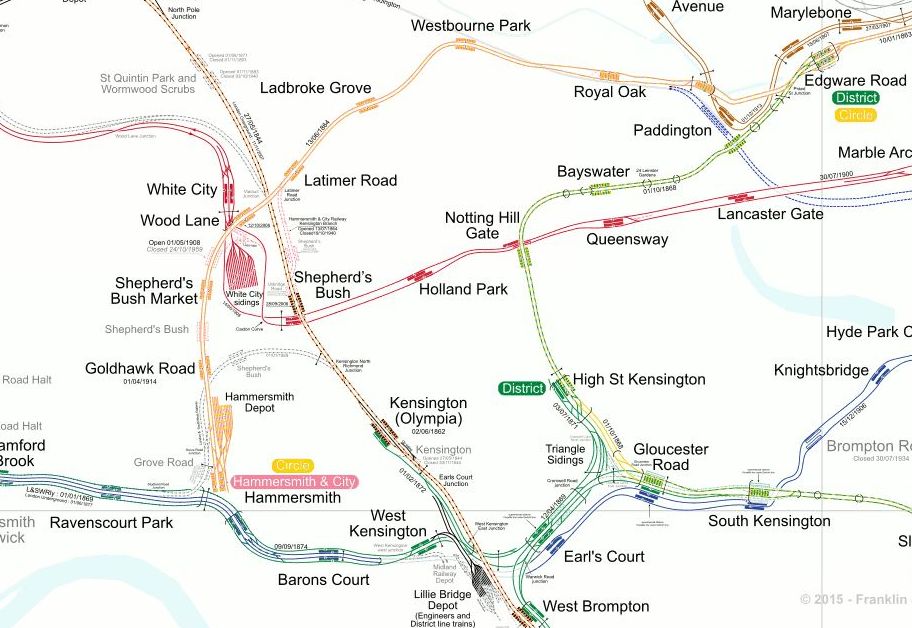
And here is a really fascinating and detailed map of the London Underground, Overground, DLR, Tramlink & National Rail (small section below). But why does this have to be published by a French company?

Lifestyle & Personal Development
Our favourite Soto Zen master, Brad Warner, reflects on “The Center of All That” the implications of being you, here.
We’re losing our skills. The skills to do everyday chores our parents took for granted, like washing up by hand, changing a mains fuse or sewing on a button.
A brief look at some of what happens behind the doors of a London crematorium.
I wasn’t sure whether to put this next item here or under medicine. According to sleep scientists we are chronically underslept and sleepwalking our way through life. That is a real threat to our health, and it isn’t fixed by a couple of good lie-ins. So what to do about it?
Apparently our culture says that emotional friendships are a female thing and that boys cannot have emotional friendships with their own sex and are discouraged from doing so by the time they hit puberty. And this is forcing a large number of men into loneliness despite the outward appearances. [OK, it’s American, but is UK culture so different?]
People

Back in August Geoff Marshall (no relation)and Vicki Pipe completed their challenge to visit all 2,563 National Rail stations in Great Britain. Here they talk about the experience for the National Railway Museum’s blog.
That’s all folks! Another instalment next month.

Your Interesting Links

Here’s this month’s round-up of miscellaneous links to items of interest or amusement from the last few weeks.
Science & Natural World
Is it an asteroid? No. Is it a comet? No. It’s actually something new: a binary comet.


At the other end of the spectrum, fishermen in New England have caught an unusual lobster: not a blue one but an even rarer translucent lobster.
On land, you wouldn’t think a 1kg rat could evade attention for long, would you? But a totally new species of giant, tree-dwelling, coconut-eating rat has been discovered on the Solomon Islands.
Health & Medicine
Just as our grannies always told us: worrying about our health makes us ill.
Most obesity is, in one way or another, caused by over-eating. But why do we over-eat? Until we actually understand that we’re unlikely to be able to crack the obesity problem.
According to the current fashionable theory, biological sex is a spectrum from 100% female to 100% male. Which makes sense when you consider the variety of ways in which genetics can muddy the waters. Scientific American explains.
Sexuality
Does sex (and orgasm) always have to be “red hot”? Many think it does, but reality is that there will be huge variations – and that’s good.
Environment
Concreted over front gardens should be banned. Concrete causes flooding! [Actually in many instances planning permission is already required for concreting over/paving front gardens.]
History, Archaeology & Anthropology
The Romans had a herb which we seem to know almost nothing about, and it was so valuable Julius Caesar kept a cache in the government treasury. [LONG READ]
The Abbots Bromley horn dance is thought to be the oldest folk dance in Britain. It is performed annually on Wakes Monday (the first Monday after 4 September). Some pictures from this year’s celebration.
Sheela-na-Gigs are female genital sculptures often dating from medieval times, or earlier. There’s now a project to catalogue all those in Ireland.
Like black cats, crows and ravens are variously viewed as lucky or malevolent. Either way they have a lot of associated folklore.
London
IanVisits discovers a hidden industrial marvel at Canary Wharf.
And here’s another, more up-to-date technological marvel from IanVisits … 3D-printing is being used to make large pieces of Crossrail stations.
Food & Drink

And finally … We shouldn’t be worrying about Brexit and food shortages, after all there’s always spam and tinned peaches. [LONG READ]

Monthly Interesting Links

There seems to be quite a lot in thus month’s round-up of links to items of interest which you may have missed the first time round. So let’s get straight in …
Science & Medicine
A lump of rock the size of a house is apparently going to whiz past Earth on 12 October at a distance of 44,000 km – that’s like an eighth of the way to the moon. And yes, astronomers are confident in the predicted distance so DON’T PANIC, but do take a towel!


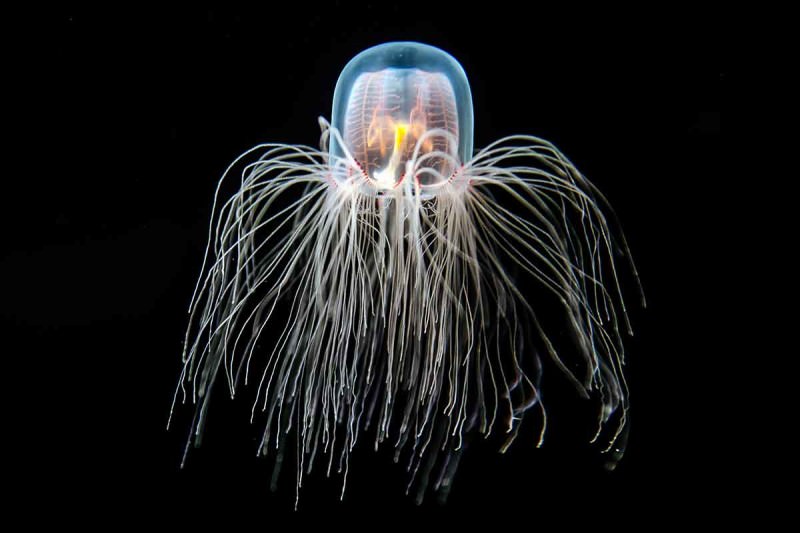
And now to the more mundane … New Scientist has a rather spectacular feature on the variety of jellyfish in the oceans. You never knew they were so beautiful!
Octopus and squid have the unhelpful habit of producing ink to cover their escape. But why? And what is the ink?
Don’t breathalyse a goldfish. At least not in the winter. For you see they avoid being frozen to death by turning turning the lactic acid in their body into alcohol.
Now you don’t expect a new species to be discovered in the UK, and certainly not right under our noses. But it seems that our (not so common) grass snake is actualy two different species.
Most of us don’t like ants in our kitchens, however the humble ant is a rather amazing creature, as researchers are beginning to understand. And there are lots of them too!
Wasps! Yes they’re intensely irritating at this time of year. But that’s only the handful of social wasps we have; there are many thousands more species of solitary wasps. Without them we would be knee deep in creepy-crawlies as they are excellent predators of other insects (as well as your BBQ burger). They are also important pollinators. But surprisingly little is known about the UK’s wasps, which a citizen science project is now trying to delve into.
Incidentally ants, wasps and bees are all quite closely related and are all members of the order Hymenoptera.
Now to our pets! Very few animals can be said to know themselves, at least according to the standard test using a mirror. And on that scale dogs are not included. However it seems that they probably do know who they are using smell.
We all know that in emergency we can give CPR to our fellow humans. But did you know it works on cats and dogs too? Here and here are a couple of items on the subject.
And finally in this section … Medics are now coming to realise that some common surgical procedures are no better than a placebo, just as some drugs aren’t.
Social Sciences, Business, Law
Constant worry, anxiety and panic about the future now seems to be a part of everyday life. But it is counter-productive and leads to burn-out rather than action.
Art & Literature
Here’s one for your diary … Next Spring the National Portrait Gallery will be showing Lewis Carroll’s photographs of the real Alice among an exhibition of early Victorian portraits.
History, Archaeology & Anthropology

I wasn’t sure whether to put this under “science” or “history” … It appears that trigonometry wasn’t discovered by the Greeks, but around a millennium earlier by the Babylonians. As one might expect it was all recorded in cuneiform on clay tablets. And they used a totally different system from that used today. However, Evelyn Lamb in Scientific American has pointed out that in fact little of this is actually new knowledge.
You wouldn’t really expect biologists to be doing research on ancient manuscripts, but they are … and they’re discovering all sorts of odd things about the parchment, the book covers and even the monks who did the calligraphy.
While on the medieval, and in other research, historians are coming to realsie that many of the supposedly iconic medieval images of the plague are nothing of the sort.
London
Did you know that for just £10 you can visit the Royal Mews and see all the Queen’s horses and carriages?
Lifestyle & Personal Development
Author Kasey Edwards discovers that so many people would like not to be married and just stay together for all sorts of reasons – but she isn’t one of them.
Berlin is designing new unisex urinals for its unisex public toilets.
Food & Drink
And finally … another that could have gone under “science” … geneticists have been hard at work on the apple and have traced its roots back along the Silk Road to Kazakhstan and China. The Romans may have brought the desert apple to England, but it had a long journey before that.

As usual more next month!

Your Monthly Links

So here’s our round-up of links to items which have caught our attention in the last month. There’s a lot in this month, so here goes …
Science & Medicine
Suspicious that expiry dates on products are a nonsense? Well that might be justified for some drugs.
The expected continual rise in life expectancy is slowing down. A leading medic suggests austerity is to blame.
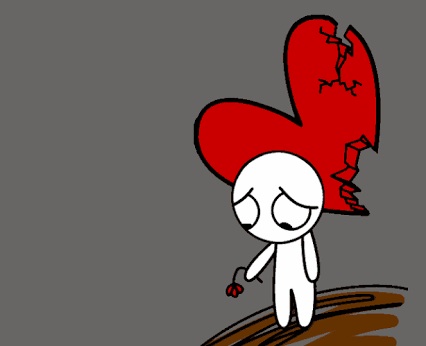
It seems like what you always suspected may be true: a broken heart may damage your health.
We all know that cats purr. But do they purr only for our benefit?
An American veterinary service is working on making vet visits stress and fear free for nervous pets.
You thought plague was a thing of the past? Wrong. It is still alive and well in the American Southwest. Here’s the story of how one biologist tracks and identifies plague outbreaks before there’s harm to humans. [Long read]
Flying ants all seem to emerge on the same day. But do they?
Sexuality
Good news, lads! Science says you should masturbate 21 times a month – not that you needed an excuse! (Well actually they mean you should ejaculate that often; not necessarily the same thing.)
Environment
Jason Hickel in the Guardian posits that even if we all adhere to the Paris climate deal that isn’t going to be enough to save us – our future depends on de-growth
There’s a plan to reintroduce Eurasian lynx to the Kielder Forest.
Art & Literature
Worried about your books? Why not protect your library the medieval way with horrifying book curses?
History, Archaeology & Anthropology
Archaeologists are suggesting that a find of buried tools and pigments means humans reached Australia 65,000 years ago – that’s 18,000 years earlier than previously thought.
Yes, we knew the Romans had concrete. And now we know why it was so good that it still stands today when our modern concrete decays.
Infertility isn’t just a modern phenomenon. The mediaevals recognised it and realised that it could be the man at fault rather then the women – not really surprising as many in medieval times believed the embryo originated solely from the man. Oh and in true medieval style they concocted some horrid cures.


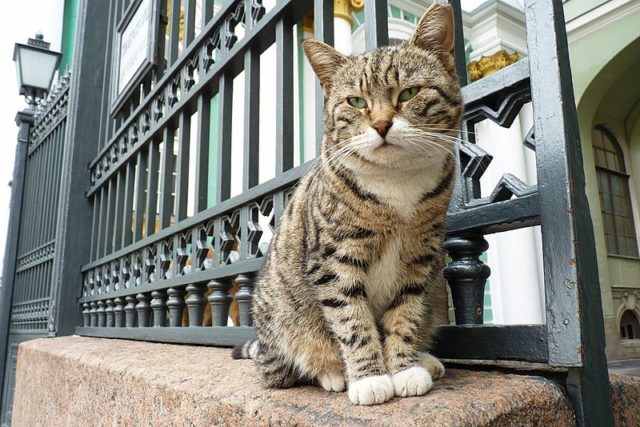
The Russian Hermitage Museum employs 74 cats just to keep its basements mice-free.
London
IanVisits investigates a south London experiment in tube tunnelling.
Lifestyle & Personal Development
What brings you happiness? Money? Stuff? Time? Surprisingly research is suggesting that you can gain the most happiness from freeing up time, even if that is paying someone to do things for you so you have the time to devote elsewhere.
So how often should you wash your bed sheets? A microbiologist looks at the problem.
On a similar note, here are a few suggestions for getting rid of pests and bugs the Buddhist way. While I can see some of this would work, a lot does seem rather unlikely.
To me this seems like a non-question: should teachers be allowed to have tattoos? Well why shouldn’t they; isn’t it all part of the life we’re supposedly educating our kids to navigate?
From which it is but a short step to asking whether witches are the ultimate feminists.
Shock, Horror, Humour
Two amusements to conclude this month …
An American researcher has used a neural network to generate a whole host of quaint, and sometimes rude, British place names.
And finally this summer’s latest fashion trend: Glitter Boobs

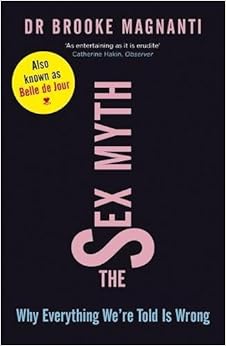
Book Review: The Sex Myth

Brooke Magnanti
The Sex Myth: Why Everything We’re Told is Wrong
Weidenfeld & Nicolson; 2012
If, like me, you’re always doubtful of what “they” are telling us about sex (well actually about anything) then this book is an eye-opener. And who better to open our eyes than Brooke Magnanti, for if anyone knows then she should:

Brooke Magnanti studied Genetic Epidemiology and gained her PhD at the Department of Forensic Pathology, University of Sheffield. Her professional interests include population-based research, standards of evidence, and human biology and anthropology. In 2009 it was revealed that she is an ex-call girl and author of the bestselling Belle de Jour series of memoirs, which were adapted into the TV series, Secret Diary of a Call Girl.

She is also a novelist, blogger and activist who, in 2016, was called to give evidence about sex work conditions in the UK to the Home Affairs Committee investigating prostitution laws in Britain.
In describing the content I can’t do a lot better than the book’s cover blurb:

Is there any truth to the epidemic of sex addiction? Are our children really getting sexualised younger? Are men the only ones who like porn? Brooke Magnanti looks at all these questions and more – and proves that perhaps we’ve all been taking the answers for granted.
Brooke Magnanti is no stranger to controversy. As Belle de Jour she enthralled and outraged the nation … Now her real identity is out in the open, Brooke’s background as a scientist and a researcher comes to bear in this fascinating investigation into the truth behind the headlines, scandals and moral outrage that fill the media (and our minds) when it comes to sex.
… Brooke strips away the hype and looks at the science behind sex and the panic behind public policy. Unlike so many media column inches, Brooke uses verifiable academic research. This is fact, not fiction; science not supposition.

Don’t let the “science” label put you off. Yes, Brooke references all her sources but her style is light and eminently readable. She combines her skills in statistics, epidemiology and research with her experiences as a call-girl to blow the lid off what the Agenda Setters and politicians are telling us, thus exposing all the myths surrounding sex in society.
Brooke follows what the Agenda Setters and Evangelisers are saying and traces back where they get (or more usually fabricate) their data – and then by reference to peer-reviewed research shows where and how it is false. From sex addiction, through trafficking for sex, to the decriminalisation of prostitution, myths are well and truly busted.
If I had to find criticisms of the book they would be four, albeit relatively small: (1) It’s a shame the book is now 5 years old; it would be good to have an update. (2) Personally I would have liked more diagrammatic explanations of the data presented. (3) In each chapter a summary of the evidence, and how it is built into the arguments, would have helped my understanding of the (often necessarily) convoluted and detailed analysis. And (4) like so many books these days it could well be reduced in size by better design and typography and not printed on such cheap paper.
But that aside, the book is highly illuminating and well worth reading.
Overall Rating: ★★★★☆

The Conceptual Penis

Anyone who needs cheering up on a Sunday afternoon, could do worse than read Jerry Coyne’s blog post A new academic hoax: a bogus paper on “the conceptual penis” gets published in a “high quality peer-reviewed” social science journal – and the papers to which it refers.
If you don’t understand a word of it, that’s fine, because the paper being described, The conceptual penis as a social construct in Cogent Social Sciences, is a total and elaborate hoax which even the authors admit they don’t understand! Just as a small example:

Nowhere are the consequences of hypermasculine machismo braggadocio isomorphic identification with the conceptual penis more problematic than concerning the issue of climate change. Climate change is driven by nothing more than it is by certain damaging themes in hypermasculinity that can be best understood via the dominant rapacious approach to climate ecology identifiable with the conceptual penis.

The paper was designed to expose the trendy opaque nonsense of much of the social sciences. And it succeeded as it was published in a peer-reviewed journal.
The paper’s text sort of makes superficial sense – and I could see it becoming a radical feminist meme – but it is actually complete bollox. Enjoy it!

Radiation

There was a useful, if short, review by David Ropeik of Harvard in Aeon a couple of weeks ago under the title “Fear of radiation is more dangerous than radiation itself“.
This is something which has been said for a long time, but it is useful to have the threads pulled together in a referenced article.
As usual I’ll give your the tl;dr version.

The fear of ionising (nuclear) radiation is deeply ingrained in the public psyche … we simply assume that any exposure to ionising radiation is dangerous. The dose doesn’t matter. The nature of the radioactive material doesn’t matter. The route of exposure – dermal, inhalation, ingestion – doesn’t matter. Radiation = Danger = Fear. Period.
The truth, however, is that the health risk posed by ionising radiation is nowhere near as great as commonly assumed. Instead, our excessive fear of radiation … does more harm to public health than ionising radiation itself. And we know all this from some of the most frightening events in modern world history: the atomic bombings of Japan, and the nuclear accidents at Chernobyl and Fukushima.
Much of what we understand about the actual biological danger of ionising radiation is based on the joint Japan-US research programme called the Life Span Study … of survivors of Hiroshima and Nagasaki [see also here]… Within 10 kilometres of the explosions, there were 86,600 survivors … and they have been followed and compared with 20,000 non-exposed Japanese. Only 563 of these atomic-bomb survivors have died prematurely of cancer caused by radiation, an increased mortality of less than 1 per cent.


Based on these findings … the lifetime cancer death toll from the Chernobyl nuclear accident might be as high as 4,000, two-thirds of 1 per cent of the 600,000 Chernobyl victims … For Fukushima, which released much less radioactive material … UNSCEAR predicts that ‘No discernible increased incidence of radiation-related health effects are expected among exposed members of the public or their descendants.’
Both nuclear accidents have demonstrated that fear of radiation causes more harm to health than radiation itself … 154,000 people in the area around the Fukushima Daiichi … were hastily evacuated. The Japan Times reported that the evacuation was so rushed that it killed 1,656 people … The earthquake and tsunami killed only 1,607 in that area.
… … …
In 2006, UNSCEAR reported: ‘The mental health impact of Chernobyl is the largest public health problem caused by the accident to date’.
… … …
Fear of radiation led Japan and Germany to close their nuclear power plants. In both nations, the use of natural gas and coal increased, raising levels of particulate pollution and greenhouse gas emissions. Neither country will meet its 2020 greenhouse gas emissions-reduction targets.
… … …
Fear of radiation has deep roots. It goes back to the use of atomic weapons, and our Cold War worry that they might be used again … Psychologically, research has found that we worry excessively about risks that we can’t detect with our own senses, risks associated with catastrophic harm or cancer, risks that are human-made rather than natural … Our fear of radiation is deep, but we should really be afraid of fear instead.

Or in the immortal words of Rear-Admiral Sir Morgan Morgan-Giles: Pro bono publico, nil bloody panico.