Category Archives: natural history

Monthly Links

Once more, dear friends, unto our monthly collection of links to items you may have missed the first time. And we have a well stuffed list this month.


Science, Technology, Natural World

First off something to worry you (well maybe) … Scientific American looks at how easy it is to hack GPS, and the USA’s lack of a backup. [£££]

I’ve never liked the way we change the clocks twice a year, and it seems there is evidence that daylight saving time does affect our health.

Another of my bêtes noir is the way wasps get such a bad press and abuse. We need to learn to love them as they’re amazing pest-killers and useful pollinators. [£££]

Many more birds migrate than we realise. Now a Robin has been recorded doing 140 mile crossing of trhe North Sea in just four hours

And now for some good news … a mouse deer thought to be extinct (it’s not been seen for nearly 30 years) has been found alive in Vietnam.

Now you now we had to get to cats eventually! It seems that our cats are more attached to us than we thought. [£££]

A mysterious 300 million-year-old fossil known as the Tully Monster could be a vertebrate or an invertebrate: scientists are still trying to decide and the oddities keep multiplying.

Do animals speak to us? Dutch philosopher Eva Meijer says that they do but we don’t (know how to) listen to them.

Finally in this section, one not for the squeamish. A look at how forensic scientists are studying the microbiological decay of corpses using human bodies. [LONG READ]


Health, Medicine

In the 1950s, photojournalist Lennart Nilsson set out to capture photographs of foetuses, and his Foetus 18 Weeks may be the greatest photograph of the 20th century.

Why is measles such a dangerous illness, even after recovery? Because it appears to make the body forget how to fight infection.

Now here’s something very odd: apparently some left-handed women can smell normally despite having olfactory bulbs in their brain. And this is only left-handed women!

So are women’s experiences of menopause psychosomatic? It seems they may be (at least in part) as women’s experience of menopause appears to be related her family’s experiences.


Sexuality

So here are seven myths about fertility.

New in London: the world’s only Vagina Museum. Needless to say it’s dedicated to female genitalia. [LONG READ]


Environment

We aren’t nearly good enough at recycling, so here are 15 ways to reduce your plastic footprint.

The National Trust is set to release families of beavers at sites in Somerset and Sussex as part of plans to ease flooding and improve biodiversity.


Art, Literature, Language

Italian police have arrested over 20 people in connection with the trafficking of archaeological artefacts.

Now here’s another oddity. It appears that our (western) perception of musical octaves is learned and not hard-wired in the brain.

Art can be cathartic, as Laura Dodsworth discovers when talking to high security prisoners about her work.


History, Archaeology, Anthropology

Should the Iron Age really be called the Flax Age? [LONG READ]

The Ancient Egyptians mummified millions of sacred birds, but were they wild caught or captive bred?

So just why was the year 536 AD the worst year to be alive?

Researchers are linking the Catholic Church’s ban on cousins marrying (well, incest in general) to the emergence of western individualism. [£££]

We all know that inflation happens, but how much has the value of money changed over the centuries? It seems it depends on how you measure it, and that isn’t easy.

It is a wise child who knows its father. New research shows this is truer in cities than rural areas.


London

The Museum of London is planning to move into part of the old Smithfield Market. IanVisits looks inside the space before construction work begins.

Meanwhile London blogger Diamond Geezer gives us an A to Z of Kew Gardens.


Food, Drink

Ten of the world’s most environmentally controversial foods.

Zoe Williams in the Guardian contends that there’s a generation gap in food.


Lifestyle, Personal Development

Collective worship in schools must be provided for all pupils in an appropriate way for their beliefs, and not be single religion.

One woman tells the story of how she became an astrologer, what it was like, and why she stopped.

The patriarchy is not the natural human state, after all hunter-gatherer societies remain remarkable for their gender equality. [LONG READ]

Attachment: are you a secure, avoidant or anxious partner?

We all know about green space, but blue space? It appears that time spent near water is the secret of happiness.

So fifty fascinating facts about our friendly felines.


People

And finally … Who would have guessed that Rod Stewart has spent over 20 years building a mega model railway?


Another instalment in the dull days following Christmas! Have a good one.

Monthly Links

Here goes then with this month’s selection of links to items you may have missed the first time round, and probably shouldn’t have done!

Science, Technology & Natural World

Cheeky monkeys! Apparently squirrels eavesdrop on birds’ chatter to find out if there’s a security alert.

After which it isn’t surprising that squirrels’ cousins, the rats, love games, giggle and jump for joy.

Insects deserve much more respect than they get; without them we’d not be here! [LONG READ]

One insect group deserving of greater respect, and admiration, are the wasps. Not just the annoying “yellow jackets”, there’s a whole diversity of species and they’re brilliant predators.

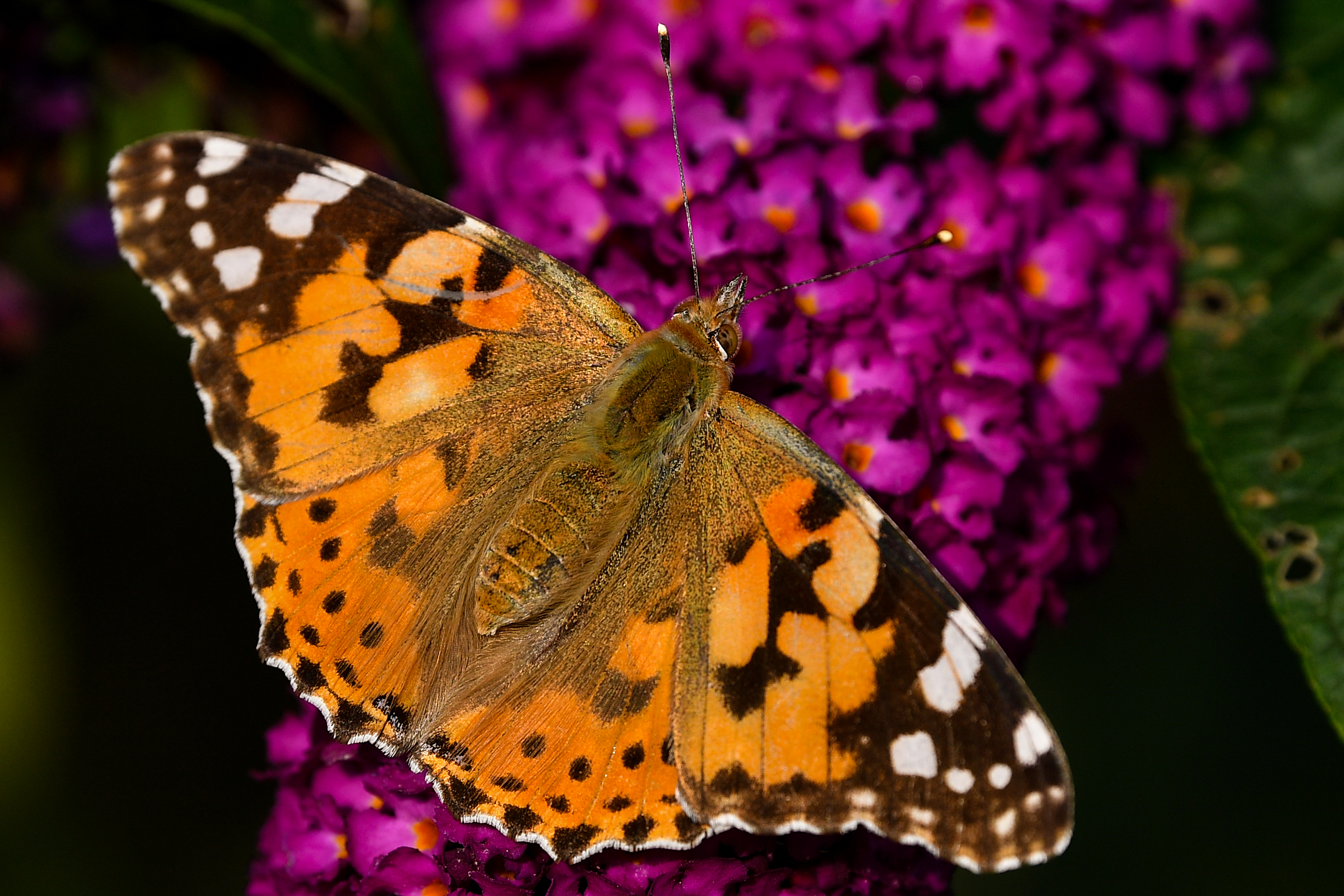
On the other hand we all like butterflies, and this has been an especially good year, especially for Painted Ladies.

Health & Medicine

Research has shown definitively that babies born by Caesarean have different gut bacteria compared with vaginal births. Why does this surprise anyone?

Statistical analysis shows that 26 September is the busiest day for births (at least in the UK) at about 10% above the average. Yes, you guessed it: it’s all down to Christmas and New Year shagging.

Sexuality

The world’s first Vagina Museum opens in November at London’s Camden Lock. Aim: to educate and raise awareness of vaginal and vulval health and fight stigmas.

Environment

Apparently the fish stock calculations were way off and North Sea cod should not have been labelled as sustainable.

What practical things can you do to combat climate change? One thing we seldom consider is to plant your own trees.

Art & Literature

After 119 years the Wallace Collection in London is to start lending out its artworks. Under the terms by which they were established they thought they couldn’t do this, but now they think they can.

History, Archaeology & Anthropology

Archaeologists have uncovered over 250 Neanderthal footprints, many of children, in northern France. They promise to throw some light on Neanderthal lifestyle.

Again, I’m not sure why this is surprising, but there is now evidence to suggest that the first people in the Americas came by sea.

Archaeologists are also now suggesting that prehistoric babies were fed animal milk from pottery bottles.

Coming more up to date, English Heritage are concerned that damp is putting many ancient murals, especially church wall paintings, at risk.

A piece of what is thought to be Elizabeth I’s lost dress is to go on display at Hampton Court.

In Scotland there is a plan to establish a national witches’ memorial.

London

While Britain’s parliamentarians are letting off quantities of hot air, the Houses of Parliament are threatening to collapse on their heads. [LONG READ]

One of our favourite London bloggers, Diamond Geezer, takes a random walk from Oxford Circus.

Food & Drink

No part of the pig is ever wasted. Now chefs are beginning to sign up to fin-to-gill eating – cooking fish without discarding anything.

Lifestyle & Personal Development

A pair of (American) researchers are suggesting every couple should have eight intense discussions to cement and develop their relationship. When you read their book, although they are deep discussions, it is the usual structured common sense – but something many will not easily do without a prompt.

It has apparently now been confirmed that there are benefits to being left-handed.

Shock, Horror, Humour

And finally, it’s time for this year’s Ig Nobel prizes. Amongst this year’s winners is a study of French postmen’s testicles.

More next month.

Monthly Links

Time flies, probably like a banana, when you’re too busy to notice. So we’ve suddenly arrived at this month’s collection of links to items you missed the first time round – and considering it’s the “silly season” (aren’t they all nowadays?) we’ve got a well packed, and very varied, bag this month.

Science, Technology & Natural World

A lot of what we now consider normal technology has its origins in the Cold War.

We often forget that there are volcanoes under the sea as well as on land, and they can produce huge rafts of pumice.

The universe is weird, and weirder than we can imagine. Look at the night sky and you’re being blasted by all manner of high energy radiation. Now astronomers have found the Crab Nebula emits incredibly high energy gamma rays.

An infographic about the majesty of trees.

For a long, long time the Japanese have looked upon sightings of rare fish as an omen of earthquakes. Now they are being urged not to as there is no evidence to support the belief.

Well who knew? Apparently black squirrels (yes, they are a thing; they’re in the UK and I’ve seen them in Washington DC; they’re rather handsome!) are the result of an interbreeding between grey squirrels and close relatives fox squirrels which produced a faulty gene now being passed down through grey squirrels.

At least one species of ant keeps its nurseries cleaner than we humans keep ours.

Every ten years Painted Lady butterflies undergo a massive population explosion and there are millions of migrants to the UK.

Health & Medicine

A top epidemiologist takes a look at the nightmare which is infectious disease aboard cruise ships.

Anyone, especially older people, on a medley of medication has an increased risk of unintended harm.

How about instead of women suffering through the menopause because they can’t be open about it, we actually fix society’s attitude so there can be open discussion and greater understanding from employers?

A significant minority of women suffer painful sex due to vulvodynia, and all too often it is not taken seriously.

And why we’re on lady bits, here’s an article explaining why the vagina doesn’t need to smell like a bouquet of flowers. And anyone who says otherwise is either indulging in patriarchy or marketing bollocks.

Oh no! We’re still on the same topic! One young lady, a sexual abuse survivor, was scared of having a smear test, but was helped through it by Twitter.

And still more … An interview with Canadian OB/GYN, Dr Jen Gunter, who is on a crusade to tell the truth about women’s health and expose the purveyors of snake oil. And here’s another interview.

And still with Dr Gunter, here’s a long essay adapted from her new book The Vagina Bible: The vulva and the vagina – separating the myth from the medicine. Buy the book; I’m reading it and it is excellent. [LONG READ]

Sexuality

One lady appreciates her pubic hair.

Well from there the only way is up …

Environment

A report in the RSA Journal argues that we need to be building homes not housing and that property should be on a human scale.

On continental Europe, apparently wild boar are being a problem in cities. This article looks at how Barcelona is fighting back. [LONG READ]

Ungardening … how to make your garden a wildlife haven.

Social Sciences, Business, Law

Ten reasons why you should be worried about facial recognition technology.

So how will the world’s major religions cope with the discovery of alien life?

Do you need to be able to address anywhere on Earth? Even the middle of the ocean? You need What3Words, a brilliantly simple idea with an app that has saved lives.

Language

We keep hearing that the English language is going to the dogs. But language always has changed, and always supposedly for the worse. Maybe it’s time to stop worrying about the English language. [LONG READ]

Wherever there is language, people swear, so trying to ban swearing is pointless. Besides there is some evidence that people who swear are more honest.

Art & Literature

How can medievalists get excited about a scrap of parchment? When it contains a fragment of a “vagina monologue”.

Following on from which there is a new translation of the gleefully indecent poems of medieval welsh feminist poet Gwerful Mechain.

We all know about haiku, but there was a ruder equivalent called Senryu. [LONG READ]

You’ve almost certainly heard of Eric Gill, but did you know he had an equally talented younger brother MacDonald “Max” Gill? This is an old review of a long gone exhibition, but serves as an introduction to his work.

History, Archaeology & Anthropology

So who were the mysterious people who preceded the Ancient Egyptians?

Still with Ancient Egypt, an article of the hugely important role of the scribe. [LONG READ]

Archaeologists have found evidence of early fish tapeworm infection at one of Britain’s most important prehistoric sites.

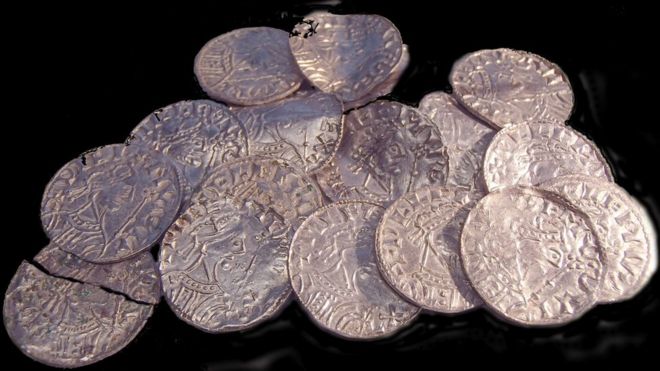
Coming forward several thousand years, metal detectorists have uncovered a huge hoard of important late Saxon and early Norman coins.

Now we enter the modern era! The Victorian introduction of the penny post revolutionised the way we communicate.

Lifestyle & Personal Development

Our favourite Zen master, Brad Warner, on the meaning of life.

And finally … The Victorians (of course!) apparently convinced married couples to sleep in separate twin beds. So how and why did this change?

Phew! There was a lot of that – hopefully something for everybody. More next month.

Alfred Hitchcock is Missing

The Birds. Or rather the lack of the birds.

There’s something very odd going on near me. Maybe elsewhere too.

In the last couple of weeks almost every bird has disappeared.

We used to have several dozen feral pigeons around – I not infrequently count upwards of 20 at a time sitting on my neighbour’s roof. Yesterday I counted a grand total of four, and that’s the most for several weeks.

Similarly we used to have dozens of house sparrows. A few week ago they were around. In the last couple of weeks no more than a handful. And there isn’t the usual incessant chirping from the hedges.

Starlings? Not one. Wood pigeon? We usually have two pairs around; but at present just a single scruffy bird. And almost nothing else which uses the gardens.

Am I sure? Yes, because I contribute (every week) to the BTO’s Garden BirdWatch project, so I regularly count and log the local birds.

Now we know that the sparrow population crashed a few years ago, but it had generally recovered hereabouts. However I have seen an article from BTO that sparrows are susceptible to a form of malaria (the same genus as the malaria parasite which affects us, just a different species), and that could be one factor in their decline.

Also we know that once the breeding season is over, birds moult and grow new feathers, during which time they’re more vulnerable so they tend to hide up. All of them? And all species? Suddenly? At precisely the same time? That doesn’t make sense to me.

On top of that I haven’t seen a squirrel in weeks, when we normally have one around fairly constantly. And the local cat population (other than ours) are also conspicuously absent.

The cats, I can understand. It’s been either hot or wet recently, so they’ll likely be hiding up somewhere cool, dry and shady. I can’t blame them! But no squirrels? That’s unusual.

Now I have a hunch, which could of course be totally wrong. I just wonder if some id.10.t has been throwing rat poison around? That would take out the rats, and the squirrels. Likely the sparrows and pigeons too as they’re grain eaters and will be attracted to the rat bait. It could also take out the odd cat if it eats a poisoned rat or mouse.

It’s a murder mystery, without any bodies. But then I wouldn’t necessarily expect to find bodies. I’m mystified.

I guess I just have to watch and wait to see if the birds come back in the coming weeks.

It’s a puzzle.

Monthly Links

Another month comes to a close so it is time for links to items you may have missed, but which I didn’t and collected for you!

Science, Technology & Natural World

Some elements amongst the physics community are determined that an even bigger particle collider than the current LHC at CERN is an utter waste of money.

Oh dear! It seems that at the end of WW2 the Allies managed to lose a few cubes of uranium from Germany’s failed nuclear programme.

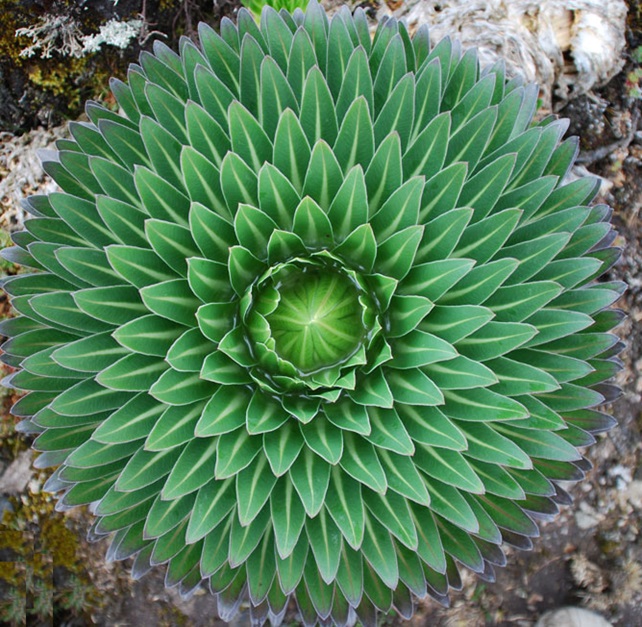
We know that plants’ growth shows a high degree of symmetry, but how many of use realised it was quite this complicated?

Scientists reckon that plants can hear bees buzzing – and they then make their nectar sweeter.

Talking of hearing … it turns out bats can tune their sonar very effectively by constantly wiggling their ears.

When is a cuttlefish like a human? When it has arms. Apparently all creatures’ arms/limbs are built from the same set of genes, regardless of how many there are.

Health & Medicine

This month’s medical column is all about girlie parts, but the boys will want to be educated too …

Women are now asking if it is possible to have a better period (depending on their value of “better”)

According to a couple of old articles in the sacred Cosmopolitan there are nine different types of boobs and seven different types of labia. The good news is that they are all perfectly normal and nothing to be ashamed of.

The story of one survivor who is campaigning against the brutality of FGM.

Environment

It is suggested that urban trees live fast and die young compared with those in rural forests

Social Sciences, Business, Law

The current incumbent seems to get embroiled on controversy, but what really is the role of the Speaker of the House of Commons?

Language

Not everyone agrees that language is a living, evolving entity, so here are 19 of the most contentious linguistic disagreements.

History, Archaeology & Anthropology

I never knew that some of the Lewis Chessmen were missing, but it seems that one of the missing few has recently resurfaced.

High quality viniculture is turning out to be a lot older than expected.

Historians across the ages cannot agree, but it seems that Druids are fairly skilled at metamorphosis – either that or the historians are making it all up as they go along!

Lifestyle & Personal Development

Somewhere, high on the Tibetan plateau, is a matriarchal culture where men are never in charge and where the women don’t know who is the father of their children.

Back in the western world, people are asking what it means to be genetically Jewish, but maybe not culturally so.

There is more accumulating evidence that a long working week really is bad for your health, and that a shorter working week isn’t necessarily less productive.

When might a big earthquake hit Tokyo, and how is Japan preparing itself?

Taxidermy is often seen as a rather unsavoury hobby, but a growing number of women are making their mark as taxidermists.

Brad Warner, our favourite Zen Master, takes a somewhat sideways look at the way all things are connected.

Food & Drink

The public health lobby are worried that too many people are getting home hygiene wrong.

And finally … Master of Wine, Caroline Gilby, looks at how long to keep an opened bottle of wine, and what you can do with it. (No, I know. What is this commodity “spare wine”?)

More in a month. Enjoy the summer.

Word: Mollipilose

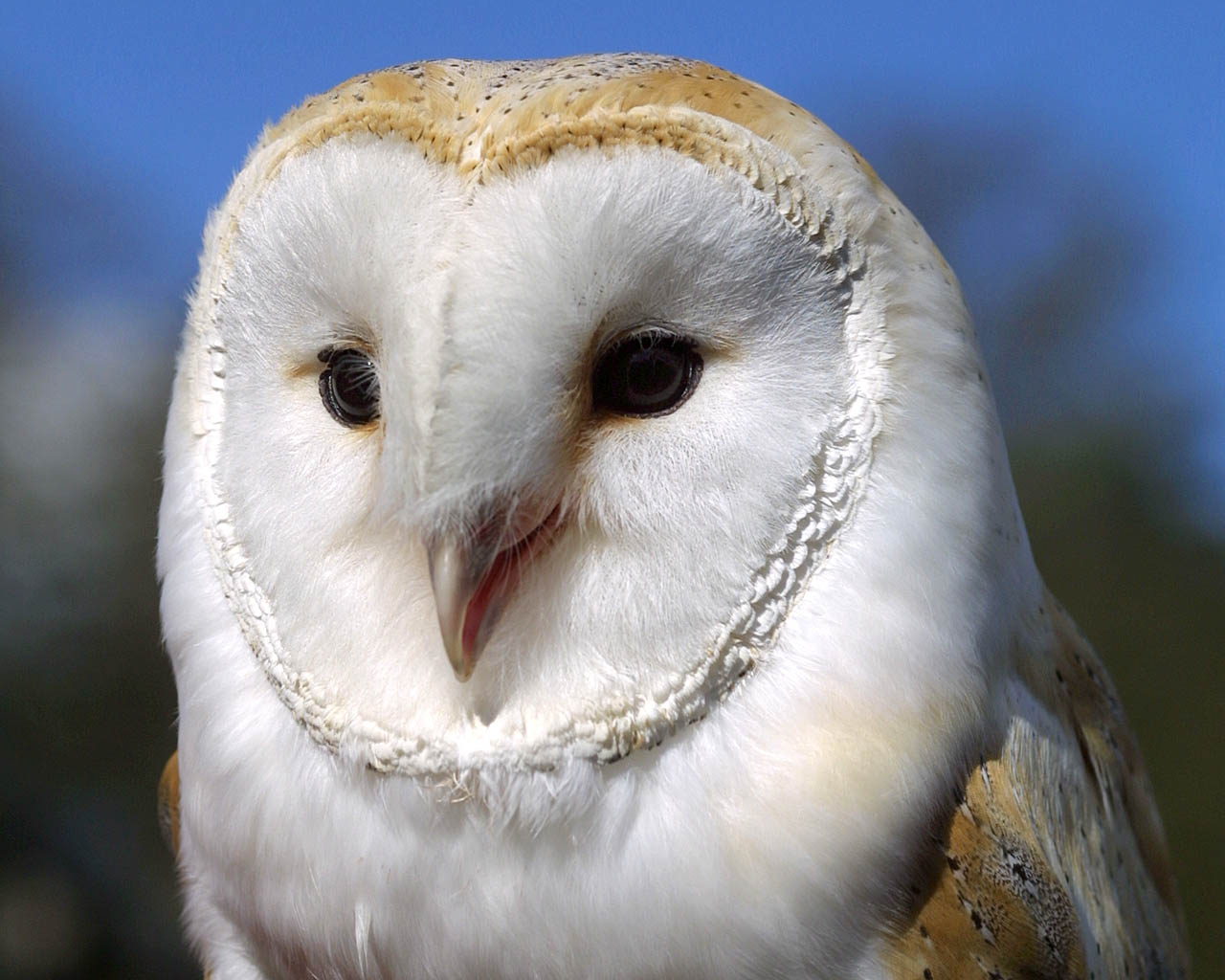
Mollipilose

Having a fur or plumage that is soft or fine; fleecy, fluffy, downy.


Barn Owl (Tyto alba). If you’ve ever met a Barn Owl up close
you’ll understand why I choose this to illustrate
mollipilose: their feathers are just unbelievably soft,
which is why they are so silent in flight.

A surprisingly late first usage in 1890 which is derived from the Latin mollis, soft + pilus, hair.

H/T @HaggardHawks

Monthly Links

So here goes with this month’s outsized collection of links to items you may have missed.

Science, Technology & Natural World

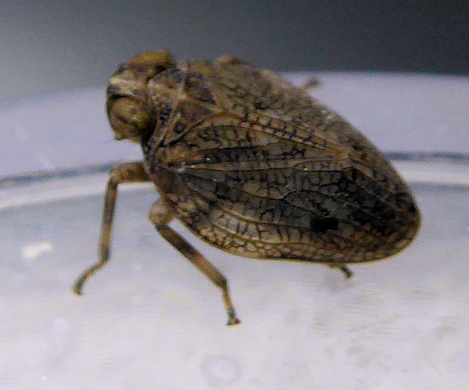
Issus coleoptratusA few days ago I had a strange little bug in the house. It turned out to be the planthopper Issus coleoptratus. And I found out the nymphs of this insect are incredible as they have the only known mechanical gears ever found in nature. Here’s a piece about these gears.
[That’s my photo on the right.]

While we’re on strangenesses … What happens when octopus are give MDMA? Does it affect their distributed brain the same way it does ours? Well naturally scientists had to find out!

Many people don’t like termites (and for good reason) but they’re incredible insects which can actually teach us a lot. [VERY LONG READ]

Scientists have realised that they can mine twitter for observations of nature.

Fungi are another of the fascinating orders of nature.

Leaving the natural world behind, scientists have developed artificial genes which demonstrate that life does not have to be based on DNA. [£££££]

But then again, if there are dead civilisations out there in the cosmos, how are we going to conduct cosmic archaeology to search for them?

Health & Medicine

It seems that we dream even when under general anaesthetic. [£££££]

We all know that 98.6°F (37°C) is our normal body temperature. Except when it isn’t, of course.

So what is going on in our guts? And do probiotics actually make any difference?

The vagina is self-cleaning – so why does the ‘feminine hygiene’ industry exist?

100 years on from the Spanish flu and the disease still stalks us.

Many older people have been advised to take an aspirin a day, even if they don’t have symptoms of cardiovascular disease. Medics now think this is risky.

Men and women experience migraine attacks differently due to both physiology and sociology.

A new UK study of depression is recruiting 40,000 volunteers to find if there are genetic markers for the disease.

Sexuality

So what are the secrets to fulfilling sex in a long-term relationship? Seems like there’s no really special magic but lots of being.

Environment

Beavers are amazing creatures and it appears that they could have a role in combating climate change. (But you don’t ever want to have to sex one!)

How would you like a wolf living near you? Personally I’d rather like to have a wolf living in my area. How about you?

The National Trust in South Wales are experimenting with a return to medieval strip farming, and it sounds like an environmental win.

Finally someone has had the courage to call out what I’ve been suggesting for a long time: abandoning nuclear power could increase carbon emissions.

Art & Literature

Apparently the male nude is back in fashion in art circles.

History, Archaeology & Anthropology

Archaeologists were initially puzzled by the skeleton of a 3,000 year old ancient Greek female. But it turns out she was a master ceramicist.

A couple of years ago IanVisits went to Broughton Castle near Banbury. I went there recently during a conference in Oxford, and it is every bit as spectacular as IanVisits says.

In his late 17th century journal sailor Edward Barlow confessed to a rape. But he then covered it over and the evidence lay hidden until modern conservators got to work uncovering an intriguing tale.

Christopher Kissane in the Irish Times blows the lid on the historical nonsense which underpins UK’s Brexit floundering.

Lifestyle & Personal Development

From the annals of the unexpected … Many of us lack a degree of self-control, but researchers have shown that having a simple ritual can help.

We in Britain are losing our shared spaces (pubs, clubs, libraries, churches) and becoming more isolated and cliquey.

So how do you win friends and then keep them for years? Emma Beddington has some ideas.

Food & Drink

Britain’s Food Standards Agency has been testing meat products, and worrying they find 20% contain the DNA of animals they aren’t supposed to, and that it appears to be deliberate.

Shock, Horror, Humour

Finally this years Ig Nobel Prize winners were announced a week or so ago. DIY colonoscopy anyone? Or just the need to use a voodoo doll to get revenge on your boss?

Monthly Links

Herewith are the usual monthly collection of links to items you may have missed. It’s holiday season, so there’s not been so much of interest this month.

Science, Technology & Natural World

This year’s Royal Institution Christmas Lectures should be good. They’re titled “Who are You?” and will apparently be all about evolution and the rise of Homo sapiens. And who better to present them than the ever excellent Prof. Alice Roberts. But I bet there will only be three lectures again this year, rather than the original six.

Talking of human evolution, the latest research suggests that one of the last traits of our primate origins to disappear was our prehensile big toes.

More prosaically, it seems that the UK has this month been plagued by social wasps. I can’t say I’ve noticed, but here anyway are five reasons we should celebrate them. Oh and there’s another reason: our beloved honey bees are descended from ancient wasps.

I’ve seen it suggested that this is old news, but there are recent reports of Pine Marten recolonising the Kielder Forest for the first time in 90 years.

Health & Medicine

There’s a brilliant plan afoot to map the location of every publicly accessible defibrillator in the UK.

And a tragic story: how smallpox claimed it’s very last known victim here in the UK.

There’s new evidence that the HPV vaccine has been responsible for a huge reduction in the rate of cervical cancer. Even better is the news from last month that HPV vaccination is to be offered to teenage boys in England.

Apparently the idea that millions of sperm are in an Olympian race to reach the egg is yet another male fantasy about human reproduction. This Aeon piece has news of what actually seems to happen. [LONG READ]

I wasn’t sure whether to put this item under science or medicine, but here’s a piece of the chemistry of foxgloves, from which we still get the heart drug digoxin.

And here’s a strange phenomenon: aphantasia – the inability to picture things in one’s mind’s eye. It sounds as if there is a spectrum of aphantasia from very lucid to nothing; I suspect I’m somewhere in the lower half as the only pictures I have of events (even significant events like our wedding) are a few “snapshot” images, whereas other people I know can run everything in full HD video in their brains. It’s very curious.

Environment

Here’s another potentially disastrous new vanity project which George Monbiot has got his knife into: the Oxford-Cambridge Expressway. The article contains links to some of the official documentation, and it doesn’t look very pretty!

History, Archaeology & Anthropology

Researchers have made a very interesting discovery of an ancient hominid girl whose mother was a Neanderthal and father was a Denisovan. It suggests that hybridisation between hominid species, and especially our close relatives, was a lot more common than was suspected.

An interesting alternative theory about the development of major monuments like Stonehenge and Easter Island. [£££]

Yet more laboratory research has led investigators to unravel the recipe for Egyptian mummification.

It been a hot summer (although writing this over bank holiday weekend it doesn’t feel that way) and the lack of rain has been a great result for archaeologists as many hitherto unknown sites have become visible in crop marks. And the use of drones has made finding them so much easier than hitherto. [Mostly images]

London

One of our favourite London bloggers has undertaken an epic journey: across London on the 51½°N line of latitude. It is documented in a series of 12 posts of which this is the first – or you can have the whole 51½°N journey in a single post. [LONG READ]

Lifestyle & Personal Development

So what is it really like being an artist’s model? A handful off London’s life models give us a few insights.

Food & Drink

Gluten is getting a bad name. Are problems with gluten in the diet a fad? Or are they a real medical issue? Joanna Blythman in the Guardian looks at some of what seems to be happening. I think the jury is still out.

Despite many people’s dislike, we all know cabbage is good for you and now researchers are suggesting it may contain anti-cancer chemicals. Well if was good enough for Diogenes …

That’s all for this month; more at the end of September.