MeMe More

OK, so here’s another silly meme I picked up the other day on Facebook, for no other reason than I have 5 minutes to waste. No-one gets tagged, just join in if you want to.

?  Marriages: 1
?  Divorces: 0
?‍?  Children: 0 (from choice)
?  Grandchildren: Not possible!
?  Pets right now: 3 cats: Tilly (5), Rosie (2), Boy (1)
??‍⚕️  Surgeries: at least 6
✒  Tattoo: 0
??  Piercings: 1
✋?  Quit a job: Yes
?  Been to an Island: Yes
?  What do You drive: My wife nuts
✈️  Flown on a plane: Yes
?  Best Vacation: Harz Mountains
?  Favourite Drink: Adnams Ghost Ship or Adnams Dry Hopped Lager
?  Rode in ambulance: Yes
?  Sang karaoke: Not likely!
❄  Ice skating: No chance!
?  Been surfing: Again, not a chance!
?  Been on a Cruise: I hate the very idea
?  Rode on a motorcycle: Scooter yes, motorbike no
?  Own a motorcycle: No
?  Rode on a horse? Yes
?  Almost died: No, I’m still here to annoy you
?  Stayed in a hospital: Yes
?  Favourite fruit: Grapefruit
?  Favourite day: Possibly Saturday
?  Favourite colour: Depends on my mood
?  Last phone call: Tom
?  Last text: Received: my bank; Sent: John B
?  Watched someone die: No
?️  Coffee or Tea: Tea, strong, preferably Earl Grey
?  Favourite pie: English pork pie
?  Pizza: Yes
?  Cats or Dogs: Always cats
?  Favourite Season: Spring/early Summer
☘️  Favourite holiday: quiet non-commercialised seaside

Monthly Links

So here’s our monthly selection of links to items you may have missed, but will wish you hadn’t. As usual we’ll start with the science-y stuff and go downhill from there.

Science, Technology & Natural World

Astronomers are still on the hunt for “Planet 9” which they think lies way beyond Pluto. And they’ve found a strange, but small, object – nicknamed “The Goblin” – which may provide more clues on where they should be looking.

At home, researchers are looking at the effects of climate change and rising sea levels, and asking which cities will sink into the sea first. The answer may not be what one would intuitively expect.

Talking of the sea, it’s long been thought that few things predated jellyfish, but this turns out to be wrong.

Meanwhile on land it is being suggested that cats are pretty useless at catching rats and prefer smaller prey. Well they had better not tell our felines that!

However the ability of crows to make tools is giving some insights into how the brain generally works.

I wasn’t sure whether this next item belongs here or under “Environment” but it is sufficiently technical I left it here … It is being suggested that we could store unpredictable energy, like solar and wind, using compressed air. It sounds crazy, but might work.

Health & Medicine

There’s a muscle-weakening disease popping up in America which affects children and looks a lot like polio (but isn’t). And weirdly it seems to have a two-year cycle.

Are you like me and have problems with sleep? If so it may be that you’re over-tired.

Still thinking bout sleep, a researcher seems to have worked out why it is that we take so long to wake up and get going in the mornings. And that caffeine doesn’t actually help.

But then it is being recognised that people sometimes just give up and die.

At the other end of the spectrum, there are women who suffer from tokophobia: an extreme fear of pregnancy and childbirth.

Finally in this section, here’s a piece about the medicinal leech and how to farm it. They’re strange beasties with 10 stomachs, 32 brains and 18 testicles!

Art & Literature

No good adventure story, and many others, would be complete without a good map. Here a few writers tell of their favourite literary maps.

History, Archaeology & Anthropology

There’s a puzzle in ancient historical research: how do we know which historical accounts are true? And as one professional demonstrates it isn’t as simple as all oral history is make-believe.

Opium has been known and used for more than 7,000 years. There’s a new book Milk of Paradise: A History of Opium by Lucy Inglis, reviewed in History Today.

King Henry I is said to have died of a surfeit of lampreys, and now archaeologists in London have found lamprey teeth in a medieval layer near the Mansion House. Although lampreys were a medieval delicacy, their teeth are rare (these are the first found in London, and only the second in the UK) as they are made of keratin (like nails and hooves) rather than dental enamel.

Someone has found an old red velvet bag (right) in a Tudor house once occupied by Walter Raleigh’s son and widow. They think it may have been used to carry around Raleigh’s mummified head. It looks more like a 1970s girl’s gym kit bag to me!

London

Have you ever wondered just how much stuff any city transport system actually owns. Here Diamond Geezer looks at Transport for London’s assets, and the scale is somewhat frightening!

Lifestyle & Personal Development

One scientist is annoyed that the likes of the media won’t recognise that her doctorate confers the title “Dr” – because she’s not medic. I find the medical profession are the worst offenders in this regard.

We all doodle, at least sometimes. It turns out your doodles could be important and meaningful.

The ability to do simple, “order of magnitude”, calculations on the back of an envelope is important for learning, verifying your answers and demystifying things like geological time. It is something I was taught, at school as a teenager, to check if answers to science/maths exam questions were likely to be right – and it has turned out to be an invaluable skill.

And finally this month … A Buddhist look at trigger warnings and fixing the world. TL;DR: don’t.

Quotes

Our monthly round up of quotes interesting and amusing.

What Dungeness has [is] the sense that it has remained so relatively unchanged, escaping the prissy tedium of the rest of south east England … the convention by which all of the south east must become one giant, government-approved suburb. Here, it feels as if planning laws have never existed. There are no polite and bricky executive cul-de-sacs, no banal shopping malls, no air-conditioned, fluorescent-lit office blocks, no golf courses, neat kerbstones, yellow lines, speed bumps, no traffic wardens or CCTY cameras, no bored and boring yoof lurking under medieval hoods on street corners. Physically, socially and emotionally, Dungeness is a very long way from Middle England.
[Jonathan Glancy in Nigel Green, Dungeness (Photoworks, 2003)]

The reality of our century is technology – the invention, construction and maintenance of the machine. To be a user of machines is to be of the spirit of the century. It has replaced the transcendental spiritualism of past eras.
[Moholy Nagy, 1922]

The concept of connectedness is, of course, the basis of all kinship systems … Getting married, in this case, is not just pairing off, it is, in a way, sharing each other.
[Stephen Muecke quoted in the Guardian]

Intolerance for the indefensible becomes intolerance for anything that is different. The aspiration for the universal becomes a crude insistence on the uniform. Sensitivity is lost to the very different needs of different cultures at different times and places.
[From the Guardian]

There is a contradiction in saying there are no universal truths, since that is itself a universal claim about the nature of truth.
[From the Guardian]

I do not want my house to be walled in on all sides and my windows to be stuffed. I want the cultures of all lands to be blown about my house as freely as possible. But I refuse to be blown off my feet by any. I refuse to live in other people’s houses as an interloper, a beggar or a slave.
[Gandhi, quoted in the Guardian]

A bottle of good claret after dinner does a digger in the red coals no harm, otherwise than as it has a tendency to throw him out of work.
[Charles Dickens, A Tale of Two Cities]

Sometimes it’s better to take life as it comes, set your sails according to the winds that blow, go with the tide, follow your instinct, choose the grassier, less trodden road for its own sake and not in the hope it might lead anywhere very special.
[Christopher Robin Milne]

We can’t know anything outside our mind. Everything we see is contained within our mind. Thus, I am not in the world. The world is in me.
[Haemin Sunim]

Honesty is the glue that holds together a society of laws. Lies are the solvent that dissolves those bonds.
[From the Washington Post]

You will continue to suffer if you have an emotional reaction to everything that is said to you. True power is sitting back and observing things with logic. True power is restraint. If words control you that means everyone else can control you. Breathe and allow things to pass.
[Warren Buffett]

Just a reminder: the system in what is currently known as the US isn’t “broken”. It was designed by male white supremacist slave owners on stolen indigenous land to protect their interests. It’s working as it was designed.
[Dr Adrienne Keene on Facebook]

In our quest for happiness and the avoidance of suffering, we are all fundamentally the same, and therefore equal. Despite the characteristics that differentiate us – race, language, religion, gender, wealth and many others – we are all equal in terms of our basic humanity.
[Dalai Lama]

Only having “compassion” for those who are in your in-group, and vilifying or even becoming violent toward those who you perceive as the out-group, is not only antithetical to world peace more broadly, but is also counter-productive to political progress that advances the greater good of all humans on this planet.
[Scott Barry Kaufman, Scientific American, 8 October 2018]

And finally …

If you ever think your job is pointless, just remember there is a bloke in Germany who puts indicators on BMW cars.

Ten Things

So the month has gone around again and its time for this month’s Ten Things. So let’s see …

According to Wikipedia there are 69 cities in England and I’ve visited around half of them, so here are ten.

Ten English Cities I’ve Visited

  1. Oxford
  2. Cambridge
  3. Norwich
  4. York
  5. Truro
  6. Canterbury
  7. Winchester
  8. Bath
  9. Ely (cathedral pictured)
  10. Exeter

Art, Nicety and the Patriarchy

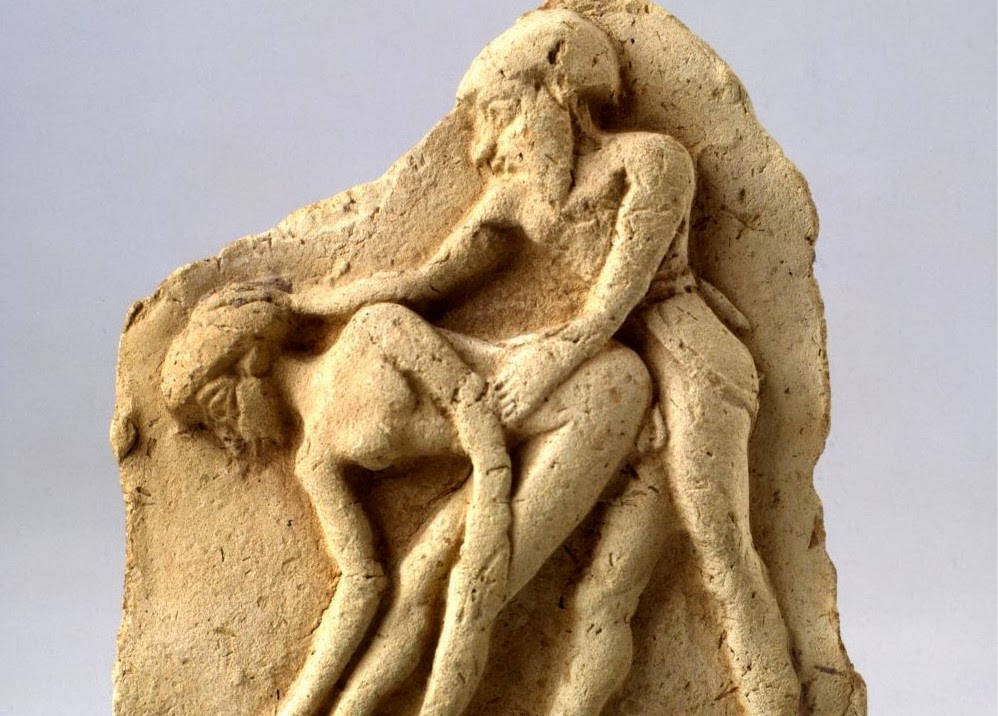
Over recent months there has been a certain amount of fuss over the appearance (or not) of art which is deemed inappropriate for public spaces (metro systems and the like) but which is acceptable in a museum context.

Elle Hunt’s article …

Repulsive to children and adults: how explicit should public art get?
Censorship in metro stations and other public places reveal limits
to how far we’re prepared to be challenged by art

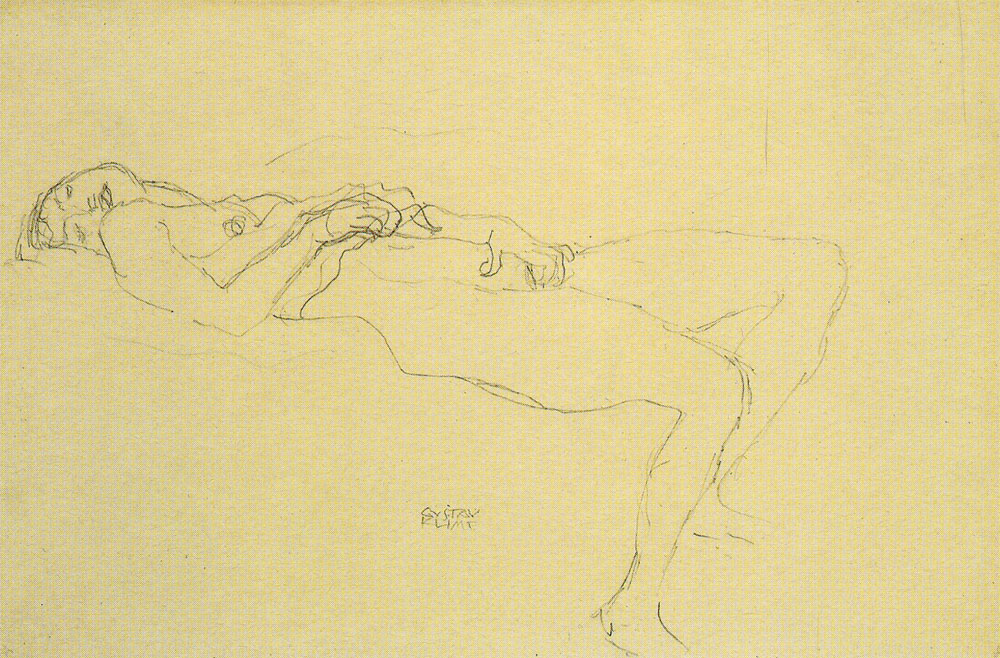
… was printed in the Guardian on 8 October and looks at some of the recent controversies including the refusal of advertising regulators in Germany, US and UK to allow explicit, uncensored images by Schiele, and the brouhaha in Stockholm over images by Liv Strömquist depicting menstruation on their metro (below). To this I would add Carolina Falkholt’s giant penis mural in New York.

I’m sorry guys, I don’t get it. There really should not be a problem.

  1. It’s art, and art is supposed to reflect life.
  2. Even if it isn’t art, it still reflects life – and life that we all know exists.
  3. I know, it pollutes children’s minds. Pah! That’s about as likely as me being Chinese. Just as they do nudity, children take these things in their stride unless they’ve been taught not to. Children know about these things and they’re curious; if they don’t know then they need to learn, and/or have an explanation. That way they become well adjusted adults.
  4. As I keep saying, sex, bodily functions, anatomy, nudity etc. need to be normalised for the good of our health – mental and physical. They do not need marginalising and criminalising.
  5. Isn’t the ability to display such images all part of freedom of speech?
  6. Obscenity, pornography etc. exist only in the mind of the beholder. There is no external arbiter. It’s down to you, and what you were brain-washed into believing.
  7. Why do public institutions (like metro companies) think they can be the arbiters of what’s appropriate? If some people get upset, so what? There are many things I find distasteful from dog shit to rococo architecture, but I’m not about to have a hissy fit if there’s a poster of one on my local bus shelter; nor would I expect it to have been censored – I may not like it, but that’s my problem not yours. No-one is responsible for another’s thoughts, emotions or beliefs. We have to trust people to make up their own minds and look after their own emotions – ie. treat them as adults.

But let me go one step further. Is all this concern that people might get upset not all part of the patriarchy controlling people and keeping them in their place so the great, the good, the white and the male remain in their dominant positions?

It’s long overdue that everyone woke up and realised there was coffee brewing; lots of flavours of coffee too!

On (not) Being Angry

There’s an important post by Sensei Alex Kakuyo over on the Same Old Zen blog about approaches to anger and angry people under the headline Buddhism and Professionally Angry People.

It’s important because although Kakuyo approaches it from a Buddhist standpoint it is applicable to all of us. For me the key messages are:

I have a choice. I can be angry, pissed off, and exhausted for my entire life, or I can practice acceptance.

… acceptance is not surrender. Rather, it’s a recognition that there is only so much that I can do with one body, in one lifetime. It’s an understanding that life is filled with suffering, and the only thing I can control is how I react to it.

So, I do what I can within the confines of my own life, and I accept that other people will make other choices. I accept that I may not like those choices …

… professionally angry people get riled up over things they can’t control. They cause suffering for themselves, they cause suffering for others, and the world keeps turning exactly as it did before.

… “Is there direct action that I can take to solve this problem?” If there is something that I can do that will actually solve the problem or alleviate my part in the ill affects, then I do it.

It isn’t always easy, indeed it can be extremely hard, and I know I fail at this more often than not. But it is something I try to live by. There’s only so much one can do and it is necessary to pick one’s fights. There’s no point worrying about things you have no control over; they have to be allowed to wash over you.

Word: Semasiographic

Semasiographic

I came across this word in an article on Inca khipus, in the current issue of New Scientist [paywall]. As this is a word I’d not previously encountered it is lucky the author explained it as a system of symbols that convey information without being tied to a single language.

Various authors on Quora provide the following explanations:

Semasiographic stems from the Greek word “semasia”, which means “meaning”. A semasiographic system of communication is the way in which the meaning of something is conveyed by signs, pictures, or icons rather than by words, sounds, or speech . . . Most semasiographic systems of communication can be used in many different countries regardless of language because if the cultures have similar practices, like those with airports, vehicles, or public transportation, then they will be able to understand the meaning of what is being represented in an icon or some sort of notation.

and . . .

Emoji would be a good example of a semasiographic text. I don’t think I can insert them here like on a phone, but if I wrote something like “<3 ;)", it's completely understandable to those who know modern internet slang, but can't really be expressed with words. "Heart wink" really doesn't cut it. Notably it's cross-linguistic, in that any internet user would understand it the same way, no matter what language they used to describe the "heart" and "wink" emoticons.

and . . .

A commonly cited example of a semasiographic system is road signs, which are similar across almost all countries but require no linguistic knowledge – you may call a yield sign something else in your language, but it will continue to mean “wait for traffic to pass”.

and . . .

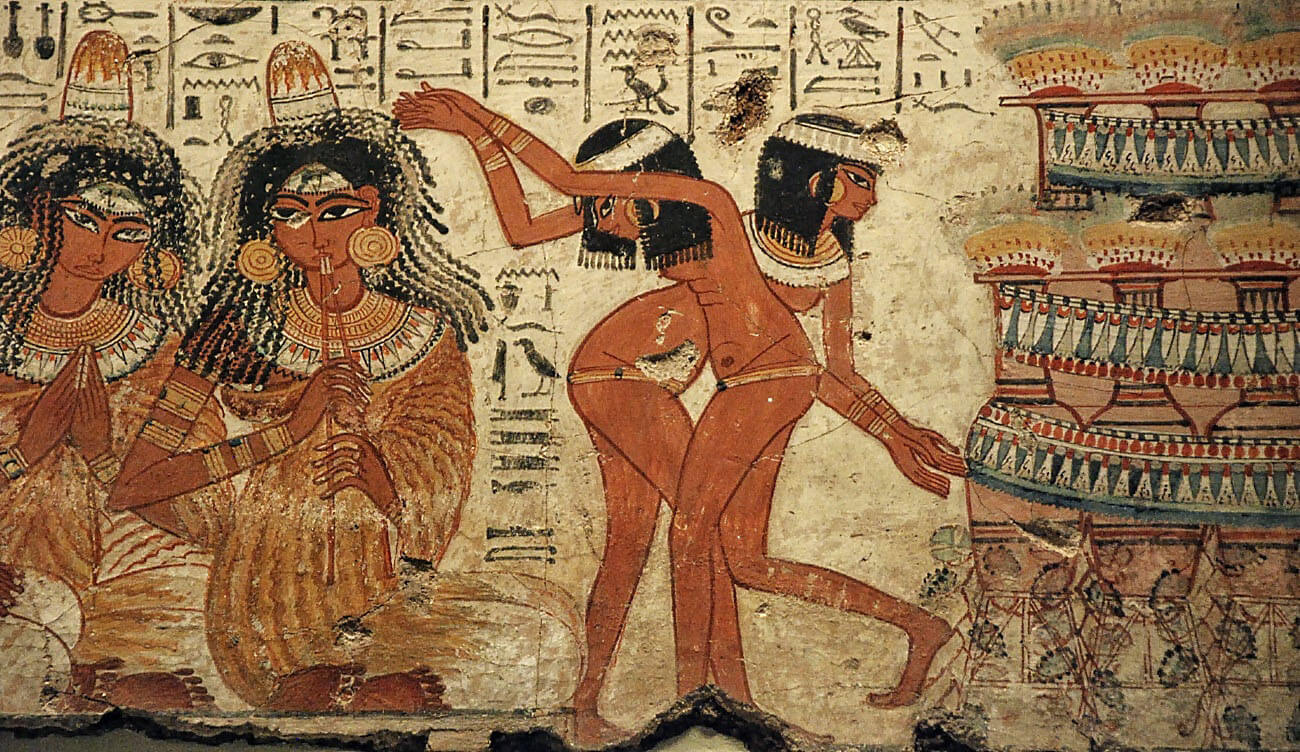
Usually the word refers to picture-based writing systems, like Mayan hieroglyphs:

or Egyptian hieroglyphs:

or in the case of the New Scientist article, Inca khipus.

Incidentally the word does not appear in the OED online to which I have access.

Word: Khipu

Khipu

Pronounced “key-poo”.

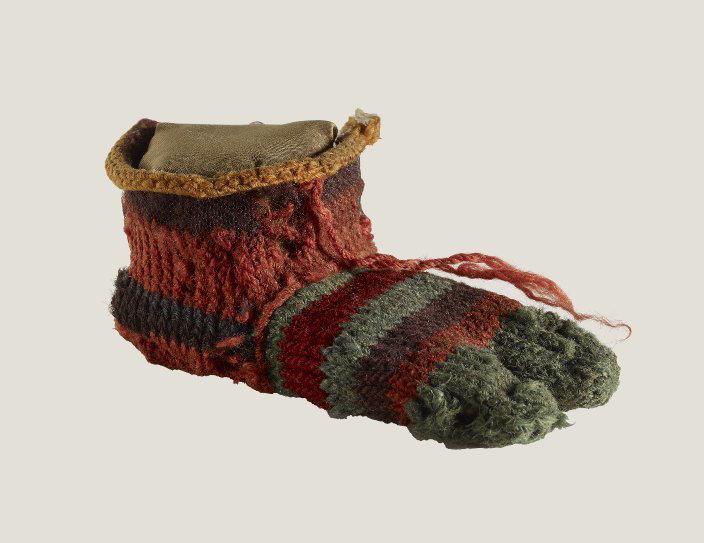
A device consisting of cords or threads of different colours arranged and knotted in various ways, used originally by the Incas of Peru and the surrounding areas for recording events, keeping accounts, sending messages, etc.

So basically this is the old Inca system of recording using intricately connected, coloured and knotted cords. This included numerical recording using a decimal number system, and it is now being thought was also textual as well as numeral. There’s an interesting article on this in the current issue of New Scientist [paywall].

The word has multiple origins being partly a borrowing from Spanish and partly Quechua. It arrived in English, via the Spanish, around 1580.

Monthly Links

So here goes with this month’s outsized collection of links to items you may have missed.

Science, Technology & Natural World

Issus coleoptratusA few days ago I had a strange little bug in the house. It turned out to be the planthopper Issus coleoptratus. And I found out the nymphs of this insect are incredible as they have the only known mechanical gears ever found in nature. Here’s a piece about these gears.
[That’s my photo on the right.]

While we’re on strangenesses … What happens when octopus are give MDMA? Does it affect their distributed brain the same way it does ours? Well naturally scientists had to find out!

Many people don’t like termites (and for good reason) but they’re incredible insects which can actually teach us a lot. [VERY LONG READ]

Scientists have realised that they can mine twitter for observations of nature.

Fungi are another of the fascinating orders of nature.

Leaving the natural world behind, scientists have developed artificial genes which demonstrate that life does not have to be based on DNA. [£££££]

But then again, if there are dead civilisations out there in the cosmos, how are we going to conduct cosmic archaeology to search for them?

Health & Medicine

It seems that we dream even when under general anaesthetic. [£££££]

We all know that 98.6°F (37°C) is our normal body temperature. Except when it isn’t, of course.

So what is going on in our guts? And do probiotics actually make any difference?

The vagina is self-cleaning – so why does the ‘feminine hygiene’ industry exist?

100 years on from the Spanish flu and the disease still stalks us.

Many older people have been advised to take an aspirin a day, even if they don’t have symptoms of cardiovascular disease. Medics now think this is risky.

Men and women experience migraine attacks differently due to both physiology and sociology.

A new UK study of depression is recruiting 40,000 volunteers to find if there are genetic markers for the disease.

Sexuality

So what are the secrets to fulfilling sex in a long-term relationship? Seems like there’s no really special magic but lots of being.

Environment

Beavers are amazing creatures and it appears that they could have a role in combating climate change. (But you don’t ever want to have to sex one!)

How would you like a wolf living near you? Personally I’d rather like to have a wolf living in my area. How about you?

The National Trust in South Wales are experimenting with a return to medieval strip farming, and it sounds like an environmental win.

Finally someone has had the courage to call out what I’ve been suggesting for a long time: abandoning nuclear power could increase carbon emissions.

Art & Literature

Apparently the male nude is back in fashion in art circles.

History, Archaeology & Anthropology

Archaeologists were initially puzzled by the skeleton of a 3,000 year old ancient Greek female. But it turns out she was a master ceramicist.

A couple of years ago IanVisits went to Broughton Castle near Banbury. I went there recently during a conference in Oxford, and it is every bit as spectacular as IanVisits says.

In his late 17th century journal sailor Edward Barlow confessed to a rape. But he then covered it over and the evidence lay hidden until modern conservators got to work uncovering an intriguing tale.

Christopher Kissane in the Irish Times blows the lid on the historical nonsense which underpins UK’s Brexit floundering.

Lifestyle & Personal Development

From the annals of the unexpected … Many of us lack a degree of self-control, but researchers have shown that having a simple ritual can help.

We in Britain are losing our shared spaces (pubs, clubs, libraries, churches) and becoming more isolated and cliquey.

So how do you win friends and then keep them for years? Emma Beddington has some ideas.

Food & Drink

Britain’s Food Standards Agency has been testing meat products, and worrying they find 20% contain the DNA of animals they aren’t supposed to, and that it appears to be deliberate.

Shock, Horror, Humour

Finally this years Ig Nobel Prize winners were announced a week or so ago. DIY colonoscopy anyone? Or just the need to use a voodoo doll to get revenge on your boss?