Category Archives: topographical

Ancestors and Mussels

Yesterday we had a day out hunting my ancestors — my father’s direct line — in Kent. And what a splendid day, despite not making any new discoveries.
We trotted off from home about 7am and arrived in Goudhurst about 9.30; just in time for coffee and apple cake.
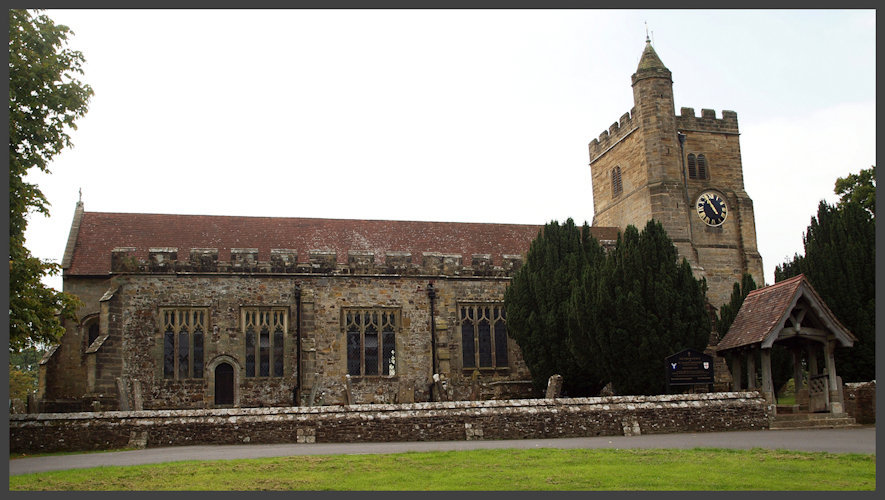
Having been refreshed we pottered on to Benenden from where, if the connections I think are there are right, my family lives for several generations in the early 18th century and probably earlier. Benenden is such a gorgeous village with houses and the church round a large village green which doubles as the cricket ground — just as it should be.


Benenden Church

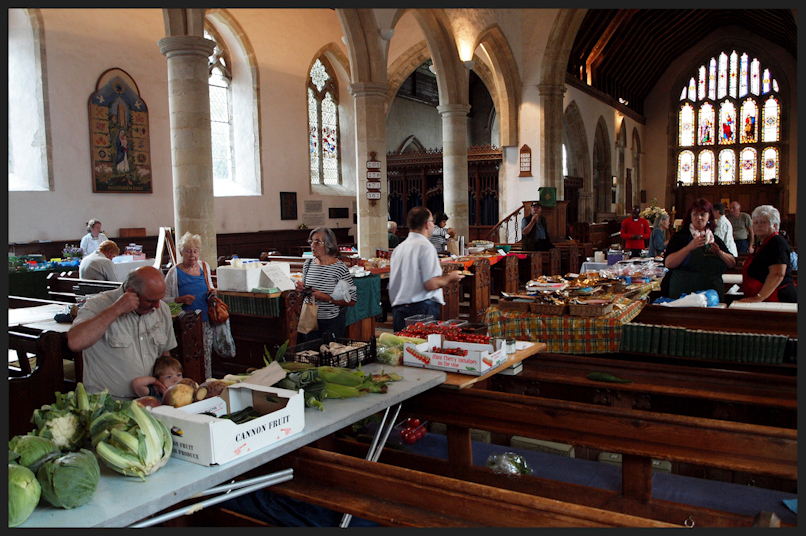
Then onward the few miles to Rolvenden, where I had higher hopes of finding evidence. What we found first of all was a small farmers’ market in the church. Yes, in the church. Excellent. This is how churches should be used; the more they are used the less they will be vandalised and the less they need to be locked. We were needless to say beguiled and stocked up from a lady selling mostly smoked meats etc., including some Oak Smoked Mussels. We also succumbed to some bread, tomatoes and a tub of fresh Lemon & Coriander Pesto.

Rolvenden Farmers’ Market

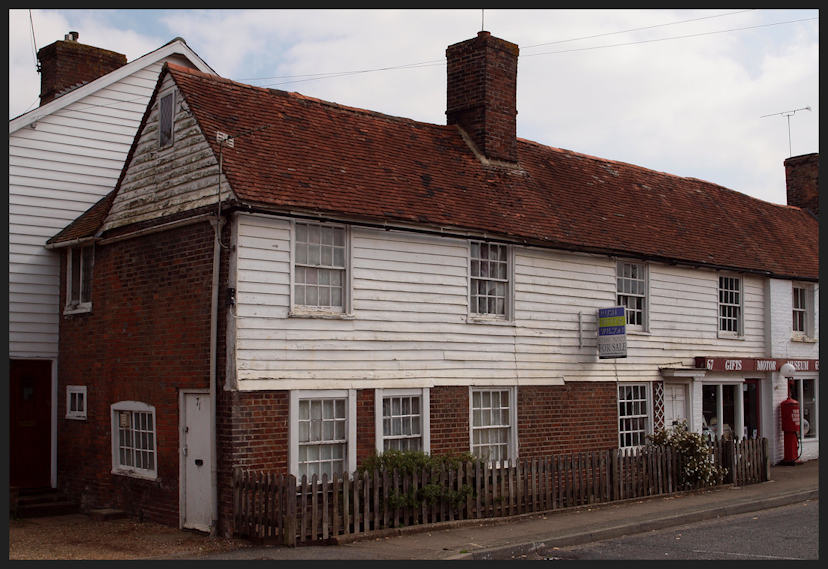
Following this and a look at the interior of the church we adjourned to The Bull for an excellent pub lunch and a pint. Staggering out we looked around the churchyard without luck, as almost every headstone was unreadable. But as we were leaving I did identify the house where my great-grandfather (Stephen Marshall, born 1849) was born and brought up.

Great-Grandfather’s birthplace in Rolvenden

Next we diverted to Smallhythe where I suspected a connection; and indeed we found a Marshall grave but of a later generation. Smallhythe is delightfully non-existent: about six houses, a vineyard, an early 16th century brick church and Ellen Terry the actress’s amazing Tudor house (now in the care of the National Trust) which was sadly not open. This is a far cry from the days of Henry VIII when he River Rother here was a wide estuary and the local industry was shipbuilding. All that ceased when the river changed course following the great storms of the late 16th century.

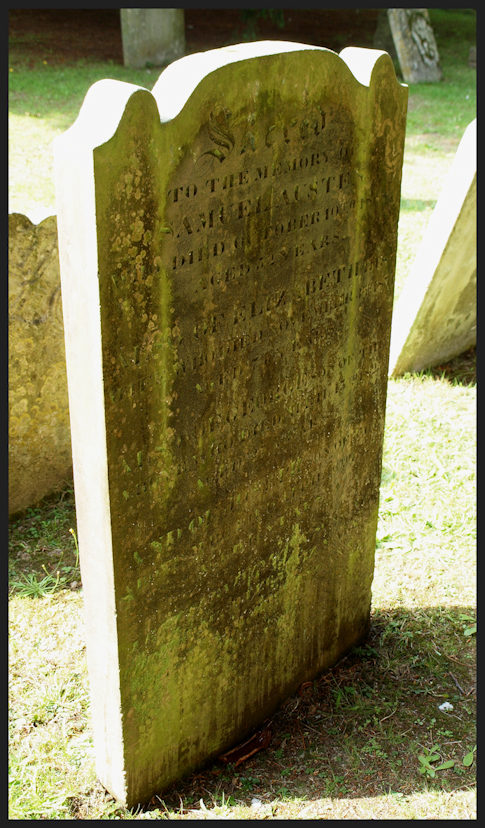
Samuel Austen (GGG-Grandfather) grave at Tenterden

Next on to Tenterden where we managed to find the grave of one Samuel Austen who is one of my ggg-grandfathers who died in 1838. Tenterden is full of Austens, and Jane Austen’s family originate here. Luckily the monuments in Tenterden churchyard have all been recorded as we would have been hard pressed to read the entirety of the headstone.
After a look in the church we were all running out of steam, so a quick drive on to Biddenden in the hope of easier parking and afternoon tea — both achieved. Following tea and cake we were disappointed to find the church locked; the only locked church of the six we tried during the day.
Leaving Biddenden we drove through Sissinghurst and retraced our steps to Goudhurst for a look at the church there and another pint. At this point there was a sudden realisation it was 6pm and we had a 2+ hour drive home round the M25.
OK, I was disappointed not to find obvious evidence to connect my ggg-grandfather Marshall further back, but that was really quite a long shot. It was also disappointing to find a locked church and nowhere selling Kentish apples or plums. But overall an excellent, and very tiring, day.
So now, today, we have a problem. What to do with those Oak Smoked Mussels and the pesto? Thoughtfully I procured a small pack of large prawns at the supermarket this morning (do not ask how we achieved the supermarket before 10.30 this morning!). So this evening I did one of my quick pasta dishes. 150g each of mussels and prawns makes a good feast for two, thus:
1. Cook some pasta; when cooked drain it and keep it warm.
2. Sweat some finely chopped onion and garlic in a little oil until translucent.
3. Add the mussels and prawns and cook for 2-3 minutes.
4. Add the pesto, stir together and cook for another minute or two.
5. Then add the pasta, stir to mix and coat the pasta and cook for a couple of minutes to ensure everything is hot through.
6. Serve and enjoy with a bottle of white wine.
And boy, was it good! The smoked mussels were to die for. As Noreen observed “I’ve eaten much worse in restaurants”.
Cheers, to the ancestors! We’ve come a long way since their days as farm labourers before 1850.

Oddity of the Week

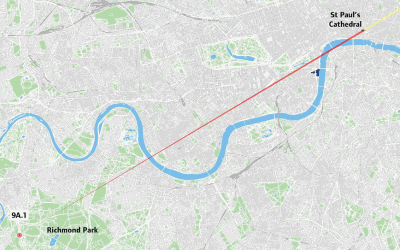
The view of the dome of London’s St Paul’s Cathedral from Richmond Hill, some 10 miles distant, is protected by legislation. As Diamond Geezer, visiting Richmond Hill, reports:

A protected line of sight exists to the northeast, with a narrow gap cut through Sidmouth Wood in the precise direction of St Paul’s. And this invisible beam from Richmond exerts considerable influence on planning policy in the City ten miles distant. Buildings along the viewing corridor must not interfere with this view of the cathedral, so there are no tall office blocks or skyscrapers either in front or behind within a margin of two dome widths. Richmond’s protected vista is the precise reason why the Cheesegrater retreats to a triangular point, and why Liverpool Street station is as yet undefiled by highrise development.

Lines on Maps

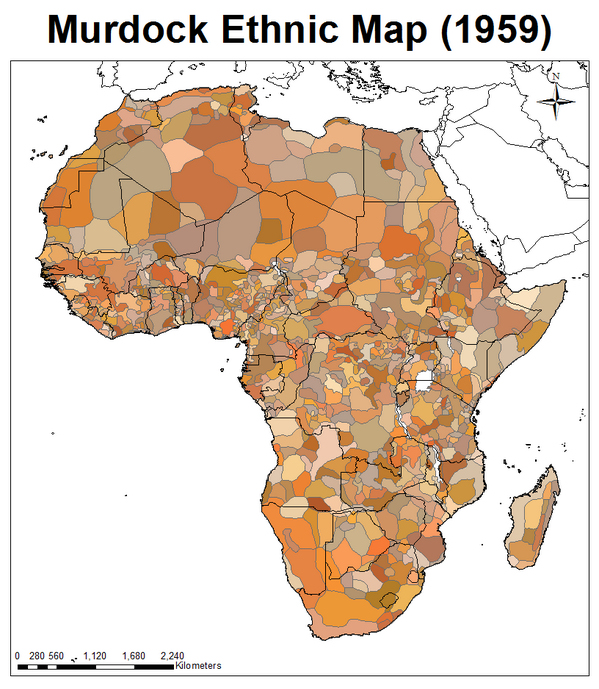
Yesterday I came across this map on Twitter …

africa

It shows Africa with its national boundaries (black lines) as they were in 1959 and (shaded) the continent’s division into ethnic/linguistic areas — ie. basically tribal areas.
Note just how many of the national boundaries are (a) straight lines and/or (b) cut straight across tribal areas. Every country contains multiple tribal/ethnic/linguistic areas.
Yet, we expect these peoples to be able to get on with each other as nations and embrace our democratic traditions. And we’re surprised when they can’t!
Is it any wonder they can’t get on, there is continual civil war and countries wanting to break themselves asunder. It is basically all the result of us, white man, drawing “arbitrary” lines on maps.

Christmas & New Year Traditional Events

This time of year produces a lot of traditional (and often strange) events around Britain. So many places seem to have their traditional event — some are relatively modern while others go back hundreds, maybe even thousands, of years.


I remember when I was a kid there was a relatively modern (started in 1908) Boxing Day tradition of a football match between the Bakers and the Sweeps which survives to this day. The participants, dressed and made up accordingly, paraded round the streets collecting money for charity before playing a fairly rowdy football match on one of the local recreation grounds. This tradition, like many others (both new and ancient) across the country, survives because it raises money for local charities.
I can’t hope to find out about and list here a tithe of the events happening across Britain — and there seems to be nowhere which lists them — so you will need to search out ones that interest you or that are happening near you. IanVisits lists a small number in his monthly “Things to do outside London” listings for December and January.
The most important dates to look for are:
     Boxing Day, 26 December
     New Year’s Eve, 31 December
     New Year’s Day, 1 January
     12th Day of Christmas, 5 January
     Old Christmas Day, 6 January
     Old New Year’s Eve, 11 January
As you see many of these traditions are tied to the old calendar and/or to traditionally important days. They deserve to survive both because they are a traditional part of the British heritage but also because so many do good work raising money for local charities.

October Plenty

October Plenty 2013 is on Sunday 20th October starting at 12 noon on Bankside, Southwark outside Shakespeare’s Globe. (Yes, that’s in London!)
October Plenty is an Autumn harvest celebration held annually in Southwark. Beginning on the Bankside, by Shakespeare’s Globe Theatre, October Plenty mixes ancient seasonal customs and theatre with contemporary festivity, joining with historic Borough Market, Southwark and Borough Market’s Apple Day.


October Plenty is a collective celebration of the seasons, weather and food, in a public place, with access to everyone. The event is free, and happens whatever the weather.
There is loads more information about this event at www.thelionspart.co.uk/octoberplenty/. It looks as if it should be great fun; must see if I can get there.

Goats on the Roof

Goat Grazing Fun Day in London
Saturday 19th October from 12 noon

Live goats graze the wildflower meadow on the roof of the Queen Elizabeth Hall, on London’s South Bank.
To mark the end of the season, and to help the wildflowers grow stronger next year, goats from Vauxhall City Farm will be nibbling away at the roof garden. Why? Because in the wild, animals would naturally keep wildflower meadows in good shape.
There will apparently be lots of other free activities during the afternoon, including seeds and plants from the roof garden being given away free, woodworking and refreshments.
So why not enjoy this opportunity to see a natural process played out in the urban jungle.
More details at www.southbankcentre.co.uk/whatson/goat-grazing-fun-day-79295
Such a shame I can’t go. Goats eating a meadow on a London roof really should be something to have done/seen.

World Stone Skimming Championships

The World Stone Skimming Championships are held every year on the last Sunday in September, this year 29 September, at Easdale Island, near Oban in Argyll, Scotland.
Easdale Island is the smallest permanently inhabited island of the Inner Hebrides. It was once the centre of a thriving Scottish slate mining industry, and one of the disused quarries forms a perfect arena for the World Stone Skimming Championships.
Anyone of any age and any level of skill can enter. Each competitor is allowed 3 skims using specially selected Easdale slate skimming stones. For a skim to qualify the stone must bounce at least three times — it is then judged on the distance achieved before it sinks.


For logistical reasons to do with ferries to the island etc. the maximum number of entrants to 350. Registration for the championships takes place at Easdale Island Community Hall from 11.00am until 1.00pm on the day (or when 350 competitors are registered if sooner). If you would like to compete just turn up as there are no qualifying rounds. The competition starts at 12 noon.
More information, rules and associated events are all on the World Stone Skimming Championships website at www.stoneskimming.com.

Abbots Bromley Horn Dance

The Abbots Bromley Horn Dance is this year on Monday 9 September.
The Abbots Bromley Horn Dance, first performed at the Barthelmy Fair in August 1226, is one of the few ritual rural customs to survive the passage of time and now takes place annually on Wakes Monday.


After collecting the horns from the church at eight o’clock in the morning, the Horn Dancers (six Deer-men, a Fool, Hobby Horse, Bowman and Maid Marian) perform their dance to music provided by a melodian player at locations throughout the village and its surrounding farms and pubs. This involves a walk of about 10 miles (16km). At the end of this long and exhausting day, the horns are returned to the church.
There are more details of the route, schedule and general visitor information on the Abbots Bromley website at www.abbotsbromley.com/horn_dance.

Piping Live! Glasgow International Piping Festival

Piping Live! is the Glasgow International Piping Festival which, in this their 10th year, is being held from 11-18 August.
The bagpipe is an ancient instrument which is found in many parts of the world — not just in Scotland but in various forms right across Europe, the Middle East and North Africa. And of course more recently introduced to wherever there is a Scottish influence.


The pipes do seem to be something you either love or hate. Although I’m one of those who love the pipes (but preferably styles other than Scottish) I can quite see why they were used (notably by the Scots and Irish) as a fearsome weapon on the battlefield.
Being held in Glasgow this is naturally a Scotland-centric festival, although the week long programme of concerts and competitions includes a number of pipe bands from abroad: Italy, Hungary, Canada, Brittany, Ireland amongst them. There are also talks, whisky tastings and the World Pipe Band Championships.
As always there is a lot more about the event, as well as a full programme of the week’s events, at www.pipinglive.co.uk

Eyemouth Herring Queen Festival

Saturday 27 July to Saturday 3 August sees the annual Eyemouth Herring Queen Festival.

Eyemouth is a small town in Berwickshire, in the Scottish Borders just 8 miles north of Berwick-upon-Tweed. It gets its name from the Eye Water flowing into the North Sea, and the natural harbour, formed by the river mouth, has been used as far back as the 1200s and probably much further.


The festival, which celebrates the town’s fishing heritage, is a week long fête built around the crowning of the 69th Herring Queen. There is the usual wide range of events from a procession with pipe bands through sandcastle building and pie eating to the Service of the Sea.

There’s lots more information on the festival website at www.eyemouthherringqueen.org.uk.