Category Archives: sexuality

Your Interesting Links

There’s a lot in this month’s edition so let’s get straight in …
Science & Medicine
Medics are now saying that arthroscopic surgery for degenerative knee problems (ie. essentially arthritis) does not actually do any much good.
[TRIGGER WARNING] Breaking the taboo of talking about miscarriage.
Another new study shows that, against expectation, women who source online and use abortion drugs do so with very little need for emergency medical help.


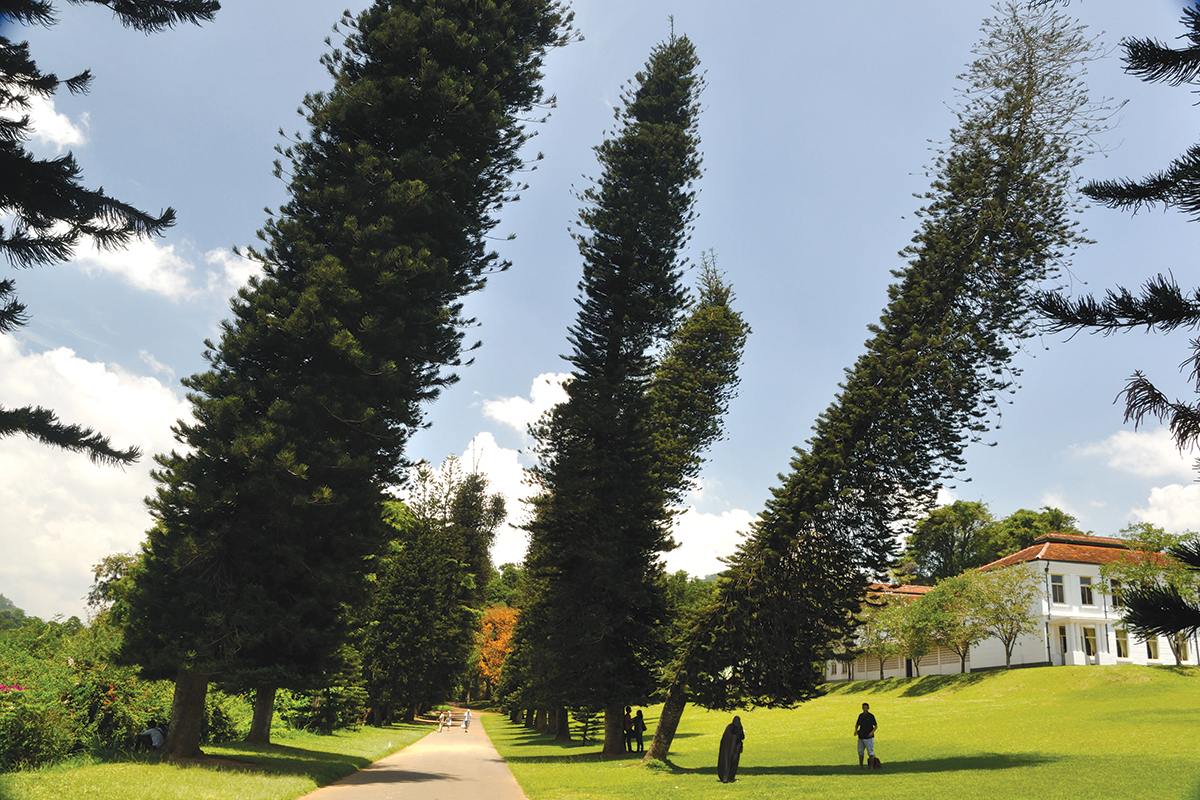
And yet another on reproductive medicine … It seems the folk contraceptive “Thunder God Vine” (Tripterygium wilfordii, above) really does prevent conception.
On the physics of having a shit.
More new research has found that daily small doses of cannabis can slow brain decline with ageing – at least in mice.
And here’s yet another instance where it seems we’ve had it all wrong … apparently eating cheese does not raise the risk of heart attack or stroke.
It has long been thought that the way we categorise colours is cultural, but surprisingly it appears to be genetic.
Sexuality
Porn is allegedly having a “terrifying impact” on men. Girl on the Net lifts the lid and finds the evidence rather thin and attitudes biased.
Is the “Dildo of Damocles” daunting? What does/will happen when sex toys connect to the internet?
Environment
It is estimated that the Fukushima accident gave everyone on the planet radiation exposure equivalent to a single X-ray – although unsurprisingly those in Fukushima received rather more it was unlikely to be more than two year’s worth of background radiation, so tiny in the overall scheme of things.
Hedges are as important for the environment as trees, at least in cities.
In another non-obvious finding, research is showing that beaver dams keep streams cool.
History, Archaeology & Anthropology
There are some amazing things happening in palaeoanthropology at the moment, not least that researchers have discovered how to extract DNA from the soil around archaeological sites.
Another of those amazing pieces of palaeoanthropology is the number and age of the Homo naledi finds in South Africa.

At the other end of Africa, a 4000-year-old funeral garden has been discovered in Egypt.
In a recent, and rather more modern, find a rare medieval text printed by William Caxton has been discovered lurking in University of Reading archives.
One of our favourite London bloggers, diamond geezer, visits the Parisian Catacombs.
Finally in this section, another of our favourite London bloggers, IanVists, explores an abandoned railway tunnel used by the BBC in WW2.
London
Which brings us nicely to London itself … Londonist suggests some of London’s more secret places to visit.
Meanwhile Time Out tells us nine things we mostly didn’t know about Euston Station.
Lifestyle & Personal Development
The Guardian magazine on Saturday 27 May featured Laura Dodsworth’s upcoming book Manhood: The Bare Reality in which 100 men talk about manhood through the lens of “me and my penis” as well as having their manhood photographed.
This a follow-on to Bare Reality: 100 Women, Their Breasts, Their Stories
Pre-order Manhood: The Bare Reality from the publishers Pinter & Martin or from Amazon.
[Full disclosure: I was interviewed for this book and there’s a little bit of me in the article, although unless you know you’ll never find it.]
Following which here’s Lee Kynaston in the Telegraph on male pubic hair grooming. My only question is “Why?”.
The key to happiness is not knowing oneself, but knowing how others see us.
But then scientists and philosophers also doubt the ancient claim that vigorous self-examination makes you a better person.
Food & Drink
WFT is alkaline water? Oh, I see, it’s no different to what comes out of the tap.
If you like sushi, you might no longer as its popularity has brought rise in parasitic infections.
People
I wasn’t quite sure where to put this next item, but it is one for the railway buffs amongst us … Geoff Marshall (no relation) and Vicki Pipe are doing All the Stations: They’re travelling to every train station in mainland UK, documenting and videoing as they go. Their videos are all on the All the Stations channel on YouTube; watch the introductory video first to see what they’re planning.
[Geoff Marshall has twice held the official record for travelling the whole London Underground in the fastest time, so he had to be up for another challenge!]
Shock, Horror, Humour

And very finally here are some stories of what happens when scientists take research specimens through airport security.
More in a month’s time.

Your Monthly Links

They’re off! … On the quest for this month’s links to items you really didn’t want to miss the first time.
Science & Medicine
Many statistics are lies compounded by misleading graphics. Here’s a quick guide to spotting lies in visuals.


Queueing is quite complex, both psychologically and mathematically, so no wonder there are old wives tales about how to queue. But many are wrong, and the right answers are non-intuitive. The Guardian gives us some clues.
We don’t normally think of Winston Churchill as a scientist, but he certainly had a passionate interest in, and knowledge of, the science of his day, even down to writing with great foresight about astrobiology and extra-terrestrial life.
Black chickens. Not just black feathers, but black all the way through: meat, bones and organs. No wonder they’re a special, and expensive, breed. It just seems wrong that so many are bred purely for divination.
Social Sciences & Business
In 1944 the CIA wrote a manual on how dissidents can surreptitiously sabotage an organisation’s productivity and gradually undermine it. Now it has been declassified and released.
Language
So who was Gordon Bennett? The BBC looks at a few of the people behind famous phrases.
Writers, improve your text. Here are a number of filler words and phrases which are superfluous and serve only to bulk out your word count.
Polari is a British slang dating back to at least the 19th century. Used by a number of tightly knit cultures it is perhaps best known for its use by sex workers and the gay subculture. As you might guess the Bible in Polari is quite a hoot; here’s my blog post about it.
Art & Literature
Book blogger Karen Langley has rediscovered Mervyn Peake’s Gormenghast trilogy. Here’s her blog post about it.
History
Construction of London’s Crossrail has unearthed a vast amount of archaeology. Here are two very different reports on the same Clerkenwell site which includes a completely lost river and a curious pair of plague victims: the first report is from IanVisits and the second from the Guardian.
London
Apart from the above item on Crossrail archaeology there is only one snippet on London this month …
Canals are well known for carrying water not electricity, but IanVisits, again, brings the story of how the Regent’s Canal ended up safely carrying both.
Lifestyle
Life is stressful. Things are continually conspiring against us. We all know that if we get too stressed we get sick. So it’s useful to have a list of major life stressors, with their relative values, so you can work out your likelihood of a stress-related illness.
Unsurprisingly the second most highly-rated stress is divorce. Here are four behaviours which appear to be the most reliable predictors of divorce.
Finally in this section is our favourite zen master talking about immigration and tribalism. It’s a perspective worth reading.
Food & Drink

And finally, finally … Garlic. Whether you love it or hate it trying to supress the resulting odour is far from obvious.
Be good until next month!

Message Getting Home

At long last a few UK politicians are getting the message about the need to decriminalise sex work. This is from the Independent a few days ago.

Liberal Democrats move to quash all historical sex-work convictions
of prostitutes and punters


What I find especially interesting, and slightly surprising, is that ex-senior policeman Lord Paddick is in favour. The police aren’t generally considered to be forward thinkers, but then Paddick has always been an outlier.
Now to get the message home to the rest of our politicians that New Zealand seems to have the best model.

Femina ars [NSFW]

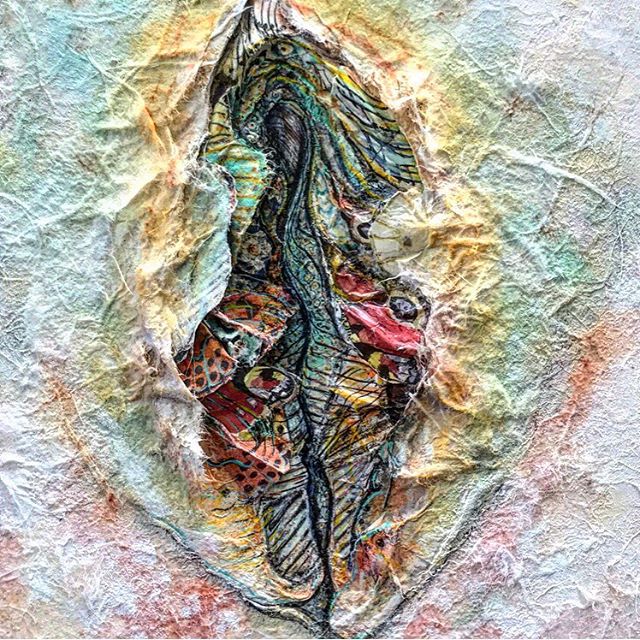
Here’s one for all of you who engage with art, body positivity, female anatomy or just pure eccentricity.
Artist’s Unapologetic Vagina Paintings Are A Force Of Body Positivity
and
Jacqueline Secor Art – Diversity of Nature
Enjoy!

Taboo Vocabulary

I’ve been going on, for a long time, about how we need to normalise nudity and sexuality, and become much more familiar and at ease with our bodies and bodily functions.
Apropos this I recently caught up with a July 2016 press release from The Eve Appeal, who are a charity devoted to fighting women’s cancers.
The press release reports on research they conducted into women’s, specifically young women’s, knowledge of their sexual anatomy, language and attitudes. The results are quite worrying.
Almost two-thirds of young women have problems using words such as “vagina” and “vulva” and only half of 26-35 year-olds are able to locate the vagina (compared with 80% of 66-75 years-olds).
But it gets worse …

It’s not just a knowledge gap … the data also showed a distinct difference in attitudes towards talking about gynaecological health issues … more than one in ten of 16-35 year olds said they found it very hard to talk to their GPs about gynaecological health concerns, and nearly a third admitted that they had avoided going to the doctors altogether with gynaecological issues due to embarrassment …
These findings are in direct contrast with the popular misconception that society is more open these days, making it much easier for women of younger generations to talk about gynaecological health.

I find this very worrying. It means there is a huge section of the population who are at much higher risk than need be of serious gynaecological health issues.
And according to Men’s Health Forum, men are no better about knowledge of, and attitudes to, their genital equipment. So don’t go getting all smug, guys!
I dread to think how bad is the knowledge of the other sex’s anatomy and the naming of parts. Or of normal bodily functions like menstruation.
We just have to change this! We have to get everyone much more familiar with their bodies — with bodies of all sizes, shapes and genders. We have to teach people the correct, as well as the incorrect and slang, names for body parts. We have to overcome the embarrassment and the knowledge gap.
There is really no reason for us to be embarrassed, because medical professionals aren’t — they’ve seen it all before. When I was in hospital recently for my knee operation I had a conversation with one of the (more mature) nurses, who remarked that they all, very early on in their careers, stop seeing genitals in any sexual way; they just become another piece of body no different from a finger or toe. And that is how it should be; just another part of a body. Until one gets into a specifically intimate and sexual situation.
It is also important that we teach when it’s appropriate to use various terms. While “penis”, “vulva”, “testicles”, “anus” are appropriate for a medical context, “prick”, “cunt”, “balls” and “arse” (although perfectly good Anglo-Saxon words) are much better kept for more intimate, private or jocular occasions. And even greater circumlocutory euphemisms are best abandoned completely.
Moreover, if we were all more attuned to, and comfortable with, our intimate anatomy how much more difficult it would become (and we would make it) for sexual predators/abusers. It would be much easier for (potential) victims to speak up, either at the time or afterwards. How much easier would it be for us to fight against female (and indeed male) genital mutilation and to reduce STIs.
I don’t know how we do this piece of public education, especially when we are starting from a base of such poor knowledge and attitudes. What I do know is that the responsibility has to lie with both parents and teachers. Actually it lies with all of us … we all need to use the correct words and not be frightened to do so.
If we can achieve this I feel sure it will result in much better health for all of us, because there will be no stigma in discussing “sensitive” subjects with medical professionals, or indeed with each other, just as we are all comfortable talking about ears, eyes, knees and backache.
It beats me why we can’t just do this.

Don't Criminalise Us …

The fight to get governments to decriminalise sex work (and sex workers) continues. Here’s a piece which highlights the views of Europe’s sex workers — most of whom are (voluntary, not trafficked) migrants.


It is notable that it isn’t just the sex workers who are saying sex work should be decriminalised. This view is backed by

major human rights organisations such Amnesty International, Human Rights Watch, the World Health Organization and several other United Nations agencies such as UN Women and the UNAIDS Advisory Group on HIV and Sex Work are also calling for the decriminalisation of sex work, noting that decriminalisation guarantees better working conditions, and reduces the social vulnerability and marginalisation of sex workers.

And as that implies many are now warning that the basic human rights — as covered, for instance, by the Charter of Fundamental Rights of the European Union — are being violated; and that those violations are state sanctioned the world over.
When are people going to wake up to what’s going on around us? It’s being done in our name, and yet how many of us agree with it?

No Sex Please …

OK, so here’s another nasty, not so little, piece of legislation from the UK government.
The new digital economy bill, which is currently going through parliament, intends to block websites hosting “unconventional” sexual content. So who decides what is conventional, and who will implement and police such a ban?
There’s a piece in yesterday’s Guardian (yes, again!) which tries to explain the What, how and why?
Now whether you like so-called pornography or not, this is worrying. The legislation is ill-conceived and appears to be not just draconian but also potentially arbitrary and ill-defined.
Worse, my personal belief is that it infringes freedom of speech (and belief) and I would agree with critics of the bill who say it is not the government’s place to police what kinds of consenting sex (or indeed anything else) can be watched by adults.
I continue to believe that pornography (unless violent, coercive or involving minors) has a valuable place, just as does the rest of the sex industry. You, personally, may find it distasteful — just as I find the idea of male-male sex distasteful — but that doesn’t mean either should be banned and I would always defend your right to indulge should you choose.
The whole of the English-speaking world has a history of drawing its rules of censorship much more tightly than continental Europe. But that changed with the internet allowing information to be streamed direct to our homes without restriction. And the English-speaking, puritan, nanny state doesn’t like it.
It’s time we started treating people like adults and allowing them to make up their own minds. But to do that requires us to invest in sensible education of our children, and isn’t it easier to keep them in ignorance and subjugated?
So-called pornography is not being forced down people’s throats. It is complete myth that the internet is awash with porn at every turn and it’s being gratuitously feed to every child in the land. Yes, it is there, but you (whatever your age) have to look for it. My systems have every available filter turned OFF and still I do not get a continual stream of emails offering me penis enlargement (surely fairly tame?) nor does every Google search bring up 27,000 pages sex videos and bestiality.
It is worrying enough to have the state control our sexual predilections but the fear is that this will go way beyond pornography; it is the first example of any liberal democratic country creating an internet censor. The fear is what such a framework could go on to be used for.
Yes, this is censorship and as such must be resisted.
Wake up, the coffee pot is bubbling on the stove.

Nudity. Why Not?

Yesterday, in between doing lots of other interesting things (which I’m not allowed to write about, at least yet) and having a day off, I came across a thoughtful piece of journalism on nudity.
In The Scientific Reasons Why You Should Just Always Be Naked Lauren Martin looks at some of the evidence in favour of accepting nudity. OK, it’s American — although that doesn’t make it any less valid elsewhere — not greatly detailed and is written with many questions in order to challenge our prejudices and taboos.
It is well worth reading the whole article, but here is the essence:

Things are only taboo because we make them that way.
… … …
Nudity is a taboo … because we primarily equate nudity or nakedness with sexuality and we have taboos about sexuality.
… … …
What would happen if we accepted our bodies the same way we accepted everything else? What would happen if we stopped covering up and started stripping down? What would happen if we all just let our bodies hang out in the open and didn’t hide them …?
… … …
There’s … no denying … that if we could get past our childish perversions and accept nudity as a basic and natural human form, there would be a lot less “deviousness” and fewer obsessions with the human body — and we could all just stop caring so much about it.
… … …
If men … were exposed to nudity on a normal, everyday basis, they wouldn’t fantasize and obsess over it the way 14-year-olds do at the sight of their first breast … By making nakedness an ordinary, matter-of-fact, common experience, unassociated with sexuality, the unhealthy prurient interest in pornography would be considerably lessened.
Imagine if men were desensitized to the female body … Imagine if men stopped putting all their time and energy into seeing women naked and just learned to live side-by-side with them?
… … …
Imagine if we all just looked at each other the way God made us without any implications or idealized notions of the perfect body? … it’s our clothing that creates our insecurities and inability to accept and love each other the way we should.
… … …
What if we’d grown up in a nude household? What if we’d been taught from a young age nudity is natural [and] beautiful?
… children exposed to nudity from a young age became … unfazed by the human body later in life and sometimes, psychologically stronger because of it … children raised around nudity [grow] up with a higher body self-concept … coming from a nudist family [plays] a more significant role in the children’s positive self body-image than their race, gender, or area of the country in which they lived.
… … …
Humans donned clothing to keep away parasites and filth, yet only created breeding grounds for different types of infections and disease … Along with infertility rates and Lyme disease, clothes also contribute to yeast infections and UTIs.
… … …
It seems arbitrary, but walking around barefoot increases brain flexibility. It doesn’t just make you feel young again, it makes your brain feel young again.


I was brought up in a household where nudity was natural and pornography was seen as a healthy part of life’s rich pattern (but violence and abuse were definitely not acceptable). To this day nudity and pornography don’t faze me — and I fail to understand the taboos around sexuality. I’ve long been an advocate of mixed student residences and mixed changing rooms — if we were all well adjusted to nudity and our bodies this should not be a concern for anyone (but until we are it will be).
I spend time in the nude when I can and I know I have a lot fewer problems with yeast infections and so on because of it. Despite admonishment from the medics I do spend almost all my time at home barefoot (it has to be really cold for me to put socks on) because fresh air is not only better for the feet (see yeast infections, above) but there is thought to be a protective effect against dementia.
So there you have it. An article which looks at some of the evidence and comes out supporting what I’ve been saying for nearly 50 years! Nudity is healthy, mentally and physically, and embracing it would benefit all of us both individually and as a society.
So what really is so special about nudity that we have to make a taboo out of it? Nothing! Get over it.
PS. As an example of how daft all this is, it took me longer to find a suitable illustration for this post than it did to actually write the thing!

Monthly Interesting Links

You just can’t get the staff these days. This month’s issue of interesting links to items you may have missed is late again. Apologies. And there is a lot in this month, so let’s get going.
Science & Medicine
Our first item is a bit technical, but interesting … It seems that neural networks (models for what makes our brains work) have a deep connection with the nature of the Universe.
And now to some much easier topics …
We all get paper cuts from time to time, but why are they so painful?
Something else we all get from time to time is bags under the eyes. But why?


And in another BBC magazine story here’s something slightly scary … just what does live under our fingernails?
There’s a very odd and rare condition where people’s internal organs are arranged the wrong way round, in mirror image — it’s called situs inversus. This piece is about what it means and what it’s like if you have it.
One of the most demanding, important, and mostly unseen, medical specialisms is being an anaesthetist. No surgery can happen without them and your life really is in their hands. This is what it means to be an anaesthetist.
Sexuality
The clitoris is so often not understood and doesn’t get the attention it should (from its owner as well as from men). This piece talks about why this is important.
After a change in the law, Italy’s Supreme Court has ruled that public masturbation is not a crime as long as it isn’t done in the presence of minors. This could <cough> get interesting.
So why do polyamorous people fear ‘coming out’? Spoiler: mostly misunderstandings.
Lest anyone doubt it, sex workers are ordinary people like the rest of us. This was realised by a New York Times reporter who was investigating whether prostitution should be a crime (in the USA).
Environment
OK, so now for a complete change of tone. Here’s a forester and environmentalist who ​thinks trees talk to each other.
Things have always come in standard sizes, haven’t they? Well no, the concept of standard sizes really only starts with a German architect in the 1920s.
Social Sciences & Business

In case you’ve not caught up with it yet, here’s a piece on the UK’s new £5 note.
London
Did you know that London’s Monument (to the Great Fire on 1666) contains a secret laboratory?
Here are ten secrets about the Thames which you probably didn’t know.
And equally fascinating, just how do London bus routes get their numbers?
OK, so more secrets: here are ten places in London you’ll probably never visit.
Lifestyle
Not all of us see them as a necessity, so why do we bother with clothes? And no, it isn’t all about keeping warm.
Here’s another take on the health benefits of being a nudist.
Food & Drink
I bet we all do this, but here’s why you shouldn’t wrap food in aluminium foil before cooking it. Yes, its the appliance of science!
The Five Second Rule. Myth or not?
Here’s the latest finding: against all expectations it seems that hard-fat cheese is good for us.
Chris Leftwich is the one man in London who knows everything about fish and seafood. Londonist has the story.
Shock, Horror, Humour
And finally for this month, here are the winners of this year’s Ig Nobel prizes for research which makes you laugh and then think.
Toodle, pip!

Words: Yoni & Lingam

Yoni

  1. In Hinduism, a stylized representation of a vulva worshiped as a symbol of a goddess or Shakti.
  2. The female genitalia, regarded as a divine symbol of sexual pleasure.
  3. The Tantric symbol of the feminine.

According to the OED the word first appears in English in 1799 and is derived from the Sanskrit yonih, womb, abode, source.
Lingam

  1. In Hinduism, a stylized phallus worshiped as a symbol of the god Shiva.
  2. The penis.
  3. (In Sanskrit grammar) the masculine gender.

Again, the word is from the Sanskrit liṅga, liṅgam, mark, penis. It is first recorded in English in 1719.