Somehow I’m not writing this week, probably because I’ve spent a lot of time with my head in family history research. But here is this weeks strange set of bedfellows.
First I’ve been reading a 1923 book about my home town and discovered that even Cromwell’s officials in 1650 could write estate agent-ese …
The Presence Chamber. One very large, spacious delightful Room called the Kinge’s Presence Chamber, being wainscotted round with carved wainscott of good oak, coullered of a liver color, and richly guilded with gold, with antique pictures over the same ; the ceiling full of guilded pendants hanging down, setting forth the roome with great splendour […] Also a very fair, large chimny piece of black and white marble, with four pilasters of the same stone […]
[Government Survey of Theobalds Palace, 1650 quoted in Percy Charles Archer, Historic Cheshunt]

This really is what it’s thought Theobalds Palace looked like!
And from the same volume this delight …
For, if those enemies to all good endeavours, Danger, Difficulty, Impossibility, Detraction, Contempt, Scorne, Derision, yea, and Desperate Despight, could have prevailed by their accursed and malevolent interposition either before, at the beginning, in the very birth of proceeding, or in the least stolne advantage of the whole prosecution; this Worke of so great worth had never bin accomplished.
[John Stow, Survey of London, quoted in Percy Charles Archer, Historic Cheshunt]
And now for some things much more of our time …
Face to face advice on the internet.
[BBC TV London News, 11/07/2011]
Be especially sure to wipe your children down. Children are just about the grimiest thing in the world.
[Rob Dunn at Scientific American Blogs]
Boris Johnson knows even less about geology than he does about geography. Undercutting Ealing with a tunnel means my constituents, and his electoral voters, will fall into the ground. London’s transport system is built on clay, it would cost more money to tunnel through that than if we replaced HS2 with sedan chairs and walked people to Birmingham.
[Ealing North MP, Steve Pound, on Mayor Boris Johnson’s idea of tunnelling HS2 rail under outer London]

 My Weight. What do you mean this counts as looks? No it doesn’t. I’d look like a sack of spuds whether I was twice the size I should be or not. I have this characteristic which means I eat too much. Not necessarily the wrong things. Just too much. And if I’m not careful I drink too much beer as well. And I seem to be unable to switch it off. Why can’t I be down to fighting weight and sexy? Even hypnotherapy has so far only succeeded in chipping odd bits off the corners. And it’s all linked to …
 Depression. Wouldn’t I love to get rid of my depression. It is so destructive. And I suspect I’ve had it since childhood. I also suspect that, although it is probably multi-factorial there is a genetic component; my father and his father were both depressive. I do seem to have made some progress here as a result of the hypnotherapy. My depression is now much less (giving up work helped a lot!) and I’ve halved the dose of my anti-depressants. Maybe that one is amenable to being smacked on the head.
 Patience. I admit I’m not patient. I never have been. Although again I’m a lot better than I used to be. I hate being late. I hate others being late, or dithering, or being stupid, or disorganised. I hate standing in queues. I hate it when things don’t go my way; I get annoyed and sweary. Gggrrrrrrr! Just get a life and relax will you! NOW!
 I’m not quite sure how to sum up this next one. But I would like to be less prone to having my arse stuck in my chair, doing more around the home, helping and generally being more engaged. I don’t mind being inept with my hands and having ten left thumbs for fingers (after all my father had twenty left thumbs and he survived to be 86). It’s partly down to the depression, but I feel that is really only an excuse. But I would appreciate being able to make myself do more; things might get done then. And I know Noreen would appreciate this too.
  Finally, I need to be able to let go; be less “in control” all the time. Everything I do and say seems to be controlled; thought out; calculated. There isn’t enough spontaneity; not enough emotion. I seem to be frightened of being emotional, letting my emotions out and just allowing my self to relax into things and go with the flow. And for some strange reason it feels as if it has gotten worse recently. Or maybe I’ve just become more aware of it. Definitely something I need to work on.
 A species of colourful, remarkably saurian, chicken-like bird, Opisthocomus hoazin, found in swamps, riverine forest and mangrove of the Amazon and the Orinoco deltas of South America. It is notable for having chicks that possess claws on two of their wing digits; the chicks are also able to swim and climb — useful when you’re a pheasant-sized bird which nests in trees over water!
 Biologists and philosophers have pondered for generations the ways in which our modern lives may be disconnected from our pasts, out of synch … When you look beside you in bed, you notice no more than one animal (alternative lifestyles and cats notwithstanding). For nearly all of our history, our beds and lives were shared by multitudes.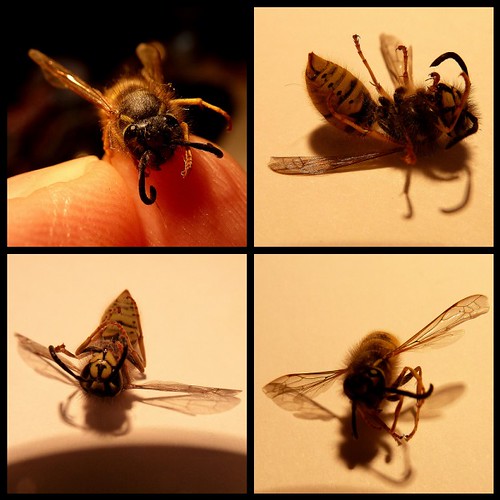

 Something I Like: Beer
 The nose print of a dog is as unique as a fingerprint, and your dog can be positively identified the same way.
 Yes, indeed. Apart from the occasional sojourn in hospital, I’ve eschewed night attire entirely since I was a student. Yes, that’s right, not even a pair of boxers. I was brought up to wear pyjamas and frankly they were often necessary in an unheated house in the 1950s, although my parents often slept in the nude. But as soon as I left home and had a room of my own (rather than a shared room or lodgings) I threw off my pyjamas, never to look back — it felt better and was a lot more comfortable.