Yet another selection of the weird and wonderful from the catalogue of our local auction house. Nothing really outrageous this time; no mounted walrus heads; cranberry glass figurines of Hitler; stuffed guinea pigs. Just a collection of oddities put together and called a lot.
A still life of a loaf of brad (sic) with cheese and a bottle of beer, oil on canvas, gilt frame
A Dunhill cigar cutter, a Dunhill white metal lighter and a small erotic carving
3 miniature books, a small collection of miniature porcelain gnomes, and a silver-mounted perfume flask
A spring-loaded bone-handled corkscrew inscribed ‘BK&C’, a pair of old field glasses, a boxed pair of Nikon binoculars, a pair of opera glasses, magnifying glasses, and an unusual small candle holder, being held up by a frog on top of a tortoise
A late Victorian ornate silver bachelor milk jug and sugar basin, Birmingham 1896
How do you sex a milk jug, let alone determine its marital status?
A large quantity of miniature souvenir cheese dishes with covers including Margate, Ipswich, Alfriston, Bath, Lincoln, etc.
A White Star Line plate, a quantity of Wedgwood Bournvita cups, plates and coffee pot, a small quantity of commemorative ware including the coronation of 1937 George VI, a small quantity of souvenir ware including Walton-on-the-Naze and Northampton, a Victorian bisque nodding mandarin, a bisque figurine of a girl, etc.
Seven Wade Nat-West piggy banks including two Fathers, a Mother, Baby and three different children.
Clearly a very modern family indeed.
A good quantity of tribal art including masks, crocodile figurine, backbone necklace, carved hardwood bellows, pipes, African wall mask styled as an elephant and decorated with feathers, plus other interesting objects.
A boxed set of six Babycham glasses, a Wedgwood green jasperware box, a Wade dish entitled Wagon Train, a Belleek heart-shaped trinket box and cover, three boxed key rings, four Time-for-Tea boxed miniature collectable teapots, a horn, a figurine of an angel with Jesus, a figurine of a lady, a set of knife rests, three blackbird pie funnels, a quantity of small animal figurines including a Goebels rabbit, a Russian blue and white alligator, and other blue and white Russian figurines including two children on a wolf, a potter, eskimo, ladies, etc., a small quantity of thimbles, a quantity of souvenir ware including a clog advertising Guildford and a pig advertising Hove, a Coalport figurine of an owl and another of a snail, an Avon black cat perfume bottle, a Portmeirion white glazed jug, a Herend dish decorated with flowers, a Russian ceramic bear, a white glazed Naples figurine of a cherub playing a flute, three David Winter cottages, and other collectable items.
… interesting items including Victorian Frister & Rossman sewing machine, a leather briefcase, a Bush radio, Smiths mantel clock, three Oriental embroidered pictures of birds, Old Foley jar and cover, a large wash jug decorated with roses, copper jug and cover, three silver plated jugs, plus other interesting china items including wall plates, jugs, etc.
A quantity of fishing equipment incl. seat, nets, rucksack and fishing rods in a blue carry-all container and a pair of curtains
Two boxes of interesting artefacts incl. an old Oriental metal bell decorated with dragons and masks, a Dinky toy Ensign glass airliner model plane, old brass animal collar, a pair of heavy metal ankle bracelets, old metal pipe, replica pistol, snake candlestick, heavy Oriental brass vase, two heavy metal African figures, a pewter tankard, and a large metal tankard
Two Tanzanian Nyamwezi water divining wooden staffs of figural form, male and female
A huge collection of 75rpm (sic) and LP records
and again …
A collection of LPs, 45s and 75s, (sic) some of which date back to the 60s
A quantity of camping equipment incl. tents, stoves, kettles, plates, in a metal trunk C219CMC 1944, belt, pen, musical dog figure ‘The Last Shout’, a boxed brake lights, a military box, an old BBC Bakelite broadcasting item no. 2 model with adapters for aerial, earth and phone, an old leather suitcase and a trunk containing a leather case, torches, a quantity of Practical Engineering magazines, and various Machinery magazines, a pair of leather driving gloves, etc.
Three cartons of assorted National hats from around the world
and again …
A collection of national hats from around the world … including SE Asian straw hats and a Native American headdress
Category Archives: ramblings
Oddity of the Week: Legal Tender
Now here’s an oddity which I found out by chance the other day …
Bank of England sterling banknotes are the only paper money which is legal tender in England and Wales. No banknotes are legal tender in Scotland or Northern Ireland! (Bank of England coinage is legal tender throughout the UK.)
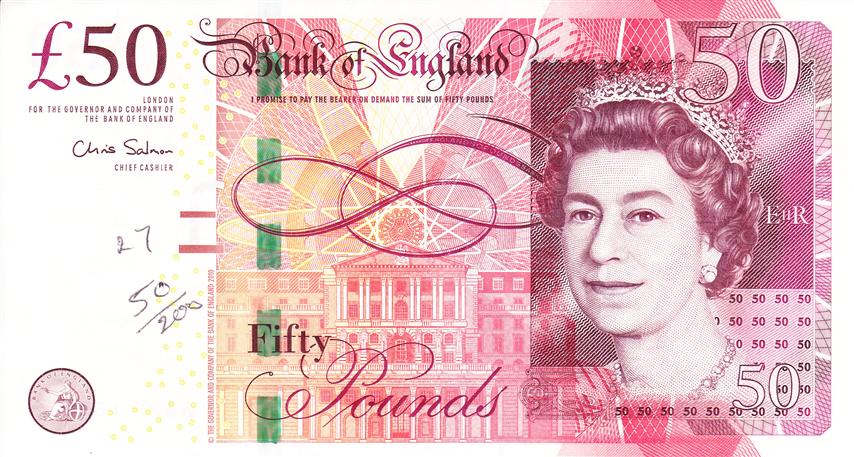
The following quotes come from the Wikipedia article on Banknotes of the Pound Sterling which, for those in doubt, is well referenced.
The Bank of England [acts] as a central bank in that it has a monopoly on issuing banknotes in England and Wales, and regulates the issues of banks in Scotland and Northern Ireland …
… some of the monopoly provisions of the Bank Charter Act [of 1844] only applied to England and Wales. The Bank Notes (Scotland) Act was passed [in 1845], and to this day, three retail banks retain the right to issue their own sterling banknotes in Scotland, and four in Northern Ireland …
English banknotes … The majority of sterling notes are printed by the Bank of England. These are legal tender in England and Wales, and are always accepted by traders throughout the UK …
Scottish banknotes … are the recognised currency in Scotland, but are not legal tender. They are always accepted by traders in Scotland, and are usually accepted in other parts of the United Kingdom. However, some outside Scotland are unfamiliar with the notes and they are sometimes refused. Institutions such as clearing banks, building societies and the Post Office will readily accept Scottish bank notes.
The situation in Northern Ireland is exactly as in Scotland except that Northern Ireland banknotes are seldom seen outside the province.
And here now is the interesting part …
The concept of “legal tender” is a narrow technical definition that refers to the settlement of debt, and it has little practical meaning in everyday transactions such as buying goods in shops (but does apply, for example, to the settling of a restaurant bill, where the food has been eaten prior to demand for payment and so a debt exists). Essentially, any two parties can agree to any item of value as a medium for exchange when making a purchase (in that sense, all money is ultimately an extended form of barter). If a debt exists that is legally enforceable and the debtor party offers to pay with some item that is not “legal tender,” the creditor may refuse such payment and declare that the debtor is in default of payment; if the debtor offers payment in legal tender, the creditor is required to accept it or else the creditor is in breach of contract. Thus, if in England party A owes party B 1,000 pounds sterling and offers to pay in Northern Ireland banknotes, party B may refuse and sue party A for non-payment; if party A provides Bank of England notes, party B must acknowledge the debt as legally paid even if party B would prefer some other form of payment.
Banknotes do not have to be classed as legal tender to be acceptable for trade; millions of retail transactions are carried out each day in the UK using cheques, bitcoin, or debit or credit cards, none of which is a payment using legal tender … Acceptability as a means of payment is essentially a matter for agreement between the parties involved.
Bank of England notes are the only banknotes that are legal tender in England and Wales. Scottish and Northern Ireland banknotes are not legal tender anywhere … The fact that these banknotes are not legal tender in the UK does not however mean that they are illegal under English law, and creditors and traders may accept them if they so choose …
In Scotland and Northern Ireland, no banknotes, not even ones issued in those countries, are legal tender. They have a similar legal standing to cheques or debit cards, in that their acceptability as a means of payment is essentially a matter for agreement between the parties involved, although Scots law requires any reasonable offer for settlement of a debt to be accepted.
Until 1988, the Bank of England issued one pound notes, and these notes did have legal tender status in Scotland and Northern Ireland while they existed. The Currency and Bank Notes Act 1954 defined Bank of England notes of less than £5 in value as legal tender in Scotland. Since the English £1 note was removed from circulation in 1988, this leaves a legal curiosity in Scots law whereby there is no paper legal tender in Scotland.
And here’s a further curiosity …
Bank notes are no longer redeemable in gold and the Bank of England will only redeem sterling banknotes for more sterling banknotes or coins. The contemporary sterling is a fiat currency which is backed only by securities; in essence IOUs from the Treasury … Some economists term this “currency by trust”, as sterling relies on the faith of the user rather than any physical specie.
In other words all money is worthless; it is all either physical tokens (banknotes, coins) or electronic bits in a computer system and it is all government IOUs. But it was the definition of “legal tender” and the lack of banknotes as legal tender in Scotland and Northern Ireland which piqued my interest.
Tasse de Dégustation
A couple of months ago I acquired from a friend four tastevin (or tasse de dégustation, tasse du vin, wine cups, depending on your predilection). My friend had bought them in northern France and cleaned them up before passing them on to me in exchange for a few drinking tokens.

 They are all of the same standard design with bowls 75mm in diameter and have the crest of Bouchard Aîné & Fils, a recognised Beaune wine house. All appear to be white metal plating over a yellow metal base, the latter showing through where the white plating is rubbed. The base metal is therefore likely to be brass (or possibly some form of pewter).
One of the four is clearly silver plated as it has a small stamp “METAL ARGENTE” (the French indication of silver plate) on the bowl near the handle. Two are stamped just “METAL”. The fourth has a tiny (2mm) square maker’s mark of M and P with what appears to be an upward pointing arrow between the letters — I have not been able to satisfactorily identify this maker. As far as I can see there are no other marks. The two “METAL” ones have a very slightly greyer/duller lustre than the other two, which makes me suspect they are maybe tin plated, the brighter two both being silver — but that is pure speculation on my part.


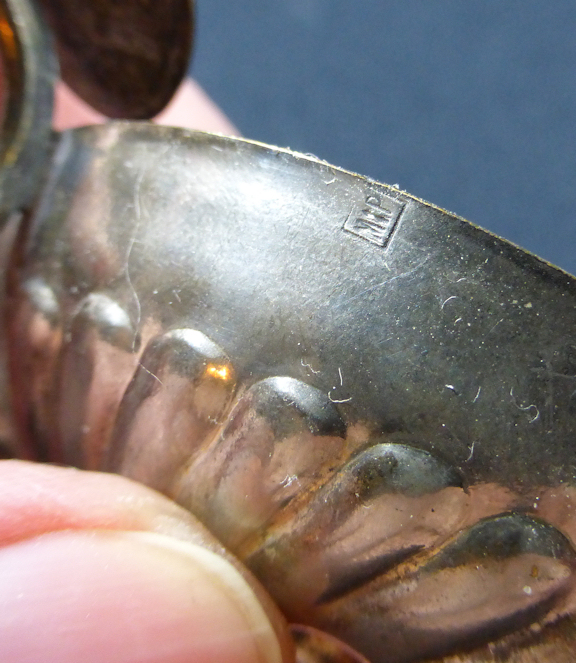
This fourth, with the maker’s mark, is noticeably the most worn, with more yellow metal showing through, so it looks as if it may have been someone’s favourite. The stamping of the crest is also of a slightly better quality, so this one could be older.
Looking further at the wear on the handle of this one with a maker’s mark, two further things become apparent: (a) there is a slight wear mark where the tasse would have been worn on string/ribbon round a sommelier’s neck (in fact all four have this) and (b) the wear on the crest suggests that the sommelier was right handed.
Nonetheless I doubt any of them is of any significant age.
I have no expectation that they are of any useful monetary value but nonetheless I’m interested to work out their provenance. I have written to Bouchard Aîné & Fils asking if they can date them or provide other information, but I have so far not received a reply.
If anyone can shed further light on them, then I would love to hear from you.
Meanwhile they are nice little things to have!
Laptop to Go
I may have spent a chunk of my working life project managing logistics projects, but global logistics still boggle my mind.
Recently I bought a new laptop. For various reasons, one being I wanted a slightly non-standard hardware configuration, I ordered direct from the manufacturer. In doing so I knew that the machine would be shipped direct to me from China, because like most things these days that’s where they’re manufactured.
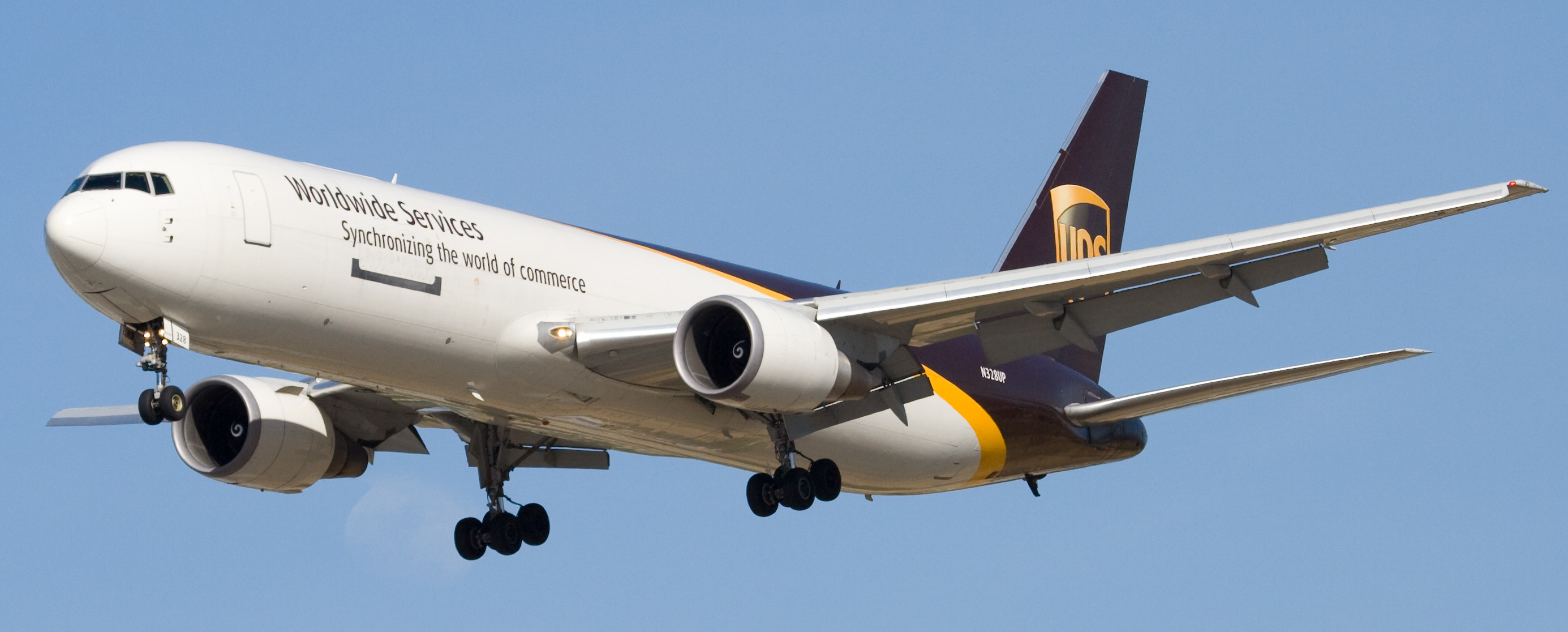
When it was eventually despatched it was trusted to the care of UPS, and slightly to my astonishment (especially given the relative lack of protective packaging) it actually arrived in one piece. Thanks to the wonders of trackable packages I was able to watch the somewhat byzantine route the laptop took to get to me. It went like this (all times are local time):
| Thursday (day 1); late evening | Ready for collection from Hefei, China |
| Wednesday; evening | Collected by UPS (And they call this is expedited delivery!) |
| Thursday (day 8); very early morning | Leaves Shanghai on route to … |
| Thursday; early morning | Arrival at Incheon, South Korea (Oh, its going east so will come via LA or JFK. Not a bit of it.) |
| Thursday midday | Leave Incheon bound for … |
| Thursday, early morning | I don’t believe it! … Almaty, Kazakhstan, where it eventually clears customs in mid afternoon |
| Thursday; early evening | Departs Almay on its way to … |
| Thursday early evening | Warsaw, Poland |
| Thursday; mid-evening | And we’re away from Warsaw on the next leg to … |
| Thursday; late evening | Cologne, Germany |
| Friday; not much after midnight | Leaving Cologne bound for … |
| Friday; before dawn | Stansted (At last we’ve arrived in the UK, but, phew, we need a little rest now!) |
| Monday; before dawn | Leaving Stansted going to … |
| Monday; 17 minutes after leaving Stansted | Feltham, near Heathrow (How in 17 minutes unless it’s on a helicopter?) |
| Monday; within minutes of arrival | Leaving Feltham on the final leg to me |
| Monday; midday | Finally delivered to my door! |
That’s 12 elapsed days and countless thousands of miles in eight hops through some very unlikely places.
At each step along the way I was having a little guess as to where it would go next, and it’s safe to say I got every one wrong except the last stop in Feltham — and that only because I know it’s where my local UPS depot is!
I’m disappointed they didn’t manage to work in Kuala Lumpur, Osaka and Barcelona along the way!
Coming up in April
Interesting events an anniversaries in the month ahead.
1 April to 5 May
National Pet Month has been promoting responsible pet ownership and helping pet charities across the UK for the last 25 years. This year’s theme is Celebrating Our Pets and there events across the country. Find out more at www.nationalpetmonth.org.uk.
1 April
All Fools Day is widely recognized and celebrated in various countries as a day when people play practical jokes and hoaxes on each other. The earliest recorded association between 1 April and foolishness is an ambiguous reference in Chaucer’s Canterbury Tales.
4 April
International Carrot Day. Who said Bugs Bunny was only a cartoon character? Find out more at www.carrotday.com.
5 April
American Indian Princess Pocahontas married John Rolfe on this day in 1614.
5 April
International Pillow Fight Day when there will be massive pillow fights in cities around the world. The events are organised under the umbrella of the Urban Playground Movement who organize free, fun, non-commercial public events. Again you can find more on their website at 2014.pillowfightday.com.
20 April
Easter Day. As well as being a major festival of the Christian church there will be traditional events (egg hunts, egg rolling, simnel cakes …) in many countries around the world.
22 April
Earth Day is an international project to encourage us all to do more to protect the planet and secure a sustainable future. This year the emphasis is on education an schools are being encouraged to join in. You’ll find lots of information over at www.earthday.org.
23 April to 21 June
British Asparagus Festival. The Vale of Evesham is the asparagus growing centre of the UK and each year they hold a 2 month-long festival during the asparagus season, starting with the first crop on St George’s Day. English asparagus is the best and has to be enjoyed during its short season, hence the festival. Find out more at www.britishasparagusfestival.org.
25 April
Guglielmo Marconi, the Italian pioneer of long-distance radio transmission was both on this day in 1874.
26 April
On this day in 1564 William Shakespeare is baptised in Stratford-upon-Avon.
28 April
On this day in 1789 the Mutiny on the Bounty is led by Fletcher Christian against Lieutenant William Bligh.
Five Questions, Series 5 #5
I’ve just realised that I never answered the last of the Five Questions in Series 5 that I posed way back at the beginning of the year. I’m not quite sure how that happened, but anyway here at last is that answer.
Question 5:Unicorns or magic carpet as your only form of transport? Why?
That just has to be a magic carpet. It should be much more comfortable a ride and there should be space for others to come along too. Moreover magic carpets probably fly lower, so you can see things along the way.
I assume that unicorns are basically horses. I don’t like horses. To me they are temperamental and untrustworthy beasts. I’ve sat on a horse only once, when I was a kid; it was very scary and bloody uncomfortable. So I can’t imagine being able to cling onto a flying unicorn.
No, the “My Little Pony Club” can have my share of unicorns. I’ll have a magic carpet, thank you!
OK, that concludes Five Questions, Series 5. I’ll do another series in a few months.
Meantime, I would like questions to answer — ask anything and I will see if I can answer it. No promises though ‘cos you really don’t want to know about my … TMIA!
Oddity of the Week: Railways #394½
Things you never suspected about railways #394½ …
The Severn Valley Railway (an English preserved steam railway, M’Lud) is now midway through a project to spend £75,000 restoring a Gresley designed LNER Gangwayed Brake Pigeon Van. Yes, that’s right, they’re spending around three times the UK average annual salary restoring a specialist railway coach for carrying pigeons!
Source: The Railway Magazine; March 2014
Ten Things #3
Here’s my March list of Ten Things.
10 Birds I see regularly in my Garden:
- House Sparrow
- Starling
- Blackbird
- Goldfinch
- Ring-Neck Parakeet
- Chaffinch
- Robin
- Great Tit
- Greenfinch
- Blue Tit
In fact we do so well for birds I might have to do another list of ten sometime later.
Coming up in March
Interesting events an anniversaries in the month ahead.
4 March
Shrove Tuesday, and therefore Pancake Day. Traditionally this was the feast to eat remaining winter food stocks on the last day before the fasting of Lent. It was also the day when the penitent went to confession (hence “shrove” from “shriven”) in preparation for Lent.

Pieter Bruegel the Elder; The Fight between Carnival and Lent (detail)
5 March
The day after Shrove Tuesday is therefore Ash Wednesday, the first day of Lent.
8 March
International Women’s Day. Find out more at www.internationalwomensday.com
11 March
This day in 1984 saw the beginning of the National Miner’s Strike in which Prime Minister Margaret Thatcher defeated the Miners’ Unions and effectively killed the British coal industry.
14-23 March
National Science & Engineering Week is a ten-day national programme of science, technology, engineering and maths events and activities across the UK aimed at people of all ages. Find more at www.britishscienceassociation.org/national-science-engineering-week.
21 March
Spring (Vernal) Equinox and the pagan festival of Ēostre (which the Christian church subsumed into Easter and made a moveable feast).
21 March
Composer Modest Mussorgsky was born this day in 1839.
25 March
Lady Day or the Feast of the Annunciation of the Blessed Virgin. It is the first of the four traditional English quarter days when servants were hired and rents were due.
26 March
The UK Driving Test was introduced on this day in 1934.
30 March
Mothers’ Day in the UK, which is always celebrated on the fourth Sunday in Lent.
31 March
Paris’s Eiffel Tower was opened this day in 1889.
Five Questions, Series 5 #3
So here you go with my answer to question three of the Five Questions in Series 5 that I posed at the beginning of the month.
Question 3: Do stairs go up or down?
Well now there’s a question! It’s a bit like “Is the glass half full or half empty”.
The answer is really either both or neither, depending on one’s philosophical position.
You can look at it as stairs going up to or from something or equally down to or from something.
But do they really?
No, not in my book of logic. Stairs are stationary. It is we who do the going up or down.
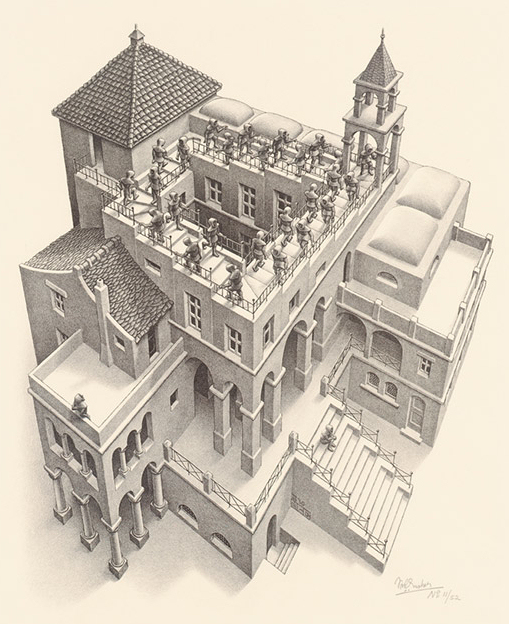
So I would submit, m’Lud, that stairs go neither up nor down. They go nowhere. They just are.
Unless of course they’re on the back of a truck (or other conveyance) when they could well be going from place A to place B. But that also may be neither up nor down; or it could be both.
Confused? Yeah, well that’s philosophy and logic, innit!