and a
Prosperous New Year
to all our family, friends and followers
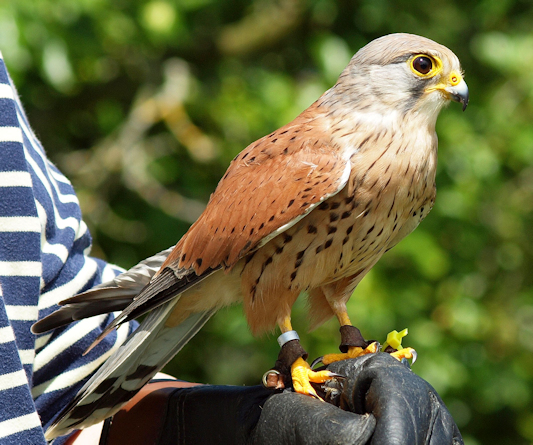
Bramble the Kestrel (Coda Falconry, June 2018)
© Keith Marshall; 2018
Following on from last month’s Ten Things we once again have a seasonal, although not especially Christmas, theme.
Ten Winter Things

Today is the Feast of St Nicholas (supposed prototype for Santa Claus). In some traditions this day is actually more important than Christmas Day, and for others it signals the start of the Christmas season. So today seems an appropriate time for a Christmas meme. Sing along Join in with your version as you choose.


 This month’s Ten Things once again has a slightly seasonal feel to it and is more in tune with the lists in The Pillow Book of Sei Shōnagon.
Ten Things that give a Hot Feeling
OK, so here’s another silly meme I picked up the other day on Facebook, for no other reason than I have 5 minutes to waste. No-one gets tagged, just join in if you want to.
? Marriages: 1
? Divorces: 0
?? Children: 0 (from choice)
? Grandchildren: Not possible!
? Pets right now: 3 cats: Tilly (5), Rosie (2), Boy (1)
??⚕️ Surgeries: at least 6
✒ Tattoo: 0
?? Piercings: 1
✋? Quit a job: Yes
? Been to an Island: Yes
? What do You drive: My wife nuts
✈️ Flown on a plane: Yes
? Best Vacation: Harz Mountains
? Favourite Drink: Adnams Ghost Ship or Adnams Dry Hopped Lager
? Rode in ambulance: Yes
? Sang karaoke: Not likely!
❄ Ice skating: No chance!
? Been surfing: Again, not a chance!
? Been on a Cruise: I hate the very idea
? Rode on a motorcycle: Scooter yes, motorbike no
? Own a motorcycle: No
? Rode on a horse? Yes
? Almost died: No, I’m still here to annoy you
? Stayed in a hospital: Yes
? Favourite fruit: Grapefruit
? Favourite day: Possibly Saturday
? Favourite colour: Depends on my mood
? Last phone call: Tom
? Last text: Received: my bank; Sent: John B
? Watched someone die: No
?️ Coffee or Tea: Tea, strong, preferably Earl Grey
? Favourite pie: English pork pie
? Pizza: Yes
? Cats or Dogs: Always cats
? Favourite Season: Spring/early Summer
☘️ Favourite holiday: quiet non-commercialised seaside
So the month has gone around again and its time for this month’s Ten Things. So let’s see …
According to Wikipedia there are 69 cities in England and I’ve visited around half of them, so here are ten.
Ten English Cities I’ve Visited
There’s an important post by Sensei Alex Kakuyo over on the Same Old Zen blog about approaches to anger and angry people under the headline Buddhism and Professionally Angry People.
It’s important because although Kakuyo approaches it from a Buddhist standpoint it is applicable to all of us. For me the key messages are:
I have a choice. I can be angry, pissed off, and exhausted for my entire life, or I can practice acceptance.
… acceptance is not surrender. Rather, it’s a recognition that there is only so much that I can do with one body, in one lifetime. It’s an understanding that life is filled with suffering, and the only thing I can control is how I react to it.
So, I do what I can within the confines of my own life, and I accept that other people will make other choices. I accept that I may not like those choices …
… professionally angry people get riled up over things they can’t control. They cause suffering for themselves, they cause suffering for others, and the world keeps turning exactly as it did before.
… “Is there direct action that I can take to solve this problem?” If there is something that I can do that will actually solve the problem or alleviate my part in the ill affects, then I do it.
It isn’t always easy, indeed it can be extremely hard, and I know I fail at this more often than not. But it is something I try to live by. There’s only so much one can do and it is necessary to pick one’s fights. There’s no point worrying about things you have no control over; they have to be allowed to wash over you.
One of our favourite Zen Masters, Brad Warner, recently wrote the ridiculousness of religions, what he called “religulous belief”. As regular readers will surmise, these are views with which I have much sympathy. However along the way Brad did explain why liturgy remains important to me despite my lack of belief in deities.
Here is an editied version of Brad’s article, as it partly explains something which has long puzzled me:
Bill Maher and like-minded people such as Richard Dawkins always make the same complaints about religions. They attack the religion’s cosmogony – its myths, its creation story, its ideas about heavens, hells, angels and all that. They point out that this stuff is ridiculous. Then they figure the job is done.
Most religions have pretty dopey stories attached to them … Even mainstream religions have ideas that sound pretty silly when you examine them; virgin birth, parting of seas, swallowings by whales, people rising from the dead, and so on. Some Buddhist ideas … are just as weird.
…
I don’t think most people join religions because they are convinced by their cosmogony. People don’t say, “You guys teach that God lives on planet Kolob? That sounds reasonable. Sign me up!”
…
Being without faith is a luxury for people who were fortunate enough to have a fortunate life. You go to prison and you hear people say, ‘I got nothing but Jesus in here.’ If you’re in a foxhole you probably have a lot of faith. I completely understand that. But how can smart people believe in the talking snake and people living to be 900 years old and virgin birth? …The answer is that we’re all in a foxhole. We’re all in prison. Maybe not literally, but metaphorically. We’re all going to get sick and die. We’re all imprisoned by society to one extent or another. Even “fortunate” people have to suffer misfortune. It’s inevitable …
People will cling to anything that makes the sadness of life a little easier to take. Being wrong but happy feels better than being right but miserable.
… Buddhism, at least in the Zen school … doesn’t insist that we have to believe in Buddhist cosmogony. Most schools of Buddhism don’t have a strong insistence on belief in Buddhist cosmogony – although some do. But the Zen school is probably the most radical in its rejection of such beliefs.
Yet … Zennies … still retain many of the trappings of Buddhist schools in which such beliefs are held more strongly. They still have ceremonies in which they honour mythological figures …
Nobody ever insists that you have to believe … yet we play along just like people who do believe these things.
… these ceremonies have practical value. They help people get along together. They give them a sense of belonging and community. Their “lies” … ease some of our worries and fears. And they can do this even if we know perfectly well they’re not true …
This is very interesting as it says to me this is (at least partly) how liturgy and ceremony work: by reinforcing community, easing worries, despite our better judgement. Although I still think there is something even deeper, more magic, about really good liturgy like Tridentine Latin Mass.
I think it may be similar to the way it feels good to hear someone you love tell you it’s going to be all right when you’re sick … We all need that …
Some good food for thought!
For this month’s Ten Things again topical …
Ten Autumn Things

Sometime earlier I came across the following on Twitter. It seems to me to be a good summary of how we should be, and how I try (not always successfully) to be. If you think about it, it is indeed all to do with boundaries, as the initial postulate says, and looking after oneself.
What do boundaries feel like?
• It is not my job to fix others
• It is OK if others get angry
• It is OK to say no
• It is not my job to take responsibility for others
• I don’t have to anticipate the needs of others
• It is my job to make me happy
• Nobody has to agree with me
• I have a right to my own feelings
• I am enough
I would add one thing to this, really for the sake of clarity:
• I am not responsible for other people’s feelings and emotions
Ultimately, it is my responsibility to look after me and only me, both mentally and physically; it is your responsibility to look after you and only you. No more, no less. Think about it. All our emotions, beliefs, needs, feelings, come from within; and you are the only person who can access and control your particular set of baggage.
It isn’t always easy to do all this – indeed it isn’t always easy to remember all of this, especially when we live in a world where the prevailing ethos is predicated on “doing unto others” rather than looking after one’s own well-being. But I try; I do my best; and one cannot ask more. As John Cheever said:
Could I do better, dear heart, better is what I would do.
