Category Archives: medical

Alcohol: Hidden Truths

Christopher Snowdon, Head of Lifestyle Economics at the Institute of Economic Affairs, talked recently at the Spectator annual health debate 2016. He talked about the new government guidelines on alcohol consumption — and he still found them deceitful, but nonetheless could see why they may have been cast the way they are. [Spoiler: because the medical profession don’t trust us to be truthful, they’re not truthful to us.]


Read the summary of Snowdon’s talk here; it is actually interesting.

NHS. Unaffordable? I don't think so.

There was an interesting article in yesterday’s Guardian from Neena Modi in which she attacks the myth that the NHS is unaffordable.
The NHS is not unaffordable, as anyone with half an ounce of common sense can see.
The NHS has shed-loads of money to do everything you and I would want it to. It just uses that money inappropriately and wastefully — often as a result of political intervention.
Neena Modi gives some good examples (I am assuming the figures in her article are accurate):
PFI repayments (that’s money the politicians made the NHS “borrow” from the private sector) cost around £10bn a year.
Virgin Care, who have some large NHS clinical contracts, admit to an 8% profit target. That’s another £1.6bn a year — and that’s just on the estimated £20bn of contracts awarded to the private sector in 2013-14.
The NHS is complex. We understand that; in many ways it has to be. But that doesn’t excuse another £640m being spent on management consultants.
Then the politicians introduced this thing called the “internal market” (everyone bidding against each other for a set amount of work). That is reckoned to cost somewhere between £4.5bn and £10bn a year to administer.
And how much is the NHS being told it has to save over the next few years? Did I hear £30bn? Well OK, let’s call it £22bn after the government has pledged (not yet paid!) an additional £8bn.
BINGO! Add up the savings above (let’s take the minimum figures from above) and we get … Yes, a whopping £16.7bn the NHS is spending *each year* that it should not be.
And that’s without allowing for all the wastage of medicines, dressings, supplies etc. Without any account for the multi-layers of unnecessary management. Without thousands of administrators who, whenever I visit a hospital or clinic appear to be ambling around carrying a single piece of paper. Without the countless project managers and IT specialists who can’t; so major improvement programmes fail. Without continual reorganisation and re-branding creating unnecessary jobs and work.
If we could get rid of all that — and we could, if the will was there — we could not only save the required £30bn but also pay the junior doctors a decent salary to work responsible hours.
Or even better … plough back those savings to improve the quality of the care delivered from fit for purpose buildings.
It needs a really tough businessman at the top. One who will tell the politicians to “f*** off” and let him run the show. And then restructure and rebalance the whole organisation to run on the people who genuinely have the right vision. It wouldn’t be pretty, or comfortable and it couldn’t be done overnight; but it would work. If Mussolini could get the trains to run on time…
Why is this so hard? Oh sorry, it doesn’t line anyone’s pockets with gold. That’s why!
We’re doomed. FFS!

Get a Life

We all know the Chief Medical Officer, Sally Davies, is on the warpath against alcohol. And she is on record as saying to Parliamentary Committee this week:

I would like people to make their choice knowing the issues and do as I do when I reach for my glass of wine and think, “Do I want my glass of wine or do I want to raise my risk of breast cancer?” And I take a decision each time I have a glass.

Christopher Snowdon calls it well in the Spectator on Wednesday:

She insists that she weighs up this trade-off every time she takes a drink. Just think about that. This is how she lives her life …
There is a distinction between understanding risk and being so preoccupied with death that you can’t pour a glass of wine without thinking about tumours. Cross that line and you enter a dark realm inhabited by neuroticism, unhappiness and the Chief Medical Officer …
… whatever she throws at us in the years ahead, always remember that if you are able to crack open a bottle of booze without dwelling on thoughts of cancer, you have already beaten her at the game of life.

If she was as intellectually acute as she would like to have us believe she would know that the change in risk of breast cancer before age 75 is around 9.5%, rising to perhaps 10.6% with the consumption of alcohol. It doesn’t take a genius to realise that this is about a 10% risk regardless. And while technically it may be statistically significant (though it doesn’t look it from here) it’s unlikely to be emotionally significant to the vast majority. After all there is something called “quality of life” — something the CMO seems not to have.


Former Tory minister Lord Tebbit has also waded in (Daily Mail; 21 January):

[He] ridiculed her latest ‘drink tea instead of wine’ edict, saying: ‘The Chief Medical Officer regards a quiet glass of sherry as too risky to contemplate. Poor creature. She must shudder in her shoes at the risks taken every Sunday morning by celebrants at Holy Communion sipping at the Communion wine. As I look forward to my 85th birthday in the spring, and my brother’s 89th in the autumn, she is unlikely to persuade me to desist from my nightly half-bottle, or he from his.’

Quite so. This very well connected and wealthy female appears to think we’re as stupid as she is a miserable control freak.
Besides, remember: Research causes cancer in rats.

More Alcohol, Less Puritan

As a follow-up to my post of a couple of days ago on the new government guidelines on consumption of alcohol, the report is taken limb from limb by Christopher Snowdon over at Velvet Glove, Iron Fist in three posts: The Chief Medical Officer is misleading the public, Twists of the Ratchet (where he picks up the comparison with tobacco, which I made earlier) and today in More on those alcohol guidelines. They’re worth a read.

Alcoholic Puritans

As Simon Barnes (former Chief Sports Writer of the Times) pointed out long ago, alcohol is the West’s drug of choice. But we live in a puritan country, and one where the government is getting ever more puritan and attempting to curtail anything of which it doesn’t approve.
Hence this week we have seen new government guidelines on the consumption of alcohol which are hyperbolic and puritan [Telegraph, 08/01/2016]. Or in the words of Simon Jenkins in the Guardian [08/01/2016]: These absurd new guidelines on how much alcohol we should drink are patronising and will have negligible effect on people’s health … These limits are about a vague national self-image of puritanism, not health.
At a swoop the alcohol limit for men has been halved to 14 units a week. Yes, halved. They say the previous limit was 21 units, but it wasn’t; the guidelines said 3-4 units a day; that’s up to 28 units a week. Similarly the limit for women has been reduced from 21 units (2-3 units a day) to 14. That, my friends, is the first piece of statistical obfuscation in the announcements — and it is one none of the media seem to have noticed.
As the Telegraph points out, one simple rule in life is that if A tries to tell B not to do something, B will probably want to do it all the more. Especially if A works for the government and is therefore ipso facto not trusted and seen as hectoring.
According to the Chief Medical Officer there is no safe level of alcohol consumption. While technically this may be true, it is disingenuous. The report’s figures show that there is a small but significant increased risk of breast cancer for women who drink; and similarly an increase in some of the rarer cancers (eg. oesophageal cancer) in men.
So what is the data behind this? Well the figures being quoted in the media are:

Cancer 0 Units 1-14 Units >14 units
Breast, female 11% 12.5% 15.5%
Bowel, male 6.5% 6.5% 8.5%
Bowel, female 5% 5% 6.5%
Oesophagal, male 0.5% 1.5% 2.5%

[Note: these numbers have been rounded to the nearest 0.5%; allowing for error bars the statistics cannot possibly be any more accurate than this.]
So if I drink more than 14 units a week I am 2% more likely to get bowel cancer (for which I am already being regularly monitored) or oesophageal cancer (which is pretty rare). And note this is over my lifetime (three-quarters or more of which has already passed), not per year.
Let’s give this some perspective … For comparison, in the UK we have a less than 0.5% lifetime chance of dying in some form of transportation accident (the vast majority of which is down to road travel). [In the USA this risk is over 1%.] Moreover in the UK the risk of dying from coronary heart disease alone is around 14% for men and 10% for women.
To quote the Telegraph again, the hyperbolic claim that there is no safe limit at all — that someone is taking their life into their own hands when they enjoy a glass of sherry — defies common sense. The report even admits the health risks of drinking within its recommended limits are comparable to those from “regular or routine activities, such as driving”. And that is something we all accept for both convenience and enjoyment.
As Christopher Snowdon, Head of Lifestyle Economics at the Institute of Economic Affairs observed [Telegraph, again]: Alcohol consumption has been falling for a decade. The change to the guidelines will turn hundreds of thousands of people into ‘hazardous drinkers’ overnight thereby reviving the moral panic about drinking in Britain and opening the door to yet more nanny state interventions. People deserve to get honest and accurate health advice from the Chief Medical Officer, not scaremongering.
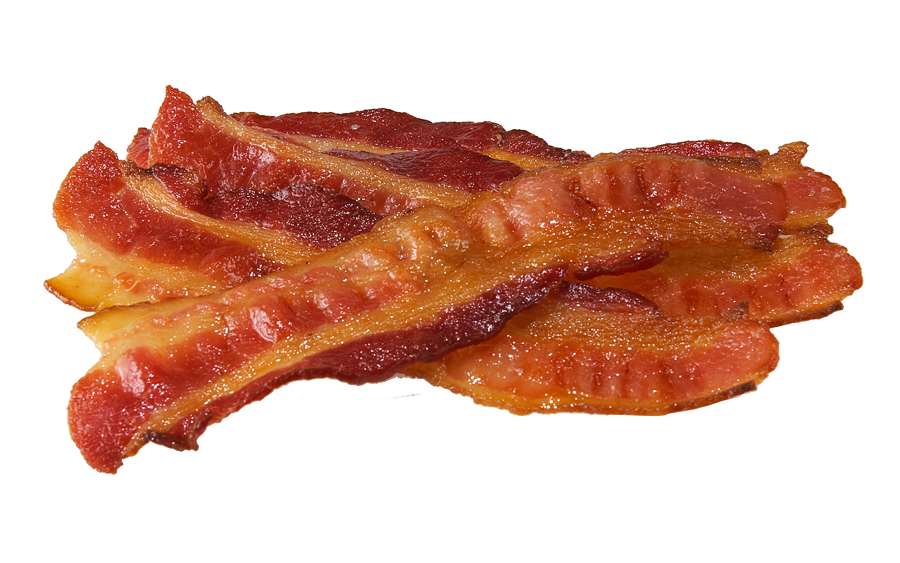
And this from Prof Sir David Spiegelhalter, Winton Professor of the Public Understanding of Risk, University of Cambridge: These guidelines define ‘low-risk’ drinking as giving you less than a 1 per cent chance of dying from an alcohol-related condition … An hour of TV watching a day, or a bacon sandwich a couple of times a week, is more dangerous to your long-term health.
Or Simon Jenkins again: Everything we do in life is risky … We would be furious if Whitehall laid down risk and safety limits for riding horses, climbing mountains, eating foreign food and playing rugby. All involve far greater danger than marginal changes in consuming alcohol.
No wonder the government and the Chief Medical Officer have been accused of nanny state scaremongering.
But let’s be clear what the government are doing here. This is puritanism and prohibition by the back-door. Tobacco has already been made socially unacceptable. This is the campaign to do the same for alcohol. And note that they have already started on sugar.
And we all know that prohibition doesn’t work; it drives the problem underground and deprives the government of tax revenue.
As citizens it is our right — indeed our duty — to stand out against such ill-conceived nanny-state control. It is high time that people were empowered to take responsibility for their own lives, the risks they take and their quality of life (something which is all too often overlooked) without hectoring “advice” from on high. Unless we do so we are rapidly sliding down the slippery slope to Orwell’s 1984 and Huxley’s Brave New World.
I, for one, will be treating this new guidance with the contempt it deserves.

Your Interesting Links

So here we are again with another round of links to interesting (or amusing) items you may have missed previously. I’ve decided to try splitting the items into sections, starting with the scientific and ending with the more light-hearted.
Science & Medicine
Let’s start off with the most important question ever … Are Cats Domesticated?
I think this next item could well be a top nominee for “research of the year” and maybe even an Ig Nobel. The headline reads: Old Mice Drinking Champagne Three Times A Week Navigate Labyrinths Better.
And so from one of cats’ main prey items to another — birds. It seems that there are some interesting mechanisms underlying the colour of birds’ plumage, and it isn’t all down to pigmentation.
So what do we really know about nutrition? It seems that in really scientific terms the answer is “not a lot” because most of the studies which have been done are of such poor quality. Aaron Carroll takes the studies apart.
It’s a bit late for Halloween now, but here’s a piece on some of the chemistry of blood.
Why do germs spread better in winter, when one would think that the cold weather would kill them off? Scientists are at last unravelling the actuality.
There is no hope. We are all doomed. It seems that the changes in our sense of humour as we age may be the early signs of losing our marbles altogether.
Touching. Some like it, others don’t. And we all have areas where we don’t like to be touched. Research has recently mapped out this awkwardness with being in physical contact with other people.
Excuse the question, but have you had a good shit lately? The chances are that none of us have, as scientists are telling us we’ve been doing it all wrong — at least since the advent of the flush toilet. But I have to ask how this is new news? It is something I’ve known for about 40 years and was based on research then!
Many (maybe all) of us are not a single genetic being; we have some level of chimerism. We likely all contain our mother’s cells; maybe our older siblings’ cells too; and mothers may also contain their children’s foetal cells. But it seems, that at least for mother, this may be a good thing.
And these cases of chimerism come to the fore where paternity tests throw up unexpected results. Oh, and maternity tests!
Anatomical question of the week … Why is the human vagina so big?
Sexuality
One American father has done his kids proud by following the Dutch model of sex advice. And guess what? It’s a model that works.
Social Sciences & Business
Seems the culture of overwork is erroneous and that working fewer hours really would make us more productive. Now why did I fairly strictly control the hours I spent in the office?
Time. We seldom have enough. But where does all your time go? [Long read]
Language
We have countless words for colours and even sounds, but why do most languages have very few words for smells?
History
The Tampon: A History. [Long read]
OK, so it was invented by the Sumerians, but what is Cuneiform anyway?
He was a mathematician, magician, astronomer, astrologer, occultist, alchemist and spy; and he lived during the reign of Elizabeth I. Who was he? Yes he was Dr John Dee. London’s Royal College of Physicians is putting on an exhibition about John Dee, from 18 January 2016.


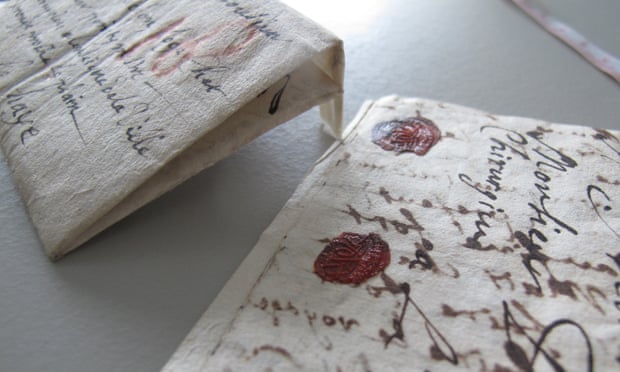
The Dutch have made a truly stunning find. A trunk of over 2500 undelivered 17th century letters, many from ordinary people giving often unrecorded details of everyday life.
Another in IanVisits’s series on “Unbuilt London”; this time how to turn St James’ Park into a giant roundabout.
Coming even further up to date IanVisits (again) takes a trip through the tunnels of London’s mothballed Post Office railway.

Food & Drink
Those of you who will be roasting a giant sparrow for Christmas dinner might need to get your oven ready now.
There’s coffee, and then there’s the perfect cup of coffee — as explained by a Chemistry teacher.
Shock, Horror, Humour
Having been on the receiving end of one, Harry Mount considers the secret brilliance of Prince Philip’s “gaffes”.
That’s all, folks!

Oddity of the Week: Toothbrushes

The toothbrush was invented in London’s most notorious prison
In the 1770s William Addis was serving time in Newgate for causing a riot. Brushing his teeth the same way as everyone else — in other words using a rag to rub them with soot and salt — he decided that there had to be a better way. Inspired by the sight of a broom, he took a small animal bone left over from his dinner and drilled small holes into it. Persuading a guard to fetch him some bristles, Addis threaded them through the holes and glued them in place. On his release the invention made him a fortune. His most expensive brushes used badger hair, while the lower end of the range featured pig and boar hair. His company, now known as Wisdom Toothbrushes, survives to this day.

Early Toothbrush

From Mail Obsession: A Journey Round Britain by Postcode by Mark Mason and quoted in London Historians Members’ Newsletter, 09/2015.

Foreskins

Digging back through my pile of unread articles over the weekend I came across one from earlier this year entitled The Troubled History of the Foreskin [long read].
Common in the US, rare in Europe and now championed in Africa, male circumcision is hotly debated. Author Jessica Wapner looks at the prevalence of male circumcision in America, the way circumcision is being forced onto developing nations (especially in Africa) and the evidence for whether it is actually effective.


Would you buy a banana like this?

And her conclusion is much the same as mine: It is unnecessary and an abuse just as FGM is. As the article is a long read, here are Jessica Wapner’s concluding paragraphs:

After reading the literature, I’m unconvinced by the evidence used to justify circumcision for health reasons. I’ll explain why by means of a thought experiment. Imagine that infant male circumcision had never been a part of American medical practice, but was common in, say, Spain or Senegal or Japan. Based on what we know about the health benefits of the procedure, would American doctors recommend introducing the procedure? And would that evidence be enough for American parents to permanently remove a part of their child’s body without his agreement?
Remember what the evidence tells us. Either the benefits can be obtained by a milder intervention (antibiotics and condoms in the case of urinary tract infections and sexually transmitted diseases), or the risk is low and open to other preventive measures (penile cancer), or the concern is rarely justified (HIV in the United States). Remember also that Western countries where circumcision is rare do not see higher rates of the problems that foreskin removal purports to prevent: not STDs, not penile cancer, not cervical cancer, not HIV. It’s hard to imagine circumcision being introduced on this basis. It’s equally difficult to picture studies on the benefits of the procedure being done.
The main reason we have circumcision in the US today is not the health benefits. It’s because we’re used to it. After all, if circumcision is not definitively preventing a life-threatening issue that cannot be prevented by other means, can removal of a body part without the agreement of the child be justified? We are so accustomed to the practice that operating on an infant so that he resembles his father seems acceptable. I’ve heard many people give this as their reason. It isn’t a good one.
It’s disconcerting to think that circumcising infant boys may be a violation of their human rights. We castigate cultures that practise female genital mutilation (FGM). Rightfully so … removal of the clitoral hood … is anatomically analogous to removal of the foreskin. Some forms of FGM, such as nicking or scratching the female genitalia, are unequivocally deemed a human rights violation but are even milder than the foreskin removal …
Thinking about male circumcision as an unnecessary and irreversible surgery forced on infants, I can’t but hope that the troubled history of the foreskin will come to an end, and that the foreskin will be known for its presence rather than its absence.

Yes, male circumcision should be a human rights abuse just as is FGM.
Footnote: Before anyone wants to ask, no I’m not circumcised. I’m very glad my parents thought as I do that the procedure is unnecessary and thus an abuse. Indeed from memory a majority (maybe 60-70%) of the guys at school and with whom I’ve shared cricket etc. changing rooms were also entire.

Sexual Wellbeing

Sexual Health Week, which is this week, has been run annually by the FPA since 1997. This year’s theme is pleasure and wellbeing.


So often we forget that most sex takes place for reasons of pleasure, intimacy and desire rather than reproduction. As well as being pleasurable, an active sex life is a good form of exercise, reduces stress, aids relaxation and sleep, is a good pain reliever and keeps the prostate gland and genitals healthy.
In this context sex doesn’t just mean what goes on between two (or more) consenting adults, but includes masturbation. Oh come on! We all do it. And masturbation can make you happier, healthier and more fertile. The chemicals released by masturbation include dopamine, which triggers the pleasure centres of the brain and reduces stress; endorphins which reduce pain (including menstrual pain); and prolactin, which aids sleep. Apparently males especially (why especially males, I don’t know) benefit from masturbation when they are under the weather, as it increases the production of bacteria-fighting white blood cells. In addition it can help prevent prostate cancer by flushing out the carcinogenic toxins in the prostate.
As sex educator Emily Nagoski says, pleasure is the best measure of sexual wellbeing. And as Emily would no doubt also point out, you only get the real pleasure if you approach sex with confidence and joy.
However the one thing we really must do to achieve this sexual wellbeing (indeed general wellbeing) is to talk much more openly about sex, our bodies and indeed everything medical. We need much better body awareness and to normalise sex and nudity rather than criminalising them. And I believe that has to include the decriminalisation of prostitution and removing the stigmas around STIs.
But this is only going to get easier if we start talking much more, and much more openly, about sex. And that means all of us: parents with children; friends with friends; partners with each other; everyone with their doctor.
The more we talk about what sex is really like, ensure consent and promote informed choices, the less harmful the extreme images, videos and information can be. Good communication really does enhance sexual wellbeing, and it is important that people have the confidence to speak openly and clearly to health professionals about their sexual health.
So if there is one thing I want everyone to start doing during this year’s Sexual Health Week — well I want you to start any time; the sooner the better — it is to talk about sex: with friends, parents, your children, your doctor, your brothers & sisters … anyone and everyone.
The more we talk, the easier it will get. And the more we talk the better our wellbeing.