Category Archives: medical

Your Interesting Links

OK, so here we are again with another instalment of links to interesting (well, I found them interesting) items you may have missed the first time round. There’s a long list this time, so lets start with the hard(er) stuff and then it’s all down hill.
The Himalayan Kingdom of Bhutan, which measures its success against a National Happiness Index, is planning to invest in the widespread use of electric vehicles. And why not, because of its mountainous terrain Bhutan has copious hydroelectric generation.


Now here is something I’ve known for a while and find quit disturbing: many widely used forensic techniques have never been subjected to scientific scrutiny but rely for veracity on the original testimony of some long-forgotten, apparent expert. Which to me means that any conviction which has relied on forensic data could well be unsafe. And yes, that includes fingerprints.
Herring Gulls. Love them? Or hate them? Either way they provide a valuable service.
How many microbes do you think there are in your house? Yep, thousands. That’s thousands of different species! Here are three stories about the research: from the BBC, from the North Carolina State University research team and from one of the study leaders, Rob Dunn.
Meanwhile in South Africa a team of very small archaeologists have found thousands of bones, apparently from an unknown hominin species, in a virtually inaccessible cave.
And so to the medical … Ovarian cancer is nasty because it is so hard to detect. But (as I have been saying for ages) if women were to lose their fear of saying ‘vagina’ the rate of early diagnosis could increase dramatically. We (everyone, men and women) just have to become more comfortable with our bodies, and talking openly about them, for the good of our health!
“What’s a uterus?” This stunning level of body ignorance and illiteracy is demonstrated in an article in the Guardian from an Australian oncologist.
Now here is a medical affliction which is really frightening: sudden death syndrome.
So what is it like to be permanently like a robot; not being yourself either physically or emotionally? It’s called depersonalisation disorder and is apparently quite common but almost totally misunderstood.
It’s a good week of strange afflictions (they’re not all diseases as such). Here’s another: aphantasia. Which is basically living without any mental images; no mind’s eye; no ability to conjure up a picture of your loves ones; nothing.
Back to the more mundane … Why is it that many of use sneeze when going from the dark into (bright) light? That’s right: no-one really knows, but there are some ideas.

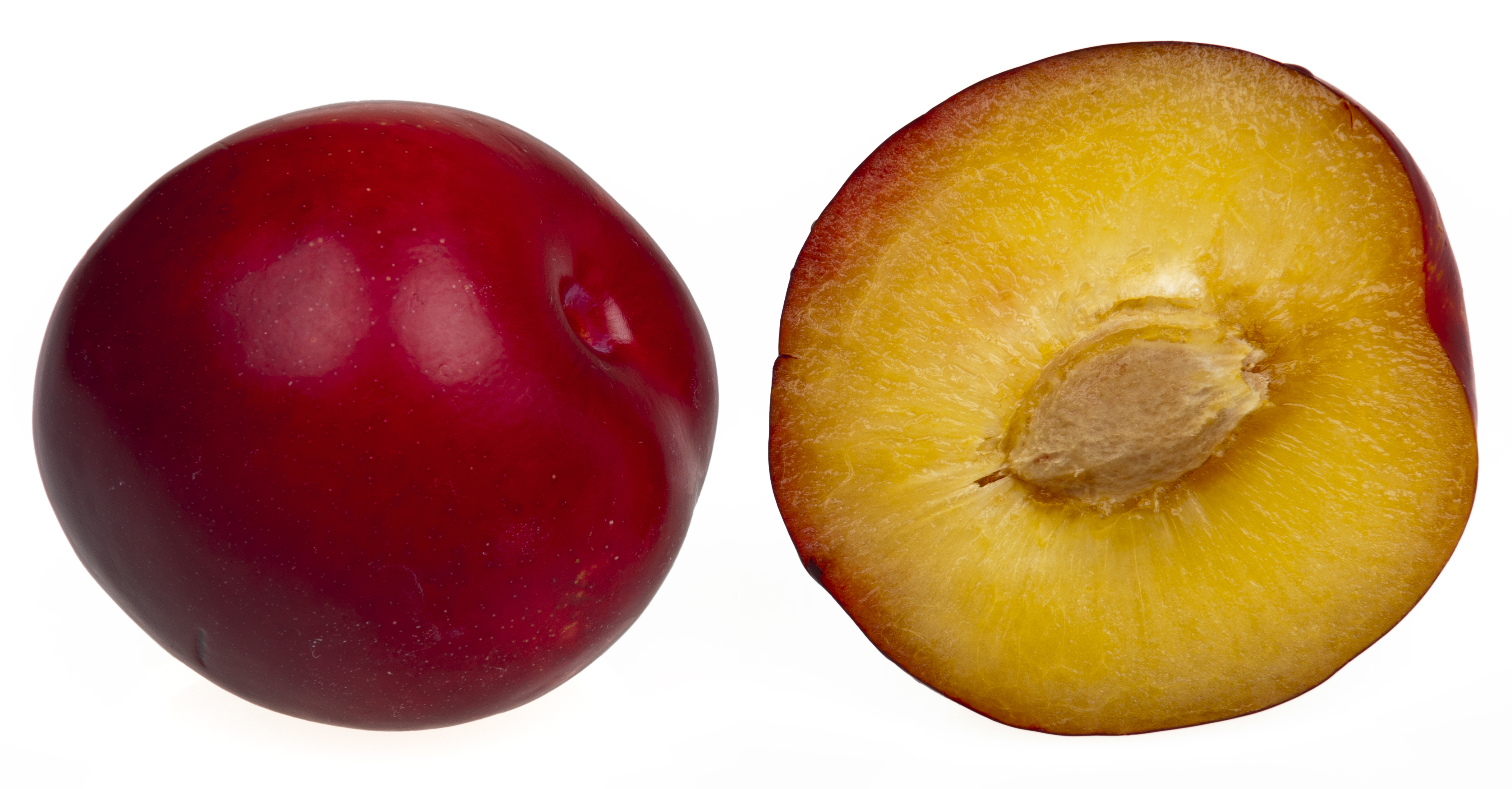
On the chemistry of plums, prunes, chewing gum and constipation.
Apparently we have bees all wrong. Royal Jelly seems not to be what makes a queen bee, but it’s what the royal larvae aren’t fed (and which is fed to workers) that forces them to become queens.
We all seem to like bees but hate wasps. But some people do like wasps despite having been stung about the privy parts. Yes, I too like wasps despite never having had more than an odd sting on the arm.
A couple of weeks ago, George Monbiot created a stir by admitting to eating a roadkill squirrel. And then repeating the exercise on live TV. Seems to me this is rather more honest than getting someone else to rear, slaughter and butcher a pig for you.
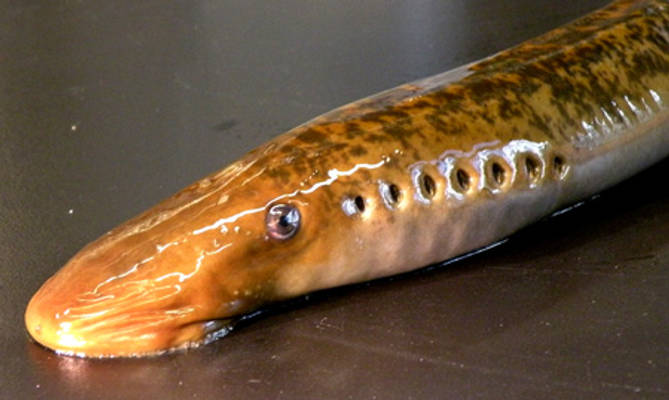
Still on the wild world, there’s a fish which is older than the dinosaurs: the lamprey. And it is returning to UK rivers after 200 years. Though it is unlikely that any time soon there’ll be enough to have a surfeit of lampreys like Henry I — which is probably as well as they are quite nasty creatures.

Do you live with a weirdo? You do if you live with a cat. Here are some tales of feline oddness.
Which sort of takes us naturally onto common beliefs we get wrong.
There are many many very wet places on this planet, but which of them wins the crown for being the wettest place on Earth?
And now to the historical … Just why was Orkney the centre of ancient Britain? Long before the Egyptians built the pyramids or ancient Britons built Stonehenge.
And talking of Stonehenge … archaeologists have discovered an unsuspected huge ritual arena just two miles from Stonehenge.
Westminster is NOT the Mother of all Parliaments. The original quotation is “England is the Mother of all Parliaments”.
Ah yes, the age old mystery of the Princes in the Tower. After 500 years it should be a very cold case but some forensic historians are trying to bring it back to life.
Next up two brief pieces from the History of London website. The first on the Great Plague and the Fire of London; the other on the Civil War and Restoration.
IanVisits is running an irregular series on unbuilt London: great projects that never happened. Here’s his piece on the iron London Bridge that never was.

London took a hammering from the Luftwaffe in the Blitz and after the war it took 20+ years to reclaim and build on all the bomb sites. So why is so much of London being redeveloped now?
Finally here’s the story of the oldest known message in a bottle, and one of the longest running scientific experiments. The bottle was cast adrift in the North Sea around 10 years before the Great War and surfaced again earlier this year!
Hopefully you’ll not have to wait quite that long for the next instalment …

Book Review: Bare Reality

Laura Dodsworth
Bare Reality: 100 Women, Their Breasts, Their Stories
Pinter & Martin; 2015
Bare RealityThis is a fascinating book in which 100 women share un-photoshopped photographs of their breasts alongside honest, courageous, powerful and sometimes humorous stories about their breasts and their effect on their lives. The women come from all walks of life: from a Buddhist nun to a burlesque dancer; ages ranging from 19 to 101; everything from a 32AAA to a 36K bust; entirely natural through surgically enhanced and surgically reduced to bilateral radical mastectomy.
The cover blurb suggests the book will make you reconsider how you think and feel about your own body as well as those of the women in your life. And yes, it may for those who have not thought about these things before. Has it for me? I don’t think so, but the jury is still out. But these women’s perspectives and experiences are certainly revealing, intimate and at times moving.
The stories recounted cover the whole range:

  • I hate my breasts — I love my breasts
  • I wish they were bigger — I wish they were smaller
  • They’re totally non-sensitive — they’re so sensitive it’s painful
  • They don’t do anything sexually — they’re my most erogenous feature
  • Breastfeeding is so gross — I love breastfeeding
  • Breastfeeding is what they’re for — sex is what they’re for
  • I love bras — bras are the work of the Devil
  • I hated them, so a had them enhanced; now they’re horrible and I hate them more
  • I could never have them enlarged/reduced — can’t understand why everyone doesn’t have a boob job
  • This is the first time I’ve ever shown them to anyone — I’m nude all the time
  • How is it men never learn what to do with our breasts but my girlfriend just knows?
  • And of course, why are (most) men so fixated on breasts?

Probably everyone would agree there are a small number of real stunners (though we probably wouldn’t agree which ones) and there are an even smaller number of horrors (like one spectacularly bad boob job); but the vast majority are just breasts — normal breasts — just like you’d see on any topless beach; nothing to get hung up about.
Which is all very much as one might expect so I can’t say I was struck by anything at all surprising. Sad; pathetic; moving; joyous. Yes all of those. But no moment of “OMG how did I not know/suspect that?!”. And in a way I found that disappointing. I had expected there would be something profound about women and their breasts that had passed me by, but if so it isn’t revealed here.
That having been said I did find the book both interesting and compulsive reading. Whether you are male or female, if you want an insight into how women view their breasts this is a must read. I would commend the book to everyone, but especially to teenagers — of both genders, but boys especially — as an essential part of learning, understanding, cherishing and being completely comfortable with your, and everyone else’s, body. To which end we could now do with the equivalent books of male and female genitalia.
Oh, and do not expect the book to be titillating. It isn’t.
Overall Rating: ★★★★☆

Oddity of the Week: Victorian (Medical) Oddities

Warning: not for the squeamish.
Conjoined piglets and two-faced kittens! Oooo-eerrr!
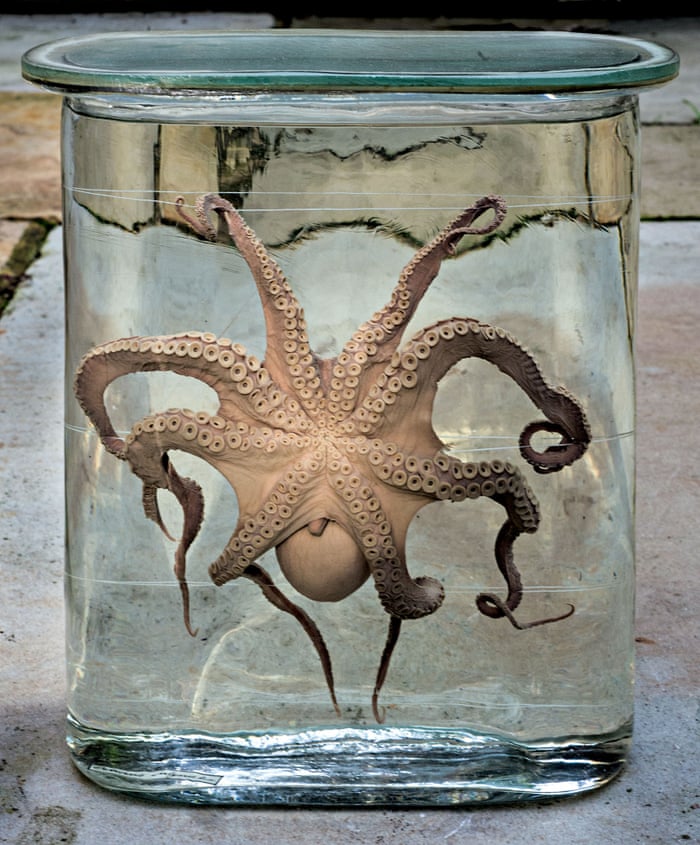
In the 19th century, bodies (both human and animal) were hard to come by, so medical and veterinary schools abandoned many dissections and taught their students using remarkably odd objects like waxwork embryos and exploded skulls as well as preserved specimens like this octopus.


The Guardian has a gallery of more interesting examples at www.theguardian.com/artanddesign/gallery/2015/jul/09/victorian-oddities-two-faced-kittens-conjoined-piglets-in-pictures
Enjoy your lunch!

Your Interesting Links

Another of our irregular round-ups of links to items you might have missed the first time.
We all drop our dinner down our shirt — some of us more than others — but how often do we stop to think about the chemistry behind stain removal?
I’m almost always warm and yet I know plenty of people who, unless sitting on a tropical beach, are always cold. So why do some of us feel the cold more than others?
While talking about people it seems that some people can’t picture things; they can’t conjure up mental images, almost as if their “mind’s eye” is blind.
Which leads me on to an interesting three-part article from Maria Konnikova on sleep: falling asleep; why we sleep; and on waking up (or not). [Long read]
More human wonders … Why do some people collect lint in their navels but others don’t? Spoiler: hair and clothes.
Apparently broccoli is bad for you, like, really toxic bad. Or then again, maybe it isn’t?
A list of links wouldn’t be complete without some reference to our feline friends, now would it! This attempts to explain what your cat is trying to say to you.
And while on language, here’s an interesting infographic on the world’s 23 most spoken languages — they’re spoken by over half the world’s population.
If you’re like us you love the iconic Le Creuset cast iron cookware. David Lebovitz does and he managed to get a tour of the Le Creuset factory.


If you had to think up a new use for recycled plastic, I bet you wouldn’t dream of a plastic road. Well the Dutch just did!
Shuffling quickly now from the modern into the historical … Here are five interesting facts about Lewis Carroll.
And from Carroll’s love of logic and puzzles to the secret codes on British banknotes.
Going backwards, someone has found, dumped in a skip, a wonderful collection of photographs of the construction of Tower Bridge dating from around 1890.

Next our friendly blogging London cabbie takes a look at the curious history of Craig’s Court, off Whitehall.
And even further back here’s an alternative view of the Middle Ages.
And finally back down to earth. Critics claim that pornography degrades women, dulls sexual pleasure, and ruins authentic relationships. But does it? Seems the evidence suggests the critics are wrong.

Ten Things #19

This month’s “Ten Things” is a bit more unusual. There are many strange diseases out in the wild and some are weirdly named, so I bring you …
Ten Oddly Named Diseases (with the animal/plant affected in parenthesis)

  1. Astrakhan Spotted Fever (humans)
  2. Flaccid Trunk Disease (elephants)
  3. O’nyong-nyong fever (humans)
  4. Whirling Disease (trout)
  5. Lime Witches’ Broom Phytoplasma (citrus trees)
  6. Wobbly Possum Disease (possums)
  7. Hand, Foot and Mouth Disease (humans)
  8. Huanglongbing (citrus trees)
  9. Motley Dwarf Disease (carrots)
  10. Corridor Disease (bovines)

Your Interesting Links

OK, so here’s another round of links to interesting items you may have missed the first time. As always we start with the nasty, hard, scientific stuff and then it’s all downhill.
First here’s a long-ish piece on the fascinating world of chimeras. Although the article concentrates on humans, much the same applies to all animals and there is an interesting paragraph which explains how tortoiseshell cats are always female.


Why are some people are left-handed? Apparently some left-handed people have same genetic code abnormality as those with situs inversus, the condition where the major organs are on the “wrong” side of the body.
I’m one of those annoying people who crack their knuckles. Surprisingly scientists have only now shown why knuckles pop when pulled — and it’s all down to physics.
And here’s some more strange finger science. Professor William B Bean measured the rate at which his fingernails grew over a period of 35 years to discover that growth slows as one ages.
Still on new scientific discoveries, researchers have just worked out what sustains the human foetus during its first weeks, and it isn’t the placenta but womb milk.
Staying with food … Why do we crave specific foods? And no, it seems it isn’t because of some deficiency which the craved for food will satisfy.
Have you ever wondered how the medical profession came up with the stethoscope? Wonder no longer: it all started with Laennec’s Baton.
How do you teach trainee doctors (and other healthcare professionals) to do breast and internal examinations? Yep, there are people who use their bodies to make a living as Gynaecological Teaching Associates, guiding the trainees what to do with their hands.
Well after that I think we need a strong gin and tonic!
Italian man starts turning his property into a trattoria; goes to fix the toilet; and ends up years later with a major archaeological site.
Maps are so much more interesting than GPS! Here are 12 amazing maps which show the history, and fascination, of cartography.
Over 250 years ago British clockmaker John Harrison was ridiculed for saying he could make a pendulum clock accurate to a second over 100 days. He has finally been proven right.
The Paston Letters are one of the most valuable, and well known, sources of information on late medieval life in England. Now the British Library have digitised them and put the images online.
Coming a bit more up to date, the Victorians had plans to build a skyscraper taller than the Shard. Thankfully reality prevailed and they didn’t because the science of building materials was not nearly advanced enough.

Let’s end in the realm of human rights. First there is a new, and very powerful, resource which aims to bring human rights to life using beautiful infographics, stories and social media. It’s the brainchild of a top human rights barrister, so it should be reliable.
If, as many would claim, nudity is the ultimate test of self-acceptance. Why are we so afraid of it?
More next time!

Talking Sex Ed

As a society, and as individuals, we need to be talking about sex. More specifically we need to be talking sex education with our youngsters.
Emily Nagoski, author of the best selling Come As You Are, has written a short piece (for The Big Issue) on how we are failing to get a grip of sex ed, and what should be changed.

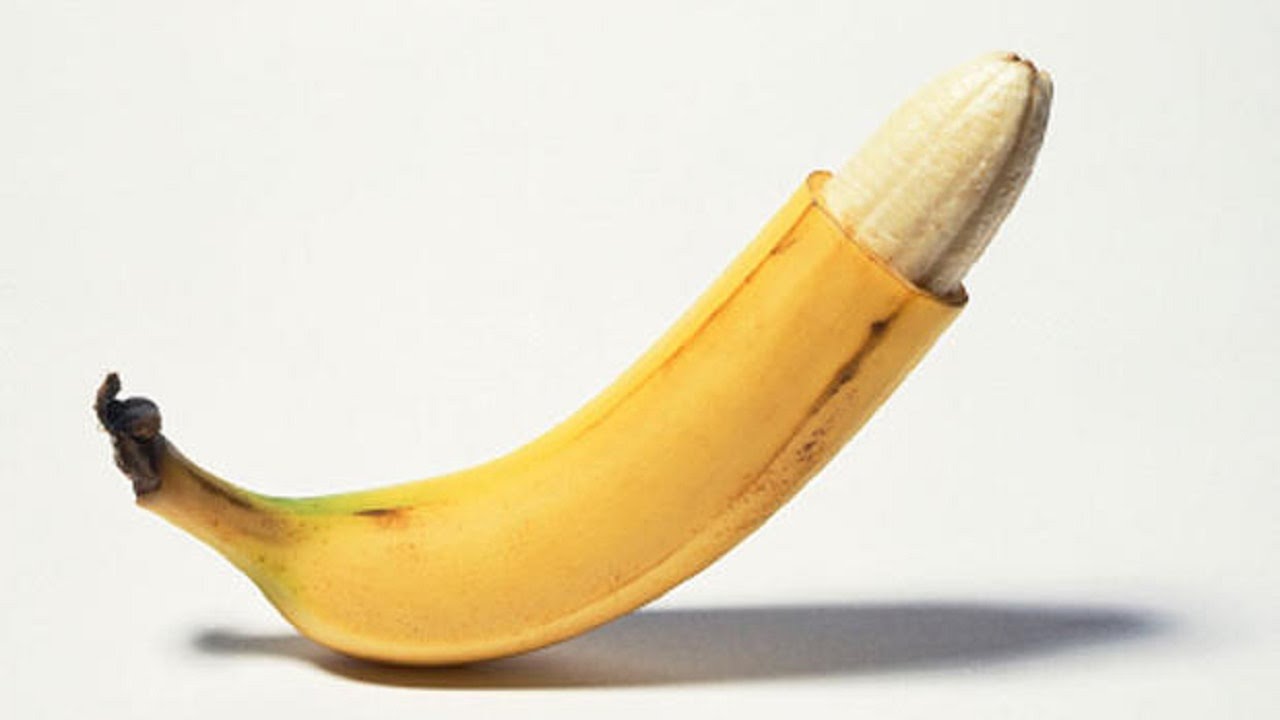
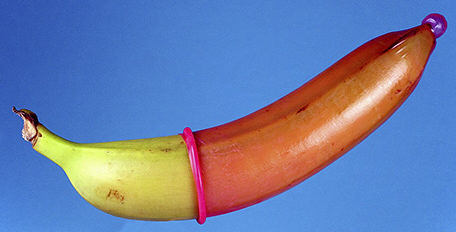
Thanks to my “sex ed”, by the time I got into my first sexual relationship, I had no idea … I didn’t have a damn clue. Nobody I knew had a clue … It’s all very well learning to put a condom on a banana, but it’s not much use if you then don’t know what to do with the banana, or what you want to do with the banana, or even how you feel about the banana in the first place.

condom-banana

Learning to put a condom on a banana — or indeed anything else vaguely banana-shaped — is certainly important, but it isn’t the whole story by a long way. And we need to be addressing the whole story.
You can find Emily’s full article here. Read it. It is important. For you. And for the next generation(s).

Oddity of the Week: Chimerism

One person outside but two people inside. That’s the gist of the chimera, a human being who carries the DNA (and sometimes the body parts) for two. It sounds crazy, but it happens. In fact, doctors think it probably happens more often than we realize. Unless there were some reason to test the DNA from cells in different parts of your body, you could easily be a chimera and never know it.
A chimera is a single organism composed of genetically distinct cells. This can result in male and female organs, two different blood types, or subtle variations in form. Animal chimeras are produced by the merger of multiple fertilized eggs.


Tetragametic chimerism occurs through the fertilization of two separate ova by two sperm, followed by aggregation of the two at the blastocyst or zygote stages. This results in the development of an organism with intermingled cell lines. Put another way, the chimera is formed from the merging of two non-identical twins. As such, they can be male, female, or have mixed intersex characteristics.
This can produce an organism with totally different characteristics on each side of the body: different genders or different colouring — as in the budgie above. Or it can cause mozaicism where the organism contains patches of the different cell types, something most easily spotted in coat colouring — as in the human above — or eye colour.
But very often the mosaicism is there; we just don’t know it.

Male Circumcision

I’ve written before about my belief that male circumcision should be outlawed (unless really medically essential) — see inter alia here and here.
Well this peer reviewed paper looks like another damn good reason not to circumcise boys.
Morten Frisch & Jacob Simonsen, “Ritual circumcision and risk of autism spectrum disorder in 0- to 9-year-old boys: national cohort study in Denmark”, J R Soc Med OnlineFirst, 8 January 2015.

Abstract
Objective: Based on converging observations in animal, clinical and ecological studies, we hypothesised a possible impact of ritual circumcision on the subsequent risk of autism spectrum disorder (ASD) in young boys …
Participants: A total of 342,877 boys born between 1994 and 2003 and followed in the age span 0–9 years between 1994 and 2013.
Main outcome measures: Information about cohort members’ ritual circumcisions, confounders and ASD outcomes, as well as two supplementary outcomes, hyperkinetic disorder and asthma, was obtained from national registers. Hazard ratios (HRs) with 95% confidence intervals (CIs) associated with foreskin status were obtained using Cox proportional hazards regression analyses.
Results: With a total of 4986 ASD cases, our study showed that regardless of cultural background circumcised boys were more likely than intact boys to develop ASD before age 10 years … Risk was particularly high for infantile autism before age five years … Circumcised boys in non-Muslim families were also more likely to develop hyperkinetic disorder … Associations with asthma were consistently inconspicuous …
Conclusions: We confirmed our hypothesis that boys who undergo ritual circumcision may run a greater risk of developing ASD. This finding, and the unexpected observation of an increased risk of hyperactivity disorder among circumcised boys in non-Muslim families, need attention, particularly because data limitations most likely rendered our HR estimates conservative. Considering the widespread practice of non-therapeutic circumcision in infancy and childhood around the world, confirmatory studies should be given priority.

On Depression — V

This is number five in my series of articles on depression — my depression. They are written from a very personal perspective; they are my views of how I see things working and what it feels like on the inside. Your views and experiences may be vastly different. My views and experiences are not necessarily backed by scientific evidence or current medical opinion. These articles are not medical advice or treatment pathways. If you think you have a problem then you should talk to your primary care physician.

Questions & Answer
In the course of writing these posts I’ve collected a small number of articles which throw some interesting lights on various aspects of depression. I’ve already mentioned some, but this post is to try to gather some of the others together.
The first is a quote from The Body Keeps the Score: Brain, mind, and body in the healing of trauma by Bessel van der Kolk

If your parents’ faces never lit up when they looked at you, it’s hard to know what it feels like to be loved and cherished.

Now that’s a fairly telling statement and if, like me, it fits your childhood then any wonder we get depressed.
This next is a link to a cartoon, about just how badly we treat the mentally ill (not just the depressed but I guess it happens to us more as our illness isn’t always so apparent). So what would it be like if physical illness were treated as we treat depression.
And now a short animated video which explains a little of the science behind depression but also highlights, perhaps, how little we really know.
Unfortunately research into depression struggles to attract funding in a way which would not be tolerated for, say, cancer. This Scientific American article demonstrates how important it is to change this especially now that useful technologies are becoming available. For those who don’t want to read the whole article here are a few key comments.

If the extent of human suffering were used to decide which diseases deserve the most medical attention, then depression would be near the top of the list.
[…]
[A]lthough depression is common, it is often ignored. Three-quarters of people with depression in the United Kingdom go undiagnosed or untreated — and even if the disorder is diagnosed, today’s medications will work well for only about half of those who seek help.
[…]
Research into depression … seems to have floundered.
[…]
Although … extra money would have solved some challenges earlier, the technology needed to crack others — by probing the brain and analysing its circuits, for example — is only now emerging.
[…]
[A]nother major factor is the long-standing stigma associated with depression. Many people still do not acknowledge that it is a legitimate condition … A large proportion of people believe depression is just something that we all feel … They think you should pull your socks up and get back to work.

One thing which seems to be common to most depressives is sleep disruption in some form, whether that is a disrupted or inappropriate sleep pattern or just plain old insomnia. But there may be some distant hope as scientists seem to be homing in on disrupted circadian rhythms being the underlying cause.

Disrupted sleep is so commonly a symptom of depression that some of the first things doctors look for in diagnosing depression are insomnia and excessive sleeping … scientists have observed for the first time a dysfunctional body clock in the brains of people with depression.
[…]
People with major depression … show disrupted circadian rhythms across brain regions.
[…]
[G]ene activity in the brains of depressed people failed to follow healthy 24-hour cycles. They seem to have the sleep cycle both shifted and disrupted.

The article goes on to explain how looking at the brains of dead but non-depressed people the scientists could pinpoint the time of death from how various genes were switched on or off. This was impossible with depressed subjects whose clocks were both shifted and disrupted. It isn’t simple as there are many genes involved, but variations in the gene expression could potentially cause all sorts of different sleep pattern disruptions.
Here are two more articles on sleep and depression. This first Sleep and Depression is a fairly simple explanation of the sleep disruption you may encounter and some pointers to what you can do to try to alleviate it. The second by David Nutt & Louise Paterson is an academic review from 2008 of what was then known; needless to say it contains lots of data.
Finally in this short round-up we must return to the question of body clocks, because another aspect is Season Affective Disorder (SAD) which affects many people during the darker winter months probably because we don’t get enough light to reset our clocks every morning. A very recent article by Katherine Hobson on Nautilus summarises some of what is known about high intensity light therapy to treat not just SAD but potentially other disorders too.

Light therapy has become standard for treating seasonal depression … light has a benevolent influence on mood during the dark days of winter instinctively makes sense: As hazardous as sunbathing is, it certainly feels good … research into the circadian underpinnings of chronic depression, bipolar disorder, Alzheimer’s disease, and fatigue suggests that light could help these patients readjust too.
[…]
Exactly how light works isn’t known, but many researchers suspect that bright lights help SAD sufferers by regulating their sluggish circadian clocks.
[…]
[C]ircadian rhythms appear to be disturbed in non-seasonal maladies too, which means there is a potential for light therapy beyond SAD.
[…]
In general, bright light therapy is a low-risk and low-cost option for treatment … it may speed up patients’ responses to antidepressants.
[…]
[T]he elderly might be particularly susceptible to the benefits of light therapy because their light perception declines with age, which might be throwing their internal clocks out of sync.

While SAD is one of the factors in my depression — and I know I feel much better on bright sunny days — it is far from the only one and is not the most crippling. I have tried light therapy two or three times over the years and never had much success with it. But it doesn’t work on everyone: while it doesn’t work for me it might work for you.