Yesterday, in between doing lots of other interesting things (which I’m not allowed to write about, at least yet) and having a day off, I came across a thoughtful piece of journalism on nudity.
In The Scientific Reasons Why You Should Just Always Be Naked Lauren Martin looks at some of the evidence in favour of accepting nudity. OK, it’s American — although that doesn’t make it any less valid elsewhere — not greatly detailed and is written with many questions in order to challenge our prejudices and taboos.
It is well worth reading the whole article, but here is the essence:
Things are only taboo because we make them that way.
… … …
Nudity is a taboo … because we primarily equate nudity or nakedness with sexuality and we have taboos about sexuality.
… … …
What would happen if we accepted our bodies the same way we accepted everything else? What would happen if we stopped covering up and started stripping down? What would happen if we all just let our bodies hang out in the open and didn’t hide them …?
… … …
There’s … no denying … that if we could get past our childish perversions and accept nudity as a basic and natural human form, there would be a lot less “deviousness” and fewer obsessions with the human body — and we could all just stop caring so much about it.
… … …
If men … were exposed to nudity on a normal, everyday basis, they wouldn’t fantasize and obsess over it the way 14-year-olds do at the sight of their first breast … By making nakedness an ordinary, matter-of-fact, common experience, unassociated with sexuality, the unhealthy prurient interest in pornography would be considerably lessened.
Imagine if men were desensitized to the female body … Imagine if men stopped putting all their time and energy into seeing women naked and just learned to live side-by-side with them?
… … …
Imagine if we all just looked at each other the way God made us without any implications or idealized notions of the perfect body? … it’s our clothing that creates our insecurities and inability to accept and love each other the way we should.
… … …
What if we’d grown up in a nude household? What if we’d been taught from a young age nudity is natural [and] beautiful?
… children exposed to nudity from a young age became … unfazed by the human body later in life and sometimes, psychologically stronger because of it … children raised around nudity [grow] up with a higher body self-concept … coming from a nudist family [plays] a more significant role in the children’s positive self body-image than their race, gender, or area of the country in which they lived.
… … …
Humans donned clothing to keep away parasites and filth, yet only created breeding grounds for different types of infections and disease … Along with infertility rates and Lyme disease, clothes also contribute to yeast infections and UTIs.
… … …
It seems arbitrary, but walking around barefoot increases brain flexibility. It doesn’t just make you feel young again, it makes your brain feel young again.
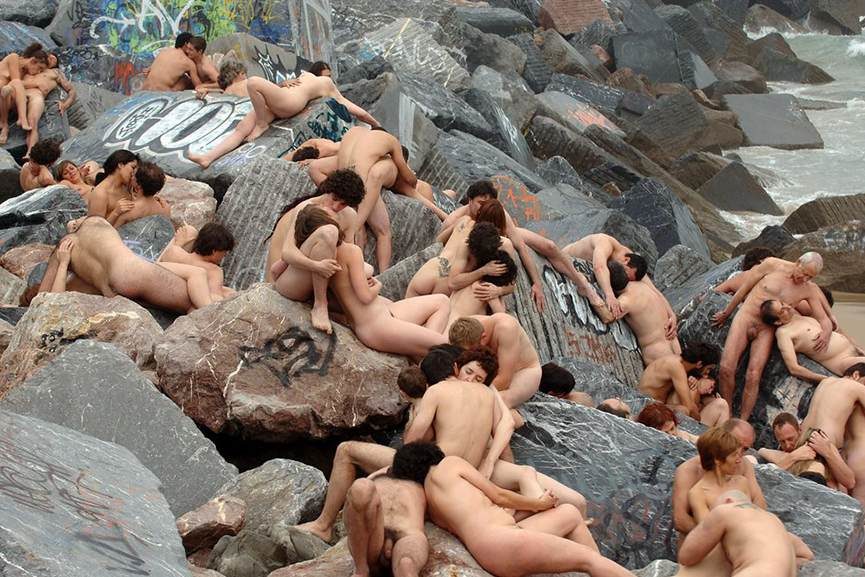
I was brought up in a household where nudity was natural and pornography was seen as a healthy part of life’s rich pattern (but violence and abuse were definitely not acceptable). To this day nudity and pornography don’t faze me — and I fail to understand the taboos around sexuality. I’ve long been an advocate of mixed student residences and mixed changing rooms — if we were all well adjusted to nudity and our bodies this should not be a concern for anyone (but until we are it will be).
I spend time in the nude when I can and I know I have a lot fewer problems with yeast infections and so on because of it. Despite admonishment from the medics I do spend almost all my time at home barefoot (it has to be really cold for me to put socks on) because fresh air is not only better for the feet (see yeast infections, above) but there is thought to be a protective effect against dementia.
So there you have it. An article which looks at some of the evidence and comes out supporting what I’ve been saying for nearly 50 years! Nudity is healthy, mentally and physically, and embracing it would benefit all of us both individually and as a society.
So what really is so special about nudity that we have to make a taboo out of it? Nothing! Get over it.
PS. As an example of how daft all this is, it took me longer to find a suitable illustration for this post than it did to actually write the thing!


 By mid-afternoon yesterday I was feeling rough. Last night I might as well have had ‘flu, I felt so awful — and I was so hot you could have fried an egg on me. (What a nasty idea!) I felt marginally better this morning and luckily I’ve gradually been improving as today has gone on.