Category Archives: history

Ten Things

This month’s Ten Things is for those, like me, who were children in the 50s and 60s. It is a little nostalgia about radio programmes, in the days before everyone had television and before there were hundreds of radio channels — ie. when there was BBC Radio or nothing; the days of the Home Service, the Light Programme and the Third Programme.
So here are Ten Radio Programmes I Remember from My Childhood:

  1. Listen with Mother
  2. Mrs Dale’s Diary
  3. The Archers (and OMG it’s still going! Why?)
  4. Round the Horne (Kenneth Horne, Kenneth Williams and Hugh Paddick)
  5. The Navy Lark (Leslie Phillips and Bill Pertwee
  6. Music While You Work
  7. Down Your Way (with Wilfred Pickles)
  8. Children’s Favourites (introduced by Uncle Mac, aka. Derek McCulloch)
  9. Does the Team Think?
  10. Palm Court Orchestra

Missing Links

Here’s our monthly round-up of items you may have missed previously. Slightly late again — apologies! There’s a lot here, this month too!
Science & Medicine
Research is showing that magpies possess self-awareness to rival that of primates, dolphins and elephants.


Humans are practically bald and are one of the very few (almost) hairless mammals which may be why we thrived as a species.
Now here is something which looks odd … it seems that women who have had their appendix removed are more fertile. Ditto for tonsillectomy.
So, the age old question … do women’s periods really synchronise when they live together? Spoiler: no.
A pain in the guts? Research is suggesting that the range and quantity of microbes in our guts may have a powerful effect on conditions like depression, MS and obesity.
However eating yoghurt is not enough to keep those gut living microbes in balance. [Long read]
Just like I’ve always known, travel sickness is a glitch between the brain, the ear, the eye and the stomach.
Now here’s one for the lads out there … just how big is a fart? Answer: somewhere between a bottle of nail polish and a can of drink. Maggie Koerth-Baker has the low down.
Your dentist knows — but likely won’t admit — what you have suspected: flossing is a waste of time.
IFLscience looks at the theories as to why time seems to pass more quickly as we get older.
Sexuality
The French (only the French?) have created a 3D model of the clitoris as an aid to their schoolchildren’s sex education.
Environment
So what is it really like to drive a Eurostar train? Andrew English in the Daily Telegraph finds it’s more complex than one might imagine.
Social Sciences & Business
So here’s something else we’ve always known: people who don’t have children benefit our environment more than any campaign. And that should be valued.
Noreen and I have done jury service three times between us. What are your chances of being called more than once.
Here’s our favourite zen master, Brad Warner, on whether “White Buddhism” is cultural appropriation.
History
There is something special on the Parisian road outside La Santé prison … the city’s last vespasienne urinal (below).

When the US Army took control of Japan after WWII they confiscated thousands of secret Japanese military maps, covering much of Asia, shipped them back to the US and dispersed them to libraries across the country for safekeeping. Now they are being brought back together and their historical interest realised.
London
In this new section, we look at items about my home city.
Once upon a time there was a plan to build a ginormous “Pyramid of Death” in London. Luckily it never happened.
Time Out looks at the complete history of Paddington Station.
Meanwhile Londonist takes a look at the history of floods on the Underground.
In another item from IanVisits he looks at the old North London Line which ran from Broad Street to Richmond, and is now part of the Overground.
It always surprises me what people can find by way of historic artefacts washed up on the Thames foreshore.
Londonist (again) looks at the top 10 of London’s “spy sites”.
And finally for London, here are nine places that apparently Londoners never go.
Shock, Horror, Humour
The Atlantic brings us the unbelievable, mysterious and Byzantine story of Jesus’s wife. [Very long read]
I often think that academics and medics, more than most of us, get up to some exceedingly strange things. One Dr Bruce Ragsdale has developed a taxonomy of the Occlupanida — this little plastic clips that are used to close plastic bread wrappers etc. Very odd.

And finally, thanks to the Guardian, Yes Minister explains everything about Brexit.
Phew! More next month …

The Oldest Profession

Despite its reviled status today prostitution has a long and honourable tradition in many countries. From the Ancient Near East to the Incas and Aztecs. In India and Japan; Ancient Greece and Ancient Rome. To the Middles Ages and modern Europe. And a history in which is has more often been legal, and encouraged, than illegal — contrary to our modern western (largely Christian) expectations.


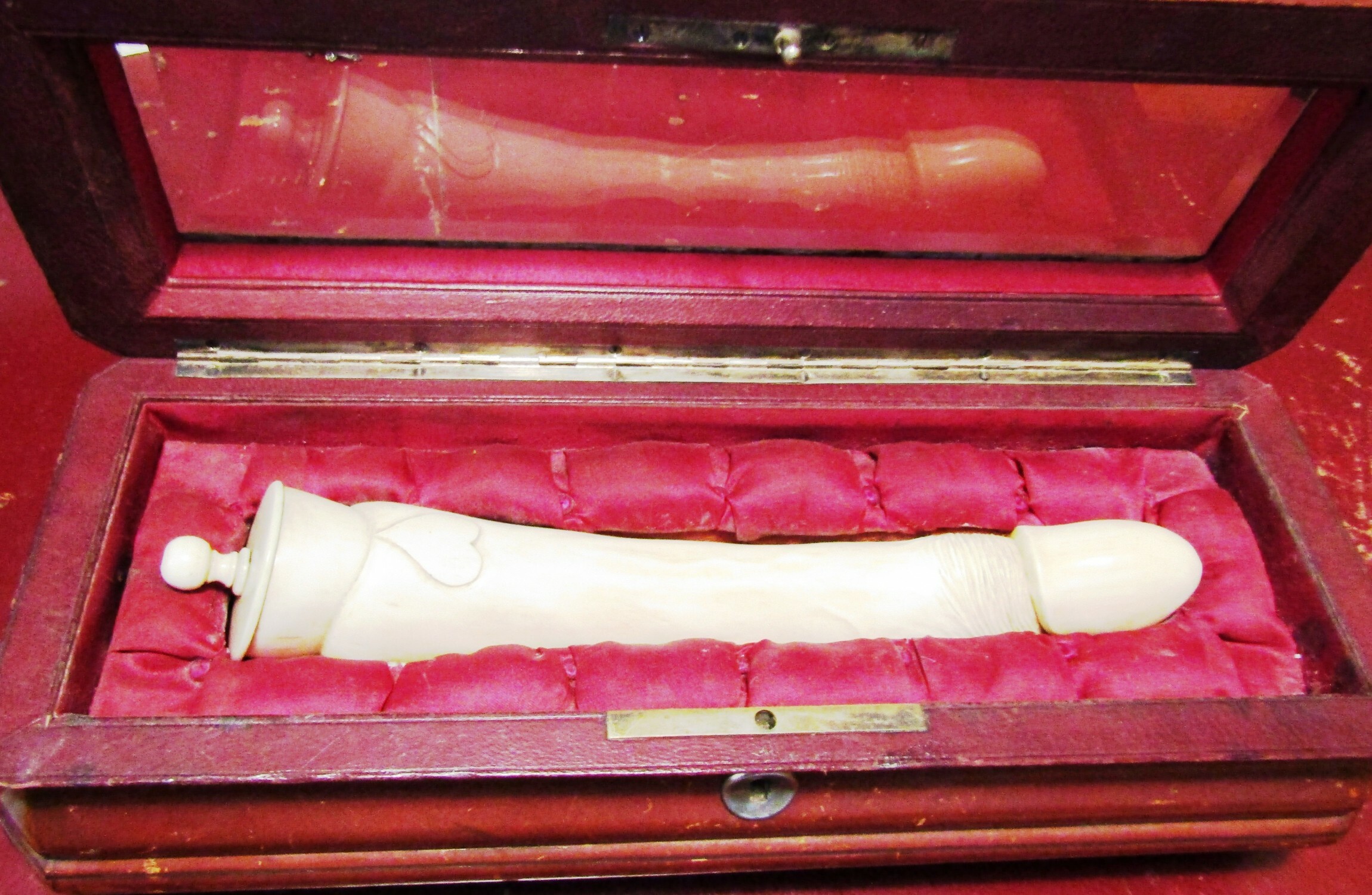
So I was interested to find this in the description of the above miniature in Flavio Febbraro’s How to Read Erotic Art which I reviewed yesterday:

In the late Middle Ages, so-called stuphae — baths or saunas — were present in almost every city across Central and North Europe. In addition to offering hot baths, they provided premises for sexual encounters with obliging women. On the other hand, prostitution — despite the Church’s official intransigence in regard to sexual activity — was tolerated, if not encouraged, by the civil and ecclesiastical authorities. It was seen as a lesser evil that served to channel masculine aggression and ensure public order. Consequently there were authorized ‘brothels’, managed according to standards defined by the municipal authorities, that enlisted women mainly from the countryside. These women enjoyed the acceptance of the community in which they lived. Houses of tolerance and stuphae were located in the centre of town, often in respectable buildings, demonstrating that, his activity took place openly, with no particular negative judgement attached to those who frequented them.

So why the problem now?
It makes no sense to me.

Your Interesting Links

Slightly later than planned, and hence slightly longer than usual, here is my monthly list of articles you might have missed before …
Science & Medicine
Kazakhstan is a treasure trove of naturally wild and flavourful apple varieties.
Welcome the tiny ingestible origami robot which can be used for repairing wounds.


Ocean scientists have been using message in a bottle techniques for over 100 years, and they still are.
One mouse, two mouse, three mouse … Can cats count mice?
And still on felines … can a cat have an existential crisis? Spoiler: yes. [Long read]
Ear wax is very strange and mysterious stuff. [Long read]
Sexuality
OK, girls, so does the ‘G-Spot’ actually exist?
Do humans actually send out airborne aphrodisiac pheromones to attract potential mates? Erm … dunno.
Social Sciences & Business
On the social and design engineering of high heels. [Long read]
How many friends do you have? Are they really your friends?
Alain de Botton on why you will marry the wrong person. And there’s not much you can do about it!
Language
What’s it like learning to talk all over again? Learning Chinese as an adult.
Art & Literature
From mega-libraries down to nano-libraries … here’s the story of London’s smallest library.

Wow! The whole of Samuel Pepys’ Diary is now online.
History
It seems that Ice Age Europe wasn’t populated by who we thought.
The Fitzwilliam Museum in Cambridge have discovered that one of their Ancient Egyptian coffins holds them youngest known mummified foetus.
Ancient toilets can tell us a lot about the lifestyle of their users, and it seems the flush toilet goes further back than we thought. [Long read]
The colour of monastic habits was much more fraught with controversy than one might suspect.
A plague on all your houses. New research suggests that the Black Death was even more devastating than we thought.
Ianvisits reviews the exhibition of the lost library of the Tudor magician John Dee.
Slowly coming more up to date, here’s a look at the background and organisation of the Gunpowder Plot.
An unsuspected mass grave in Durham is though to hold the remains of prisoners from the Battle of Dunbar.
Investigations into a 1661 document awarding £20 to Major Smith.
Lady Antonia Fraser on the sexy and scandalous truth about Versailles and the new BBC series about the same.
How old is that London house? Is it Georgian Or Victorian?

London was devastated during World War 2. The recently published LCC bomb damage maps reveal all. It’s a magnificent volume!
There have been lots of weird and wonderful proposals for building in London which have come to naught. Here are some, arranged by Underground station.
Food & Drink
How to tell real Parmigiano Reggiano from imposters. Science now has a way.
People
So here are two pieces about the forensic mysteries of identifying unknown bodies.
First the mystery of Saddleworth Moor: who was the man they’ve nicknamed Neil Dovestone?
And in the US, just as here in the UK, the identification of nameless bodies can take years before the mysteries are solved.
Shock, Horror, Humour
So here’s a little quiz to end with … What is London’s longest tunnel? It’s OK, I got it wrong too.
More next month.

Oddity of the Week: Train Stations

It is well known, at least around here, that Britain has more than its fair share of eccentrics. And we have had for a very long time. Think back to John Aubrey, John Evelyn and even Samuel Pepys. Then there are the eccentric Victorian clergyman, with too much time on their hands, who investigated everything from stone circles to the propagation of primulas and photography.


Dolau station in Wales (photo: David Brewer)

Should we therefore be surprised that, even today, the eccentrics are still amongst us? And the latest example: David Brewer, from Chorley in Lancashire, who has spent the last 8 or 9 years photographing every single railway station in mainland Britain. Why? Because they’re there.

Your Interesting Links

Lots of science-y bits again in this months offering …
Science & Medicine
I wonder when humans first started pondering about aliens? Well certainly they were in medieval times.
On the discovery of dinosaurs among us.
So what would you guess is the world’s deadliest poison? Well here are five of the top contenders.
Clean water. We all depend on it, but do you know what happens to it between its source and your tap? Simple explainer from Compound Interest.
Hugs generally feel good. Now researchers are beginning to understand why.


Wow! In what looks a stunning piece of work some neuroscientists have been able to create an atlas showing how words are organised in the brain. The implications could be worrying though.
Next up another stunning piece of research and development … A biotech company has developed a DNA sequencer that fits in a pocket and will go literally anywhere. Of course it is still expensive, but that should change. [Long read]
More new work shows that women get healthier after their husbands die. It must be finally having been able to stop doing childcare.
So really how do female astronauts cope with menstruation? Seems it is currently most down to persona choice.
Sexuality
So here are some of those sex myths debunked.
Here’s the story of a childless young lady who chose to be sterilised in her 20s and 40 years later she hasn’t regretted it, despite the harassment.
Social Sciences & Business
Bodyhackers: people who ave stuff implanted in them, like the microchips we put in our cats and dogs. They’re all around us. And most of them are women.

Language
Speed-reading. Too good to be true? Well that’s what the latest research is telling us.
History
Here’s an interesting piece on the early history of London’s St Paul’s Cathedral.

Archaeological divers found a 400-year-old dress in a shipwreck off the Netherlands. And it seems it sheds light on plot to pawn crown jewels.
The oddities of maritime history … the SS Baychimo, one of the strangest ghost ships on record sailing unmanned for 38 years.
Food & Drink
Well the French may call them pissenlit, but the humble dandelion is an interesting and useful herb. I remember when I was a kid we made both dandelion wine (lots of flowers) and dandelion coffee (from the roots). Love the illustrations too.
Out there are some amazing heirloom breeds: from woolly pigs to deodorant squash. And they’re vanishing, which is a shame as we’re losing some rich variety.
Shock, Horror, Humour
And finally … If you live near the sea what do you do with all the flotsam you find? If you’re artist Stuart Haygarth you sort it all to make interesting collections of weirdness.
More at the end of the month.

Oddity of the Week: Curly Pigs

The Mangalica (or Mangalitsa) is a Hungarian breed of domestic pig. It was developed in the mid-19th century by cross-breeding Hungarian breeds from Szalonta and Bakony with the Serbian Šumadija breed.


The Mangalica pig grows a thick, woolly coat similar to that of a sheep. It is a quick-growing, “fat-type” hog which does not require any special care, hence its popularity in Hungary.
The only other pig breed noted for having a long coat is the extinct English breed the Lincolnshire Curly Coat.
Lots more on Wikipedia.

Weekly Photograph

As many of you know we were in York last weekend for as conference. And on the Sunday we had an outing to see the glories of Castle Howard. So here’s a panorama of the rear of the house.

Castle Howard
Castle Howard Panorama
April 2016
Click the image for a larger view

Weekly Photograph

Over the weekend I’ve been running the Anthony Powell Society Conference in York. Thanks to University of York we were able to use the magnificent King’s Manor, the university’s city centre base.
King’s Manor was originally built to house the abbots of St Mary’s Abbey, York and the Abbot’s house probably occupied the site since the eleventh century. However the earliest extant remains date from the 15th century. Following the abbey’s dissolution in 1539, Henry VIII instructed that King’s Manor be the seat of the Council of the North, a role it fulfilled until 1641. Following the Restoration the building was for some years the residence of the Governor of York. But since the late 17th century King’s Manor has been leased to various institutions until acquired by York City Council in the late 1950s and subsequently leased to University of York. It now houses the university’s Archaeology and Medieval Studies Departments.
Much of the original structure remains, and as you would expect is Grade I listed. This is photograph is the main entrance door and (although heavily restored) gives a good idea of the magnificence within.

King's Manor Door
King’s Manor, York, Doorway
York, April 2016
Click the image for a larger view

There is some more about King’s Manor on the University of York website.

Your Interesting Links

There’s a lot in this month’s edition, which is a few days late, so let’s get straight in.
Science & Medicine
Scientists have tried to work out the five most addictive substances on Earth and what they do to your brain.
No real surprises though.
Another set of scientists have discovered a mysterious boiling river in the middle of the Amazon rainforest. Well it’s almost boiling and certainly hot enough to lightly poach the unwary.


Talking of boiling water, what temperature does it actually boil? And why can’t you make tea at the top of Everest (even supposing you were stupid enough to want to)?
And to the other end of the scale … Yet more scientists have been and recorded the sounds at the bottom of the ocean. Not just any ocean but deepest part, the Mariana Trench. And they were in for quite a surprise.
From sound to … sound. It seems that parrots are a lot more than just pretty birds. They have their own parrot languages and are also known to make tools.
Back to water and a German scientist has worked out just how Archer Fish are so adept at shooting down insects with a jet of water.
And now to things medical … One in five of us believe we have a serious allergy, but most of it is just belief. Here’s a summary of some key things you should know about allergies and intolerances (which aren’t the same at all!).
“I’ve been told bacon smells lovely.” Just what is it like to live with no sense of smell?

There’s no reason why it should work, but it does. We’ve all experienced the placebo effect but here are five popular placebo myths explained.
[Trigger Warning] It is thought that anything up to a quarter of all pregnancies end in miscarriage, the vast majority in the first 12 weeks, and often there is no obvious reason. However miscarriage remains a taboo and is seldom talked about. But medics are now putting effort into trying to find underlying reasons and to help those women most badly affected and those most at risk. [Long read]
What happens when you have a hole in your ear? Specifically a hole in the canal(s) of your inner ear? It’s rare, but the effect is quite frightening. [Long read]
Seems that attacking people who are overweight (or worse) is counter-productive. You don’t say!
Are you a loner? And a nerd? Yes many of us who do a lot of thinking (it’s often called research, or work) are. So we need some peace and quiet — and a little sympathy.
Sexuality
It is important that we talk openly, frankly and honestly to our children about sex and pleasure. Peggy Orenstein has a new book out on “Girls & Sex”; here‘s a piece about it and a few myths exploded. But don’t forget the boys as well; they have to be taught about sex and pleasure, and often respect for the girls too.
At which point it seems appropriate to ask why the clitoris doesn’t get the attention it deserves? And why does this matter?
It seems there are engineering lessons to be learnt from the design of the penis and the mechanics of erection
Social Sciences & Business
The surprising chances of our lives can seem like they’re hinting at hidden truths. On coincidences and the meaning of life.
History
Apparently a 5000-year-old linen dress is the oldest know woven garment. and it’s on display in London.
There are many mysteries about the lives and deaths of the Egyptian Pharaohs. But it looks as if one may have been solved as CT scans have revealed brutal injuries to Pharaoh Ramesses III.
We’ve all come to know (and love?) the @ sign. But I remember being totally mystified by it as a kid using my father’s typewriter, which isn’t surprising as it appear to have a long and rather convoluted history.
Edward Johnston and the typeface that changed the face of London Underground, and much else besides. with a rather more than walk-on part by Eric Gill.
I love the Museum of London Docklands and they’re opening a new gallery which centres around the museum’s building itself. IanVisits got a sneak preview.
Food & Drink
Are you a devoted breakfast eater? Or are you like me and usually not want breakfast? Breakfast is supposed to be the most important meal of the day, but is it? Spoiler: probably not.
Apparently we don’t have a clue how to shop for vegetables. Dear God, Mr American, tell me something I’ve not known this last 60 years.
Professional chefs on mould, food waste and expiry dates.
The UK has sheep coming out of its ears, so why won’t UK supermarkets stock British lamb? Surely it has to be better than frozen New Zealand lamb that’s been shipped round the world; and because it’s on our doorsteps it really shouldn’t be more expensive. Sorry supermarkets (and butchers) if you aren’t going to sell me fresh British lamb, I’m not buying lamb. Simples.
Shock, Horror, Humour
Finally, for the avoidance of doubt — and the education of the masses — here’s the CPS guidance on nudity in public.