Category Archives: environment

Monthly Links

So here we are for our last post of 2018, and this month’s links to items you may have missed before. As usual we’ll start with the scientific and get easier as we go along – so hang in there!

Science, Technology & Natural World

Forty-one years ago (that’s 1977) NASA launched the Voyager 1 and Voyager 2 probes to investigate the outer planets. Voyager 1 left the solar system and entered interstellar space some six years ago. And it has now been confirmed that Voyager 2 passed the same landmark on 5 November 2018. Amazingly both probes are still alive and beaming information back to us using their tiny 20w transmitters, although their plutonium power sources will eventually run out and the probes will be dead on arrival at a nearby star in about 40,000 years time. What an incredible achievement! It is feats like this that make me proud to be a scientist.

We know earthquakes mostly happen along the boundaries of tectonic plates. But not all do; some happen far from plate boundaries. Seismologists are now beginning to think that (some of) these “remote” earthquakes may be caused by rivers moving huge amounts of material over the millennia.

Benjamin Franklin is well known for many things, one of them being his experiments with kites and lightning which led to his development of the lightning conductor. But he had another great electrical discovery to his credit: turkey tenderisation – in the process of which he nearly killed himself.

I wonder if anyone can tell us what glitter is, and how it’s made?

Apparently the Leaning Tower of Pisa is leaning a little less.

Wasps. And why we might miss them.

Where grows the mistletoe?

Health & Medicine

1918 saw the destructive Influenza Pandemic. What progress has been made since then?

Meanwhile we have few clues about Disease X, the next pandemic to hit London – as one surely will sooner or later.

Researchers reckon they’ve discovered a genetic cause that links erectile dysfunction and Type-2 diabetes.

Are you shitting comfortably? Actually, probably not. [LONG READ]

So why are more boys born than girls – especially when there are more adult women than men?

Sexuality

The Going Medieval blog dissects the very idea of No Nut November. [LONG READ]

Environment

The Guardian suggests 24 ways in which we can embrace an anti-capitalist life in a capitalist world.

And then here are four actions would help tackle the global plastic crisis.

History, Archaeology & Anthropology

Researchers reckon they’ve found stone tools which suggest that human ancestors spread into north Africa much earlier than previously thought.

Analysis of various records has highlighted London’s murder hotspots.

Meanwhile in the River Thames there is the mystery of the skeleton still wearing his thigh boots.

When and where were the first traffic lights? Answer: Parliament Square in 1868 – long before the motor car.

Lifestyle & Personal Development

Some thoughts on how to be a better spouse from Scientific American.

And finally for this year …

Since 1904, King William’s College on the Isle of Man has set an annual general knowledge test. In the past pupils sat the test twice: once unseen on the day before the Christmas holidays, and again when they returned to school in the New Year, after spending the holiday researching the answers. The test (now voluntary) is highly difficult, a common score being just two correct answers from the 180 questions, with best scores of 40 to 50 for the unseen test. The quiz has been published in the Guardian since 1951 – and you can find the 2018 test in the Guardian or on the King William’s College website. Good luck!

That’s all for this year, so here’s wishing everyone a peaceful and successful 2019. The Kindly Ones permitting we’ll be back after the fireworks.

Monthly Links

So here’s our monthly selection of links to items you may have missed, but will wish you hadn’t. As usual we’ll start with the science-y stuff and go downhill from there.

Science, Technology & Natural World

Astronomers are still on the hunt for “Planet 9” which they think lies way beyond Pluto. And they’ve found a strange, but small, object – nicknamed “The Goblin” – which may provide more clues on where they should be looking.

At home, researchers are looking at the effects of climate change and rising sea levels, and asking which cities will sink into the sea first. The answer may not be what one would intuitively expect.

Talking of the sea, it’s long been thought that few things predated jellyfish, but this turns out to be wrong.

Meanwhile on land it is being suggested that cats are pretty useless at catching rats and prefer smaller prey. Well they had better not tell our felines that!

However the ability of crows to make tools is giving some insights into how the brain generally works.

I wasn’t sure whether this next item belongs here or under “Environment” but it is sufficiently technical I left it here … It is being suggested that we could store unpredictable energy, like solar and wind, using compressed air. It sounds crazy, but might work.

Health & Medicine

There’s a muscle-weakening disease popping up in America which affects children and looks a lot like polio (but isn’t). And weirdly it seems to have a two-year cycle.

Are you like me and have problems with sleep? If so it may be that you’re over-tired.

Still thinking bout sleep, a researcher seems to have worked out why it is that we take so long to wake up and get going in the mornings. And that caffeine doesn’t actually help.

But then it is being recognised that people sometimes just give up and die.

At the other end of the spectrum, there are women who suffer from tokophobia: an extreme fear of pregnancy and childbirth.

Finally in this section, here’s a piece about the medicinal leech and how to farm it. They’re strange beasties with 10 stomachs, 32 brains and 18 testicles!

Art & Literature

No good adventure story, and many others, would be complete without a good map. Here a few writers tell of their favourite literary maps.

History, Archaeology & Anthropology

There’s a puzzle in ancient historical research: how do we know which historical accounts are true? And as one professional demonstrates it isn’t as simple as all oral history is make-believe.

Opium has been known and used for more than 7,000 years. There’s a new book Milk of Paradise: A History of Opium by Lucy Inglis, reviewed in History Today.

King Henry I is said to have died of a surfeit of lampreys, and now archaeologists in London have found lamprey teeth in a medieval layer near the Mansion House. Although lampreys were a medieval delicacy, their teeth are rare (these are the first found in London, and only the second in the UK) as they are made of keratin (like nails and hooves) rather than dental enamel.

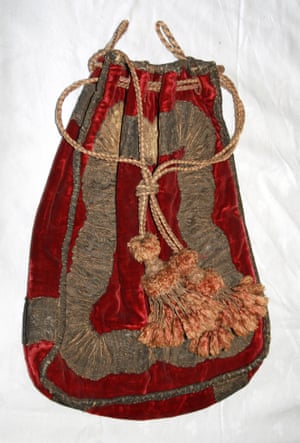
Someone has found an old red velvet bag (right) in a Tudor house once occupied by Walter Raleigh’s son and widow. They think it may have been used to carry around Raleigh’s mummified head. It looks more like a 1970s girl’s gym kit bag to me!

London

Have you ever wondered just how much stuff any city transport system actually owns. Here Diamond Geezer looks at Transport for London’s assets, and the scale is somewhat frightening!

Lifestyle & Personal Development

One scientist is annoyed that the likes of the media won’t recognise that her doctorate confers the title “Dr” – because she’s not medic. I find the medical profession are the worst offenders in this regard.

We all doodle, at least sometimes. It turns out your doodles could be important and meaningful.

The ability to do simple, “order of magnitude”, calculations on the back of an envelope is important for learning, verifying your answers and demystifying things like geological time. It is something I was taught, at school as a teenager, to check if answers to science/maths exam questions were likely to be right – and it has turned out to be an invaluable skill.

And finally this month … A Buddhist look at trigger warnings and fixing the world. TL;DR: don’t.

Monthly Links

Herewith are the usual monthly collection of links to items you may have missed. It’s holiday season, so there’s not been so much of interest this month.

Science, Technology & Natural World

This year’s Royal Institution Christmas Lectures should be good. They’re titled “Who are You?” and will apparently be all about evolution and the rise of Homo sapiens. And who better to present them than the ever excellent Prof. Alice Roberts. But I bet there will only be three lectures again this year, rather than the original six.

Talking of human evolution, the latest research suggests that one of the last traits of our primate origins to disappear was our prehensile big toes.

More prosaically, it seems that the UK has this month been plagued by social wasps. I can’t say I’ve noticed, but here anyway are five reasons we should celebrate them. Oh and there’s another reason: our beloved honey bees are descended from ancient wasps.

I’ve seen it suggested that this is old news, but there are recent reports of Pine Marten recolonising the Kielder Forest for the first time in 90 years.

Health & Medicine

There’s a brilliant plan afoot to map the location of every publicly accessible defibrillator in the UK.

And a tragic story: how smallpox claimed it’s very last known victim here in the UK.

There’s new evidence that the HPV vaccine has been responsible for a huge reduction in the rate of cervical cancer. Even better is the news from last month that HPV vaccination is to be offered to teenage boys in England.

Apparently the idea that millions of sperm are in an Olympian race to reach the egg is yet another male fantasy about human reproduction. This Aeon piece has news of what actually seems to happen. [LONG READ]

I wasn’t sure whether to put this item under science or medicine, but here’s a piece of the chemistry of foxgloves, from which we still get the heart drug digoxin.

And here’s a strange phenomenon: aphantasia – the inability to picture things in one’s mind’s eye. It sounds as if there is a spectrum of aphantasia from very lucid to nothing; I suspect I’m somewhere in the lower half as the only pictures I have of events (even significant events like our wedding) are a few “snapshot” images, whereas other people I know can run everything in full HD video in their brains. It’s very curious.

Environment

Here’s another potentially disastrous new vanity project which George Monbiot has got his knife into: the Oxford-Cambridge Expressway. The article contains links to some of the official documentation, and it doesn’t look very pretty!

History, Archaeology & Anthropology

Researchers have made a very interesting discovery of an ancient hominid girl whose mother was a Neanderthal and father was a Denisovan. It suggests that hybridisation between hominid species, and especially our close relatives, was a lot more common than was suspected.

An interesting alternative theory about the development of major monuments like Stonehenge and Easter Island. [£££]

Yet more laboratory research has led investigators to unravel the recipe for Egyptian mummification.

It been a hot summer (although writing this over bank holiday weekend it doesn’t feel that way) and the lack of rain has been a great result for archaeologists as many hitherto unknown sites have become visible in crop marks. And the use of drones has made finding them so much easier than hitherto. [Mostly images]

London

One of our favourite London bloggers has undertaken an epic journey: across London on the 51½°N line of latitude. It is documented in a series of 12 posts of which this is the first – or you can have the whole 51½°N journey in a single post. [LONG READ]

Lifestyle & Personal Development

So what is it really like being an artist’s model? A handful off London’s life models give us a few insights.

Food & Drink

Gluten is getting a bad name. Are problems with gluten in the diet a fad? Or are they a real medical issue? Joanna Blythman in the Guardian looks at some of what seems to be happening. I think the jury is still out.

Despite many people’s dislike, we all know cabbage is good for you and now researchers are suggesting it may contain anti-cancer chemicals. Well if was good enough for Diogenes …

That’s all for this month; more at the end of September.

Oxford-Cambridge Expressway

I’d never heard of the Oxford-Cambridge Expressway, which seems to be a new mega-road linking the two university cities. And no wonder, because it seems to be being cookd up behind closed doors.

Yesterday’s Guardian ran a typically robust piece from George Monbiot attacking both the scheme and the governments approach:

This disastrous new project will change the face of Britain
yet no debate is allowed

Monbiot’s article links to a number of the government documents, which do seem to substantiate many of his assertions. Beyond that I leave readers to make up their own minds.

Monthly Links

So here we are then with this month’s selection of links to items you may have missed the first time round. There’s a lot her again this month, and as usual we’ll start with the “harder” science-y stuff and slalom downhill from there.

Science, Technology & Natural World

So are we alone in the universe? Maybe or maybe not. Science doesn’t know. [£££]

The Earth’s tectonic activity might be essential for the evolution of life.

Most of us hate the sound of our own voices when we hear recordings. Here’s why.

A New Yorker article on the obsessive search for the Tasmanian Tiger (aka. Thylacine). [VERY LONG READ]

Balls! The males of all mammals have them, but not all are on display: some species don’t have descended testicles.

Who could have predicted that crows can work a vending machine – and make their own tokens.

That clean swimming pool smell … turns out it isn’t too good for you!

Health & Medicine

There’s this yeast; it’s a strange and deadly superbug.

So just how easy is it to catch germs from a toilet seat?

Women’s healthcare could be normalised by employers understanding the need for menstrual leave.

Low risk of breast cancer? Seems like skipping that mammogram isn’t such a bad idea.

Two items on fish oil and Omega-3 supplements. A study by the Cochrane Institute (who are the gold standard of medical reviews) concludes the supplements give no protection against heart disease and stroke. And what’s more the second article points out that such supplements are doing immense harm to the planet.

There’s a better medicine for the elderly than umpteen pills. It’s called social prescribing, where GPs can signpost people to activities and support – except most don’t know what is actually available.

Sexuality

Do lesbians have better sex than straight women? Seems like they probably do.

Environment

I remember my father talking about this 50+ years ago, so it’s been known for years (and ignored) that we need to look after and repair the soil to grow crops sustainably and with good yields.

Timber! So just how are tree trunks cut to make wood with a range of uses and appearances?

Social Sciences, Business, Law

Now I was suggesting this as a corporate strategy some 12 or more years ago, and it has taken this long for someone to catch on: accountancy giant PwC is making employees use mobile phones and cancelling landlines.

History, Archaeology & Anthropology

Archaeologists have unearthed an unknown Neolithic site near Woodbridge in Suffolk. Ritual is suspected.

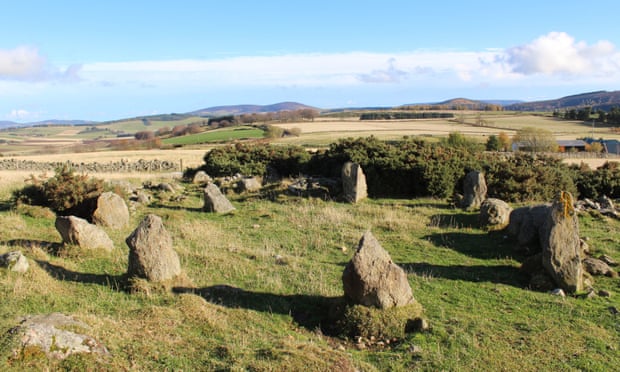
IanVisits pays a visit to Avebury Stone circle (above).

Ireland is having a hot, dry summer which is good for revealing crop marks of ancient remains. In one a drone has spotted the outline of a previously unknown henge near Newgrange.

Slightly nearer home, soldiers have found the skeleton of a Saxon warrior on Salisbury Plain.

There’s an unexpected cockatoo in the margins of a 13th-century manuscript in the Vatican. And it’s forcing a rethink of the ancient trade routes.

Meanwhile on the north Kent coast a 16th-century shipwreck is being revealed by the sea, and it too is expected to reveal a lot about trade in Tudor England.

Still on watery archaeology, there is a massive metro construction project in Amsterdam which is necessitating the clearance of some stretches of canal. The astonishing range of finds, right back into pre-history, has been put online.

London

Kew Gardens station has a remarkable concrete bridge. IanVisits goes to see.

The Horniman Museum in south-east London has a new World Display as well as being all-round interesting.

Lifestyle & Personal Development

Are things getting worse – or does it just feel that way?

And are women’s breasts getting bigger – or is it just bras? (Or is it just low levels of hormones in food?)

Some schools are banning girls from wearing skirts supposedly to protect the girls. But skirts aren’t the problem; the problem is boys who think girls are lesser creatures. No, just let girls and boys wear skirts, or trousers, as they please.

A parents’ guide to surviving children’s teen years.

So just why do people believe in superstition and the unbelievable?

People avoid adopting black cats because they’re supposed to be unlucky and because they are hard to photograph. Neither is actually true!

Ah yes, the cashless society. It’s another big con of the banking sector to boost its profits. As Sweden is beginning to realise, if you don’t have cash the whole of society is vulnerable to computer malfunction, attack and power failure. Just think about that for a minute.

Food & Drink

On the history of borscht.

Shock, Horror, Humour

And finally one from Norfolk Police, who stopped a motorist only to find he was driving while sitting on a bucket and steering with pliers!

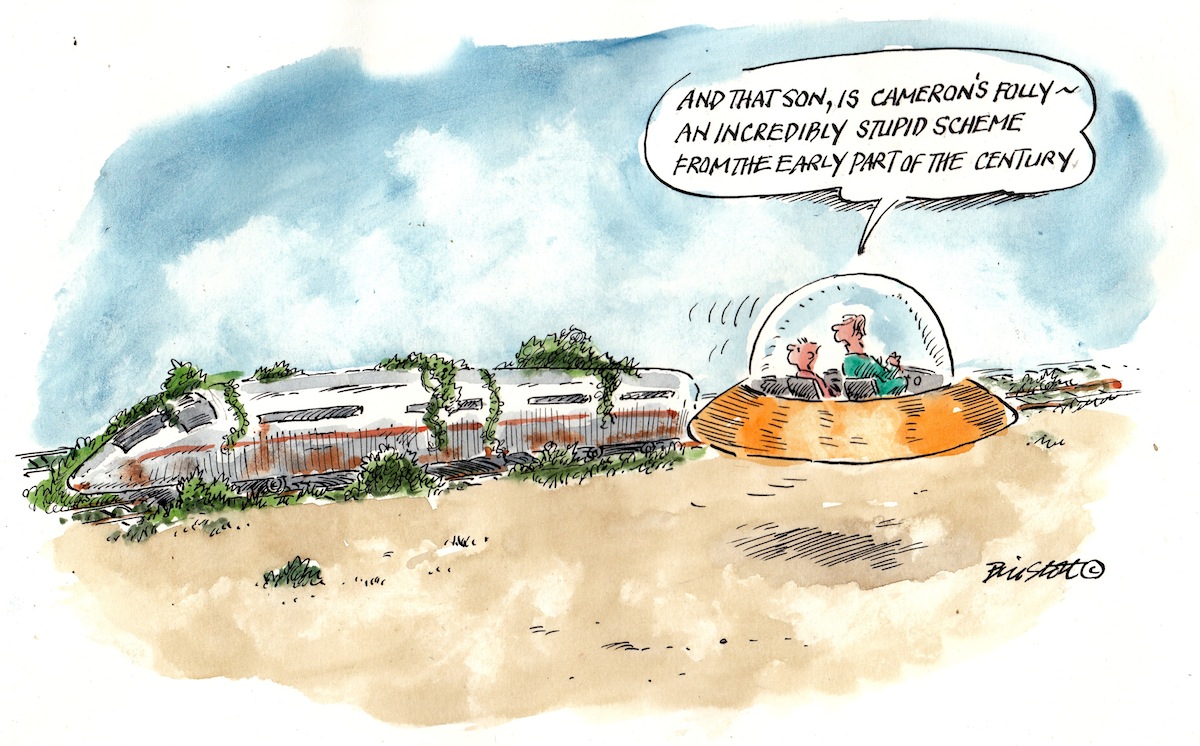
HS2 (again)

Lord (Tony) Berkeley writes a regular column in the Railway Magazine. In the July issue he once again takes a very scathing look at HS2. The article isn’t online but here are a few key extracts:
Head in sand over escalating HS2 costs

New Civil Engineer reports design elements for one of the main design and construct contracts let for the civil works were coming in at 18% over the target price, up from £6.6billion to £7.8bn.

… some bids were as much as 30% to 40% higher than their individual target price.

… the project is probably running three to four years late, even before any serious work on the ground has started. Other estimates from along the route indicate the project is held up because the purchases of the necessary land and additional areas needed for accommodation works are late.

Has HS2 allowed for the cost of diverting a 12in-diameter fuel pipe a dozen times along the route? Have they applied to the National Grid for the necessary power supply for the trains and for the required capital cost contribution to build the necessary power station capacity? Have they allowed for the cost of driving piles to support 20km of double slab track in the mushy ground of the Trent Valley?

I have asked many questions in the Lords since that time and have always been told the funding
envelope of £23.73bn at 2015 prices is still valid.

Given what we are now discovering there seems to be every reason to suppose the out-turn cost of Phase 1 will be a lot closer to £50bn than the DfT’s £25bn.

Surely it is time to reflect on why ministers continue to allow HS2 to have a blank cheque to spend what they like – a figure likely to reach more than £100bn if Phases 2A and 2B are included – while at the same time starving Network Rail of any investment …

It is all investment in the railway and there are many who believe £100bn could make a massive
difference to improving the present network in a greater number of beneficial ways.

Now we know that Tony Berkeley is a powerful voice in the rail freight side of the industry (so he’s not totally unbiased), but he is also a respected civil engineer. Even if half of what he says were to stand up to scrutiny (and from what I’ve read I’m unsure about the cost figures quoted) then it is yet another damning condemnation of this benighted government.

HS2 is a vanity project, pure and simple. It is government “willy waving” on a massive scale. See, for instance, this in the Spectator, this and this in the Daily Mail.

And all of that is without the environmental damage HS2 will do – as the Woodland Trust and the National Trust highlight.

Isn’t it time for everyone to come clean and admit that we just cannot afford HS2? Environmentally or financially. If nothing else, wherever the money is supposed to be coming from, it just isn’t there. Not when we have such a huge public debt. Not now, and certainly not after Brexit.

Monthly Links

There’s again a lot in this month’s round up of items you may have missed the first time. So here goes …

Science, Technology & Natural World

Maglev trains have been around for a surprisingly long time, so why aren’t they ubiquitous?

Inter-species hybrids were once looked on as just biological misfits, but science is now coming to appreciate their importance for evolution. [LONG READ]

Did you know that witches’ brooms grow on trees? You do now!

Tidal power is supposed to be able to provide a significant percentage of the world’s energy needs, but a close look suggests it won’t. [£££]

Health & Medicine

Here’s a little about how Moorfields Eye Hospital in London really has changed the world.

It’s only a matter of time before we get the next major pandemic. An American-centric look at our preparedness? [VERY LONG READ]

The medical profession prescribe a lot of opioid painkillers. But are they all they’re cracked up to be, and would we miss them if they weren’t there?

Restoring life using CPR is brutal and rarely works. So why do people have so much faith in it and demand resuscitation at all costs?

Against most specialists expectations there’s work going on to develop a single vaccination to prevent several common cancers. It’s about to start a major trial in dogs.

While we’re on cancer, the placenta may just give us insights into cancer treatment – it’s just one of nine ways the placenta is so amazing. [£££]

Scientific American recently asked “When Does Consciousness Arise in Human Babies?”

Did you know you have an “inverse piano” in your head? Well actually there are two and they’re in your ears.

Finally in this section, Fred Pearce in the Guardian, takes another look at the real fallout from the Fukushima Dai-ichi disaster.

Sexuality

Why was it ever in doubt that women can have multiple orgasms?

Environment

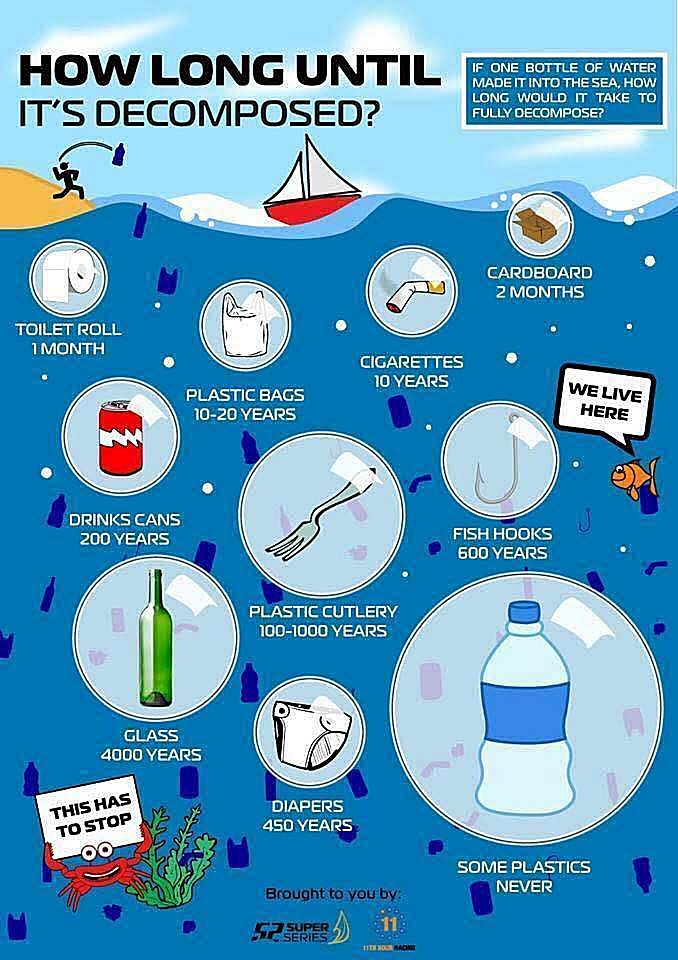
Here are two articles on the length of time it takes garbage to decompose. The first is fairly general; the second gives us the following graphic looking at plastic and other rubbish in the sea.

And while we’re on plastic, Annie Leonard in the Guardian says that the “plastic crisis” is too big to be solved by recycling alone.

The Woodland Trust are understandably – and quite rightly – angry at Network Rail’s apparent plans to clear trees from railway embankments.

Social Sciences, Business, Law

History tells us that all cultures have their sell-by date, so has the West’s time come and are we on the brink of collapse?

Oxford and Cambridge Colleges own a bigger portfolio of property than Church of England.

The rail industry are running a public consultation on rail fare structure prior to submitting proposals to the government. Do have your say.

History, Archaeology & Anthropology

Aethelflaed: A Saxon warrior queen who was out to vanquish the Vikings.

London

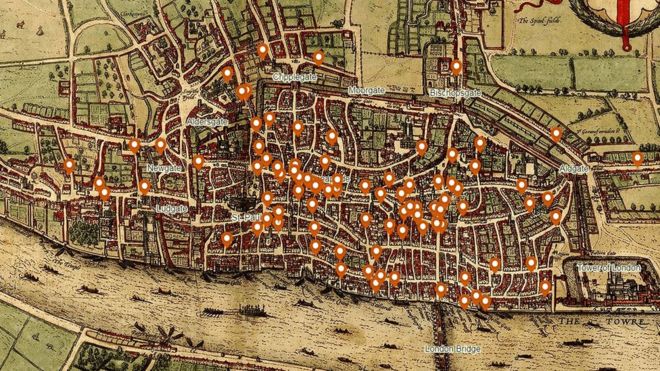
Layers of London is a super resource which allows you to overlay a number of old maps on the current street plan of London. One of the best is the Tudor layout of 1520. IanVisits takes a look.

Lifestyle & Personal Development

So just why are Dutch teenagers among the happiest in the world? And couldn’t we learn something from their approach?

Here’s Zen Master and writer Brad Warner contemplating the problem of spirituality, religion, the ego and intellectual honesty. It is readable, and well worth a read.

Meanwhile the Guardian (again!) reports that UK homes vulnerable to a staggering level of corporate surveillance from smart TVs, smartphones, laptops, security cameras etc.

Shock, Horror, Humour

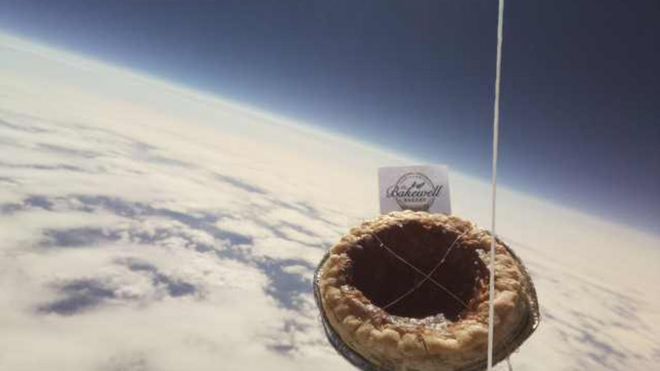
And finally, just because it isn’t 1st April … a prep school in Derbyshire has lost its Bakewell pudding in space. So very careless!

More next month!