Category Archives: current affairs

Monthly Links

Welcome to this month’s collection of links to items you may have missed the first time round and might want to catch up on.


Science, Technology, Natural World

The Black-Browed Babbler, known only from a 180 year old stuffed specimen, has finally been seen in Borneo.

So you always thought those little vials used for vaccines were any old glass, or even plastic? Well think again!

More on vaccines … Here’s a series of articles on Covid-19 vaccine manufacturing and distribution.
First, Derek Lowe on some myths about vaccine manufacture.
And a detailed look at some of the supply chain challenges for the Pfizer and Moderna vaccines. [TECHNICAL and VERY LONG READ]
Another item on the challenges of setting up manufacturing and distribution. [LONG READ]
Understanding the vaccine source code, or how to build a vaccine at the molecular level. [LONG READ]
Yes, these are all long, and in places rather technical, reads but worthwhile nonetheless if you want to understand just what the pharmaceutical industry has achieved in the last year.

Here’s Derek Lowe again, this time looking at drug discovery and the immune system.


Sexuality

And now to things which are a bit less intellectually demanding …

So how about a piece on the way the penis has influenced scientific research, as well as a lot else! [£££]

Or a journalist writes about her experiences of reporting on the porn industry. [LONG READ]


Social Sciences, Business, Law

The Guardian seems to have just discovered that the Queen has more power than we thought – and they’re highly indignant.


History, Archaeology, Anthropology

A 17,000 year old conch shell hs been found in a French museum – and also found to be a musical instrument.

Two reports on the supposedly dramatic discovery that some of the stones of Stonehenge were previously a stone circle in Wales – one report from BBC, the other from the Guardian. Well I must say they haven’t convinced me: it all just seems to be no more than circumstantial evidence.

Oh, no! We’re back with the penis again! Amongst many archaeological finds during the building of the A14 trunk road upgrade in Cambridgeshire, there was a rare Roman penis carving.

Meanwhile on the Isle of Man a metal-detectorist has uncovered some rare Viking jewellery.

When is a history not a history? When it’s a chronicle. Eleanor Janega explains the differences between history and chronicles, with some history along the way.

Coming almost up to date, here, in two parts, is the story of one WWII SOE Resistance agent, found in the National Archives. Part 1 and Part 2.


London

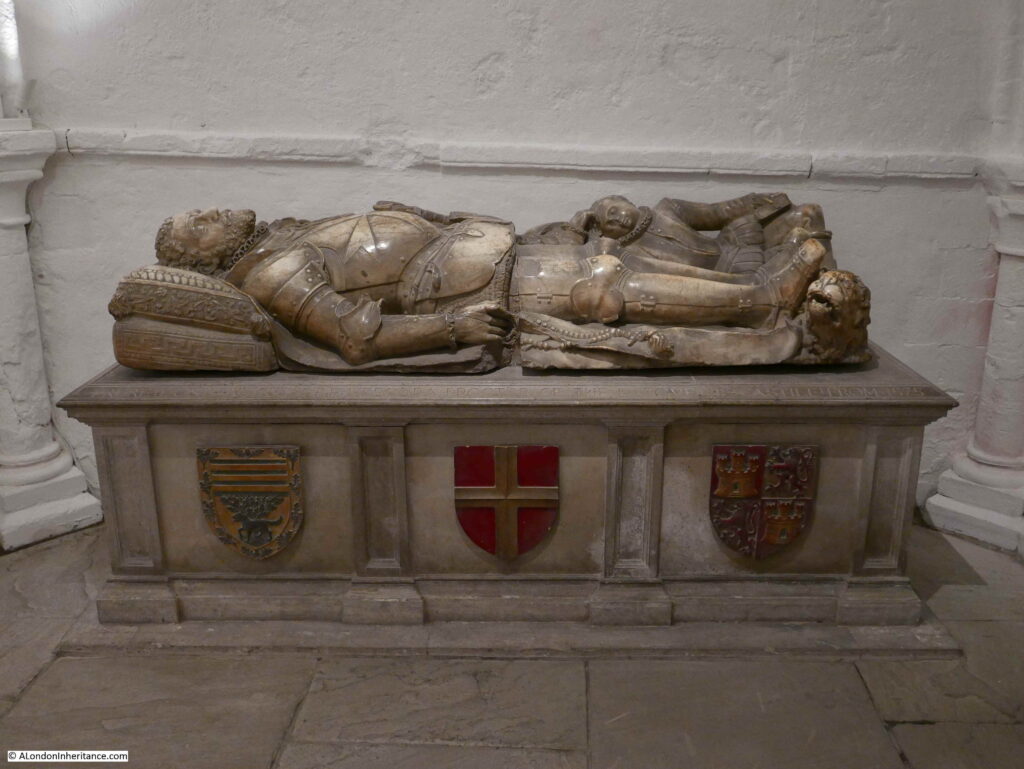
The slightly curious history of the Priory Church of the Order of St John in Clerkenwell.


Lifestyle, Personal Development, Beliefs

Researchers are suggesting that feeding our pet cats meatier meals and playing with then more will reduce their toll on wildlife. Here are two reports, from Science News and the Guardian with slightly different takes on the results.

And finally … Oh, God, we’re back with sex again! … It appears that the Jewish community have lost sight of the fact that the Purim Hamantaschen cookies look like the female pudendum. No, I didn’t know either, but then why would I?


Horrible Times 19: Easing Lockdown

So our dearly unbeloved Boris thinks he’s going to end all lockdown restrictions on 21 June. All I can say is that like everything which emanates from BJ’s mouth this is either madness or fiction – and quite possibly both. Let’s take a look.
[Links to some relevant BBC News reports at the end.]

  1. Lockdown ends on 21 June. But all UK adults aren’t going to be offered their first vaccination until 31 July. When do they get their second jab? Well at least 3-4 weeks later, which takes us effectively until the end of August, or 8+ weeks after 21 June. So we have a minimum period of 8 weeks with no lockdown and with the UK not as fully vaccinated as it can be. Does not compute.
     
  2. Can we hit the 31 July target? Given that the rate of vaccination is reported to have fallen in recent days, partly due to a lack of vaccine supply, this seems unlikely. Moreover the priority sequence for those under 50 has not yet been decided. Yes, it might be possible if we get the volume of vaccine we need. But there’s many a slip ‘twixt cup and lip.
     
  3. That is ignoring that we don’t yet have very much data on the effectiveness of the current vaccines against the new variants of the virus. Nor are there updated vaccines available (or even nearly so).
     
  4. So lockdown is eased in five steps on 8 March, 29 March, 12 April, 17 May and 21 June. (The media are reporting this as four stages by lumping together the two March dates.) These appear to be the earliest dates for each round of eased restrictions. They will only happen if four conditions are met:
    • The coronavirus vaccine programme continues to go to plan
    • Vaccines are sufficiently reducing the number of people dying with the virus or needing hospital treatment
    • Infection rates do not risk a surge in hospital admissions
    • New coronavirus variants do not fundamentally change the risk of lifting restrictions

    WTF do these conditions mean? They are flabby and woolly at best. Without specific numbers against them, published up-front, they’re worthless as the government can flex them any-which-way it likes. They’re about as ethereal as mist.

  5. When they return to school, secondary school children will be required to have two Covid (lateral flow) tests a week. It seems the first three will be conducted in school but thereafter parents will be expected to administer the tests at home and report the results to the school. How many parents will (a) bother administering the tests, (b) do the tests properly, and (c) report the results accurately? This is going to end well, isn’t it!?

I’m not even going to talk about the rest of contents of each round of restriction easing. As you’ll realise from the above it is all rather academic when we don’t know the detailed baselines and criteria being used.

But what I will say is that if this timeline is adhered to, we’ll most likely have an up-tick in cases in May (as a result of schools going back) and another one in August (due to incomplete vaccine coverage).

Now don’t get me wrong. I want to see lockdown removed just as much as anyone else. But I want to see it done safely. For everyone’s sake.


Links
What’s the roadmap for lifting lockdown?
Lockdown review: What are the risks of schools, pubs and shops reopening?
Covid: When will schools reopen?
Covid: Why can’t we unlock more quickly?
Number of UK Covid vaccinations falls by a third as vaccine supply dips


Horrible Times 18: Day 350

Today is Day 350 of my lockdown. We’re rapidly approaching a year of detention, and it seems pretty certain we’ll make the full year.

No checklist of good/not so good things this time, and this is the briefest of reports. Why?

Because basically nothing changes. We still have the same patheticly incompetent government. And the same NHS which is doing heroic work despite the government’s attempts otherwise.

There’s no real news on the home front since my last report. Again everything muddles on much as for the previous 350 days.

The only significant change is that both Noreen and I have had our first Covid-19 vaccinations – I wrote about my experience here. Oh and Noreen has had shingles – now luckily gone away – and her cellulitis is resolving but slowly and the whole area of skin is still fragile.

I suggested last time that the lockdown may be over by now, but it isn’t and quite rightly in my view. The case rate needs to be down in really low figures. I might start feeling comfortable with ending lockdown when the daily new case rate locally gets down below 100 – it’s currently around 1800, down from a peak of 10,500.

I wonder what fresh nonsense can be dreamt up in time for my next report on day 365?

Meanwhile remember the mantra:

HANDS – FACE – SPACE

And stay locked in your cell.

Social Murder?

Murder is an emotive word. In law, it requires premeditation. Death must be deemed to be unlawful. How could “murder” apply to failures of a pandemic response? Perhaps it can’t, and never will, but it is worth considering.

Thus opens an interesting and thought-provoking editorial from Kamran Abbasi in BMJ (PDF) on 4 February. As always I bring the tl;dr key points.

When politicians and experts say that they are willing to allow tens of thousands of premature deaths for the sake of population immunity or in the hope of propping up the economy, is that not premeditated and reckless indifference to human life?
… … …
At the very least, covid-19 might be classified as“social murder,”as recently explained by two professors of criminology.
… … …
If not murder or a crime against humanity, are we seeing involuntary manslaughter, misconduct in public office, or criminal negligence?
… … …
More than a few countries have failed in their response to the virus; the global missteps are many and well documented by the Independent Panel for Pandemic Preparedness and Response.
… … …
But the global picture does not absolve individual leaders and governments from responsibility.
… … …
[M]uch of the media is complicit too, trapped in ideological silos that see the pandemic through a lens of political tribalism, worried about telling pandemic truths to their readers and viewers, owners, and political friends … truth has become dispensable as politicians and their allies are allowed to lie, mislead, and repaint history, with barely a hint of a challenge.
… … …
The most important lessons from this pandemic … are less about the coronavirus itself but what it has revealed about the political systems that have responded to it.

However necessary, basically nothing is going to happen.

Horrible Times 16: Day 300

Happy New Year to everyone, from these dystopian times!

So we’ve arrived at Day 300 of my lockdown. Are we going to make it to a full year? Well given the current situation where everything is locked down until at least mid-February, it feels pretty much a certainty.

OK, so we’ve now got two Covid-19 vaccines approved in the UK (from Pfizer/BioNtech and Oxford/AstraZeneca). In that sense there is light at the end of the tunnel, although full deployment is going to take quite a while – like maybe a year. Yes, yes, I know what the government say, but do you really believe them? Although I hit 70 this month I don’t expect to get my first vaccine shot this side of Easter and it could well be later – does anyone know what the supply situation will be in two weeks, let alone two months?

But (there is always a but) we also have a new strain of Covid-19 which appears to be getting on for twice as infectious as the original. This has caused the number of cases of Covid-19 to increase rapidly again, undoing all the good work of the early-to-middle part of last year. It hasn’t been helped by the general stupidity of the (un)great British public who don’t seem to get the problem. But then the government also either don’t get the problem or they are terminally inept. (I suspect the latter; but maybe it’s both.) All of which means that although there’s a light at the end of the tunnel, the tunnel has just got a lot, lot longer – and with yesterdays announcement of stricter lockdown it got a lot, lot darker where we are.

London has been in Tier 4 restrictions (lockdown in all but name) for several weeks. While this is pretty strict, it doesn’t seem to be draconian enough. At long last the government seems to have come to realise this (for the whole country) with yesterday’s imposition of much stricter lockdown and schools & universities closed for face-to-face teaching (with a few exceptions) until at least mid-February. What larks!

Not that this makes a lot of difference to us. We’ve largely been living under “STAY AT HOME” rules since early March. I just feel sorry for those, like our friend Tom, who have no lifeline and have to work to keep the wolf from the door; and for those who are supposed to put their well-being at risk (not just healthcare workers, but supermarket staff, emergency services, …).

So I’m not going to give you a checklist of the good and not-so-good this time around; just a couple of points.

First of all Noreen has to a large extent (but not completely) recovered from the illness I mentioned back on Day 250. It turned out to be a very nasty case of cellulitis which required two weeks of daily trips to the hospital for IV antibiotics, and then a couple of weeks of attention from the District Nurses. We’re now in the healing phase. I won’t pretend that the whole episode wasn’t difficult in the extreme – for both of us! What was especially shocking was the speed and severity with which it hit, and one can quite see why in days of yore, and with no antibiotics, it would have killed people very quickly. On the other hand, with a very few exceptions, Noreen was hugely impressed with the skill and care of all sections of the NHS: our GP, the Practice nurses, hospital doctors and nurses, hospital transport, and the District Nurses; and we mustn’t forget the couple of friends who turned out to provide emergency transport at short notice. Another good thing is that it has made us both slow down some and get to bed at a more sensible hour.

Needless to say this put a large spanner in the works and meant our Christmas was exceptionally quiet and low-key even by our standards. For various reasons we ended up with a lot more meat than we could cope with (no, just don’t ask!) so we now have three large joints of various sorts in the freezer. We also have a good supply of wine, beer, gin, soup and chocolate laid in. Just as well given the weather is getting colder. It can’t be all bad!

So what next? Well who knows? I guess we just have to plod on and hope; there seems to be no guessing what’s going to happen next, nor what our lords and masters are (not) going to decree we must do. Surely 2021 can’t be as bad as 2020, can it?! But maybe I won’t put my last shirt on that.

With luck I’ll bring you another episode on Day 350 (Wednesday 24 February) by which time this new lockdown may be over – or it may not. Who knows?

Meanwhile please follow the rules and remember:

HANDS – FACE – SPACE

Oh and you’re not allowed out of your cabin on pain of being keel-hauled.

Predictions for 2021

Once again this year I’ve disinterred my crystal ball and wiped the mud off. However it becomes cloudier by the day (yes, the ravages of age affect crystal balls too!) so despite regular consultations over the last month or so what follows are only my guesses at what may happen during 2021.

Actually this year I’ve found it very difficult to predict as there are too many unknowns and variables, and too much going on, due in large part to both Brexit and Covid-19. Hence the length of this year’s predictions.

As before, I’ve divided the predictions into sections: General, UK, World and Personal. Various items are redacted (although I have them documented) as some might be especially sensitive.

Disclaimer. I remind you that these are just my ideas of what could happen; they’re based solely on hunches and gut feel; I have no inside knowledge, I haven’t been studying the form, and I have a success rate of about 20%. So if you base any decision on any of this I will take no responsibility for your wanton act of idiocy or its consequences.

General

  1. This should be a year of change, of healing, of reassessing what’s important and of rebuilding. But I fear it won’t be! There are too many who want to instigate violent protest or will angrily protect their vested interests.
    Watch out for flashpoints in mid-February, mid-June and immediately before Christmas.
  2. If we do see a return to some semblance of normality, it is going to be late in the year and run on into 2022. Things will generally ease up in 4Q.
  3. We should also see the technological and green revolutions, as well as smarter working practices, take off. If they do it will be in the middle 6 months of the year.
  4. Watch out for travel delays and general buggeration during weeks 5-7, 21-25 and 39-41.
  5. Also watch out for change around the time of eclipses, especially in areas where they are visible. This year we have: Lunar eclipses on 26 May (visible round the pacific rim), 19 November (eastern Pacific and Americas); Solar eclipses on 10 June (Arctic) and 4 December (Antarctic).
  6. There are Supermoons on 27 April, 26 May and 24 June, and a Blue Moon on 22 August. These should all herald good news.

UK

  1. The Queen abdicates unexpectedly, on or shortly after her 95th birthday in April, citing failing health, and may die late in the year.
  2. Boris Johnson resigns as PM in March, partly due to poor health. In true Roman style he declares a Triumph saying he “got Brexit done”.
    His successor is likely to be Michael Gove or Rishi Sunak and will be an even worse culprit of nepotism and cronyism while introducing some fresh blood.
    There is no prospect of an early general election.
  3. There will be more division in politics and more stand-offs between local authorities and central government. Watch London, Manchester and Liverpool.
  4. Elections due to be held in May (eg. London Mayor) will go ahead despite Covid-19 still being rampant.
  5. Scottish independence referendum is possible in October/November but probably won’t happen until at least mid-2022 (and quite likely 2023).
    If it does happen, the result will be 55:45 in favour of independence.
  6. Government budget deficit hits £500bn with no immediate prospect of falling.
  7. UK GDP shrinks a further 5% year-on-year.
  8. Unemployment rises to 10%.
  9. Bank of England interest rate falls to 0% and could go negative.
  10. UK is in recession again by mid-year.
  11. In the Spring Budget:
    • Due to the budget deficit tax bands are not increased.
    • Tax rates are increased: 2% on both basic rate Income Tax and on VAT.
    • All UK pensions (state & private) are frozen by law for at least 3 years.
    • Duty on alcohol sold in pubs & restaurants is reduced by 30% in an attempt to help the industry.
    • Duty on alcohol off-sales, fuel and tobacco is increased.
  12. Major discontent (already brewing in the last days of 2020) when UK fishing industry realise they won’t get their full fishing quotas back post-Brexit.
  13. Despite the Brexit deal, there are major food shortages by February, due to Brexit import issues, effect of the new variant of Covid-19, and the lack of vaccinations. These could well last until June.
    Fruit & veg increases 50% in (retail) price – partly to constrain demand.
    Meat & fish also increase in price by 30%.
    Bread (and flour) prices double and supply is constrained due to poor 2020 grain harvests in UK and Canada as well as post-Brexit issues.
  14. There is major disruption to movement of goods between Northern Ireland and the UK mainland.
    The border between Northern Ireland and the Republic continues to be very porous.
    It is concluded that the only solutions are either a hard border with the Republic or the reunification of Ireland. Neither is politically acceptable, but then neither is the current situation. Meanwhile the disruption continues while politicians on all sides spend the year gibbering in their corners and paralysed with indecision.
    A temporary hard border is however required to try to constrain the spread of Covid19.
  15. The EU continues to impose travel restrictions on UK (due to Covid-19 and Brexit).
    Several countries follow France’s lead and insist that all UK travellers have visas to enter their country, regardless of reason or length of stay.
    As a consequence, travel outside the UK is difficult until mid-year.
  16. All of which stimulates a popular movement to rejoin the EU. This will build slowly over a number of years, but will not be taken at all seriously until after 2025.
  17. The government tries (again) to impose major reform on TfL. This leads to long-running industrial action by tube and bus workers and could see 30% of bus routes withdrawn permanently.
  18. A strike (or other significant industrial action) by energy workers (I’m not sure if this is electricity, gas or oil) seems likely – probably in February or November/December.
  19. Covid-19 wave 3 in January/February is due to the new strain of the virus and rules generally being ignored (especially in London and SE England). Lockdowns and restrictions (via tier) are ongoing until at least mid-year; this scuppers any hope of a quick recovery.
  20. Covid shuts UK schools & universities for three months (January to March is most likely) causing major confusion and disruption.
    Many degrees and GCSE/A-levels are devalued due to doubts over the level of teaching and study possible.
  21. There will be increased stress in 1Q and a further unexpected lockdown in 3Q. This fuels a further marked decline in mental health with antidepressant prescriptions up 25% during the year.
  22. There will be problems with Covid-19 vaccine supply until around Easter, when there will be a turning point.
    There will be another turning point around September time.
  23. A UK TV channel/company ceases broadcasting. Possibly Channel 5 or BBC3; less likely Sky or BBC4.
  24. One of UK’s eight major supermarkets goes under. Most likely: ASDA, Morrisons.
  25. The following will go into administration/cease trading as a result of the Coronavirus pandemic: Wetherspoons, Coda Falconry, Vagina Museum, 30% of pubs and restaurants, 30% of London theatres, Hull Trains, Eurostar.
  26. [[REDACTED]]
  27. There may well be a significant event (possibly a disaster) somewhere near Stoke-on-Trent and another in West Lothian.
  28. There is likely to be a major train crash, with at least 10 dead.
  29. Further structural damage will be found to London’s Hammersmith Bridge, and there may be a partial collapse. The bridge may have to be demolished.
  30. Other deaths: Prince Philip, another senior royal, Frank Field, Philip Green, Monty Don, Bill Turnbull, Tariq Ali.

World

  1. Trump continues to believe he won the election and refuses to leave the White House. He is finally removed in early February.
  2. The Trump presidency leaves the US in a terrible state with lots of last minute, vindictive orders which cannot be easily rolled back.
  3. Several Trump aides and family members are investigated for fraud and corruption, although prosecutions are hampered by non-cooperation and interference with witnesses.
  4. Trump declines to follow precedent and refuses to bequeath his papers to the state or endow a library for them.
  5. Joe Biden dies (probably due to a heart attack), leaving US with a woman president by default.
    This causes Trump to resurface and claim he should be President.
  6. 2021 could possibly see the death of Donald Trump.
  7. Expect several Covid-19 vaccines to be approved; most likely: Pfizer/BioNTech, Moderna, Oxford/AstraZeneca, Johnson & Johnson; there may be others.
    Oxford/AstraZeneca vaccine will not be licensed in USA until there have been further trials.
    All western countries will license at least two of the above four.
  8. However a really good vaccine (effective with long lasting protection) is not available in sufficient quantity until at least mid-year and will take 12 months or more to deploy fully in western countries.
    In consequence travel and isolation restrictions remain in place into 2022.
  9. In good news there could well be some major medical breakthroughs. Cancer treatment looks to be the most likely.
  10. There’s all out war between China and India, which threatens to pull in Russia and USA.
  11. There is a crisis of some sort in North Korea (possibly the death of Kim Yong-un) which dangerously destabilises the country.
  12. There is also a destabilising crisis in Venezuela.
  13. A crisis in either Iraq or Iran could well descend into civil war.
  14. There will be a major Islamic-based attack in Europe.
  15. Japan starts dumping the tritium contaminated water from the Fukushima nuclear site into sea.
  16. NASA’s Perseverance rover (to Mars) will fail on landing.
  17. Catastrophic failure and demise of ISS, possibly due to a debris strike – although any on-board astronauts are able to evacuate to safety prior to final explosion.
  18. Having returned to the skies, there’s another Boeing 737 MAX 8 crash, and the plane is grounded again.
    And at least one other major plane crash with over 100 dead.
  19. Two major airlines fail; Virgin Atlantic is probably finally one of them.
  20. There’s a major train crash somewhere in Europe
  21. A major financial institution fails – it’s not clear where, but the US, Italy or Greece seem likely.
  22. There may well be a significant event (possibly a disaster) somewhere around Spain or Portugal – possibly around the border between the two countries.
  23. A magnitude 7 earthquake is likely in one of the countries on the west coast of South America.
    There will also be a magnitude 6 quake on the west coast of the USA.
    And at least one major volcanic eruption which causes disruption to air travel.
  24. The world’s weather will be slightly cooler than in recent years (due to El Niña) but there will be an increase in the number and severity of storms and hurricanes.
  25. Other Deaths: Bolsonaro, another prominent international politician (possibly Merkel), Rupert Murdoch, a current F1 driver.

Personal

  1. Family 1: [[REDACTED]]
  2. Family 2: [[REDACTED]]
  3. Friends 1: [[REDACTED]]
  4. Friends 2: [[REDACTED]]
  5. Friends 3: [[REDACTED]]
  6. Miscellaneous 1: [[REDACTED]]
  7. Deaths: [[REDACTED]]

These have all been redacted as the content is bound to be sensitive to people I know, however they are documented in my files and will be reported on at the end of the year.


Obviously I shall keep a tally and will publish the results at the end of the year. Let’s hope we actually get a better year this year than we did last and that much of the above doesn’t come to pass.

Predictions for 2020: The Results

This time last year I made a long series of predictions about what would happen during 2020. So what did I get right, and what wrong?

[Some of the items remain redacted to protect the sensitive and innocent.]


UK

  1. Look out for natural disasters around 9-10/02 (snow), 9-10/03, 7-8/04 (very wet Easter), 6-7/05 (financial crash) (all of these dates are moon at perigee and full). CORRECT for 9-10/02 with Storm Ciara bringing heavy rain and high winds, with snow in the north. CORRECT for 9-10/03 which was again very wet and windy. VOID for 6-7/05 as this was an erroneous date for moon at perigee.
    Also 30-31/10 (plane crash) (moon is at apogee, full and a Blue Moon). WRONG
  2. Penumbral lunar eclipse (visible in London) 10/01, 05/06, 05/07, 30/11 may also presage problems. CORRECT for 10/01 with the beginnings of the emergence of Covid-19. WRONG. for the other dates.
  3. UK leaves EU on 31/01: UK will not request a further extension and anyway the EU wouldn’t grant it. CORRECT
    Leave deal will be unsatisfactory (basically the deal of 10/2019, passed due to Tory majority in the new parliament) containing many Henry VIII clauses (many of which will be abused before YE). CORRECT
  4. Government cannot agree a trade deal with EU by YE. WRONG
    If the EU proposes an extension beyond YE 2020 the UK government will refuse it, thus cementing a total “no deal” Brexit. CORRECT; no extension was offered; indeed the UK government indicated it didn’t want any extension.
  5. Boris Johnson continues to believe in unicorns and will ride out the economic turmoil following Brexit. CORRECT so far.
  6. Corbin is replaced as Labour Leader by a woman; possibly one of Yvette Cooper, Stella Creasy, Angela Eagle, Angela Rayner. (Predicted before the runners and riders were declared.) CORRECT in that Corbin was replaced. However WRONG that the new leader would be female. Also WRONG that the named females would be in the final running for leader.
  7. Despite attempts by UK and Ireland, the parties in Ulster are unable to agree a power sharing administration. WRONG; a new administration was agreed in January.
  8. There’s a move to reunite Ireland as the post-Brexit border is unworkable. This could stimulate Sinn Féin take their seats at Westminster to try to push through the reunification. WRONG on all counts there.
  9. Scotland is denied an independence referendum in 2020 by Westminster and fails to get a Supreme Court ruling in it’s favour. CORRECT that BJ would deny Scotland another referendum.
    The SNP will build resentment against Westminster in order to win elections (and maybe a referendum) in 2021/22. WRONG in that there is no major sign of SNP building discontent (more than normal).
  10. Increasing calls for reform of electoral system (to some form of proportional representation) but they’re continually blocked by the government who implement boundary changes to cement their position. WRONG
  11. HS2 gets the go-ahead and a feasibility study into extensions to Edinburgh/Glasgow and Cardiff. CORRECT; HS2 was given the go-ahead in February, with a proposal to extend to Glasgow surfacing in June.
  12. Fracking is allowed to restart. WRONG; in fact Cuadrilla (who have the only UK fracking licence) have surrendered the fracking part of their licence.
  13. Sadiq Khan wins a second term as London Mayor – but only just. VOID as the elections have been postponed to 2021 due to Covid-19.
  14. Nigel Farage gets a peerage; John Bercow, Kenneth Clarke and Dominic Grieve do not. WRONG about Farage and Clarke. CORRECT about Bercow and Grieve.
  15. Appointees to the Supreme Court (eg. the replacement for Lady Hale) are seen as being clearly political appointees, rather than appropriate legals. WRONG as far as I am aware.
  16. Because of the economic turmoil the UK is in recession by YE. CORRECT; UK officially in recession by August, largely due to Covid-19.
    Unemployment hits 10%. WRONG; September’s unemployment was just 4.8%.
    Bank of England Interest Rate returns to 0%. WRONG; base rate was reduced but only to 0.1%.
  17. Sterling plummets against dollar and Euro following the UK’s exit from the EU. CORRECT for Euro which fell from €1.18 to €1.11. WRONG for US Dollar which rose from $1.32 to $1.37.
  18. Inflation rises to at least 10% by YE, mainly due to large cost increases in the food industry and hospitality sector. WRONG
  19. FTSE falls 10% cf. start of year – due to Brexit and the financial crash. CORRECT; due to Brexit and Covid-19 the FTSE100 fell by 12.8% over the year.
  20. Financial crash, probably in early May, with the possibility that a bank will fail. WRONG
  21. S&P and/or Moody’s downgrade UK creditworthiness by two levels. WRONG
  22. Mortgage interest rates hit 10% before YE. WRONG
    Average UK house prices fall by at least 10%. WRONG according to the ONS they increased by around 5%.
    Repossessions double. WRONG; repossessions fell dramatically although there was a significant rise in home owners with serious payment arrears.
  23. Pensions (private & state) are compulsorily frozen. WRONG
  24. Drug prices double as the US buys up the NHS. WRONG; if this has happened it’s been well hidden.
    Prescription charges are extended to everyone with no exemptions. WRONG
  25. Either ASDA or Morrison’s fails or is taken over. CORRECT; ASDA was bought from Walmart.
    Debenhams finally fails. CORRECT
    Major problems for M&S and/or John Lewis – a partnership between the two looks likely. CORRECT about problems for both M&S and JLP although WRONG about an M&S/JLP tie-up.
  26. Major drug/alcohol or fraud/fixing issue uncovered in one or more of UK athletics, rugby, cricket. WRONG
  27. Extinction Rebellion fizzles out. PARTLY CORRECT in that ER have gone very quiet although they’re still around.
  28. Diane Abbott and Theresa May are diagnosed with long-term illnesses. WRONG as far as we know.
  29. Magnitude 4 or greater earthquake somewhere in UK. PARTLY CORRECT as there was a Mag 3.9 quake in Uxbridge in September.
  30. At least 200 deaths in illegal migration attempts to the UK. VOID as I’ve been unable to find any consolidated data.
  31. Plans announced to replace the Thames Barrier; work to start 2025 and complete 2040. WRONG
  32. Announcement that London congestion charge zone will be expanded out to N & S Circulars in 2025/6. PARTLY CORRECT; this was proposed by government (and sooner than 2025/6) as part of a deal to provide extra funding for TfL; however it was eventually removed.
  33. Relatively mild wet January/February followed by a cold wet spring & summer thus ensuring a poor fruit and grain harvest. WRONG as the winter was not especially warmer or wetter than of late; but CORRECT about the cool, wet Spring and Summer and the ensuing poor harvest.
  34. Death of the Queen and Prince Philip. Possibly also Prince Charles, in an accident. William becomes King by YE. WRONG on every count.
  35. Other Deaths: Edwina Currie, Gordon Brown, a royal duke, Kenneth Clarke, Jeffrey Archer, Dennis Skinner, Lord Heseltine, Lord Gowrie. WRONG on every count.

World

  1. Trump wins 2020 Presidential election due to Democrat dissent over their candidate. WRONG
  2. Saudi Arabia drastically cuts oil exports amid internecine turmoil. CORRECT; Saudi Arabia did cut oil exports but due to a fall in demand because of Covid-19.
  3. Zimbabwe finally succumbs to outright civil war which spills over into South Africa. WRONG
  4. South American countries descend further into right-wing government. WRONG
  5. Rate of Amazonian deforestation increases. CORRECT
    Global temperature and CO2 emissions continue to rise. CORRECT
    The COP26 climate talks in Glasgow (in November) end in disagreement and failure. VOID as the talks were postponed due to Covid-19.
  6. Major violence (civil war?) in Turkey. WRONG
  7. Violent uprising continues in Hong Kong and India. CORRECT for both Hong Kong and India.
  8. Russia annexes one of the Baltic states. WRONG
  9. Big solar geomagnetic storm causes major breakdown of satellites and infrastructure, probably across North America but possibly elsewhere. WRONG
  10. Collision between two operational satellites (maybe as a result of geomagnetic storm). PARTLY CORRECT in that two (non-operational) satellites had a very close near-miss in January.
  11. Boeing Starliner and SpaceX Crew Dragon both launch crewed capsules. One of them fails with loss of the crew. CORRECT in that SpaceX did launch crew, and in fact took crew to ISS. WRONG about a Boeing Starliner crewed mission and loss of crew in a failure.
  12. At least one other major space mission fails. PARTLY CORRECT; with 10 orbital launch failures out of 112 (9%) this has been the most mission failures in a year since 1971.
  13. Magnitude 7 or greater earthquake in California and another in Peru. WRONG
  14. Greta Thunberg is burnt out and sinks out of sight to complete her education. PARTLY CORRECT in that Thunberg has gone very quiet although she’s still around.
  15. At least one major global IT company fails (or is saved only by a takeover). WRONG
    Also a major airline and a shipping line. CORRECT for airlines; see, inter alia, Air Italy, Flybe, Virgin Atlantic.
    VOID for shipping as again I can find no good data, but given the state of the shipping industry it seems likely there were major failures.
  16. Major plane crash in western Europe – possibly France – possibly controlled flight into terrain. PARTLY CORRECT Ukrainian Boeing came down near Tehran; all 176 onboard lost.
  17. Ebola flares again in central Africa. CORRECT; there was an outbreak in DRC between June and November.
  18. Significant new disease emerges (as MERS and SARS did); concern at possible pandemic. CORRECT (in Spades!) with the emergence of pandemic Covid-19.
  19. Number of western countries ban vaping or include it in their anti-smoking regulations. WRONG
  20. Amazon and/or Facebook is involved in a major anti-trust or privacy law suit. CORRECT; Facebook is facing major (anti-trust?) law suits in USA.
  21. Deaths: Jimmy Carter, Bill Clinton, Dalai Lama, Angela Merkel, Bill Gates, Rupert Murdoch. WRONG on all counts.

Personal

  1. Personal (a), (b): [[REDACTED]] WRONG
  2. Neighbours1 (a), (b): [[REDACTED]] WRONG
  3. Neighbours2: [[REDACTED]] WRONG
  4. Neighbours3: [[REDACTED]] WRONG
  5. Local Community1 (a), (b), (c): [[REDACTED]] (a) & (c) WRONG; (b) CORRECT
  6. Local Community2 (a), (b): [[REDACTED]] (a) CORRECT; (b) WRONG
  7. Local Community3: [[REDACTED]] WRONG
  8. Friends1 (a), (b): [[REDACTED]] WRONG
  9. Friends2 (a), (b), (c): [[REDACTED]] (a) CORRECT; (b) & (c) WRONG
  10. Friends3: [[REDACTED]] WRONG to the best of my knowledge
  11. Friends4 (a), (b): [[REDACTED]] WRONG
  12. Friends5 (a), (b): [[REDACTED]] WRONG but only just
  13. Friends6: [[REDACTED]] CORRECT
  14. Friends7: [[REDACTED]] WRONG to the best of my knowledge
  15. Deaths: 11 named individuals [[REDACTED]] CORRECT for two individuals; WRONG for the other nine to the best of my knowledge.

These have all been redacted as the content is bound to be sensitive to people I know, however they are documented in my files and will be reported on at the end of the year.


Yet again this is a pathetic hit rate, although in my defence I suggest that really all bets were off this year due to Covid-19.

Tomorrow I’ll post my predictions for 2021. Watch this space.

Are You Ready for False Side Effects?

A few days ago Derek Lowe** over at In the Pipeline, had a short post about the dangers of apparent side effects being wrongly attributed to the Covid-19 vaccine(s) – ie. false side effects.

We’re talking about treating very, very large populations, which means that you’re going to see the usual run of mortality and morbidity that you see across large samples. Specifically, if you take 10 million people and just wave your hand back and forth over their upper arms, in the next two months you would expect to see about 4,000 heart attacks. About 4,000 strokes. Over 9,000 new diagnoses of cancer. And about 14,000 of that ten million will die, out of usual all-causes mortality. No one would notice. That’s how many people die and get sick anyway.

But if you took those ten million people and gave them a new vaccine instead, there’s a real danger that those heart attacks, cancer diagnoses, and deaths will be attributed to the vaccine. I mean, if you reach a large enough population, you are literally going to have cases where someone gets the vaccine and drops dead the next day (just as they would have if they *didn’t* get the vaccine).

We need to remain alert for this, and ensure that others understand this. Because people get sick and die constantly. As Lowe goes on to say:

The key will be whether they are getting sick or dying at a noticeably higher rate once they have been vaccinated. No such safety signals have appeared [during] the first [vaccine trails] … we should be seeing the exact opposite effects on mortality and morbidity as more and more people get vaccinated …
I certainly think mass vaccination is the most powerful method we have to knock that back down to normal. That’s going to be harder to do, though, if we get screaming headlines about people falling over due to heart attacks after getting their vaccine shots. Be braced.

Yes, we need to be alert and realistic, but not ignore possible side effects. Remember that in the UK possible adverse reactions to any pharmaceutical can be reported by patients as well as clinicians through the Yellow Card Scheme.


** Derek Lowe gained a PhD in organic chemistry from Duke University. Since 1989 he’s worked for several major pharmaceutical companies on drug discovery projects against schizophrenia, Alzheimer’s, diabetes, osteoporosis and other diseases.

More on Covid Vaccines etc.

[Warning: LONG READ]

Last week’s New Scientist carried several good articles on Covid-19 vaccines etc. If you have access to New Scientist or their website (which is paywalled) they’re worth reading. As usual, as they’re paywalled I’m going to be a little naughty and give you a key extracts from three of the articles. (Links to the articles are at the foot of the page.)


We can’t be certain the coronavirus vaccines will stop the pandemic

So things look good. But we are still a long, long way from a vaccine that will get us back to life as normal. That is in no small part due to the huge challenge of manufacturing, distributing and administering one … plus the reluctance of a significant minority of people to get vaccinated.

How long will immunity last? … We simply don’t know yet how long protection from any vaccine will last.

Vaccine efficacy does not always predict vaccine effectiveness … various reasons …a major one is that the deployment of a vaccine on the ground, to millions or billions of people, is much more challenging than administering it within a tightly regimented clinical trial. That is especially true of a two-shot vaccine that relies on people showing up to two appointments, often weeks apart.

The trials aren’t going to tell us what, if any, effect a vaccine has on severe illness … unless urgent changes are made to the way the trials are designed and evaluated, we could end up with approved vaccines that reduce the risk of a mild infection but do not decrease the risk of hospitalisation, [ICU] use or death. This seems outlandish, but … it comes down to the trials’ end point. In all the phase III trials, this is defined as the prevention of mild covid-19 symptoms … such a result tells us next to nothing about whether the vaccine is stopping infected people from getting really sick.

The trials appear designed to answer the easiest questions in the least amount of time, not the most clinically important ones … It is possible to do a Covid-19 clinical trial with severe disease as an end point … but it would be a major undertaking because that outcome is still quite rare. The studies do not have adequate numbers of patients to be able to reliably tell us if they prevent severe disease.

We don’t know how people who have had the virus and recovered will respond to any of the vaccines … We also don’t know whether the vaccines will put pressure on the virus to mutate.

The seemingly simple question “does this Covid-19 vaccine work?” is surprisingly hard to answer.


The Biggest Logistics Challenge in History: What will it take to get a covid-19 vaccine to the world?

Vaccines don’t save lives … Vaccination does.

When a Covid-19 vaccine is approved, it will trigger a staggeringly complex chain of events. These events must occur in perfect lockstep using a global supply chain that needs to reach even the planet’s most remote areas – the same supply chain that left parts of the world in desperate need of things like disposable gloves and protective equipment just months ago. The scale and magnitude of what we’re talking about doing is just unparalleled.

The key to overcoming complexity is planning and planning early.

How many people need to be vaccinated to end the pandemic depends on how effective the vaccine is, and how long the immunity it provides lasts … that figure [may be] 60 per cent. Given we now number 7.7 billion, and most of the vaccine candidates in late-stage trials require at least one booster, that is a staggering 9 billion or so doses.

Pfizer and BioNTech plan to make enough doses to vaccinate 25 million people by the end of 2020, and 630 million people in 2021 … Making all this vaccine requires a lot of upfront cash.

The US government has invested $6.5 billion in Covid-19 therapeutics and vaccines … [and] … will own more than 700 million doses from at least six different companies. The UK government has signed [deals] agreeing to buy a total of 340 million doses at set prices from at least six firms.

Once vaccines have been approved and manufactured … the challenge remains to package, ship and administer them to more people and in a shorter … time than ever before. While supplies like alcohol swabs, gloves, bins for used needles, pallets, plastic wrap and syringes can all be made by a wide array of manufacturers, the scale of the demand may be hard to cope with.

One of the challenges … is that vaccines are shipped by air and can arrive almost anywhere on the planet in one to three days. Syringes, being bulkier and with a shelf life of around five years, are typically sent by boat and truck. They can take two to four months to reach their destination.

Covid-19 vaccines will be stored and shipped in special glass vials. These are resistant to shattering at temperature extremes and less chemically reactive than standard glass … almost exclusively made from borosilicate glass. The main worry is that this glass requires special sand … and a breakdown at any point in the chain could bring vaccination efforts to a halt.

Once the vials are filled, they will need to be distributed – and quickly. The … airline industry … has estimated that providing a single dose to everyone on the planet would require enough vaccine to fill 8000 Boeing 747 cargo planes.

How they are transported is another challenge: all 12 of the leading vaccine candidates will need to be kept cold to stabilise the sensitive ingredients. Moderna’s [vaccine] will need to be stored at -20°C, a temperature that can be reached by most household freezers. [Pfizer’s] vaccine will need to be far colder: -70°C. That requires special freezers that can reach -80°C, the kind used to store things like bacterial cells in labs or sperm in fertility clinics. Pfizer has designed new insulated, suitcase-sized containers that will be packed with dry ice to maintain temperatures below -70°C and can keep the vaccine stable for up to 15 days. Each container can hold up to 4875 doses and will need to be refilled with 23 kilograms of dry ice every five days.

At some air hubs in the US and Europe, UPS is building freezer farms. Each of the 600 freezers in one of its farms will be able to hold 48,000 doses of vaccine.

Things get trickier when products are on the road … it gets most difficult in the “last mile” … In low and middle-income countries, drivers on motorbikes typically deliver vaccines and other medical products to villages in remote areas.

More worrisome are unanticipated shortages … there are a lot of hypotheticals and you have to plan and prepare for all of them … you need to have the right infrastructure and capacity in place to handle what’s going to be a relatively short, sharp shock to the supply system … coordinating the administration of a vaccine and booster on a global scale isn’t something the world has experience with … at [the scale] needed to open up society.

Political challenges to overcome, not least the willingness of people to actually get vaccinated.

In the UK … there are concerns that changing trade agreements under Brexit could delay the transit of vaccines or even leave them stranded at the border.

As long as we leave a region or country without access, the virus will come back


Heidi Larson interview: How to stop covid-19 vaccine hesitancy

One of the reasons rumours and misinformation are getting more traction now is because we have a lot of uncertainty. Things are changing every day, and people are anxious and want an answer. We have a perfect storm for rumour spread.

In the UK, the US and other countries, in May only 5 per cent said they would definitely not take a vaccine. Now, that’s up to more like 15 per cent.

Across the UK and US is if you are lower income … you are non-white and female, you are more likely to refuse a Covid vaccine … These communities could benefit the most but they are the least trusting of government.

We don’t have a misinformation problem as much as we have a relationship problem [between the public and health systems].

What reasons do people give for not wanting to use the vaccine?
Safety … It’s “too new” … Could we get long covid from the vaccine?

We have to do a better job of explaining why things are moving faster. We are not short-cutting old processes. It’s because we have brand new [vaccine] platforms, new technology.

On the health authority side you get more formalistic “everybody do this” messages, it’s almost monotone. The public has a lot of different questions. So when they hear the same message they think we [public health officials] really don’t hear them, that’s not answering their questions.

The Covid response is a real opportunity to change [health authorities’] relationship with the public. If we rebuild our relationship with the public so they feel we are a caring, listening health authority or government, that will make a huge difference.


https://www.newscientist.com/article/mg24833093-100-we-cant-be-certain-the-coronavirus-vaccines-will-stop-the-pandemic/
https://www.newscientist.com/article/mg24833093-800-what-will-it-take-to-get-a-covid-19-vaccine-to-the-world/
https://www.newscientist.com/article/2259876-heidi-larson-interview-how-to-stop-covid-19-vaccine-hesitancy/
Covid #3

Let’s have another catch-up on some of the Covid-19 news (as of yesterday).
[References at the bottom of the page.]


Vaccination Programmes

There have been a number of news reports recently about how the NHS is going to meet the challenge of a mass vaccination against Covid-19 – when we do eventually get a vaccine.

As already hinted, this no trivial task.

  1. There is the question of space – real estate – to do the work. Space which is secure, safe and can be easily disinfected; and available for an extended period.
  2. Then, as we’ve discussed before, a large number of heavyweight freezers may be required to store the Pfizer vaccine at around -75°C ±15°C. Your domestic freezer can’t get near that! And of course the cold supply chain.
    Even if vaccines are stable long-term at domestic fridge temperatures (2-8°C) large numbers of commercial-grade fridges will be needed.
  3. And not least there is the question of manpower. Pulling doctors and nurses away from their day-to-day work will be essential, but will have a knock-on effect on “normal” healthcare:

    Health leaders warned that surgeries will not be able to offer their full range of care for patients from next month as doctors and nurses will be immersed in administering jabs at more than 1,200 mass vaccination centres across England, potentially including sports halls, conference centres and open air venues.

  4. All of which assumes there is enough vaccine, in the right places, at the right time, every time, with no supply issues.

The availability of manpower is why the programme will take the length of time (up to 18 months) that’s being discussed. Here’s my very rough demonstration of why (in very crude figures and assumptions; but it is a demonstration):

  1. The UK population is around 70 million and every one will need two doses of vaccine.
  2. Assume we have 7000 FTE** clinicians sticking needles in people.
  3. And assume each of those can give 70 injections (1 every 5 minutes) in a single shift. (That’s 6 productive hours in an 8 hour day, which is fairly standard productivity.)
  4. That means we need (70 million x 2) / (7000 x 70) or roughly 300 days to complete the work.
  5. [** FTE = Full Time Equivalent. 1 person working 5 days a week is 1 FTE. 5 part-timers each working 1 day a week is also 1 FTE.]

    But it isn’t that simple because:

  6. No-one can work flat out, every day, for the duration (a year plus). They need time out, rest days etc. Add 20% (ie. let them have “weekends” off).
  7. Then there is sickness and other absences. Add another 15%.
  8. And you’ll never achieve 100% occupancy; there will always be gaps in the schedule where people don’t turn up, the appointment can’t be filled, people decline, etc. Add another 20%.
  9. That means we need to increase the time by 55%, which gives us 465 days.
    Or 67 weeks (15-16 months) if working 7 days a week.
    Or 93 weeks (21-22 months) if working 5 days a week

You see why this is such a huge logistical challenge. As one of the Guardian articles linked below says:

[There is] concern that the NHS does not have enough staff or infrastructure, such as freezers to store vaccines and lorries to transport them, and could become embroiled in the sort of “desperate scramble” for kit seen in the spring with personal protective equipment (PPE) and ventilators.

This is very complex stuff. Two jabs, three weeks apart, with people having to recover somewhere for 15 minutes after they have it – that is far more complex than administering the winter flu jab.

That’s before one even starts thinking about the priorities – and you’d better have some bloody good reasons why the priorities are what they are, because whatever they are they’ll be challenged.


Herd Immunity

Looking at the other side of the coin, there is a long article by Dr Tara C Smith, an academic epidemiologist and infectious disease researcher, discussing why The Concept of Coronavirus Herd Immunity is Deadly and Dangerous. This looks at, inter alia, issues with the Great Barrington Declaration.

[T]he actual implementation of this strategy would fail for a number of reasons … First, “vulnerable people” is not limited to just the elderly … There are no details to how we would protect these people other than requiring them to stay in lockdown indefinitely … separating the “vulnerable” from the rest of society is, essentially, impossible. Both our lived experiences and data say that we cannot separate the vulnerable from others. We share homes and workplaces with them … We need to consider whether asking these people to isolate from society will compound the disadvantages many already experience in society.

Add to that … We don’t yet have a vaccine to help speed up any herd immunity. We don’t have a firm handle on how long any immunity might last; so there is no guarantee that herd immunity is even possible for Covid-19. There’s a significant minority of people who have “Long Covid” – is it fair to knowingly inflict this on more people, or indeed to knowingly increase the number of deaths? How and where do you draw an ethical line?

Basically the idea of herd immunity without a vaccine is a non-starter.


https://www.theguardian.com/world/2020/nov/11/thousands-of-hospital-staff-to-be-deployed-in-covid-vaccine-rollout
https://www.theguardian.com/world/2020/nov/10/gps-in-england-will-scale-back-care-to-deliver-covid-vaccines
https://www.bbc.co.uk/news/health-54902909
https://www.self.com/story/coronavirus-herd-immunity