A circle is a line which meets its other end without ending.
[unknown]
A circle is a line which meets its other end without ending.
[unknown]
It is well known hereabouts that I am non-croyant, so when the God Botherers rang the doorbell the other day my thought processes were stimulated.
It occurred to me that believers in God(s) are fundamentally not just that. It is deeper. They are actually Devil worshippers.
“How so?” you ask. Well to me it is perfectly simple. If they didn’t believe in the Devil and revere his powers, they wouldn’t need God to save them from him.
This isn’t just Christians. It applies to all (major) religions as, in one form or another, all have a God(s) and all have a Devil figure – although they may not state it so explicitly. Christianity, Judaism, Islam, Hinduism, Sikhism (I think) and some schools of Buddhism (eg. Tibetan Buddhism) are all the same – all have God(s) and all have a Devil in some form – as do ancient “sun worshipping” religions and mythologies
[I don’t claim to know enough about either Taoism or Shinto to know if they are also included. The “purer” forms of Buddhism (eg. Zen) are excluded as they don’t have God(s) and are more of a philosophical way of life and personal development than a belief system.]
What I don’t understand is why people need to believe in either God(s) or the Devil. It is much easier without both.
So if you want a way to really piss off the next set of God Botherers who come calling, just remind them they’re Devil Worshippers and to “get thee hence”.
This year our Ten Things series is focusing on each month in turn. The Ten Things may include facts about the month, momentous events that happened, personal things, and any other idiocy I feel like – just because I can. So here are …

Each month this year we’re bringing you a post under the general title “Things that Count in [Number]” where [Number] will be the month. And naturally each month’s post will contain the [Number] of items (so just one for January, up to 12 for December).
For our purposes the definition of counting includes things which either come in groups of [Number] (eg. four suits in a pack of playing cards) or things which count in [Number] (eg. decimal coinage counting in tens).
Things which Count in Five …

It’s that time again! Time for our monthly round-up of items you may have missed the first time. Let’s go …
Science, Technology & Natural World
DNA isn’t the only intricate code used by life. There’s a really subtle and intricate coding of sugars coating every cell (diagram below). [£££]
Here’s another look from The Conversation.
DNA continues to shine light on the domestication of dogs.
From dogs to cats … apparently cats can recognise their own names. They just take no notice!
A “missing link” four-legged fossil shows how walking whales learned to swim. [£££]
Meanwhile the Antarctic Icefish expands our surprise at the variety of colours of blood.

Asian hornets (above) predate honeybees and are an invasive, alien, pest as they have no natural controls in Europe. Much as it grieves me to see anything destroyed (and especially given my defence of wasps) we are being asked to report any sightings. London’s Natural History Museum provides the low-down, identification guidance, and links for reporting sightings.
And now to the physical sciences …
Some brilliant science has led to the first picture of a black hole.
It has long been known, but often disputed, that the Northern Lights make a noise. Now scientists have worked out how this might happen. [£££]
Clouds of hot volcanic gas, rocks etc. (pyroclastic flow) can move at deadly speed. It seems the speed of pyroclastic flow is is due to a “hovercraft effect”.
Health & Medicine
It seems we’re getting our calorie counting all wrong.
Which brings us nicely to the understanding that our microbiomes need fibre to flourish and not the oft believed fermented foods.
This American woman lived to be almost 100 despite having almost all her organs in the wrong places.
The story of one young lady with an unusually obstinate hymen.
Sexuality
Well, yes, as you might expect, sex therapists really do hear it all.
So then, girls, how do you perk up your breasts? Spolier: you can’t. [£££]
Laura Dodsworth muses on vulvas, vaginas and the stigma of talking about them.
Environment
We know the Chernobyl disaster was caused by errors, but it was also followed by cover-ups.
Social Sciences, Business, Law
Article 13 is the EU’s new rules on online copyright enforcement. So what is it all about? [£££]
Art & Literature
There has been dispute over the authorship of Beowulf for many years. Now the latest research suggests it was the work of a single author.
History, Archaeology & Anthropology
One day, long, long ago, a humongous meteor crashed into Earth causing the death of the dinosaurs. Now one maverick palaeontologist believes he’s found a fossil site encapsulating the instant of the disaster. [LONG READ] [£££]
And here are two somewhat shorter summary articles: the first from New York Times [£££], the second from National Geographic.
Slightly more up to date, palaeontologists have discovered what they believe is another “human” species in a Philippine island cave.
So did Homo sapiens inter-breed with Denisovans more recently than we previously thought? [£££]
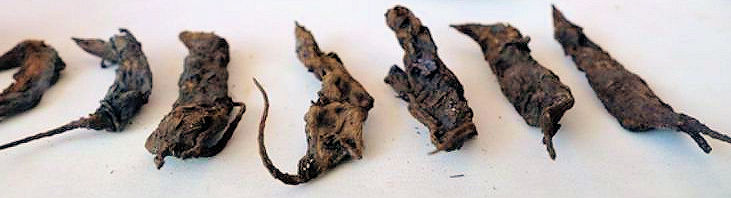
It seems that the Ancient Egyptians mummified mice (above)!
Experts now tell us that the Romans brought rabbits to Britain. Did we not already know this?
Dutch marine salvage teams, looking for lost shipping containers, have found the remains of ship wrecked in 1540 complete with its cargo of copper plates.
London
Although this is 18 months old, it is worth highlighting the disgraceful decay of the Houses of Parliament.
The Victoria & Albert Museum has a cast of Trajan’s Column. Now you can stand inside it.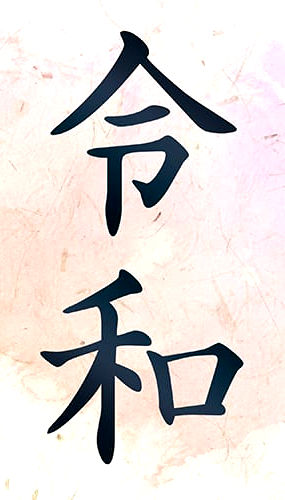
Lifestyle & Personal Development
And finally … Japan is entering a new era wth the abdication of Emperor Akihito on 1 May 2019. The reign of each Emperor is given a name (gengo), which is used in the Japanese calender (alongside the Western calender). Emperor Akihito’s current gengo, Heisei, which means “achieving peace”. The era of the new Emperor, Naruhito, will be called Reiwa (right), signifying order and harmony.
So here goes with this month’s assemblage of recently encountered quotes both interesting and amusing …
In a courtroom somewhere …
Lawyer: Doctor, before you performed the autopsy, did you check for a pulse?
Doctor (Witness): No.
L: Did you check for blood pressure?
Dr: No.
L: Did you check for breathing?
Dr: No.
L: So, then it is possible that the patient was alive when you began the autopsy?
Dr: No.
L: How can you be so sure, Doctor?
Dr: Because his brain was sitting on my desk in a jar.
L: But could the patient have still been alive nevertheless?
Dr: It is possible that he could have been alive and practising law somewhere.
[unknown]
Metaphor is the currency of knowledge. I have spent my life learning incredible amounts of disparate, disconnected, obscure, useless pieces of knowledge, and they have turned out to be, almost all of them, extremely useful.
[Chandler Burr, The Emperor of Scent]
We will find it, we will bind it,
We will stick it with glue, glue, glue
We will stickle it
Every little bit of it
We will fix it like new, new, new…
[Firmin & Postgate; Bagpuss]
Happiness does not come ready made. It comes through your own actions.
[Dalai Lama]
Even the humble raven contains within its blackness a whole spectrum, a whole rainbow, a chord of black. The black can be sooty, soily, glazed, cindery, blackboard black, kohl black, coal black, noir, Schwarz. I don’t know how many words and phrases there are to describe black.
[Chris Skaife, aka. Ravenmaster]
Tourism is the great soporific. It’s a huge confidence trick, and gives people the dangerous idea that there’s something interesting in their lives. All the upgrades in existence lead to the same airports and resort hotels, the same pina colada bullshit … The tourists smile at their tans and their shiny teeth and think they’re happy. But the suntans hide who they really are – salary slaves, with heads full of American rubbish. Travel is the last fantasy the 20th century left us, the delusion that going somewhere helps you reinvent.
[JG Ballard]
Computers won’t achieve human-style intelligence until they become prone to boredom. A system that can sit stationary indefinitely lacks the dynamical motivation characteristic of life.
[Sean Carroll]
You shuffled around the room in what a contemporary wit called “a form of country walking slightly impeded by a member of the opposite sex” and you called it a foxtrot. You slid around a little faster and called it a one-step … eventually the foxtrot and the one-step merged into a uniform shuffle which presented no difficulty to anybody.
[CEM Joad, writing about the post-WWI craze for dancing]
From kindergarten onwards we need education to strengthen inner values not just pursue material goals. We need to introduce emotional hygiene, much as we teach physical hygiene. This way we can address the problems we face, in the hope of making this a century of non-violence.
[Dalai Lama]
The joy of dictionaries is that they provide you with dozens of answers you were never looking for.
[Susie Dent]
If it can’t be reduced, reused, repaired, rebuilt, refurbished, refinished, resold, recycled, or composted, then it should be restricted, designed or removed from production.
[Pete Seeger]
Government: You owe us money. It’s called taxes.
Me: How much do I owe?
Gov’t: You have to figure that out.
Me: I just pay what I want?
Gov’t: Oh no, we know exactly how much you owe. But you have to guess that number too.
Me: What if I get it wrong?
Gov’t: You go to prison.
[unknown]
If life was all about peace, quiet, and lack of risk, there would be few marriages, and no steeplejacks.
[David Collier on Facebook]
I’m not saying your perfume is too strong. I’m just saying the canary was alive before you got here.
[unknown]
Some day ago I was searching the local papers for the Dover area around 1860-70 for one of my ancestors, a certain Henry Williams, Booking Clerk with the SE Railway. (Yes, it’s needle in haystack stuff, but he’s elusive so I’m clutching at straws.) In the process I came upon the following, very non-PC by our standards but still highly amusing, court report in the Kentish Chronicle for 19 July 1862:
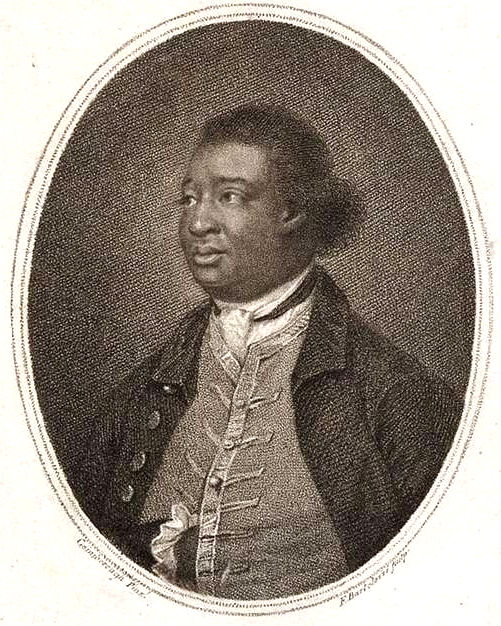
Beautifying a Black Man
A tall woolly-headed negro, named Henry Williams, was brought before Mr Selfe, at Worship-street Police Court, on Saturday, charged with creating a disturbance, and breaking a pane of glass in the shop window of Mr Noah Sayer, a barber, in Well-street, Wellelose Square.
William Butler, a journeyman barber, said the prisoner came into his master’s shop on Friday evening, and said he wanted beautifying [laughter]. He proceeded to shave the prisoner – to polish him up, and cut his hair. He then shampooed the prisoner [great laughter].
Mr Selfe: Shampooed him! How did you do that?
Witness: Oh, I shampooed him in the American style – dressed his hair, and poured some odoriferous stuff, and beautified him nicely [roars of laughter]. When I had done all that he offered me a penny.
Mr Selfe: A penny for beautifying a black man! [increased laughter]
Witness: I told him a penny would not do; the charge was a shilling. He said he was not half-beautified, and would not pay it, but after creating a great disturbance he paid the shilling and took up a pot of cosmetic, which he was about to put on his head [laughter]. I told him that could not be included, on which he seized me and threw me on the shop door, and broke a large pane of glass.
Mr Selfe: What cosmetic was it?
Witness: Pomade, sir.
Mr Selfe: To make his hair straight?
Witness: No, sir; it is the sort of pomade to make the hair curl.
Mr Selfe: Pomade to curl a black man’s hair; it will curl without pomade [laughter].
Mr Sayer, the proprietor of the barber’s shop, said this was no laughing matter; but as the prisoner had made it straight he would not press the charge.
Mr Selfe: Made what straight – his hair?
Mr Sayer: No; he will pay for the glass he has broken.
Mr Selfe: Very well. Now, Mr Williams, when you want to be beautified again, don’t meddle with the barber’s cosmetics and break his windows. You may go.
The black man, who looked all the better for the “polish” he had received from the barber, then withdrew.
Well first of all this is not “my” Henry Williams. And, yes, as I say, very non-PC by our standards, although one can’t help feeling that it was all rather knowingly tongue-in-cheek and that the reporter and magistrate enjoyed it as much as the public gallery. How times change in 150 years; no such exchange would be permitted these days.
Vulpeculated
Robbed by a fox.

Derived from the Latin vulpēcula, diminutive of vulpēs, a fox.
Although the OED records the first use in 1672, the word is said now to be obsolete.
Devastating though it is, Vulcan failed in his mission to reduce Notre Dame de Paris to a pile of ash and rubble. I enjoy watching disasters like this, and plane crashes, not from a a sense of morbid curiosity but from a forensic and analytical perspective; I’m curious about the how, why, what was the cause, and what next.

While one hates to see any medieval, historic, and important building – let alone a church – reduced as it has been, it is equally irritating to see Vulcan not finish the job! The Brigade des sapeurs-pompiers de Paris did an heroic job, against all the odds, and won. But let’s be honest, this fire is a grand calamity for the cathedral, for France, and for the French. And it is a truly sorry sight.
It could easily have been so much worse. As one Parisian official has said there was a critical 15-30 minutes, which I presume is referring to the time when the flames reached the NW and SW towers but was contained before it took hold there. If either tower had gone up in flames all bets were off as those towers contain the bells which would almost certainly have fallen, destroying masonry and probably bringing down a large amount of the stone structure if only through a domino effect.
The French government has committed to rebuild the cathedral and somewhere around €1bn of private money has already been pledged to help finance this. Such is the understandable, predictable, knee-jerk reaction. But should Notre Dame be rebuilt? I suggest that maybe it shouldn’t – and not just because of the horrendous cost.
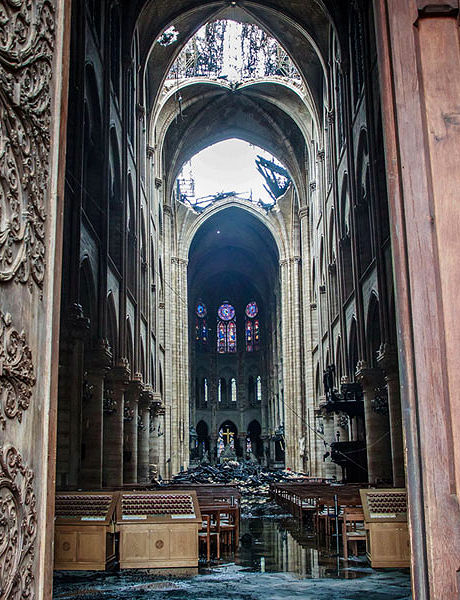
Clearly the remaining structure has to be made safe. After that why not conserve what remains to preserve the medieval splendour. Then do something modern (but, of course this being France, tasteful) which will commemorate the fire as a remarkable event in the cathedral’s history and the heroic efforts of les pompiers. Why not install a transparent (glass, probably) roof so that light (the light of God?) continues to shine through the holes in the stone vaulting emphasising what very nearly didn’t survive. After all the photographic record, and existing skills, are so good that there is little to be gained from remaking the lost parts. Well at least that’s what I would be tempted to do.
I’ve been to Notre Dame twice, and I didn’t like it. It didn’t just leave me cold, I had a feeling of the sinister, even evil, there – and that’s unusual for me in a church (despite my lack of belief). So from an totally personal perspective I would not have been too distraught had the whole building been destroyed. But that’s not to be (at least yet) and a major rebuild of some form will happen. Which is probably as it should be.
Don’t lie, don’t kill, don’t steal. Don’t use love as a game or weapon. Respect the earth, and don’t abuse its gifts. All are familiar ethics that we somehow forget, or manage to sidestep, when we just don’t feel like thinking about consequences.
[Stephanie JT Russell]