Category Archives: history

July Quiz Answers

Here are the answers to this month’s six quiz questions. If in doubt, all should be able to be easily verified online.

General History

  1. In what year did the Battle of Waterloo occur? 1815
  2. Which ancient civilization built the city of Machu Picchu? Inca
  3. Which famous historical document begins with the words “We hold these truths to be self-evident”? The Declaration of Independence
  4. The Aztecs even used cocoa beans as what? Currency
  5. In what year did the Berlin Wall fall? 1989
  6. What event marked the beginning of World War I? The assassination of Archduke Franz Ferdinand

Answers were correct when questions were compiled in late 2025.

July Quiz Questions

Each month we’re posing six pub quiz style questions, with a different subject each month.
As always, they’re designed to be tricky but not impossible, so it’s unlikely everyone will know all the answers – just have a bit of fun.

General History

  1. In what year did the Battle of Waterloo occur?
  2. Which ancient civilization built the city of Machu Picchu?
  3. Which famous historical document begins with the words “We hold these truths to be self-evident”?
  4. The Aztecs even used cocoa beans as what?
  5. In what year did the Berlin Wall fall?
  6. What event marked the beginning of World War I?

Answers will be posted in 2 weeks time.

July 1926

Our look at some of the significant happenings 100 years ago this month.


1. Birth. Hans Werner Henze, German composer (d.2012)

9. In Portugal, General Óscar Carmona takes power in a military coup.

10. A bolt of lightning strikes Picatinny Arsenal in New Jersey; the resulting fire causes several million pounds of explosives to blow up in the next 2-3 days.

Picatinny

Monthly Links for June

So here we are with this month’s bumper bundle of links to items you didn’t know you shouldn’t have missed.


Science, Technology, Natural World

As usual let’s start at the bottom … Really, just how many elementary particles are there? Pick a number! [LONG READ]

At the other extremes … Space is unimaginably bigger than you think.

And if your brain wasn’t fried enough already, there’s a suggestion that light is the shadow of a dimension we can’t see.

Now to the relatively mundane … for a long time scientists have been trying to understand the mysterious creatures of the deep oceans. [LONG READ]

Which just shows we really do not understand biology … There are some mysterious blobs in cells – even after 100 years scientists are only now beginning to understand what they are and their importance for life. [££££]

How do societies survive power struggles? Ask the wasps.

So why do cats sit in that “loaf position“?

From cats to dogs … scientists have recently discovered the rare and elusive Amazonian Short-Eared Dog in the forests of Bolivia and Peru.

Good grief! Japan’s 2011 “Fukushima” earthquake was so powerful it moved the location of the whole of Japan! [££££}


Health, Medicine

Well, yes … we could indeed at this moment be living through a hantavirus pandemic, but thanks to a lot of quick action by many countries we have avoided it. Which is exactly how public health should work.

What does body odour tell us, and why do we care about it so much?

Here’s (yet another) look at the health and history of pubic hair. [LONG READ]

Meanwhile here’s a look at sunscreen, what it is and how it works. [LONG READ]


Sexuality & Relationships

A cultural look at various aspects of the vagina.

Followed by the new craze of the Vaginus Maximus.

Now here’s an interesting one … an only slightly surprising suggestion of Viagra for women. Read the follow-on articles too. [LONG READ]

And then there’s a look at sexual burnout and bridging the resulting intimacy gaps.

[Images very NSFW] It’s the rarity factor! A look at why we’re biologically wired to desire redheads.


History, Archaeology, Anthropology

A select group of researcher are allowed access to Spain’s amazing cave paintings and one lucky writer gets a personal tour. [LONG READ]

Archaeologists believe they have discovered a simpler, and older, version of Stonehenge.

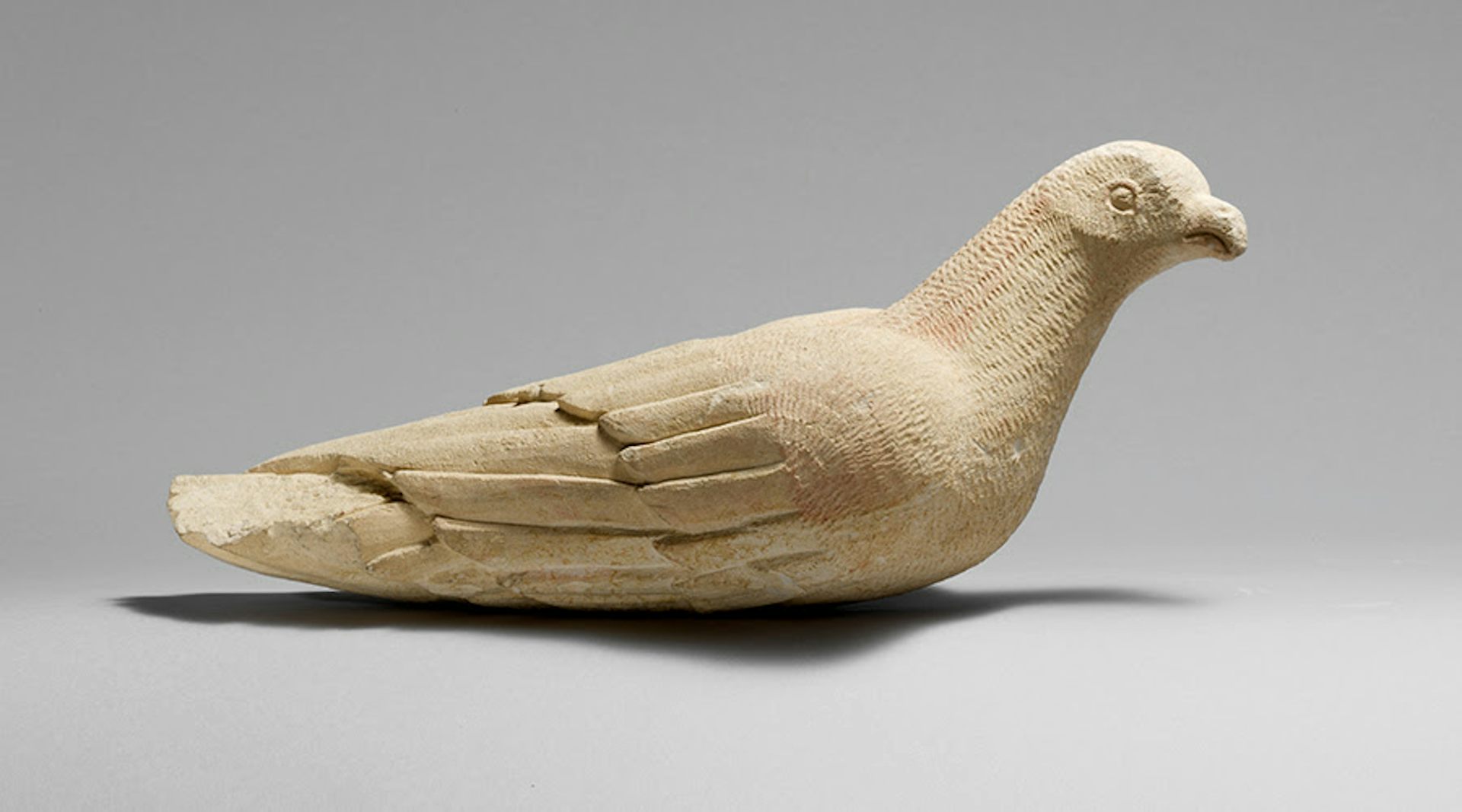
Amongst other things it seems that Bronze Age people were also pigeon fanciers.

I just don’t know how they do this … the charred scrolls from Herculaneum are being deciphered.

A metal detectorist in Somerset has found a stunning gold Roman ring.

A medieval manuscript containing early versions of the Merlin and Grail legends, which has remained in private hands for 700 years, is being auctioned by Christie’s.

So to put the record straight, here’s everything you need to know about the Black Death.


London

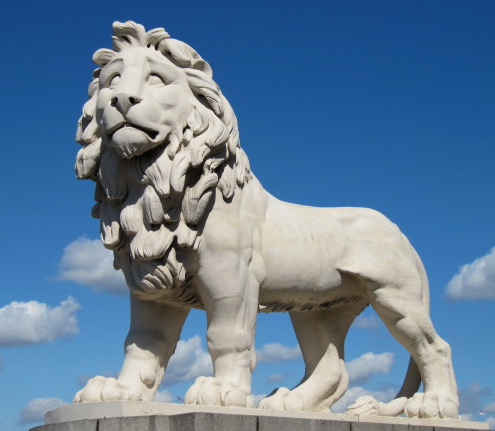
The Lions of London

Here are some 1920s London Tube Maps, from before its current Harry Beck iconic design.

Greater London has a surprising number of overlooked Art Deco railway stations. (No, not the tube stations!) [LONG READ]

What was the mysterious Whitechapel Mount?


Food, Drink

Why does beer taste different on draught, in a can, or from a bottle?

Scientists are at last starting to unravel the importance of cork to the chemistry of wine. [££££]


Lifestyle, Personal Development, Beliefs

DDA banding. It’s an accessibility thing.

A naturist’s look at what people’s arguments against nudity are really saying. [LONG READ]

What if seeing naked women actually reduced objectification? (Men too?) [LONG READ]


Shock, Horror, Ha ha ha!

And finally in New Scientist “Feedback” discovers Halupedia, an online encyclopaedia that is 100% AI generated. [££££]

Enjoy!

June 1926

Our look at some of the significant happenings 100 years ago this month.


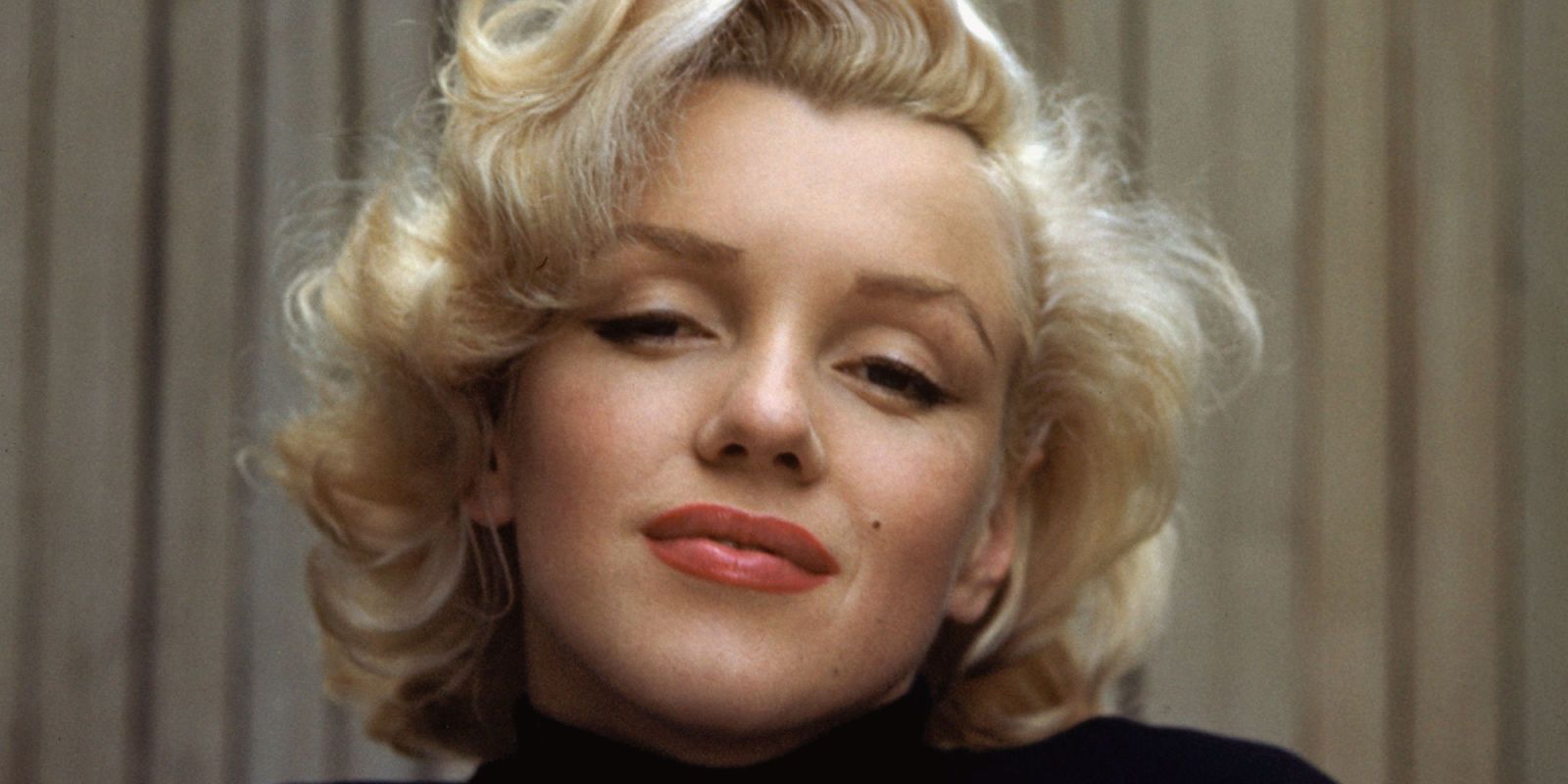
1. Birth. Marilyn Monroe, American actress (d.1962)

Marilyn Monroe

3. Birth. Allen Ginsberg, American poet (d.1997)

4. Death. Fred Spofforth, Australian cricketer (b.1853)

5. Birth. Paul Soros, Hungarian-born American mechanical engineer, inventor, businessman and philanthropist (d.2013)

10. Death. Antoni Gaudí, Spanish architect (b.1852)

28. Birth. Mel Brooks, American actor, comedian, and screenwriter

May’s Monthly Links

So now we bring you this month’s selection of links to items you wish you hadn’t missed. And it’s a well packed edition …


Science, Technology, Natural World

Apart from traumatic, what it would have been like to experience the dinosaur‑killing asteroid? [LONG READ]

death to the dinosaurs

There’s a huge amount of “space junk” above our heads: almost half of what’s in earth orbit is junk – and that’s only what we know about. [££££]

And while we’re talking of things going round … Astronomers have just found over ten thousand new exoplanet candidates.

Meanwhile there are some pieces of the cosmos being ignored by astronomers. [££££]

It seems that the universe could be any one of 18 possible shapes. [££££]

Let’s come back down to Earth … Researchers are beginning to understand how Egypt’s Great Pyramid has withstood earthquakes etc. for over 4500 years. [££££]

There are new insights into whether plants can hear.

[Illustrations NSFW] “Slow Blink” communication with your cat.

Scientists are developing tiny robots that can learn to navigate like honeybees. [££££]

On birds’ eyes and why their visual perception is almost second to none. [LONG READ]

At the other end of life on earth scientists have found a tiny fish that looks like Mr Snuffleupagus (below). [££££]

Snuffleupagus pipe fish

And finally in this section New Scientist had a piece on the renowned mathematician who doesn’t exist. [££££]


Health, Medicine

An interview with two scientists who have been working flat out to develop a test for hantavirus. [££££]

An American look at what the response to the hantavirus “scare” has brought to the surface – and a brilliant example of how to do public health leadership. [LONG READ]

So did the Ancient Egyptians invent the pregnancy test?

Egyptian wall painting…

Along with that women have been using cannabis medicinally for thousands of years.

Twins. Born within minutes of each other. But they have different fathers!


Sexuality & Relationships

Sexual health after 60: aging, hormones & intimacy.

Sex after 35: apparently the female body was not designed for the sex most women are having. [LONG READ]

So what really does happen to a woman’s body during orgasm?

One man’s experience of vasectomy leads him to wonder why the procedure isn’t more common.


History, Archaeology, Anthropology

Neanderthal dentistry

Were the Neanderthals the first dentists? One article from Scientific American, and a second from The Guardian.

A research team have published a new, online, map of Roman roads across their empire.

It’s long been supposed that after the Romans left Britain the Anglo-Saxons took over and totally replace the indigenous population. But DNA analysis tells us otherwise. [LONG READ]

It seems strange, but early medieval Ireland had laws protecting bees.

So who invented the corridor? [LONG READ]

There are tunnels under Bloxham, Oxfordshire. But what are they for? [LONG READ]

There’s a forgotten cock pit under Whitehall. [Now, now. That’s enough of that!]


London

And finally … Matt Brown has released the latest coloured section of John Rocque’s 1746 map of London. This time it’s Limehouse and Rotherhithe.

1746 London map section


May 1926

Our look at some of the significant happenings 100 years ago this month.


4. The United Kingdom general strike begins at midnight, in support of a strike by coal miners.

General Strike March

8. Birth. Sir David Attenborough, British broadcaster, naturalist, and producer

9. Explorer Richard E Byrd and co-pilot Floyd Bennett claim to be the first to fly over the North Pole in the Josephine Ford monoplane, taking off from Spitsbergen, Norway and returning 15 hours and 44 minutes later. Both men are immediately hailed as national heroes, though some experts have since been skeptical of the claim, believing the plane was unlikely to have covered the entire distance and back in such a short time. Byrd’s diary, discovered in 1996, suggests the plane actually turned back 150 miles short of the North Pole, due to an oil leak.

9. Death. JM Dent, British publisher (b.1849)

12. Roald Amundsen and his crew fly over the North Pole, in the airship Norge.

12. The United Kingdom general strike is called off by the trade unions, although miners remain on strike.

14. Birth. Eric Morecambe, English comedian, author (d.1984)

Monthly Links for April

As usual in this month’s collection of links, we’ll start with the hardest stuff …


Science, Technology, Natural World

Quite a lot of years ago, mathematicians worked out why waiting for a lift (elevator, for those in America) always takes forever. [££££]

How likely are you to be killed by a primordial black hole? [££££]

Whether you believe in astrology or not, your star sign is likely wrong, but you can find the correct one. [££££]

The Chernobyl exclusion zone has become a most unusual ecological experiments on Earth, leading to some unexpected results. [LONG READ]

So why do cats get the Zoomies, especially late at night?


Health, Medicine

If you had cardiac arrest in public, would a stranger give you CPR?

Most men have two balls, but are three balls better?


Sexuality & Relationships

The Kamasutra is more than a sex manual, with consent as an underlying principle.

A 300+ year old sex manual that got pretty much all of it wrong.

Well who would have guessed? Human sperm get lost in space. [££££]

As if boob jobs weren’t enough, labiaplasty is a growing fashion. Why? Just why? [LONG READ]


Environment & Ecology

Jaguar (below) are becoming increasingly rare, so researchers were pleased to see one in a wildlife corridor in the Honduran mountains. [££££]


History, Archaeology, Anthropology

Archaeologists have discovered a variety of 12,000‑year‑old dice, and they illuminate ancient play.

The oldest known recipe for toothpaste comes from … Ancient Egypt.

So how many of the purported priest holes are actually what they’re said to be? [LONG READ]

Samuel Pepys was, in many ways, a very naughty man – even to the extent of concealing letters about being offered an enslaved boy as a bribe.


London

Matt Brown of Londonist has taken a look at the origins of some of the City of London’s street names.

Matt Brown is also creating a coloured version of John Rocque’s 1746 map of London. Here’s the latest section covering Chelsea and the King’s Road (above).

Meanwhile a researcher has been able to unravel the mysterious location of Shakespeare’s house in Blackfriars.

London Historians visits Benjamin Franklin’s London house.


Food, Drink

Here’s a quick look at some of the factors which produce the myriad types of tea.


Lifestyle, Personal Development, Beliefs

Humans have been documenting their appreciation of the nude body for thousands of years, and photography has made it much easier and more accessible.

The New Testament letters of Paul are not what they seem; many weren’t even written by him. [LONG READ]


Shock, Horror, Ha ha ha!

Finally, New Scientist considers the size of a “shedload“. [££££]


April 1926

Our look at some of the significant happenings 100 years ago this month.


1. Birth. Anne McCaffrey, American-born Irish author (d.2011)

2. Birth. Jack Brabham, Australian racing driver (d.2014)

3. Birth. Gus Grissom, American astronaut (d.1967)

6. Birth. Ian Paisley, Northern Irish politician (d.2014)

7. An assassination attempt against Italian Fascist leader Benito Mussolini fails.

9. Birth. Hugh Hefner, American founder of Playboy magazine (d.2017)

Hugh Hefner and blonde

21. Birth. Queen Elizabeth II of the United Kingdom (d.2022)

30. A state of emergency is proclaimed in the United Kingdom under the Emergency Powers Act 1920 on account of the “threat of cessation of work in Coal Mines”.

Monthly Links for March

Herewith my collection of links to items you may have missed, but didn’t want to. Again this month we have quite a few science and medicine articles, and not so much on the arts – well it all depends on what’s published and looks interesting.


Science, Technology, Natural World

Now tell me … would aliens do physics, and do it the way we do? [££££] [LONG READ]

Beyond which, could aliens in another galaxy see dinosaurs on Earth? [££££]

So what is time? Is it just a figment of our imaginations?

A researcher has found Galileo’s handwritten notes in old astronomy text.

The Eye of the Sahara. They think it’s a circle and it shouldn’t be there. [LONG READ]

On the dying art of taxonomy and a love of midges.

In Papua New Guinea scientists have found a tiny possum and a glider which were thought extinct for 6,000 years.

Staying with discoveries, scientists have found three unknown geckos, and a lot else too, in Cambodia’s limestone caves.

And still with new discoveries, some other scientists have found lots of strange new species (example below) deep off the coast of Britain’s Caribbean islands.

Back on dry land apparently hedgehogs can hear very high frequency ultrasound.

Apparently cacti could help explain one of the oddities of evolution.

And finally in this section, an immunologist takes a hard look at the science behind the paraben panic.


Health, Medicine

Which brings us to the messier bits of the scientific arena …

We all have skin mites, but should we worry? Are they a health issue or harmless passengers?

Why do some people (like me) suffer from motion sickness, while others don’t.

What does body odour actually say about you?

Have you ever noticed that you breathe out of one nostril at a time. And have you ever stopped to wonder why?

Researchers have a suspicion that a previously unknown virus, hiding in a bacterium, may be a trigger for colorectal cancer.

And still wth gut bacteria, apparently couples share 30% of their gut bacteria. [I’m surprised it is so little – K]


Sexuality & Relationships

NSFW. So what does science tell us about why breasts send males wild? [LONG READ]

Remaining with female anatomy for a minute, apparently the clitoris has migrated from the inside (in most species) to the outside (in humans).

And so to male anatomy … with a look at the history of male member. [LONG READ]

The myths, misconceptions and realities of how porn shapes sexual health.

NSFW. Against which the evolution of erotic literature looks fairly tame.


Environment & Ecology

For once some good news: the Large Tortoiseshell butterfly (above) is no longer extinct in UK

It’s definitely counterintuitive, but when the human population fell during the Black Death, plant diversity dropped as well.


Social Sciences, Business, Law, Politics

The UK is considering putting native fauna on its banknotes, so some experts have a say.


Art, Literature, Language, Music

Here’s an interesting interview with Ruth Scurr who wrote a biography of 17th century antiquarian John Aubrey (below).

Apparently our least favourite word is all about womb wisdom.

NSFW. A look at art and the vulva. [LOMG READ]


History, Archaeology, Anthropology

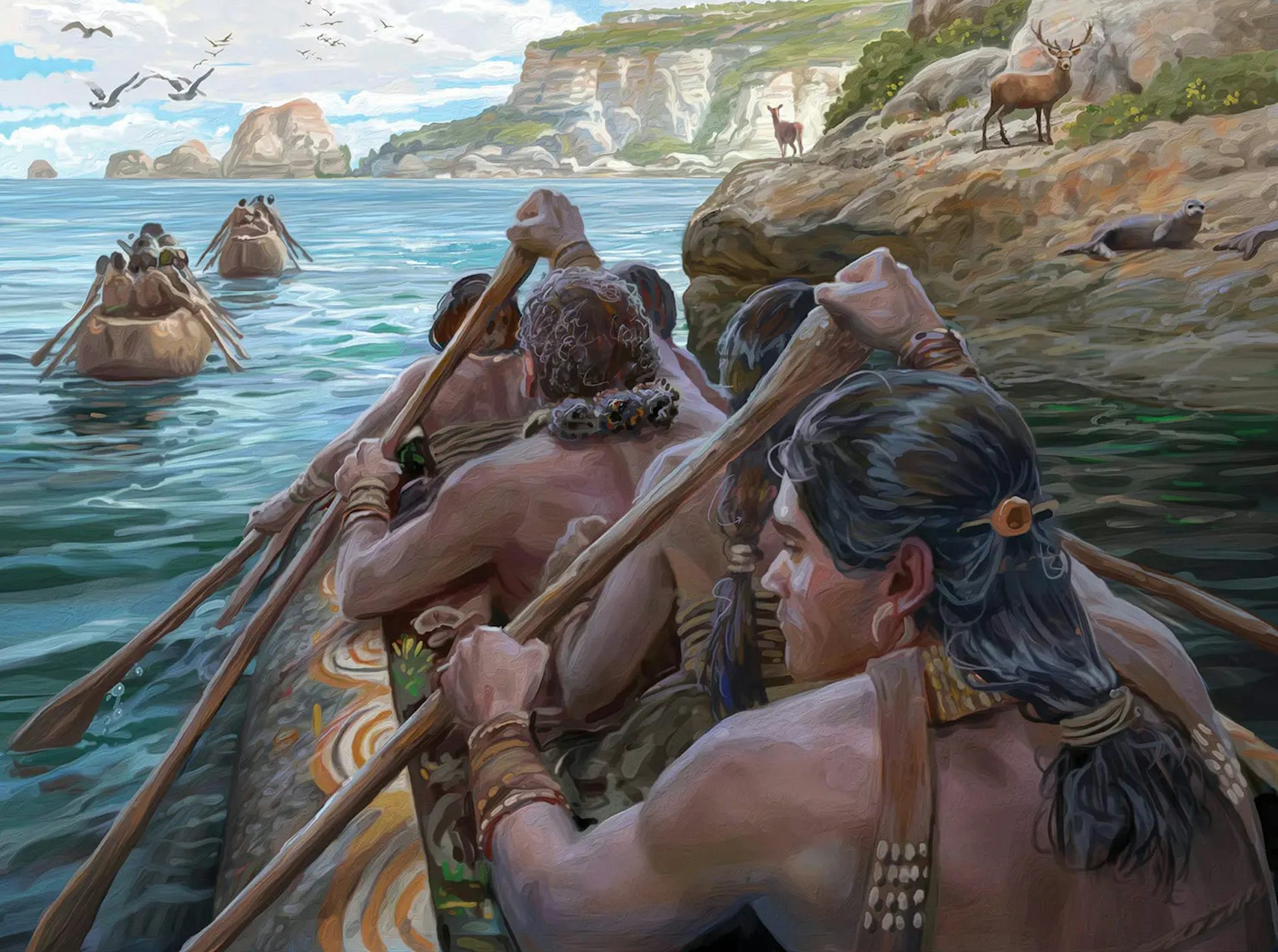
The theory of the population of the Americas has again been turned on its head by an archaeological site in Chile.

King Harold’s movement of troops from the NE to fight the Battle of Hastings … was it (as has been assumed) the most heroic march ever, or did everyone travel by boat?


London

Matt Brown takes a look at some of the interesting and varied historical models of London. [LONG READ]

And I’ll leave you this month with Matt Brown looking at bovine influences on London. [LONG READ]