Tag Archives: physics

Monthly Links for December

So here we are with the last round of Monthly Links for 2024, and were ending with a fairly bumper bundle …


Science, Technology, Natural World

dog-like ancestral mammal

Let’s start off with Quanta Magazine‘s reviews of science during the year. [All are LONG READS]
The Year in Physics
The Year in Biology
The Year in Maths
The Year in Computer Science
For some reason Quanta don’t cover chemistry or medicine.

There’s this idea in theoretical physics that we are living in a simulation, driven by some higher powers. And now there is a possible new law of physics which could support this.

The mathematics of random gatherings is a bit of a riddle.

Exponential growth can be somewhat counter intuitive.

Meanwhile scientists have tossed 350,757 coins to prove that they’re not 50/50 heads/tails and that a fair coin is probably impossible.

By most standards our modern atomic clocks are pretty accurate, but they’re about to be superseded by nuclear clocks which are orders of magnitude even more accurate.

Somewhat at the other extreme there’s an ancient piece of space hardware which is surprisingly still working well beyond it’s intended lifespan.

Talking of space hardware, there’s growing concern at the quantity of space junk left flying about up above, and how it could destroy all possibility of further space missions.

There are, as NASA have discovered, a whole host of so-called “dark comets” flying about above our heads.

Let’s come back to earth, or rather the sea … a strange, previously unknown, predatory crustacean has been found miles deep in an ocean trench off the west coat of South America.

Land predators aren’t going to be left out … the 280-million-year-old fossil of a dog-like predator which is likely one of our oldest mammal ancestors, has been found in Spain (above).

From dogs to cats … scientists have made a lot of progress unravelling the complex genetics of ginger cats.

ginger kitten

Finally in this section, Independent SAGE, which was formed early in the pandemic to communicate good and transparent science, have been doing some navel-gazing to see what they could have done better. There are two summaries by Kit Yates of the published research paper: activities and organisation and lessons learnt.


Health, Medicine

Although it’s now a bit late for Christmas 2024, here are some generally applicable ways, from a GP, to avoid some common health hazards.

The science and medical community are getting worried about a possible pandemic of H5N1 bird flu. But how close are we really close to a pandemic?

Meanwhile Bob Hawkins is writing a series of four articles on how one models a pandemic in order to understand how various scenarios play out. Here’s part 1, part 2 and part 3.

Here’s a look at why it makes sense to vaccinate boys against HPV.

Poliovirus has been found in wastewater in Spain, Germany and Poland. How important is this?

One of our most common symbols of Christmas, mistletoe, provides a number of therapeutic agents.

The Vagus Nerve, our most complex nerve, is responsible for the messaging associated with many of our organs, but it’s role in mental health is also being unravelled. [££££] [LONG READ]


Sexuality

It seems that sexual identity is much more fluid than we previously thought.

Sex educators provide 16 ways to talk to your children about bodies, porn and consent.


Environment
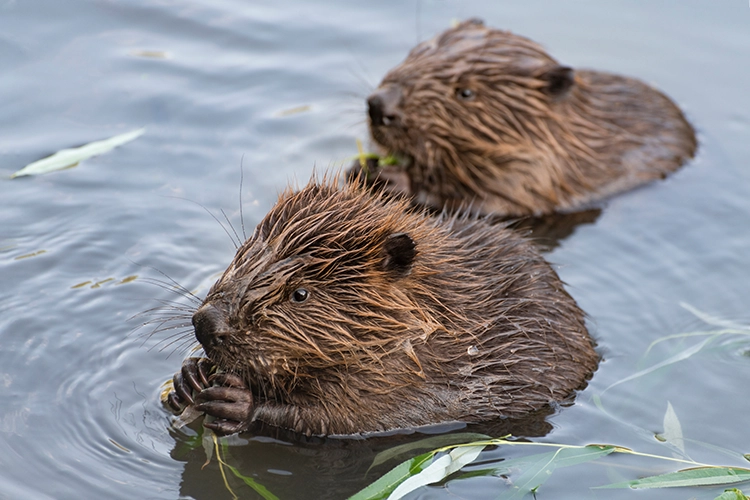
beaver kits

Here are five UK biodiversity success stories.

So what does happen to the natural world when people disappear? [LONG READ]

Carbon-positive gardening in your own back yard.

Hunting wildlife to remove them doesn’t work: hunt more coyote, get more coyote.

coyote


Social Sciences, Business, Law, Politics

So how much do we know about really old people, and how reliable is it? [LONG READ]

Sweden is almost a cashless society, and that’s not good for who are left out.


Art, Literature, Language, Music

As one had always suspected, “Word of the Year” is a marketing gimmick which tells us nothing about the actual state of the world.

Many authors place imaginary books within their own real books. Now there’s an exhibition in New York which brings some of these imaginary works of literature to life.


History, Archaeology, Anthropology

Let’s start off with a summary of ten fascinating archaeological discoveries of 2024. [LONG READ]

It seems highly likely that the first tools were made from plants, not rocks; but it is difficult to prove. [££££] [LONG READ]

A Bronze Age pit in Somerset has revealed evidence not just of mass murder, but also cannibalism.

Back around 4500 years ago, the area which is now Iran is known to have had a number of sophisticated board games including the Royal Game of Ur; and of course there are no manuals. Now two researchers have looked at another of these games, which has not just the board but also many of the pieces, and worked out a possible set of rules for the game. (If you really want brain-ache, follow the link to the preprint paper at the end of the linked article for a detailed explanation.)

In Norway, a number of Viking women’s graves have revealed jewellery, coins, and a ‘vulva stone’

An archaeological site in Kent is turning up lots of Anglo-Saxon finds, including a remarkably well preserved sixth-century sword.

Two articles on the plethora of archaeological finds from the reconstruction of Notre Dame. First from Science and second from Good News Network.

Unexpectedly, letters from Elizabeth I, Benjamin Franklin and Lord Byron are among a collection discovered in British stately home.

Around the globe there are around 8,500 shipwrecks from WWI and WWII, and many are now a ticking time-bomb of pollution, or worse.
Polluting shipwrecks are the ticking time-bomb at the bottom of our oceans.


Food, Drink

Now here’s a curiosity … Diamond Geezer has discovered that the British are drinking a lot less tea than 50 years ago, but coffee consumption is about the same.

cup of tea


Lifestyle, Personal Development, Beliefs

People have always needed to make sense of the world within their knowledge span, so they end up believing all sorts of things which later generations reveal to be rubbish.

Here are three articles from Corey S Powell in which he takes a cosmic look at thought …
Perspective from the stars
You Are a Ripple of Information
Your information bubble is your legacy

How Polynesian voyagers navigate Earth’s biggest ocean.

So just why don’t more women choose to propose to their male partners? Spoiler: patriarchy.

Once they reach 40 many women become invisible to men, and they won’t all accept it. [££££]

Another look at why women wear bras.

And finally for this year … ten reasons why you need to sunbathe naked.

nude sunbather


Monthly Links

Here we go with this month’s collection of links to items you’ll wish you’d not missed.


Science, Technology, Natural World

First off, wasps … apparently hornets are able to hold their alcohol amazingly well. [££££]

hornet

Birds listen to their songs in a totally different way than we do. [££££}

Scientists have found a surprisingly intact sabre-toothed tiger kitten frozen in Siberian ice, and it’s revealing unknown details about the species.

In 2023 researchers sent a dummy alien signal to Earth, without telling anyone, and it has now been decoded although not understood!

Jupiter is large enough to swallow at least 1000 Earths, and yet it has no surface.

NASA has a large number of satellites studying the sun, and they’re providing some surprising discoveries unrelated to the sun.

Look deeper and you find that comets have sinkholes, which generate jets of material.

In another piece of work from NASA, they’ve discovered two galaxies, looking like bloodshot eyes, which seem to be in the process of merging.

And finally in this section, astronomers have rediscovered a “dandelion-like” supernova first spotted in 12th-century China and Japan. [££££]

dandelion supernova


Health, Medicine

H5N1 bird flu has been detected in pigs, which is a big cause for concern as they are a well-known “mixing vessel”. And a teenager hospitalised in Canada has H5N1 with mutation(s) which may make it more transmissible between people.

It turns out that humans evolved to share beds, and not only with their romantic partner.

Synaesthesia is strange (especially for those of us who don’t have it) but ticker-tape synaesthesia, where real life comes with subtitles, is really bizarre.


Sexuality

Girls, is it that you just don’t like sex, or is it that you don’t like patriarchal sex? [LONG READ]

So how do you like your dirty talk during sex? [££££]

Is using lube really that much of a taboo for straight couples? Seems it is. [££££]


Environment

OK, so let’s change track …

Japan tiny forest

Apparently British cities are taking on the Japanese concept of “tiny forests“.

And in a similar vein, relatively small patches of wildflowers in cities are as good as natural meadows for insect biodiversity.


History, Archaeology, Anthropology

An amateur archaeologist has discovered another two stone circles on Dartmoor, and believes they add to the theory of a sacred arc of stone circles.

So who was Gunhild? And was she a victim of medieval ethnic cleansing?

On the other side of the world, a postgraduate student has serendipitously found a lost city in the Mexico jungle.

In Leicester they’ve found an 800-year-old burial pit containing 123 bodies, and it’s a complete mystery.

In the mid-13th-century, in what is now Turkey, a kingdom changed hands in exchange for a hat.

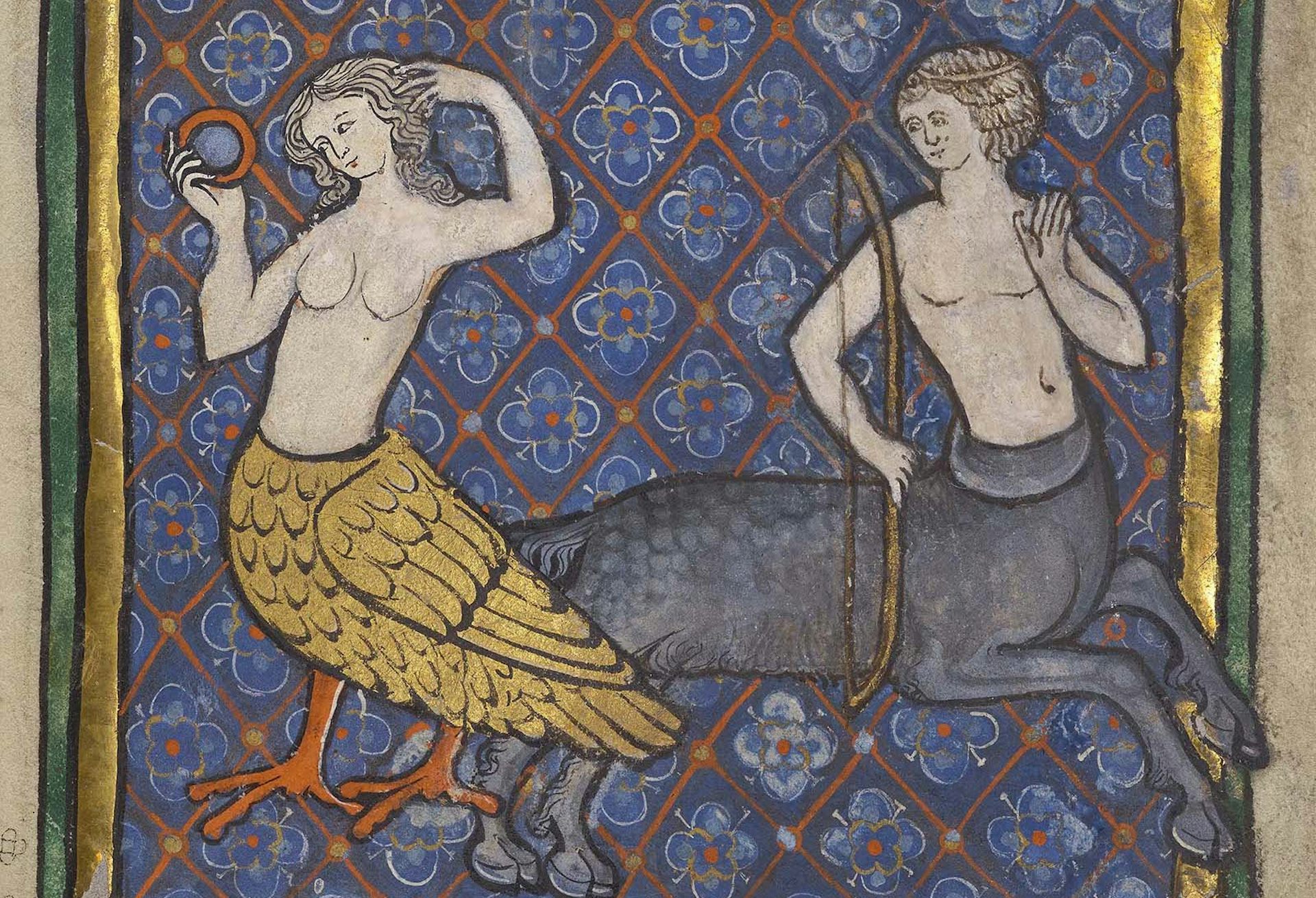
siren and centaur

In order to make sense of the world as best they could medieval people had lots of supernatural beliefs: elves and fairies; abductions and the undead.

On which subject, here’s a look at some medieval animal ghost stories.

When you’re a peasant economy and don’t have the resources to feed lots of livestock through the winter, November becomes Blotmonath, the month of animal sacrifice and trying to store the meat.

The British Library currently has an exhibition Medieval Women: In Their Own Words. Here’s a review.


Food, Drink

Our drinking water contains many “forever chemicals”, but practically and personally what can we do to ameliorate this?


Wow! Ha ha!

So it’s that time of year, the season of Winter Vagina.

winter vagina


November Quiz Answers

Here are the answers to this month’s five quiz questions. If in doubt, all should be able to be easily verified online.

Physical Science

  1. What does a Geiger-Müller Counter measure?  Ionising Radiation
  2. Which British-Italian engineer obtained a patent for radio in London in 1897?  Guglielmo Marconi
  3. What man-made spacecraft is generally recognised as the first to leave the solar system?  Voyager 1
  4. What is the speed of sound in a vacuum?  Zero; sound cannot exist in a vacuum
  5. Who discovered that the earth revolves around the sun?  Nicolaus Copernicus

Answers were correct when questions were compiled in late 2023.

November Quiz Questions

Each month we’re posing five pub quiz style questions, with a different subject each month. As before, they’re not difficult, but it is unlikely everyone will know all the answers – so hopefully you’ll learn something new, as well as having a bit of fun.

Physical Science

  1. What does a Geiger-Müller Counter measure?
  2. Which British-Italian engineer obtained a patent for radio in London in 1897?
  3. What man-made spacecraft is generally recognised as the first to leave the solar system?
  4. What is the speed of sound in a vacuum?
  5. Who discovered that the earth revolves around the sun?

Answers will be posted in 2 weeks time.

Monthly Links, October

So once more, somehow, another month passes and we come around again to this month’s selection of links to items you didn’t know you didn’t want to miss!


Science, Technology, Natural World

Starting here, it’s all downhill, because it seems that a lot of science is actually faked.

Fly brains may be tiny in size but they’re still stuffed with very complex inter-weavings of thousands of neurons, so it’s amazing that researchers have managed to map every neuron. Two reports, first from BBC, and second from Scientific American [££££].

At a different level, scientists have analysed ancient DNA to unravel how the endangered Iberian Lynx avoided extinction.

Some fish in the sea are so bizarre … here’s one that walks on six legs, and those legs can smell its prey in the sand. [££££]

Still at sea, but now above the water, research has found that the windless doldrums around the equator are caused in a completely different way than previously thought.

Staying with things geographical, apparently Mount Everest is still getting taller and not quite in the way we might expect.

It’s no great surprise that scientists have found that the asteroid which wiped out the dinosaurs was not a one-off.

And talking of meteorites, there was a mega meteorite about 3 billion years ago which was at least the size of Greater London which boiled the ocean and created a 500km wide crater.

NASA has shut down one of Voyager 2’s five remaining instruments to save power.

And finally in this section, did the early universe balloon in size with “cosmic inflation“, or is there a much simpler explanation?


Health, Medicine

This month’s medical matters are all to do with reproduction, in one way or another …

There are many genetic changes that link puberty to other aspects of physiology and affect its timing.

Prof. Christina Pagel highlights why we need to stop ignoring period pain and heavy bleeding!

Why is it that many doctors don’t believe women about the menopause? [££££]

At which point the Guardian asks if wearing a bra makes breasts more perky.

Let’s segue away from “women only” … in a move labelled “bonkers” by many, an NHS hospital in Norfolk has instructed staff that they must not describe babies as “born” male or female [££££]

And finally to the morgue where pathologists have found, during an autopsy, that the deceased 78-year-old man had not two, but three penises – and it is only the second ever such report and the first in an adult. Two reports, from Popular Science and Gizmodo. And the published academic papers make interesting reading!


Environment

In the hope of re-establishing colonies right across Britain, a number of pine martens have been released at a secret locations in Devon.


Social Sciences, Business, Law, Politics

It is being alleged that companies will no longer want to force people to change passwords every few weeks to counteract cyber attacks. I’ll believe it when it happens.


Art, Literature, Language, Music

An illustrator talks about how she went about a big commission.

Brits are forever complaining about the relentless invasion of English by Americanisms, but British English regularly invades the US.


History, Archaeology, Anthropology

What?! So little history this month?!

Archaeologists have found a very rare Bronze Age wooden spade in southern England.

Archaeologists have found another tiny house in Pompeii which is decorated with erotic frescoes.

Going Medieval finds that medieval people were just as much into side hustles as their modern counterparts.


Food, Drink

White mulled wine seems set to be a thing in UK this Christmas, with Marks & Spencer taking the lead.

Why did European cuisine become so bland? Apparently because snobbery decreed the removal of all the spices and contrasting flavours from the cuisine.

Is it possible to make a commercial, ethically responsible, and tasty fish finger?


Lifestyle, Personal Development, Beliefs

We should put down our mobile phones and get back into the habit of reading

So just why shouldn’t women propose marriage to men?

And last, but by no means least …

On discovering something wonderful when skint and posing as a nude model. [££££]