#0000ff; text-align: center; margin-bottom: 24px;"> An Advent Calendar of My 2020 Photographs



We’re beginning every month this year with a haiku (or a longer poem made of haiku) relevant to the month.
Sharp, crisp, scent-filled air
Inundates the nose, winter
Smells of frosty cold.
[Lisa Denney]
All the poems can be found online at http://www.haikupoemsandpoets.com.

Yet again we get to the end of a month (how?) and it’s time for the usual collection of links to items you may have missed earlier. There seems to be a lot in this month so let’s not waste time …
Science, Technology, Natural World
Science doesn’t always get things right. Here are arguably science’s top 10 erroneous results. [LONG READ]
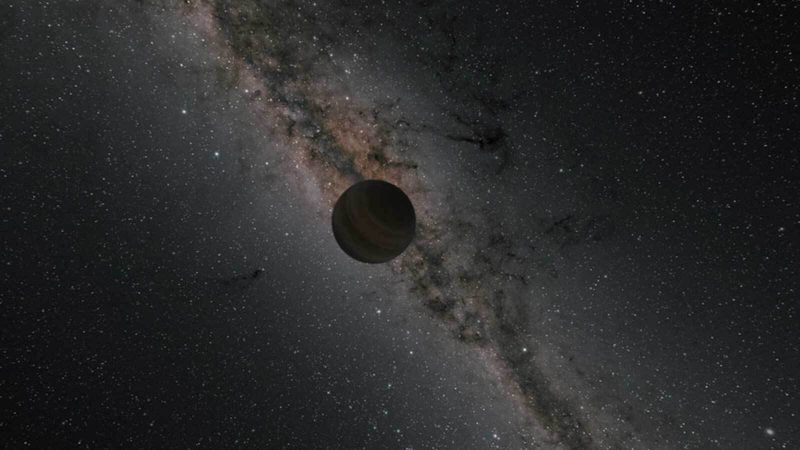
Believe it or not there are unaccompanied planets wandering the cosmos; they’re mystery worlds and hard to find.
There is now DNA evidence that dogs and ancient humans migrated together.
One of the scientists responsible for destroying the nest of so-called murder hornets in USA talks about the experience.
Once feared to be extinct in the UK, the great fox-spider has been rediscovered on MoD land in Surrey.
The platypus is a mysterious creature, the more so because its fur is bioluminescent.
Still in the animal kingdom, the Popa Langur is a lithe tree-dweller living primate with a mask-like face and a shock of unruly grey hair which lives in Myanmar – and it is new to science.
And not quite so animal, there is a fleet of small green robots driving around Hounslow in west London.
Health, Medicine
As in previous months I’m leaving all things Covid out of these posts, but there are a number of items elsewhere on my blog, mostly about vaccine development and logistics.
MPs have criticised NHS England’s IT plan, saying it is expensive and risky. And no wonder; government (and especially the NHS) know nothing about IT, won’t take advice from people who do know, don’t learn from past mistakes, always choose the cheapest supplier, and then keep changing the requirements.
Sexuality
The clitoris has but one function: female orgasm. Which is probably why medical science ignores it: it isn’t an essential medical feature or problem. [LONG READ]
An archive of two centuries of handmade erotic objects is witness to overlooked and hidden desire.
Environment

Why the wolf should be an essential part of our landscape and not an object of fear and loathing. [LONG READ]
I’m always amazed at how long seeds can remain viable. A scientist has discovered the grass-poly a rare plant which has reappeared from buried seed after conservationists restored an almost disappeared pond in Norfolk.

Social Sciences, Business, Law
No, you can’t use Magna Carta to avoid Covid lockdown restrictions, and here’s why. [LONG READ]
Which takes us nicely on to …
History, Archaeology, Anthropology
Experimental archaeologists are making craft beer from yeast recovered from ancient artefacts.
Meanwhile British archaeologists are investigating a huge “mega henge” in Dorset.
Beds have a bizarre social history and are older than we might think.
In fourteenth-century England, one of the only ways a woman could get a divorce was if her husband was impotent. But first, she had to prove it in court. That’s a job for the medieval penis investigators. [LONG READ]
Food, Drink
So tell me about the difference between cognac and armagnac. [LONG READ]
Lifestyle, Personal Development, Beliefs
And finally …
What was invented by American, John J Loud and changed a lot about writing? Yes, the humble ballpoint pen.
Now this is potentially very interesting, and if it holds up could be hugely important.
Last week scientists at University of Birmingham reported developing a nasal spray which could provide protection against Covid-19 – although the work has not yet been peer-reviewed and published in the scientific literature.
Yes, OK, you may say; so what? Well the interesting – and potentially important – part is that it is based on two naturally occurring polysaccharide (polymerised sugar) gelling agents, carrageenan (E407/E407a) and gellan (E418), which already have worldwide approval for use in the food industry – so they’re already safety tested and widely available. This means, if the results hold up in vivo, a nasal spray could be developed and manufactured quite quickly and presumably cheaply.
The other interesting part is that the nasal spray uses the gelling properties of the two agents to encapsulate the virus particles (thus neutralising them), rather than any form of biochemical/medical destruction.
The spray could be especially useful in situations where it is difficult to provide normal “barrier” methods to inhibit transmission – although it is unlikely to be a replacement for such measures.
It seems to me the importance goes even wider than this. Surely such a method should be useable as a protective against many other air-borne viruses (like colds and flu) and possibly even bacteria.
This seems so simple, one has to wonder why we’ve never thought of it before!
[Warning: LONG READ]
Last week’s New Scientist carried several good articles on Covid-19 vaccines etc. If you have access to New Scientist or their website (which is paywalled) they’re worth reading. As usual, as they’re paywalled I’m going to be a little naughty and give you a key extracts from three of the articles. (Links to the articles are at the foot of the page.)
We can’t be certain the coronavirus vaccines will stop the pandemic
So things look good. But we are still a long, long way from a vaccine that will get us back to life as normal. That is in no small part due to the huge challenge of manufacturing, distributing and administering one … plus the reluctance of a significant minority of people to get vaccinated.
How long will immunity last? … We simply don’t know yet how long protection from any vaccine will last.
Vaccine efficacy does not always predict vaccine effectiveness … various reasons …a major one is that the deployment of a vaccine on the ground, to millions or billions of people, is much more challenging than administering it within a tightly regimented clinical trial. That is especially true of a two-shot vaccine that relies on people showing up to two appointments, often weeks apart.
The trials aren’t going to tell us what, if any, effect a vaccine has on severe illness … unless urgent changes are made to the way the trials are designed and evaluated, we could end up with approved vaccines that reduce the risk of a mild infection but do not decrease the risk of hospitalisation, [ICU] use or death. This seems outlandish, but … it comes down to the trials’ end point. In all the phase III trials, this is defined as the prevention of mild covid-19 symptoms … such a result tells us next to nothing about whether the vaccine is stopping infected people from getting really sick.
The trials appear designed to answer the easiest questions in the least amount of time, not the most clinically important ones … It is possible to do a Covid-19 clinical trial with severe disease as an end point … but it would be a major undertaking because that outcome is still quite rare. The studies do not have adequate numbers of patients to be able to reliably tell us if they prevent severe disease.
We don’t know how people who have had the virus and recovered will respond to any of the vaccines … We also don’t know whether the vaccines will put pressure on the virus to mutate.
The seemingly simple question “does this Covid-19 vaccine work?” is surprisingly hard to answer.
The Biggest Logistics Challenge in History: What will it take to get a covid-19 vaccine to the world?
Vaccines don’t save lives … Vaccination does.
When a Covid-19 vaccine is approved, it will trigger a staggeringly complex chain of events. These events must occur in perfect lockstep using a global supply chain that needs to reach even the planet’s most remote areas – the same supply chain that left parts of the world in desperate need of things like disposable gloves and protective equipment just months ago. The scale and magnitude of what we’re talking about doing is just unparalleled.
The key to overcoming complexity is planning and planning early.
How many people need to be vaccinated to end the pandemic depends on how effective the vaccine is, and how long the immunity it provides lasts … that figure [may be] 60 per cent. Given we now number 7.7 billion, and most of the vaccine candidates in late-stage trials require at least one booster, that is a staggering 9 billion or so doses.
Pfizer and BioNTech plan to make enough doses to vaccinate 25 million people by the end of 2020, and 630 million people in 2021 … Making all this vaccine requires a lot of upfront cash.
The US government has invested $6.5 billion in Covid-19 therapeutics and vaccines … [and] … will own more than 700 million doses from at least six different companies. The UK government has signed [deals] agreeing to buy a total of 340 million doses at set prices from at least six firms.
Once vaccines have been approved and manufactured … the challenge remains to package, ship and administer them to more people and in a shorter … time than ever before. While supplies like alcohol swabs, gloves, bins for used needles, pallets, plastic wrap and syringes can all be made by a wide array of manufacturers, the scale of the demand may be hard to cope with.
One of the challenges … is that vaccines are shipped by air and can arrive almost anywhere on the planet in one to three days. Syringes, being bulkier and with a shelf life of around five years, are typically sent by boat and truck. They can take two to four months to reach their destination.
Covid-19 vaccines will be stored and shipped in special glass vials. These are resistant to shattering at temperature extremes and less chemically reactive than standard glass … almost exclusively made from borosilicate glass. The main worry is that this glass requires special sand … and a breakdown at any point in the chain could bring vaccination efforts to a halt.
Once the vials are filled, they will need to be distributed – and quickly. The … airline industry … has estimated that providing a single dose to everyone on the planet would require enough vaccine to fill 8000 Boeing 747 cargo planes.
How they are transported is another challenge: all 12 of the leading vaccine candidates will need to be kept cold to stabilise the sensitive ingredients. Moderna’s [vaccine] will need to be stored at -20°C, a temperature that can be reached by most household freezers. [Pfizer’s] vaccine will need to be far colder: -70°C. That requires special freezers that can reach -80°C, the kind used to store things like bacterial cells in labs or sperm in fertility clinics. Pfizer has designed new insulated, suitcase-sized containers that will be packed with dry ice to maintain temperatures below -70°C and can keep the vaccine stable for up to 15 days. Each container can hold up to 4875 doses and will need to be refilled with 23 kilograms of dry ice every five days.
At some air hubs in the US and Europe, UPS is building freezer farms. Each of the 600 freezers in one of its farms will be able to hold 48,000 doses of vaccine.
Things get trickier when products are on the road … it gets most difficult in the “last mile” … In low and middle-income countries, drivers on motorbikes typically deliver vaccines and other medical products to villages in remote areas.
More worrisome are unanticipated shortages … there are a lot of hypotheticals and you have to plan and prepare for all of them … you need to have the right infrastructure and capacity in place to handle what’s going to be a relatively short, sharp shock to the supply system … coordinating the administration of a vaccine and booster on a global scale isn’t something the world has experience with … at [the scale] needed to open up society.
Political challenges to overcome, not least the willingness of people to actually get vaccinated.
In the UK … there are concerns that changing trade agreements under Brexit could delay the transit of vaccines or even leave them stranded at the border.
As long as we leave a region or country without access, the virus will come back
Heidi Larson interview: How to stop covid-19 vaccine hesitancy
One of the reasons rumours and misinformation are getting more traction now is because we have a lot of uncertainty. Things are changing every day, and people are anxious and want an answer. We have a perfect storm for rumour spread.
In the UK, the US and other countries, in May only 5 per cent said they would definitely not take a vaccine. Now, that’s up to more like 15 per cent.
Across the UK and US is if you are lower income … you are non-white and female, you are more likely to refuse a Covid vaccine … These communities could benefit the most but they are the least trusting of government.
We don’t have a misinformation problem as much as we have a relationship problem [between the public and health systems].
What reasons do people give for not wanting to use the vaccine?
Safety … It’s “too new” … Could we get long covid from the vaccine?
We have to do a better job of explaining why things are moving faster. We are not short-cutting old processes. It’s because we have brand new [vaccine] platforms, new technology.
On the health authority side you get more formalistic “everybody do this” messages, it’s almost monotone. The public has a lot of different questions. So when they hear the same message they think we [public health officials] really don’t hear them, that’s not answering their questions.
The Covid response is a real opportunity to change [health authorities’] relationship with the public. If we rebuild our relationship with the public so they feel we are a caring, listening health authority or government, that will make a huge difference.
https://www.newscientist.com/article/mg24833093-100-we-cant-be-certain-the-coronavirus-vaccines-will-stop-the-pandemic/
https://www.newscientist.com/article/mg24833093-800-what-will-it-take-to-get-a-covid-19-vaccine-to-the-world/
https://www.newscientist.com/article/2259876-heidi-larson-interview-how-to-stop-covid-19-vaccine-hesitancy/
And lo, they said it is time for our monthly round-up of quotes, interesting and amusing.
In February 1881 William Cox was charged with bigamy, having married Caroline in 1875 and Rosina in 1880. In his defence, evidence was given that Caroline had married George in 1873, which would have made her marriage to William void and his marriage to Rosina valid. But it was then proved that George had also been married before, which would have made his marriage to Caroline void, her marriage to William valid, and William’s marriage to Rosina void! At this point the magistrates seem to given up, and simply discharged William, who was to be found living with Rosina at the time of the subsequent census.
[Rebecca Probert; Divorced, Bigamist, Bereaved? The Family Historian’s Guide to Marital Breakdown, Separation, Widowhood, and Remarriage: from 1600 to the 1970s]
If you can imagine something, then someone in history has carved, drawn, painted, etched, handwritten, collaged and sewn it into pornography.
[Hannah Rose Woods; https://www.historytoday.com/archive/review/poking-fun]
If you make people think they’re thinking, they’ll love you. If you really make them think, they’ll hate you.
[Donald Robert Perry Marquis, American Journalist (1878-1937)] (h/t John Monaghan)
We are all in the gutter, but some of us are looking at the stars.
Was the earth made to preserve a few covetous, proud men to live at ease; or was it made to preserve all her children?
[Gerrard Winstanley; 1619; Founder of The True Levellers]
If I had more time I would have written a shorter letter.
[Blaise Pascal; mathematician; Lettres Provinciales; 1657]
In some sense, the problems of the world are me. The world I live in is a reflection of me. If the world is in a state of panic, it must be because that state of panic exists within me. Therefore, I attend closely to the state of panic I feel in myself. I don’t try to force it to stop … knowing that it has always been futile …
[Brad Warner, “Responding to Fear” at http://hardcorezen.info/responding-to-fear/6862]
I also believe in karma. I know it’s somewhat controversial. But I believe that things will turn out for me precisely as they are meant to. There is only one thing I can do to avoid whatever pain or difficulty is in store for me, and that is to do as much good as I can whenever I have an opportunity. That is the only sort of activity that might change the course of my own life . In that sense, I have nothing at all to fear. Fear is just something extra that gets in the way of my being able to offer help when help is needed.
[Brad Warner, “Responding to Fear” at http://hardcorezen.info/responding-to-fear/6862]
The idea of two people spending their lives together was invented by people who were lucky to make it to thirty without being eaten by dinosaurs.
[Kevin Dolenz, St Elmo’s Fire; 1985]
5.5 million is an decent estimate of the number of insect species (8mil+ not unrealistic according to some). There are around 6500 species of mammal. So, for every mammal species there are likely ca.1000 insect species. Worth thinking about next time you watch a nature documentary.
[Prof. Adam Hart; @AdamHartScience on Twitter]
If you have a garden and a library you have everything you need.
[Cicero]
If liberty means anything at all, it means the right to tell people what they do not want to hear.
[George Orwell]
I have always imagined that Paradise will be a kind of library.
[Borges]
The greatest enemy of knowledge is not ignorance, it is the illusion of knowledge.
[Stephen Hawking]
Or in the words of George Bernard Shaw:
Beware of false knowledge; it is more dangerous than ignorance.
So we’re now at day 250 of Covid isolation, and things are going downhill.
Here are a few things that have happened since my last report on day 200.
| Good | Not So Good |
|
|
So WTF happens next? Fates permitting another update on day 300.
Let’s have another catch-up on some of the Covid-19 news (as of yesterday).
[References at the bottom of the page.]
Vaccination Programmes
There have been a number of news reports recently about how the NHS is going to meet the challenge of a mass vaccination against Covid-19 – when we do eventually get a vaccine.
As already hinted, this no trivial task.
Health leaders warned that surgeries will not be able to offer their full range of care for patients from next month as doctors and nurses will be immersed in administering jabs at more than 1,200 mass vaccination centres across England, potentially including sports halls, conference centres and open air venues.
The availability of manpower is why the programme will take the length of time (up to 18 months) that’s being discussed. Here’s my very rough demonstration of why (in very crude figures and assumptions; but it is a demonstration):
[** FTE = Full Time Equivalent. 1 person working 5 days a week is 1 FTE. 5 part-timers each working 1 day a week is also 1 FTE.]
But it isn’t that simple because:
You see why this is such a huge logistical challenge. As one of the Guardian articles linked below says:
[There is] concern that the NHS does not have enough staff or infrastructure, such as freezers to store vaccines and lorries to transport them, and could become embroiled in the sort of “desperate scramble” for kit seen in the spring with personal protective equipment (PPE) and ventilators.
This is very complex stuff. Two jabs, three weeks apart, with people having to recover somewhere for 15 minutes after they have it – that is far more complex than administering the winter flu jab.
That’s before one even starts thinking about the priorities – and you’d better have some bloody good reasons why the priorities are what they are, because whatever they are they’ll be challenged.
Herd Immunity
Looking at the other side of the coin, there is a long article by Dr Tara C Smith, an academic epidemiologist and infectious disease researcher, discussing why The Concept of Coronavirus Herd Immunity is Deadly and Dangerous. This looks at, inter alia, issues with the Great Barrington Declaration.
[T]he actual implementation of this strategy would fail for a number of reasons … First, “vulnerable people” is not limited to just the elderly … There are no details to how we would protect these people other than requiring them to stay in lockdown indefinitely … separating the “vulnerable” from the rest of society is, essentially, impossible. Both our lived experiences and data say that we cannot separate the vulnerable from others. We share homes and workplaces with them … We need to consider whether asking these people to isolate from society will compound the disadvantages many already experience in society.
Add to that … We don’t yet have a vaccine to help speed up any herd immunity. We don’t have a firm handle on how long any immunity might last; so there is no guarantee that herd immunity is even possible for Covid-19. There’s a significant minority of people who have “Long Covid” – is it fair to knowingly inflict this on more people, or indeed to knowingly increase the number of deaths? How and where do you draw an ethical line?
Basically the idea of herd immunity without a vaccine is a non-starter.
https://www.theguardian.com/world/2020/nov/11/thousands-of-hospital-staff-to-be-deployed-in-covid-vaccine-rollout
https://www.theguardian.com/world/2020/nov/10/gps-in-england-will-scale-back-care-to-deliver-covid-vaccines
https://www.bbc.co.uk/news/health-54902909
https://www.self.com/story/coronavirus-herd-immunity