Covid #3

Let’s have another catch-up on some of the Covid-19 news (as of yesterday).
[References at the bottom of the page.]


Vaccination Programmes

There have been a number of news reports recently about how the NHS is going to meet the challenge of a mass vaccination against Covid-19 – when we do eventually get a vaccine.

As already hinted, this no trivial task.

  1. There is the question of space – real estate – to do the work. Space which is secure, safe and can be easily disinfected; and available for an extended period.
  2. Then, as we’ve discussed before, a large number of heavyweight freezers may be required to store the Pfizer vaccine at around -75°C ±15°C. Your domestic freezer can’t get near that! And of course the cold supply chain.
    Even if vaccines are stable long-term at domestic fridge temperatures (2-8°C) large numbers of commercial-grade fridges will be needed.
  3. And not least there is the question of manpower. Pulling doctors and nurses away from their day-to-day work will be essential, but will have a knock-on effect on “normal” healthcare:

    Health leaders warned that surgeries will not be able to offer their full range of care for patients from next month as doctors and nurses will be immersed in administering jabs at more than 1,200 mass vaccination centres across England, potentially including sports halls, conference centres and open air venues.

  4. All of which assumes there is enough vaccine, in the right places, at the right time, every time, with no supply issues.

The availability of manpower is why the programme will take the length of time (up to 18 months) that’s being discussed. Here’s my very rough demonstration of why (in very crude figures and assumptions; but it is a demonstration):

  1. The UK population is around 70 million and every one will need two doses of vaccine.
  2. Assume we have 7000 FTE** clinicians sticking needles in people.
  3. And assume each of those can give 70 injections (1 every 5 minutes) in a single shift. (That’s 6 productive hours in an 8 hour day, which is fairly standard productivity.)
  4. That means we need (70 million x 2) / (7000 x 70) or roughly 300 days to complete the work.
  5. [** FTE = Full Time Equivalent. 1 person working 5 days a week is 1 FTE. 5 part-timers each working 1 day a week is also 1 FTE.]

    But it isn’t that simple because:

  6. No-one can work flat out, every day, for the duration (a year plus). They need time out, rest days etc. Add 20% (ie. let them have “weekends” off).
  7. Then there is sickness and other absences. Add another 15%.
  8. And you’ll never achieve 100% occupancy; there will always be gaps in the schedule where people don’t turn up, the appointment can’t be filled, people decline, etc. Add another 20%.
  9. That means we need to increase the time by 55%, which gives us 465 days.
    Or 67 weeks (15-16 months) if working 7 days a week.
    Or 93 weeks (21-22 months) if working 5 days a week

You see why this is such a huge logistical challenge. As one of the Guardian articles linked below says:

[There is] concern that the NHS does not have enough staff or infrastructure, such as freezers to store vaccines and lorries to transport them, and could become embroiled in the sort of “desperate scramble” for kit seen in the spring with personal protective equipment (PPE) and ventilators.

This is very complex stuff. Two jabs, three weeks apart, with people having to recover somewhere for 15 minutes after they have it – that is far more complex than administering the winter flu jab.

That’s before one even starts thinking about the priorities – and you’d better have some bloody good reasons why the priorities are what they are, because whatever they are they’ll be challenged.


Herd Immunity

Looking at the other side of the coin, there is a long article by Dr Tara C Smith, an academic epidemiologist and infectious disease researcher, discussing why The Concept of Coronavirus Herd Immunity is Deadly and Dangerous. This looks at, inter alia, issues with the Great Barrington Declaration.

[T]he actual implementation of this strategy would fail for a number of reasons … First, “vulnerable people” is not limited to just the elderly … There are no details to how we would protect these people other than requiring them to stay in lockdown indefinitely … separating the “vulnerable” from the rest of society is, essentially, impossible. Both our lived experiences and data say that we cannot separate the vulnerable from others. We share homes and workplaces with them … We need to consider whether asking these people to isolate from society will compound the disadvantages many already experience in society.

Add to that … We don’t yet have a vaccine to help speed up any herd immunity. We don’t have a firm handle on how long any immunity might last; so there is no guarantee that herd immunity is even possible for Covid-19. There’s a significant minority of people who have “Long Covid” – is it fair to knowingly inflict this on more people, or indeed to knowingly increase the number of deaths? How and where do you draw an ethical line?

Basically the idea of herd immunity without a vaccine is a non-starter.


https://www.theguardian.com/world/2020/nov/11/thousands-of-hospital-staff-to-be-deployed-in-covid-vaccine-rollout
https://www.theguardian.com/world/2020/nov/10/gps-in-england-will-scale-back-care-to-deliver-covid-vaccines
https://www.bbc.co.uk/news/health-54902909
https://www.self.com/story/coronavirus-herd-immunity


Covid & Others News Update

For those that have missed it, a quick update of yesterday’s news on the Covid-19 vaccine, as a follow-up to my post of yesterday.

First of all the Guardian expands on the huge logistical problems distributing a vaccine: Pfizer and BioNTech’s vaccine poses global logistics challenge. The scale of the operations required is just mind-boggling.

Secondly the Guardian also reports that GP clinics are expected to administer 975 injections a week in 12-hour days, 7 days a week – roughly one every 5 minutes. (That’s 975 per clinic, there will be one clinic per area.)

The same Guardian piece reports Health Secretary, Matt Hancock, sounding some good words of caution in the House of Commons:

[T]he best way to liberate and to get life closer to normal is a vaccine … [but] … We do not have a vaccine yet but we are one step closer … There are many steps still to take. The full safety data is not yet available and our strong and independent regulator, the MHRA, will not approve a vaccine until it is clinically safe. And until it’s rolled out we won’t know how long the effect lasts for or its impact, not just on keeping people safe, but also on reducing transmission.

(One fly in that ointment is that the MHRA is not entirely independent, as it’s a government funded body.)


In other news former Prime Minister, Sir John Major, that as a result of the stupidity and ineptitude of the current government, the outlook for next year is bleak:

It now seems that on 1 January next year, Brexit may be even more brutal than anyone expected.


Covid-19 Vaccine

I didn’t blog this yesterday as I wanted to catch up on all the news reports …

Pfizer/BioNTech have announced that their vaccine against Covid-19 is 90% effective. So of course everyone is jumping about in delight and expecting that everything is going to be fixed by next week (slight, but only slight, exaggeration).

[T]he results are preliminary, have been shared only by press release, and the trials are not yet complete.

Frankly I consider this scientifically and medically irresponsible as it will get many people demanding the vaccine now, create disenchantment when they can’t, and undermine the current lockdown. The trials are continuing, the final data has not been analysed, nor peer-reviewed, nor published, nor submitted to the regulators. Press release is not the way to publish scientific research; it is purely a mechanism for bumping up a company’s share price.

So for once I was pleased to see Boris Johnson adding a touch of realism to the proceedings. Here are some more of the key snippets from the news items which show why this is not a magic bullet (references at the bottom).

[T]the announcement is just the first hurdle of many … regulatory hurdles will have to be overcome – and that is before we even think about manufacture and distribution.

Nothing in medicine is 100% safe – even something we take without thinking, like paracetamol, poses risks.

We also don’t [yet!] know how protective the vaccine is in different age groups.

[I]t must be approved by licensing authorities.

The prime minister said “if and when” the vaccine was approved for use, the UK “will be ready to use it”.

[W]hen scientists succeed in making a coronavirus vaccine, there won’t be enough to go around.

[A] huge level of production will be required, and then there is the matter of who gets the vaccine first and how mass vaccination would be rolled out.

Each … country will have to determine who it immunises first and how it does that.

[S]hould the Pfizer vaccine pass all the vigorous safety checks … older people would be first in line for the vaccination.

As the initial supply will be limited, reducing deaths and protecting health care systems are likely to be prioritised.

In the UK, older care home residents and care home staff are top of the preliminary priority list. They are followed by health workers such as hospital staff and the over 80s.

There are also logistical challenges, not least as the vaccine needs to be stored at -80°C, meaning that even in developed countries there could be difficulties in distributing the jab.

The Pfizer/BioNTech candidate … needs -80°C storage, and that is not available down at your local pharmacy [or GP]. Pfizer has been rounding up as many ultracold freezers (and as much dry ice production) as they can, but … this is going to be a tough one … the press release talks about getting 1.3 billion doses of this vaccine during 2021, but actually getting 1.3 billion doses out there is going to take an extraordinary effort, because you’re getting into some regions where such relatively high-tech storage and handling becomes far more difficult … With demanding storage requirements, the more people that are within a short distance of a Big Really Cold Freezer, the better. And the more trucks (etc.) that you have to send down isolated roads to find the spread-out patients, the worse.

Given that this vaccine needs two shots to be effective 1.3 billion doses is a nowhere near what is needed; it would provide enough to fully vaccinate only about half of India and nowhere else!

Maintaining vaccines under cold chain is already one of the biggest challenges countries face and this will be exacerbated with the introduction of a new vaccine … You will need to add more cold chain equipment, make sure you always have fuel (to run freezer and refrigerators in absence of electricity) and repair/replace them when they break and transport them wherever you need them.

Frankly, we’re in the middle of the second wave, and I [Prof Jonathan Van-Tam, England’s Deputy Chief Medical Officer] don’t see the vaccine making any difference for the wave we are now in. I’m hopeful that it may prevent future waves, but this one we have to battle through to the end without vaccine.

WHO has said it does not expect to see widespread vaccinations against Covid-19 until the middle of 2021.

[Boris Johnson] added it was “very, very early days”. He warned people not to “rely on this news as a solution” to the pandemic. “The biggest mistake we could make now would be to slacken our resolve at a critical moment,” he said.

So yes, this is good news and there is light at the end of the tunnel, but it is a very long tunnel! We will get out of the tunnel, but meanwhile stay safe!


https://blogs.sciencemag.org/pipeline/archives/2020/11/09/vaccine-efficacy-data
https://www.theguardian.com/world/2020/nov/09/uk-rollout-of-covid-vaccine-could-start-before-christmas
https://www.theguardian.com/world/2020/nov/09/what-has-pfizers-covid-vaccine-trial-found-and-is-this-a-breakthrough
https://www.bbc.co.uk/news/uk-54879676
https://www.bbc.co.uk/news/explainers-54880084
https://www.bbc.co.uk/news/health-54027269


Ten Things: November

This year our Ten Things series, on the tenth of each month, is concentrating on things which are wackier than usual, if not by much. From odd road names to Christmas carols by way of saints and scientists. So here goes with November …

Ten Comedy Catchphrases

  1. “You dirty old man”
    Harold Steptoe; Steptoe and Son (right)
  2. “Silly Old Moo!”
    Alf Garnett; Till Death Us Do Part
  3. “Don’t panic!”
    Lance-Corporal Jones; Dad’s Army
  4. “You stupid boy”
    Captain George Mainwaring; Dad’s Army
  5. “It’s good night from me…”
    “…and it’s good night from him”
    Ronnie Corbett & Ronnie Barker; The Two Ronnies
  6. “I’m Free”
    Mr Humphries; Are You Being Served?
  7. “Listen Very Carefully, I Shall Say This Only Once”
    Michelle Dubois; ‘Allo ‘Allo!
  8. “I have a cunning plan”
    Baldrick; Blackadder
  9. “May your god go with you”
    Dave Allen
  10. “Just like that”
    Tommy Cooper

They Think It’s All Over

So the Biden supporters in America are jubilant that he has ousted Trump as President. They think it’s all over! But I wouldn’t be quite so jubilant yet …

  • Has there been a handover of power?
  • Are there any outstanding lawsuits relating to the election?
  • Has Trump been physically removed from the White House?
  • Has the fat lady sung?

Answer “no” to any of these and a Biden Presidency is not assured.

Trump will do everything he can to stay in power; it is the way of tyrants.

Watch out for a confetti of lawsuits – all spurious but outwardly plausible – on top of the usual tirade of abuse, misinformation and lies.

Oh and of course there are over 70 days before the Inauguration. Time enough for Trump to wreak untold damage and havoc.

A pessimistic outlook? Certainly. And I hope I’m wrong. But Trump doesn’t have a good track record for acting decently.

2021 Wall Calendar Now Available

My 2021 Photographic Wall Calendar is here!

coverWith the permission of the Fates, I shall be 70 in early 2021, so this seemed a good opportunity to create a calendar of my photographs.
Covid-19 has, of course, caused havoc this year, and this appears likely to continue well into 2021 and maybe beyond. So we need something cheering to help us through the year; and what could be better than a few appealing photographs (except maybe champagne, gin, chocolate or cake!).

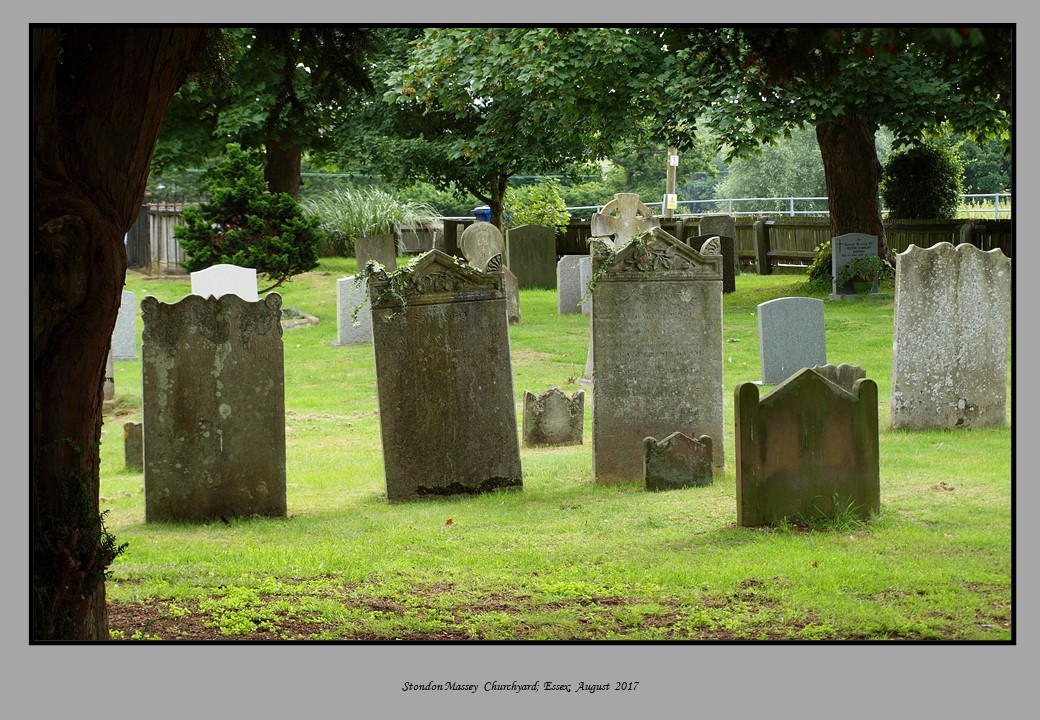
stondon masseyThe calendar includes a variety of photographs taken over the last few years. My original intention was to feature images from only 2020, but despite buying myself a birthday present of an expensive new camera early in 2020, Covid-19 isolation has restricted my photographic opportunities to house and garden for most of the year – hence the calendar contains a selection of images from earlier years.
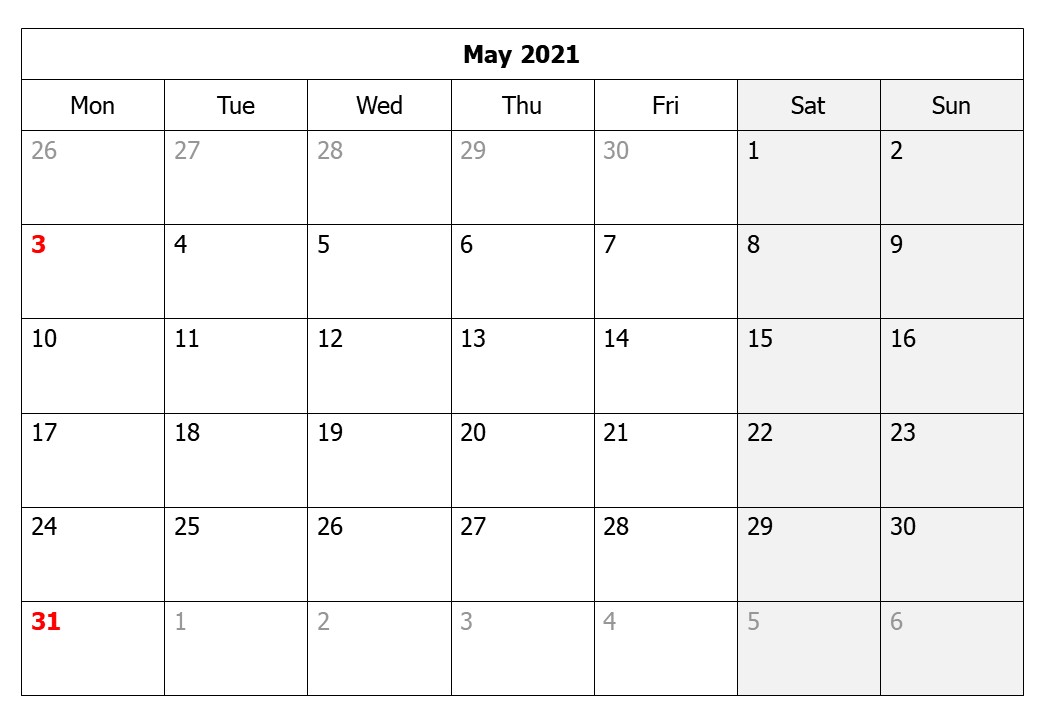
monthAs always, I don’t pretend these are stunning, top quality, professional standard photographs, however I hope they are sufficient to provide some part of the cheer we’ll all need over the coming year.

The calendar is A4 sized, so it’s A3 when opened up and hanging. There’s a hole to hang it on a nail in the office wall. As well as images for each month there are a couple of pages of description and on the back calendars for 2021 and 2022.

decemberI shall naturally be dispensing some to the faithful, along with their Christmas presents, however if anyone wishes to buy one they are available on eBay and Etsy at £7.50 + p&p; I’ve also put the links in the right-hand navigator (with a reminder that my 2011 book is still available). £1 from each calendar sold (and £2 from each book sold before 31 January) will go to London’s Air Ambulance.
Weird Meme

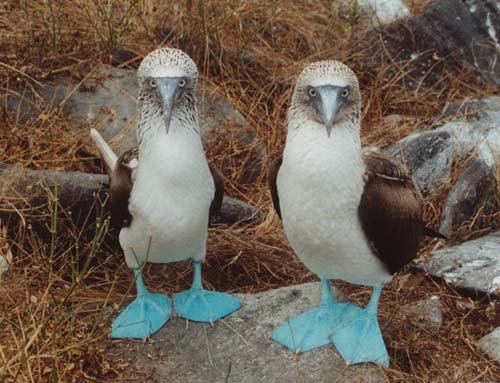
So on Halloween I thought we might have a sort of weird-ish meme. Well of course it’s weird, it has 13 questions!

Let’s go …

  1. Can you describe your boobs using only a SFW picture of them?


  2. If you suddenly found out that your internal monologue for the last week was actually audible, how screwed would you be?
    Totally and utterly fucked, and probably certified.
     
  3. What two totally normal things become really weird if you do them back to back?
    Wanking. Well two of you wanking back-to-back is a bit weird isn’t it? Why wouldn’t you do it face-to-face so you can watch each other?
     
  4. What ridiculous and untrue, yet slightly plausible, theories can you come up with for the cause of common ailments?
    • Dental cavities are caused by the mouth imps mining for pearls.
    • It’s well known that people feel weak when they’re ill. This is because the elastic bands perish. Convalescence is needed to re-vulcanise the elastic.
    • Headaches are caused by a parasite scrubbing limescale off the inside of the skull; migraines happen when they reproduce and the nymphs get out of control like the Sorcerer’s Apprentice.


  5. What secret conspiracy would you like to start?
    The one that turns out to be true.
     
  6. What’s the weirdest thing you’ve ever eaten or drunk?
    Well not really in the weird category, but Retsina probably wins by a short head from Absinthe. Both are absolutely vile.
     
  7. Are aliens real? How do you know?
    Who knows? They’re at least as likely as anything in is of being true! I’ll be surprised if they don’t exist somewhere in the universe, but we’ll likely never know for sure. Indeed can we ever know? See this in New Scientist.
     
  8. What’s your first executive order as king of this third-word country?
    (Re)nationalise all public transport and utilities; make all public transport (bus, train, tram) free; then ban the private car and internal air travel.
     
  9. Do you believe in the paranormal and would you go ghost hunting?
    As a scientist I find it difficult to credit the paranormal but I also know that there are many things we don’t (and maybe never can) understand so I concede that the paranormal is indeed a possibility. And yes, I would go ghost hunting.
     
  10. What’s the weirdest thing you’ve never done but want to?
    See a corpse flower. No, not like that! I means going to see an Amorphophallus titanum in flower.
     
  11. Have you ever been to a séance?
    Yes, we held séances during power cuts when I was a student.
     
  12. Have you ever met a supernatural being?
    Not visibly embodied, but certainly the effects of one – at least twice; once in an old empty house as a child; and again as a post-grad student at a friend’s flat.
     
  13. Tell us something unusual/weird about yourself.
    I think I exist.

Nobody is being tagged, but everyone feel free to join in if you wish. Post your version on your blog (or Facebook, or wherever) preferably with a link back here; and put a link in the comments below so we know where to find your version.

Monthly Links

And so we come inexorably to the end of another month, and our round-up of links to items you missed before and really don’t want to miss again. There’s lots in this month’s pack, so here goes …


Science, Technology, Natural World

DON’T PANIC! The massive star Betelgeuse could be 175m light years closer to us than was previously thought.

How does 2 meters of DNA fold up by a factor of 250,000 to fit in the cell nucleus (which has a diameter of around 10 millionths of a meter)? [LONG READ]

Who knew that the Victorians were into collecting and pressing seaweeds? Turns out to be a useful resource for studying the oceans.

Small bird flies 12,000km in 11 days, non-stop.

Why do some birds have a small downturned overhang on their bill?

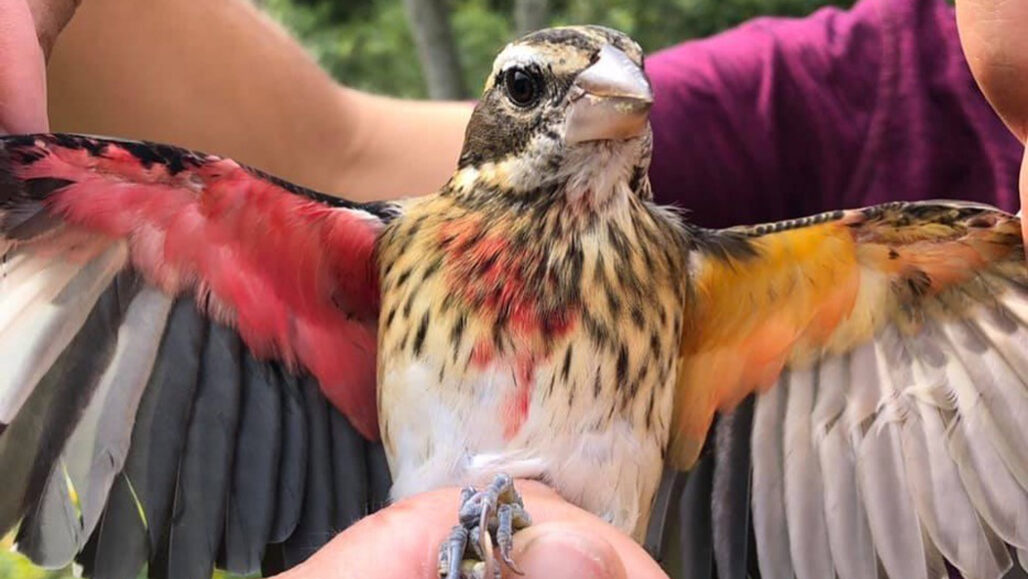
Here’s a rather stunning chimera grosbeak – a half male, half female gynandromorph.


Health, Medicine

In a quick segue into the medical, a look at why scientists say bats are not to blame for Covid-19. [LONG READ]

Are we too anxious about the risks of nuclear power? [LONG READ]


Sexuality

Female journalist visits a sex doll factory and learns about male sexual desire. [LONG READ]


Environment

Why many dual-flush toilets waste more water than they save.

There’s often more tree cover in towns and cities than in the countryside.


Social Sciences, Business, Law

The airline industry has been hit hard by Covid-19. Samanth Subramanian in the Guardian takes a look. [LONG READ]


History, Archaeology, Anthropology

The giant geoglyphs of Peru’s Nazca Lines remain an enigma especially when researchers uncover a lounging cat! (Are we really sure it’s not April Fool’s Day?)

Sculpted head, possibly of Edward II, unearthed at Shaftesbury Abbey.

A look at the history of Waltham Abbey, from Saxon times to its destruction by Henry VIII. This is especially interesting for me as it is just across the marshes from where I grew up.

The myth of medieval Europe’s isolation from the Islamic world. [LONG READ]

The importance of Michaelmas in the medieval world. [LONG READ]

St Procopius of Sázava, a saint for Halloween.

On masculinity and the medieval theories of disease [LONG READ]

The British Library has released 18,000 maps from the Topographical Collection of King George III, free to download and with no copyright restrictions.


London

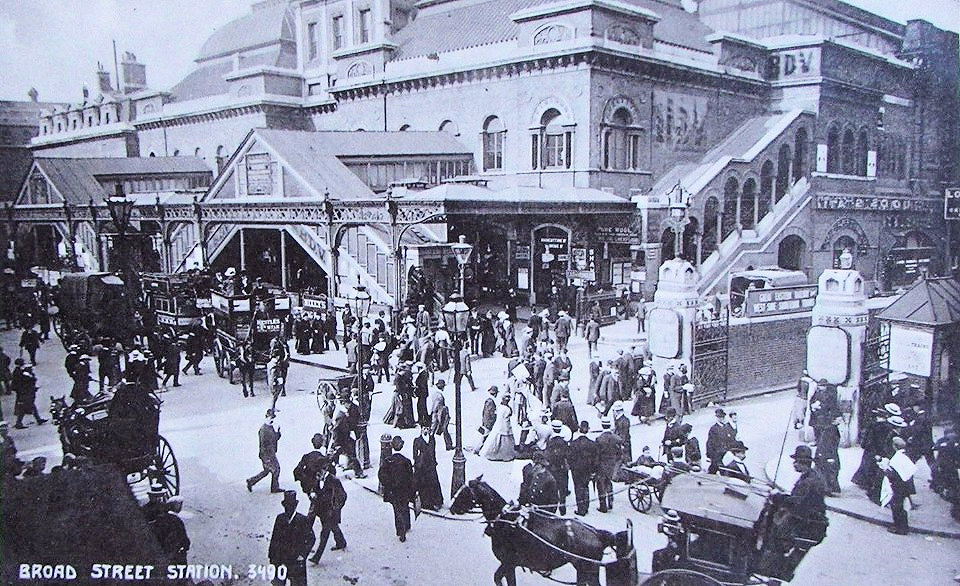
A London Inheritance takes a look at London’s long-lost Broad Street Station.


Lifestyle, Personal Development, Beliefs

Now here’s an interesting idea: when things look bleak, thinking in terms of “hope horizons” can help. [£££££]

And finally … If our scientific theories are correct you don’t have free will, and you can’t change it, so don’t worry about it. But believe in free will if you wish, because in the words of Edward N Lorenz:

We must wholeheartedly believe in free will. If free will is a reality, we shall have made the correct choice. If it is not, we shall still not have made an incorrect choice, because we shall not have made any choice at all, not having a free will to do so.