Monthly Links

Welcome to our monthly collection of links to items you may have missed but which struck me as interesting or amusing. We’ve got quite a collection this month, and as usual we’ll start with the hard stuff – the science – and then it’s all downhill.


Science, Technology, Natural World

Let’s start with something topical … So just why do we have leap years? [££££]
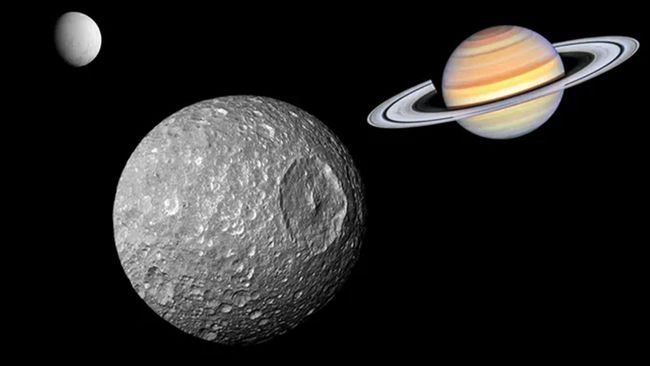
Scientists have again proven themselves wrong: this time they’ve concluded that Saturn’s moon Mimas probably has an underground ocean which they thought couldn’t exist.

On Earth, but not entirely disconnected, scientists have concluded that the largest volcanic eruption in recorded history happened 7300 years ago off Japan. [££££]

We’re familiar with Isaac Newton splitting light into a rainbow with a prism, but it was William Herschel (better known as an astronomer) who actually worked out what was going on beyond the red and the violet ends of the spectrum.

Changing tack entirely … Researchers have worked out a more detailed mechanism by which erections work – at least in mice – opening the door for better drugs for erectile dysfunction.

Which somehow brings us to penguins … One of the current team at UKAHT’s Port Lockroy station in Antarctica describes counting penguins and why the penguins think pebbles are cool.

So why do birds have skinny legs? [££££]

Let’s hear it for the Yellow-Crested Helmetshrike (below), which has been rediscovered after not being seen for 20 years.

Why don’t humans have gills? Spoiler: because guess what, we don’t live in water.

On a more macabre topic, scientists have discovered a detailed, and regularly timed, network of microbes for decomposing flesh.

Which takes us nicely on to …


Health, Medicine

It is estimated that one million people in England may have undiagnosed type 2 diabetes.

Bubonic plague is still a thing, albeit pretty rare, in America. The latest case is in Oregon.

We are still in the Covid pandemic – it’s only the fifth year – and it is still presenting challenges. [LONG READ] [££££]

An epidemiologist takes a long hard look at what you can do to boost your immune system – and what doesn’t work! [LONG READ]

Bodily secretions (blood, tears, wax) can tell us a lot about our health.

Should this be here or under History? … A bone analysis has revealed the first known cases of TB amongst Neanderthals.

Here’s some reassurance, especially for those of us in the springtime of our senility, that forgetting is a normal function of memory – and when we should start worrying about it.


Sexuality

Apparently some women (probably some men too) enjoy anal sex, it’s more common than supposed and it shouldn’t be a guilty pleasure.

Sex educator Emily Nagoski has a new book out (Come Together) which is a good excuse for a Q&A. [LONG READ]
And here’s an excerpt from Come Together. [LONG READ]


Social Sciences, Business, Law, Politics

Here are two related items from lawyer David Allen Green on when the UK government hold a border poll in Northern Ireland. The first from Prospect magazine, the second from DAG’s Substack blog. [LONG READ]

The first UK banknotes featuring King Charles III will be released into circulation on 5 June this year.


Art, Literature, Language, Music

I’m not at all sure I fully understand how they’ve done this, but researchers have uncovered secret mathematical patterns in Bach’s music. [££££]

A controversial new analytical technique offers a fresh look at the Indo-European roots of our languages.

Between about 1909 and 1915 Sergey Prokudin-Gorsky photographed Russia using his ground-breaking colour process.

A portrait by Gustav Klimt (above) has been rediscovered after being lost for nearly a century.

The astonishing art of Mattias Adolfsson.


History, Archaeology, Anthropology

We start this section with a long overview article on the emerging use of science in historical research. [LONG READ]

Forget our modern preconceived ideas, just what was life like for female Neanderthals?

What does jewellery tell us about the culture of Ice Age Europeans? [££££]

Here are two articles on the Egyptian’s practice of mummification. First, when did the Ancient Egyptians start mummifying their dead. And secondly their practice of mummifying baboons. [££££]

Having mentioned TB amongst Neanderthals earlier, researchers have used DNA to identify Down’s Syndrome in 2600-year-old infants. [££££]

Rare Roman funeral remains have been discovered beneath Holborn Viaduct in London
From

The devastating Roman-era plagues were associated with cold snaps.

Still with the Romans, what was life, and death, like for Roman legionaries? [LONG READ]

A haul of nearly 400 ancient medical tools from Turkey hint at rare Roman doctors’ offices.

We’re coming a bit more up to date with this look at St Margaret of Antioch. [LONG READ]

Still with the early medievals … A gold ring of Mercian Queen Æthelswith (above) was unearthed by a Victorian ploughman in Yorkshire.

A look at secret romantic communications in medieval times. [LONG READ]

And finally in this section, Going Medieval looks at the Black Death in Africa and Asia, and the interconnected Middle Ages.


London

Covenants, Easements & Wayleaves: the intricacies of London Infrastructure. [LONG READ]

The various parts of the London Overground train lines are to be given their own names and identity. [LONG READ]


Lifestyle, Personal Development, Beliefs

Not having children when you get old can be unsettling, but it need not be. [££££]

A huge “house share” in the Netherlands has always caused outsiders to speculate and gossip about the residents’ sleeping arrangements. [LONG READ]

Third century Buddhist scripture The Lotus Sutra still has relevance today.

Cats have many attention-seeking behaviours, but do they really suffer from a fear of missing out? [££££]


Shock, Horror, Humour, Wow!

And finally for this month, here’s Simon Tatham’s Portable Puzzle Collection.


What Happened in 724?

Here’s our next instalment of things that happened in ..24 years of yore.

Notable Events in 724

Unknown Date. A Muslim fleet raids the Byzantine-ruled Balearic Islands, as well as Byzantine Sardinia and Lombard Corsica.

Unknown Date. Emperor Shomu orders that houses of the Japanese nobility be roofed with green tiles, as in China, and have white walls with red roof poles.

Monthly Quotes Collection

Welcome to this month’s collection of quotes recently encountered. So in no particular order …


All human beings are descendants of tribal people who were spiritually alive, intimately in love with the natural world, children of Mother Earth. When we were tribal people, we knew who we were, we knew where we were, and we knew our purpose. This sacred perception of reality remains alive and well in our genetic memory. We carry it inside of us, usually in a dusty box in the mind’s attic, but it is accessible.
[John Trudell]


Tell me your favourite weird fact … The Earth is covered in corpses. We breathe the air the dead exude, eat the food they nourished with their decay, pour their remains into our cars, wear them and sleep on them. And then we call them scary without even noticing that they are present in every single thing of our lives. We live because of the dead.
[unknown]


Science is the acceptance of what works and the rejection of what does not. That needs more courage than we might think.
[Jacob Bronowski]


Once you’ve understood, that you can’t understand everything you start to be wise.
[unknown]


A certain small income, sufficient for necessities, should be secured for all, whether they work or not.
[Bertrand Russell; British philosopher and logician (1872–1970)]


There seems to be a complete difference of style between the things that human beings do and the things that nature does, even though human beings are themselves part of nature. On the one hand, nature is wiggly. Everything wiggles: the outlines of the hills, the shapes of the trees, the way the wind brushes the grass, the clouds, tracts of streams. It all wiggles. And for some reason or other, we find wiggly things very difficult to keep track of. And, you know, we say to people, “Well, let’s get things straightened out”, “Let’s get it ironed out”, “Let’s get it all squared away”. And then, somehow, we think we understand things when we have translated into terms of straight lines and squares. Maybe that’s why they call rather rigid people squares. But it doesn’t fit nature.
The physical world is wiggly. Clouds, mountains, trees, people, are all wiggly. And only when human beings get to working on things – they build buildings in straight lines, and try to make out that the world isn’t really wiggly. But here we are, sitting in this room all built out of straight lines, but each one of us is as wiggly as all get-out.

[Alan Watts]


Let no one be slow to seek wisdom when he is young nor weary in the search of it when he has grown old. For no age is too early or too late for the health of the soul.
[Epicurus]


When I was a smartass computer nerd in the 80s and 90s, an eternal theme was friends and family sheepishly asking me for tech support help, and me slowly, patiently explaining to them that computers aren’t scary, they’re actually predictable, they won’t explode or erase your data (unless you really make an effort), and they operate by simple (if somewhat arcane) rules. Edit > Cut, then click, then Edit > Paste. Save As. Use tabs, not spaces. Stuff like that. Maybe not easy, but simple, or at least consistent and learnable.
But that’s not true anymore.
User interfaces lag. Text lies. Buttons don’t click. Buttons don’t even look like buttons! Panels pop up and obscure your workspace and you can’t move or remove them – a tiny floating x and a few horizontal lines is all you get. Mobile and web apps lose your draft text, refresh at whim, silently swallow errors, mysteriously move shit around when you’re not looking, hide menus, bury options, don’t respect or don’t remember your chosen settings. Doing the same thing gives different results. The carefully researched PARC principles of human-computer interaction – feedback, discoverabilty, affordances, consistency, personalization – all that fundamental Don Norman shit – have been completely discarded.
My tech support calls now are about me sadly explaining there’s nothing I can do. Computers suck now. They run on superstition, not science. It’s a real tragedy for humanity and I have no idea how to fix it.

[AlexC; @neuralex@neurodifferent.me]


Thinking is difficult, that’s why most people judge.
[CG Jung, Swiss psychiatrist and psychotherapist (1875–1961)]


It is strange what weather we have had all this winter; no cold at all; but the ways are dusty, and the flyes fly up and down, and the rose-bushes are full of leaves, such a time of the year as was never known in this world before here.
[Samuel Pepys; Diary; 21 January 1660/61]


While the best of our physical theories are really excellent – wonderfully predictive – not one of them is complete. When applied in the wrong situation, they fail. That’s just the way it is. So it’s pretty clear, I think, that physics has no guarantee of arriving at a final theory.
Instead, my bet is it’s going to be successive approximations to reality all the way down. You’ll do better and better, but you’ll never get there. Because to get there, in my world view, you have to have experimental checks of predictions, and experiments are finite: they cannot explore all eventualities to all accuracy. So my conclusion is that we’ll never get there.

[Prof. Jim Peebles; New Scientist; 27 January 2024]


Old minds are like old horses; you must exercise them if you wish to keep them in working order.
[John Adams (1735–1826), American statesman and Founding Father]


It ought to be remembered that there is nothing more difficult to take in hand, more perilous to conduct, or more uncertain in its success, than to take the lead in the introduction of a new order of things. Because the innovator has for enemies all those who have done well under the old conditions, and lukewarm defenders in those who may do well under the new.
[Nicolo Machiavelli, c.1505]


The illusion that egoists will be pleased, or flattered, by interest taken in their habits persists throughout life; whereas, in fact, persons like Widmerpool, in complete subjection to the ego, are, by the nature of that infirmity, prevented from supposing that the minds of others could possibly be occupied by any subject far distant from the egoist’s own affairs.
[Anthony Powell, A Buyer´s Market (1952)]


Elinor agreed to it all, for she did not think he deserved the compliment of rational opposition.
[Jane Austen, Sense and Sensibility]


Earth, water, fire and air
Met together in a garden fair,
Put in a basket bound with skin.
If you answer this riddle,
You’ll never begin.

[Robin Williamson (Incredible String Band); “Koeeoaddi There” from album The Hangman’s Beautiful Daughter (1968)]


February Quiz Answers

Here are the answers to this month’s five quiz questions. If in doubt, all should be able to be easily verified online.

Medicine

  1. Where in the human body would you find the medulla oblongata?  The brain
  2. If you have cryophobia, what are you afraid of?  Ice or cold
  3. What is the largest organ of the human body?  The skin
  4. Which is the only body part that is fully grown from birth?  Eyes
  5. Where is the strongest human muscle located?  Jaw

Answers were correct when questions were compiled in late 2023.

On Depression – X

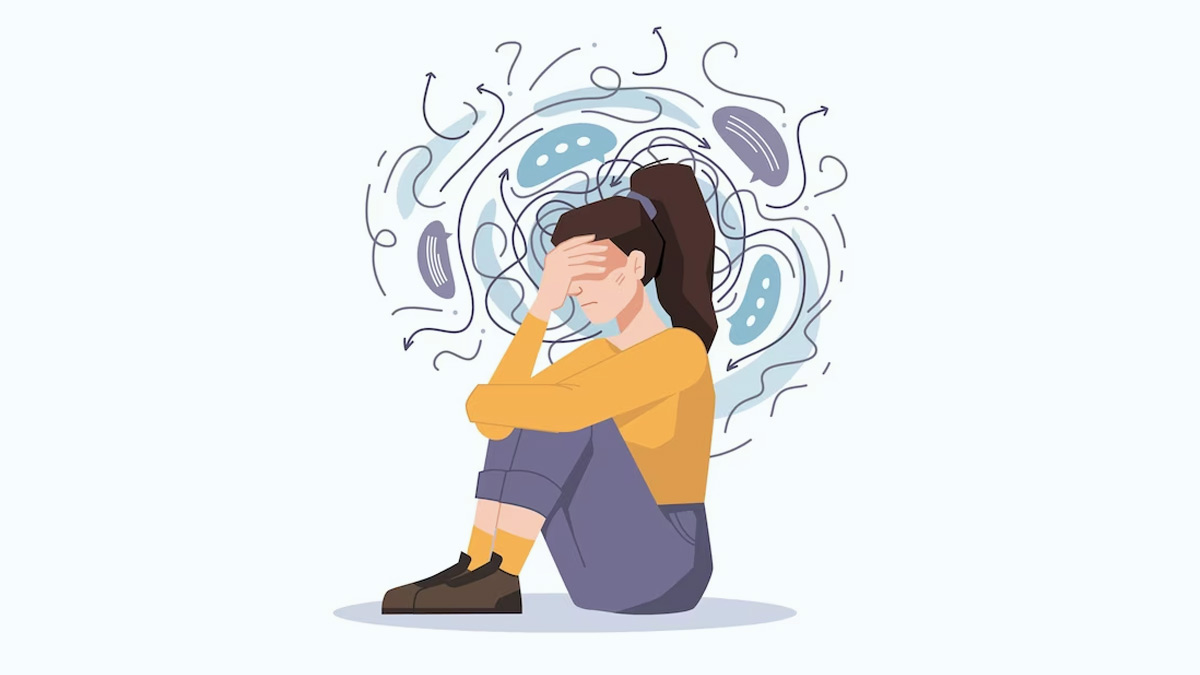
Another in my very occasional series of articles on depression – my depression. They are written from a very personal perspective; they are my views of how I see things working and what it feels like on the inside. Your views and experiences may be vastly different. My views and experiences are not necessarily backed by scientific evidence or current medical opinion. These articles are not medical advice or treatment pathways. If you think you have a problem then you should talk to your primary care physician.


I recently came across the following elsewhere on social media.

One of the worst things about depression is that it’s a self-reinforcing cycle. In many ways, a lot of the popular “mindfulness” or “yoga” or “touch grass” or “diet and exercise” things about recovering from depression is a correlation, not causation thing which is a reversal of cause and effect. When you’re depressed, you CAN’T do the things that help you not be depressed, or at least you can’t sustain doing them for long because they drain more energy than they’re returning.

It’s a lot of feel good “pull yourself up by your bootstraps” nonsense. When you’re depressed, even when you try to force yourself to do the endorphin generating activities, your brain is so full of depression juice that it sucks up all the endorphins you might have gotten otherwise. So now you’re just even more exhausted from trying to do the thing, and have even more depression juice in your brain because you tried to do the thing and didn’t feel any better, which must just be because you’re a broken failure.

[Jess, @JessTheUnstill@infosec.exchange at https://infosec.exchange/@JessTheUnstill/111880212752583330]

I don’t really agree with the final phrase about being a “broken failure”. I’m a broken failure only in terms of getting rid of the depression and in consequence having fucked up too many things in my life. And who’s surprised after 50+ years experience – we’ve trained so long and hard that we’re now experts! Otherwise this is a pretty spot on summary of how my depression seems to work.

Medics please note that this is how depression works for many of us, so don’t be surprised when we tell you that all your suggested fixes don’t work for us.

February Quiz Questions

Each month we’re posing five pub quiz style questions, with a different subject each month. As before, they’re not difficult, but it is unlikely everyone will know all the answers – so hopefully you’ll learn something new, as well as having a bit of fun.

Medicine

  1. Where in the human body would you find the medulla oblongata?
  2. If you have cryophobia, what are you afraid of?
  3. What is the largest organ of the human body?
  4. Which is the only body part that is fully grown from birth?
  5. Where is the strongest human muscle located?

Answers will be posted in 2 weeks time.

February 1924

Our look at some of the significant happenings 100 years ago this month.


3. Died. Woodrow Wilson, 28th President of the United States, Nobel Peace Prize recipient (b. 1856)


14. The Computing-Tabulating-Recording Company (CTR), based in the US state of New York, is renamed International Business Machines (IBM)


21. Born. Robert Mugabe, Zimbabwean revolutionary and politician, 1st President of Zimbabwe (d. 2019)