
Book Review: 100 Chemical Myths
Lajos Kovács, Dezső Csupor, Gábor Lente, Tamás Gunda
100 Chemical Myths: Misconceptions, Misunderstandings, Explanations
Springer, 2014
 This is a science book, but one which should be relatively intelligible to the intelligent layman. It deals with popular, yet largely untrue, misconceptions and misunderstandings about the chemistry in our lives: food, medicine, the environment and industrial process.
The explanations are relatively concise (few are more than three or so pages) and seek to cut through fallacies and urban legends. Because of their concision the explanations are not highly technical, although some basic knowledge of chemistry or basic science will help.
So far, so good. However I found this an intensely irritating read on a number of levels.
Each of the short explanations is self contained, although copiously cross-referenced and with a section of sources and references in the back-matter. Nevertheless the refutations are stated often with little in the way of logical reasoning or explanation; just bald statements which sounded like “we now know that …” or even “we deny it”. Because of this, and the lack of technical detail, I found the explanations often superficial and unsatisfying.
This isn’t helped by the poor illustrations. Although relatively well illustrated the graphics vary between being too small, pointless and lacking helpful captions. The authors do rather assume that one either knows what a chemical structure means, or one is happy to gloss over it, which I find intensely irritating — even as a trained chemist some memory joggers would be helpful.
I also did not find this book a comfortable read. The language is clunky. In a way this isn’t surprising as the authors, and thus the original text, are Hungarian. But the translation doesn’t flow: too often the sentence structure is obtuse; and there are too many instances of just the wrong word being used — it is clear what the meaning is but an inappropriate synonym has been used. In fact the English feels like a machine translation which hasn’t been checked by a native English speaker for flow and sense.
The book was also physically uncomfortable. It isn’t a cheap book and is from a major scientific publishing house; the paper and the binding are good. Nevertheless the production feels like a print on demand product: the board cover has a laminated glossy illustration, rather than a dust jacket, and very sharp corners which made reading in bed rather uncomfortable.
So yes, that’s right, I was not impressed. The book might have been marginally acceptable as a sub-£10 paperback, but for £45 (from Amazon) it is not of the quality — of content or production — expected.
Overall Rating: ★☆☆☆☆
Oddity of the Week: Oddest Book Title
Oddest Title of the Year Award
Every year the Diagram Group offers a prize, via the column of the estimable Horace Bent in the Bookseller magazine, to the person in the trade who comes up with the oddest book title published that year. Many — but not all — of the winning titles are from professional, technical, academic and scientific publishers.
Since the prize was established in 1978, winners have included:
- Proceedings of the Second International Conference on Nude Mice (1978)
- The Madam as Entrepreneur: Career Management in House Prostitution (1979)
- Lesbian Sadomasochism Safety Manual (1990)
- The Theory of Lengthwise Rolling (1993)
- Greek Rural Postmen and Their Cancellation Numbers (1996)
- High-Performance Stiffened Structures (2000)
- Butterworths Corporate Manslaughter Service (2001)
- Living with Cray Buttocks (2002)
- The Big Book of Lesbian Horse Stones (2003)
Other submissions over the years have included:
- Access to the Top of Petroleum Tankers
- An Illustrated History of Dustcarts
- Bombproof Tour Horse
- Classic American Funeral Vehicles
- Cooking with Mud: The Idea of Mess in 19th-century Art and Fiction
- Did Lewis Carroll Visit Llandudno?
- Diversity of Sulfate-reducing Bacteria Along a Vertical Oxygen Gradient in a Sediment of Schiermonnikoog
- Fancy Coffins To Make Yourself
- Lightweight Sandwich Construction
- New Caribbean Office Procedures
- Pet Packaging Technology
- Principles and Practices of Bioslurping
- Psoriasis at Tour Fingertips
- Short Walks at Land’s End
- Tea Bag Folding
- The Aesthetics of the Japanese Lunchbox
- The Anger of Aubergines
- The Fiat-Footed Flies of Europe
- The Voodoo Revenge Book: An Anger Management Program You Can Really Stick With
- Throwing Pots
- Twenty Beautiful Tears of Bottom Physics
- What is a Cow?: And Other Questions That Might Occur to Ton When Walking the Thames Path
- Whose Bottom? A Lift-the-Flap Book
- Woodcarving with a Chainsaw
From: Ian Crofton, Brewer’s Cabinet of Curiosities
Lessons for Life
Spread all across the intertubes there are hundreds of sites which suggest a vast number of supposed “lessons for life”. Many, of course, are nothing of the sort but merely personal predilection or religious proselytising. However there are some which seem to me to be much more universally useful and which would serve us well if included in our modus operandi. Here then are my top ten tips for surviving life on an even keel.
My Top Ten Lessons for Life
- Life isn’t fair — deal with it.
- If it harm no-one, do as you will.
- Treat others as you would wish them to treat you.
- Be open and honest in all that you do.
- You can never have all the information you want to make a decision; every decision is the best you can make at the time with the information available.
- Don’t be afraid to admit you were wrong or you don’t know; be prepared to change your mind.
- No one is responsible for your happiness, your emotions, your opinions or your orgasms except you.
- No regrets — just things you now know weren’t the best.
- If you’re faced with a problem, don’t delay trying to resolve it; problems ignored only multiply.
- There is no point worrying about things outside your control or which you cannot change.
Of all the rest I’ve seen over the years I have collected some more of what I consider to be the most generally useful on my website at Lessons for Life.
Weekly Photograph
This week’s photograph was taken as an experiment. Yes, it really is the sun partially obscured by cloud. I took it when I was playing around testing out exposure settings on my small camera so I could photograph the partial solar eclipse of 20 March 2015. (As it turned out there was no chance of seeing the eclipse due to cloud.) This is the best of several shots, taken at varying exposures, I wanted to see how it really would stand up as an actual image. Experimental, but I think quite interesting.

Cloudy Sun
Greenford; March 2015
Click the image for larger views on Flickr
Quotes
Another selection of recently encountered amusing or thought-provoking quotes. In no particular order …
I’m not lost for I know where I am. But however, where I am may be lost.
[AA Milne, Winnie-the-Pooh]
Always forgive your enemies; nothing annoys them so much.
[Oscar Wilde]
Unlike riding a camel, driving a car places a woman in danger of being raped.
[source unknown]
When in danger or in doubt, run in circles, scream and shout.
[Herman Wouk]
It is not necessary to believe in God to be a good person. In a way, the traditional notion of God is outdated. One can be spiritual bur not religious. It is not necessary to go to church and give money — for many, nature can be a church. Some of the best people in history did not believe in God, while some of the worst deeds were done in His name.
[Pope Francis]
The body is meant to be seen, not all covered up.
[Marilyn Monroe]
[Soil is] literally and — it seems — metaphorically, beneath us. To judge by its absence from the media, most journalists consider it unworthy of consideration. But all human life depends on it. We knew this long ago, but somehow it has been forgotten. As a Sanskrit text written in about 1500BC noted: “Upon this handful of soil our survival depends. Husband it and it will grow our food, our fuel and our shelter and surround us with beauty. Abuse it and the soil will collapse and die, taking humanity with it.”
…
Landowners around the world are now engaged in an orgy of soil destruction so intense that, according to the UN’s Food and Agriculture Organisation, the world on average has just 60 more years of growing crops. Even in Britain, which is spared the tropical downpours that so quickly strip exposed soil from the land, Farmers Weekly reports, we have “only 100 harvests left”.
…
This is what topples civilisations. War and pestilence might kill large numbers of people, but in most cases the population recovers. But lose the soil and everything goes with it.
[George Monbiot at www.theguardian.com/commentisfree/2015/mar/25/treating-soil-like-dirt-fatal-mistake-human-life]
Los Angeles, where abuses by the super-rich are clearly evident all over the city … is a desert town. Why are there lush green golf courses all over it? The rich steal water from the poor and ultimately ruin the future for everyone including themselves and their heirs.
[Brad Warner; Hardcore Zen blog]
Therefore all things whatsoever ye would that men should do to you, do ye even so to them.
[Matthew 7:12 (AV)]
To be beautiful means to like yourself, you don’t need to be accepted by others. You need to accept yourself.
[Thich Nhat Hanh]
This is my simple religion. There is no need for temples; no need for complicated philosophy. Our own brain, our own heart is our temple; the philosophy is kindness.
[Dalai Lama]
I cook with wine, sometimes I even add it to the food.
[WC Fields]
Five Questions, Series 7 #5
And so to the last of my Five Questions — at least for this series.
In some ways this is going to be the trickiest question to answer, as you’ll see. Which is why it has been left until last. So …
Question 5: What character (fictional if you wish) you would like to kiss?
Now I feel like I’m on a hiding to nothing here. For if I name an obvious friend I’ll doubtless get a smack round the chops, either from the person concerned, their partner or “her indoors”.
And were I to name someone well-known, doubtless everyone would say “What?! Them!”, and immediately downgrade their opinion of me. Oh wait, that’s not possible; it is rock-bottom anyway!
And if I name someone fictional there’s at least a sporting chance no-one will have the first clue who I’m talking about. So that is rather pointless.
Of course there are lots of people “out there” (mostly female) who I think are sexy, hot or whatever other synonym you like to choose. But I cannot visualise myself ever being in the position to even consider a kiss might be on the cards. And if I can’t visualise it as a possibility then it is hard — at least for me — to imagine it. Besides, this sort of intimacy is not something I’ve grown up with; as a family (and hence it has rubbed off on me) we are very undemonstrative; the net result is that I don’t do emotion and intimacy well, however much I might wish otherwise. (And, yes, I know all of that says much about me.)
However I could just say … perhaps … Ella, or … Janet, or … Laura, or …
Then everyone can try to work out which of the 47 girls called Ella, Janet or Laura who I might know (or know about) I mean.
But whoever you decide it is, you’re wrong; it isn’t.
Unless you want it to be!
OK, so that’s the end of this series of Five Questions. There may be another series later in the year, especially if you all send me some good questions!
Meanwhile, be good!
Something for the Weekend
Yes, I know that feeling!

Talking Sex Ed
As a society, and as individuals, we need to be talking about sex. More specifically we need to be talking sex education with our youngsters.
Emily Nagoski, author of the best selling Come As You Are, has written a short piece (for The Big Issue) on how we are failing to get a grip of sex ed, and what should be changed.
Thanks to my “sex ed”, by the time I got into my first sexual relationship, I had no idea … I didn’t have a damn clue. Nobody I knew had a clue … It’s all very well learning to put a condom on a banana, but it’s not much use if you then don’t know what to do with the banana, or what you want to do with the banana, or even how you feel about the banana in the first place.
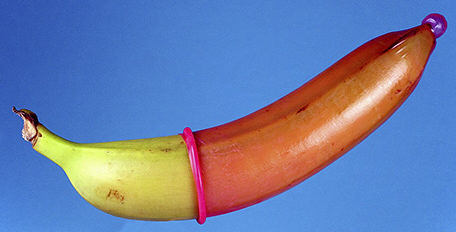
Learning to put a condom on a banana — or indeed anything else vaguely banana-shaped — is certainly important, but it isn’t the whole story by a long way. And we need to be addressing the whole story.
You can find Emily’s full article here. Read it. It is important. For you. And for the next generation(s).
Oddity of the Week: Imperial Camel Corps
One of the more unusual of London’s WWI memorials is that to the Imperial Camel Corps in Victoria Embankment Gardens, just along from Embankment tube station, by the Thames.
Raised in December 1916 the Camel Corps was, as one might guess, established for desert warfare. The first men to join the Corps were Australian troops who had recently returned from the horrors of the Gallipoli campaign; they were quickly joined by troops from Britain, New Zealand, Hong Kong, Singapore and India.

The Corps fought in many of the Middle East campaigns and at one time numbered 4,150 men and 4,800 camels. Thanks to the camels the soldiers could travel long distances across remote desert terrain, carrying machine guns, mountain artillery and medical support. 346 troops from the Imperial Camel Corps lost their lives during WWI.
The small memorial was sculpted by Major Cecil Brown who had himself served with the Corps; it was unveiled in July 1921 in the presence of the Prime Ministers of Australia and New Zealand.
From: WWI 100: London’s Memorials … The Imperial Camel Corps