
NHS Data Sharing
I wrote what follows the other day for a friend whose parents (I was going to say “elderly parents” but realised they’re only a couple of year older than me – so maybe I’d better not!) are confused about the various NHS initiatives for sharing our medical records. And they weren’t getting much help from their GP.
So this is my understanding based on my involvement over the last few years as a patient representative, as Chairman of my GP’s Patient Group and from discussion with NHS staff. It may not be complete and it may not be entirely accurate – though I think it’s pretty close – so I’m happy to be corrected by anyone on the ground in the NHS who has factual information. I’m also happy for this to be shared as long as this preamble is included and I’m credited.
There are six NHS data sharing initiatives which people might want to be aware of; they are often confused and mostly misunderstood – mainly beacuase of the NHS’s inability to communicate effectively. I’m going to start with what was proposed about 3 years ago so you have the whole context.
- Care.data. This is the scheme which was proposed about 3 years ago in which GP patient records would be extracted, anonymised, and used for research and planning purposes (potentially including academic and commercially). Understandably many patients had big fears about confidentiality and the reverse engineering of data to identify them, despite assurances that this couldn’t happen. Patients were able to opt out (the default was for everyone to be opted in), which many felt was the wrong way round. The scheme was also very badly communicated and thus widely misunderstood. As a result the public concerns, the scheme was withdrawn pending a rethink and has never been resurrected.
My opinion: This is, at least for now, irrelevant; forget about it.
- Hospital Event Recording (or whatever it’s officially called). This is the hospital equivalent of care.data where hospital records are extracted and anonymised for research and planning use. It has been running for many, many years (maybe 20 years?) without anyone knowing (or apparently caring). I am not aware of any means of opting out, but there may be one. Given that GPs have 90% of the patient contact in the NHS this will be generating one, even two, orders of magnitude less data than would care.data.
My opinion: You can’t change it, so it’s not worth worrying about.
- Summary Care Records (SCR). This is one of the two initiatives you do need to know about. It was introduced at the same time as care.data (hence a lot of the confusion). Again the default is to opt in everyone, although you can choose to opt out.
This is an extract of your GP’s records. It contains information about what drugs you are currently prescribed, what you have been prescribed in the last 6 months, your allergies and very little else. It does not include specific information on your ailemnts, nor does it contain information on your GP consultations etc.
This record is available throughout the NHS only to specifically authorised clinicians (eg. A&E consultants) who may need it urgently. [You will know that every NHS employee has a “chip & pin” ID card which gives their appropriate authorisation to NHS IT systems; it works like your bank card. A&E consultants (and possibly some others with a real need to know) have an additional authorisation on this card which gives access to SCR.]
So if you turn up at A&E, and cannot remember/say what drugs you’re on, it allows the clinician to see your medication etc. to (a) get an idea of your underlying conditions and (b) know what drugs they can/cannot give you. If the clinician wants to access your SCR they are required to get your consent before doing so; if you are unable to give consent (eg. you’re unconscious) they may still access the record but they have to make a note in the record of the circumstances under which they accessed it. I believe that your GP sees an alert to tell them your record has been viewed – but they should be getting an alert that you’ve been at A&E anyway. As you’ll see, this can be a life-saver and you really do not want to opt out of it.
My opinion: The vast majority of people will want to be opted in to this. It could be a life-saver.
- GP demographic/epidemiological data. The NHS collects, from every GP practice, some high-level demographic and epidemiological data – ie. number of patients, their age profile, ethnicity profile, and how many suffer from which ailments. As far as I am aware this is aggregated data collected at the practice level; it does not contain information (even anonymised) on any individual. This is used for future planning of healthcare services – eg. this area has a high prevalence of diabetes, therefore we need to provide more diabetic nurses or clinics. This data is collected automatically and has been for some years. You can neither opt in nor opt out.
My opinion: You can’t do anything about this, so forget it.
- Your GP’s Clinical Records. Your GP keeps records of your medical history, drugs prescribed, hospital referrals and so on, which they update every time you visit them (or the practice nurse etc.). The clinical information is available only to clinicians; it cannot be seen by (for instance) receptionists, as there is strong masking of the data in the GP systems depending on the viewer’s authorisation (see “chip & pin” card above).
One thing which is happening is that GPs are moving towards patients being able to interact with the practice online, via a specifically authorised system. This allows patients to do things like book appointments and request repeat prescriptions online, even when the surgery is closed. One option in this is to allow the patient to see the coded clinical parts of their medical records, including things like blood test results, for the last year or so. This requires a second level of authorisation of the patient by the practice – you have to request this; the practice has to permit it specifically for you.
Many people will not want to do this as it is just one line coded descriptions. For example I just looked at my record and it shows, in seven codified entries, that I saw the nurse the other day to have wax removed from my ears. The entries look like “Tympanic membrane normal”; “Syringing ear to remove wax”. Not hugely informative. As a patient you can see only the coded parts of the record created by a clinician; you cannot see any free-form comments or non-clinical actions.
My opinion: This is too much information for most people and it can be ignored unless you’re really inquisitive. It is available only if you actively request it.
- Clinical record sharing. This is the other piece of data sharing you do need to know about. Increasingly GPs are able to share clinical records electronically with hospital consultants (and other providers) – assuming, of course, their IT systems can talk to each other. This goes beyond the SCR. If you are referred to a hospital your complete record can be made available to the consultant; they then have your full medical history and are not reliant on the minimal information which your GP will provide in the referral. The idea is that this will result in better healthcare, better outcomes and fewer stupidities like consultants prescribing conflicting drugs because the don’t know what the other is doing.
This sharing is NOT automatic: on each occasion your GP should ask if you consent to your record being shared, with this specific consultant/clinic, for this referral; you may say “yes” or “no” or ask for some parts of your record not to be shared. My understanding is that the consultant must also ask if you are happy for them to read your records. Unless you consent twice the records should not be opened. The intention is that, over time, the system will also work the other way, with your GP getting access to your hospital information – but we’re not quite there yet, although some parts may be working.
My opinion: In most instances you will probably want to permit this sharing as it is in the interests of you getting good care.
It is important to note that in each case where you are able to opt out, you must do so specifically for that one piece of sharing. Opting out of one does not opt you out of all.
So in summary …
Option 1 is irrelevant (and included for clarity).
Options 2 & 4 you can do nothing about, so stop worrying about them.
Option 5 is something you have to request from your GP practice (if they have the facility available; not all do); many people won’t want to do this.
Options 3 & 6 are the really important ones and in my view the vast majority of people will want to be opted in to these – they could be life-savers.
Hopefully that is a bit clearer for everyone.
As I said, if anyone in the NHS knows (yes, actually knows!) of anything factually wrong, then please let me know. (I do NOT want the comments filled with conspiracy theories, flapping about confidentiality or security, and anything for which there is no evidence – I reserve the right to remove such comments. My blog; my rules!)
Your Interesting Links
There’s a lot in this month’s “links”, so let’s get right in …
Science & Medicine
For those of you with youngsters interested in science – or even just for yourself – don’t forget the Royal Society’s Summer Science Exhibition in London which runs 4-9 July.

Earthquakes are well known for making big cracks in the ground, but could an earthquake ever crack a planet apart?
So what is the oldest living thing on the Earth? And no, the mother-in-law doesn’t count!
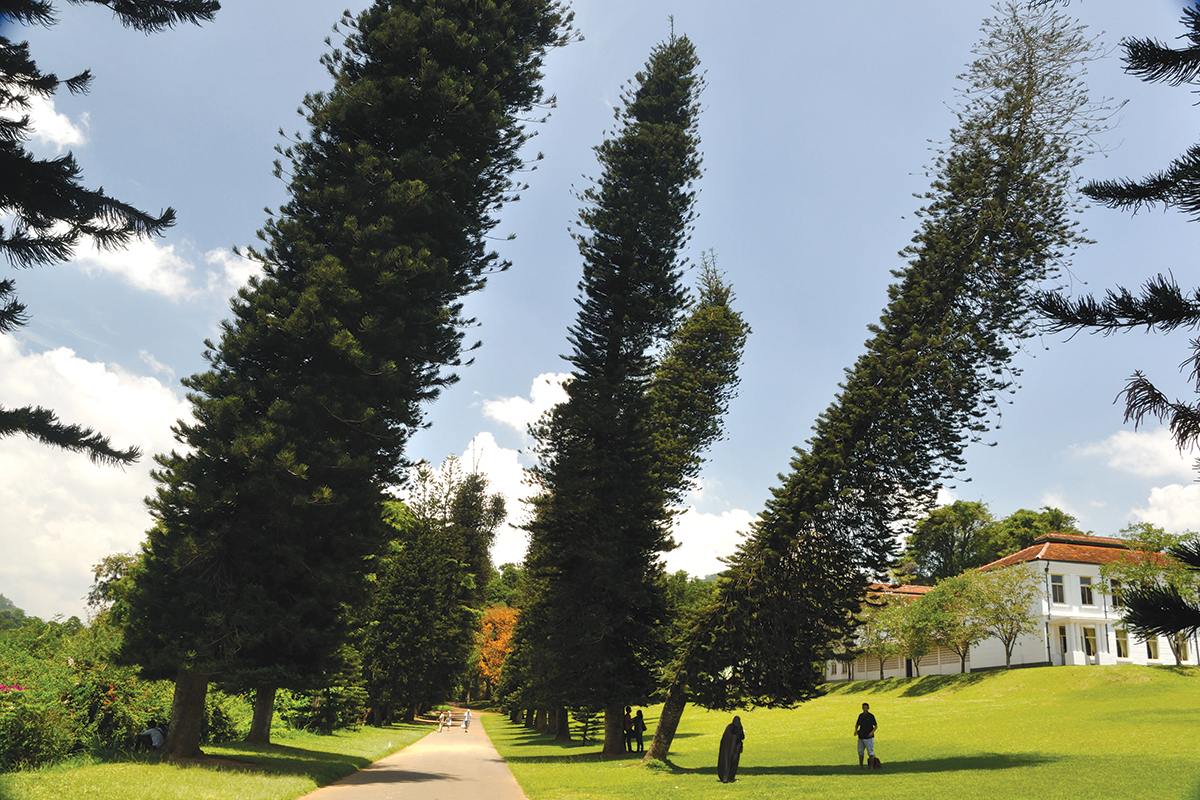
Now this is really odd. It seems that all Cook pine trees lean towards the equator – and dramatically so! Scientists have only just noticed and they don’t understand why.
It seems that jumping spiders can see the moon, their vision is so good.
Well yes, butterflies have sex, but it is a lot more complicated than we imagine.
So just why are birds’ eggs egg-shaped? Researchers have finally worked out the real reason.
Want to smell like a dog? Well now you can. Psychologist Alexandra Horowitz is training herself to approach the world in the same olfactory way her dogs do.
From dogs to cats … there have been several articles recently on research which has worked out how cats conquered the world. Here are just two, from IFLscience! and the Smithsonian magazine.
And now to humans. Apparently foetuses turn to follow face-like shapes while still in the womb.
Be afraid, at least if you’re American. It seems the Lone Star Tick is causing people to become allergic to meat, and even causing death; scientists are still trying to work out why.
Finally in this section, one science journalist has weighed up the pros and cons of having a PSA test, and found it wanting.
Sexuality
Suzannah Weiss in Glamour wants to end the expectations of pubic hair grooming.
What happens when illness robs someone of their ability to orgasm.
We’ve known for some time, but now research has provided the evidence, that women are the stronger sex.
Men need to be talking about fertility – male fertility.
Apparently there’s an association between sex in old age and keeping your brain sharp.
Environment
Harry Mount laments the vanishing glory of the suburban front garden all in the worship of the automobile.
Social Sciences, Business, Law
Will Self looks at the need for a Britain to have a written constitution – and offers to write it!
Several years ago, lawyer David Allen Green looked at the effects of the political penchant for banning things.
Language
Here are 35 words which many people use wrongly. Yes, even I fall into one or two of the traps.
History, Archaeology & Anthropology
Apparently there was a huge wooden structure at Avebury. It pre-dated Stonehenge by hundreds of years and was (deliberately?) destroyed by fire.

Something many aren’t aware of is that medieval castles were very cleverly designed, even down to the spiral staircases.
So what really did happen at Roswell in 1947.
London
IanVisits goes in search of London’s lost Civil War fortifications.
Also from IanVisits are two items on the London Underground. First a look at possible plans to make gardens in unused ticket offices; and secondly at some of the engineering challenges in taking the heat out of the Underground system.
Lifestyle & Personal Development
Are 16 and 17-year-olds really too young to vote? Dean Burnett, in the Guardian, looks at the evidence.
There are some amazing photos showing the work of Sutherland Macdonald, Victorian Britain’s first professional tattoo artist.
Ada Calhoun, in the Guardian again, looks at how to stay married. Spoiler: don’t get divorced.
People
And finally, Geoff Marshall (who has twice held the record for travelling the whole London Underground in the shortest time) and Vicki Pipe (of the London Transport Museum) are on a record-breaking mission to visit all 2,563 railway stations in mainland Britain this summer – documenting the state of our railways as they go. They started in early May and are already over halfway there. Follow their progress on YouTube, Twitter, Instagram, Facebook and at All the Stations.
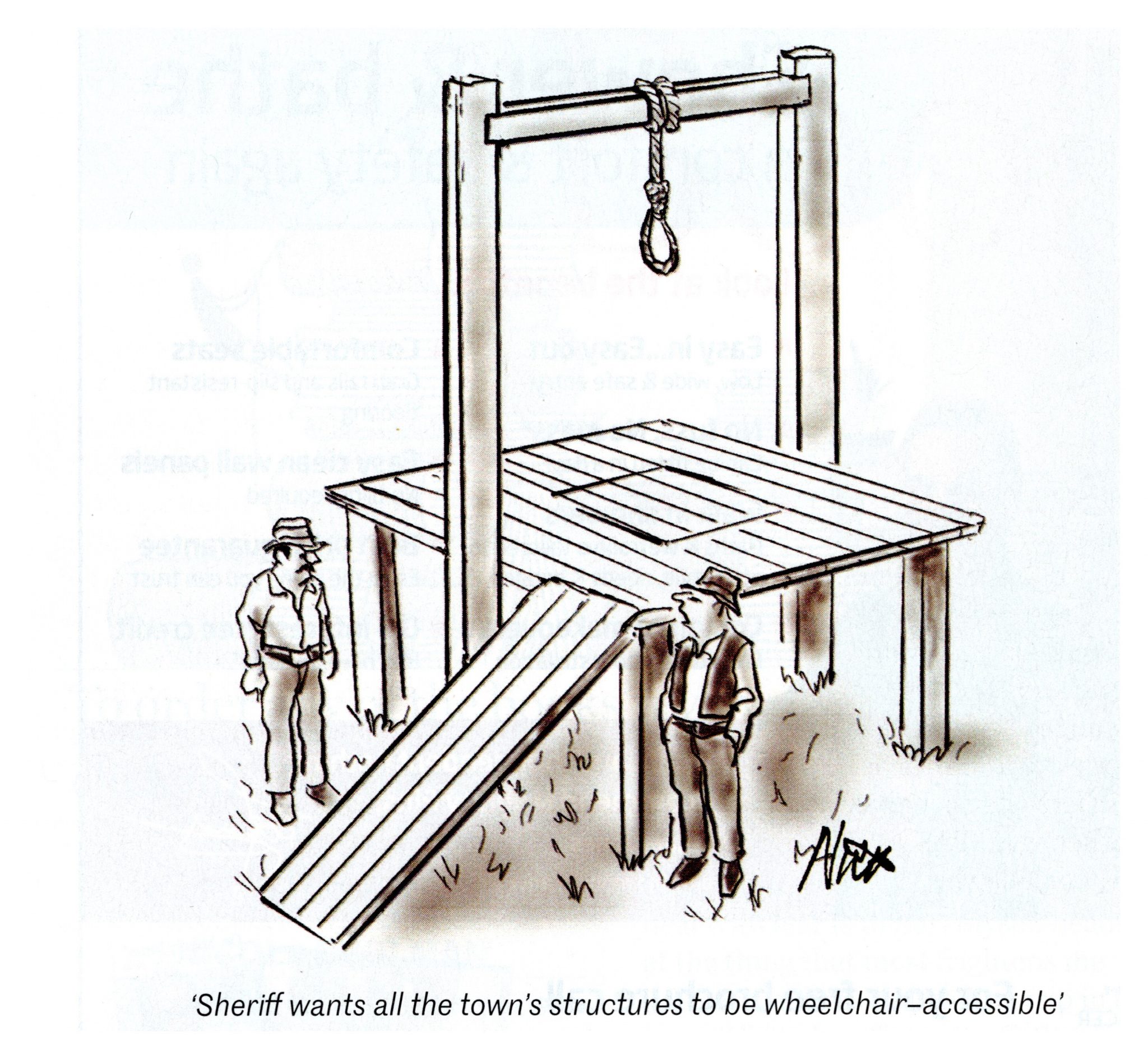
Chuckles …
… from the current edition of The Oldie.
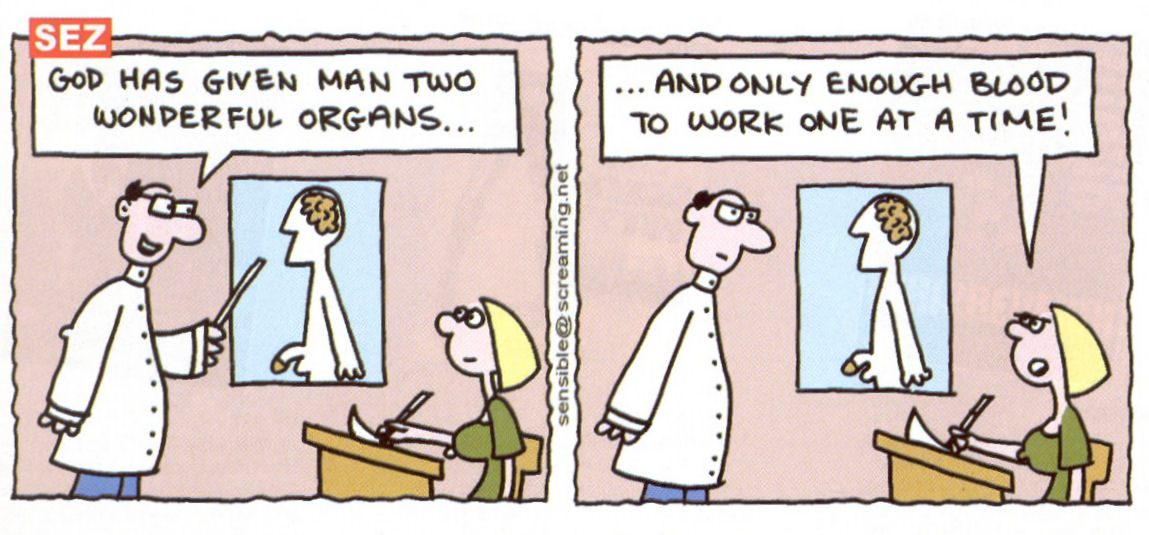
Something for the Weekend
A Dilbert classic which says so much about modern life …
Oxfordshire Photo
I don’t these days get round to posting a weekly photograph all that often, partly because I’ve not been doing so much photography recently.
But a few weeks ago we had a day out in Oxfordshire. I had a meeting in Oxford in the morning and we then meandered our way home via Islip and Brightwell Baldwin, both of which have ancestral connections for me.
This is a wonderful, clearly very old, thatched stone cottage which backs onto Islip churchyard – indeed it is the churchyard wall!

We shall be revisiting both Islip and Brightwell Baldwin.
Quotes
Time for our monthly selection of amusing, interesting and thought-provoking quotes.
Strong espresso drinks are all that stand between us and total creative defeat.
Hari Kunzru
Ignorance more frequently begets confidence than does knowledge.
Charles Darwin; The Descent of Man (1871)
Stupidity is a more dangerous enemy of the good than malice. One may protest against evil; it can be exposed and, if need be, prevented by use of force. Evil always carries within itself the germ of its own subversion in that it leaves behind in human beings at least a sense of unease. Against stupidity we are defenceless. Neither protests nor the use of force accomplish anything here; reasons fall on deaf ears; facts that contradict one’s prejudgement simply need not be believed – in such moments the stupid person even becomes critical – and when facts are irrefutable they are just pushed aside as inconsequential, as incidental. In all this the stupid person, in contrast to the malicious one, is utterly self-satisfied and, being easily irritated, becomes dangerous by going on the attack. For that reason, greater caution is called for when dealing with a stupid person than with a malicious one. Never again will we try to persuade the stupid person with reasons, for it is senseless and dangerous.
Dietrich Sonhoeffen (1906-1945) “On Stupidity” in Letters and Papers from Prison
What a society chooses to allow of female toplessness, as with art, speaks volumes. It is entirely possible to see how a society’s rules governing access to women’s bodies continue, ultimately, to be rules governing what is considered a male property right. There are constant contestations over breastfeeding in public, toplessness on beaches, bare breasted political protesting, and what constitutes obscenity and pornography. In mainstream views and in social media, for example, female toplessness is largely prohibited, while barely camouflaged sexually objectifying pornography, that prioritizes male sexual pleasure, is not.
Soraya Chemaly, from the Foreword to Bare Reality.
There comes a time in life, when you walk away from all the drama and people who create it. Surround yourself with people who make you laugh, forget the bad, and focus on the good. Love the people who treat you right. Pray for the ones who don’t. Life is too short to be anything but happy. Falling down is part of life, getting back up is living.
Unknown
There comes a time when one must take a position that is neither safe, nor politic, nor popular, but he must take it because conscience tells him it is right.
Martin Luther King, A Testament of Hope
No person who can read is ever successful at cleaning out an attic.
Ann Landers
One of Joyce’s most valuable bequests to writers is that none of them ever need to write a novel like Ulysses again; a benefaction unhappily sometimes disregarded, especially in the US. One feels that Joyce, even if pretty able, is not quite in the Proust, Dostoevsky, even Balzac, class; useful to be learnt from, but not to be imitated … His obsession with himself, paying a good dividend in certain respects, was a handicap in others, narrowing the sphere of vision. As regards the novel itself, one wishes the Brothel scene was done in the same manner as the Martello Tower. I feel certain Joyce simply found himself unable to bring that off, falling back faute de mieux on ‘experimental’ methods, not because those really gave a better picture. Perhaps it might be argued this stuck closer to the Ulysses myth.
Anthony Powell, Journals 1982-1986, 20 June 1986
With thanks to Peter Kislinger
You can outsource anything you like folks, but you cannot outsource the responsibility or the liabilities.
Unknown
Terrorists want people to fear. Demagogues [eg. Trump] encourage fear. Great leaders like FDR say, the only thing we have to fear is fear itself.
Lawrence M Krauss
It is hardest to talk about civil rights after an atrocity. To many people it feels beside the point, or even part of the problem. People are in no mood for “niceties”, for giving terrorists the liberties which they seem hell bent on destroying. These are the danger times. Human rights, civil liberties – whatever you want to call them – are designed for times like this. They are a moral check list. An insurance policy against our worst natures. Because at times like this, when the world is fearful and trust is in short supply, we need to remember that our judgement in the better times was sound … human rights have a lot to offer in this conversation. Not least because as lucid as we feel after a terrorist attack, the policy responses which emerge from the aftermath may simply be wrong.
Barrister Adam Wagner; Rights Information; 5 June 2017
Regulations (and the removal of regulations) are not ends in themselves.
A regulation is there to provide that outcomes will be (are are likely to be) different from what they would be, *but for* the regulation.
Certain bad outcomes can be avoided; certain public goods and public benefits can be achieved. In both cases, individuals would not be able to do this for themselves without the regulation.
David Allen Green at Jack of Kent blog
What, if anything, can be done to prevent further terrorist attacks in the UK? There is a dearth of sensible ideas but no shortage of suggestions from the nation’s politicians and columnists. UK prime minister Theresa May characterised last week’s atrocity as an attack on the UK’s liberal values, and suggested the nation could more expediently resolve this conflict by further abandoning those very same values.
May called for more to be done to make online communications less secure, echoing predecessor David Cameron’s sentiment that there should be no form of communication that the government cannot intercept.
While this strategy would effectively destroy the safe operation of the UK’s digital infrastructure, it does mean we can look forward to an end to religious strife, as gods of all denominations would be sidelined by an all-knowing state. At the pearly gates, British citizens could anticipate being met by a minister clutching their internet search history and a disapproving glare.
“Feedback”; New Scientist; 17 June 2017
Clothes largely cut off the experience of pleasurable sensations of the skin. Natural skin sensation, the play of air, sun, and wind upon the body, can be very pleasurable … The nudist movement almost certainly reflects the desire for more freedom of communication through the skin.
Ashley Montagu, Touching: The Human Significance of the Skin
And though you seek in garments the freedom of privacy, you may find in them a harness and a chain. Would that you could meet the sun and the wind with more of your body and less of your raiment, for the breath of life is in the sunlight and the hand of life is in the wind.
Khalil Gibran
Something for …
… this hot, sunny, BBQ Saturday.
Something for the Weekend
Prompted by the publication yesterday of Laura Dodsworth’s book Manhood: The Bare Reality (in which I make a cameo appearance), we offer this perspective …
Benefits of Nudity
In today’s society sex and nudity are used to sell products and casual nakedness is frowned upon if not actually criminalised. (Incidentally nudity, per se, is not illegal in the UK.) This is harmful in many ways, body shame being amongst the least of them. So little wonder that naturism is perceived by society as being different, and even a thin cover for rampant sexuality.
Nudism is generally considered the act of being naked, while naturism is a lifestyle which may embrace more than just nudity. Actually I would define both a being lifestyles; it depends on one’s attitude. Both can be social or practised individually, although naturism is generally more social than individual (at least in my estimation) and often encompasses other environmentally aware beliefs. In what follows I’ve been lazy and tend to use the terms “nudism” and “naturism” fairly interchangeably.
I would define myself as a nudist; I am comfortable being nude, both privately and socially, but I’m not one for the wider naturist lifestyle if only from a lack of opportunity and a dislike of the regimentation so often expected by clubs and organisations. I like the ideas of naturism, but clubs etc. don’t work for me; so my nudism tends to be private. I would like that we could live in a world where nudity was accepted anywhere and at any time and we think nothing of practising social nudity with friends and family. Until then I wear clothes to cover other people’s embarrassment.
Nudism and naturism as lifestyles are all too often frowned upon by society; this is often as a result of fear and misunderstanding of what they’re about. Contrary to what many people think, naturism and nudism are definitely not sexual lifestyles; they are holistic, bringing about many physical, mental and societal benefits.

So here are a few of the Benefits of Nudity:
- Naturism as Therapy. According to naturists, one of the main benefits of naturism is that it provides an incredible feeling of relaxation. Being naked is more comfortable and removes the restrictions of clothing; it is very sensual (not sexual). This creates a feeling of well-being, which helps to invigorate the body. The feeling of the breeze or sun on your naked body, or of walking barefoot, is very invigorating, and enhances enjoyment of your surroundings. The feeling of euphoria that comes with being totally naked also helps alleviate mental health issues such as stress, anxiety and depression.
- Body Acceptance. People are under pressure to live up to the mythical ideal image, and use clothes as a way of hiding their feelings of inferiority. The fear of being naked is a defence mechanism which many people develop (or have imposed on them by parents) to protect themselves from feeling inferior due to their self-perceived imperfections. Naturism helps avoid this by enabling people to better understand that their self-perceived body imperfections are nothing more than part of the glorious diversity of human bodies. This helps people to accept their bodies, and respect those of the others; in turn this has been shown to promote healthier relationships and sexuality.
- Self-esteem & Maturity. Clothes are also used by society as an indicator of social status and focus attention on sexuality; partial clothing is considered very sexually stimulating. Naturism on the other hand, focuses attention on the acceptance of the body whatever its perceived imperfections. Shedding clothes makes people familiar with nakedness; it ceases to be something to be scared of. Moreover once people remove their clothes, everyone is equal and very little attention is paid to the social status. All this helps people who engage in naturism be more mature sexually and have enhanced self-esteem.
- Tolerance. Naturism advocates self-respect and respect for others, which helps promote tolerance in the society. Clothing promotes a patriarchal society where women are expected to dress according to certain requirements. Naturism advocates the acceptance of other people as equals and helps people to respect their bodies. This helps to eliminate male oriented expectations that are repressive to women and respect for all.
- Money and Time. Clothes are a huge expense in terms of money, time spent shopping and environmental damage. Wearing, and needing, fewer clothes is good for your bank balance, your time balance, and for the planet.
- Natural Body Processes. People are taught that they are not supposed to expose their bodies. This cultivates body shame, makes people view genitals as “dirty” rather than parts of the body that have important functions. In turn this generates mystery, ignorance and fear about the natural processes of the body, such as adolescence, pregnancy and ageing.
- Better Health. Clothing, make-up and the like hinder the basic functions of the skin, including the correct microbial balance. Body crevices become hot, sticky and humid which encourages the growth of (for example) fungal infections. Nudity allows air and sun to the skin, preventing the sticky conditions loved by many pathogens and hence helping maintaining a healthier body. Additionally, and importantly, exposure to sunlight boosts the production of vitamin D.
- Healthy sexuality. Many studies show that countries which support naturism have a lower rate of teenage pregnancy and abortion, because naturism promotes the understanding of sexuality and body image. While this will not remove common teenage curiosity with sex, it does help it be more appropriate because of an enhanced awareness of what sex and bodily functions are all about.
At the end of the day, give or take the odd scar or mole, we all know what’s under my, and your, t-shirt and jeans. So really, where is the problem?
See also:
https://zenmischief.com/on-nudity-and-naturism/
https://zenmischief.com/nudity-and-naturism-quotes/
British Naturism
Is there a human “need” for being naked?