Another test post. Apologies. I’m trying to figure out the best way to get stuff automatically from my WordPress blog to Facebook and Twitter. But none of the methods seems to be reliable. I am removing these posts as soon as they are redundant.
Test Post 4
Another test post. Apologies. I’m trying to figure out the best way to get stuff automatically from my WordPress blog to Facebook and Twitter. But none of the methods seems to be reliable.
Test Post 3 — Please Ignore
Apologies for another test post.
I’m trying to figure out the best way to get stuff automatically from here to Facebook and Twitter.
Book Review: Map Stories
Francisca Mattéoli
Map Stories: The Art of Discovery
(Ilex, 2015)
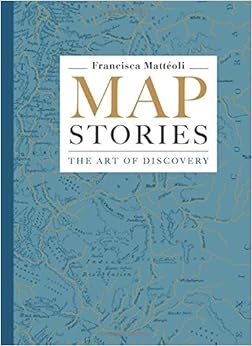 This is, in the words of the Preface, “a book that invites the reader on a journey from map to map, to let their imagination run free”. It is a curious collection of historical maps, around which the author tells the stories the places and voyages which gave birth to the maps.
Now I love maps, and I love stories of history and the discovery of new worlds. However I found this a very difficult book to engage with, for a number of reasons.
- While I love maps I do find old, multi-coloured, shaded maps with tiny print/calligraphy difficult and off-putting.
- The stories I dipped into didn’t engage me; I found them dull; which is in part down to the author’s style.
- The stories major heavily on the Americas and SE Asia. Europe hardly gets a look in.
- This is a large, oversize, atlas-sized book; and quite heavy. It needs to be to make the most of the maps. But this does make it almost impossible to read in bed.
As a consequence I did no more than leaf through the book and dip into it from time to time. I just found it was asking too much of me, especially when I was reading it late at night in bed. I’m sure I’m missing a lot, and I may well return to it in due course – it would be a shame not to.
Overall Rating: ★★☆☆☆
Thought for the Weekend
Somehow this seems appropriate for these troubled times …

which means it must be time for a large G&T and some cake, maybe even all-in-one …
Have a good weekend, everyone!
Femina ars [NSFW]
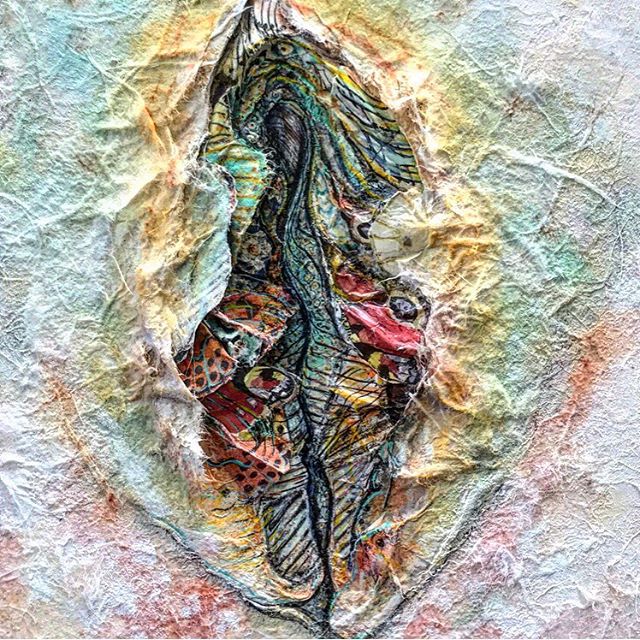 Here’s one for all of you who engage with art, body positivity, female anatomy or just pure eccentricity.
Artist’s Unapologetic Vagina Paintings Are A Force Of Body Positivity
and
Jacqueline Secor Art – Diversity of Nature
Enjoy!
Book Review: Letters from England
Karel Čapek
Letters from England
(Continuum, 2001)
What is the connexion between Czechoslovakia, ant, London and robots? Answer: Karel Čapek.
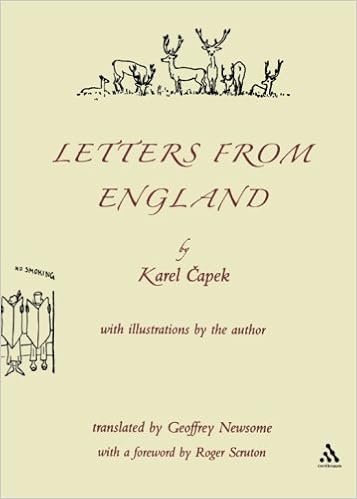 Čapek (1890-1938) was a Czech novelist, dramatist and journalist who was mostly active in the 1920s and 30s. He is possibly best known today for two plays written with his brother Josef: R.U.R. (Rossum’s Universal Robots) and Pictures from the Insects’ Life (aka. The Insect Play). This latter I have known since school as we did it as the school play in my final year; it is strange, weird and disturbing. With R.U.R. Čapek is credited with the invention of the term “robot”.
In 1924 Čapek visited Britain and Letters from England is the resulting sketches about the visit. It is a small paperback which I’ve had on the shelves for many years and dipped into occasionally – as I have done again recently.
The sketches, originally written in Czech but in several translations, are a mixture travel diary and cynical but humorous observation.
Čapek travels the length and breadth of the Britain (but omits Ireland). The first third of the volume is taken up with London, including this wonderful description of his first visit:
I remember with horror the day when they first brought me to London. First, they took me by train, then they ran through some huge, glass halls and pushed me into a barred cage which looked like a scales for weighing cattle. This was ‘a lift’ and it descended through an armour-plated well, whereupon they hauled me out and slid away through serpentine, underground corridors. It was like a horrible dream. Then there was a sort of tunnel or sewer with rails, and a buzzing train flew in. They threw me into it and the train flew on and it was very musty and oppressive in there, obviously because of the proximity to hell. Whereupon they took me out again and ran through new catacombs to an escalator which rattles like a mill and hurtles to the top with people on it. I tell you, it is like a fever. Then there were several more corridors and stairways and despite my resistance they led me out into the street, where my heart sank. A fourfold line of vehicles shunts along without end or interruption; buses, chugging mastodons tearing along in herds with bevies of little people on their backs, delivery vans, lorries, a flying pack of cars, steam engines, people running, tractors, ambulances, people climbing up onto the roofs of buses like squirrels, a new herd of motorised elephants; there, and now everything stands still, a muttering and rattling stream, and it can’t go any further …
This, remember, is 1924. Plus ça change!
Čapek perambulates an astonishing amount of the country: Oxford, Cambridge, Yorkshire, North Wales, the Lake District, Edinburgh, Inverness … and here he is in the Isle of Skye:
I am in a region which is called Skye, that is to say ‘Sky’, although I am not in the heavens but only in the Hebrides, on a large, strange island among other islands, on an island consisting of fjords, peat, rocks and summits. I collect coloured shells among the blue or flaxen pebbles and by a special grace of heaven even find the droppings of a wild elk, which is the milch cow of Gaelic water nymphs. The hillsides drip like a saturated sponge, the bruach heather catches at my feet, but then, folks, the islands of Raasay and Scalpay, Rhum and Eigg are visible and then one can see mountains with strange and ancient names like Beinn na Callaich … It is beautiful and poor, and the original shanties look as prehistoric as if they had been built by the long-departed Picts, of whom, as is well known, nothing is known.
Interspersed with the text are occasional thumbnail sketches by the author: naïve but humorous. And Čapek meets people, often well known people, like George Bernard Shaw, who sketches, twice:
This is an almost supernatural personality, Mr Bernard Shaw. I couldn’t draw him better because he is always moving and talking. He is immensely tall, thin and straight and looks half like God and half like a very malicious satyr, who, however, by a thousand-year process of sublimation has lost everything that is too natural. He has white hair, a white beard and very pink skin, inhumanly clear eyes, a strong and pugnacious nose, something knightly from Don
Quixote, something apostolic and something which makes fun of everything in the world, including himself; never in all my life have I seen such an unusual being; to tell you the truth, I was frightened of him. I thought that it was some spirit which was only playing at being the celebrated Bernard Shaw. He is a vegetarian, I don’t know whether from principle or from gourmandaise. One never knows whether people have principles on principle or whether for their own personal satisfaction.
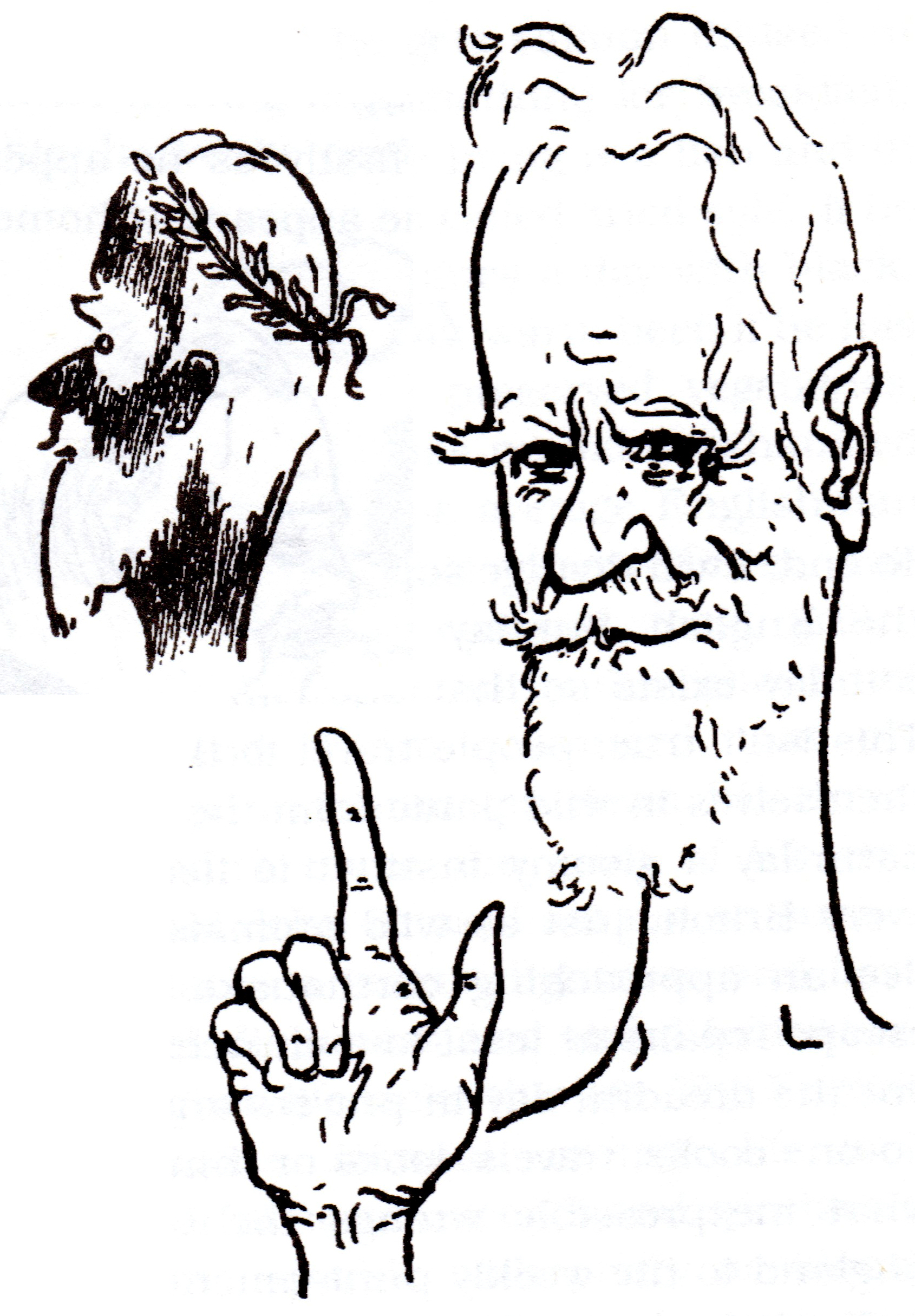 This is an almost supernatural personality, Mr Bernard Shaw. I couldn’t draw him better because he is always moving and talking. He is immensely tall, thin and straight and looks half like God and half like a very malicious satyr, who, however, by a thousand-year process of sublimation has lost everything that is too natural. He has white hair, a white beard and very pink skin, inhumanly clear eyes, a strong and pugnacious nose, something knightly from Don
If you want a criticism, the prose does get a bit tedious and turgid at times, however all in all this is a delightfully eccentric and amusing small volume; very readable in small doses, so eminently suitable for dipping into or light bedtime reading.
Overall Rating: ★★★★☆
Book Review: Molecules
Theodore Gray
Molecules: The Elements and the Architecture of Everything
(Black Dog & Leventhal; 2014)
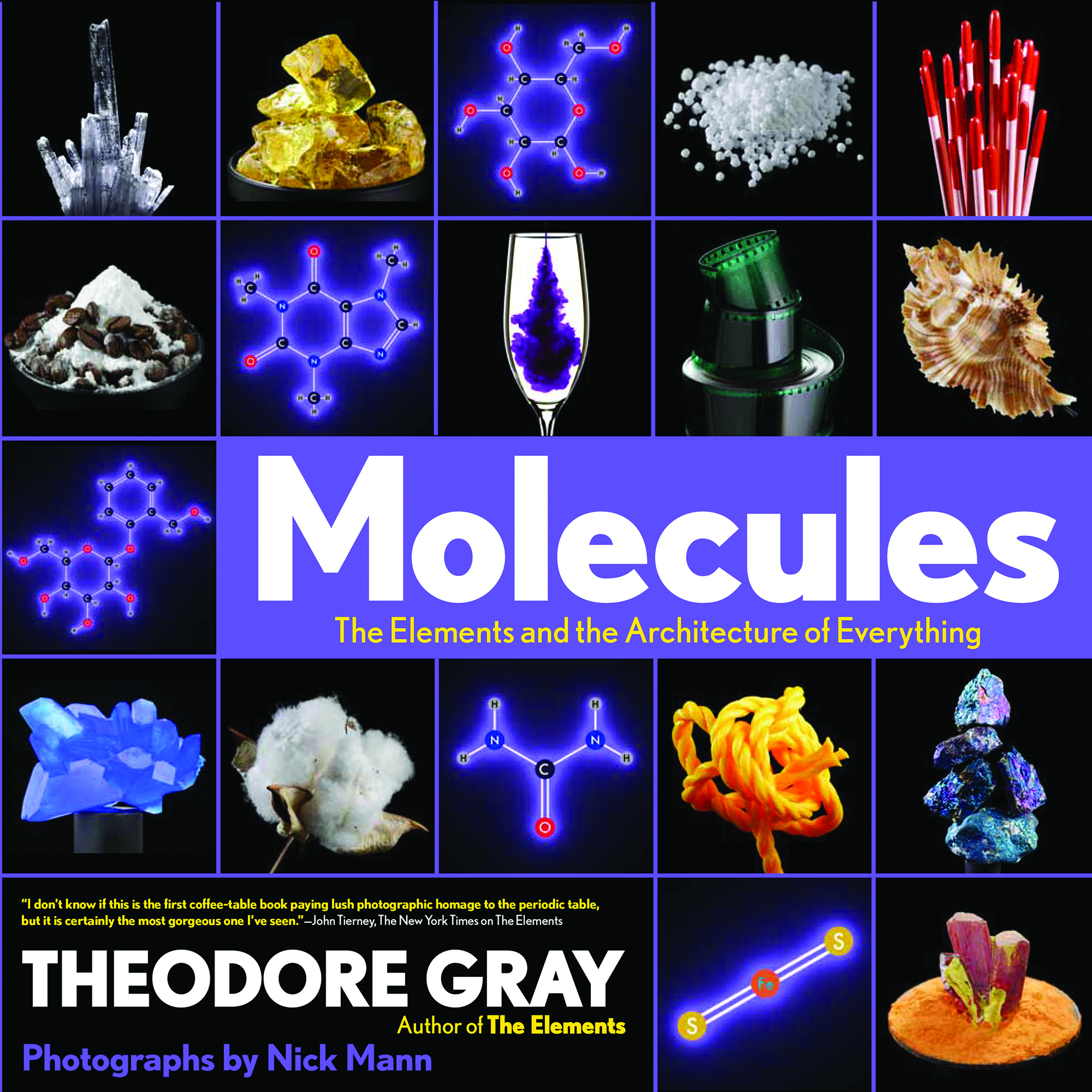 This is another of my Christmas acquisitions. It is a large coffee table book of almost 250 pages containing (mostly) photographs and diagrams on a black background with relatively little, but simple, textual explanation. It is a science book for the non- or only-just-scientist in which Gray sets out to show us how everything around us is built.
Gray shows how the elements of the periodic table combine to form the molecules that make up our world. Everything is made up of molecules, formed in an infinite variety of ways from the elements. This book explores the most interesting, essential, useful and beautiful of the millions of chemical structures that make up every material in the world. Gray begins with an explanation of how atoms bond to form molecules and compounds, as well as the difference between organic and inorganic chemistry. He then explores the vast array of materials, all built of molecules: soaps and solvents; alcohol and oil; rocks, ropes and fibres; painkillers, sweeteners, perfumes and poisons. All are stunningly photographed and accompanied by chemical diagrams and potted explanations.

This double page spread with a potted introduction to each chapter shows why this book is so brilliant
You’ll want to click the image to get a larger view and appreciate the image fully
I’m originally a chemist, but over 40+ years have forgotten much of what I once knew – and in fact much of what is here I never did know as it is materials science beyond the scope or time of a 1960s/70s chemistry degree (although I had the grounding to work it out). But do not be put off … even if you have no science background at all, you should get a huge amount from this book as it starts with some basic steps, and is all written in very non-scientific language. It doesn’t matter if you don’t understand the detail of the molecular structures shown; you don’t need to as the explanations allow anyone to follow along. There is no hard science here such that you are lost if you don’t understand it. And there are no details of how the compounds discussed are synthesised (if such is even possible in the lab.) – so there’s no need to be scared.
What is here are simple explanations of why many things are the way they are. Why, for instance, tetraethyl lead was added to petrol, how it’s toxic effects were known but ignored and thus why it was eventually banned. Why asbestos is so dangerous. Why plastics work. And even why coins smell. The book ends with a very simple explanation of how the proteins that make up the living world are built – which just reinforces the wonder of life itself.
I found this a fascinating book, which made me realise how much I had missed (or forgotten) of my chemistry degree. I found the chapter on sugars and the one on painkillers especially interesting. Yes, I could have taken more detail, but in fact the balance is right for the interested layman rather than the superannuated chemist.
So yes, I’d recommend this book for anyone who has an interest in how the world around is built and why it works in some of the ways it does. Although if you have a science background you will get more from this book, you don’t need it to appreciate the fascinating nature of “stuff”.
Overall Rating: ★★★★★
Book Review: London in Fragments
Ted Sandling
London in Fragments: A Mudlark’s Treasures
Frances Lincoln, 2016
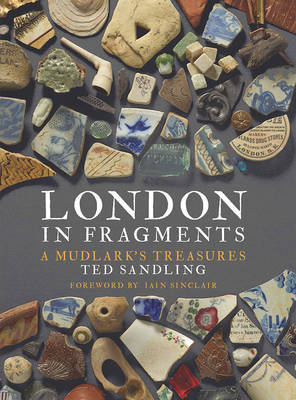 I was given this book at Christmas – well what else do you give a Londoner who is interested in the history and eccentricity of the city? I’ve been reading it in small chunks, which is why I’ve only just finished it.
Sandling is a mudlark; someone who when the tide is low wanders the beaches and foreshores of the River Thames hunting for objects trouvés. Now you might think that such a mighty river would wash away any and every artefact dropped into it. But not a bit of it. There is a surprising amount to be found: everything from Roman tiles through remnants of ships and shipbuilding right up to a twentieth-century Sri Lankan talisman.
What Sandling does in this book is to put on display images of many of the artefacts he’s found over the years. Each is identified, as best one can. Along with many there are the stories; some about the artefacts themselves but many about the history surrounding how they might have gotten into the river.
The stories give us some surprising insights into London’s history. Like why are so many pins found? Apparently in Tudor times many clothes were pinned together; the pins fell off in the street and were washed down a sewer and into the river. It sounds unlikely, and I must say I have my doubts, but over the course of a couple of hundred years it could well be what happened.
And why is there so much cullet – glass which has been broken into small pieces for recycling? Well, apparently in medieval times there was a big market in cullet and it was shipped around between Europe and Asia. And it doesn’t take many shipwrecks to seed the whole of a coastline with cullet and sea glass. That’s something I would never have guessed.
The whole book is broken up into sections for things like “Adornment”, “Industry” and “Pleasure and Vice”. Each section has a short overview introduction before the artefacts themselves make their appearance. This, with the information about the artefacts, makes the book a fascinating read, and along the way there is some excellent photography, often of tiny things, to be admired.
It is a small format book of some 250 pages, printed on good paper to bring out the best in the photographs. I cannot fault the production.
Where I was less happy was that all too often the text with an artefact is very general and not nearly as specific as I would like: how big is the item, where was it found; how was it identified? Yes, we do get some of that; but for me, not enough. This is though a rather unfair criticism as many of the items are so fragmentary there isn’t much which can be divined about them.
But overall, I enjoyed the book and would recommend it to anyone with an interest in London and its history. And I would say it is a must read for anyone who is thinking of having a go at mudlarking.
Overall Rating: ★★★★☆
Meme Again
A few days ago, Andrew Baker over on Facebook, posted another meme. One I’ve not seen before. It isn’t hugely exciting but it amused me for 5 minutes (and besides I need a test post), so here goes.
1. Where is your phone? On the desk in front of me
2. Your hair? Grey; needs cutting
3. Your dad? In a box in a wood
4. Your other half? Walking up the road to the shops and post office
5. Your favourite food? So many! Probably curry
6. Your dream last night? Not a clue
7. Your favourite drink? Beer: Adnams Ghost Ship or Dry Hopped Lager
8. Fears? Not being in control; not having enough money
9. Favourite shoes? Bare feet or trainers
10. Favourite way to relax? What is this relaxation?
11. Your mood? Depressed
12. I Love? Sunshine
13. Where were you last night? In bed at home
14. Something that you aren’t? Conventional
15. Muffins? Just say no
16. Wish list item? A new head and a new body
17. Where you grow up? Waltham Cross
18. Last thing you did? Installed a WordPress plugin
19. What are you wearing now? Tracksuit trousers
20. Something you hate? People who don’t think
21. Your pets? 3 cats and some fish
22. Friends? A select few eccentrics
23. Life? Marvin
24. Regrets? None; I don’t do regret
25. Your home away from home? If anywhere it’s Norwich
No, nobody is tagged; it’s just an amusement for me.