Bidet
Michele Hanson in yesterday’s Guardian bemoans the fact that “prudish Brits” don’t have a bidet in their bathroom, and most (especially the blokes) wouldn’t know what to do with one if they did.
I agree. We don’t have bidets. And most Brits wouldn’t be seen dead using one. Why not?
I’ll tell Hanson why not. Because most of us have pathetically small bathrooms that you struggle to get a bath, loo and handbasin in. That’s why.
When we had our bathroom rebuilt a few years ago we struggled for a long time with how best to use the tiny space. Out went the bath and in went a shower cubicle. The handbasin was moved and a towel rail installed. Loo and radiator stayed in position. This made a tiny extra amount of space, but not enough room for a bidet. Despite trying hard there just is no way, short of removing a wall, to accommodate a bidet. And there is still almost no room as the space is about half the size of the average box room – cats cannot be swung.
To the majority of Brits, a bidet is like Europe: it’s either for the poncey well-to-do or its foreign. And God forfend we have either of those! Thank you, we’ll remain insular and isolated in out tiny little island/bathroom space.

The solution? Maybe these all-singing-all-washing-all-drying Japanese-style toilets are the way to go, but at the moment they’re way, way too expensive.
But that raises the question of whether a quick wash and dry is more environmentally friendly than 8-10-12 sheets of bog paper. Interesting one that.
Your Interesting Links
As usual our monthly list of links to interesting items you may have missed the first time around. There’s a lot in this month’s edition, so let’s get going …
Science & Medicine
Here are 101 ridiculous science “facts” which are mostly myth and need to die.
Researchers have worked out the genealogy of our dog breeds, and it isn’t as simple as you might think.
Meanwhile scientists have discovered the world’s largest canary on an isolated island of giants and dwarfs off west Africa.
Changing tack, it turns out the new £5 note isn’t so indestructible – if you’re a determined enough mad scientist.
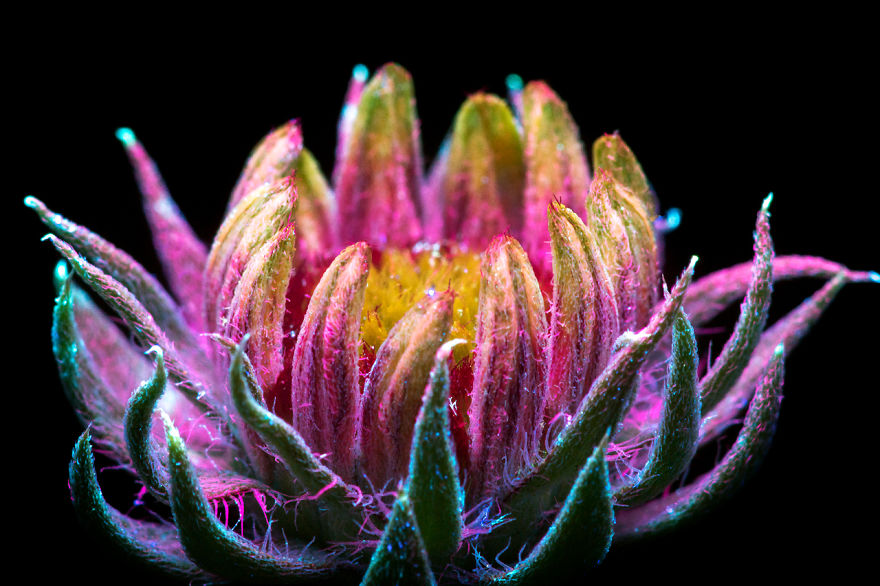
Wow! A photographer has used black light (ie. UV) to photograph the luminescence emitted by plants. And it is amazing!
Another sort of discovery has led to the finding of lost research notes which undermine dietary advice we’ve been given for the last several decades.
Looking at even older “research” it seems that some of the medical recipes in medieval books may actually work and point the way to new antibiotics.
Sexuality
I wasn’t sure whether to put this here or under “science” but it turns out that unprotected sex may disrupt the microbiome of the vagina. Now there’s a surprise!
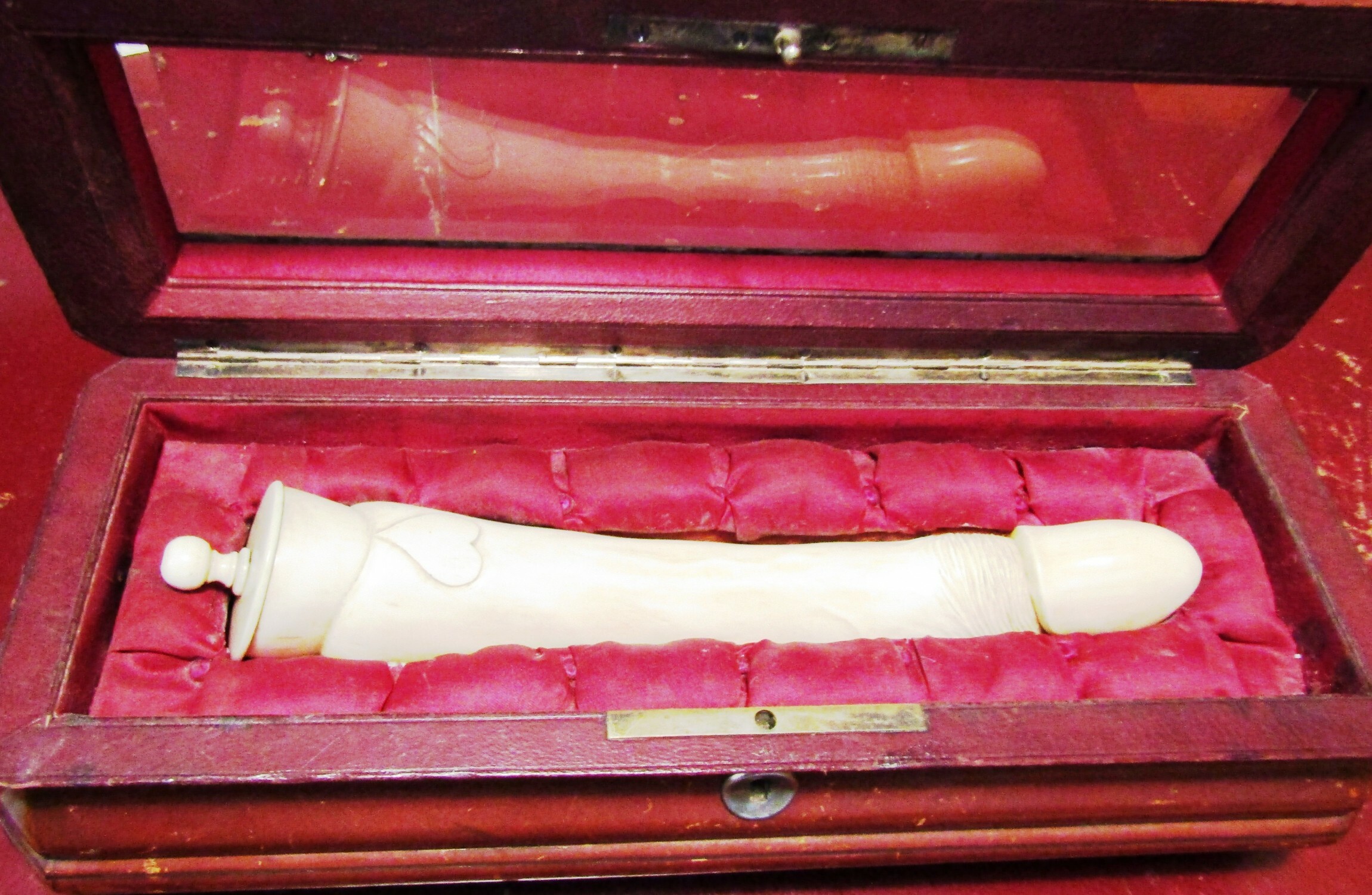
A Victorian ivory dildo, with an interesting story, has generated a lot of excitement at an auction in Ireland.
Environment
Max Hooper, the man who worked out how to date old hedgerows, has died at the age of 82.
History
Here’s another which could easily have gone in the science section … Scientists have now worked out how to extract the DNA of ancient hominids from the surrounding dirt.
Turns out we aren’t the first people to be scared of zombies; it seems the mediaevals were too and they did some barbaric things as a result.
It’s well known that the Tudors bathed only about once a year and were very smelly the rest of the time. Turns out that may be another myth as it is possible to go months without bathing and not be smelly. Yes, an intrepid researcher has tried it!
They’ve found, quite by chance, the remains of five lost Archbishops of Canterbury in a small London church. Harry Mount, new editor of The Oldie, was first on the scene.
Lifestyle
Are you a devotee of nail polish? If so here’s a piece on some of the chemistry which makes them work.
Food & Drink
Cheese. That microbial concoction of from milk. Well here’s a guide to the natural microbiology of cheese rind.
Why is ultra-heat-treated (UHT) milk so stable that it is a shelf staple, especially in tropical climes where milk easily spoils?
[Incidentally, UHT milk is always known in our house as “UFO milk” but I have no idea how you might milk a UFO!]
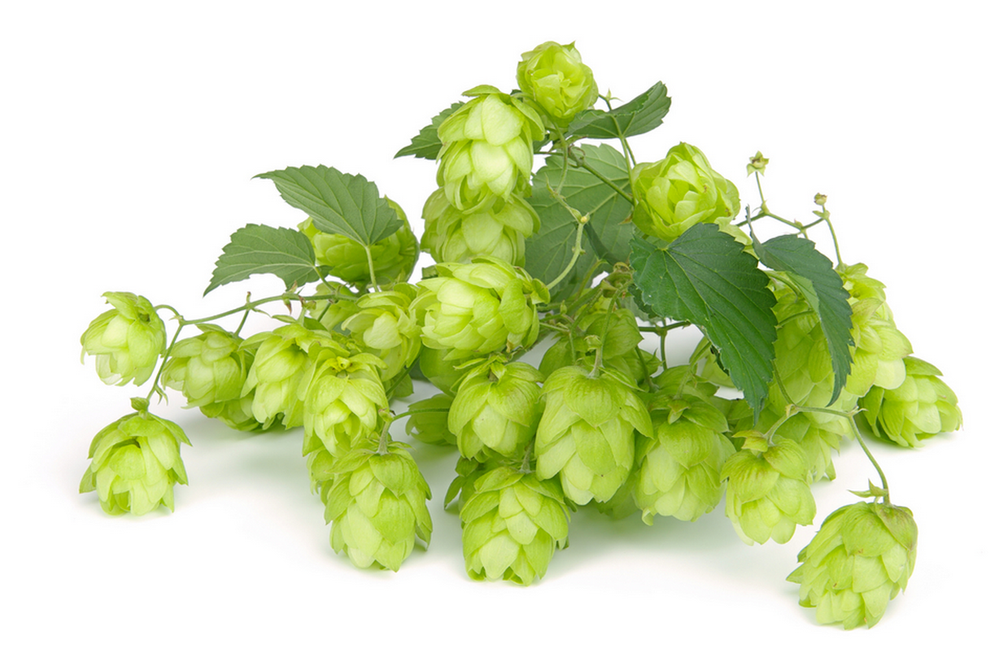
So what really does give beer its bitterness and flavour? While some of it is down to the malt, most seems to originate with the hops.
Why are we masochists? Why is it we love chilli so much when it burns like it does? And how does the burn work?
Shock, Horror, Humour
And finally … someone thought it was a good idea to teach a computer to write cookbooks and invent cocktails. Its recipe ideas are hilariously brilliant. Chocolate pickle sauce anyone?
Word: Caterpillar
Oh, go on then, let’s have another word. In writing about frass, I was minded to wonder about the origin of caterpillar, so …
Caterpillar
1. The larva of a butterfly or moth; sometimes extended to those of other insects, especially those of saw-flies, which are also hairy.
2. A type of tractor which travels upon two endless steel bands, one on each side of the machine, to facilitate travel over very rough ground. (And by extension to other such vehicles.)
3. To move like a caterpillar or on caterpillar tracks.
The first uses, in sense 1, recorded by the OED is from c.1440 in Promptorium Parvulorum 63: Catyrpel, wyrm among frute, erugo.
I’m going to reproduce the etymology from the OED essentially in full:
(Some think the word a direct compound of piller. The giving to hairy caterpillars a name derived from the cat, is seen not only in the French word cited, but also in Lombard gatta, gattola (cat, kitten), Swiss teufelskatz (devil’s cat); compare also French chenille (from canicula, little dog), Milanese can, cagnon (dog, pup). Compare also catkin, French chaton, applied to things resembling hairy caterpillars.)
In other words, we don’t know!
Word: Frass
Frass
The fine powdery refuse or fragile perforated wood produced by the activity of boring insects.
The excrement of insect larvae.
(Or to put it in the vernacular: caterpillar shit.)
First used in an academic paper in 1854, the word is derived from the German frasz, fressen, to devour.
Open Door
There’s been this meme circulating recently, especially on Facebook, about people having an “open door policy”. Leaving aside that I generally don’t get involved in such viral nuisances, I’ve not engaged with this because (a) the wording felt wrong and (b) it is not new for us and should not need saying.
About 35 years ago Noreen and I made a deliberate and considered decision not to have children. Instead we said that we would always be available for our friends, their children, etc. if and when they needed us.
All our friends know this (at least they all should know this!); most have been told at some appropriate time. And as the younger ones reach an age to properly understand (generally around 15-16, but sometimes earlier), we have a quiet conversation with them about it. What we say is ad lib but generally something like:
Know that we are here if you ever need us. No parents, however good they are (and our friends really are brilliant parents) can provide everything a child needs. However open, frank and honest your relationship with your parents there will always be something you don’t want to talk them about – but something you would like to discuss with someone detached and outside the family. That is what we are here for. You can come and talk to us at any time and about anything; literally anything: boyfriend/girlfriend problems, exam worries, sexuality; if you’re in trouble and need bailing out of the police station; if you need a bed for the night; if you want to talk about life and what direction you’re going; or you just want someone to talk to. Remember, we may be geriatrics, but we’ve been there ourselves. We were students in the heady hippie days of the late-60s/early-70s so we’ve either done it or we have a friend who has. You are very unlikely to shock us – one way or another we’ve encountered most things. We don’t do judgement. And we aren’t going to tell you what you must do. We’re here to listen and to help you work through whatever is worrying you. Just pick up the phone or turn up on our doorstep (call first if you can to ensure we’re at home) at any time; day or night. And most importantly anything you tell us is in complete confidence; it will not be repeated to your parents/family/friends unless you specifically ask that it is. This is what we are here for and why we chose not to have children of our own. Here’s a card with our contact details; put it in your wallet and keep it in case you ever need it.
 Know that we are here if you ever need us. No parents, however good they are (and our friends really are brilliant parents) can provide everything a child needs. However open, frank and honest your relationship with your parents there will always be something you don’t want to talk them about – but something you would like to discuss with someone detached and outside the family. That is what we are here for. You can come and talk to us at any time and about anything; literally anything: boyfriend/girlfriend problems, exam worries, sexuality; if you’re in trouble and need bailing out of the police station; if you need a bed for the night; if you want to talk about life and what direction you’re going; or you just want someone to talk to. Remember, we may be geriatrics, but we’ve been there ourselves. We were students in the heady hippie days of the late-60s/early-70s so we’ve either done it or we have a friend who has. You are very unlikely to shock us – one way or another we’ve encountered most things. We don’t do judgement. And we aren’t going to tell you what you must do. We’re here to listen and to help you work through whatever is worrying you. Just pick up the phone or turn up on our doorstep (call first if you can to ensure we’re at home) at any time; day or night. And most importantly anything you tell us is in complete confidence; it will not be repeated to your parents/family/friends unless you specifically ask that it is. This is what we are here for and why we chose not to have children of our own. Here’s a card with our contact details; put it in your wallet and keep it in case you ever need it.
Yes, this is indeed a part of why we are here. Having someone detached to talk to is important. (It’s like mentoring at work: I always did it and vowed that I always would even if management told me not to.)
Over the years we’ve helped a number of friends in various stages of separation and relationship problems, medical worries, and confusion about life. We’ve even been called at 3AM by a friend about to appear in court and who expected to end up in jail (they didn’t). More than one of our friends has said to us that although they’ve never needed to take us up on this, it is a great comfort just knowing we’re there if needed. There are several friends for whom we are either “spare parents” or “spare siblings”, which is a good way of looking at all this.
This is more than just having an “open door policy” or “a friend in need”. It is about the meaning of life; being a true friend; and being ethical.
Something for the Modern Housewife
Taxing Meat
Could a tax on meat help us save the planet?
That’s the interesting question posed by Simon Fairlie in a Guardian article a few days ago.
It is, I think, now becoming widely accepted that fattening livestock for human consumption is a very inefficient use of feed and water – and thus environmentally unsound. One way to reduce consumption of meat would be to tax it, perhaps treating it as a luxury item.
As usual here’s the tl;dr summary of quotes from the article.
Feeding cereals and beans to animals is an inefficient and extravagant way to produce human food … there is a limited amount of grazing land … the world will be hard-pressed to supply a predicted population of 9 billion people with a diet as rich in meat as the industrialised world currently enjoys, and … it’s not a very healthy diet anyway. [Additionally] … livestock [generate] 14.5% of all manmade greenhouse gas emissions.
… … …
Meat taxes have been proposed … the ideal solution might be not to tax meat itself, but to tax fossil fuels … meat production would decline as a consequence – partly because nitrogen fertilisers … for growing animal feed would become more expensive, and partly because there would be increased competition for grazing land.
… … …
Most proposals [for meat taxes] foresee different rates of tax applied to different animals … a pig fed on food waste and crop residues has a tiny fraction of the environmental impact of a pig fed on soya and grains.
If we were to have a meat tax, it would … be simpler to have a flat rate for all meat; and in the UK and the rest of the EU there is an oven-ready way of doing that … VAT … It is hard to think of a more seamless way of introducing consumers to the concept that meat … is a luxury item they will have to pay more for.
… … …
[Another] aspect of applying VAT to meat [is that] small livestock farms with an annual turnover of less than the £85,000 threshold could be exempt. They would benefit from an advantage of up to 20% over supermarkets for any meat they sell direct to consumers … [this] might help reverse the drastic decline in the number of small family farms, and give a boost to new entrants into farming. It would also provide a fillip to local economies, with farmers’ markets, community-supported agriculture schemes, urban food co-ops, small farms in the green belt, conservation graziers … likely to benefit.
It’s an intriguing idea, but one which I don’t see happening. The consumer in the developed world is far too wedded to meat as a staple food to accept what will be seen as an arbitrary price hike for no gain. But then again why not scrap income tax and charge VAT (or equivalent) on everything?
The Ancestors' Commandments
I came across these a few days ago in a family history society magazine. I’ve tidied them up a bit.
The Ancestors’ Commandments
- Thou shalt use the same forenames for at least one person for every generation, preferably at least once in every family, just to cause confusion.
- Thou shalt wait the maximum amount of time before registering births and deaths, or better still somehow forget to get them registered at all.
- Thou shalt have two forenames, and use them both separately on official documents, but never together.
- Thou shalt change your forename at least once during your lifetime.
- Thou shalt use every conceivable spelling for your surname, and make up a few others as well.
- Thou shalt never use the same year of birth or birth date and always vary it adding a couple of years here and taking away a couple of years there.
- Thou shalt use the house name and country as your place of birth and not the village or town.
- Thou shalt completely disappear without trace for at least 15 years of your life and suddenly turn up again.
- Thou shalt use at least two different versions of your father’s name.
- Thou shalt not use family members as witnesses at your wedding(s).
- Thou shalt get married somewhere where neither of you live.
- Thou shalt not have all of your children baptised and shalt not always use the same church.
- Thou shalt move between counties at least once every ten years.
- Thou shalt move hundreds of miles from your home at least once.
Brilliant, aren’t they. And so, so true. I think Noreen and I each have a full house in our family trees.
Protecting Our Planet Starts with You and Me!
Protecting Our Planet Starts with You and Me
Ten simple choices for a healthier planet …