Your Interesting Links

Wow! What’s everyone been up to, cos there’s an enormous amount in this month’s issue!
Science & Natural World
We all know that a vast many parrots and parakeets are bright green. But how did they get this way when so few other creatures are so colourful? [Long read]


Talking of green … there’s a lot more to trees than meets the eye: they have a whole underground communications network. [Long read]
And still with green things … the whole world was changed by a glass terrarium that made it possible to successfully transport plants across the globe.
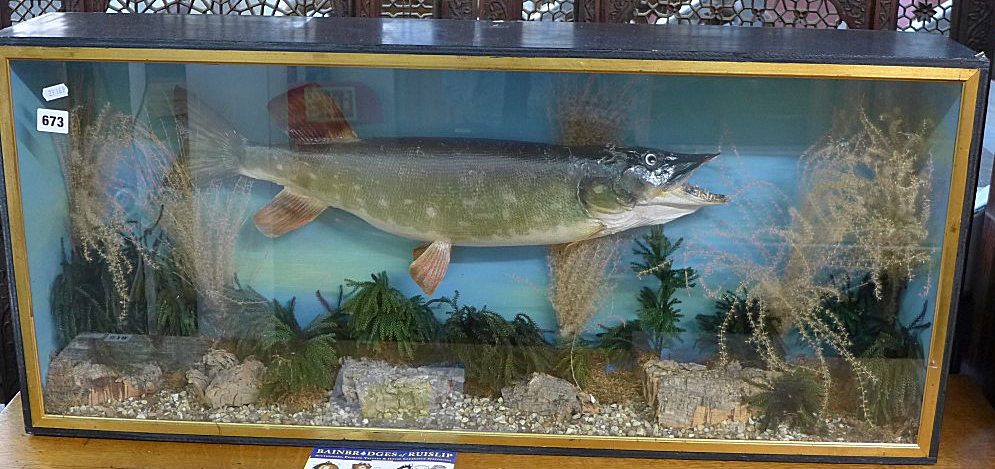
Which brings us to the seas, where a Portuguese trawler has netted a rare, and rather fearsome, “prehistoric shark

Health & Medicine
Many major medical advances have their origins in the military, and especially on the battlefield. Here are six which made the move from battlefield to mainstream medicine.
It had to happen, indeed I’m surprised it hasn’t happened sooner: hospitals in Leicester are pioneering free post mortems using CT scanners.
Why isn’t the flu vaccine as effective as it should be? Because simple biology introduces errors during the manufacturing process.
Our body clocks are incredibly important; and the more researchers look the more important the clocks become. They even switch genes and biological processes on and off at various times of day and this can have important implications for medicine.
Our body clocks are related to sleep. And sleep is still a mystery to be untangled.
Do you suffer from exploding head syndrome? If so there’s a group of researchers who want to hear from you.
And finally for this section, unusual and long lost diseases are crawling out of the permafrost as the climate warms up. [Long read]
Social Sciences, Business, Law
Now here’s a novel way to fix the NHS’s funding problems: legalise cannabis! Like everything else, if you legalise it you can regulate and tax it!
Language
I know I swear quite a lot and now I know why: bad language is good for you.
We all know that turkeys don’t come from Turkey, so how is it that they acquired the name?
Art & Literature
John Donne (right), the early Stuart poet, left us a scurrilous manuscript, of which an original has now been discovered hidden in the archives of Westminster Abbey.
History, Archaeology & Anthropology
We’re a load of drunkards, and have been for a long time. Archaeologists analysing residues on pottery, found near Tbilisi in Georgia, have just pushed back the first known winemaking by around 1000 years to 6000BC.
Meanwhile in Egypt archaeologists have been using cosmic rays to image the guts of the Great Pyramid, and have found a hitherto unknown chamber. Two reports, the first from Scientific American and the second from the Guardian.
Exploring the topography of prehistoric Britain through early drawings.

England’s oldest statute law still in force isn’t Magna Carta (that wasn’t passed into statue law until 1297) but the Statute of Marlborough enacted by Henry III in 1267. Much of it has been repealed over the centuries but there are still extant sections on the recovery of debt and the laying waste of farmland.
A silver ring found in Buckinghamshire has been identified as belonging to the royal falconer, Robert Dormer, who died during the Civil War.
London
A Roman temple beneath the City of London has been restored and opened to give an idea of the apparently blood-curdling rites of the cult of Mithras. [Long read]
So why did the Victorians build a series of small green huts across London?
London has 270 extant Underground stations, and quite a number of disused ones. There are also a number of fictional Underground stations and IanVisits provides us with a list of those which have appeared in film or on TV
Lifestyle & Personal Development
Owen Jones in the Guardian makes a compelling case for why we should all be working a four-day week.
Why has UK life-expectancy plateaued in recent years? Danny Dorling investigates.
Finland is trialling the provision of a basic income for everyone, rather than benefits for some. And it appears to be working.
Here are seven things you should never say or do to disabled people.
Food & Drink
Delia Smith doesn’t like modern cookery, describing it as “poncey” and “chefy”. For once I agree with her.
We’re all supposed to eat two portions of oily fish a week. But many of us don’t. Time to rediscover mackerel, anchovies and the humble Cornish sardine.

Where should you keep your tomatoes? In the fridge or on the windowsill? The Chronicle Flask takes a look at some of the chemistry to come up with an answer.
And on that foodie note, I’ll wish everyone a very merry Christmas and I’ll hope to see you again soon afterwards.

Thoughts on Family History

In doing my family history I, like most, keep my records in a piece of software designed for the purpose. In my case this is Family Tree Maker (FTM), which (is no longer owned by but) syncs with Ancestry [https://www.ancestry.com]. I looked quite hard at the options many years ago and found that FTM was the most useable of the many family tree applications available.
And then a couple of years ago, when Ancestry announced they were ceasing support and development of FTM, and before it was acquired by Mackiev, I looked again at the market and still found nothing I thought came up to FTM for either functionality or usability. So like many others I was very happy when Mackiev took on FTM and have worked with Ancestry to maintain the FTM-Ancestry integration.
What all family tree software allows you to do is plot not just your direct line, but also the branches by adding the laterals (siblings etc.) for each person. I know many don’t bother with this but concentrate only of their father’s father’s father’s … line, or at least their direct lines. To me this is not a good approach for two reasons.
First of all, adding in all those laterals (siblings, uncles, aunts, cousins, half- and step-siblings, and more, going ever backwards) provides more information. And hunting around them can often provide key evidence to verify (or at least suggest) one’s actual ancestral line. Nefarious family members are often witnesses at marriages, the person registering a death, or shown on a census as sharing a house.
Secondly, this provides a huge amount of rich interest, and often the odd skeleton in the wardrobe. Ah, so great-grandmother was actually a tailor with her own business and not just any old seamstress. GGGG-uncle Bulgaria did serve at Waterloo, as Grandma always said. And no-one in the family knew great-grandfather had a bastard child after he left great-grandmother in 1910, and in the process he told fibs to either the registrar of births or the 1911 census. [This latter actually happened in my family: my mother had a half-aunt who she was totally unaware of until I found her.]
But in amongst all this it is often quite hard to remember where the gaps in your research are, and how good is the quality of the data you have. This is important if, like Noreen and I, you believe in being forensic in proving linkages. I’m never really happy until I can be pretty sure my evidence would stand the “beyond reasonable doubt” test of a criminal court. However, as Clarenceux King of Arms has reminded me more than once, you do occasionally have to fall back to the civil court standard of “on the balance of probabilities” – which does still require substantial evidence which would be allowable in court but not quite as rigorously as in a criminal court. There’s far too much guesswork and wishful thinking amongst family historians, and that won’t do, nor will copying other people’s research without checking it. Remember also the plural of anecdote is not data.
All the software packages I’ve looked at do allow you to reference and source your information, as any good researcher should. But what I have never found is a package which allows you to set, for each piece of information, a Red/Amber/Green traffic light style flag to indicate the quality of the data with a quick visual check. For instance a birth registration might be GREEN if you have the birth certificate or have seen the baptismal register; AMBER if it is information which is known in the family but not well documented, like Great-grandma’s birthday; but RED if is a date you’ve back-calculated from the age given on a death certificate or census (both of which are notoriously unreliable, albeit useful). To me this is a major failing and any family tree software application which includes RAG flags will have a significant selling point.
One thing I have found useful, and which provides some part of a way round the omission of RAG flags is a “family table”. Many sources provide pretty charts which allow you to plot out you, your parents, their parents, and their parents, and so on; ie. just your direct ancestors. This can be in circular form or in the more usual form of a tree. And they are mostly large cumbersome wallcharts with room for little more than the name; dates of birth and death if you’re lucky.
I’ve found it better to make my own using a simple table structure in MS Word (any word processing or spreadsheet software should do) – I stole the original idea from my wife and have since adapted it. I have three sheets, which takes me back to my GGGG-grandparents (so 250 or so years). It is designed to be printed on normal A4 paper; and carrying two or three sheets of paper in a pocket or handbag isn’t unreasonable – and very useful if you get into family conversations with relatives or friends. OK, so it isn’t as pretty as many of the commercial offerings, but that’s not important; it’s much more convenient.
Here are the first couple of pages of my table (click on the images for a larger view):

Sample Family Table 1 Sample Family Table 1

[I’ve redacted a few details, just to make it a bit harder for the criminally minded, but even if I hadn’t all the information is in the public domain, although it might cost a few quid and a lot of time to get at it.]
For me the other way this table wins is because I’ve used colour-coding. That means I have a very quick visual check on where I have holes and information I need to prove. The more black there is on the table the better the data. And as one might imagine by the time one reaches page 3 there are a lot of gaps and a lot of red – it’s all work in progress.
If anyone would like a blank copy of the table you can download the MS Word version here. If you do use it, let me know – just so I can wallow in feeling slightly useful! 🙂
Meanwhile happy ancestor hunting.

Five Questions, Series 10 #5

A big fanfare! Because we have reached the last question in Series 10 of Five Questions.

★★★★★

Question 5: How would you describe yourself in three words?
Totally fucked up.
★★★★★

OK, so that’s the end of this series of Five Questions. I hope you’ve enjoyed it, maybe learnt something (if only about my craziness) and possibly even had a think yourself.
As in the past, if I can find enough good – or crazy – questions I may do another series, sometime next year. So if you have a good question, or something you want to ask, then do please get in touch – or leave a note in the Comments. And yes you can ask literally anything you like!
Meanwhile, it’s the season to wish everyone a very merry Christmas and a fabulous New Year!

Five Questions, Series 10 #4

And so on to question four and we’re getting towards the end of this tenth series of Five Questions.

★★★★☆

Question 4: Why don’t sheep shrink when it rains?
Because they’re 10% nylon?
But seriously … The real answer is almost certainly to do with the cross-linking of the long-chain protein polymers that make up each hair and the mechanical interlinking between the individual hairs. The more random cross-linking there is, the more the proteins will fold together and the curlier (thus shorter) the hairs. Similarly the more random the mechanical interlinking, the more likely the fibres are to be shorter. Wool has to be processed to remove this interlinking and cross-linking and create straight fibres, which we call unshrunk. Heat, water and mechanical action go to create the randomisation of the linking and thus cause the fibres to shrink in the wash. Now sheep are a natural product; they aren’t processed. Hence their wool is pretty random and effectively pre-shrunk, so they aren’t going to shrink more in the rain.

Monthly Quotes

This month’s collection of thoughtful, or laughable, quotes encountered.
Do the characters we inhabit in dreams have dreams of their own when we’re awake? Are we characters they inhabit?
[Brad Warner]
Tony’s parents had settled in a flat a short walk away at Clarence Terrace, a dubious blessing in their son’s view, but a long lease on the new house would scarcely have been possible without help from his father. “I suppose one oughtn’t to grumble as he does cough up quite a lot of the necessary,” Tony eventually conceded, “but he has a wonderful air of conveying that he is a mixture of General Gordon and Saint Francis of Assisi and that one is a compound of King John and Titus Dates.”
[Hilary Spurling; Anthony Powell]
The life of the series is generated within it … Less original novelists tenaciously follow their protagonists. In the Music of Time we watch through the glass of a tank; one after another various specimens swim towards us; we see them clearly, then with a barely perceptible flick of fin or tail, they are off into the murk. That is how our encounters occur in real life. Friends and acquaintances approach or recede year by year … Their presence has no particular significance. It is recorded as part of the permeating and inebriating atmosphere of the haphazard which is the essence of Mr Powell’s art.
[Evelyn Waugh on Anthony Powell’s A Dance to the Music of Time]
Sheldrake plays accordion in a band called the Gentle Mystics, whose tracks include a trance epic called “Mushroom 30,000”, and whose musical style might best be described as myco-klezmer-hip-hop-electro-burlesque. Once heard, bewildered. Twice heard, hooked.
[From https://www.newyorker.com/tech/elements/the-secrets-of-the-wood-wide-web/amp]
Trying to control leads to ruin. Allow your life to unfold naturally, knowing that it too is a vessel of perfection
[Lao Tzu]
There is a mysterious place
Behind the Great Pyramid’s face
Which physicists found
By looking around
Assisted by muons from space.

[@Limericking on Twitter]
We are cast by chance into an age in which nothing is worse than to be openly ignorant, nothing more rare than to be fully learned.
[John Donne, Introduction to Catalogus Librorum Satiricus, ca.1600]
Most content in the news media consists of propaganda generated by the rich and powerful. But when the launch of an advert becomes the news, the mask falls off entirely.
[George Monbiot on Twitter; 10 November 2017]
[Trump] got elected when I was two years into the album [Utopia] and I felt like, OK, it’s really important now to be intentional. If you feel this world is not heading the right way, you have to be DIY and make a little fortress, over here to the left.
[Björk; https://www.theguardian.com/music/2017/nov/12/bjork-utopia-interview-people-miss-the-jokes]
Scientists are skeptics. It’s unfortunate that the word “skeptic” has taken on other connotations in the culture involving nihilism and cynicism. Really, in its pure and original meaning, it’s just thoughtful inquiry.
[Michael Shermer]
They were not life forms. They were … non-life forms. They were the observers of the operation of the universe, its clerks, its auditors. They saw to it that things spun and rocks fell. And they believed that for a thing to exist it had to have a position in time and space. Humanity had arrived as a nasty shock. Humanity practically was things that didn’t have a position in time and space, such as imagination, pity, hope, history and belief. Take those away and all you had was an ape that fell out of trees a lot.
[Terry Pratchett, Thief of Time]
Rates of sexual offending go down as people in a society have more access to pornography. This is research that has been replicated in the United States and around the world. People don’t talk about this because they don’t want to acknowledge what it means. Porn is good for society. A society with more access to porn is a sexually safer society.
Access to pornography may decrease rates of juvenile sex offending even more. If pornography were a moral-altering thing, turning weak-minded people into rapists and paedophiles, it would have a greater negative effect on teen boys. And it doesn’t. Just the opposite. Gay men watch more porn than straight men. But rates of rape and sexual violence in gay men are lower than in heterosexuals.

[David J Ley, Ethical Porn for Dicks]

Five Questions, Series 10 #3

Here we are at the halfway point, at question three in this series of Five Questions.

★★★☆☆

Question 3: Do illiterate people get the full effect of alphabet soup?

Can illiterate people even know what alphabet soup is?

Clearly if you’re totally illiterate you can’t get the full effect because you don’t even know what letters are let alone identify them.
Although, who knows, there may be a deeper hidden truth.

Rosé!

At long last, after years of hunting, I have finally run to earth a seriously good Tavel rosé. Well actually almost any Tavel!
Never heard of it? Well that’s hardly surprising as Tavel is a small village in the southern Rhône, between Orange and Avignon, which produces only its eponymous Rosé.
I blame my father. He discovered this wine in the mid-60s when he worked near the then Peter Dominic’s main wine vault in Orange Street, just south of London’s Leicester Square. I don’t remember a lot about the wine we had in those days, but my father had obviously started to appreciate good wine as things picked up and the country had recovered after the war – and I guess as he started feeling more financially secure.
How or why he came to try Tavel is a mystery, but he appreciated it as it is a very dry rosé, unlike the sugar water which often seems to masquerade as Anjou Rosé. It was never cheap, so we enjoyed it only occasionally, until the day came when it was unobtainable as Dominic’s gradually died and was taken over.
We did, subsequently, find Tavel stocked by Balls Bros (famous for their City wine bars) who had an outlet opposite Noreen’s work. And Noreen and I had their Tavel at our wedding, although looking back that Tavel was something of a disappointment. Once Balls Bros retrenched it has been about as scarce as hen’s teeth.
That was until last week when, quite serendipitously, I happened across The Wine Society. And lo and behold they stock a Tavel. I also found a small handful of other very up-market wine shops who stock it, but they sounded equivocal and were considerably more expensive.
I’ve always been suspicious of The Wine Society, but this looked like a deal too good to miss. Yes you have to join, but that is a one off £40 (yes, for life!), with a £20 discount off your first order. They’re a large organisation, who aim not to make major profits but plough the savings back into their prices. So their wine is mostly a couple of quid a bottle less than the same wine at somewhere like Majestic. The Wine Society’s Tavel (shown right) was a sensible price, and described as

An outstanding example of Tavel, the Rhône appellation that produces only rosé wine. Of a deep pink hue, this is round and richly flavoured, brimming with fruit and touches of spicy complexity.

Domaine Maby is found in the heart of the village of Tavel in the southern Rhône. There are some 60 hectares covering Tavel, Lirac and Côtes-du Rhône, with excellent wines produced in all three colours. The Tavel and Lirac vineyards have the same round pebbles (galets roulés) as are found in Châteauneuf-du-Pape. These are precious for the region’s winemakers as they conserve heat accumulated during the day and then restore it slowly to the soil during the night which helps the grapes attain even better ripeness.

The individuality of the famous Tavel rosés lies in their great structure and fruitiness, aptly displayed here at Maby, where the style is even chunkier … anyone tasting [Maby] rosés blindfolded would be hard pressed to know whether the wine was pink or red … “Prima Donna”, made from older vines, is a little fuller and more complex than the standard bottling.

Well that sold me on it. I ventured forth, credit card in hand, and took the plunge, ordering a case, knowing that at worse we’d have drinkable plonk.
It arrived today. So we had to try it this evening. I said it would either be very disappointing or really knock one’s socks off. And wow it did the latter alright! It is a gorgeous ruby red, a very dark rosé, almost a pale red. It’s strong, at 14.5%. Lightly chilled it is a full-bodied rosé, very dry, with some amazing flavours of strawberries and raspberries. We were eating pork and venison sausages, and it stood up to the strong meat really well – this is not a feeble rosé which is going to be in awe of good meat. But it isn’t so robust that one couldn’t happily sit on a sunny balcony quaffing it all evening as the sun sinks in the west.
It slipped down so well. We debated drinking a second bottle, but sadly we decided to be good.
Yes, it is seriously good. Tavel is called the “King of the Rosés” with good reason.