Category Archives: thoughts

On Depression – VI

Another in my very occasional series of articles on depression – my depression. They are written from a very personal perspective; they are my views of how I see things working and what it feels like on the inside. Your views and experiences may be vastly different. My views and experiences are not necessarily backed by scientific evidence or current medical opinion. These articles are not medical advice or treatment pathways. If you think you have a problem then you should talk to your primary care physician.

Noise and Depression

Helicopters, leaf blowers, sirens, car alarms, washing machines, motorways, food processors, construction sites, microwaves, air conditioners, lawn mowers, hair dryers, motorcycles, motorboats, cell phones, TVs, stereos, car doors, people constantly talking loudly, aeroplanes, screaming children …

We have non-stop noise these days in our lives.  How can we possibly have mental clarity and peace?  Our minds are constantly being jolted and thrown violently back and forth by this sudden noise and then the next. [1]

We live in a noisy world – we shouldn’t. No wonder we get so fraught, anxious and depressed.

It is well established that noise is a major disrupter of health – both physical and mental – and seems to be a factor in depression [1,2,3,4,5,6].

Is depression the inevitable aftermath of unabating stress on our bodies, minds and souls living in this noisy, fast-paced modern society? If depression can be caused by a depletion of chemicals that our body naturally produces when in harmony, how can we expect to have this harmony in such an environment that violently assaults our natural relaxed state with noise at two-second intervals? [1]

Noise is certainly a factor in my depression, which is often triggered by pure overload. I don’t want to be assailed by noise – any noise, but especially secondhand noise – just as I don’t want to have too much to do heaped on me.

I need quiet. Much to Noreen’s bemusement, I seldom play music these days; or have the TV or radio on. I used to have something playing all the time but I now cannot function with continual background distraction. Continual (especially man-made) noise – even just the hum of my PC – drives me up the wall.

We live in a noisy world – far too noisy. To demonstrate just how noisy our world is, try doing my 10-minute test.

  1. You will need: pencil and paper, a watch.
  2. Go and sit outside, somewhere where you aren’t going to be disturbed for 10 minutes: your garden, your balcony or the square you live in.
  3. Sit quietly and listen – really listen, 100%.
  4. Write down every single noise you hear as you hear it. (If you hear it more than once, write it down each time.) What do you hear?
  5. At the end of 10 minutes have a look at your list. How many noises have you written down? How many are natural sounds (birds, animals, the wind, the stream); how many are man-made (cars, planes, appliances)?
  6. Ideally you should be able to hear only natural sounds – the more man-made sounds you hear, the more your environment will be stressing you.

Now compare with what Piers Plowman would have heard 500 or more years ago while eating his lunchtime bread and cheese under a tree: birds, sheep, a distant dog barking, wind rustling the trees, his horses’ whinnying, a babbling brook, maybe the swoosh of the windmill. How often do any of us hear these natural sounds?

Unless you live in the depths of the countryside I wouldn’t mind betting well over 50% of your noises are man-made and/or drown out the natural. That, at least, is my experience. OK, it isn’t scientific, but it is likely to demonstrate just how noisy our environment is. Is it any wonder we feel hammered?

What can you do about it? Here are twelve things which may help you:

  1. Avoid places with high noise levels; if necessary walk away to somewhere quieter.
  2. Avoid open-plan offices; research shows they are a major disrupter of work and mental processes [2].
  3. Don’t have the TV, radio or hi-fi on unless there is something specific you want to listen to/watch (and then give it your undivided attention).
  4. Don’t play music, especially through headphones, as background; this doesn’t make it better [2].
  5. Complain in bars, restaurants and shops which play “musak”; if they don’t like it, go somewhere else; remember you have a choice.
  6. Keep your mobile phone on vibrate and your PC speakers on mute.
  7. Try to avoid having the phone ring; try using text messages instead [5].
  8. Avoid noisy household appliances like hair dryers, food processors, lawn mowers and leaf blowers.
  9. Try to find quiet household appliances.
  10. If you have hearing aids and want more quiet, take your hearing aids out; it isn’t rude if it is looking after your mental well-being.
  11. Spend time away from the city; go somewhere you can listen to the birds or the sea.
  12. Plan for some quiet time every day.

References

[1] Noise Pollution, Depression, … and Nature As Our Guide
[2] Seven Ways Noise Affects Your Health
[3] Decibel Hell: The Effects of Living in a Noisy World
[4] What Did You Say?! How Noise Pollution Is Harming You
[5] Depression: On Noise, Answering the Telephone and Making Decisions
[6] The ubiquity of the modern beep
How to Be a Better Spouse

For Valentine’s Day, yesterday, Scientific American posted an article entitled How to Be a Better Spouse. You can read the detail in the article, but the four headline tips are:

  1. Be nice as often as you can
  2. Think about what your partner needs, even when fighting
  3. Just notice them
  4. Ignore the bad, praise the good

Yes, well, they’re sort of obvious really. But do we do this? Well, not as much as we probably should – I certainly don’t despite 38 years married (eeeekk!!!!), although I must be doing something not too wrong.
But then do these all not amount to the old adage: Communicate, communicate, communicate?
And think on this too … Are these ideas not things we should be doing to everyone, and not just our partners? Do they not all fall under the umbrella of Treat others as you would wish them to treat you? Reductio ad adsurdum.
On the other hand we do have to have these things pointed out to us occasionally so we don’t forget them.

Predictions for 2018

So I retrieved my crystal ball from the back of the wardrobe and dusted it off. Having been staring into its mistiness, on and off, for most of the last month, these are my best guesses at what it’s trying to tell me for the next year.
As before, I’ve divided the predictions into three sections: UK, Worldwide and Personal – the latter are documented but currently redacted, as are a couple of other items which some might consider over-sensitive.
Disclaimer. I remind you that these are just my ideas of what could happen; they’re based solely on hunches and gut feel; I have no inside knowledge and I haven’t been studying the form – so if you base any decision on any of this I will take no responsibility for your wanton act of idiocy or its consequences.


UK

  1. Brexit. It becomes clear that no Brexit deal is possible, but no-one has the courage to cancel Brexit so the UK is sleepwalking over a cliff to become a third world country (economically and socially) by 2020
  2. The government will ensure that, despite its expressed wish, Parliament does not have a meaningful vote on the final Brexit deal
  3. Increasing sexual harassment claims in Parliament and involving members of the government, on top of divisions over Brexit, are likely to bring down the government
  4. However, it’s unlikely there will be a General Election, but if there is it will be won by Labour with a tiny majority
  5. Michael Portillo is given a peerage and a seat in the Cabinet
  6. Boris Johnson is replaced as Foreign Secretary by one of David Davies, Liam Fox or Michael Gove
  7. Part of the Palace of Westminster collapses and the whole building is evacuated long-term, and may even have to be demolished
  8. UK interest rates rise twice during the year, each time by 0.25%
  9. Inflation remains at 3.0-3.5%
  10. Stamp Duty relief for first-time buyers pushes property prices up by 10%
  11. Tesco try to buy another supermarket chain but are prevented from doing so by the Monopolies Commission
  12. Waitrose close 20 stores across UK by YE and record an operating loss
  13. Ryanair buy/merge with EasyJet
  14. Move to regulate and meter all London taxi fares (including all private hire)
  15. Uber wins the appeal over its withdrawn operating licence in London
  16. Heavy flu season with many hospitals unable to cope with demand, contributing to 10,000 excess deaths
  17. At least two major disasters (industrial, train crash, plane crash etc.) with a combined total of over 200 fatalities
  18. Driverless vehicles kill six cyclists in the UK
  19. Red Arrows are disbanded after another fatal accident
  20. Murders. [[REDACTED]]
  21. No snow in London for the whole of 2018 with temperatures 2°C above average across the year
  22. Prince Harry’s wedding day will be wet
  23. Meghan Markle. [[REDACTED]]
  24. Deaths: Prince Charles, a current England cricketer, [[REDACTED]], [[REDACTED]]

World

  1. There’s an attack on Donald Trump’s life, which results in the death of several bodyguards and assailants, but only minor injuries to Trump
  2. Average of one terror-related attack a month across Europe (including UK) with total fatalities in excess of 120
  3. It’s unlikely North Korea will fire a nuclear weapon at the US to start WW3, but quite possible the US will fire first probably with conventional weapons
  4. Kim Jong-un will fall from power in North Korea
  5. There could be military conflict over China’s appropriation of islands in the South China Sea
  6. Vladimir Putin is re-elected as Russian President; in fact there’s a good chance he will be the only candidate
  7. US lose a submarine and are unable to rescue the crew
  8. Ukraine is proven to be illegally selling radioactive materials, and cannot/will not identify all the buyers
  9. Saudi Arabia. [[REDACTED]]
  10. Civil war in Zimbabwe which spills over into South Africa due to uncertainties about the South African presidency
  11. The Pope is embroiled in controversy possibly surrounding a significant shift in core Catholic theology
  12. At least one space disaster (possibly on the ground) which kills two; and at least one major inter-planetary mission is lost in transit
  13. Euro – Dollar – Pound parity
  14. There’ll be major financial crash, with long-term knock-on effects, although it’s not clear if this will be in US, Europe or the Far East.
  15. At least two household name companies are hacked with over 100 million sets of personal information exposed
  16. Uber buys Lyft
  17. Two of Amazon, Google and IBM merge
  18. Scientists believe they have discovered extra-terrestrial life (not necessarily intelligent)
  19. Major eruption of Vesuvius or Mt Etna with widespread destruction and mass evacuation, but fewer than 50 fatalities
  20. Magnitude 7 or above earthquake in California which, with continuing drought, all but destroys their fruit production
  21. At least one major US city will be destroyed (and quite possibly permanently abandoned) due to a severe hurricane (possibly New Orleans, Orlando, Miami)
  22. Massive collapse of another Antarctic glacier or ice sheet
  23. Poland beat Russia in FIFA World Cup final, with Denmark and Brazil as losing semi-finalists
  24. Other deaths: Dalai Lama

Personal

  1. Anthony Powell Society. [[REDACTED]]
  2. Family. [[REDACTED]]
  3. Cats. [[REDACTED]]
  4. Friends 1. [[REDACTED]]
  5. Friends 2. [[REDACTED]]

Obviously I’ll keep a tally and will publish the results at the end of the year. Let’s hope I’ve seen further and more clearly into the mist than last year.

Winter Lights

In a few days, on Twelfth Night, our Christmas decorations will be coming down. Anything which gets forgotten has to stay up until next year as it is believed to be unlucky to remove Christmas decorations after Twelfth Night.
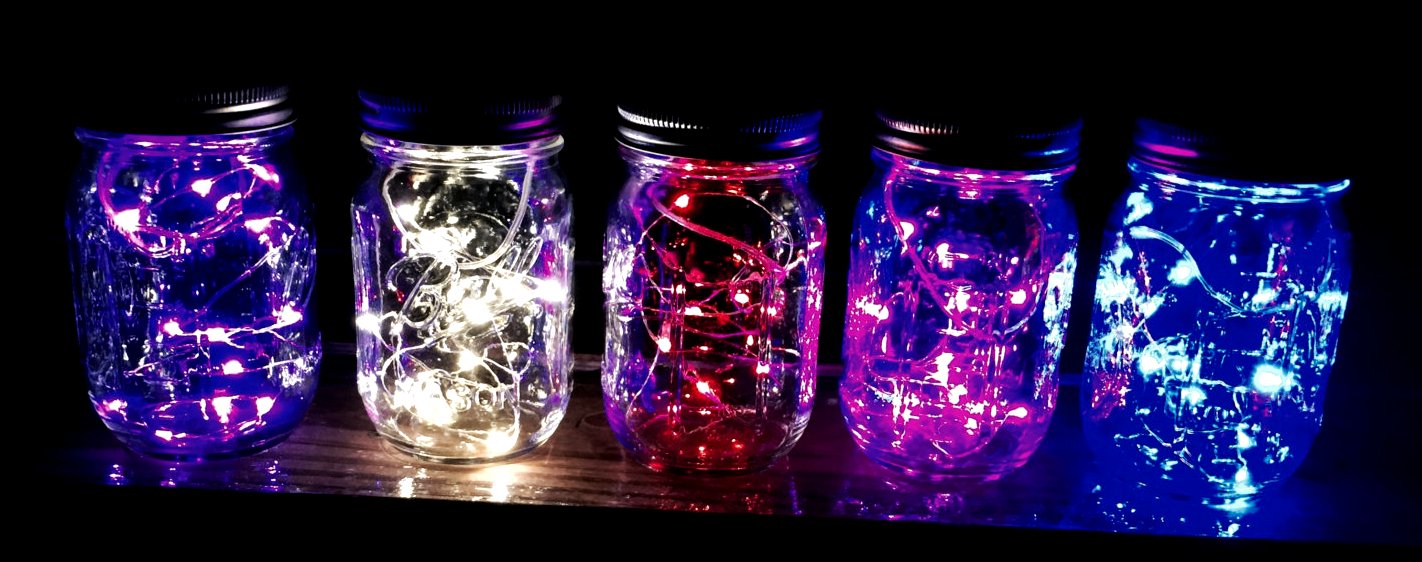
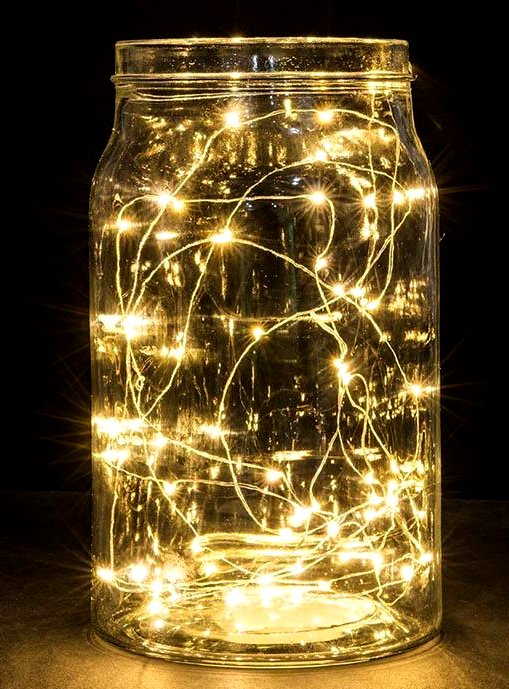
But there’s an exception. Our lights. Which are Winter Lights, rather than Christmas Lights.
How come?


Almost all major religions have a winter light festival, mostly around the Winter Solstice (in the Northern Hemisphere) to celebrate the turn of the year and to provide light and hope in the darkness of winter.

  • In Hinduism the most important light celebration is Diwali – the victory of light over darkness – which is slightly earlier than the solstice as it normally occurs around early November. Jainism also keeps Diwali.
  • Buddhism, at least in Burma, has Tazaungmon which mostly falls in November-December.
  • Chinese New Year seems to fit I here, as it too is a light festival celebrated on the first new moon between 20 January and 21 February.
  • Islam, at least as practised in Iran, has both Jashne Sade, a mid-winter feast to honour fire and to defeat the forces of darkness, frost and cold, and Shabe Chelle, the turning point, the end of the longest night of the year and the beginning of growing of the days.
  • Judaism, of course, has Hanukkah.
  • The Roman feast of Saturnalia, with its reputation for debauchery, lasted a week and also fell around the Winter Solstice.
  • Paganism, in its various forms – either ancient Paganism or its more modern incarnation as Wicca – celebrate the Winter Solstice as Yule.
  • And of course Christianity has Christmas, which it cobbled together from Pagan Yule and Roman Saturnalia with Christian iconography as pargeting.
  • And let’s not forget St Lucia’s Day on 13 December, a light festival widely celebrated across Scandinavia and some other countries.

I’m sure there are more, but you get the point.
There are many different traditions embedded in these festivals. In fact so many that years ago we decided to create our own. Hence our Winter Lights. So when the Christmas decorations – tree, holly, cards, crib figures and so on – come down the lights remain, just as they preceded the Christmas decorations.
In fact the tradition we created was to put lights in our main windows. They go up on the Feast of Christ the King, which is the Sunday before Advent (so in late November) and stay up until Candlemas on 2 February.
Why? Well, why not? Lights cheer the place up! They add some fun, interest and maybe even some mystery. They give light to scare away the dark during the gloomiest two months of the year. And while the lights don’t banish SAD they do shine a little happiness, and let’s be honest we could all do with that at this time of year.
Yes, OK, before anyone says it, the lights do take a certain amount of energy to run. But if, like us, you standardise on LEDs then the cost and environmental impact is negligible. As an example, the set of lights plugged in by my desk are rated to use 3.6 watts of electricity; over 70 days that’s 6KwHr at a cost of about £1. So you could run four sets for the cost of a couple of coffees, or (in London) the cost of a pint of decent beer. Even my environmentally conscious brain isn’t going to worry too hard about that; maybe I’ll just drink one fewer mug of tea a week.
So if you would like to help cheer the place up, and you have lights that you could like to leave up for a while, why not join our tradition. Together we might even be able to make it into something big.

Thoughts on Family History

In doing my family history I, like most, keep my records in a piece of software designed for the purpose. In my case this is Family Tree Maker (FTM), which (is no longer owned by but) syncs with Ancestry [https://www.ancestry.com]. I looked quite hard at the options many years ago and found that FTM was the most useable of the many family tree applications available.
And then a couple of years ago, when Ancestry announced they were ceasing support and development of FTM, and before it was acquired by Mackiev, I looked again at the market and still found nothing I thought came up to FTM for either functionality or usability. So like many others I was very happy when Mackiev took on FTM and have worked with Ancestry to maintain the FTM-Ancestry integration.
What all family tree software allows you to do is plot not just your direct line, but also the branches by adding the laterals (siblings etc.) for each person. I know many don’t bother with this but concentrate only of their father’s father’s father’s … line, or at least their direct lines. To me this is not a good approach for two reasons.
First of all, adding in all those laterals (siblings, uncles, aunts, cousins, half- and step-siblings, and more, going ever backwards) provides more information. And hunting around them can often provide key evidence to verify (or at least suggest) one’s actual ancestral line. Nefarious family members are often witnesses at marriages, the person registering a death, or shown on a census as sharing a house.
Secondly, this provides a huge amount of rich interest, and often the odd skeleton in the wardrobe. Ah, so great-grandmother was actually a tailor with her own business and not just any old seamstress. GGGG-uncle Bulgaria did serve at Waterloo, as Grandma always said. And no-one in the family knew great-grandfather had a bastard child after he left great-grandmother in 1910, and in the process he told fibs to either the registrar of births or the 1911 census. [This latter actually happened in my family: my mother had a half-aunt who she was totally unaware of until I found her.]
But in amongst all this it is often quite hard to remember where the gaps in your research are, and how good is the quality of the data you have. This is important if, like Noreen and I, you believe in being forensic in proving linkages. I’m never really happy until I can be pretty sure my evidence would stand the “beyond reasonable doubt” test of a criminal court. However, as Clarenceux King of Arms has reminded me more than once, you do occasionally have to fall back to the civil court standard of “on the balance of probabilities” – which does still require substantial evidence which would be allowable in court but not quite as rigorously as in a criminal court. There’s far too much guesswork and wishful thinking amongst family historians, and that won’t do, nor will copying other people’s research without checking it. Remember also the plural of anecdote is not data.
All the software packages I’ve looked at do allow you to reference and source your information, as any good researcher should. But what I have never found is a package which allows you to set, for each piece of information, a Red/Amber/Green traffic light style flag to indicate the quality of the data with a quick visual check. For instance a birth registration might be GREEN if you have the birth certificate or have seen the baptismal register; AMBER if it is information which is known in the family but not well documented, like Great-grandma’s birthday; but RED if is a date you’ve back-calculated from the age given on a death certificate or census (both of which are notoriously unreliable, albeit useful). To me this is a major failing and any family tree software application which includes RAG flags will have a significant selling point.
One thing I have found useful, and which provides some part of a way round the omission of RAG flags is a “family table”. Many sources provide pretty charts which allow you to plot out you, your parents, their parents, and their parents, and so on; ie. just your direct ancestors. This can be in circular form or in the more usual form of a tree. And they are mostly large cumbersome wallcharts with room for little more than the name; dates of birth and death if you’re lucky.
I’ve found it better to make my own using a simple table structure in MS Word (any word processing or spreadsheet software should do) – I stole the original idea from my wife and have since adapted it. I have three sheets, which takes me back to my GGGG-grandparents (so 250 or so years). It is designed to be printed on normal A4 paper; and carrying two or three sheets of paper in a pocket or handbag isn’t unreasonable – and very useful if you get into family conversations with relatives or friends. OK, so it isn’t as pretty as many of the commercial offerings, but that’s not important; it’s much more convenient.
Here are the first couple of pages of my table (click on the images for a larger view):

Sample Family Table 1 Sample Family Table 1

[I’ve redacted a few details, just to make it a bit harder for the criminally minded, but even if I hadn’t all the information is in the public domain, although it might cost a few quid and a lot of time to get at it.]
For me the other way this table wins is because I’ve used colour-coding. That means I have a very quick visual check on where I have holes and information I need to prove. The more black there is on the table the better the data. And as one might imagine by the time one reaches page 3 there are a lot of gaps and a lot of red – it’s all work in progress.
If anyone would like a blank copy of the table you can download the MS Word version here. If you do use it, let me know – just so I can wallow in feeling slightly useful! 🙂
Meanwhile happy ancestor hunting.

More thoughts on "Me Too"

Earlier today my friend Katy (@thevoiceofboo) retweeted Louise O’Neill (@oneilllo):

Men who choose to respond to the emerging stories of sexual harassment with “But I’m not like that” are the embodiment of a patriarchal society that teaches straight, white men to believe that their experiences alone are the most valid and important.

That may indeed be so, but look at the other side of the coin. If I say “But yes, I am like that” I get vilified. Men have been put in a lose-lose situation (yes, OK, by their own stupidity), so no wonder some are pissed off and feel hunted.
I know there have been times I’ve overstepped the mark, either physically or verbally. I can call a handful to mind, but no doubt there are others I’ve forgotten. I can’t find the right words to describe how I feel about this, but they include: sorrow, mortified, distressed, depressed, demoralised, upset, worried and fearful.
This is despite, right from my teen years, having a personal code of conduct that I don’t touch people (especially females) and I’m very circumspect about saying anything – which is why, girls, you won’t generally find me complimenting even your attractive frock. I’ve spent my life being almost afraid, certainly too insecure, to engage with females on anything but a very superficial, purely business, level. There are very few I have known well enough to even begin to rise above this level; one reason, no doubt, why I’ve never had very many girlfriends.
To give you an example, at a fairly innocuous level, of how insecure this made me feel … If, at work, I was lunching alone in the restaurant and there was a group of female colleagues I knew already at a table, I would never join them (unless they spotted me and beckoned me over). I always felt that to do so would (potentially, at least) be imposing myself into their possibly girls only conversation and that this was inappropriate. I had many fewer qualms about joining an equivalent group of guys.
And yet I can still do stupid things, at least on an odd occasion – in spite of being able to think about these things and remaining vigilant.
But the sad thing is, I suspect, that the vast majority of blokes, who don’t think and drift through life relying on their Neanderthal instincts, are just going to say “Err … Yer wot? … Fuck off” and carry on regardless; probably despite wondering why they feel that womankind is against them, which just reinforces their attitude.
It’s all very sad.

Thoughts on #metoo

I’ve been thinking about all the recent posts. While in one way I’m not surprised, in another it is frighteningly disturbing to realise the level of abuse that we men inflict and remain totally unaware of. But from what I’ve seen (and I may be misinterpreting) I don’t think most women are saying that every man harasses them or is a sex offender.
(On the other hand, in some senses maybe we all are offenders, if only in our heads. Be honest, which of us doesn’t look at a pretty girl and think some variant of “I wonder what she’d fuck like?”. But then there is a line between thinking it and grabbing it.)
However if even 50% of women have experienced men being inappropriate (and 50% seems to be a very low estimate) then it isn’t just a tiny minority of men doing it.
We are all thoughtless and stupid towards others at times, whatever our gender and whatever the gender of the other person. (This isn’t just men on women, although that is almost certainly the vast majority or the “action”.) That’s not an excuse – there are no excuses – but a fact of life. We will never totally eradicate it, just as we can never be completely certain that our actions can ensure “X never happens again”. There will always be outliers. But we can all work hard to ensure our thoughtlessness and stupidity is reduced to an absolutely minimal level and those few outliers are all that remain.
I’m not conscious of ever having done anything wrong physically – though I will concede I probably have unknowingly. But I know that at times I have said, either verbally or in writing, and mostly without meaning to, something stupid, thoughtless or just plain badly worded. At times I’ve been called for it; at times I’ve realised myself I’ve overstepped the mark. I hope that on all such occasions I’ve apologised, learnt something, improved; and hopefully we have all been able to move on with some level of dignity restored. Even so there are a few of these occasions which still haunt me.
And for those occasions where I still don’t realise I’ve overstepped the mark, I apologise now!
Obviously as, I hope, a considerate being I would never deliberately set out to harass or abuse anyone; something I outlined in my post earlier in the year on my personal ethics and morals.
I feel sure that very often men don’t realise they’re behaving inappropriately; but I don’t buy the “that’s just because it’s the way men are” non-excuse. I suggest it’s because we’ve never been taught to be aware of such things – how can we have been when previous generations of men haven’t been aware of the problem and women have been too frightened to speak up, so no-one could teach us – and we’ve been too lazy to think about it for ourselves?
Hopefully the new, heightened, awareness can help change this, but realistically it isn’t going to happen overnight. Hopefully men can start to trust and believe what women say; they can start thinking about how they behave; and they can learn about being generally more sensitive, considerate and thoughtful human beings. Many – the more thoughtful men – will. But I do worry that the majority, who go through life relying only on their animal cave-man instincts, are just going to say “fuck off” and carry on regardless. They are going to need a lot of work by the rest of us – men and women. We all have to be brave and stand up to them, and that in itself isn’t always going to be easy – but if we’re being considerate human beings we have to try, pro bono pubico.

Radiation

There was a useful, if short, review by David Ropeik of Harvard in Aeon a couple of weeks ago under the title “Fear of radiation is more dangerous than radiation itself“.
This is something which has been said for a long time, but it is useful to have the threads pulled together in a referenced article.
As usual I’ll give your the tl;dr version.

The fear of ionising (nuclear) radiation is deeply ingrained in the public psyche … we simply assume that any exposure to ionising radiation is dangerous. The dose doesn’t matter. The nature of the radioactive material doesn’t matter. The route of exposure – dermal, inhalation, ingestion – doesn’t matter. Radiation = Danger = Fear. Period.
The truth, however, is that the health risk posed by ionising radiation is nowhere near as great as commonly assumed. Instead, our excessive fear of radiation … does more harm to public health than ionising radiation itself. And we know all this from some of the most frightening events in modern world history: the atomic bombings of Japan, and the nuclear accidents at Chernobyl and Fukushima.
Much of what we understand about the actual biological danger of ionising radiation is based on the joint Japan-US research programme called the Life Span Study … of survivors of Hiroshima and Nagasaki [see also here]… Within 10 kilometres of the explosions, there were 86,600 survivors … and they have been followed and compared with 20,000 non-exposed Japanese. Only 563 of these atomic-bomb survivors have died prematurely of cancer caused by radiation, an increased mortality of less than 1 per cent.


Based on these findings … the lifetime cancer death toll from the Chernobyl nuclear accident might be as high as 4,000, two-thirds of 1 per cent of the 600,000 Chernobyl victims … For Fukushima, which released much less radioactive material … UNSCEAR predicts that ‘No discernible increased incidence of radiation-related health effects are expected among exposed members of the public or their descendants.’
Both nuclear accidents have demonstrated that fear of radiation causes more harm to health than radiation itself … 154,000 people in the area around the Fukushima Daiichi … were hastily evacuated. The Japan Times reported that the evacuation was so rushed that it killed 1,656 people … The earthquake and tsunami killed only 1,607 in that area.
… … …
In 2006, UNSCEAR reported: ‘The mental health impact of Chernobyl is the largest public health problem caused by the accident to date’.
… … …
Fear of radiation led Japan and Germany to close their nuclear power plants. In both nations, the use of natural gas and coal increased, raising levels of particulate pollution and greenhouse gas emissions. Neither country will meet its 2020 greenhouse gas emissions-reduction targets.
… … …
Fear of radiation has deep roots. It goes back to the use of atomic weapons, and our Cold War worry that they might be used again … Psychologically, research has found that we worry excessively about risks that we can’t detect with our own senses, risks associated with catastrophic harm or cancer, risks that are human-made rather than natural … Our fear of radiation is deep, but we should really be afraid of fear instead.

Or in the immortal words of Rear-Admiral Sir Morgan Morgan-Giles: Pro bono publico, nil bloody panico.

Benefits of Nudity

In today’s society sex and nudity are used to sell products and casual nakedness is frowned upon if not actually criminalised. (Incidentally nudity, per se, is not illegal in the UK.) This is harmful in many ways, body shame being amongst the least of them. So little wonder that naturism is perceived by society as being different, and even a thin cover for rampant sexuality.
Nudism is generally considered the act of being naked, while naturism is a lifestyle which may embrace more than just nudity. Actually I would define both a being lifestyles; it depends on one’s attitude. Both can be social or practised individually, although naturism is generally more social than individual (at least in my estimation) and often encompasses other environmentally aware beliefs. In what follows I’ve been lazy and tend to use the terms “nudism” and “naturism” fairly interchangeably.
I would define myself as a nudist; I am comfortable being nude, both privately and socially, but I’m not one for the wider naturist lifestyle if only from a lack of opportunity and a dislike of the regimentation so often expected by clubs and organisations. I like the ideas of naturism, but clubs etc. don’t work for me; so my nudism tends to be private. I would like that we could live in a world where nudity was accepted anywhere and at any time and we think nothing of practising social nudity with friends and family. Until then I wear clothes to cover other people’s embarrassment.
Nudism and naturism as lifestyles are all too often frowned upon by society; this is often as a result of fear and misunderstanding of what they’re about. Contrary to what many people think, naturism and nudism are definitely not sexual lifestyles; they are holistic, bringing about many physical, mental and societal benefits.


So here are a few of the Benefits of Nudity:

  1. Naturism as Therapy. According to naturists, one of the main benefits of naturism is that it provides an incredible feeling of relaxation. Being naked is more comfortable and removes the restrictions of clothing; it is very sensual (not sexual). This creates a feeling of well-being, which helps to invigorate the body. The feeling of the breeze or sun on your naked body, or of walking barefoot, is very invigorating, and enhances enjoyment of your surroundings. The feeling of euphoria that comes with being totally naked also helps alleviate mental health issues such as stress, anxiety and depression.
  2. Body Acceptance. People are under pressure to live up to the mythical ideal image, and use clothes as a way of hiding their feelings of inferiority. The fear of being naked is a defence mechanism which many people develop (or have imposed on them by parents) to protect themselves from feeling inferior due to their self-perceived imperfections. Naturism helps avoid this by enabling people to better understand that their self-perceived body imperfections are nothing more than part of the glorious diversity of human bodies. This helps people to accept their bodies, and respect those of the others; in turn this has been shown to promote healthier relationships and sexuality.
  3. Self-esteem & Maturity. Clothes are also used by society as an indicator of social status and focus attention on sexuality; partial clothing is considered very sexually stimulating. Naturism on the other hand, focuses attention on the acceptance of the body whatever its perceived imperfections. Shedding clothes makes people familiar with nakedness; it ceases to be something to be scared of. Moreover once people remove their clothes, everyone is equal and very little attention is paid to the social status. All this helps people who engage in naturism be more mature sexually and have enhanced self-esteem.
  4. Tolerance. Naturism advocates self-respect and respect for others, which helps promote tolerance in the society. Clothing promotes a patriarchal society where women are expected to dress according to certain requirements. Naturism advocates the acceptance of other people as equals and helps people to respect their bodies. This helps to eliminate male oriented expectations that are repressive to women and respect for all.
  5. Money and Time. Clothes are a huge expense in terms of money, time spent shopping and environmental damage. Wearing, and needing, fewer clothes is good for your bank balance, your time balance, and for the planet.
  6. Natural Body Processes. People are taught that they are not supposed to expose their bodies. This cultivates body shame, makes people view genitals as “dirty” rather than parts of the body that have important functions. In turn this generates mystery, ignorance and fear about the natural processes of the body, such as adolescence, pregnancy and ageing.
  7. Better Health. Clothing, make-up and the like hinder the basic functions of the skin, including the correct microbial balance. Body crevices become hot, sticky and humid which encourages the growth of (for example) fungal infections. Nudity allows air and sun to the skin, preventing the sticky conditions loved by many pathogens and hence helping maintaining a healthier body. Additionally, and importantly, exposure to sunlight boosts the production of vitamin D.
  8. Healthy sexuality. Many studies show that countries which support naturism have a lower rate of teenage pregnancy and abortion, because naturism promotes the understanding of sexuality and body image. While this will not remove common teenage curiosity with sex, it does help it be more appropriate because of an enhanced awareness of what sex and bodily functions are all about.

At the end of the day, give or take the odd scar or mole, we all know what’s under my, and your, t-shirt and jeans. So really, where is the problem?
See also:
https://zenmischief.com/on-nudity-and-naturism/
https://zenmischief.com/nudity-and-naturism-quotes/
British Naturism
Is there a human “need” for being naked?

Personal Ethics and Morals

Almost every individual – excluding perhaps those insane persons who have no sense of right and wrong, but certainly including everyone from religious leaders to gangsters and serial killers – has a set of ethics.
… … …
Each person draws portions, sometimes bits and pieces, of their personal … ethics from an almost random variety of sources, such as their childhood upbringing, a dramatic or otherwise pivotal life experience, religious beliefs, discussions with family, colleagues, and friends, and the ethical teachings of whatever philosophers [they] may have read.
https://www.irmi.com/articles/expert-commentary/where-our-ethics-come-from

I’ve written a number of times before about ethics and morals (see for example here and here). But stimulated by a conversation with one of my friends (yes, somehow I do still have one or two!) some days ago I’ve been moved to return to the subject at a more personal, rather than philosophical, level.
 
What follows is a summary of some of those “bits and pieces” I’ve garnered over the years as my personal ethics and morals. These are the things which I try to live by.

  1. Causality. Things are as they are for a reason which is seldom disclosed to us. There are more things in heaven and earth than we can ever know or understand.
  2. Respect People. Always treat others as you would wish them to treat you – with respect, dignity, kindness, equality, compassion and integrity. Essentially this is the old adage: do as you would be done by. Or in the words of Matthew 7:12, Therefore all things whatsoever ye would that men should do to you, do ye even so to them: for this is the law and the prophets. Or to spin it the other way: if it harm none, do as you will. If you can do this one thing, all the rest pretty much follow.
  3. Respect Nature. We are but a small part of this Earth. It is not ours, it was here long before us and it should be here long after us. We are merely it’s current custodians and as such we should behave as ethically towards the Earth, Nature and all living creatures as we should to other human beings. Do not rape our natural resources or screw the environment. That doesn’t mean being vegetarian, living off-grid or the like – after all eating plants and felling trees can be considered murder just as much as eating animals – but it does mean respecting what you do eat (we almost always raise a glass to the animal we’re eating), recycling as much as possible, and not consuming for the sake of it. Do not play god; there is no reason to suppose we know better than Mother Nature.
  4. Be Honest. Be open, honest and truthful in all things and at all times. Open government and fair dealing. Admit it when you don’t know; don’t guess.
  5. Respect Relationships. Never do anything to unhook or put in jeopardy anyone else’s relationship. This is something I formulated for myself as a teenager: that I would never do anything to harm or unhook another relationship. It didn’t matter how much I fancied the girl (and for me it always has been girls) in question, nor how strongly or loosely committed the relationship; if there was a relationship the parties were strictly off-limits as anything more than friends. It just seemed to me to be ethical, kind and respectful not to meddle while the relationship existed. (This is one reason Noreen and I knew each other for several years before we started dating.) I have continued to live by this, not just as student on the pull, but as an adult where others might have seen/wanted an opportunity for adultery.
  6. Freedom of Speech. Be liberal and relaxed in dealing with other people’s views and beliefs. Everyone is entitled to their opinions, and is entitled to express those opinions even if I don’t like it. I may not agree with you, but I will defend to the death, your right to hold and express your opinion. To do otherwise is but a short step to censorship.
  7. Beliefs. Each of us is entitled to believe whatever we like. Just don’t expect anyone else to share your beliefs. It’s not what you believe that’s the problem, but what you think I should believe.
  8. Use Your Abilities. Do everything to the best of your ability.
  9. Don’t Judge. Don’t be judgemental: you can never know how someone else feels inside, what motivates them, nor how their relationship works, so don’t assume or judge.
  10. No Revenge. Don’t hold grudges or be vengeful – be compassionate and forgiving; understand the other person’s position and move on. It’s OK to be angry; it’s never OK to be cruel.
  11. Admit Errors. If you’re wrong, be strong enough to admit it, apologise and if possible do something to remediate the error. Never blame others for your failings.
  12. Never Regret. Do not regret anything which has happened, even if you now know it was not the best thing to do. If it’s good, that’s great. If it isn’t, it’s experience to learn from and move on. We all do things that with hindsight we wish we hadn’t; but they cannot be undone and rarely properly repaired. Regret is unhelpful and destructive.
  13. Be Responsible. You are responsible for what you do, say and think; accept that responsibility. However you are not responsible for other people’s emotions, beliefs, actions and reactions; nor they for yours.

That’s the high level stuff and I feel sure I’ve left something out. I can’t think any of it is very startling, but it is interesting to put it all together – something I’ve never done in quite this way before – as it really does make one consider whether the whole is self-consistent. Of course, I’ve not yet made any attempt to integrate this with my core constructs (such as I know them).
And below all that are my personal beliefs, like the legalisation of sex work and marijuana; nudity and body acceptance; the scientific method; the absence of deities; etc.
Heavy stuff. I need a gin & tonic.