
As last year here is a survey to summarise my engagement (or lack of it) with 2014.
 1. What did you do that you’d never done before?
Yoga
Have a full body massage
Got hearing aids
Injected myself with drugs (legally!)
2. Did you keep your new year’s resolutions, and will you make more for next year?
I don’t make New Year resolutions (see here); but I did have some goals most of which I failed to achieve.
3. What would you like to have in 2015 that you lacked in 2014?
£2M
Good health
4. What dates from 2014 will remain etched upon your memory?
None that I can think of.
5. Did you suffer illness or injury?
I had an awful respiratory virus which floored me for over a month in February/March and again in October/November.
And then there’s the ongoing diabetes and depression.
6. What was the best thing you bought?
Gin and champagne
7. Where did most of your money go?
As far as I can tell absolutely nowhere, and certainly nowhere very worthwhile (unless you count gin and champagne!).
8. What did you get really, really excited about?
Nothing; I don’t waste effort on excitement or panic.
9. Compared to this time last year, are you:
a. happier or sadder? — sadder, ‘cos I haven’t kicked the depression hard enough in the gonads.
b. thinner or fatter? — fatter, but not by very much.
c. richer or poorer? — poorer, if only due to expensive dental treatment.
10. What do you wish you’d done more of?
Sex
Sit in the garden in the sun
11. What do you wish you’d done less of?
Been stuck to a desk
12. What was your biggest achievement of the year?
Survival
13. What was your biggest failure?
Yoga
14. How many one-night stands?
None
15. What was your favourite TV program?
I’ve just not watched anything like enough TV to be able to make any sort of judgement.
16. What was the best book you read?
Two books by Alice Roberts come out top of the heap: Evolution: The Human Story (Dorling Kindersey, 2011) and The Incredible Unlikeliness of Being: Evolution and the Making of Us (Heron Books, 2014)
17. What did you want and get?
An immense amount of help and support, in all sorts of ways, from Noreen, for which I am far more grateful than I think she realises.
18. What did you want and not get?
£2m
Sanity
19. What one thing would have made your year immeasurably more satisfying?
Choose between better health and a couple of holidays.
20. How would you describe your personal fashion concept in 2014?
Nude when possible, clothed when necessary.
21. What kept you sane?
Did anything keep me sane?
22. Who did you miss?
I’ve no idea! I’m not conscious of having specifically missed anyone.
23. Tell us a valuable life lesson you learned in 2014:
Quality of life is more important than stressing yourself to conform to society’s expectations. But then I failed to live up to it.
24. A quote or song lyric that sums up your year:
It’ll pass, Sir, like other days in the Army.
[Anthony Powell, A Dance to the Music of Time]
25. Your hopes for 2015
Society normalises sex and nudity rather than criminalising it
Any office block which is less than half occupied for more than 3 months has to be converted into flats, or demolished and homes built on the site
Drink more champagne
Be painted or photographed nude
Have at least one 2 week holiday
My mother makes her 100th birthday
So how was your 2014? And what are you hoping for in 2015?
Category Archives: personal
Relaxing Christmas
Yes, we’ve had a nice relaxing day of presents, drink and food but without over-indulging.
Had a bit of a lie-in and got up about 9.30. Two mince pies and mug of tea for breakfast.
I rang my mother and had a quick chat with her; she’s in a care home 120 miles away so although we aren’t there she isn’t on her own.
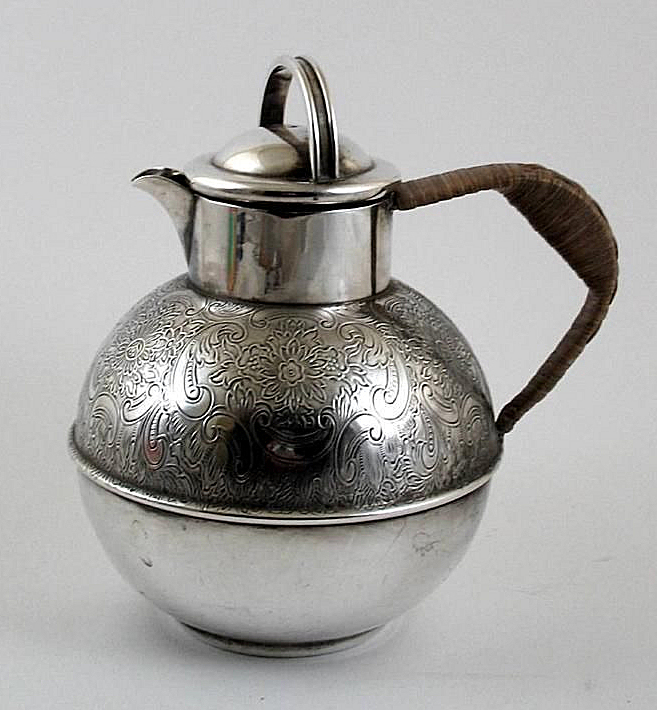 About 11.30 we sat down with an extra large G&T (Noreen had a similarly large Bacardi & Coke) and opened our main presents. As always there was a fair amount of alcohol and quite a few books. But we always manage to find each other something unusual: this year I got Noreen a Jersey milk/cream jug — silver plate, pre-WWII and probably made for the tourist market, but a nice thing nonetheless.
After clearing up a bit we had our traditional Christmas Day lunch of smoked salmon sandwiches at about 1.30 (we have Christmas Dinner in the evening).
At 3-ish Noreen put a large leg of pork in the oven to roast; while I had a nap she went to see the old lady across the road (who is 90+ and on her own) for an hour or so.
Just after 5 we both got to work in the kitchen on the rest of dinner. Somehow we managed to avoid any alcohol in the process!
Dinner at about 7: Roast Pork, sausage, garlic potatoes, roast parsnips, sprouts, chestnut stuffing and apple sauce. Accompanied by a bottle of pink champagne (which also now one of our traditions). No need for starters or pudding; just a good main course.
After dinner we sat and opened presents part two which I accompanied with a glass of an unusual, rather nice and delicate rosé port Noreen had given me. The tradition from my family is to have small presents, from under the tree, in the evening — really just a little something to unwrap like a few chocs or a paperback book.
After that we sat reading for a bit and abhorring the available choices of TV viewing.
And shortly to bed, perhaps to read some more, maybe with another glass of something.
I think we’ll call that a good Christmas!
Happy Christmas
and a Prosperous 2015
to all our friends and followers
Click the image for a larger view
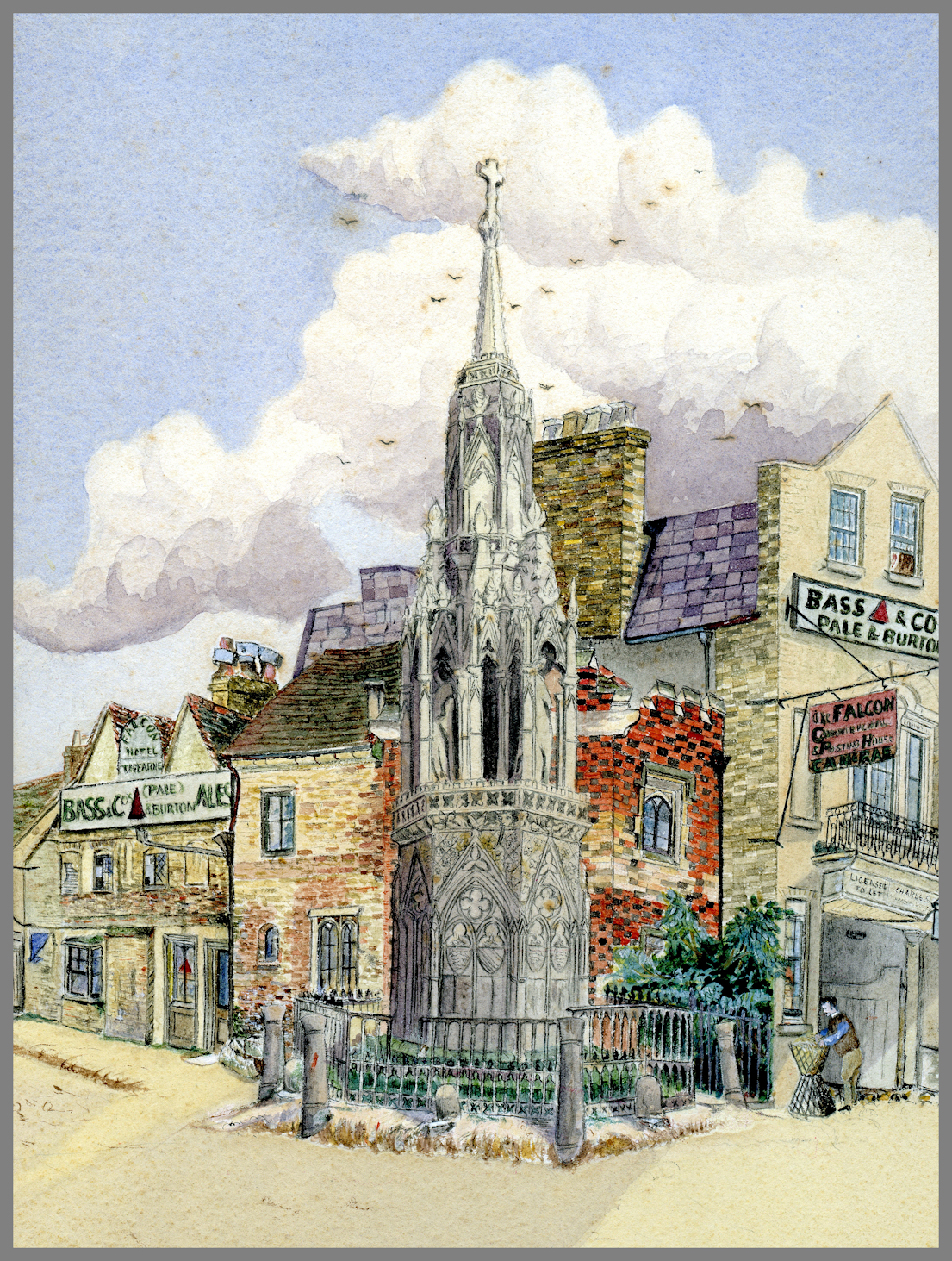
Waltham Cross
from a watercolour by W Bailey, 14 November 1889
Ten Things #12
This month’s “Ten Things” has a predictably seasonal theme: Christmas.
 Christmas Things I Enjoy
- Carols (well most of them)
- Christmas Trees
- Fairy Lights
- Scented Candles
- Holly Wreaths
- Christmas Dinner
- Holly, Ivy & Mistletoe
- Bach Christmas Oratorio
- Handel Messiah
- Champagne
On Depression — V
This is number five in my series of articles on depression — my depression. They are written from a very personal perspective; they are my views of how I see things working and what it feels like on the inside. Your views and experiences may be vastly different. My views and experiences are not necessarily backed by scientific evidence or current medical opinion. These articles are not medical advice or treatment pathways. If you think you have a problem then you should talk to your primary care physician.
 Questions & Answer
In the course of writing these posts I’ve collected a small number of articles which throw some interesting lights on various aspects of depression. I’ve already mentioned some, but this post is to try to gather some of the others together.
The first is a quote from The Body Keeps the Score: Brain, mind, and body in the healing of trauma by Bessel van der Kolk
If your parents’ faces never lit up when they looked at you, it’s hard to know what it feels like to be loved and cherished.
Now that’s a fairly telling statement and if, like me, it fits your childhood then any wonder we get depressed.
This next is a link to a cartoon, about just how badly we treat the mentally ill (not just the depressed but I guess it happens to us more as our illness isn’t always so apparent). So what would it be like if physical illness were treated as we treat depression.
And now a short animated video which explains a little of the science behind depression but also highlights, perhaps, how little we really know.
Unfortunately research into depression struggles to attract funding in a way which would not be tolerated for, say, cancer. This Scientific American article demonstrates how important it is to change this especially now that useful technologies are becoming available. For those who don’t want to read the whole article here are a few key comments.
If the extent of human suffering were used to decide which diseases deserve the most medical attention, then depression would be near the top of the list.
[…]
[A]lthough depression is common, it is often ignored. Three-quarters of people with depression in the United Kingdom go undiagnosed or untreated — and even if the disorder is diagnosed, today’s medications will work well for only about half of those who seek help.
[…]
Research into depression … seems to have floundered.
[…]
Although … extra money would have solved some challenges earlier, the technology needed to crack others — by probing the brain and analysing its circuits, for example — is only now emerging.
[…]
[A]nother major factor is the long-standing stigma associated with depression. Many people still do not acknowledge that it is a legitimate condition … A large proportion of people believe depression is just something that we all feel … They think you should pull your socks up and get back to work.
One thing which seems to be common to most depressives is sleep disruption in some form, whether that is a disrupted or inappropriate sleep pattern or just plain old insomnia. But there may be some distant hope as scientists seem to be homing in on disrupted circadian rhythms being the underlying cause.
Disrupted sleep is so commonly a symptom of depression that some of the first things doctors look for in diagnosing depression are insomnia and excessive sleeping … scientists have observed for the first time a dysfunctional body clock in the brains of people with depression.
[…]
People with major depression … show disrupted circadian rhythms across brain regions.
[…]
[G]ene activity in the brains of depressed people failed to follow healthy 24-hour cycles. They seem to have the sleep cycle both shifted and disrupted.
The article goes on to explain how looking at the brains of dead but non-depressed people the scientists could pinpoint the time of death from how various genes were switched on or off. This was impossible with depressed subjects whose clocks were both shifted and disrupted. It isn’t simple as there are many genes involved, but variations in the gene expression could potentially cause all sorts of different sleep pattern disruptions.
Here are two more articles on sleep and depression. This first Sleep and Depression is a fairly simple explanation of the sleep disruption you may encounter and some pointers to what you can do to try to alleviate it. The second by David Nutt & Louise Paterson is an academic review from 2008 of what was then known; needless to say it contains lots of data.
Finally in this short round-up we must return to the question of body clocks, because another aspect is Season Affective Disorder (SAD) which affects many people during the darker winter months probably because we don’t get enough light to reset our clocks every morning. A very recent article by Katherine Hobson on Nautilus summarises some of what is known about high intensity light therapy to treat not just SAD but potentially other disorders too.
Light therapy has become standard for treating seasonal depression … light has a benevolent influence on mood during the dark days of winter instinctively makes sense: As hazardous as sunbathing is, it certainly feels good … research into the circadian underpinnings of chronic depression, bipolar disorder, Alzheimer’s disease, and fatigue suggests that light could help these patients readjust too.
[…]
Exactly how light works isn’t known, but many researchers suspect that bright lights help SAD sufferers by regulating their sluggish circadian clocks.
[…]
[C]ircadian rhythms appear to be disturbed in non-seasonal maladies too, which means there is a potential for light therapy beyond SAD.
[…]
In general, bright light therapy is a low-risk and low-cost option for treatment … it may speed up patients’ responses to antidepressants.
[…]
[T]he elderly might be particularly susceptible to the benefits of light therapy because their light perception declines with age, which might be throwing their internal clocks out of sync.
While SAD is one of the factors in my depression — and I know I feel much better on bright sunny days — it is far from the only one and is not the most crippling. I have tried light therapy two or three times over the years and never had much success with it. But it doesn’t work on everyone: while it doesn’t work for me it might work for you.
On Depression — IV
This is the fourth in my series of articles on depression — my depression. They are written from a very personal perspective; they are my views of how I see things working and what it feels like on the inside. Your views and experiences may be vastly different. My views and experiences are not necessarily backed by scientific evidence or current medical opinion. These articles are not medical advice or treatment pathways. If you think you have a problem then you should talk to your primary care physician.
Questions & Answer
What causes your depression?
As I’ve tried to say in previous articles in this series, the cause of my depression is certainly multifactorial. I know I have a tendency to Seasonal Affective Disorder (SAD) and I am certainly worse during the winter months. I also know that I may have a genetic predisposition to depression. My father was depressive, although I think never treated for it. And by all accounts my father’s father also suffered from depression. In my grandfather’s case this was put down to Trench Fever from WWI and the depression shouldn’t be surprising given his experiences in WWI and that he was a struggling back-street corner grocer in the Depression. Clearly none of this would have helped my grandfather but I suspect, from the little I knew him in old age, that he would have suffered from depression regardless. But then all the men in my family (and I include myself) are dysfunctional.
Perhaps, to me, the most obvious cause of my depression is stress, change and far too much to do; so much that I can never hope to catch up. Yes, I know I take things on (although I am getting better at picking and choosing what I do) and I’m involved in various voluntary projects. But I can’t sit and do nothing! As I said in an earlier post, an acquaintance commented to me recently about his situation: “if I sat at home all day I’d go senile”.
Other things that add to the depression, although may not be direct causes, are financial security (will I run out of money in a few years time); lack of achievement (past and present); a lack of attention (although I’m a loner I do still need people); dieting, having to watch what I eat and drink; being ill. All of those make things worse.
What are the physical effects of your depression?
It’s sometimes hard to separate the physical from the mental, the depression is so pervasive. Basically I feel incapable of doing anything. Nothing is fun or enjoyable. Everything is too much effort; I don’t even want to get out of my chair and make a cup of tea; and it’s this lack of ability to get up and do which stops me doing all the things, like exercise, which I know I should do. It’s like someone has taken all the elastic out of the joints and brain. I’m usually headachy and irritable. I often feel weepy — which is usually a part of a mild panic attack about being able to do something. I’m not interested in anything; I don’t want to do anything — even hobbies; and I can’t concentrate. I frequently sleep badly, although I’m dead to the world in the mornings and can sleep fine all morning. In the last few years I’ve had a very low libido; something I never used to have a problem with. It is all too easy to eat too much (which I know I do) and drink too much alcohol (which I am able to control — I am nowhere near being an alcoholic but I know I could go that way).
You’re on antidepressants. Do they have any side effects?
Mercifully I seem to tolerate most drugs fairly well; I’m not someone who gets allergic reactions, nausea or many of the more regular side-effects of most drugs. I’m currently on a moderate dose of my antidepressant. In the past I have been on the maximum dose, but managed to reduce this a couple of years back. And I don’t want to go back on the maximum dose because then I do get some side effects. The two most noticeable things are due to the anticholinergic effect of antidepressants: they decrease gut motility, so one tends towards constipation; and they are extremely good at preventing (not just delay; prevent) orgasm (which is why I don’t want to go back on the higher dose).
The other thing about the antidepressant I’m currently on is that it is one of the worst for getting off. Over the years I’ve had several attempts at reducing them with the intention of changing drugs, but every time I’ve ended up with withdrawal symptoms. I’m currently trying again and I’m more hopeful this time.
What is the depression like on the inside?
At the moment I have half a cold. Apart from the slight sore throat and tickly cough this is how I feel almost permanently. At least some part of a headache. Stiff neck, which is probably the cause of the headache. Physically drained, as if someone has taken all the elastic bands out of my joints, and slightly achy. I just want to close my eyes, and maybe sleep. I feel as if I have a head full of cotton wool and it’s been used as a football. I cannot cope with thinking about doing anything; let alone actually doing anything and certainly nothing I have to concentrate on. Thinking is fuzzy because I can’t concentrate. Everything is an effort. All I really want to do is curl up under the duvet until it goes away.
This is very much like you feel after a bad bout of ‘flu; when you’re beginning to recover but can’t yet do anything. You’re totally debilitated and incapable. And everything is too much effort — mentally and physically. But with ‘flu this goes away after a day or two. With depression it doesn’t; it stays; day after day after day after day …
Sometimes I have to curl up under the duvet; and sometimes some part of it does go away. For a while.
Are you typical?
I’m not sure there is a typical depression or reaction to it; we’re all different, although as I’ve maybe shown there is a set of common themes.
I got another view recently from Charlie at Sex blog (of sorts) who wrote about her depression.
Anxiety is so much worse than depression, right? Depression is just, well, sadness. And I can handle sadness … Sadness can be fixed with chocolate and wine and hot baths and long walks and time alone. Sadness is like a prompt to take better care of yourself: to eat properly, to get some fresh air, some more sleep.
Yeah, right! Charlie is being somewhat tongue in cheek here. This isn’t full on clinical depression. It’s more like what I’ve termed Dynamic Depression. But then she goes on:
I sit and I feel this crashing sense of despair that things will always be this shit, so what’s the point? What’s the point of anti-depressants or therapy, when life isn’t going to improve? Why won’t everything just stop? Why can’t I just go to bed and stay there?
… … …
People don’t understand why depression is tiring … It’s tiring not only because everything seems so pointless, but also because I’m in constant battle with myself. I’m not this person who doesn’t have any determination to achieve stuff: I have a good degree, a good job, some fucking self-respect, for god’s sake … my ability to give a fuck about any of that stuff has totally gone. Except it hasn’t. I still do give a fuck about it and so I beat myself up: I’m doing a shit job at work, I’m not socialising enough, I’m a lazy cunt. And the more I think and act on those feelings the closer I circle to burn out.
That’s better. That’s pretty much how I feel a lot of the time.
How do you get out of that?
That’s the point. I don’t have a flying clue. If I did you wouldn’t be reading this.
This series may, or may not, be continued at a later date.
Five Questions, Series 6 #5
OK, so at last here is the last of Series 6 of Five Questions.
Question 5: What gets you out of bed in the morning?
For once we have a very simple answer!
The need to pee. Every morning! Without that I would quite likely not bother to get out of bed.
Judging by my total inability to get round to answering these five questions, I may or may not do another series sometime next year.
On Depression — III
This is the third in my series of articles on depression — my depression. They are written from a very personal perspective; they are my views of how I see things working and what it feels like on the inside. Your views and experiences may be vastly different. My views and experiences are not necessarily backed by scientific evidence or current medical opinion. These articles are not medical advice or treatment pathways. If you think you have a problem then you should talk to your primary care physician.
The medical profession generally characterise different types of depression by their causes and effects, and they may range from mild, through moderate to severe. (See, for instance, www.mentalhealth.org.uk/help-information/mental-health-a-z/D/depression/.)
However pragmatically, over the years, I’ve come to realise that there seem to be two types of depression, which I have never heard voiced by a clinician. I’ll call them Dynamic Depression and Static Depression on the basis of what appears to help alleviate them. I’m not in a position to work out if the symptoms and/or causes are different although I suspect Dynamic Depression is at the milder end of the spectrum.
Dynamic Depression
This is the type of depression which everyone thinks you have, and which is the subject of every self-help book (and a lot of counselling) that I’ve encountered. The “cure” (which is how I characterise these two types) goes along the lines of “put on some brass band music, have a cold shower, think how blessed you are with everything you have going for you, and just get on with life”. Yeah, right. That may work for some people; probably those with low-grade depression who have a short-term problem. This is out of the book of “tell it like I want it to be and it’ll be that way” management. It is a fallacy which does nothing but con the brain — though that may of itself be valuable for some. It doesn’t work for me; it never has; and it may be why I’ve never succeeded with talking therapies.
Static Depression
Many years ago I read an article by a couple of medics who had looked at a small number of patients hospitalised with depression. Unfortunately I didn’t keep the article and I cannot now trace it, but this was the gist … They found that if these patients were given the standard treatment of drugs and compulsory occupational therapy they didn’t get better and sometimes got worse. Further they observed that all the patients wanted to do was to sit in the corner. So the medics allowed them to sit in the corner. And they found that as long as the occupational therapy was there, and visible to the patients, then allowing the patients to sit and vegetate meant they eventually started to get better; they eventually came out and joined in the occupational therapy and started to recover. The medics’ hypothesis was that this was because these patients were suffering from too much stress and change in their lives and they needed a prolonged period of stability, on their own terms, to recover.
This is what my depression is like. It is (at least in part) triggered by stress, lots of expectation and a high level of change. Which, I suspect, is why the “dynamic” approach doesn’t work on me.
Fortunately it is now recognised that change, especially, is a major contributor to depression. And change is why our society has increasing rates of depression — society is always chasing after “faster, better, cheaper”; there is no stability and no respite. It is becoming a major mental health problem, and the solution is not to keep popping happy pills.
To be continued …
On Depression — II
This is the second in my series of articles on depression — my depression. They are written from a very personal perspective; they are my views of how I see things working and what it feels like on the inside. Your views and experiences may be vastly different. My views and experiences are not necessarily backed by scientific evidence or current medical opinion. These articles are not medical advice or treatment pathways. If you think you have a problem then you should talk to your primary care physician.
I was first diagnosed with depression back around 1980 — certainly some time in the two years after Noreen and I married. I have been on and off antidepressants ever since. And over the years I’ve tried just about every possible approach to managing the depression: drugs; psychiatry; counselling; CBT; giving in and curling up under the duvet.
Talking therapies don’t work on me and they never have; I know (and have likely tried) everything they try to suggest and I know already it doesn’t work. Such is the curse of being intelligent, questioning and experimental. The last thing I need is for some therapist to give me something more to do.
For the last couple of years I’ve been having monthly-ish hypnotherapy sessions and even this has not yet been very productive, although I remain hopeful; it feels closer to a solution than many previous attempts.
Looking back I have probably been depressed at least since my teenage years, maybe earlier, although no-one, including me, realised. It may all be tied up with being shy; a loner; and not having many friends.
The first real trigger I can remember was at the start of my second year at university (so over 40 years ago) when my girlfriend of over 2 years and I broke up (at her instigation).** This, piled on top of other circumstances, left me paralysed with depression for several months; I’m very lucky I didn’t totally screw my chances of getting a degree. Of course being male, and young, and not really knowing what was happening, I never got medical help but just tried to struggle on.
Since then, although I have had bouts of more serious depression, above the background level, I am not conscious of any particular thing which has been a trigger. I’m lucky in that I have never been seriously suicidal or into self-harm; that’s something I’ve not had to cope with. Nor do I have bipolar disorder: I never have the highs.
But one general trigger does seem to be a high level of change and overload. Too much to do and/or too much change. This happened when I was at work; everything occasionally got on top of me and I had to take a duvet day. This did my career and reputation no favours, and I was well aware of it. This is also why I never pushed to get higher up the ladder than I did; I knew I didn’t want the aggravation that went with it, much as I would have liked the recognition. It is also why I ended up retiring early, because I could not have done another year of the “project from hell” I was working on.
And this overload/change effect still happens, because I still keep doing things. I cannot not be involved. If I didn’t get involved I fear I would quickly vegetate. As someone expressed it to me the other day: “if I sat at home all day I’d go senile”.
But sometimes everything gets too much. I try not to let it get in the way of things I have committed to do for other people – just as I tried to avoid it affecting my professional life. But that means all too often the fallout descends on my personal life. Hobbies get neglected; and far too often I end up ducking out of something we’ve booked to do. However much I need to find that space, I always feel bad about it because it always affects at least Noreen as well. I’ve got to the stage where the only real way to mitigate this is to book as little in advance as I can. And that in itself is demoralising and depressing.
I’m very lucky in that Noreen does her best to understand this and ride with it, even if she cannot really understand from the outside what the depression is actually like on the inside. Understandably she feels helpless to do anything to alleviate my suffering. I’m continually surprised, and hugely grateful, that Noreen is as understanding and patient as she is. She does a lot to help: doing bits and pieces for me; mopping up after me; quietly, behind the scenes, helping me achieve a lot of the things I get involved in. And she stops me getting involved in too much! I don’t think she realises just how much difference she makes and just how grateful I am. In this I am truly lucky; it is probably the one thing which really keeps me going.
To be continued …
** I’m not going to write in detail about this because although 95%+ of it would be about me there would be things about other people from whom I cannot get consent and who, should they happen to read this, may not wish to be reminded of what happened.
Ten Things #11
This month’s “Ten Things” continues last month’s theme of “influences”. It was inspired by the quotation from Eleanor Roosevelt which I came across some time back:
Many people will walk in and out of your life, but only true friends will leave footprints in your heart.
So here are 10 people who have left their muddy bootprints on my heart. And no, I’m not going to explain; those who know, know; those who don’t can make wildly wrong guesses.
- Jill Broad
- Jill Weekes
- Noreen Oldman
- Victor Stok
- Faith Shaw
- Barry & Julia Say
- Sue Frye
- Katy Wheatley
- Jessie Hicks
- Dan Wilson
Hmmm … interestingly female dominated and not always for the reasons you might think!