Category Archives: personal

Winter Lights

In a few days, on Twelfth Night, our Christmas decorations will be coming down. Anything which gets forgotten has to stay up until next year as it is believed to be unlucky to remove Christmas decorations after Twelfth Night.
But there’s an exception. Our lights. Which are Winter Lights, rather than Christmas Lights.
How come?

Almost all major religions have a winter light festival, mostly around the Winter Solstice (in the Northern Hemisphere) to celebrate the turn of the year and to provide light and hope in the darkness of winter.

  • In Hinduism the most important light celebration is Diwali – the victory of light over darkness – which is slightly earlier than the solstice as it normally occurs around early November. Jainism also keeps Diwali.
  • Buddhism, at least in Burma, has Tazaungmon which mostly falls in November-December.
  • Chinese New Year seems to fit I here, as it too is a light festival celebrated on the first new moon between 20 January and 21 February.
  • Islam, at least as practised in Iran, has both Jashne Sade, a mid-winter feast to honour fire and to defeat the forces of darkness, frost and cold, and Shabe Chelle, the turning point, the end of the longest night of the year and the beginning of growing of the days.
  • Judaism, of course, has Hanukkah.
  • The Roman feast of Saturnalia, with its reputation for debauchery, lasted a week and also fell around the Winter Solstice.
  • Paganism, in its various forms – either ancient Paganism or its more modern incarnation as Wicca – celebrate the Winter Solstice as Yule.
  • And of course Christianity has Christmas, which it cobbled together from Pagan Yule and Roman Saturnalia with Christian iconography as pargeting.
  • And let’s not forget St Lucia’s Day on 13 December, a light festival widely celebrated across Scandinavia and some other countries.

I’m sure there are more, but you get the point.
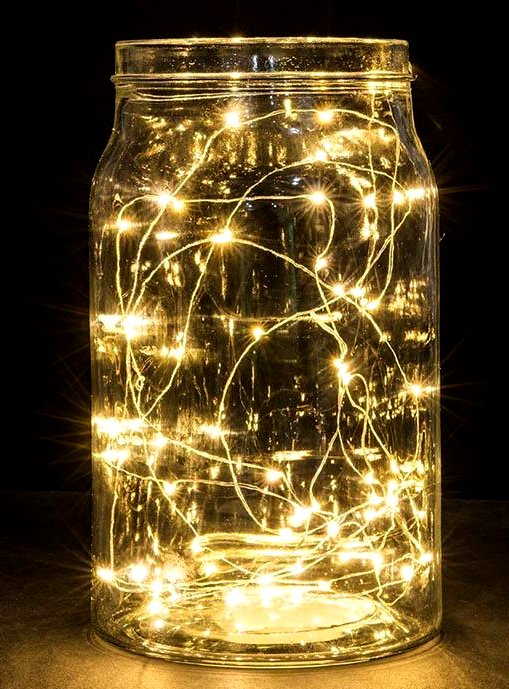
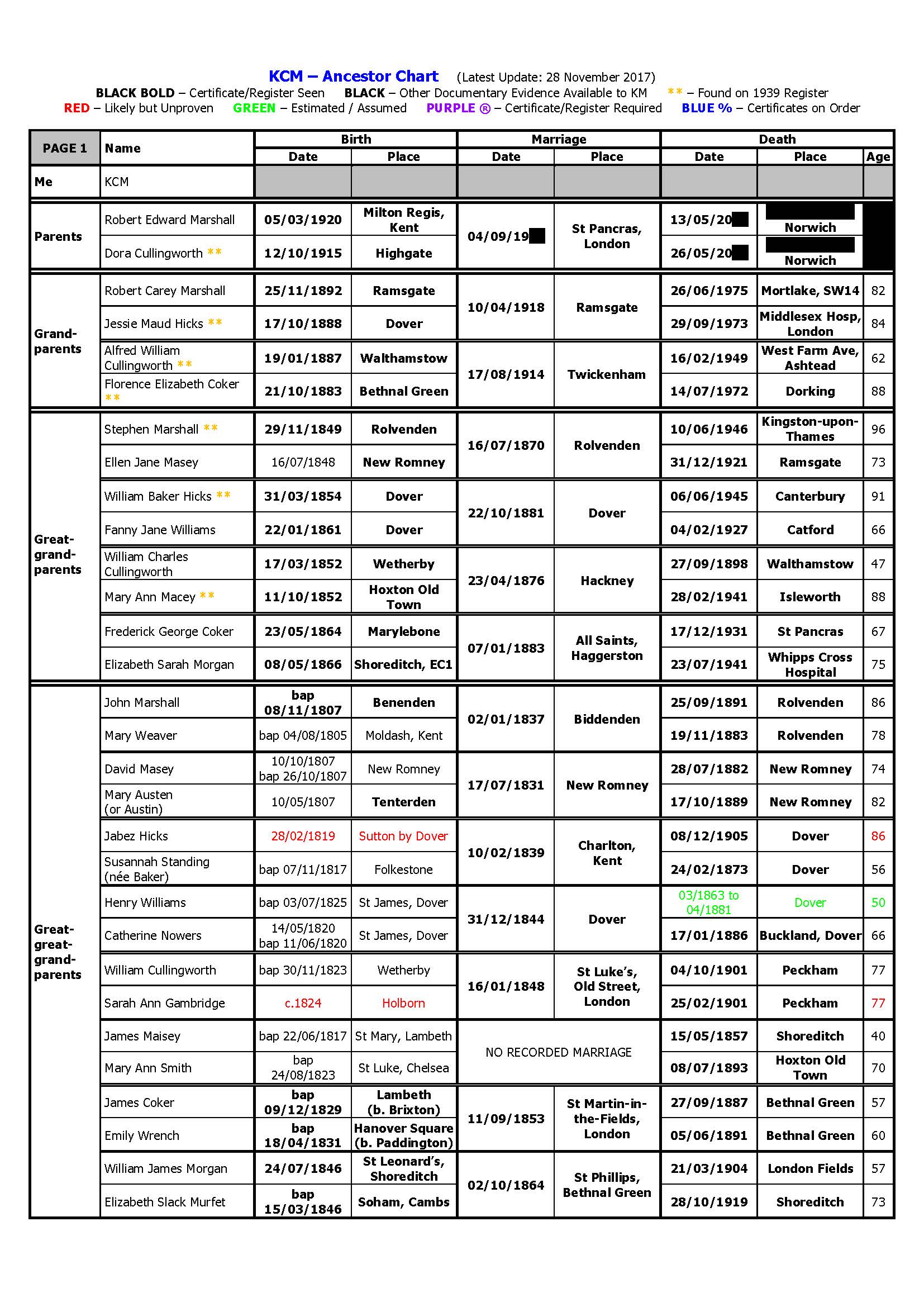
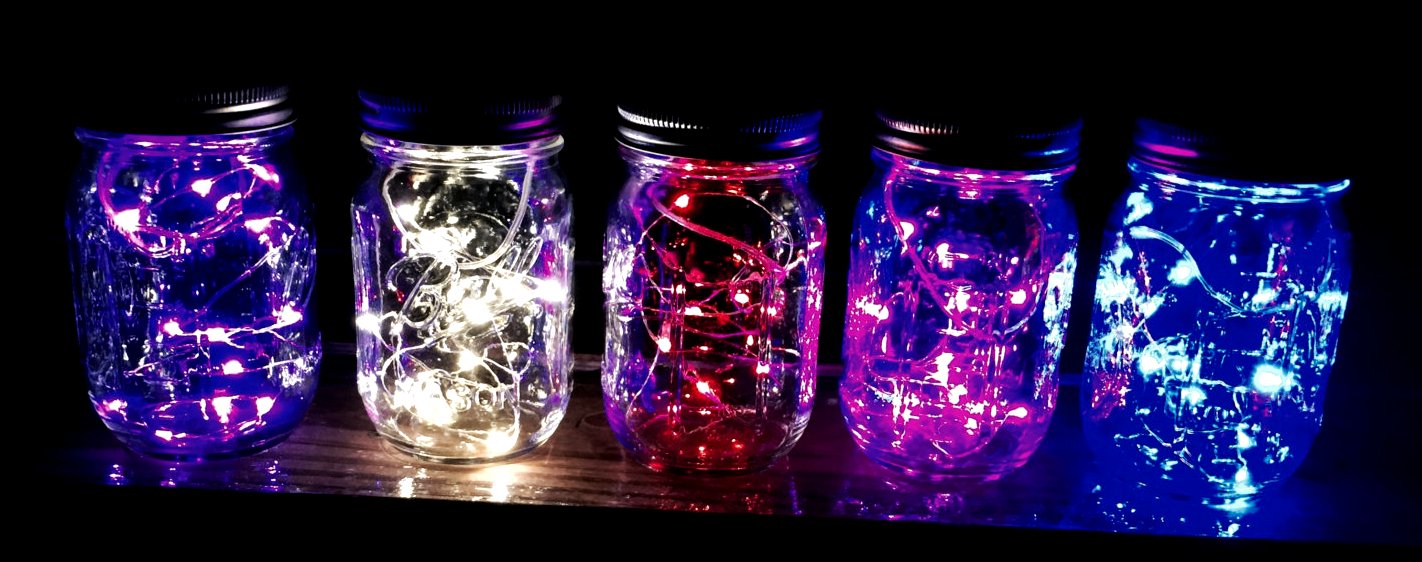
There are many different traditions embedded in these festivals. In fact so many that years ago we decided to create our own. Hence our Winter Lights. So when the Christmas decorations – tree, holly, cards, crib figures and so on – come down the lights remain, just as they preceded the Christmas decorations.
In fact the tradition we created was to put lights in our main windows. They go up on the Feast of Christ the King, which is the Sunday before Advent (so in late November) and stay up until Candlemas on 2 February.
Why? Well, why not? Lights cheer the place up! They add some fun, interest and maybe even some mystery. They give light to scare away the dark during the gloomiest two months of the year. And while the lights don’t banish SAD they do shine a little happiness, and let’s be honest we could all do with that at this time of year.
Yes, OK, before anyone says it, the lights do take a certain amount of energy to run. But if, like us, you standardise on LEDs then the cost and environmental impact is negligible. As an example, the set of lights plugged in by my desk are rated to use 3.6 watts of electricity; over 70 days that’s 6KwHr at a cost of about £1. So you could run four sets for the cost of a couple of coffees, or (in London) the cost of a pint of decent beer. Even my environmentally conscious brain isn’t going to worry too hard about that; maybe I’ll just drink one fewer mug of tea a week.
So if you would like to help cheer the place up, and you have lights that you could like to leave up for a while, why not join our tradition. Together we might even be able to make it into something big.

Happy New Year

I name this Year, 2018


God bless her

and all that sail in her

The colour of the message above is Pantone 18-3838 Ultra Violet
“a provocative and thoughtful purple shade” which is the designated colour for 2018.

Thoughts on Family History

In doing my family history I, like most, keep my records in a piece of software designed for the purpose. In my case this is Family Tree Maker (FTM), which (is no longer owned by but) syncs with Ancestry [https://www.ancestry.com]. I looked quite hard at the options many years ago and found that FTM was the most useable of the many family tree applications available.
And then a couple of years ago, when Ancestry announced they were ceasing support and development of FTM, and before it was acquired by Mackiev, I looked again at the market and still found nothing I thought came up to FTM for either functionality or usability. So like many others I was very happy when Mackiev took on FTM and have worked with Ancestry to maintain the FTM-Ancestry integration.
What all family tree software allows you to do is plot not just your direct line, but also the branches by adding the laterals (siblings etc.) for each person. I know many don’t bother with this but concentrate only of their father’s father’s father’s … line, or at least their direct lines. To me this is not a good approach for two reasons.
First of all, adding in all those laterals (siblings, uncles, aunts, cousins, half- and step-siblings, and more, going ever backwards) provides more information. And hunting around them can often provide key evidence to verify (or at least suggest) one’s actual ancestral line. Nefarious family members are often witnesses at marriages, the person registering a death, or shown on a census as sharing a house.
Secondly, this provides a huge amount of rich interest, and often the odd skeleton in the wardrobe. Ah, so great-grandmother was actually a tailor with her own business and not just any old seamstress. GGGG-uncle Bulgaria did serve at Waterloo, as Grandma always said. And no-one in the family knew great-grandfather had a bastard child after he left great-grandmother in 1910, and in the process he told fibs to either the registrar of births or the 1911 census. [This latter actually happened in my family: my mother had a half-aunt who she was totally unaware of until I found her.]
But in amongst all this it is often quite hard to remember where the gaps in your research are, and how good is the quality of the data you have. This is important if, like Noreen and I, you believe in being forensic in proving linkages. I’m never really happy until I can be pretty sure my evidence would stand the “beyond reasonable doubt” test of a criminal court. However, as Clarenceux King of Arms has reminded me more than once, you do occasionally have to fall back to the civil court standard of “on the balance of probabilities” – which does still require substantial evidence which would be allowable in court but not quite as rigorously as in a criminal court. There’s far too much guesswork and wishful thinking amongst family historians, and that won’t do, nor will copying other people’s research without checking it. Remember also the plural of anecdote is not data.
All the software packages I’ve looked at do allow you to reference and source your information, as any good researcher should. But what I have never found is a package which allows you to set, for each piece of information, a Red/Amber/Green traffic light style flag to indicate the quality of the data with a quick visual check. For instance a birth registration might be GREEN if you have the birth certificate or have seen the baptismal register; AMBER if it is information which is known in the family but not well documented, like Great-grandma’s birthday; but RED if is a date you’ve back-calculated from the age given on a death certificate or census (both of which are notoriously unreliable, albeit useful). To me this is a major failing and any family tree software application which includes RAG flags will have a significant selling point.
One thing I have found useful, and which provides some part of a way round the omission of RAG flags is a “family table”. Many sources provide pretty charts which allow you to plot out you, your parents, their parents, and their parents, and so on; ie. just your direct ancestors. This can be in circular form or in the more usual form of a tree. And they are mostly large cumbersome wallcharts with room for little more than the name; dates of birth and death if you’re lucky.
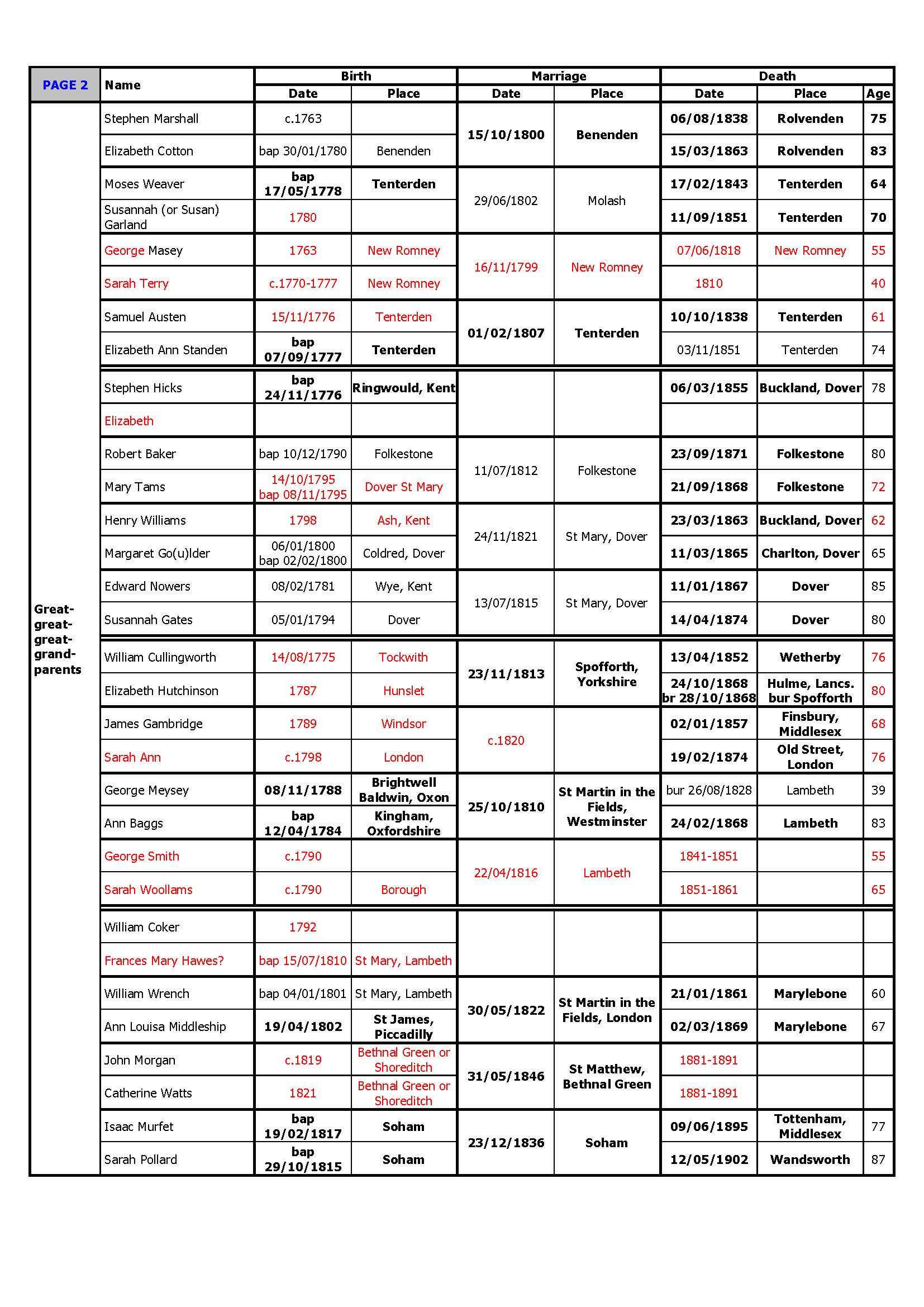
I’ve found it better to make my own using a simple table structure in MS Word (any word processing or spreadsheet software should do) – I stole the original idea from my wife and have since adapted it. I have three sheets, which takes me back to my GGGG-grandparents (so 250 or so years). It is designed to be printed on normal A4 paper; and carrying two or three sheets of paper in a pocket or handbag isn’t unreasonable – and very useful if you get into family conversations with relatives or friends. OK, so it isn’t as pretty as many of the commercial offerings, but that’s not important; it’s much more convenient.
Here are the first couple of pages of my table (click on the images for a larger view):

Sample Family Table 1 Sample Family Table 1

[I’ve redacted a few details, just to make it a bit harder for the criminally minded, but even if I hadn’t all the information is in the public domain, although it might cost a few quid and a lot of time to get at it.]
For me the other way this table wins is because I’ve used colour-coding. That means I have a very quick visual check on where I have holes and information I need to prove. The more black there is on the table the better the data. And as one might imagine by the time one reaches page 3 there are a lot of gaps and a lot of red – it’s all work in progress.
If anyone would like a blank copy of the table you can download the MS Word version here. If you do use it, let me know – just so I can wallow in feeling slightly useful! 🙂
Meanwhile happy ancestor hunting.

Five Questions, Series 10 #5

A big fanfare! Because we have reached the last question in Series 10 of Five Questions.

★★★★★

Question 5: How would you describe yourself in three words?
Totally fucked up.
★★★★★

OK, so that’s the end of this series of Five Questions. I hope you’ve enjoyed it, maybe learnt something (if only about my craziness) and possibly even had a think yourself.
As in the past, if I can find enough good – or crazy – questions I may do another series, sometime next year. So if you have a good question, or something you want to ask, then do please get in touch – or leave a note in the Comments. And yes you can ask literally anything you like!
Meanwhile, it’s the season to wish everyone a very merry Christmas and a fabulous New Year!

Five Questions, Series 10 #4

And so on to question four and we’re getting towards the end of this tenth series of Five Questions.

★★★★☆

Question 4: Why don’t sheep shrink when it rains?
Because they’re 10% nylon?
But seriously … The real answer is almost certainly to do with the cross-linking of the long-chain protein polymers that make up each hair and the mechanical interlinking between the individual hairs. The more random cross-linking there is, the more the proteins will fold together and the curlier (thus shorter) the hairs. Similarly the more random the mechanical interlinking, the more likely the fibres are to be shorter. Wool has to be processed to remove this interlinking and cross-linking and create straight fibres, which we call unshrunk. Heat, water and mechanical action go to create the randomisation of the linking and thus cause the fibres to shrink in the wash. Now sheep are a natural product; they aren’t processed. Hence their wool is pretty random and effectively pre-shrunk, so they aren’t going to shrink more in the rain.

Five Questions, Series 10 #3

Here we are at the halfway point, at question three in this series of Five Questions.

★★★☆☆

Question 3: Do illiterate people get the full effect of alphabet soup?

Can illiterate people even know what alphabet soup is?

Clearly if you’re totally illiterate you can’t get the full effect because you don’t even know what letters are let alone identify them.
Although, who knows, there may be a deeper hidden truth.

More thoughts on "Me Too"

Earlier today my friend Katy (@thevoiceofboo) retweeted Louise O’Neill (@oneilllo):

Men who choose to respond to the emerging stories of sexual harassment with “But I’m not like that” are the embodiment of a patriarchal society that teaches straight, white men to believe that their experiences alone are the most valid and important.

That may indeed be so, but look at the other side of the coin. If I say “But yes, I am like that” I get vilified. Men have been put in a lose-lose situation (yes, OK, by their own stupidity), so no wonder some are pissed off and feel hunted.
I know there have been times I’ve overstepped the mark, either physically or verbally. I can call a handful to mind, but no doubt there are others I’ve forgotten. I can’t find the right words to describe how I feel about this, but they include: sorrow, mortified, distressed, depressed, demoralised, upset, worried and fearful.
This is despite, right from my teen years, having a personal code of conduct that I don’t touch people (especially females) and I’m very circumspect about saying anything – which is why, girls, you won’t generally find me complimenting even your attractive frock. I’ve spent my life being almost afraid, certainly too insecure, to engage with females on anything but a very superficial, purely business, level. There are very few I have known well enough to even begin to rise above this level; one reason, no doubt, why I’ve never had very many girlfriends.
To give you an example, at a fairly innocuous level, of how insecure this made me feel … If, at work, I was lunching alone in the restaurant and there was a group of female colleagues I knew already at a table, I would never join them (unless they spotted me and beckoned me over). I always felt that to do so would (potentially, at least) be imposing myself into their possibly girls only conversation and that this was inappropriate. I had many fewer qualms about joining an equivalent group of guys.
And yet I can still do stupid things, at least on an odd occasion – in spite of being able to think about these things and remaining vigilant.
But the sad thing is, I suspect, that the vast majority of blokes, who don’t think and drift through life relying on their Neanderthal instincts, are just going to say “Err … Yer wot? … Fuck off” and carry on regardless; probably despite wondering why they feel that womankind is against them, which just reinforces their attitude.
It’s all very sad.

Ten Things

We’re returning to our normal, fairly run-of-the-mill themes for this month’s Ten Things.
Ten Things which should be Large

  1. Pine trees
  2. Steaks
  3. Mugs of tea
  4. Gin & tonic (well, at least the gin should be large!)
  5. Joints of meat
  6. Beds
  7. Tax rebates
  8. Lottery wins
  9. Bouquets of flowers
  10. Bottles of Champagne