Here’s our next instalment of things that happened in ..24 years of yore.
Notable Events in 1824
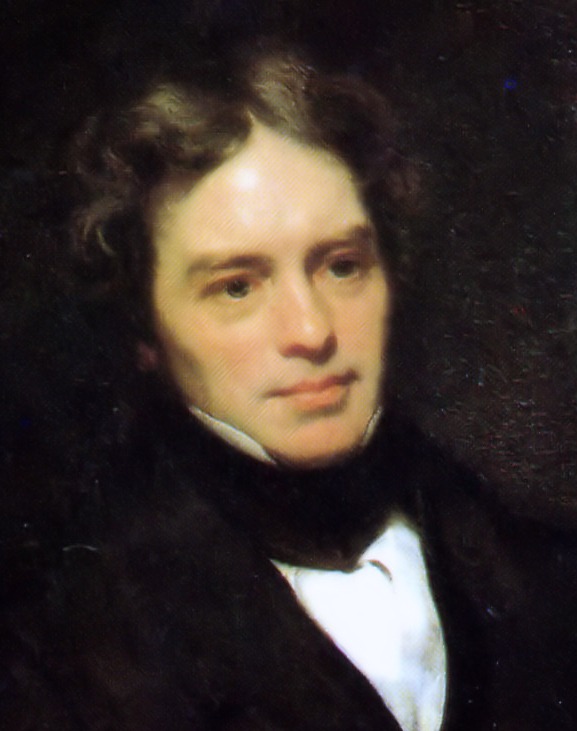
8 January. After much controversy, Michael Faraday (below) is finally elected as a member of the Royal Society.
8 January. Birth of Wilkie Collins, British novelist (d.1889)
21 January. Birth of Thomas Jonathan “Stonewall” Jackson, American Confederate general (d.1863)
10 February. Simón Bolívar is proclaimed dictator of Peru.
4 March. Founding of the Royal National Lifeboat Institution (RNLI)in Britain.
19 April. Lord Byron, the British poet, dies at the age of 36 in the Greek city of Missolonghi, where he had taken ill while making plans to liberate the Greeks from Ottoman rule.
7 May. Premiere of Beethoven’s Symphony No.9 at the Theater am Kärntnertor in Vienna.
16 June. The Royal Society for the Prevention of Cruelty to Animals (RSPCA) is established in Great Britain.
4 September. Birth of Anton Bruckner, Austrian composer (d.1896)
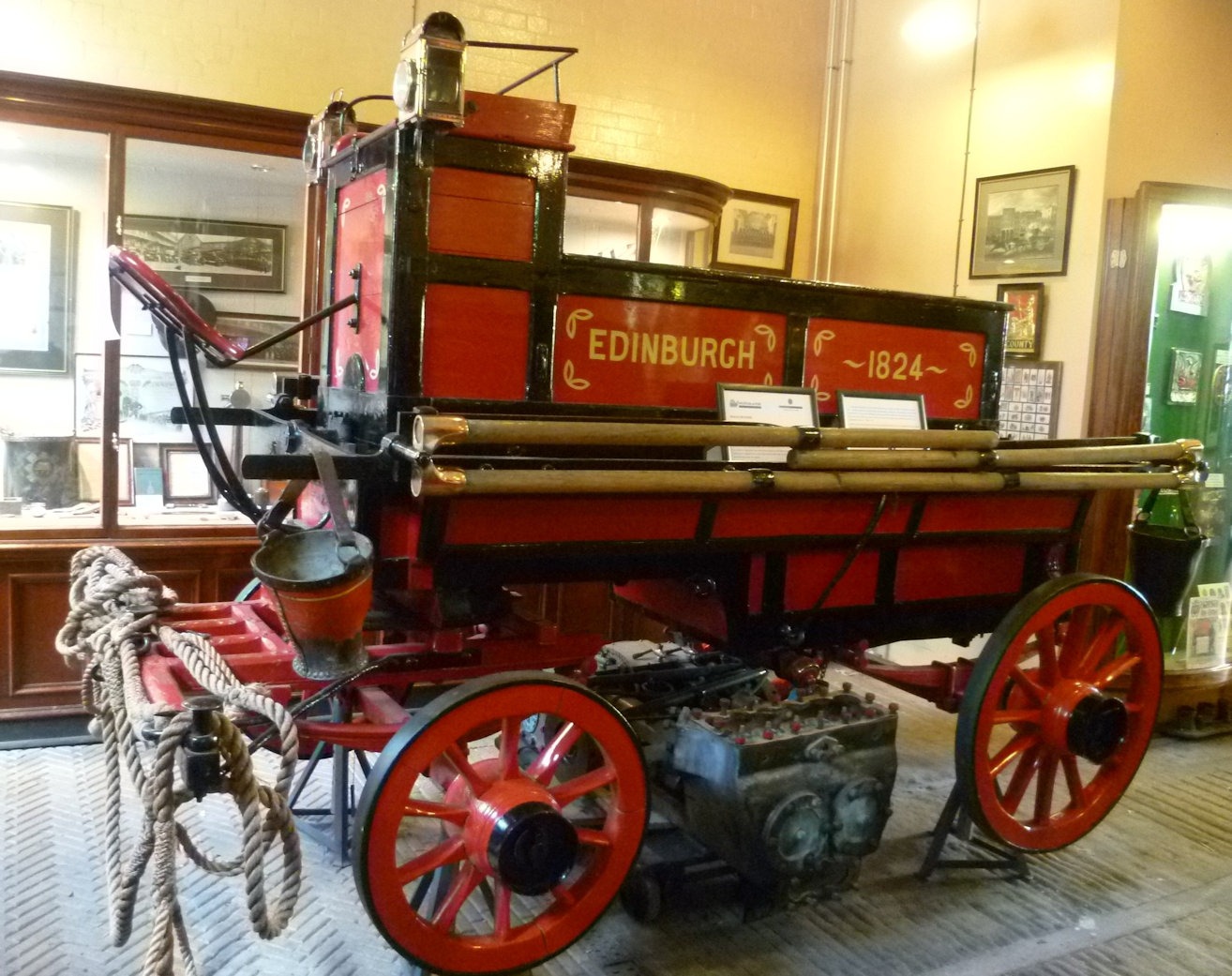
10 October. The Edinburgh Town Council founds the Edinburgh Fire Engine Establishment, the first municipal fire brigade in Britain (and probably the world). [Pictured below an 1824 Edinburgh Fire Engine.]
21 October. Joseph Aspdin patents Portland cement.
Unknown Date. The Colorado potato beetle is first described, by Thomas Say.
Each month we’re posing five pub quiz style questions, with a different subject each month. As before, they’re not difficult, but it is unlikely everyone will know all the answers – so hopefully you’ll learn something new, as well as having a bit of fun.
Classical & Ancient World
What is the 4th letter of the Greek alphabet?
Which English city was once known as Duroliponte?
What prized object comprises the coat of the winged ram that flew Phrixus to safety?
Name the Sun-god of Ancient Egypt?
In Greek mythology the Little Owl traditionally represents which goddess?
Palaeontologists have discovered several new species of extinct bone-crushing Tasmanian Tigers.
At the other end of the size scale, researchers looking in a Tibetan glacier have found over 1700 different frozen viruses.
Still with research reported in Popular Science magazine, the social white-browed sparrow weavers varying nest shapes demonstrate that birds have “culture”. Mind I thought we already knew that from the dialects of Meso-American parrots.
Leaving the animal world for the geological, in September 2023 something made Earth ring like a bell for nine days. [LONG READ]
Back in the early life of the solar system, it seems that Jupiter’s moon Ganymede was struck by an asteroid bigger than the one which wiped out the dinosaurs.
While on brains, within the billions of neurons they contain there are trillions of typos – some good, some bad. [LONG READ]
And still on brains, it’s being suggested that many older people don’t just maintain, but actually increase, their cognitive skills. [££££]
And finally with things mental, a Stanford-led research group has identified six different types of depression each of which is likely to respond differently to various treatments. [LONG READ]
Sexuality
Sex historian Dr Kate Lister tries to explain exactly why women masturbate. [££££]
Loughborough has installed a new memorial bell as a tribute to those who died from Covid, and a thank you to NHS and other key workers. And unusually for the UK, it’s a campanile. We need more campaniles.
In which David Hockney stimulates an academic epidemiologist and mathematician to think about four dimensional chairs.
Philip Curtis, the director of The Map House in London, talks about mapping Antarctica.
History, Archaeology, Anthropology
We reported previously that Stonehenge’s altar stone had been identified as originating in NE Scotland. Now it seems that the front runner locations, Orkney, has been ruled out.
Our favourite London blogger, Diamond Geezer, visits Theobalds Grove (one stop outside Greater London). This is my home town; I was brought up just three minutes walk from this station! Needless to say it’s changed quite a bit since I last lived there in late 1970s.
I lived a couple of hundred yards down the road to the right of the church
Emma Beddington set out to see what it’s like to spend a day as a dog, and finds it impossible.
People
A German mathematician who lived in France as a hermit, left thousands of pages of work. Now there’s a debate over whether he was a mathematical genius or just a lonely madman. [LONG READ]
Here’s our next instalment of things that happened in ..24 years of yore.
Notable Events in 1724
7 April. The premiere performance, of Bach’s St John Passion (BWV 245) at St Nicholas Church, Leipzig.
22 April. Birth of Immanuel Kant, German philosopher (d.1804)
25 August. Birth of George Stubbs, English painter (d.1806)
24 September. The Paris Bourse, the stock exchange for France, is created by order of King Louis XV on the advice of Nicolas Ravot d’Ombreval, four years after a financial panic had shut down trading.
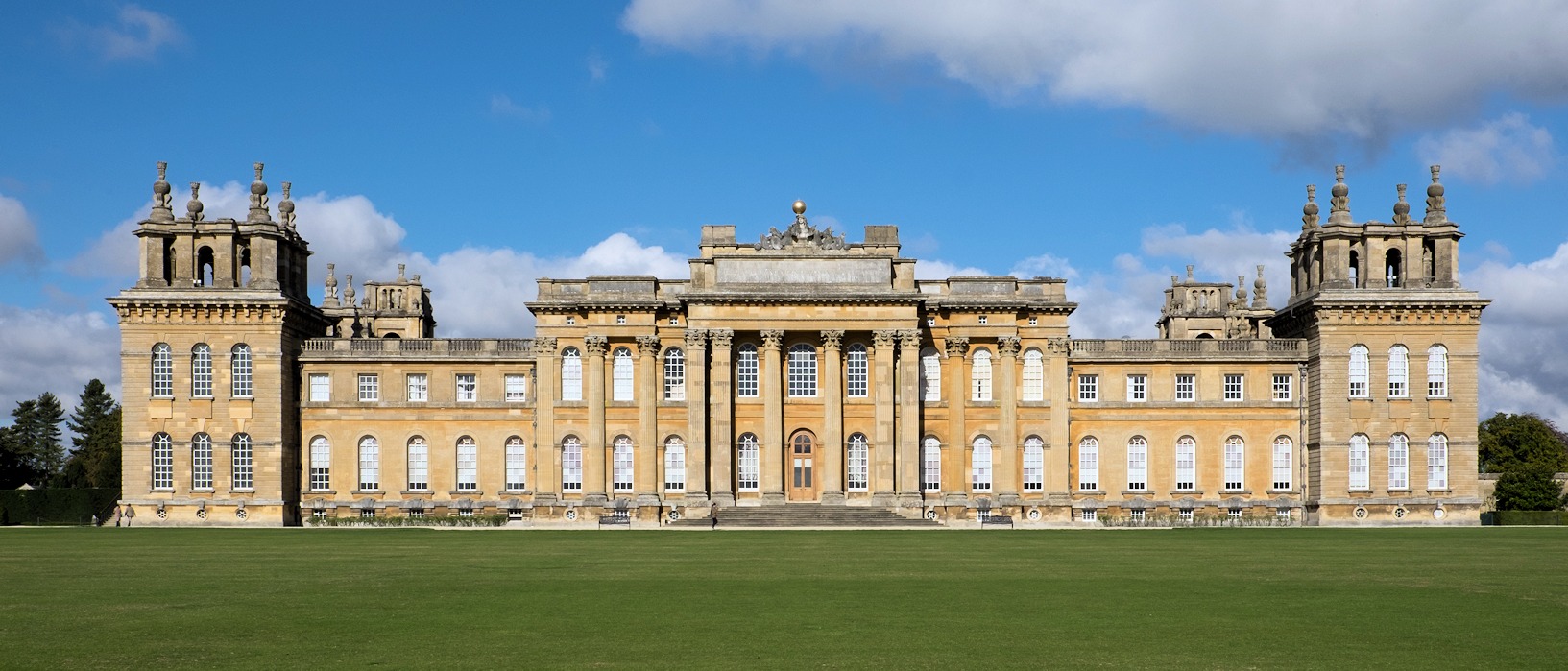
Unknown Date. Construction of Blenheim Palace (below) is completed. It is presented as a gift from the nation to the Duke of Marlborough, for his involvement in the Battle of Blenheim in 1704.
Unknown Date. Founding of Longman, the oldest surviving publishing house in England.
Our look at some of the significant happenings 100 years ago this month.
2. Born. Daniel arap Moi, 2nd President of Kenya (d. 2020)
4. Born. Joan Aiken, English writer (d. 2004)
16. Born. Lauren Bacall, American actress (d. 2014)
28. US Army pilots John Harding and Erik Nelson complete the first aerial circumnavigation of the globe; it has taken them 175 days and 74 stops before their return to Seattle
30. Born. Truman Capote, American author (d. 1984)
And now to tiny wings … scientists are doing all sorts of probes into honey and finding it can tell a huge story about the environment where it was created – it’s full of pollen, DNA, bacteria, and a lot of other junk. [££££]
Back to one of my favourite themes: wasps.
Each summer, wasps in the UK capture about 14 million kilogrammes of insects such as caterpillars and greenfly, making them important friends to gardeners.
First Prof. Seirian Sumner (aka. @waspprof) looks at why there are so few wasps around this year. (Spoiler: wet Spring.)
Secondly, yet another look at the importance of wasps as both predators and pollinators.
Tardigrades, those almost indestructible micro-creatures, that have been preserved in amber are revealing when they gained their indestructability. [££££]
Psychological research has a problem with reproducibility, and now there are indications that men may not be more attracted to scent of fertile women, after all.
Let’s explode another psychological stereotype … only children are no more self-centred, spoiled and lonely that those with siblings. [LONG READ] [££££]
As below, so above – maybe …
Astronomers have spotted a comet which is being kicked out of the solar system.
And NASA’s army of citizen scientists have spotted an object moving at an incredible 1 million miles per hour (that’s about 40 times round the Earth, an hour!).
Health, Medicine
It is becoming increasingly evident that Parkinson’s disease is related to the gut microbiome.
Would women be healthier and happier if they avoided the menopause and menstruated for ever? Researchers are divided.
Environment
What people classify as pests are only species of wildlife going about their lawful business and in the process encroaching on what we declare as human-only places (like houses).
One American environmentalist on the joy of harvesting greywater for his desert garden.
There are many, many big companies that we’ve never heard of, but who have a surprising grip on our lives – and failure of any one (like CrowdStrike did in July) could being the world to a halt.
Some really forensic research has worked out that Stonehenge’s massive Altar Stone came from north-east Scotland. And we thought that moving the bluestones from SW Wales was a feat too far!
Just a quick reminder that the original (ancient Greek) Olympic Games were entirely male and entirely nude.
Here’s our next instalment of things that happened in ..24 years of yore.
Notable Events in 1624
2 March. The English House of Commons passes a resolution making it illegal for a Member of Parliament to quit or wilfully give up his seat. Afterward, MPs who wish quit are appointed to an “office of profit”, a legal fiction to allow a resignation. It is still in force today.
13 April. Death of William Bishop, first Roman Catholic bishop after the English Reformation (b.1553)
May. The first Dutch settlers arrive in New Netherland.
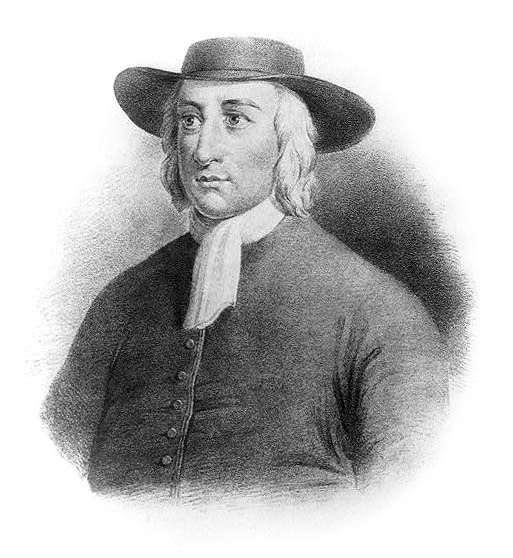
July. Birth of George Fox (below), English founder of the Quakers (d.1691)
13 August. Cardinal Richelieu is appointed by Louis XIII of France to be his chief minister, having intrigued against Charles de la Vieuville, Superintendent of Finances who was arrested for corruption the previous day.
24 August. Jasper Vinall becomes the first known person to die while playing the sport of cricket, after being struck on the head with a bat during a game at Horsted Keynes in England.
21 September. The Roman Catholic church’s Dicastery for the Clergy issues a decree that no monk may be expelled from his order “unless he be truly incorrigible”.
24 December. Denmark’s first postal service is launched by order of King Christian IV.
Unknown Date. Frans Hals produces the painting now known as The Laughing Cavalier.
Unknown Date. The German-language Luther Bible is publicly burned, by order of the Pope.
Unknown Date. Birth of a Female Greenland shark (which is still alive in 21st century).