Category Archives: food+drink

Monthly Links

Here we go again with this month’s collection of links to items which interested me and which you maybe didn’t want to miss.


Science, Technology, Natural World

On the colours of the stars. [££££]

There are some small “earthquakes” on the moon, and the cause is somewhat surprising.

They’re still hunting for the missing flight MH370, and now there is hope of finding it using divination by barnacles.

Scientists have found a huge, remote, Fijian cave, and it’s full of tiny endangered bats. [££££]

Scientists are looking at dreaming and REM sleep across the animal kingdom.

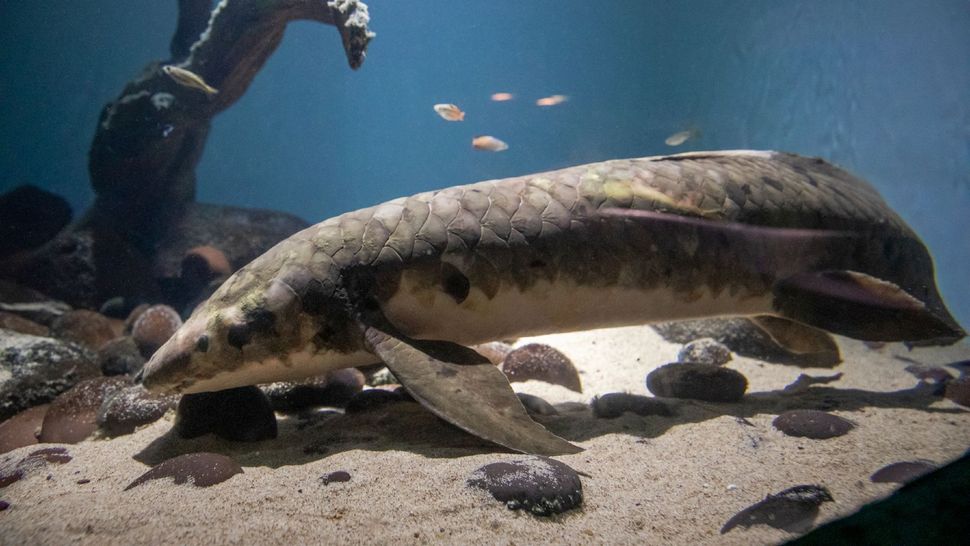
So just how old is the oldest aquarium fish? We know koi carp can live to 80, but Methuselah is even older.

Health, Medicine

Explaining both the neuroscience and physiology of fear and anxiety.

More screening for cancers sounds like it could be good for many of us, but there are serious questions over whether the NHS could cope with it.

Girls, your vagina has it’s own microbiome (just as our guts and skin do), so here are a few pointers on how to look after it.

Yes, it turns out the so-called “male menopause” is a thing for at least some men. [££££]

So is pee sterile?

The medicinal leech has a long history, and is still used today.

Most of us suffer from delusions of some form, however mildly. Here are the five most common.

We all have childhood memories – some of us more than others – but how reliable are they?

It seems that some people whose brains flatline but survive can recall lucid “experiences of death“.


Sexuality

Just what were the rules around masturbation in Ancient Greece? As if one can put rules round such a thing! [££££]

Here are some things most of us don’t know, but probably should, about emergency contraception.


Environment

A recent report says that Britain’s ocean fish populations are in a quite some trouble.


Art, Literature, Language, Music

Seemingly the speed at which someone talks has no relationship to intelligence.


History, Archaeology, Anthropology

Researchers have calculated that the species which were to become Homo sapiens suffered a population bottleneck, and could have gone extinct, almost a million years ago.

Meanwhile researchers in southern Africa have discovered some ½million year old timbers which appear to have been woodworked.

5000-7000 years ago there was a culture in what’s now Eastern Europe which burned its houses down every couple of generations – but we don’t know why.

On the age of, and reasons for, the Egyptian pyramids.

Along with Greek rules around masturbation (see above) the ancient world had various rules about with female beauty. [££££]

Two rare Roman cavalry swords from around 200AD have been found in the Cotswolds.

On a similar note, an early medieval warrior buried with his weapons has been found in Germany.

In around 900AD there was a very powerful woman who ruled over that Papacy.

On the involvement of the Templars in the murder of Thomas Becket in 1170.

A bit further on … a 14th-century cannon has been found off Swedish coast.

Cannibalism in human history has rarely been just about eating to survive.

An Ode to the Rag-and-Bone Man.


Food, Drink

Notable Sandwiches #68: Francesinha e Francesinha Poveira.


Lifestyle, Personal Development, Beliefs

Do opposites attract? Apparently not as research is suggesting that couples are more likely to be similar than different.

Another for the girls … Attractive though it may be, in more ways than one, apparently going braless does come at a cost. However if you’re going to wear a bra, then find your correct size, ‘cos it probably isn’t what you think.

So what is it about school nicknames? Harry Mount suggests that while they can be fantastically rude, the ruder they are, the more affectionate.


Shock, Horror, Humour, Wow!

Finally, this year’s Ig Nobel Prize winners have been revealed.


Culinary Adventures #103: Fried Rice

As the alert will have spotted by now, I’m catching up on a backlog of the recipes I’ve tried out over the summer. So here’s another.

Fried Rice

Serves: 2
Preparation: 15 minutes
Cooking: 15 minutes

Ingredients

  • Mild vegetable oil of your choice
  • 3 eggs, lightly beaten
  • 2 banana shallot or small onion, chopped
  • 2 spring onions, sliced into rounds
  • 4 large mushrooms, chopped
  • 4 cloves garlic, chopped
  • 3 handfuls frozen peas, thawed in boiling water
  • 1 yellow pepper, chopped fine
  • 150g cold pre-cooked long-grain rice
  • 1 tablespoon light soy sauce or more depending on taste
  • Ground black pepper
  • 150g leftover meat or prawns

What to do …

  1. Heat the wok or large frying pan over high heat for a couple of minutes. Add about a tablespoon of oil.
  2. Pour in the eggs and scramble. When just cooked, remove from the pan and set aside.
  3. If needed, add a bit more oil. Add the onion, spring onion, yellow pepper, mushrooms and garlic. Cook just until the onion is just beginning to brown. Set aside with the egg.
  4. Again, add a bit more oil of needed. Add the meat/prawns and cook for 5 minutes until hot through and beginning to brown.
  5. Increase the heat and add the rice, soy sauce, egg, veg mix, peas and a good grind of black pepper. Stir-fry for about 5 minutes until the rice is well hot throughout.

Notes

  1. Make the rice ahead and chill before frying. The key is starting with chilled, day-old cooked rice that’s only just cooked.
  2. Don’t use freshly cooked rice. If you try to use freshly cooked rice, it becomes overcooked and too soft.
  3. Don’t make ahead of time and reheat. This will also result in overcooked rice.
  4. If using frozen or raw prawns, be sure they get fully cooked through.

Culinary Adventures #102: Turkey Stirfry with Lime & Coconut

OK so here’s another stirfry I’ve been playing with in recent weeks.

Just for a change, we bought a pack of turkey breast strips. We had no great hopes for them as our previous encounters with bits of turkey haven’t been encouraging. However this was good and tender.

Turkey Stirfry with Lime & Coconut

Serves: 2 for a generous main course
Preparation: 15 minutes
Cooking: 10 minutes

For the Stirfry

  • 2 nests of Noodles
  • 300g pack Turkey Breast strips
  • 2 banana shallots or a medium onion, finely sliced
  • 1 red or yellow pepper, sliced
  • 3 or 4 medium mushrooms, sliced
  • 3-6 cloves of garlic (according to taste), sliced
  • generous handful cashews or pine puts (optional)
  • 3 tbsp olive oil

For the Sauce

  • 1-2 tbsp light soy sauce
  • 1 tbsp Worcester sauce
  • 50ml dry sherry
  • juice & zest of 2 limes
  • generous 2 tbsp tomato paste
  • generous 1 tbsp garlic paste
  • pinch chilli flakes
  • 1-2 tbsp flakes of coconut cream (flake some from a block)
  • black pepper

What to do …

  1. As always with stirfry, have everything prepared before you start cooking.
  2. Mix all the sauce ingredients in a small bowl.
  3. Slice the onion, pepper, mushrooms & garlic.
  4. If the turkey strips are too large, cut them into small-finger sized pieces.
  5. Cook the noodles according to the packet instructions.
  6. Sauté the onion, pepper and garlic in the olive oil until going translucent.
  7. Add the turkey and cook for another 3 minutes. If necessary add a little more oil.
  8. Then add the mushrooms and cook for a further couple of minutes.
  9. Add the sauce to the pan and cook to thicken and reduce for 3 minutes or so.
  10. Just before the end add the nuts (if using).
  11. Drain the noodles and divide between warmed bowls.
  12. Top each bowl of noodles with stirfry.

Notes

  1. You don’t need salt in this, there’s enough in the soy sauce.
  2. As always, if you want to ensure the sauce thickens well, mix in a teaspoon of cornflour.
  3. As an alternative, top each bowl of stirfry with the nuts, rather than adding them to the stirfry.

Culinary Adventures #101: Scallops with Lime & Ginger Stirfry

Oh my word, we’ve not had a culinary adventure for nearly 3 months. That’s inexcusable!

Anyway last Friday was our 44th wedding anniversary. No, we don’t know how it happened either! So I did something a bit different, largely my own invention!

Scallops with Lime & Ginger Stirfry and Noodles

Serves: 2
Preparation: 15 minutes
Cooking: 10 minutes

Main Ingredients

  • Scallops – as many as you like, we had a greedy 3x 125g packs
  • black pepper
  • paprika
  • 2-3 tbsp sunflower oil
  • 2 nests of Noodles

For the Stirfry

  • 1 large salad onion (or 1 banana shallot, or ½ small-ish onion), finely sliced
  • 1 red or yellow pepper, sliced
  • 3 medium mushrooms, sliced
  • 2-3cm piece of ginger, grated
  • 2-3 tbsp sunflower oil

For the Sauce

  • ½ wine glass dry sherry
  • a tot of brandy
  • juice & zest of 2 limes – zest reserved
  • 1-2 tbsp tomato paste
  • 1 tbsp garlic paste
  • black pepper

What to do …

You need to concentrate on the timing as the scallops don’t want to be overdone; so have everything prepared in advance of cooking.

  1. Lay out the scallops on a board and pat them dry with kitchen paper. Sprinkle them on both sides with freshly ground black pepper and paprika.
  2. In a small bowl mix together all the sauce ingredients.
  3. Cook the noodles according to the packet instructions.
  4. Sauté the onion, pepper, mushrooms and ginger all together in 2-3 tbsp sunflower oil in a suitable frying pan or sauté pan.
  5. When the stirfry is cooking well (3-4 minutes), put 2-3 tbsp oil in a second heavy frying pan on a high heat.
  6. When the frying pan is hot, sear the scallops and cook for about 4 minutes, turning them over halfway through.
  7. As soon as you put the scallops on, add the sauce to the stirfry, bring back up to heat and cook to reduce and thicken.
  8. Just before the scallops are done, quickly drain the noodles and divide between warmed bowls.
  9. Top each bowl of noodles with stirfry, then scallops and garnish with the lime zest.
  10. Eat immediately accompanied by a bottle of champagne.

And it was good! There were no leftovers.

Notes

  1. As usual for us, no added salt or sugar.
  2. If you want to ensure the sauce thickens well, mix in a teaspoon of cornflour.
  3. If you want a bit of variation of texture, add a handful of cashews or pine nuts to the stirfry shortly before serving.

Monthly Links

We bring you this month’s action-packed collection of links to items you may have missed.


Science, Technology, Natural World

When cells divide how do they accurately copy their DNA once, and only once? [LONG READ]

bat

Bats in the UK harbour coronaviruses; none apparently immediately dangerous to us, but we need to know more.

China has a mysterious wildcat, but is the Chinese Mountain Cat actually a discrete species? [££££]

On the Byzantine labyrinths that make up a cat’s nose. [££££]

In potentially good news there’s a plan to establish the UK’s first feline blood bank.

Octopuses change their skin patterns while sleeping, which suggests that they may be dreaming.

octopus

If insects actually have memories, it seems they may not survive across metamorphosis. [LONG READ]

Scientists have discovered a species of palm that flowers and fruits only underground, but they don’t yet understand how it is pollinated.


Health, Medicine

It seems that we have a gene which prevents most bird flu viruses from infecting us.

Nightmare Warning … There’s an unidentified something which causes a green hairy tongue – luckily it’s benign, just disturbing.


Sexuality

In a possible explanation of why vibrators are so effective, researchers have discovered neurons in the clitoris and penis which are especially sensitive to vibration. [££££]

One couple talk about sex in their mid-70s.


Social Sciences, Business, Law, Politics

One tax specialist is of the opinion that the UK’s Office of Budget Responsibility (OBR) has a completely erroneous view of the economy. [LONG READ]


Art, Literature, Language, Music

Some rarely seen Holbein sketches of the Tudor court are going on display later this year at the Queen’s Gallery.

pest rat

When the fantasy world wants a pest do they always choose rats?


History, Archaeology, Anthropology

Pendants made from bits of giant sloth indicate that humans settled in the Americas a lot earlier than previously thought.

At the same time archaeologists believe they’ve found the USA’s oldest stone tools to date. [LONG READ]

Back in the UK a rare Neolithic polissoir has been found hiding in plain sight in Dorset.

Pyramids and other remains have been discovered off the western tip of Cuba.

carnyx

The Carnyx, a brass musical instrument, was used as a psychological weapon of war by the ancient Celts.

Pompeii bread oven

Pompeii continues to provide surprises. In a current excavation archaeologists are uncovering a building containing a bakery oven (above), courtyard, a fountain and a number of frescos including one of what has (jokingly) been described as an early pizza (below).

pizza fresco

The story of Salisbury’s Medieval Giant.


London

London’s Hyde Park was once the playground of Tudor and Stuart monarchs, courtiers, and the upper echelons of society. [LONG READ]

There’s a hidden world underneath Waterloo Station, which is being revealed on its 175th anniversary prior to redevelopment.


Food, Drink

The Guardian‘s food writer, Felicity Cloake, looks at a few food rules and suggests they can be safely ignored.

Rachel Roddy recreates that Pompeii “pizza” (see above).

Do we need to be worrying about the sweetener aspartame in diet drinks? Spoiler: probably not. [LONG READ]


Lifestyle, Personal Development, Beliefs

A ramble around body hair and hairless bodies through the ages.


Shock, Horror, Humour, Wow!

And finally, please enjoy some highlights from this year’s Finnish Hobbyhorse Championships.

hobbyhorsing


Culinary Adventures #100: Summer Pudding

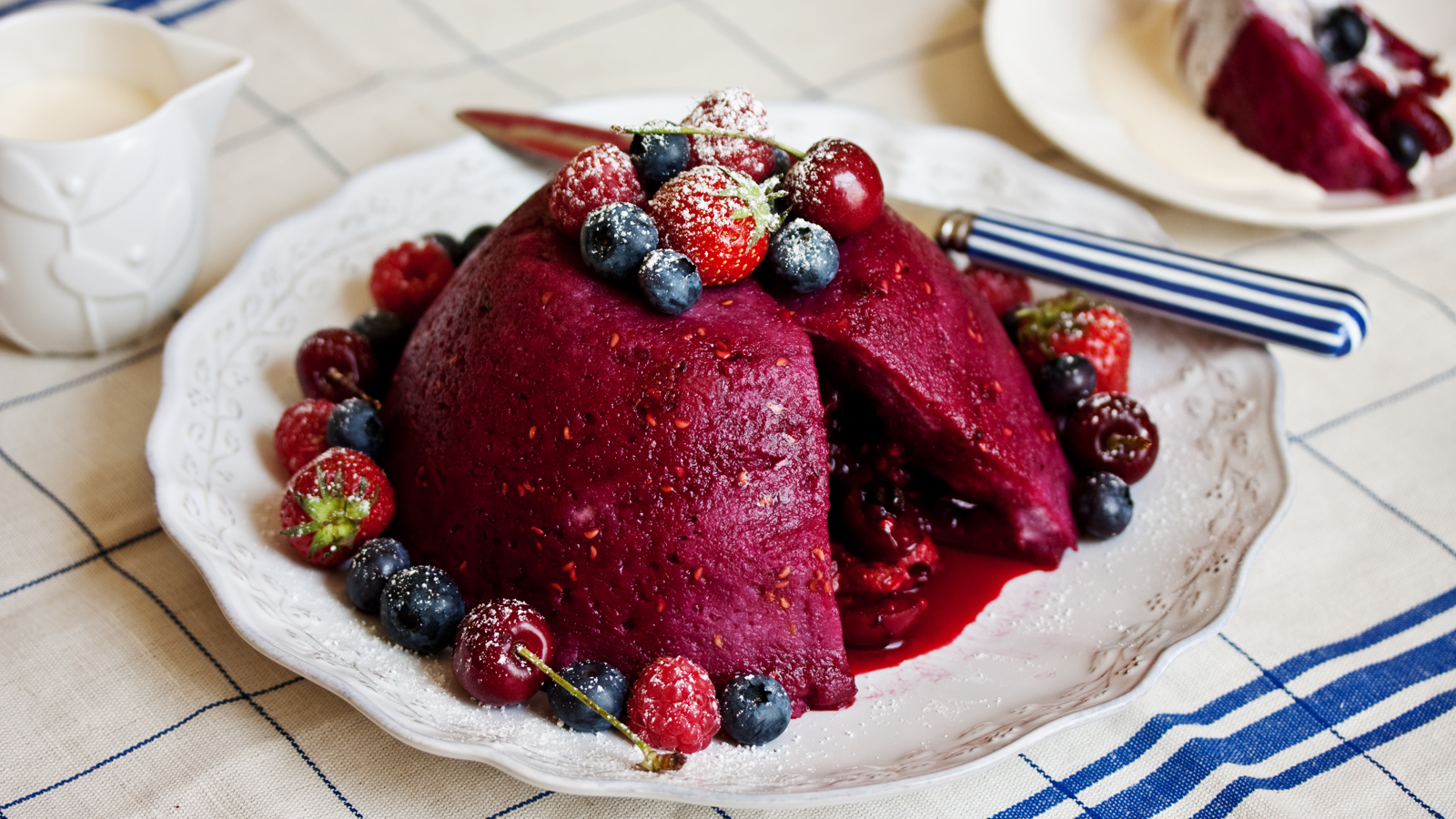
This Summer Pudding is definitely worthy of being post number 100.

As usual I hacked up someone else’s recipe as I went along; in this case a recipe by Sophie Grigson for the BBC at https://www.bbc.co.uk/food/recipes/summerpudding_90295.

Sorry no picture because we ate it! But it was just as good, and just a yummy as the one in Sophie Grigson’s recipe (below). Indeed it came out far better than I had expected.

Ingredients

  • 400g punnet Strawberries
  • 225g punnet Raspberries
  • 200g punnet Blackberries
  • 150g punnet Blueberries
  • 160g Granulated Sugar
  • ½ wine glass very sticky blackberry liqueur
  • Loaf White Bread
  • Sunflower oil or Butter for greasing

What to do …

  1. Wash the fruit. Hull the strawberries and halve any large ones
  2. Put all the fruit in a pan with the sugar and liqueur.
  3. Simmer very gently for about 5 minutes to get the juices running, then turn up the heat and cook for another 2 minutes. Take off the heat and allow to cool a bit.
  4. Meanwhile, grease a large pudding basin.
  5. Cut the bread into 1cm slices and remove the crusts.
  6. Cut a piece of bread to fit the bottom of the basin. Then cut pieces (rectangles, triangles) to fit the sides of the basin without any gaps. Remember to cut a piece to make the lid.
  7. Carefully strain the juice from the fruit; be careful not to mash the fruit.
  8. Starting at the bottom, dip one side of each piece of bread in the fruit juice and put in the basin, juice side out. Continue until you’ve done all the pieces of bread. If there are now gaps (the bread may shrink slightly) fill them with more slivers of juiced bread.
  9. Now tip the fruit into the basin.
  10. Dip the lid in the juice, and pour the remaining juice in with the fruit.
  11. Put on the lid.
  12. On top of the lid place a plate or saucer which fits closely, and weight it down with 1-2kg weights (or use tins of soup, beans, etc.).
  13. Leave to fully cool, then put in the fridge overnight.
  14. The next day, remove the weights and the plate/saucer. Run a thin blade around the edges, then invert the basin onto a shallow serving plate.
  15. Cut into thick slices and serve with double cream.

Notes

  • You can use any summer fruit. Blackcurrants are especially good and in my view preferable to blueberries; redcurrants and white currants work well. You could also use sliced peaches, nectarines or apricots.
  • So you don’t have blackberry liqueur? Use Cassis, which is more traditional anyway.
  • Don’t worry if the fruit doesn’t come to the top of the bread case – as mine didn’t because I used too large a bowl. Just turn the sides over and cut the lid down to fit the remaining space.

Culinary Adventures #99: Coronation Terrine

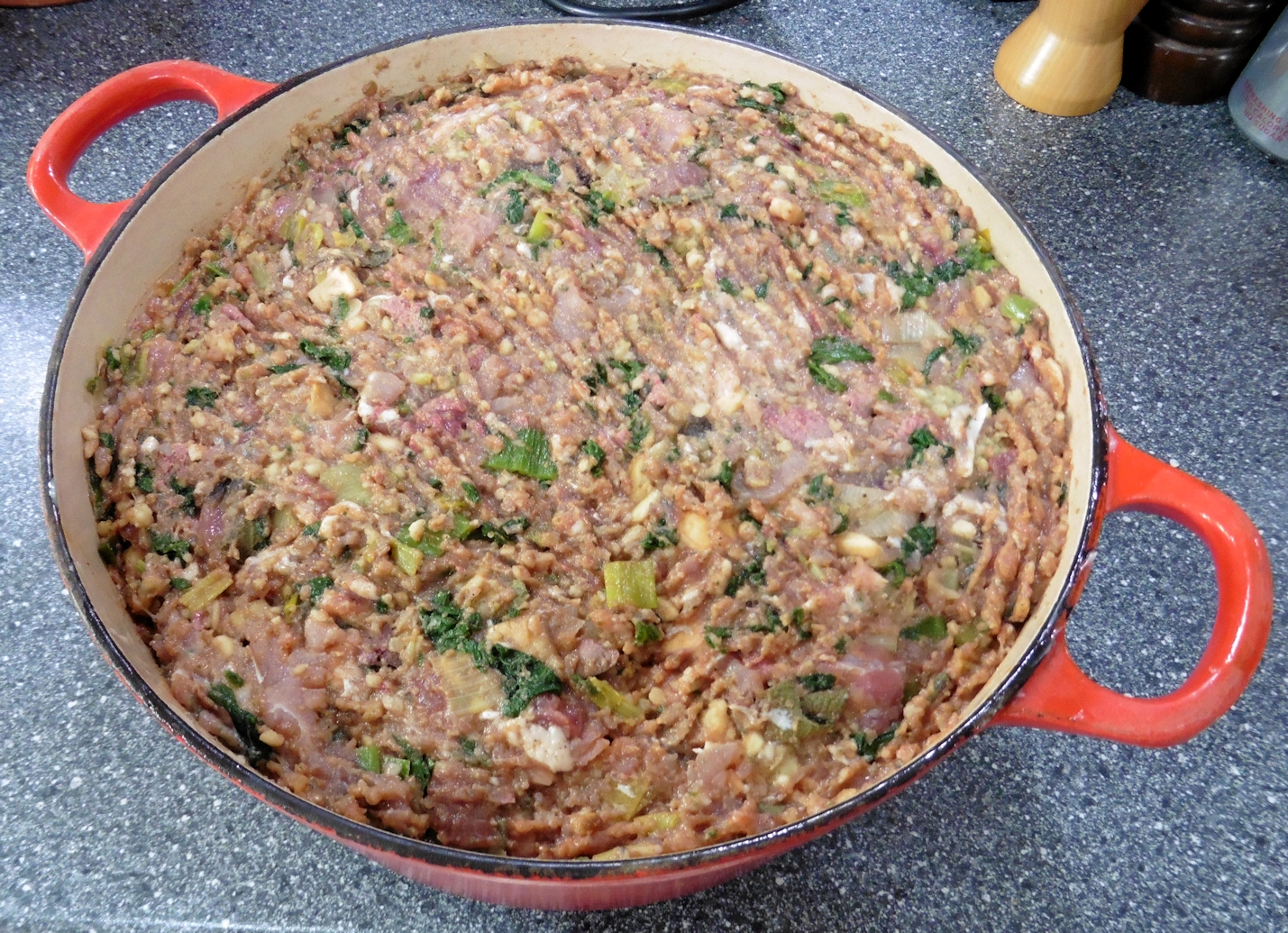
So yesterday was Coronation Day. So we had to make something special, which turned out to be a variation on our Ennismore Terrine but called Coronation Terrine. It went like this …

Ingredients

  • 200g pack mixed Game Pieces
  • 400g Pork Mince
  • 400g pack good Sausages
  • 200g pack Duck Stir-Fry Strips
  • 8 rashers Smoked Back Bacon (or 12 rashers Streaky Bacon)
  • 400g Chicken Livers
  • 1 packet Stuffing Mix
  • 2 Leeks (or 2 medium-large Onions, or 4 Banana Shallots)
  • 6 (or more) cloves Garlic
  • ½ pack frozen Spinach (or fresh if preferred)
  • 200g Mushrooms
  • ½ wine glass Whiskey
  • 1 bunch fresh Sage
  • Black Pepper
  • 2 pinches salt (optional as the bacon may provide enough)
  • 2 tbsp Tomato Paste (optional)
  • 2 tbsp Garlic Paste (optional)
  • 1 tbsp Worcester Sauce
  • 2 tsp ground spices (choose some combination of ginger, nutmeg, cloves, allspice, cinnamon, cumin)
  • Butter
Terrine ready for the oven

What to do …

  1. Pre-heat the oven to 180°C/fan 160°C/gas 4.
  2. Thaw the spinach (if frozen) or wilt it if fresh.
  3. Make up the stuffing mix with hot water.
  4. Finely slice the leeks and the garlic and fry in 1-2 tbsp butter until translucent.
  5. Finely chop the sage and mushrooms.
  6. Fry the chicken livers in a tbsp butter for a couple of minutes (don’t fully cook them); allow to cool and chop roughly.
  7. Finely chop the game pieces, duck and bacon.
  8. Skin the sausages.
  9. Mix all the above (including any pan juices) together with the whiskey, a good grind of black pepper (and then some more), the spices, salt (if using), Worcs Sauce, tomato and garlic puree.
  10. Transfer the mix to a greased terrine, loaf tin, cake tin or a large casserole, and cover tightly with foil.
  11. Bake in the oven in a bain marie for 1½-2 hours until a meat thermometer reads 70°C or a knife comes out hot.
  12. Press the terrine and allow to cool; refrigerate, still weighted, overnight.
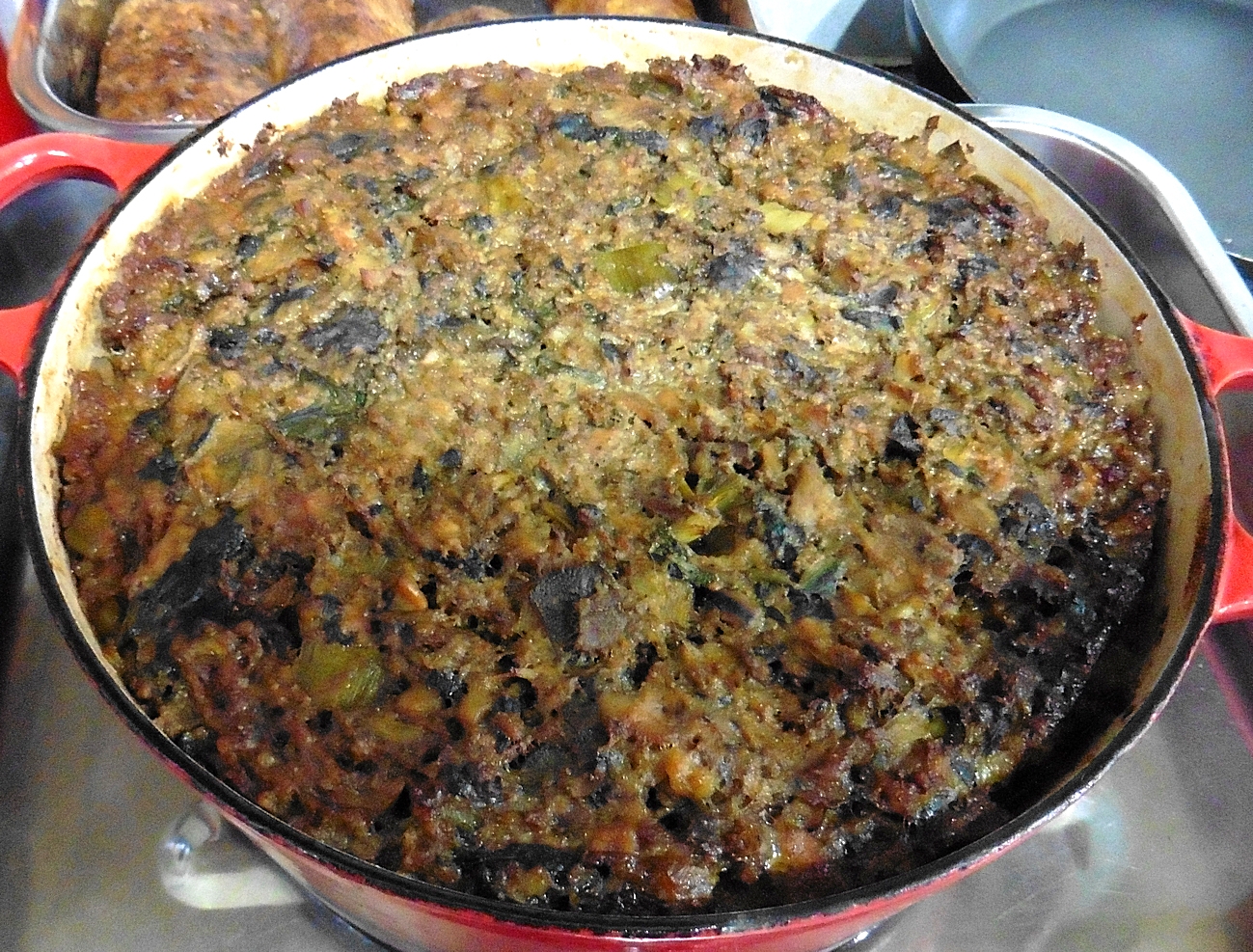
Terrine fresh from the oven
Terrine fresh from the oven, before being pressed

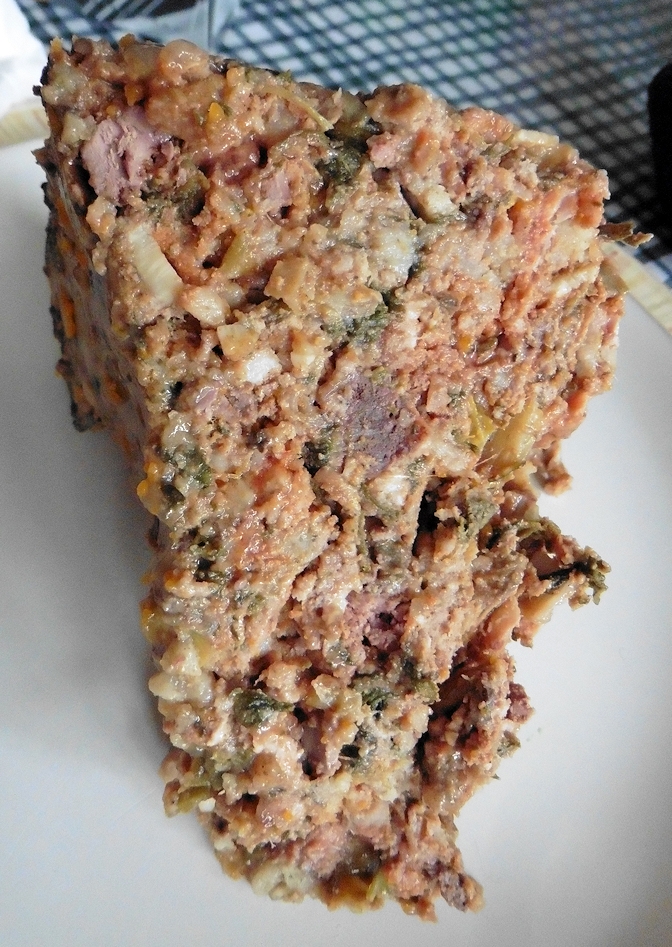
The result was slightly wetter and more friable than I would have liked, probably partly as I used some not fully thawed frozen spinach and frozen mushrooms with the end of a bottle of whiskey which was probably nearer a large wineglass full. It could also have done with pressing under heavier weights. On the other hand it was very palatable and very garlicky.

A wedge of terrine on a plate
A wedge of terrine waiting to meet a mouth

Oh, and the ingredients were, naturally, themed for the Coronation:

  • For England: game, sausage
  • For Scotland: whisky
  • For Wales: leeks
  • For Ireland: bacon
  • For the British Empire: the spices

Now what stunt do I pull off for Culinary Adventures #100?

Culinary Adventures #98: Pork Pie

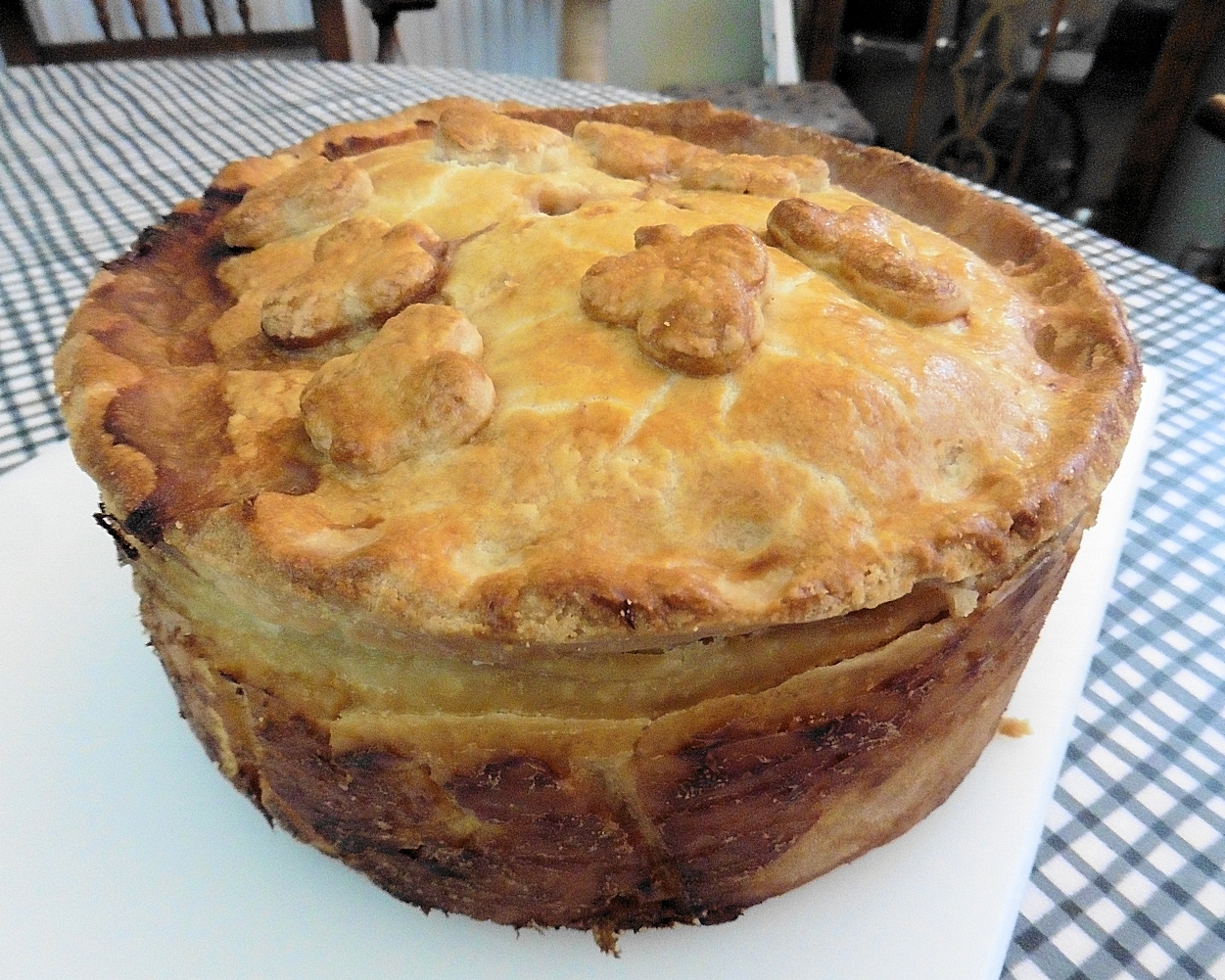
It seems to be tradition in this house to make a huge terrine at Easter, see inter alia my post from 2014. However this year we decided to be different and do a large home-made pork pie instead – and yes, do it properly with hot water pastry.

I’ve not done hot water pastry before, but N has and so did my mother occasionally, so I knew the basic idea. This is the traditional pastry for pork pie. It isn’t difficult and is actually quite forgiving. To be absolutely traditional it is made with lard; while that produces a good flavour it isn’t wonderfully healthy. It turns out that butter (which is just a bit healthier) works OK too, although it does make a slightly softer pastry.

Our large pork pie, cooled and ready for the table

Anyway this is what I did …

Ingredients for the Pastry [1]

  • 500g plain flour
  • 220ml water
  • 190g butter [2]
  • an egg, beaten, for glazing
Ingredients for the Filling [3]

  • 450g Pork Fillet [4]
  • 500g Pork Mince
  • 400g Good Pork Sausages
  • 250g Smoked Back (or Streaky) Bacon [2]
  • large bunch fresh sage (if available) or a generous tbsp dried mixed herbs
  • Black Pepper & Ground Nutmeg

What to do …

  1. Make the filling first!
  2. Cut the bacon into 5mm squares (do not remove the fat) and add to a large mixing bowl.
  3. Similarly cut the pork fillet into roughly 5mm dice and add to the bacon.
  4. Skin the sausages and add them with the mince to the pork.
  5. Add the herbs, a good grind of black pepper, and then another, and the same with nutmeg.
  6. Get in there with your hands and mix it all well. Set aside.
  7. Heat the oven to 205°C. While it heats up make the pastry.
  8. Grease well, and/or line with parchment, an 8″ cake tin.
  9. Put the flour in another large mixing bowl and make a well in the centre.
  10. Gently melt the butter and water together in a saucepan.
  11. When the butter is all melted add this to the well in the flour and mix it together with a wooden spoon – it will be hot!
  12. When it is almost mixed, and has cooled a little, finish mixing the pastry with your hands. You should have a soft dough.
  13. Reserve about a third of the pastry to make the pie lid.
  14. Roll out the larger portion and line the cake tin; let the excess pastry flap over the edge.
  15. If the pastry splits, don’t panic; just use a few of the extra bits from the edges to patch the holes – it’s fine; this is how hot water pastry is so forgiving.
  16. Add the filling to the pie case and pack it down well.
  17. Roll out the lid; dampen the edges of the pastry case with beaten egg; put on the lid and press firmly onto the case using your fingers to make a pretty scalloped edge.
  18. Trim the edges and use the offcuts to make decorations for the lid.
  19. Don’t forget to cut a hole in the centre of the lid, in case you want to fill the cooked pie with jelly. [5]
  20. Glaze with beaten egg. Place the tin on a baking sheet.
  21. Cook for 30 minutes at 205°C, then turn the oven down to 165°C and cook for a further 1½-2 hours until the juices run clear on application of a skewer. (If you’re a meat thermometer fan then you need to get the centre to at least 70°C.)
  22. Leave the pie to cool, preferably overnight in the fridge, before removing from the tin.
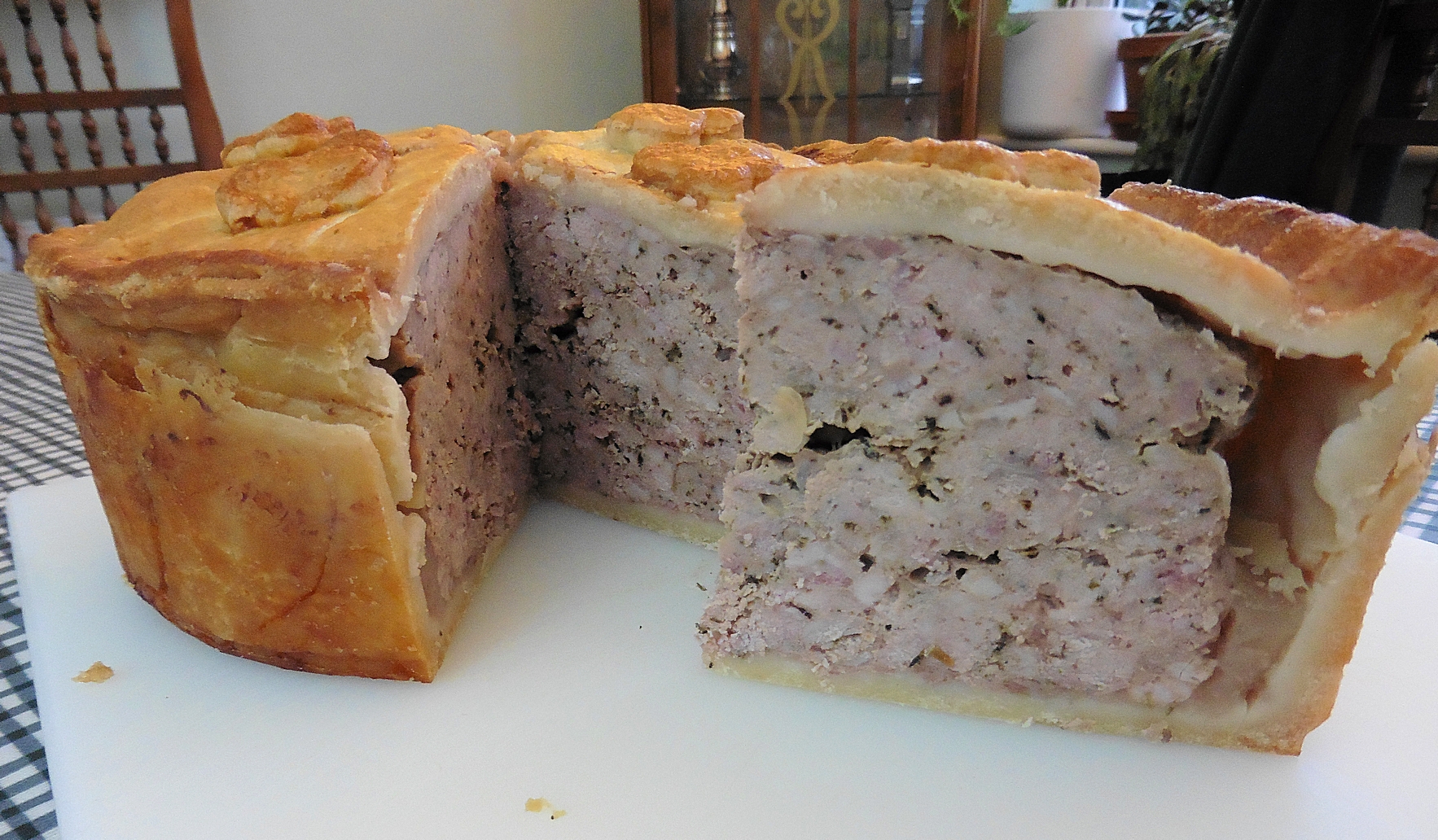
The pie, sliced

Notes
[1] This should make plenty of pastry for a round 8″ (20cm) cake tin (preferably one with a removable base).
[2] Note the omission of salt as we used salted butter; add a tiny amount if you’re using unsalted butter. Similarly with the filling, the bacon may well be salt enough.
[3] No this is not too much for an 8″ cake tin; it packs down surprisingly well, which you want.
[4] Or any other good, flavoursome, pork meat like shoulder.
[5] If you wish to fill the pie with the traditional jelly, you need to do it as soon as it comes out of the oven. Use a funnel to carefully pour hot jelly into the hole in the pie lid. I didn’t bother, so I’ll leave you to work out how to make a suitable pork jelly.
[6] Having done all of that I felt that the filling needed a bit more seasoning. I note that Jane Grigson in Good Things adds teaspoon quantities of spice (cinnamon, allspice) to her filling in addition to the nutmeg. Or you might want to add a little salt. Or perhaps some garlic paste. Or a layer of sharp apple (like Bramley) in the centre of the filling.

Culinary Adventures #97: Spiced Apple Pie

A quick post on today’s slightly experimental culinary exploit.

It’s an apple pie day! Yeah, OK, so what?

We had loads of spare eating apples (‘cos I always buy to much fruit) and a block of puff pastry.
Chop & pre-cook the apples (on the hob for maybe 15-20 minutes) with a teaspoon of mixed spice, tablespoon of sugar and a couple of tots of sweet white wine. Being eating apples they won’t fluff down like Bramleys do, but they will soften and release quite a bit of juice.
Use the pastry to line a 20cm square flan tin.
Fill the pastry case with drained apple, fold the pastry edges over – no harm if it looks a bit rustic – scatter over a tablespoon of chopped mixed peel, glaze the pastry, and bake for about 30 minutes at 200°C.
I had 4-5 tablespoons of spiced apple liquor left, so added 2 tablespoons of sugar and 10-15ml of brandy, and reduced it to make a very sticky syrup which was drizzled over the tart when it came out of the oven.
Devour warm with double cream.

It worked better than expected and was just nicely spiced, so as not to be boring apple pie.

Culinary Adventures #96: Nectarine Danish

Having tried Rustic Pineapple Danish a couple of weeks ago, yesterday I did a variant using nectarines.

I’m sure I don’t need to write it all in detail, but just tell you the variation was:

  1. Use half a nectarine instead of a slice of pineapple
  2. Glaze and seal with a teaspoon (or less) sugar dissolved in about 50ml of Amaretto liqueur, instead of jam and egg.

Otherwise proceed as before.

And yes, the result worked better for me. And they took no eating: warm with ice-cream while the pastry is crisp. They’re OK cold, but the pastry tends to lose its crisp if left, which spoils the combination of textures.