Category Archives: food+drink

Oddity of the Week: Garlic Coke

Garlic-Flavored Cola Is Actually a Thing in Japan
… believe it or not, the drink actually exists in Japan!
Locally known as ‘Jats Takkola’, the unusual drink was released last month. It is produced in the city of Aomori … well-known for the huge amount of garlic that is harvested every year in July. Local companies have produced several bizarre garlic-flavored products … such as garlic beer and garlic ice cream, but latest offering, garlic cola, apparently took a fair bit of trial and error before they could make it palatable.


The drink consists of cola mixed with finely ground garlic. Those brave enough to try it are advised to turn the bottle slowly before consumption, in order to mix the settled pieces of garlic. The makers say that the drink is as tasty as regular cola, with a supposedly pleasant aftertaste of garlic.
From: www.odditycentral.com/foods/garlic-flavored-cola-is-actually-a-thing-in-japan.html
See also: http://en.rocketnews24.com/2015/01/31/new-garlic-cola-from-japans-garlic-capital-is-as-surprising-as-its-name-proclaims/

Book Review: Cooking for Geeks

Jeff Potter
Cooking for Geeks: Real Science, Great Hacks and Good Food
O’Reilly; 2010
This book was another of my Christmas presents (Thanks, Katy!) which I’ve been reading in bits and pieces over the last few weeks.
The first thing we need to get straight is that, although it contains recipes, this is essentially not a recipe book. Nor is it a book specifically about ingredients.
The author is a scientist and he takes an experimental approach to working out how things work in cooking — the effects of temperature on proteins; what various chemicals do; how bread works; how taste and smell work. And perhaps most interestingly how chefs use unexpected techniques to produce such different food to what we make at home.
Yes, I learnt a few things. Specifically I was interested in the temperatures at which different proteins denature (ie. essentially the temperature at which they cook) and how too high a temperature will denature the wrong proteins and make meat tough. But this has to be done while keeping in mind that a minimum temperature (or combination of temperature and time) is required to ensure any pathogens (bacteria; fungi; even parasites) present are killed.
And there are simple tips. For instance when cracking an egg do it on the worktop not the edge of the bowl: the former will give larger pieces of broken shell; the latter will give smaller pieces of shell that are much more likely to end up in the bowl with the egg and have to be fished out.
Oh and there is a whole chapter on hacking together hardware etc. for special cooking techniques like sous vide, filtration, using the cleaning cycle on your oven and using liquid nitrogen. Things I am never likely to do.
As I say, yes there are recipes, but they are largely there to demonstrate the effects being described: different types of dough, and oven temperature, for pizza; how whisking egg whites varies depending on the bowl you use; how different gelling agents work. Some of these things I knew, and some I have even done. I’ve not actually tried any of the recipes because although it is interesting to see these effects most of the recipes are not for things which fire me with enthusiasm or which are too much faffing around — I believe in simple, tasty and wholesome food, not a load of faffing about. (Which is why I can’t be bothered with things like cake, ice cream and soufflés.)
So in summary … This was an interesting book and it may turn out to be useful for some things — like more precise temperature control. It is a great book if you’re a geek and/or you want to do a wide range of experimental cooking — but sadly that doesn’t fire me with enthusiasm other than as an armchair scientist.
Finally though, here’s one other good tip from the book … Do check out Maureen Evans’ Twitter recipes feed, @cookbook. She has devised a method of reducing recipes to the 140 character constraint of a single tweet. As an example here’s her recipe for chocolate cake (which isn’t in the book):

Chocolate Cake: Beat¼c sug/2egg. Sift⅓c flr&cocoa/½t bkgpdr&soda/⅛t cardamom&cinn&salt. Mlt6oz choc/¼c cocontoil&coffee. Fold all. 40m@350F.

There you are: I even bring you cake!
Overall Rating: ★★★☆☆

Coming up in December

December is, of course, the month of Christmas and consequently that takes over most events etc. So this month’s list is rather abbreviated.
1 December
On this day in 1934 author Anthony Powell and Lady Violet Pakenham were married at All Saints, Ennismore Gardens, Knightsbridge (below).


12 December
1889 saw the death, in Venice, of poet Robert Browning on the day his last work Asolando was published.
21 December
Winter Solstice. That dark day when we in the Northern Hemisphere have the fewest hours of daylight. This day is also celebrated as the festival of Yule in many pagan traditions when the year turns and the days begin to lengthen again towards Spring.
24 December
Christmas Eve is traditionally the day for celebratory meals and the exchange of presents in many European countries. In the UK it is, of course, the final mad dash up to Christmas Day.
25 December
Christmas Day. Hodie Christus natus est. Today we have a very commercial and secularised Christmas Day whereas in much earlier times it was one of the few holidays when peasants were not expected to work but to attend church, feast and make merry (if they could afford to). There are many Christmas Day traditions around the country, so have a search for what’s happening near you.
26 December
Boxing Day and the Feast of St Stephen. Boxing Day is traditionally the day when servants and tradespeople would receive gifts (a “Christmas box”) from their bosses or employers. Although this custom has generally now died out there are many community events, both traditional and modern, on Boxing Day which often raise money for charity. The day is a public holiday in the UK and many other countries, a big day in the sporting calendar and also marks the start of the winter sales. Again seek out your local traditional events which may include Morris dancing or customs such as the Greatham Sword Dance.

31 December
New Years Eve, the last day of the old year, is another day on which there are many traditional customs as well as the usual social gatherings to see out the old year and welcome the new. Once more look out for your local customs like the Allendale Tar Barrel Ceremony. This is also one of the days on which we should be wassailing our apple trees and raising a glass to both their fruitfulness and general prosperity in the coming year.

Weekly Photograph

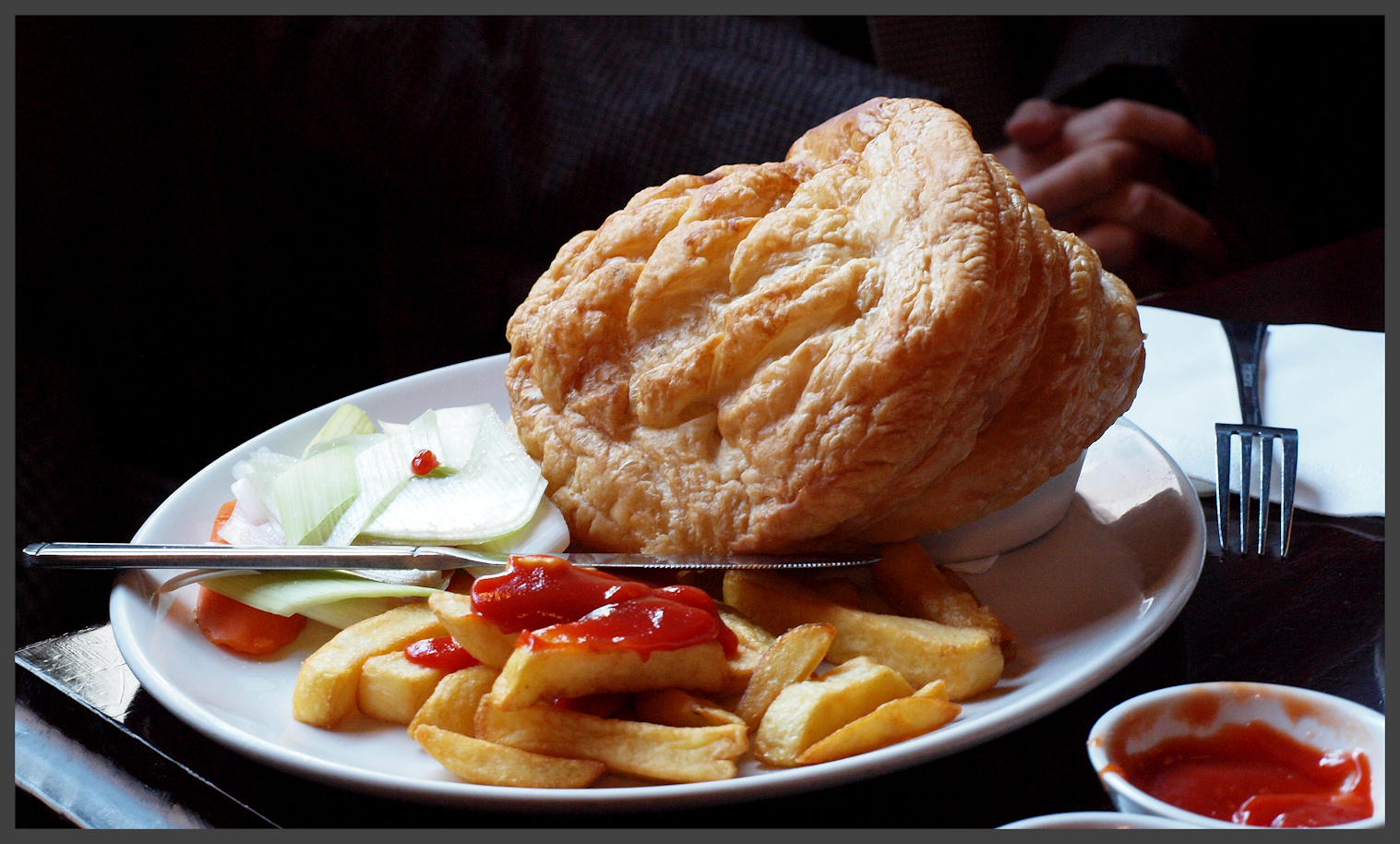
Saturday was the Anthony Powell Society quarterly London Pub Meet at the Audley in Mount Street, just off Park Lane. Although attended by fewer than usual we had a jolly time with the some fun and eclectic discussion accompanied by a few beers and some food. And it is the food which brings this week’s photograph for we discovered one of our number about to demolish his, rather dilapidated, chapeau.

Click the image for a larger viewPie
Well I’ll Eat My Hat
London; November 2014

Contrary to initial appearances this crust was the topping for a Venison Pie, which I was assured was excellent.
This image appears by courtesy of one Robin Bynoe, who challenged me to make it my weekly photograph.

Oddity of the Week: Coffee Grinding

The coffee plant is native to Ethiopia, but the first evidence of coffee beans being turned into a beverage comes from fifteenth-century Yemen. The fashion for this black, bitter drink spread across the Middle East and the Mediterranean, reaching Europe in the late sixteenth century. Although hand-operated spice mills had been in use since the 1400s, coffee beans continued to be ground using the more basic technology of mortar and pestle, or by millstones. Even as late as 1620, when the Pilgrim Fathers sailed for America on the Mayflower, all they brought with them for grinding coffee was an adapted mortar-and-pestle device.
In the 1660s a certain Nicholas Book, ‘living at the Sign of the Frying Pan in St Tulies Street’ in London, publicized himself as the only man known to make mills that could grind coffee to powder, but he was not necessarily the inventor of the machine he manufactured. The first US patent for a coffee grinder was issued in 1798 to Thomas Bruff of Maryland, who, when he was not grinding coffee, was Thomas Jefferson’s dentist.
From William Hartston; The Things that Nobody Knows: 501 Mysteries of Life, the Universe and Everything; Atlantic Books; 2011

Oddity of the Week

Rocky Mountain Oysters: bull or ram testicles boiled then sliced into ovals and fried. The oysters are served with a spicy sauce. Other euphemisms include barnyard jewels, cowboy caviar, fry, swinging beef and Montana tendergroin. Clifton in Montana holds an annual Testicle Festival, serving up over 2 tons of bull’s balls to 15,000 visitors. In France testicles are served as animelles, while in Greece kokoretsi is a stew involving a variety of offal, including testicles.
From: Ian Crofton; Brewer’s Cabinet of Curiosities

Ancestors and Mussels

Yesterday we had a day out hunting my ancestors — my father’s direct line — in Kent. And what a splendid day, despite not making any new discoveries.
We trotted off from home about 7am and arrived in Goudhurst about 9.30; just in time for coffee and apple cake.
Having been refreshed we pottered on to Benenden from where, if the connections I think are there are right, my family lives for several generations in the early 18th century and probably earlier. Benenden is such a gorgeous village with houses and the church round a large village green which doubles as the cricket ground — just as it should be.


Benenden Church

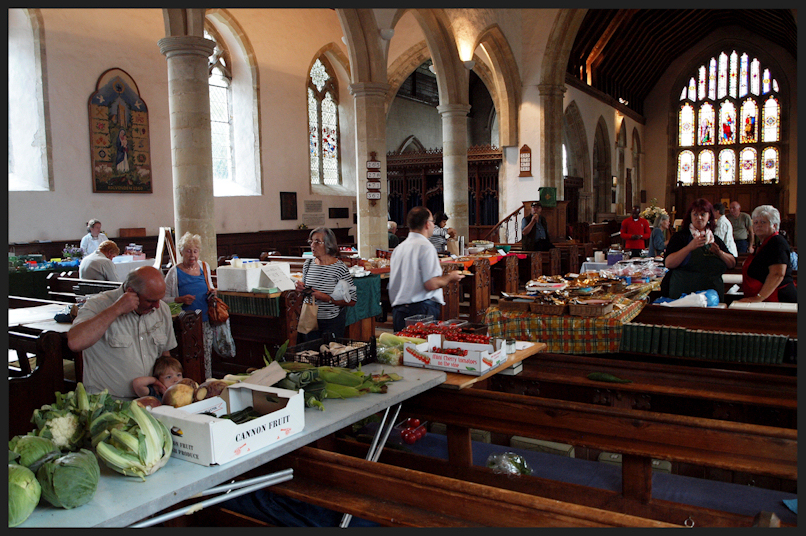
Then onward the few miles to Rolvenden, where I had higher hopes of finding evidence. What we found first of all was a small farmers’ market in the church. Yes, in the church. Excellent. This is how churches should be used; the more they are used the less they will be vandalised and the less they need to be locked. We were needless to say beguiled and stocked up from a lady selling mostly smoked meats etc., including some Oak Smoked Mussels. We also succumbed to some bread, tomatoes and a tub of fresh Lemon & Coriander Pesto.

Rolvenden Farmers’ Market

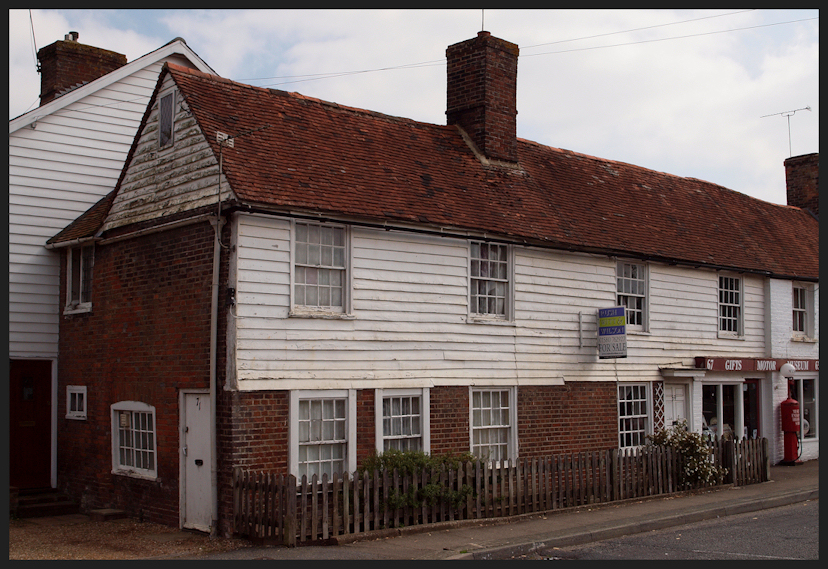
Following this and a look at the interior of the church we adjourned to The Bull for an excellent pub lunch and a pint. Staggering out we looked around the churchyard without luck, as almost every headstone was unreadable. But as we were leaving I did identify the house where my great-grandfather (Stephen Marshall, born 1849) was born and brought up.

Great-Grandfather’s birthplace in Rolvenden

Next we diverted to Smallhythe where I suspected a connection; and indeed we found a Marshall grave but of a later generation. Smallhythe is delightfully non-existent: about six houses, a vineyard, an early 16th century brick church and Ellen Terry the actress’s amazing Tudor house (now in the care of the National Trust) which was sadly not open. This is a far cry from the days of Henry VIII when he River Rother here was a wide estuary and the local industry was shipbuilding. All that ceased when the river changed course following the great storms of the late 16th century.

Samuel Austen (GGG-Grandfather) grave at Tenterden

Next on to Tenterden where we managed to find the grave of one Samuel Austen who is one of my ggg-grandfathers who died in 1838. Tenterden is full of Austens, and Jane Austen’s family originate here. Luckily the monuments in Tenterden churchyard have all been recorded as we would have been hard pressed to read the entirety of the headstone.
After a look in the church we were all running out of steam, so a quick drive on to Biddenden in the hope of easier parking and afternoon tea — both achieved. Following tea and cake we were disappointed to find the church locked; the only locked church of the six we tried during the day.
Leaving Biddenden we drove through Sissinghurst and retraced our steps to Goudhurst for a look at the church there and another pint. At this point there was a sudden realisation it was 6pm and we had a 2+ hour drive home round the M25.
OK, I was disappointed not to find obvious evidence to connect my ggg-grandfather Marshall further back, but that was really quite a long shot. It was also disappointing to find a locked church and nowhere selling Kentish apples or plums. But overall an excellent, and very tiring, day.
So now, today, we have a problem. What to do with those Oak Smoked Mussels and the pesto? Thoughtfully I procured a small pack of large prawns at the supermarket this morning (do not ask how we achieved the supermarket before 10.30 this morning!). So this evening I did one of my quick pasta dishes. 150g each of mussels and prawns makes a good feast for two, thus:
1. Cook some pasta; when cooked drain it and keep it warm.
2. Sweat some finely chopped onion and garlic in a little oil until translucent.
3. Add the mussels and prawns and cook for 2-3 minutes.
4. Add the pesto, stir together and cook for another minute or two.
5. Then add the pasta, stir to mix and coat the pasta and cook for a couple of minutes to ensure everything is hot through.
6. Serve and enjoy with a bottle of white wine.
And boy, was it good! The smoked mussels were to die for. As Noreen observed “I’ve eaten much worse in restaurants”.
Cheers, to the ancestors! We’ve come a long way since their days as farm labourers before 1850.

Coming up in September

Some of the events and traditions coming up during September. Everyone’s back from holiday (and in days of yore the harvest is almost done) so there is more happening this month.
1 September
On this day in 1914 the Passenger Pigeon become extinct when Martha, thought to be the world’s last passenger pigeon, died at Cincinnati Zoo.
3 September
Outbreak of World War II in 1939 when the UK declared war on Germany.
6 to 21 September
Scottish Food and Drink Fortnight. Discover and celebrate Scotland’s culinary heritage. No, not just whiskey and haggis, but a great deal more besides. There’s lots of information at www.scottishfoodanddrinkfortnight.co.uk.
9 September
This day in 1839 Sir John Herschel (son of astronomer William Herschel, discoverer of Uranus) made the first photograph on a glass plate. He made many other contributions to photography, astronomy and botany.
11 to 14 September
Heritage Open Days. Four days to explore more of England’s beautiful architecture when over 4000 buildings that are usually closed or charge for admission will open their doors free. Find more information at www.heritageopendays.org.uk.


15 to 21 September
National Cupcake Week. Many of my friends seem to be cakeophiles, so they’re going to love National Cup Cake Week — a chance to show off your baking skills and eat cake. What’s not to like? More over at www.nationalcupcakeweek.co.uk.
19 to 22 September
Great British Beach Clean. Organised by the Marine Conservation Society this is an opportunity to look after your local beach by helping clean it up. Find an event near you at www.mcsuk.org/beachwatch/events.
21 September
Autumnal Equinox. One of two days a year when we get exactly 12 hours of day and 12 hours of night, the Autumn Equinox marks the passage from summer to the dark days of winter.
22 September to 23 October
Seed Gathering Season. Through this autumn festival The Tree Council aims to inspire everyone, particularly school children and families, to gather seeds, fruits and nuts and grow the trees of the future. More information and events over at www.treecouncil.org.uk/Take-Part/seed-gathering-season.

29 September
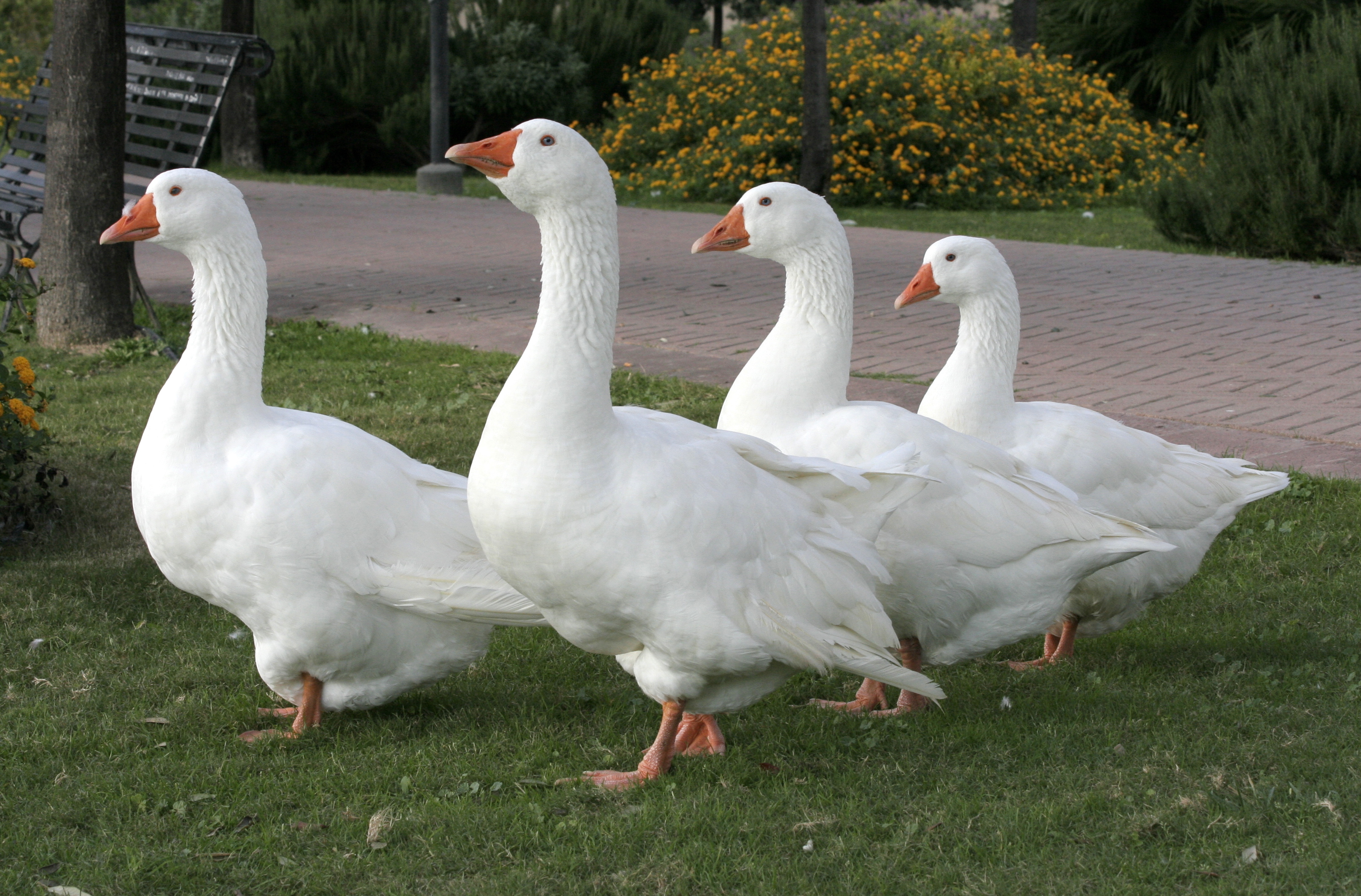
Michaelmas, the feast of Saint Michael the Archangel. Falling as it does near the equinox, it is associated in the northern hemisphere with the beginning of autumn and the shortening of days. In medieval England Michaelmas marked the ending and beginning of the husbandman’s year and was one of the English quarter days. The traditional food on this day was goose, nicely fattened on the grain it had gleaned amongst the fields of stubble.

Oddity of the Week: Blue Honey

French beekeepers were recently shocked when their bees started producing thick, blue and green honey.
After investigating, they discovered their bees were feeding on the colourful shells of M&Ms — a Mars processing plant was located just 4 km away.
The Mars waste-processing plant has now solved the problem and are cleaning any outdoor or uncovered containers that M&M waste was stored in, so it’s unlikely you’ll see the blue honey on the market any time soon.


As Reuters reports, the unsellable honey is a new issue for the beekeepers, who are already struggling with high bee mortality rates and dwindling honey supplies.
From http://sciencealert.com.au/news/20142405-25561.html