Gesshin Claire Greenwood
Bow First, Ask Questions Later
Wisdom, USA; 2018
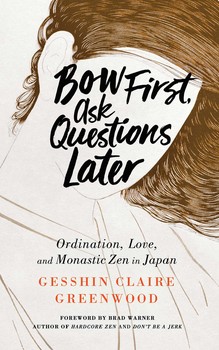 Having just finished this book, I’m still not quite sure what my emotions are towards it – beyond pure admiration, that is. So I’m going to start with a couple of quotes from other people. First here’s Ruth Ozeki on the cover blurb:
With rigour, honesty, hilarity, and joy, Gesshin shows us how to grapple with the great matter of life and death – as well as with lesser matters, like capitalism, sexism, religious dogma, sex, love, fashion, and Kyoto nightclubs. The result is an inspiring book that I couldn’t put down, even when I’d finished reading it.
And here’s an extract from the Foreword by our other favourite Zen Master, Brad Warner:
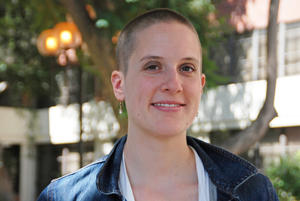
Gesshin Greenwood is … an honest-to-Buddha Zen nun, with the shaven head to prove it. She went through the kind of rigorous training in traditional Zen temple practice that most of the folks you see writing puffed-up fluff pieces for those slick spiritual magazines… avoided like politicians evading the draft …
I [am] amazed that someone as young as she had such a deep background in Buddhist practice experience … Gesshin … really did all the stuff … She actually immersed herself in Japanese Zen temple life for years doing all the ceremonies, all the services, all the cooking and cleaning and the rest of it …
… It’s rare that someone from the West does any of this stuff, rarer still when they write about it, and yet even more rare that their writing is as good as Gesshin’s is. This is a truly unique document of a truly unique lived experience.
I’ve been reading Gesshin’s weblog, That’s So Zen, for some years and have always found it illuminating, if at times hard to fully understand. This book travels some of the same ground, which is good because everything is newly written and so helps reinforce the “learning”.
Although the book is autobiographical it is first and foremost a book about Zen Buddhism, but not in a dry academic way; as Brad says it is extremely well written, in a light, engaging style which does indeed make it difficult to put down – I had to ration myself to a couple of chapters an evening to avoid reading through the night.
Gesshin is a self-confessed white, privileged Californian, with hippy, Buddhist parents; and as the book goes on one comes to realise she was probably something of an angry brat (but then aren’t all teenagers?). Nonetheless she wanted to study Buddhism, and felt even in college strangely attracted to it; and that emotional connexion is passed on to the reader.
She started in India, and went to Tibet, before finding her spiritual home in the Sōtō Zen tradition in Japan, and in the rigorous setting of an all female Zen monastery. This is her story, of her journey; and one isn’t sure until well into the book quite where things are going to end up.
Gesshin talks frankly about the hardships, heartaches, tragedies and mistakes – as well as the joys – of her practice and shows how each of them allowed her to grow. Each of the 25 short chapters focusses on some particular event to illuminate her learning. We see something of her relationships with her teachers and her wrestles with the apparently irreconcilable dichotomy of being a nun and a young woman who likes men and can fall in love. We are left, at the end, with the impression that Gesshin has happily resolved that dichotomy.
All this is shared openly with us, and we join in feeling the pain and the joy. Equally I found the book inspiring and stimulating me to move forward in my own journey (whatever that is).
For anyone with an interest in Buddhism, especially Japanese Sōtō Zen, this is a book well worth reading. And even if you just want to follow the quest of a young woman in search of answers to life and death, do read it. I really did find it hard to put down.
Overall Rating: ★★★★★
 Do you watch porn? If you’re male there’s a very high chance that you have at sometime in your life, even if you don’t now. If you’re female the chances are still good that you have done.
 Don’t let the “science” label put you off. Yes, Brooke references all her sources but her style is light and eminently readable. She combines her skills in statistics, epidemiology and research with her experiences as a call-girl to blow the lid off what the Agenda Setters and politicians are telling us, thus exposing all the myths surrounding sex in society.
 The idea is good and the book should have been interesting, but I found it facile and superficial: like cheap brawn, lots of aspic with very little meat. I had to give up on it half way through.
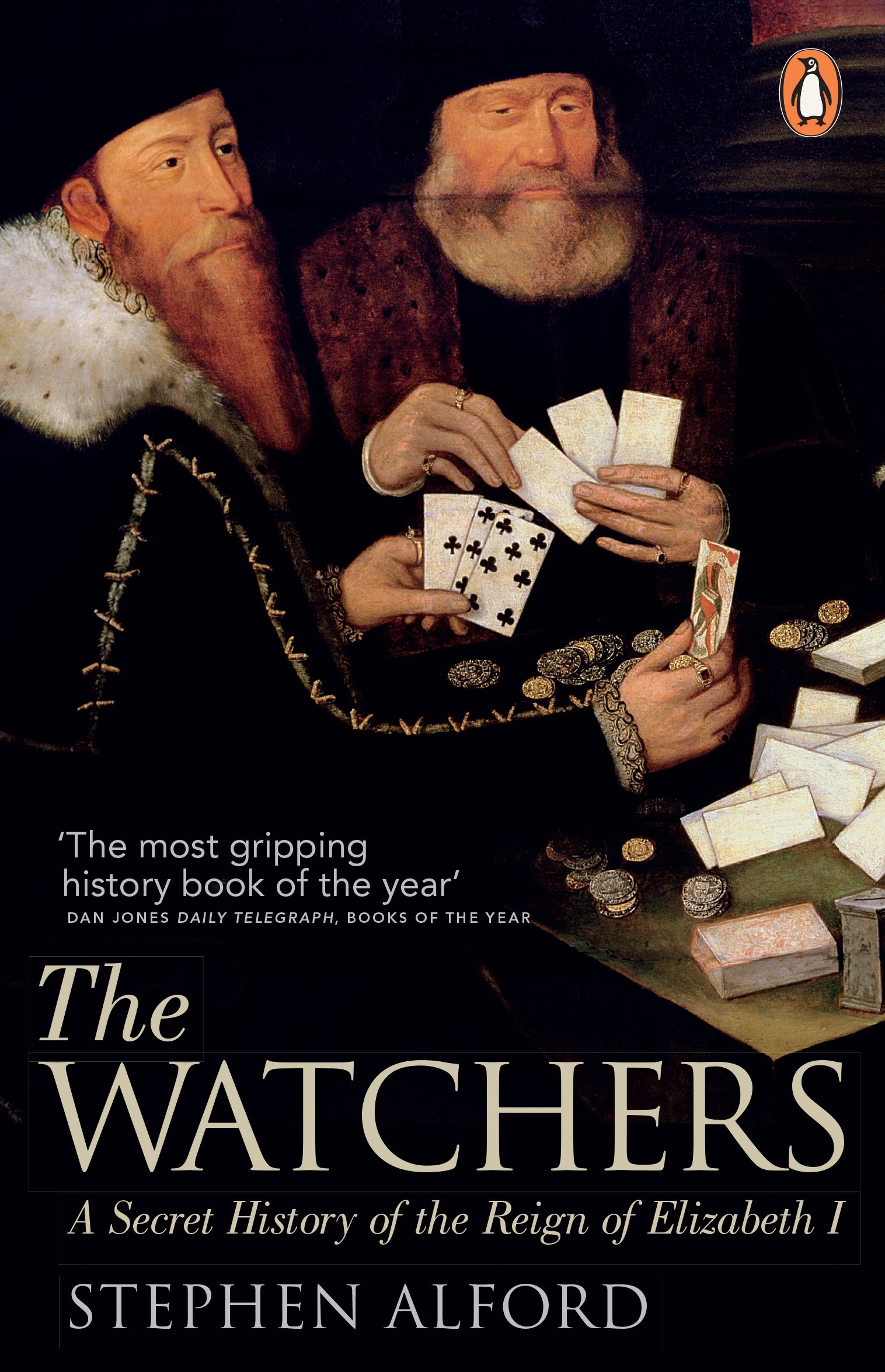 What emerges is a “who nearly done it” from the misty and murky world of Elizabethan espionage. Espionage that, in those dangerously unsettled times, was essential for the survival of Protestant England and Elizabeth. Espionage, which was perhaps the first really consolidated use by the state, and whose methods very much laid the foundations even for today’s shadowy world of subterfuge.
 This is, in the words of the Preface, “a book that invites the reader on a journey from map to map, to let their imagination run free”. It is a curious collection of historical maps, around which the author tells the stories the places and voyages which gave birth to the maps.