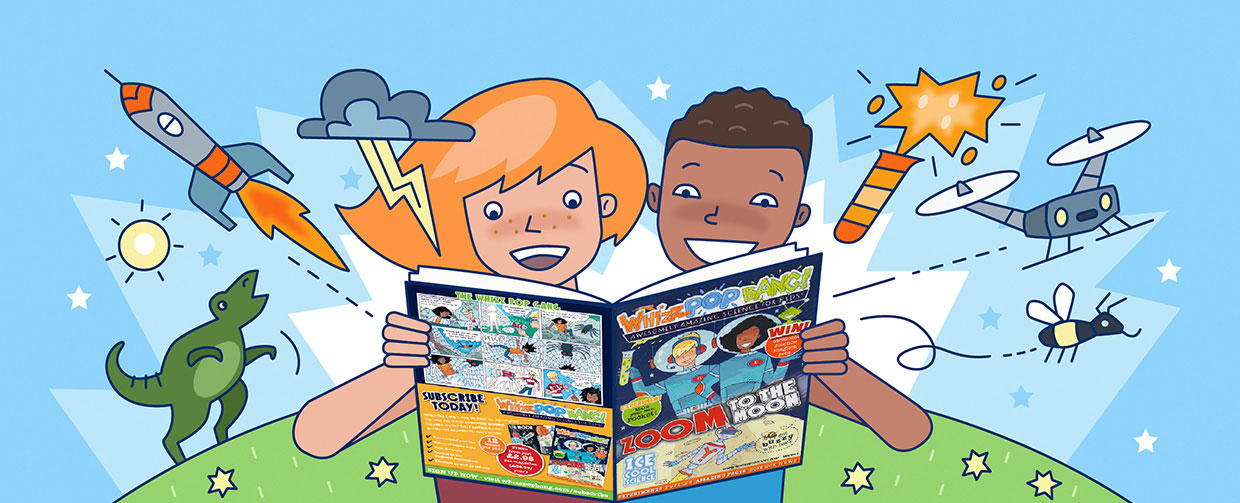
I spotted these two in the current (April 2017) issue of BBC Science Focus magazine.
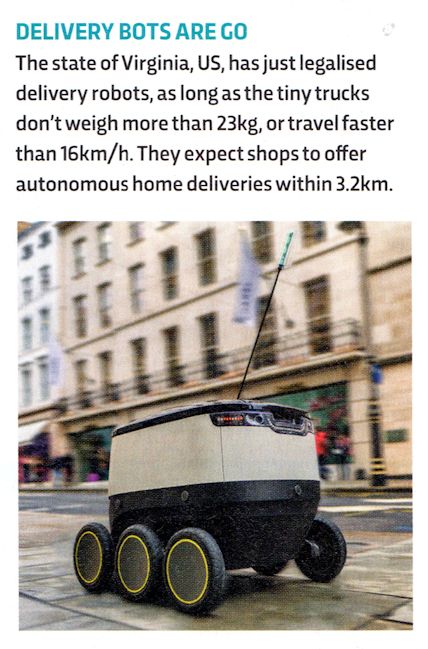
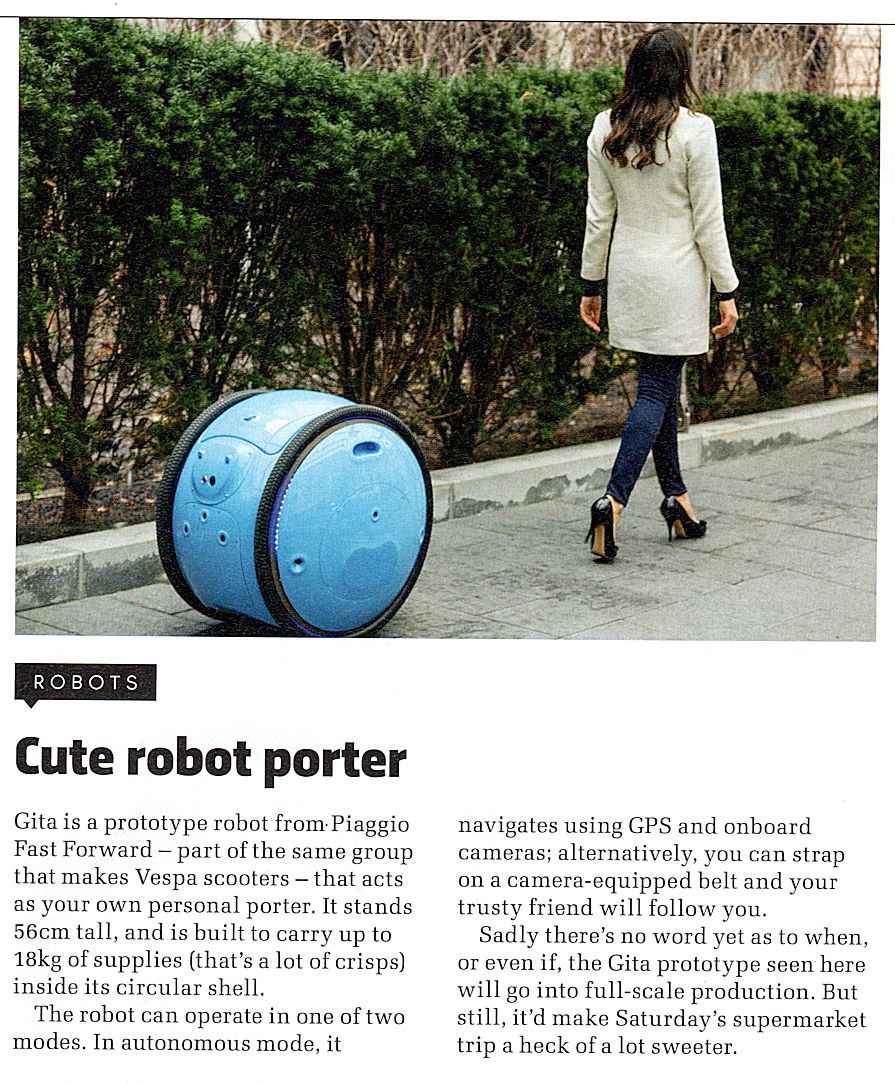
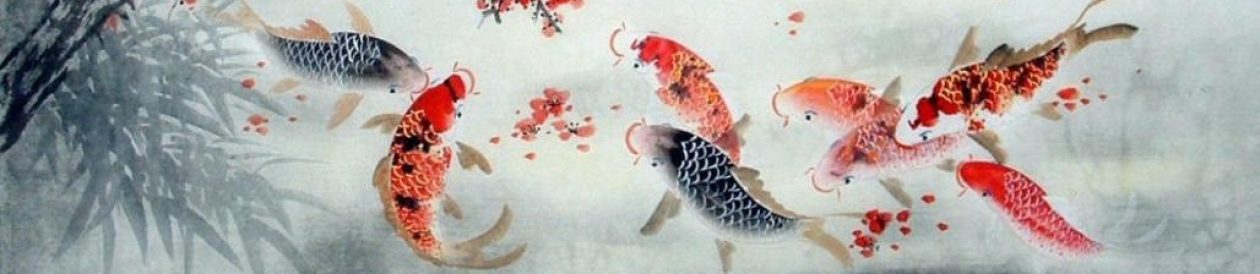
I spotted these two in the current (April 2017) issue of BBC Science Focus magazine.
Suddenly it’s Spring. Everything in our garden is growing, and green, and flowering. From the bright shocking pink of our “Ballerina” crab apple tree to …
… our small pendant ornamental crab apple …


Well who would have guessed it? Well to be fair, I don’t think I would have guessed it, at least not quite in this way … because according to a report in yesterday’s Guardian, coal-fired power stations are more injurious to health than nuclear ones.
OK, so here goes with this month’s selection of links to interesting items you might have missed the first time around …
Science & Medicine



Inosculation
 To unite (as of blood vessels, nerve fibres, or ducts) by small openings.
The opening of two vessels of an animal body, or of a vegetable, into each other.
To unite so as to be continuous; blend.
It is applied anatomically especially to blood vessels and in botany to the growing together of the trunks/branches of separate trees (as shown).
Needless to say the word is derived from In plus the Latin ōsculāre (having a mouth). The first usage is recorded by the OED as being from 1673.
Noreen and I had a fun time this afternoon: we played at the King in his counting house.
We have a gallon whisky bottle into which we put our small change when we come in – basically the shrapnel that weighs down the pocket. The rule is if it is less than a £1 coin and it fits in the bottle, it goes in; basically that is everything except £1, £2 and old 50p coins.
We’ve been doing this for many years, and used to collect about half a bottle a year (usually around £150-£200) which we used as holiday spending money. But now that we’re not working there hasn’t been as much small change to go in the bottle, and we’ve been lazy, so it hasn’t been emptied for quite some years. The bottle has overflowed into a plastic jar, which has overflowed into a tin.
Today we decided to count our loot. In days of old sorting and counting the coins was a horrible job (one reason we kept putting it off!); it used to occupy us all afternoon. But I knew the job was looming so I acquired, for a few quid on eBay, a nifty little machine which sorts the coins (basically by size). It’s battery driven and a devilishly clever sorting mechanism based on two disks and sized slots.
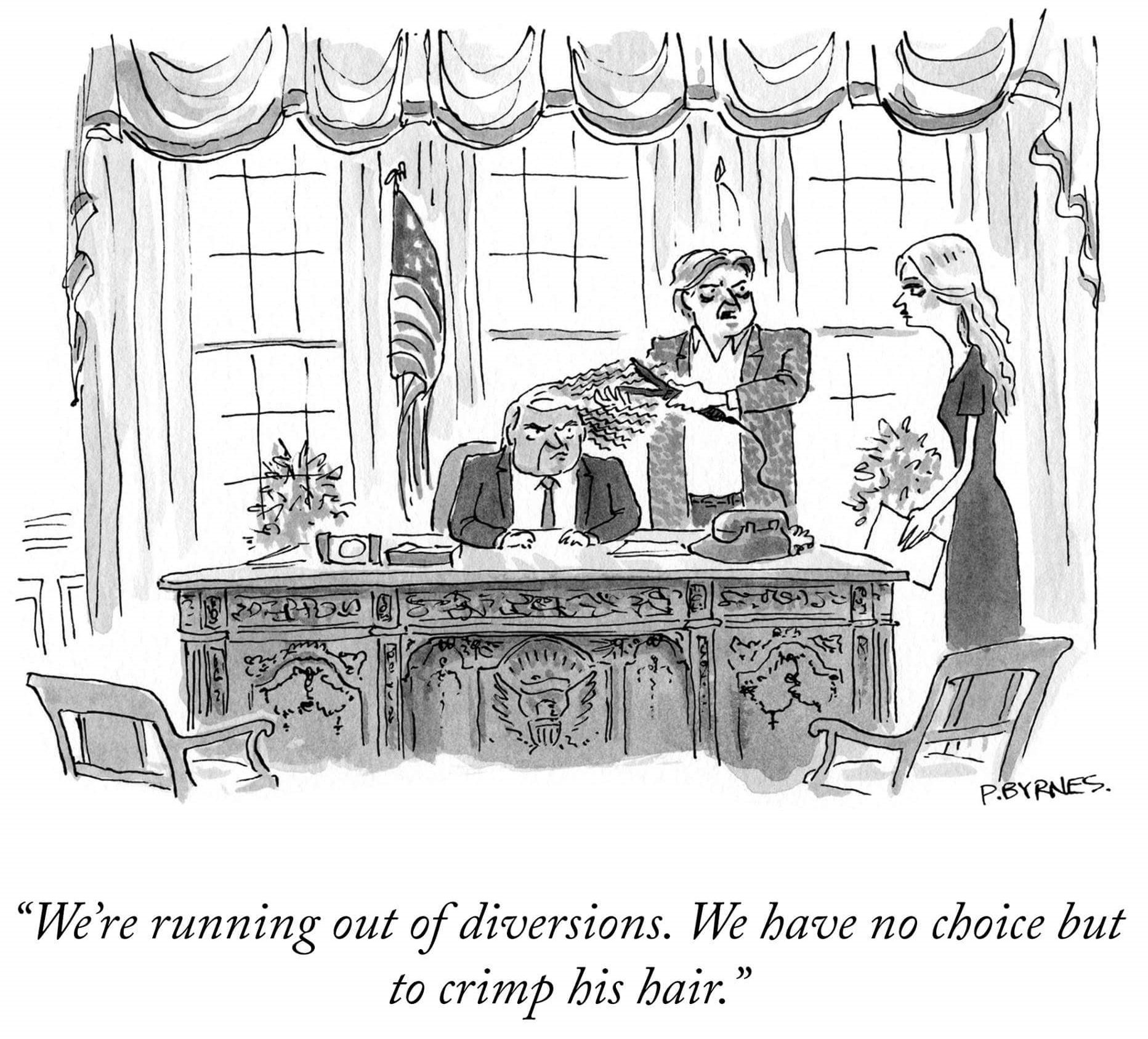
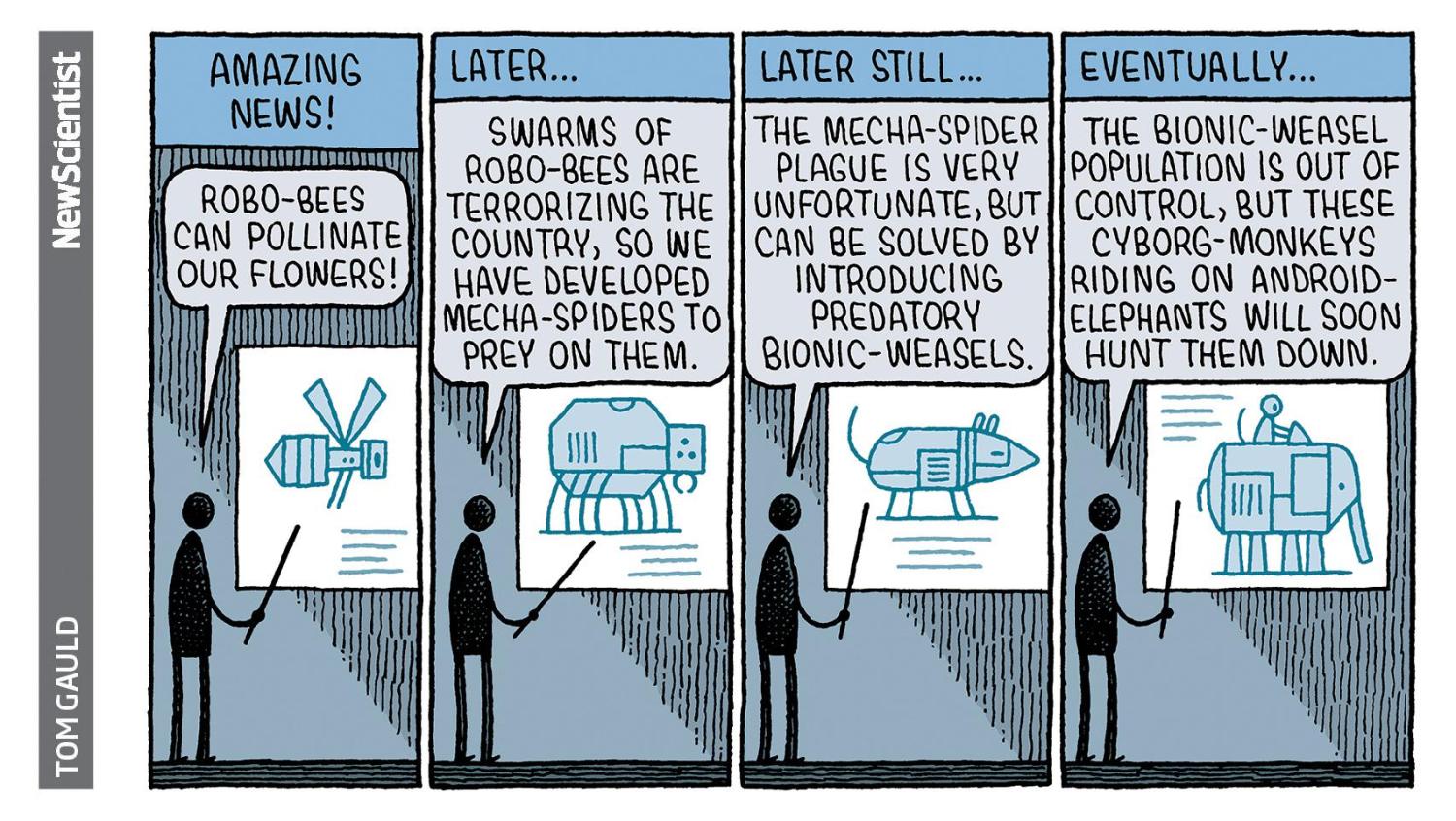
I had to be amused by this cartoon I spotted from a recent edition of the New Yorker …
Hierarchies of all sorts get a bad rap these days. We’re all supposed to be equal and everything should be egalitarian. But a few days ago Aeon published an interesting article from a group of academic thinkers. (They don’t call themselves philosophers, though such is what they are.) They suggest we need hierarchies; indeed we can’t function efficiently without them.
As usual it was a long-ish read, so here, via a handful of extracts, is a summary of the key points for me.
Preamble …
The modern West has placed a high premium on the value of equality. Equal rights are enshrined in law while old hierarchies of nobility and social class have been challenged … Few would doubt that global society is all the better for these changes. But hierarchies have not disappeared …
… the idea of a purely egalitarian world in which there are no hierarchies at all would appear to be both unrealistic and unattractive. Nobody, on reflection, would want to eliminate all hierarchies, for we all benefit from the recognition that some people are more qualified than others to perform certain roles in society. We prefer to be treated by senior surgeons not medical students, get financial advice from professionals not interns. Good and permissible hierarchies are everywhere around us.
… We live in a time when no distinction is drawn between justified and useful hierarchies on the one hand, and self-interested, exploitative elites on the other.
Correct use …
Apart from their civic importance, hierarchies can be surprisingly benign in life more broadly. Hierarchy is oppressive when it is reduced to a simple power over others. But there are also forms of hierarchy that involve power with, not over …
Take the examples of good relationships between parents and children, teachers and students, or employers and employees. These work best when the person higher in the hierarchy does not use that position to dominate those lower down but to enable them to grow in their own powers.
A common Confucian ideal is that a master ought to aim for the student to surpass him or her. Confucian hierarchies are marked by reciprocity and mutual concern. The correct response to the fact of differential ability is not to celebrate or condemn it, but to make good use of it for the common [good].
Bounds of influence … Experts are expert in limited domains, but most real-life problems are complex and multi-domain …
To protect against abuse by those with higher status, hierarchies should also be domain-specific: hierarchies become problematic when they become generalised, so that people who have power, authority or respect in one domain command it in others too … we see this when holders of political power wield disproportionate legal power, being if not completely above the law then at least subject to less legal accountability than ordinary citizens. Hence, we need to guard against what we might call hierarchical drift: the extension of power from a specific, legitimate domain to other, illegitimate ones.
This hierarchical drift occurs not only in politics, but in other complex human arenas. It’s tempting to think that the best people to make decisions are experts. But the complexity of most real-world problems means that this would often be a mistake. With complicated issues, general-purpose competences such as open-mindedness and, especially, reasonableness are essential for successful deliberation.
Get a life …
One reason why hierarchy is offensive to the modern, egalitarian mind is that it implies deference to those higher up than them. But if the idea that deference can be a good thing seems shocking, then so be it. Philosophy should upset and surprise us.
Paternalism …
… paternalism … has become another dirty word. Political paternalism can be defined as coercive interference with autonomy. This form of hierarchy is generally regarded with great suspicion for very good reason: many authoritarian governments have disregarded the interests of the people under the pretence of acting in them. But there might be a justification for at least some forms of this, as paternalism can, in fact, foster autonomy.
See the Confucian argument above.
So in summary …
Hierarchy has been historically much-abused … Nonetheless, we think it important to put these ideas forward as an invitation to begin a much-needed conversation about the role of hierarchy in a world that is in many ways now fundamentally egalitarian, in that it gives equal rights and dignity to all. However, it clearly does not and cannot give equal power and authority to all. If we are to square the necessary inequality that the unequal distribution of power entails with the equally necessary equality of value we place on human life, it’s time to take the merits of hierarchy seriously.
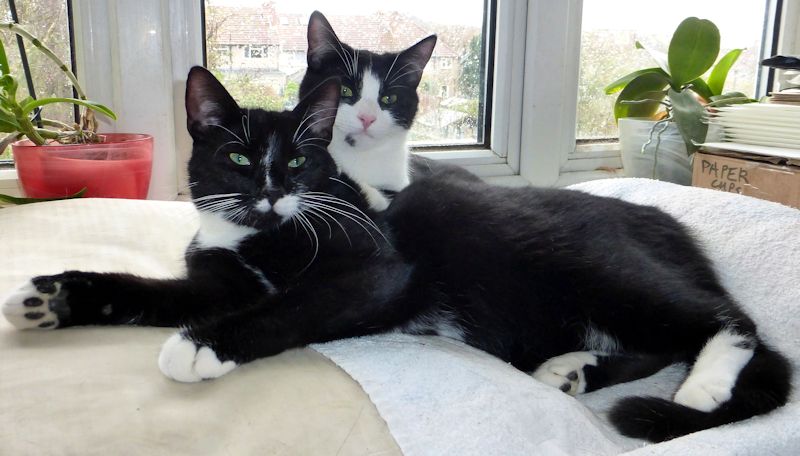
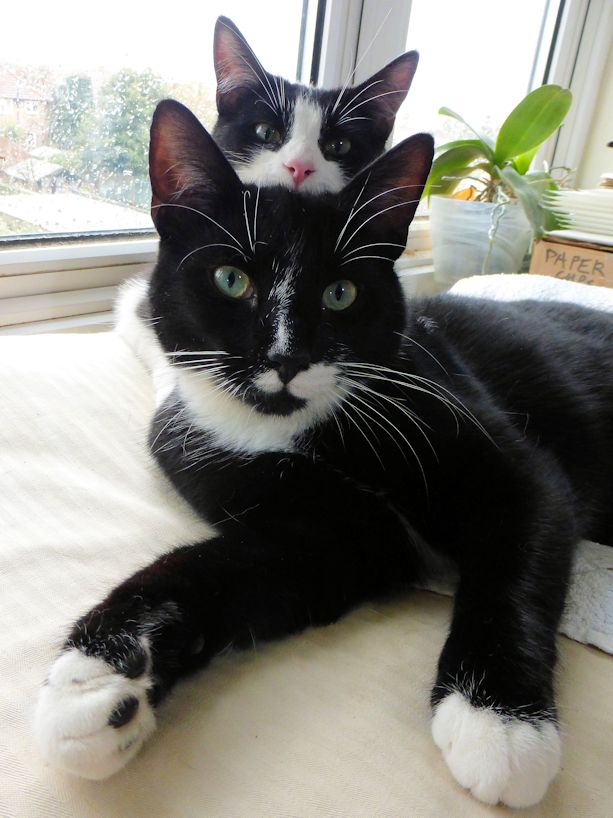
The kittens (huh, some kittens, they’re a year in 2 weeks time and both over 4kg!) caught this morning trying to convince us that butter wouldn’t melt in their hot little paws.
Rosie (behind) and Wiz for once not practising for their Assassin’s Guild exams: