We’ve not had any amusements and oddities from our local auction house for a while, largely because the last few sales haven’t thrown up anything really spectacular. Anyway here are the few highlights(?) of the recent sales. Any childish and inappropriate amusement is, of course, entirely in your brain!
Interesting old ivory including binoculars, a circular box, a bone card case with metal inlay, a desk clock, a glass paperweight, a Wills cigarette tin with a picture of the Queen, etc., and a tin containing miniature Nazi paper flags, etc.
A box of curiosities including a German cut-out 3D ‘theatre’ with actors, in original box, a pair of miniature shoes, an old purse, a chain-mail miser’s purse, two wartime handkerchiefs, a pin doll, an old notebook, military badges, an old lock, cigarette holder, etc., all in a fabric-covered box
Two miniature tortoiseshell guitars, a mandolin and a banjo
A 19th century portrait miniature of a child in a papier mache frame …
I wanted to know what the child was in a papier maché frame!
A vintage hand held fire extinguisher, a small box of vintage medicines in bottles and boxes and a Christmas fairy
Three modern large glass ornaments modelled as horns on metal stands
A replica ancient Greek helmet in steel and brass with black bristle cresting, on stand
A novelty metal garden seat in the form of a nodding dog
A large quantity of assorted fabrics, some on rolls, scraps, throws, cushion covers, needlework items, patterns, buttons, buckles, etc., also a small quantity of ladies accessories including a skin handbag, gloves, etc., two vintage costume dolls and a modern doll, a stuffed cat doorstop, etc.
A child’s rocking chair with stirrups …
An early 20th century instrument, possibly medical, an early photograph of a seated gentleman the frame marked, 58 Strand, a Victorian mahogany box of draughts and two large watermarks one of Darenth Mills Dartford and a portrait of Haile Selassie, etc.
Carved woodpecker inkwell …
A good shelf of African wooden tribal wares including bowls, spears, drums and benches
Which was followed by …
A good lot of wooden African tribal art including carved busts, figurines, bowls, jugs, paddles etc.
A Chinese late Qing Dynasty wood carving of three Buddhistic lions finished in red lacquer, with painted verso, in modern gilt frame, and a pair of native African throwing spears
A Timor horse skull mask incised with geometric decoration
An Eco 4 mobility scooter and battery which can be folded up into a car and transported
Ah yes, the patent folding battery.
Over 600 used golf balls
A decorative modern oil on board, of a Bible clutching a nun
A wooden boxed travelling chess set and board, a New Home sewing machine and two heated servers
A modern gilt framed flower fairies plaque marked spurious Minton on the back
A vintage oak wine barrel, a pair of vintage dog nut crackers and a decorative brass fish
Is cracking a dog’s nuts not classed as cruelty?
Seventeen vintage milk bottles including D Wilson & Sons and Lyndley Dairy, two vintage fire buckets and fire extinguisher, a Gordon wrench set in red metal case and other vintage tools …
Six boxes of terracotta plant pots in various graduating sizes
Yes, they really were used clay flowerpots.
A Celmac new ceramic toilet and seat
A charming Edwardian silver toasting fork with turned wood handle, with silver suspension loop, Sheffield 1908, together with a pair of late Victorian silver-plated and oak salad servers fashioned as gardening implements
More anon …
All posts by Keith
Something for the Weekend
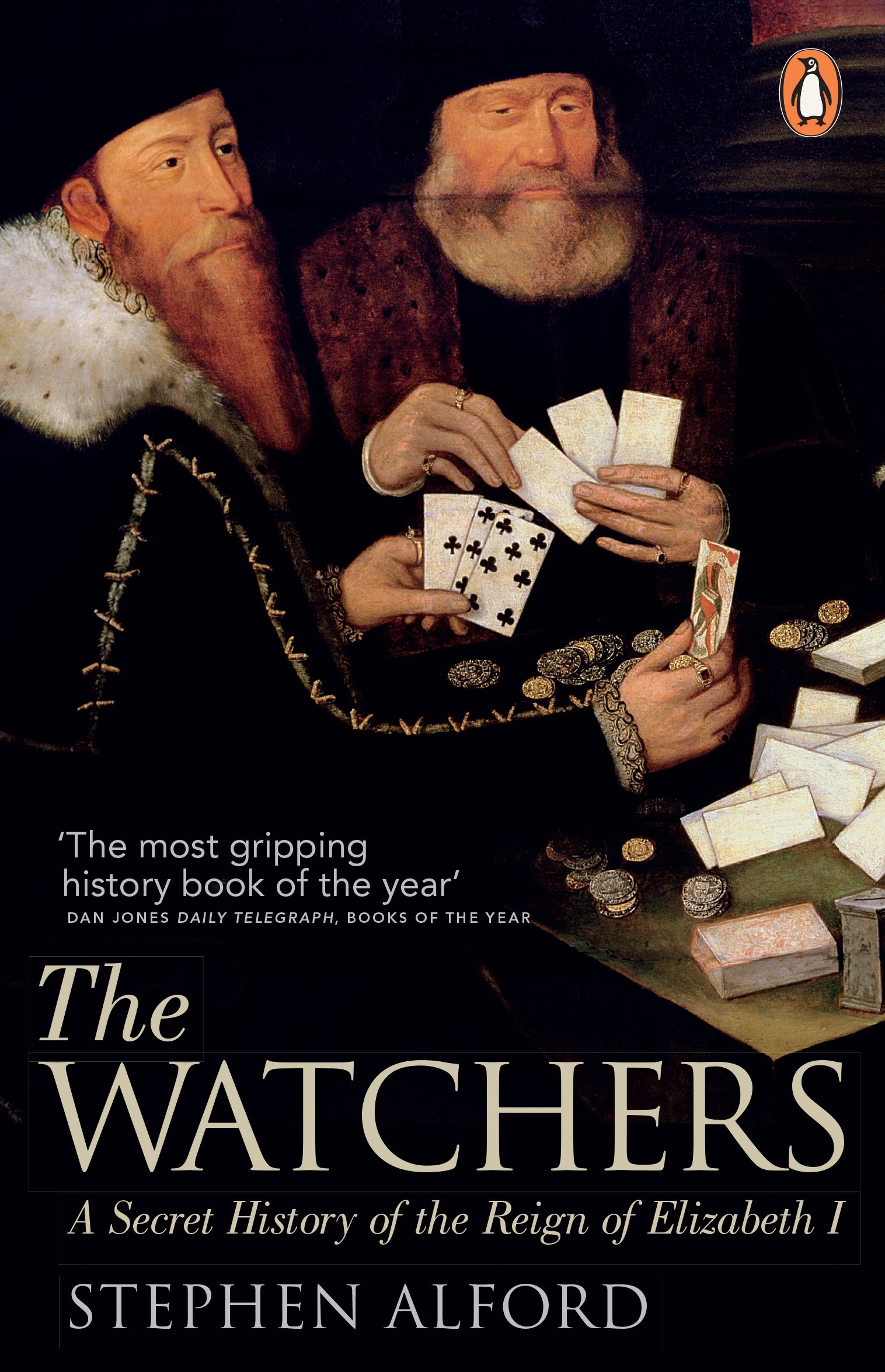
Book Review: The Watchers
Stephen Alford
The Watchers: A secret History of the Reign of Elizabeth I
(Penguin; 2012)
I mentioned this book some while ago, and promised a review of it when I finished it. At that time I was about four chapters from the end, but have only just got round to reading them – life has intervened in too many ways! Anyway, here at last is a review.
The book is a tour de force of forensic historical document research. There is little remaining evidence to go on, as Alford himself explains in his “Introduction”:
It would be wonderful to have the papers of [Elizabeth’s] secretary and his staff just as they were left at the end of Elizabeth’s reign. Instead we have to make do with tantalizing fragments, scattered pieces of a great documentary puzzle that keep historians on their toes. A stunning exception is the surviving archive of manuscripts belonging to Robert Beale, a clerk of Elizabeth’s Privy Council. Beale was a powerful character, a plainly spoken man of … high intelligence, an experienced bureaucrat and a master of government business. Over his long career, Beale collected the kinds of papers he and his colleagues needed to use every day, organized by themes and topics … Beale’s volumes in the British Library … allow us to understand an Elizabethan archive, to touch it and feel it: the stiff pale animal hide spines and covers, the leather ties to keep the books closed, the indexes for speedy reference, and Beale’s explanatory notes in what, after the frenetic scrawl of Sir Francis Walsingham [Elizabeth’s principal secretary] or the impossibly compressed minute writing of Walsingham’s most secret servant, Thomas Phelippes, is one of the vilest hands of sixteenth-century England … Unfortunately Beale’s papers are exceptional. Time, damp and hungry rodents quickly set to work on the piles of old government papers that lay in heaps in the Tower of London for centuries. Most of what survives today was preserved for us by the enterprising Victorians who … went through the chaos of papers they found in government and family archives and gave them order.
 What emerges is a “who nearly done it” from the misty and murky world of Elizabethan espionage. Espionage that, in those dangerously unsettled times, was essential for the survival of Protestant England and Elizabeth. Espionage, which was perhaps the first really consolidated use by the state, and whose methods very much laid the foundations even for today’s shadowy world of subterfuge.
Alford uses the available papers to tell the story of the machinations underneath many of the plots against Elizabeth, and of the subtle, cunning and, yes, dishonest way in which Sir Francis Walsingham, Lord Burleigh, Robert Cecil (Burleigh’s son), and to a lesser extent the Earl of Essex, used spies, couriers and shadowy men to capture Catholic plotters, entrap Mary Queen of Scots and send many to the rack and the gallows.
We all knew that Mary Queen of Scots had been caught out colluding with the Catholic enemy. What we probably didn’t realise was just how many people were involved; many were just couriers of letters who knew not what was happening; but equally many knew parts of the plan and were paid handsome sums of money not to ask questions. We probably also didn’t know that the crucial evidence against Mary was in fact a forgery.
It is a fascinating story with web upon web upon web of interplay between agents, double agents and even triple agents. A web which ranges across much of mainland Europe as well as England. But this tangle of webs does make the book somewhat challenging, as you need a clear head to keep in mind who everyone is, and who is playing who off against who.
It is an engrossing read which is well written and keeps you turning the page – I had to restrict myself to a chapter or two a night just so as not to stay up round the clock to finish the book. This is a book which tells history in the raw, and in the way it happened on the ground at the time, rather than as the sanitised version we are all taught at school. It gives us an insight into what (at least for some elements of society) was a really frightening, unsafe and unstable age.
If you enjoy history, are interested in the Elizabethans, or just like some good intrigue and skulduggery, then this is a book you will want to read. It is perhaps the most fascinating book I’ve read in a long time.
Overall Rating: ★★★★★
Ten Things
Something completely different this month …
Ten Scientific Discoveries that were Later Proven Wrong by Religion:
Extra Cat
Yesterday we acquired another kitten – a boy kitten. Well we can’t have a household of just two girlie cats! Again he came from our local animal rescue charity Guardian Angels and was being fostered by the lovely Kat in Isleworth. Kat said she hadn’t named him but was referring to him as “Boy”. By the time we got him home, it had stuck. He’s about 9 weeks old, mostly white with some tabby splotches. He’s also got noticeably, and strikingly, curly whiskers, a very triangular head and big ears – which makes us wonder if he doesn’t have some Devon Rex (or similar) in his make up; maybe a Devon Rex grandfather?
So here are the first couple of decent photos, taken at lunchtime yesterday, within an hour or so of him arriving. In the first he is offering to help with lunch. Well what self-respecting cat wouldn’t when there’s cold roast salmon on offer?
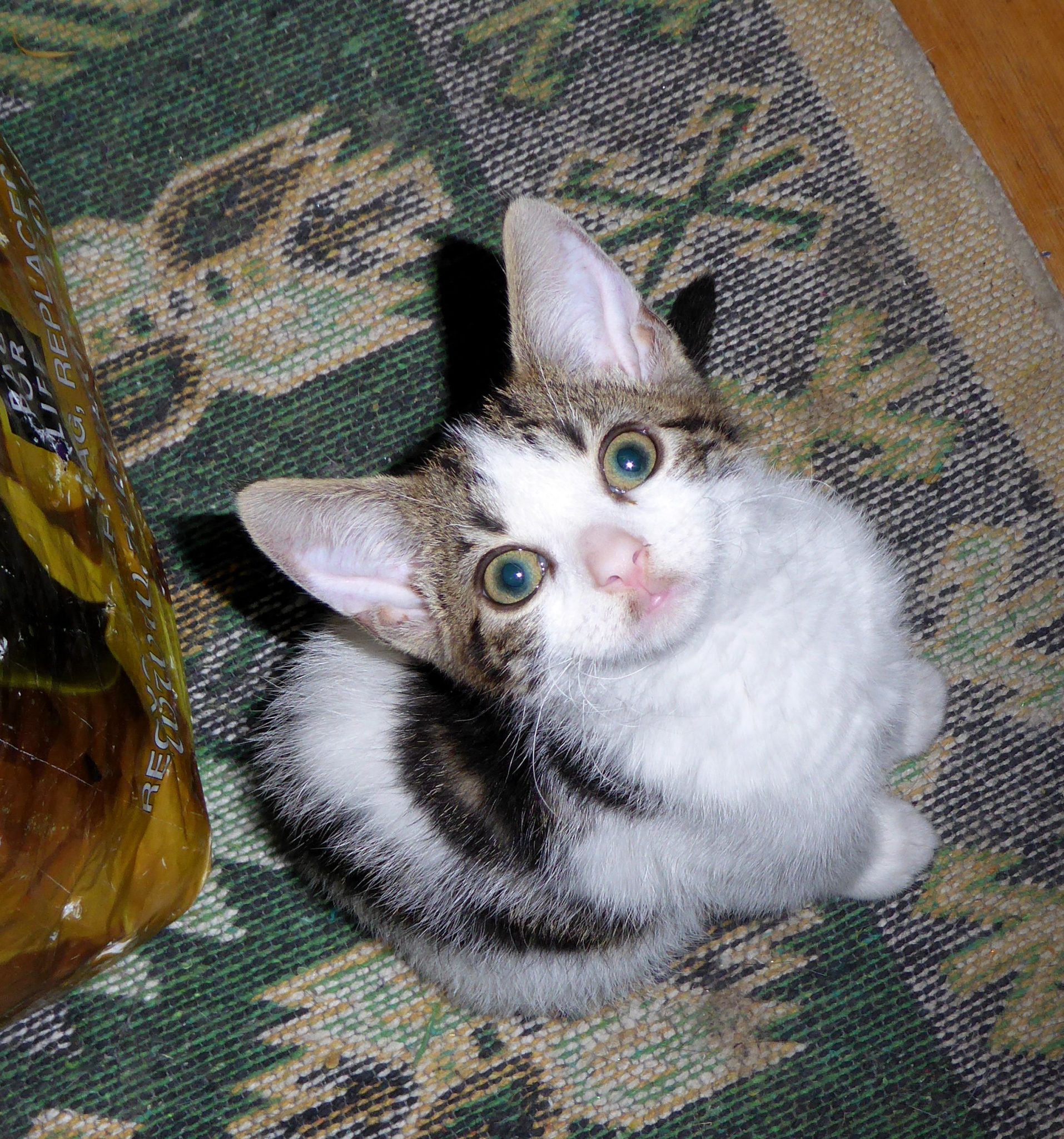
Like all kittens he’s slightly scruffy, but that never stops them looking cute …
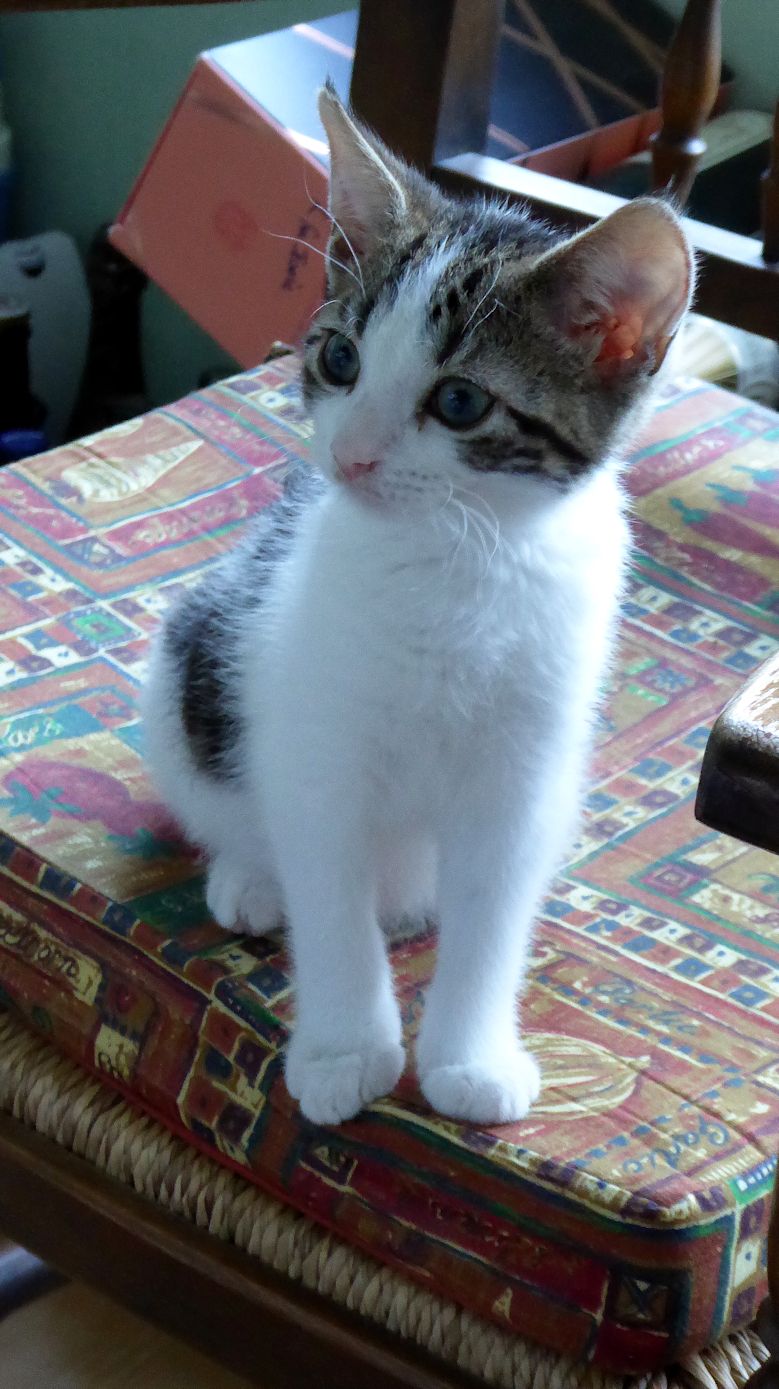
He’s still quite phased by everything. He was the last of the litter to find a home, so he’s been without his brothers’ company for a while. He hated the car journey home. And everything here is different, new and scary especially with two big cats around. But he’ll be fine. I’m confident they’ll all adjust.
If nothing else Boy will eat for England. He clearly wasn’t starving when we brought him home. Nevertheless between about 1pm and midnight yesterday he demolished two complete sachets of kitten food, several teaspoons worth of cold salmon, a piece of raw steak the size of a large almond, and several similar pieces of cooked steak. Oh and the piece of pasta I dropped on the floor. By the evening he was very round and drum-like in the middle; he looked as if he’d swallowed a basketball and was about to split a seam. But then it is every kitten’s ambition to be like that: most cat’s run by the motto “Eat now, lest hungry later”. As Garfield always said: “Eat and sleep. Eat and Sleep. There must be more to life but I do hope not!”
Meanwhile WPC Primrose sat and watched, ready to intervene in any indecorous behaviour:
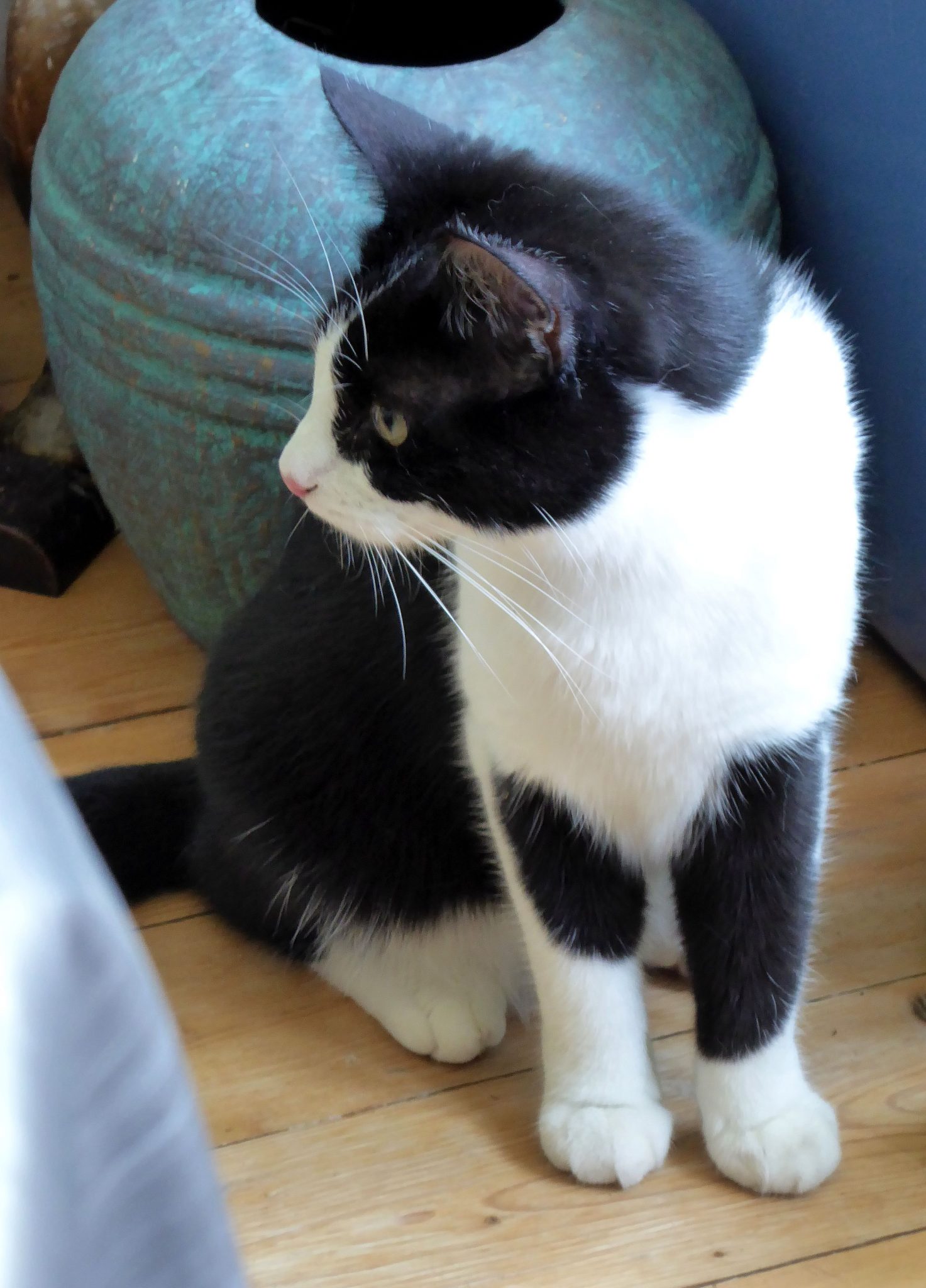
Actually, apart from spending time out, and being pissed off because our bedroom is out of bounds at present, both Tilly and Rosie are being quite good.
NHS Data Sharing – II
What follows in this post is a very short summary of two of the NHS data sharing initiatives (care.data and Summary Care Records) which I wrote back in 2014 when they were new and care.data was still very much alive. I record this here in order to provide more background and clarity to my post of yesterday on NHS Data Sharing. This is unedited and provided in its entirety; note the date at the bottom!
A Very Brief Introduction
The NHS currently has two initiatives to share patient medical data electronically: Summary Care Records and care.data. The two initiatives are very different. Let’s look at them.
Care.data is the initiative which was in the news a lot early in 2014, and is what was referred to in the leaflet which should have been put through your door in January 2014. It is about sharing aggregated data with a variety of organisations (public and commercial) to enable better healthcare planning and research. The programme will take GP and hospital records, remove or obscure anything which can identify you, and then merge all the records into a single national database. Any record which can identify you, as a patient, is not permitted to be shared outside the NHS. This is not new: hospital records have been used in this way for many years and the system is now being extended to include GP records. The intention is that over time this improves everyone’s healthcare by looking at where, and why, better outcomes are being achieved. The start of this has been delayed to at least Autumn 2014 in recognition that it has not been well communicated.
Summary Care Records [SCR] are different; they are about sharing data within the NHS for the provision of your immediate medical care. They will make your essential data (your drugs, allergies, drug reactions) available electronically to other parts of the NHS, but only when they need to treat you. So A&E and out of hours services can see your record if you need emergency treatment. This will mean you, as an individual, get better and safer care especially if you end up, unconscious, in A&E. Only healthcare staff with a special authorisation card and a PIN number will be able to access your data – just like you using your credit card – and if you are conscious and capable they must ask your permission at the time of access.
A very senior A&E consultant of my acquaintance, who works at a major South Coast hospital, recently commented to me:
Please think very carefully before opting out. I have just received my SCR access card, and it has been a revelation. Most elderly people are on lots of medicines and can remember about 10% of them. They turn up at my Emergency Department confused and unable to remember much. I can now get their medication list and their past history exactly and it means that they get much better treatment, especially with medications like Parkinson’s disease ones that are time-critical. I’m not saying that you are elderly and confused, but I am saying that you may be one day, and you won’t have opted back in. Is SCR secure? It seems no worse than the security to access my bank account.
Quite reasonably many people have concerns about the privacy of both Summary Care Records and care.data records. While we can never absolutely guarantee that security cannot be breached or abused, there is no reason to believe your data will be less secure in future than it is now.
Of course, you may opt out of one or other or both of these systems. Opting out of one does NOT opt you out of both. It is your right to opt out if you wish to do so – you just need to tell your GP. But please think very carefully before you do opt out.
Version 2 filed: 2 November 2014
Quote: Being Offended
NHS Data Sharing
I wrote what follows the other day for a friend whose parents (I was going to say “elderly parents” but realised they’re only a couple of year older than me – so maybe I’d better not!) are confused about the various NHS initiatives for sharing our medical records. And they weren’t getting much help from their GP.
So this is my understanding based on my involvement over the last few years as a patient representative, as Chairman of my GP’s Patient Group and from discussion with NHS staff. It may not be complete and it may not be entirely accurate – though I think it’s pretty close – so I’m happy to be corrected by anyone on the ground in the NHS who has factual information. I’m also happy for this to be shared as long as this preamble is included and I’m credited.
There are six NHS data sharing initiatives which people might want to be aware of; they are often confused and mostly misunderstood – mainly beacuase of the NHS’s inability to communicate effectively. I’m going to start with what was proposed about 3 years ago so you have the whole context.
- Care.data. This is the scheme which was proposed about 3 years ago in which GP patient records would be extracted, anonymised, and used for research and planning purposes (potentially including academic and commercially). Understandably many patients had big fears about confidentiality and the reverse engineering of data to identify them, despite assurances that this couldn’t happen. Patients were able to opt out (the default was for everyone to be opted in), which many felt was the wrong way round. The scheme was also very badly communicated and thus widely misunderstood. As a result the public concerns, the scheme was withdrawn pending a rethink and has never been resurrected.
My opinion: This is, at least for now, irrelevant; forget about it.
- Hospital Event Recording (or whatever it’s officially called). This is the hospital equivalent of care.data where hospital records are extracted and anonymised for research and planning use. It has been running for many, many years (maybe 20 years?) without anyone knowing (or apparently caring). I am not aware of any means of opting out, but there may be one. Given that GPs have 90% of the patient contact in the NHS this will be generating one, even two, orders of magnitude less data than would care.data.
My opinion: You can’t change it, so it’s not worth worrying about.
- Summary Care Records (SCR). This is one of the two initiatives you do need to know about. It was introduced at the same time as care.data (hence a lot of the confusion). Again the default is to opt in everyone, although you can choose to opt out.
This is an extract of your GP’s records. It contains information about what drugs you are currently prescribed, what you have been prescribed in the last 6 months, your allergies and very little else. It does not include specific information on your ailemnts, nor does it contain information on your GP consultations etc.
This record is available throughout the NHS only to specifically authorised clinicians (eg. A&E consultants) who may need it urgently. [You will know that every NHS employee has a “chip & pin” ID card which gives their appropriate authorisation to NHS IT systems; it works like your bank card. A&E consultants (and possibly some others with a real need to know) have an additional authorisation on this card which gives access to SCR.]
So if you turn up at A&E, and cannot remember/say what drugs you’re on, it allows the clinician to see your medication etc. to (a) get an idea of your underlying conditions and (b) know what drugs they can/cannot give you. If the clinician wants to access your SCR they are required to get your consent before doing so; if you are unable to give consent (eg. you’re unconscious) they may still access the record but they have to make a note in the record of the circumstances under which they accessed it. I believe that your GP sees an alert to tell them your record has been viewed – but they should be getting an alert that you’ve been at A&E anyway. As you’ll see, this can be a life-saver and you really do not want to opt out of it.
My opinion: The vast majority of people will want to be opted in to this. It could be a life-saver.
- GP demographic/epidemiological data. The NHS collects, from every GP practice, some high-level demographic and epidemiological data – ie. number of patients, their age profile, ethnicity profile, and how many suffer from which ailments. As far as I am aware this is aggregated data collected at the practice level; it does not contain information (even anonymised) on any individual. This is used for future planning of healthcare services – eg. this area has a high prevalence of diabetes, therefore we need to provide more diabetic nurses or clinics. This data is collected automatically and has been for some years. You can neither opt in nor opt out.
My opinion: You can’t do anything about this, so forget it.
- Your GP’s Clinical Records. Your GP keeps records of your medical history, drugs prescribed, hospital referrals and so on, which they update every time you visit them (or the practice nurse etc.). The clinical information is available only to clinicians; it cannot be seen by (for instance) receptionists, as there is strong masking of the data in the GP systems depending on the viewer’s authorisation (see “chip & pin” card above).
One thing which is happening is that GPs are moving towards patients being able to interact with the practice online, via a specifically authorised system. This allows patients to do things like book appointments and request repeat prescriptions online, even when the surgery is closed. One option in this is to allow the patient to see the coded clinical parts of their medical records, including things like blood test results, for the last year or so. This requires a second level of authorisation of the patient by the practice – you have to request this; the practice has to permit it specifically for you.
Many people will not want to do this as it is just one line coded descriptions. For example I just looked at my record and it shows, in seven codified entries, that I saw the nurse the other day to have wax removed from my ears. The entries look like “Tympanic membrane normal”; “Syringing ear to remove wax”. Not hugely informative. As a patient you can see only the coded parts of the record created by a clinician; you cannot see any free-form comments or non-clinical actions.
My opinion: This is too much information for most people and it can be ignored unless you’re really inquisitive. It is available only if you actively request it.
- Clinical record sharing. This is the other piece of data sharing you do need to know about. Increasingly GPs are able to share clinical records electronically with hospital consultants (and other providers) – assuming, of course, their IT systems can talk to each other. This goes beyond the SCR. If you are referred to a hospital your complete record can be made available to the consultant; they then have your full medical history and are not reliant on the minimal information which your GP will provide in the referral. The idea is that this will result in better healthcare, better outcomes and fewer stupidities like consultants prescribing conflicting drugs because the don’t know what the other is doing.
This sharing is NOT automatic: on each occasion your GP should ask if you consent to your record being shared, with this specific consultant/clinic, for this referral; you may say “yes” or “no” or ask for some parts of your record not to be shared. My understanding is that the consultant must also ask if you are happy for them to read your records. Unless you consent twice the records should not be opened. The intention is that, over time, the system will also work the other way, with your GP getting access to your hospital information – but we’re not quite there yet, although some parts may be working.
My opinion: In most instances you will probably want to permit this sharing as it is in the interests of you getting good care.
It is important to note that in each case where you are able to opt out, you must do so specifically for that one piece of sharing. Opting out of one does not opt you out of all.
So in summary …
Option 1 is irrelevant (and included for clarity).
Options 2 & 4 you can do nothing about, so stop worrying about them.
Option 5 is something you have to request from your GP practice (if they have the facility available; not all do); many people won’t want to do this.
Options 3 & 6 are the really important ones and in my view the vast majority of people will want to be opted in to these – they could be life-savers.
Hopefully that is a bit clearer for everyone.
As I said, if anyone in the NHS knows (yes, actually knows!) of anything factually wrong, then please let me know. (I do NOT want the comments filled with conspiracy theories, flapping about confidentiality or security, and anything for which there is no evidence – I reserve the right to remove such comments. My blog; my rules!)
Your Interesting Links
There’s a lot in this month’s “links”, so let’s get right in …
Science & Medicine
For those of you with youngsters interested in science – or even just for yourself – don’t forget the Royal Society’s Summer Science Exhibition in London which runs 4-9 July.

Earthquakes are well known for making big cracks in the ground, but could an earthquake ever crack a planet apart?
So what is the oldest living thing on the Earth? And no, the mother-in-law doesn’t count!
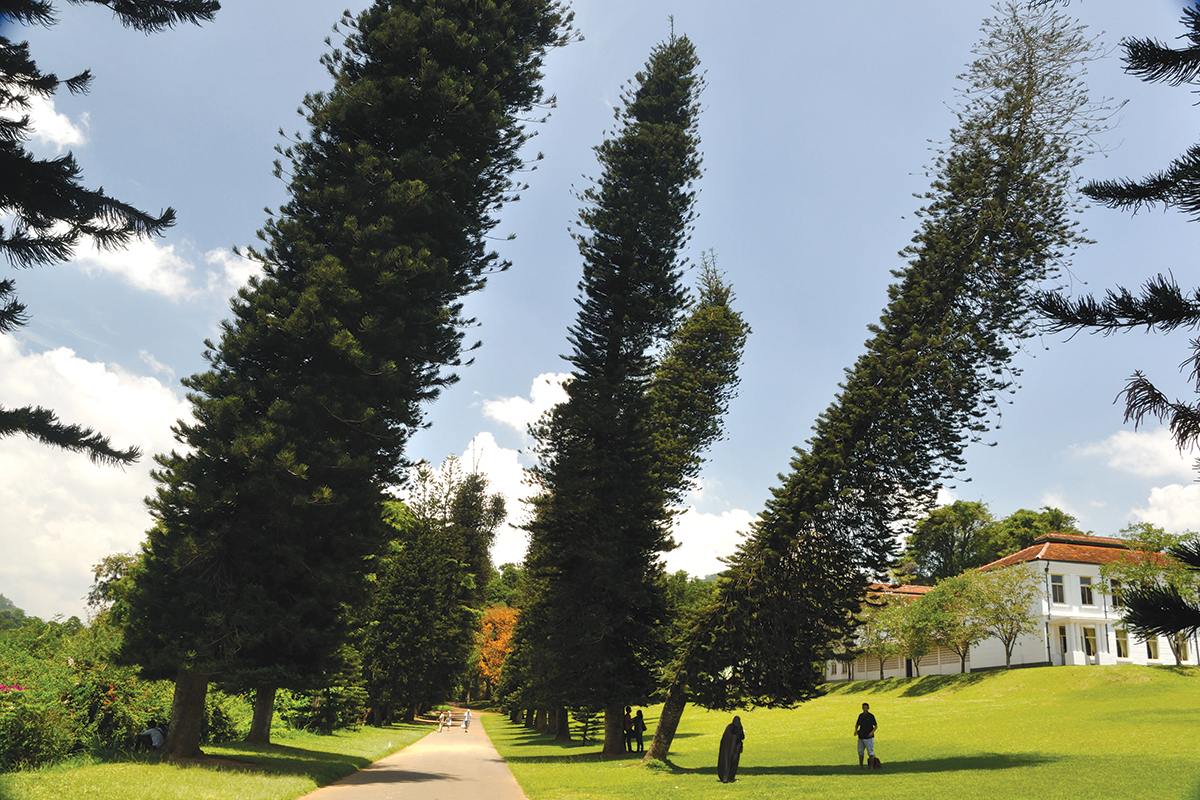
Now this is really odd. It seems that all Cook pine trees lean towards the equator – and dramatically so! Scientists have only just noticed and they don’t understand why.
It seems that jumping spiders can see the moon, their vision is so good.
Well yes, butterflies have sex, but it is a lot more complicated than we imagine.
So just why are birds’ eggs egg-shaped? Researchers have finally worked out the real reason.
Want to smell like a dog? Well now you can. Psychologist Alexandra Horowitz is training herself to approach the world in the same olfactory way her dogs do.
From dogs to cats … there have been several articles recently on research which has worked out how cats conquered the world. Here are just two, from IFLscience! and the Smithsonian magazine.
And now to humans. Apparently foetuses turn to follow face-like shapes while still in the womb.
Be afraid, at least if you’re American. It seems the Lone Star Tick is causing people to become allergic to meat, and even causing death; scientists are still trying to work out why.
Finally in this section, one science journalist has weighed up the pros and cons of having a PSA test, and found it wanting.
Sexuality
Suzannah Weiss in Glamour wants to end the expectations of pubic hair grooming.
What happens when illness robs someone of their ability to orgasm.
We’ve known for some time, but now research has provided the evidence, that women are the stronger sex.
Men need to be talking about fertility – male fertility.
Apparently there’s an association between sex in old age and keeping your brain sharp.
Environment
Harry Mount laments the vanishing glory of the suburban front garden all in the worship of the automobile.
Social Sciences, Business, Law
Will Self looks at the need for a Britain to have a written constitution – and offers to write it!
Several years ago, lawyer David Allen Green looked at the effects of the political penchant for banning things.
Language
Here are 35 words which many people use wrongly. Yes, even I fall into one or two of the traps.
History, Archaeology & Anthropology
Apparently there was a huge wooden structure at Avebury. It pre-dated Stonehenge by hundreds of years and was (deliberately?) destroyed by fire.
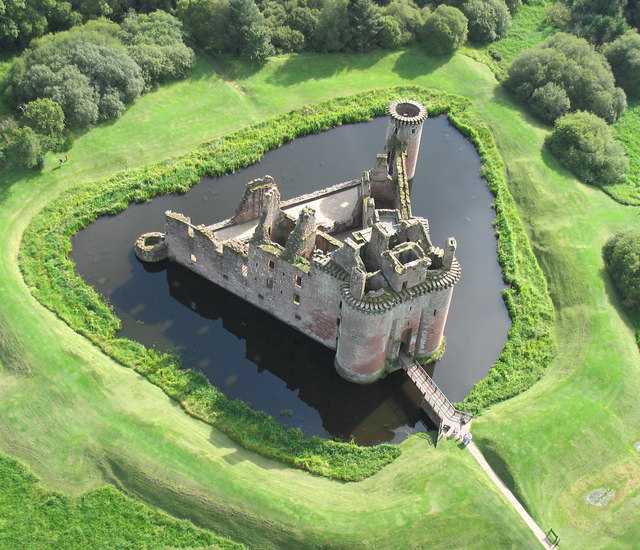
Something many aren’t aware of is that medieval castles were very cleverly designed, even down to the spiral staircases.
So what really did happen at Roswell in 1947.
London
IanVisits goes in search of London’s lost Civil War fortifications.
Also from IanVisits are two items on the London Underground. First a look at possible plans to make gardens in unused ticket offices; and secondly at some of the engineering challenges in taking the heat out of the Underground system.
Lifestyle & Personal Development
Are 16 and 17-year-olds really too young to vote? Dean Burnett, in the Guardian, looks at the evidence.
There are some amazing photos showing the work of Sutherland Macdonald, Victorian Britain’s first professional tattoo artist.
Ada Calhoun, in the Guardian again, looks at how to stay married. Spoiler: don’t get divorced.
People
And finally, Geoff Marshall (who has twice held the record for travelling the whole London Underground in the shortest time) and Vicki Pipe (of the London Transport Museum) are on a record-breaking mission to visit all 2,563 railway stations in mainland Britain this summer – documenting the state of our railways as they go. They started in early May and are already over halfway there. Follow their progress on YouTube, Twitter, Instagram, Facebook and at All the Stations.

Chuckles …
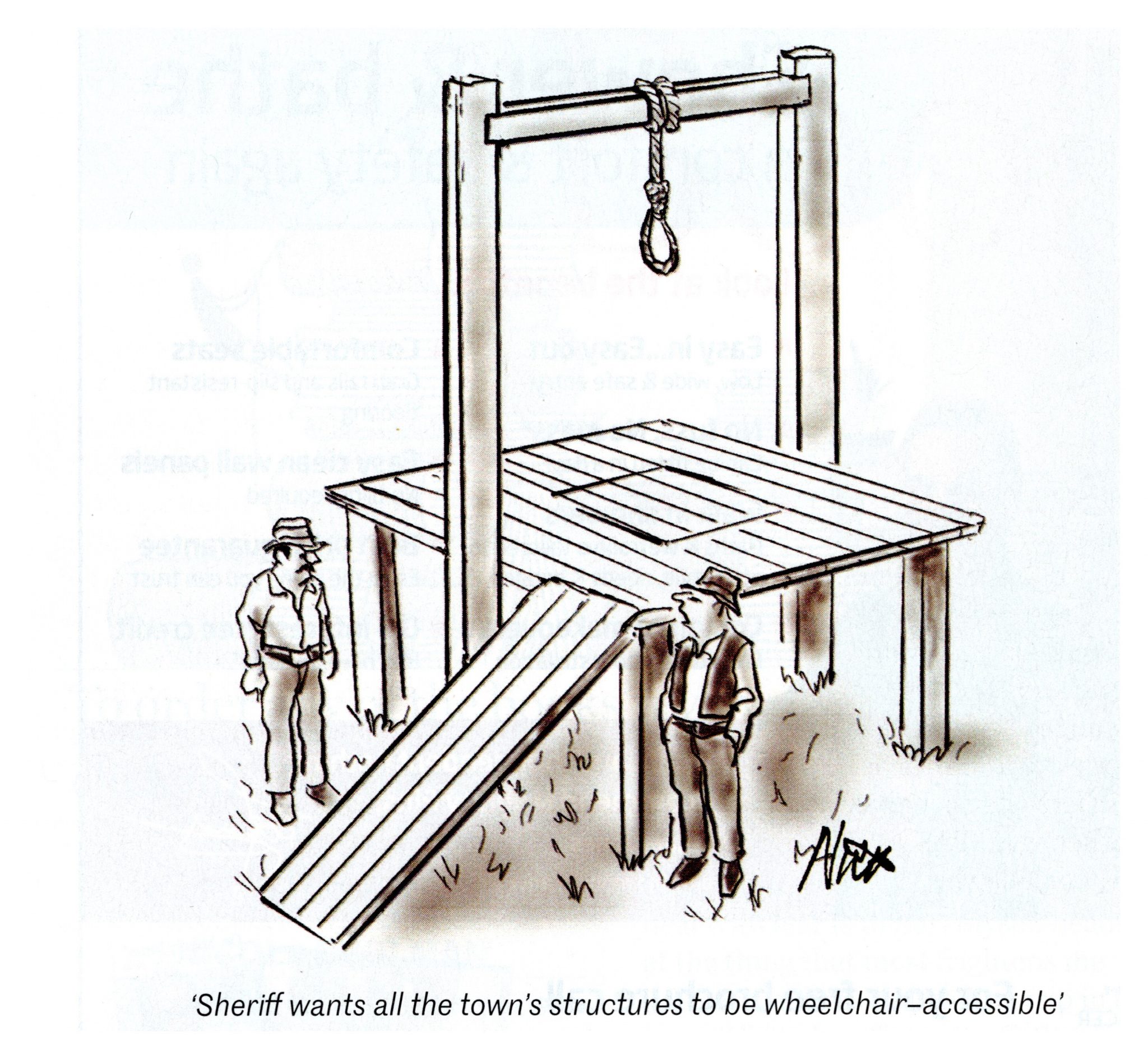
… from the current edition of The Oldie.