All posts by Keith

I’m a controversialist and catalyst, quietly enabling others to develop by providing different ideas and views of the world. Born in London in the early 1950s and initially trained as a research chemist I retired as a senior project manager after 35 years in the IT industry. Retirement is about community give-back and finding some equilibrium. Founder and Honorary Secretary of the Anthony Powell Society. Chairman of my GP's patient group.

Monthly Links

Herewith are the usual monthly collection of links to items you may have missed. It’s holiday season, so there’s not been so much of interest this month.

Science, Technology & Natural World

This year’s Royal Institution Christmas Lectures should be good. They’re titled “Who are You?” and will apparently be all about evolution and the rise of Homo sapiens. And who better to present them than the ever excellent Prof. Alice Roberts. But I bet there will only be three lectures again this year, rather than the original six.

Talking of human evolution, the latest research suggests that one of the last traits of our primate origins to disappear was our prehensile big toes.

More prosaically, it seems that the UK has this month been plagued by social wasps. I can’t say I’ve noticed, but here anyway are five reasons we should celebrate them. Oh and there’s another reason: our beloved honey bees are descended from ancient wasps.

I’ve seen it suggested that this is old news, but there are recent reports of Pine Marten recolonising the Kielder Forest for the first time in 90 years.

Health & Medicine

There’s a brilliant plan afoot to map the location of every publicly accessible defibrillator in the UK.

And a tragic story: how smallpox claimed it’s very last known victim here in the UK.

There’s new evidence that the HPV vaccine has been responsible for a huge reduction in the rate of cervical cancer. Even better is the news from last month that HPV vaccination is to be offered to teenage boys in England.

Apparently the idea that millions of sperm are in an Olympian race to reach the egg is yet another male fantasy about human reproduction. This Aeon piece has news of what actually seems to happen. [LONG READ]

I wasn’t sure whether to put this item under science or medicine, but here’s a piece of the chemistry of foxgloves, from which we still get the heart drug digoxin.

And here’s a strange phenomenon: aphantasia – the inability to picture things in one’s mind’s eye. It sounds as if there is a spectrum of aphantasia from very lucid to nothing; I suspect I’m somewhere in the lower half as the only pictures I have of events (even significant events like our wedding) are a few “snapshot” images, whereas other people I know can run everything in full HD video in their brains. It’s very curious.

Environment

Here’s another potentially disastrous new vanity project which George Monbiot has got his knife into: the Oxford-Cambridge Expressway. The article contains links to some of the official documentation, and it doesn’t look very pretty!

History, Archaeology & Anthropology

Researchers have made a very interesting discovery of an ancient hominid girl whose mother was a Neanderthal and father was a Denisovan. It suggests that hybridisation between hominid species, and especially our close relatives, was a lot more common than was suspected.

An interesting alternative theory about the development of major monuments like Stonehenge and Easter Island. [£££]

Yet more laboratory research has led investigators to unravel the recipe for Egyptian mummification.

It been a hot summer (although writing this over bank holiday weekend it doesn’t feel that way) and the lack of rain has been a great result for archaeologists as many hitherto unknown sites have become visible in crop marks. And the use of drones has made finding them so much easier than hitherto. [Mostly images]

London

One of our favourite London bloggers has undertaken an epic journey: across London on the 51½°N line of latitude. It is documented in a series of 12 posts of which this is the first – or you can have the whole 51½°N journey in a single post. [LONG READ]

Lifestyle & Personal Development

So what is it really like being an artist’s model? A handful off London’s life models give us a few insights.

Food & Drink

Gluten is getting a bad name. Are problems with gluten in the diet a fad? Or are they a real medical issue? Joanna Blythman in the Guardian looks at some of what seems to be happening. I think the jury is still out.

Despite many people’s dislike, we all know cabbage is good for you and now researchers are suggesting it may contain anti-cancer chemicals. Well if was good enough for Diogenes …

That’s all for this month; more at the end of September.

Oxford-Cambridge Expressway

I’d never heard of the Oxford-Cambridge Expressway, which seems to be a new mega-road linking the two university cities. And no wonder, because it seems to be being cookd up behind closed doors.

Yesterday’s Guardian ran a typically robust piece from George Monbiot attacking both the scheme and the governments approach:

This disastrous new project will change the face of Britain
yet no debate is allowed

Monbiot’s article links to a number of the government documents, which do seem to substantiate many of his assertions. Beyond that I leave readers to make up their own minds.

Monthly Quotes

Here’s this month’s collection of recently encountered quotes.


Borges wrote that a library is a labyrinth. This is also true – the rows of bookshelves running on for miles, with paths and passageways between them, the classification of the texts working as a kind of cipher that the reader must decode in order to find what she wants. That is only the superficial idea, however. Borges meant that literature is itself a labyrinth, and that every library contains the possibility of infinite places and infinite existences. Open a book in a library and you can disappear into a world, its cities, and its landscapes. All books, in turn, are labyrinths that express the winding shapes of their writers’ imaginations. Each writer builds the labyrinth, and then leads the readers through the myriad possibilities of their tale with a thread like that of Ariadne, guiding them down the paths of their story, wherever it might take them.
[Sofia Grammatiki, quoted at https://www.theguardian.com/books/2018/jul/28/myth-monsters-and-the-maze-how-writers-fell-in-love-with-the-labyrinth]


In thinking, keep to the simple.
In conflict, be fair and generous.

[Lao Tzu]


Making others happy is not a question of sacrificing our own happiness. Trying to make others happy, even when we do not always succeed, is a source of great satisfaction. Anger and hatred are signs of weakness, while compassion is a sure sign of strength.
[Dalai Lama]


Any sufficiently oblivious technology is indistinguishable from malice.
[Rose Eveleth]


You don’t have to say anything to the haters. You don’t have to acknowledge them at all. You just wake up every morning and be the best you you can be. And that tends to shut them up.
[Michelle Obama]


Doors closed 15 minutes ago. As we do every evening, we’ve turned all the books upside down so the words don’t fall out overnight. It may seem like a silly waste of time, but ask yourself this; when did you last see piles of words on a Waterstones carpet? That’s right – NEVER.
[https://twitter.com/swanseastones/status/1027234913005830144]


A limerick is seldom essential,
And this one is inconsequential,
Just the standard five lines,
And some dubious rhymes,
And it’s pointlessly self-referential.

[https://twitter.com/daniel_barker/status/1027932616442474498]


The rigid low-sodium diet is insipid, unappetising, monotonous, unacceptable, and intolerable. To stay on it requires the asceticism of a religious zealot.
[Sir George Pickering, about 50 years ago, quoted at https://www.theguardian.com/science/2018/aug/09/salt-not-as-damaging-to-health-as-previously-thought-says-study]


A Limerick on any occasion
Is great for debate or persuasion,
It dissipates bile
Just by raising a smile:
The perfect poetic equation.

[https://twitter.com/bernardstacey/status/1028189895519596544]


Ultimately, happiness comes down to choosing between the discomfort of becoming aware of your mental afflictions and the discomfort of being ruled by them.
[Yongey Mingyur Rinpoche]


GOING TO THE DOGS
My granddad, viewing earth’s worn cogs,
Said things were going to the dogs;
His granddad in his house of logs,
Said things were going to the dogs;
His granddad in the Flemish bogs.
Said things were going to the dogs;
His granddad in his old skin togs,
Said things were going to the dogs;
There’s one thing that I have to state –
The dogs have had a good long wait.

[Anon; quoted at https://www.facebook.com/barnabyjpage/posts/10156805118473487]


Lighthouse-keepers Trinity House own a lot of land alongside Borough High Street, which is why Avon Place … has a bicentennial mural along its length featuring Henry VIII, osteopathy and a fox chewing a brake cable.
[diamond geezer at http://diamondgeezer.blogspot.com/2018/08/51n-6.html]


Life Drawing

Thanks to @ldsdrawingclub on Twitter for drawing attention to this piece from the Daily Telegraph of a few days ago.

Life drawing can help teens overcome
social media body confidence issues

The Telegraph website is paywalled, so here are a few snippets:

Experts including the former president of the Royal Society of Portrait Painters have advised that drawing nude models could help youngsters understand what “real” people look like, compared to those on social media.

What is out there online for youngsters is often superficial and does not accurately represent what people look like in real life … images seen online and on social media are having an impact of distorting reality and … cause people to have body confidence issues or think how they look is different.

I would urge people to get involved in life drawing which has the benefit of allowing people to question what the ‘ideal’ body is.

Life drawing is an opportunity to study the human form, folds, blemishes and all – not wondering if the image you’re obsessing over has been photoshopped.

Those who follow along here won’t be surprised to learn that I entirely agree. I can’t draw for toffee – I was so bad I wasn’t allowed to take O-level Art at school, but I have been to an art class since school (to little effect, I may say). But in many ways one’s drawing ability doesn’t matter. What’s important is the exposure, the ability to see so many different forms, the opportunity through drawing to see how all the pieces and shapes fit together, and to realise it is all normal.

More power to these people for doing their bit to cure us of this toxic ethos and these ridiculous taboos.

Personal Boundaries

Sometime earlier I came across the following on Twitter. It seems to me to be a good summary of how we should be, and how I try (not always successfully) to be. If you think about it, it is indeed all to do with boundaries, as the initial postulate says, and looking after oneself.

What do boundaries feel like?
•  It is not my job to fix others
•  It is OK if others get angry
•  It is OK to say no
•  It is not my job to take responsibility for others
•  I don’t have to anticipate the needs of others
•  It is my job to make me happy
•  Nobody has to agree with me
•  I have a right to my own feelings
•  I am enough

I would add one thing to this, really for the sake of clarity:

•  I am not responsible for other people’s feelings and emotions

Ultimately, it is my responsibility to look after me and only me, both mentally and physically; it is your responsibility to look after you and only you. No more, no less. Think about it. All our emotions, beliefs, needs, feelings, come from within; and you are the only person who can access and control your particular set of baggage.

It isn’t always easy to do all this – indeed it isn’t always easy to remember all of this, especially when we live in a world where the prevailing ethos is predicated on “doing unto others” rather than looking after one’s own well-being. But I try; I do my best; and one cannot ask more. As John Cheever said:

Could I do better, dear heart, better is what I would do.

Monthly Links

So here we are then with this month’s selection of links to items you may have missed the first time round. There’s a lot her again this month, and as usual we’ll start with the “harder” science-y stuff and slalom downhill from there.

Science, Technology & Natural World

So are we alone in the universe? Maybe or maybe not. Science doesn’t know. [£££]

The Earth’s tectonic activity might be essential for the evolution of life.

Most of us hate the sound of our own voices when we hear recordings. Here’s why.

A New Yorker article on the obsessive search for the Tasmanian Tiger (aka. Thylacine). [VERY LONG READ]

Balls! The males of all mammals have them, but not all are on display: some species don’t have descended testicles.

Who could have predicted that crows can work a vending machine – and make their own tokens.

That clean swimming pool smell … turns out it isn’t too good for you!

Health & Medicine

There’s this yeast; it’s a strange and deadly superbug.

So just how easy is it to catch germs from a toilet seat?

Women’s healthcare could be normalised by employers understanding the need for menstrual leave.

Low risk of breast cancer? Seems like skipping that mammogram isn’t such a bad idea.

Two items on fish oil and Omega-3 supplements. A study by the Cochrane Institute (who are the gold standard of medical reviews) concludes the supplements give no protection against heart disease and stroke. And what’s more the second article points out that such supplements are doing immense harm to the planet.

There’s a better medicine for the elderly than umpteen pills. It’s called social prescribing, where GPs can signpost people to activities and support – except most don’t know what is actually available.

Sexuality

Do lesbians have better sex than straight women? Seems like they probably do.

Environment

I remember my father talking about this 50+ years ago, so it’s been known for years (and ignored) that we need to look after and repair the soil to grow crops sustainably and with good yields.

Timber! So just how are tree trunks cut to make wood with a range of uses and appearances?

Social Sciences, Business, Law

Now I was suggesting this as a corporate strategy some 12 or more years ago, and it has taken this long for someone to catch on: accountancy giant PwC is making employees use mobile phones and cancelling landlines.

History, Archaeology & Anthropology

Archaeologists have unearthed an unknown Neolithic site near Woodbridge in Suffolk. Ritual is suspected.

IanVisits pays a visit to Avebury Stone circle (above).

Ireland is having a hot, dry summer which is good for revealing crop marks of ancient remains. In one a drone has spotted the outline of a previously unknown henge near Newgrange.

Slightly nearer home, soldiers have found the skeleton of a Saxon warrior on Salisbury Plain.

There’s an unexpected cockatoo in the margins of a 13th-century manuscript in the Vatican. And it’s forcing a rethink of the ancient trade routes.

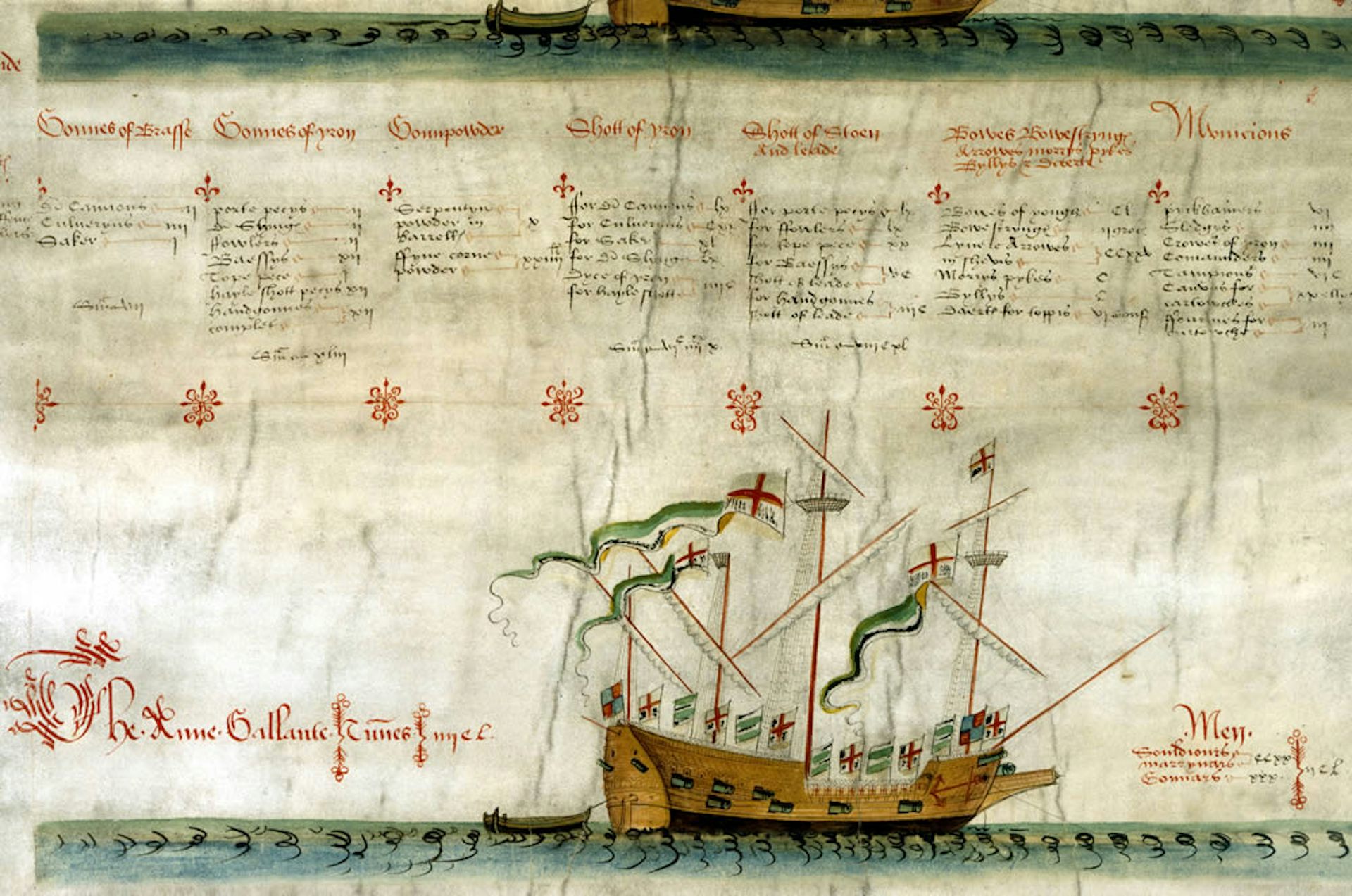
Meanwhile on the north Kent coast a 16th-century shipwreck is being revealed by the sea, and it too is expected to reveal a lot about trade in Tudor England.

Still on watery archaeology, there is a massive metro construction project in Amsterdam which is necessitating the clearance of some stretches of canal. The astonishing range of finds, right back into pre-history, has been put online.

London

Kew Gardens station has a remarkable concrete bridge. IanVisits goes to see.

The Horniman Museum in south-east London has a new World Display as well as being all-round interesting.

Lifestyle & Personal Development

Are things getting worse – or does it just feel that way?

And are women’s breasts getting bigger – or is it just bras? (Or is it just low levels of hormones in food?)

Some schools are banning girls from wearing skirts supposedly to protect the girls. But skirts aren’t the problem; the problem is boys who think girls are lesser creatures. No, just let girls and boys wear skirts, or trousers, as they please.

A parents’ guide to surviving children’s teen years.

So just why do people believe in superstition and the unbelievable?

People avoid adopting black cats because they’re supposed to be unlucky and because they are hard to photograph. Neither is actually true!

Ah yes, the cashless society. It’s another big con of the banking sector to boost its profits. As Sweden is beginning to realise, if you don’t have cash the whole of society is vulnerable to computer malfunction, attack and power failure. Just think about that for a minute.

Food & Drink

On the history of borscht.

Shock, Horror, Humour

And finally one from Norfolk Police, who stopped a motorist only to find he was driving while sitting on a bucket and steering with pliers!

Experimental Food

This evening’s food was a bit by way of an experiment. We’d bought some ready-prepared ravioli (mushroom and ricotta, as you ask) and I decided we would have it with a tomato sauce, but ended up experimenting. So what I ended up with was …

Tomato, Olive and Port Sauce

I used …
medium Red Onion, finely chopped
3 clove Garlic, finely chopped
a few small Cherry Tomatoes, halved
small can Chopped Tomatoes (or more chopped fresh tomatoes)
2 tablespoons Tomato Paste
12 Black Olives, chopped
half wineglass of Port

Roughly what I did …
Sauté the onion and garlic in some (olive) oil until the onion is just beginning to brown.
Now throw in the fresh tomatoes and olives and sauté for another couple of minutes.
Add a couple of egg-cups of port and cook for a further couple of minutes.
Now add the tinned tomatoes if you’re using them, if not just let the fresh tomatoes cook down.
Season with a small pinch of salt and a generous amount of black pepper.
Let the whole lot cook for a few minutes to thicken and reduce; add more port if it gets too jam-like.
Towards the end add another couple of egg-cups of port and the tomato paste; the result should be nether jam-like nor too liquid but somewhere in between.

I ended up with a deep red, very robust, sauce which was quite tasty but rather too robust for the ravioli, but stood up well to a hearty Sicilian red wine. It would go well with braised rabbit, or pheasant, or maybe lamb. And it would work well with blackberries in place of port, when it would be especially good with rabbit (rabbit and blackberries is a favourite here!).

Experiments don’t always work, or at least not the way one thinks they might. But nonetheless this was an experiment worth doing, and worth eating!