So here we are, another month bites the dust, which means it’s time for a look at some of the things which impinged on me but which I didn’t otherwise write about.
Sunday 1
It’s tedious but sadly it’s necessary.
Tuesday 3
Did it stop raining at any point today? If it did, I certainly didn’t notice.
Wednesday 4
In contrast to yesterday, today was a lovely sunny day. Looking out of the bedroom window this morning, there were two goldfinches in the street tree outside – very nice; although they are usually around. But what is that? Flying steadily some way off, across a clear blue sky, and going south was a single swan: large, white with a long neck; quite unmistakeable. Not something one sees very often.
Sunday 8
There seems to be nothing happening at present. Everything is dull, dreary and wet. Motivation has disappeared today if only because I woke up feeling very depressed. That caused me to cancel my hospital appointment on Tuesday as I just can’t face the hassle – the appointment isn’t urgent anyway, it’s just a quick 15 minute check-up which will waste most of the day.
Monday 9

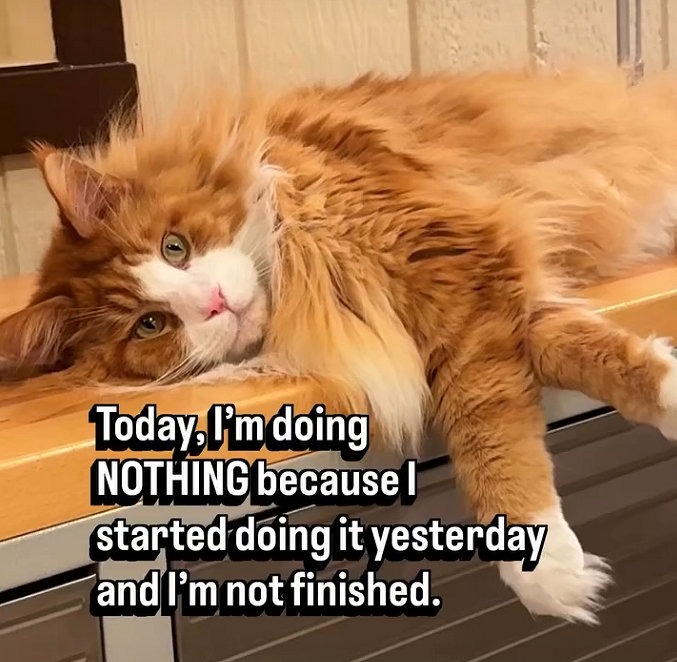
Image stolen from the internet
Wednesday 11
Sitting over lunch we looked out of the window to see not one, but two red kites gliding over, very low. They really are big birds. No wonder the pigeons scattered!
Friday 13
There are days when you have lots of sugar, and days when you don’t have any. Given my diabetes the latter should be the norm. But today was one of the former; I seem to have spent the day guzzling cake and fizzy pop. Well it would be rude not to! At least once in a while.
Saturday 14
Sunshine! Lots of sunshine! A glorious sunny morning, although cold. And the afternoon was good too, although it did gradually cloud up. Doesn’t it make everything feel so much better.
Sunday 15
Only a day late for our Valentine’s Day dinner. Something simple: sirloin steak with garlic roast potatoes and a tray of roast veg (tomato, fennel, pepper, mushroom, onion). Washed down with the obligatory bottle of Champagne. No starter; no pudding; the main course was enough. Despite all, food remains one of the pleasures of life.
We were remembering our first Valentine’s Day together in 1979. It was bitterly cold and snowy; we were at my parents. We went the 2-3 miles to a restaurant, despite 2 inches of ice on the roads (somehow the buses were still running!). The restaurant were glad to see us as almost everyone else had cancelled due to the freezing weather. Starters, main course and wine plus a Calvados each cost £50 – which was a fortune; probably the equivalent of paying near £500 now. Looking at the menu, which N has kept, a gastro pub starter now costs the same as a main course then. It felt like something we really couldn’t afford at the time, but looking back it was, in many ways, a great investment.”
Monday 16
Tuesday 17
Hang on! This isn’t right. We had another essentially dry day and some sunshine. It’s definitely helping lift my depression.
Thursday 19
What an interesting day. The osteopath mauling my hand and back was the least of it! A trip to the doctors this afternoon produced two “amusements”, Firstly one of the receptionists asks me if the patient group could fund-raise as the nurses want an ECG machine – errrrr, maybe, but do the powers know about this? Then to see the nurse for my RSV jab, when she discovers the supply is out of date – rescued by one of the other nurses finding some OK stock well hidden in the back of the fridge. After witch tidying up the books in the book exchange was a piece of cake!
Friday 20
Felt distinctly mucky all day – and through into Saturday morning – which I put down to yesterday’s RSV jab.
Saturday 21
Well that’s a nice first for many years … this morning two (and sadly only two) greenfinches sitting in the top of the silver birch. They’ve been devastated in recent years by “trichomoniasis, a parasite-induced disease that prevents the birds from feeding properly”. In consequence I’ve not see them around for many years, so wonderful to have them back, however briefly. Add to that, a couple of days ago we had two redwings; they’re winter visitors and it isn’t unusual to occasionally see the odd one or two, probably in transit. Also this week we now have four squirrels!
Sunday 22
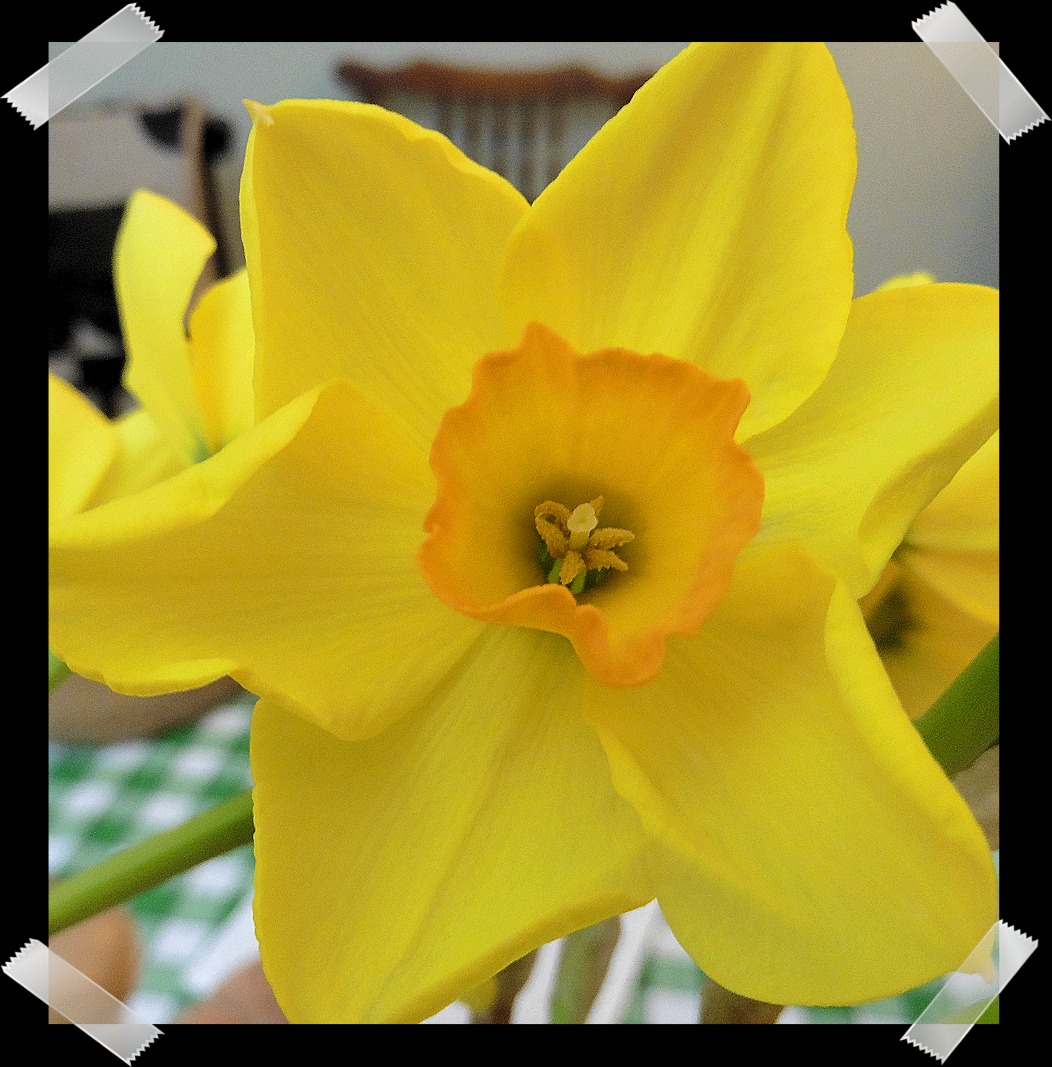
For the last several weeks we’ve been getting some really cheerful daffodils and narcissi from the supermarket – and they’re British grown!They’re ridiculously cheap; in fact I’d say too cheap. But they do give a cheering lift to the dining table. And given the recent weather, I’ll take that.
Tuesday 24
Just after 18:00 I opened the study window. It was pitch dark, but there was still a robin singing its heart out somewhere close by.
Thursday 26
Walking out of the hospital to get my cab early this afternoon after my audiology appointment … the hospital entrance is blocked by at least three police cars, three fire trucks and an ambulance, all with flashing blue lights. Chaos; no-one can get in, but you can get out. Fortunately they all backed off after about 20 minutes so my cab was able to finally get to pick me up. And horrible traffic on the way home meant I finally got lunch at 15:15!
Saturday 28
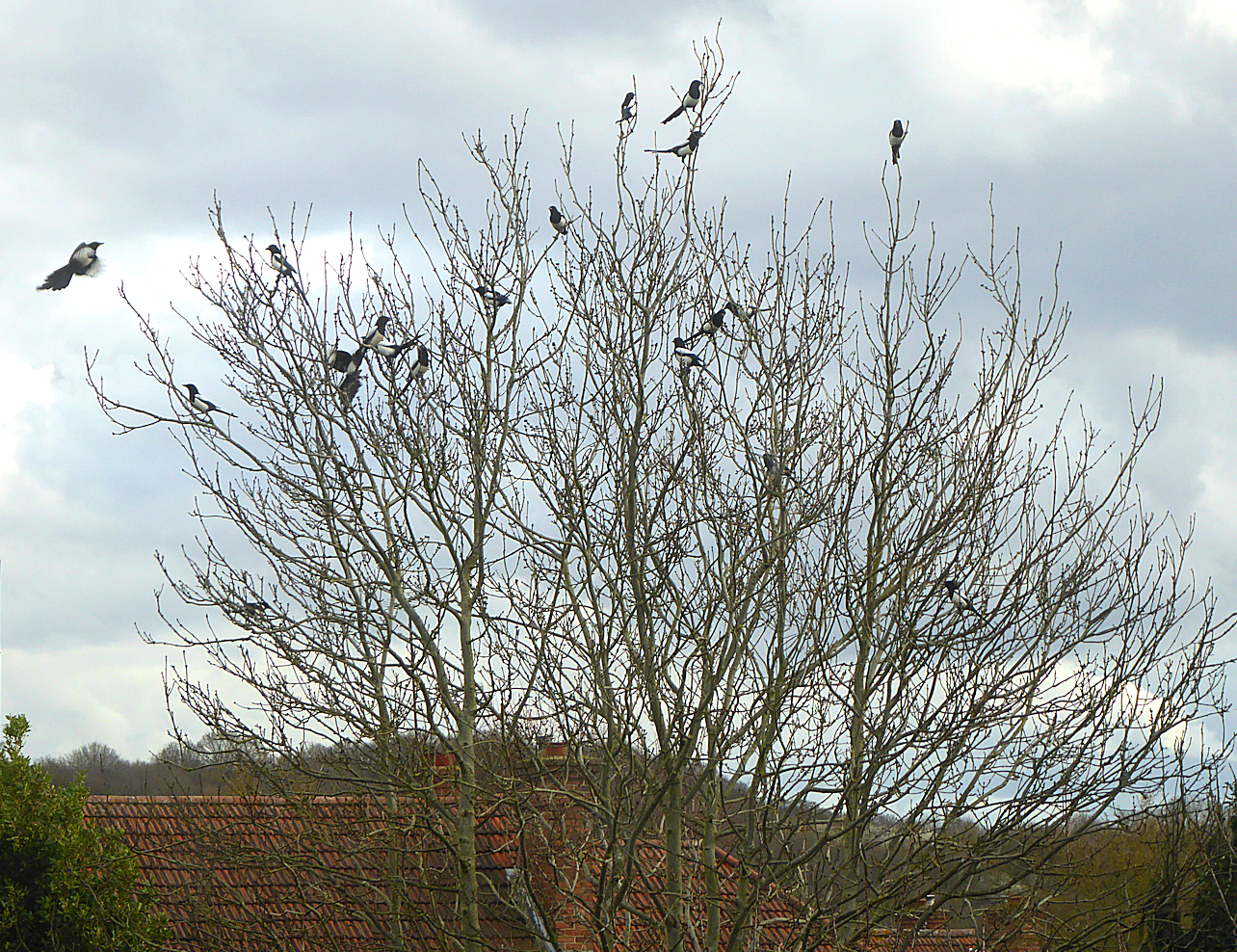
They clearly know something we don’t! I don’t know what was happening, but somewhere around mid-afternoon I looked out the study window and the tree at the back of us, a couple of houses along, was full of magpies. And I mean full. One or two went away and a couple of others joined the throng. At one point I think I counted 20 birds sitting in the tree, without any that were flying around. Here’s the proof …
Count them: 19 magpies
[Click the image for a larger view]


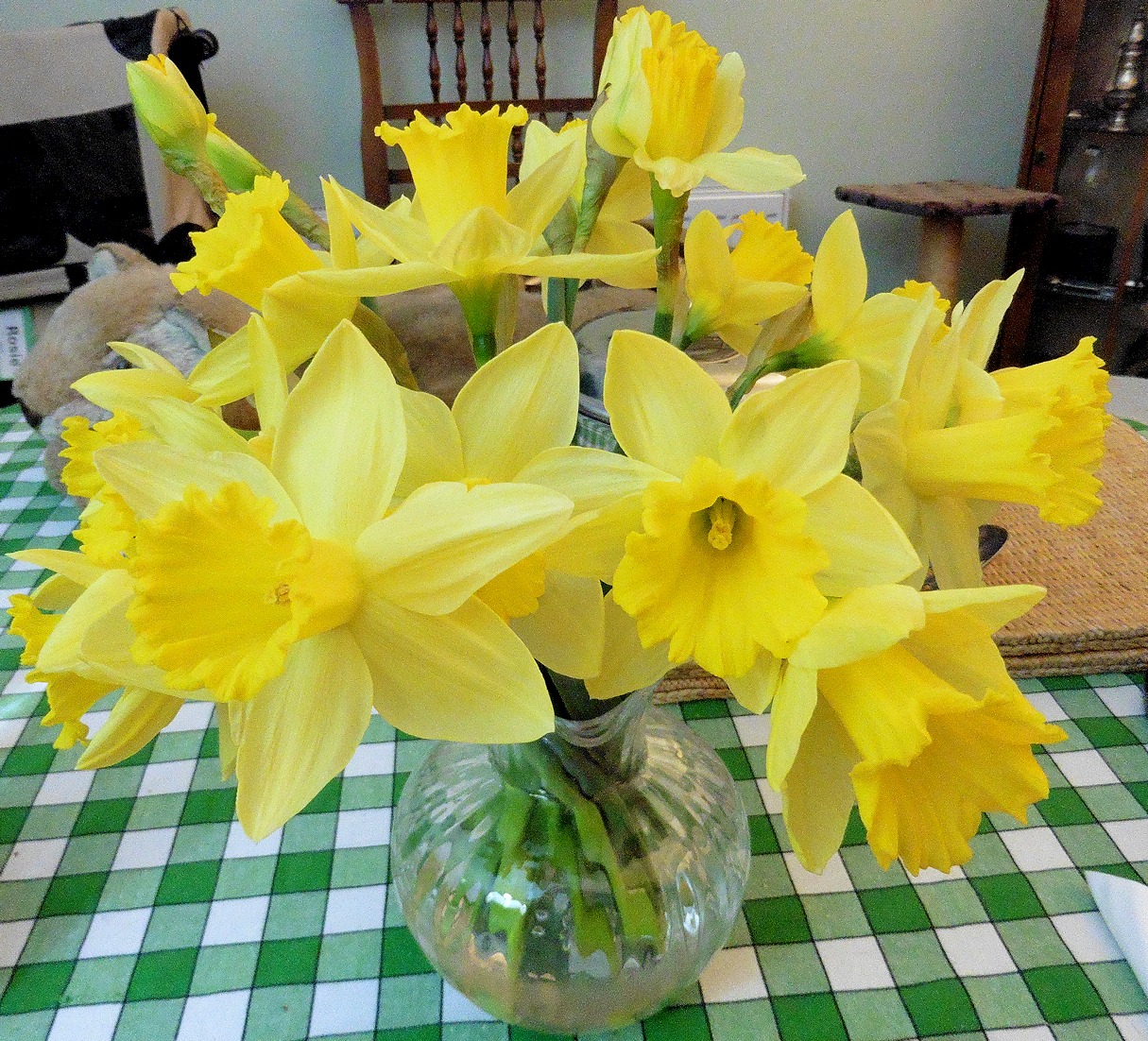 They’re ridiculously cheap; in fact I’d say too cheap. But they do give a cheering lift to the dining table. And given the recent weather, I’ll take that.