Well I promised I would write again at day 200 of Covid isolation, and here we are. That’s over 6 months of house arrest and confinement to barracks.
Well not quite, as I have been out beyond the front gate twice in the last month: on both occasions to go to the dentist to get a broken tooth fixed. And what a surreal experience that was, with the dentist and nurses all bedecked in space-suit style PPE. It was all approached very professionally and efficiently: obviously they’re finding it hard but they’re managing and seem able to be their usual cheerful selves (at least outwardly to patients). It’s good too that I’ve had the same excellent dentist for around … I can’t remember but it must be at least 15 years and maybe more. So we know each other well; I might have been rather more worried if I’d had to encounter someone totally new.
Back in the real world we’re now undoubtedly seeing the second wave of Covid-19 infections. I find this no surprise at all: restrictions have been lifted; the unthinking section of the population thinks it’s all over and have gone back to drinking and socialising; they also all went on holiday to Spain for more drinking and shagging, and to bring back more infections; and now the schools have gone back. Who would have guessed this was going to produce a second spike? Clearly not our apology for a government, who couldn’t find their way out of a wet paper bag – I doubt they could even lie their way out of said wet paper bag, at least not without managing to break the law or piss off everyone as well.
But enough of my ranting. Here are a few things (good and not so good) that have happened since my last report on day 150.
Good
Not So Good
So far we’ve had half a dozen marrows from our 3 plants. Some have been stuffed and eaten, and a couple used to make chutney.
We’ve made 5 or 6 batches of chutney: a couple of apple, red tomato; marrow; plus a small batch of crab apple cheese. (Scroll back a few posts to find my recipes.)
The small number of apples on our new (container planted last winter) apple trees are ripening. I picked one a few days ago; it was delicious. Harvest time coming soon.
I’ve been doing lots of family history, trying to untangle knots back in the 17th and 18th centuries. That’s taken me down numerous fun rabbit holes, but solved few puzzles.
We’ve also had great fun putting together a Christmas quiz for the Anthony Powell Society Newsletter. It’s never all literary and includes lots of general knowledge style questions. And it’s always amusing to see what sneaky questions we can think up, especially as this one will be a competition.
I actually quite enjoy trips to the dentist (due to a combination of a really excellent dentist and interesting conversations) but it is a treat I, and my bank balance, could happily forego.
We lost all our tomato plants to some sort of fungal/viral pestilence: everything went black, almost overnight. It seems to have happened to a number of people round here this year. Although we’d had some fruit this was very annoying as there was a good crop of super fruit coming along.
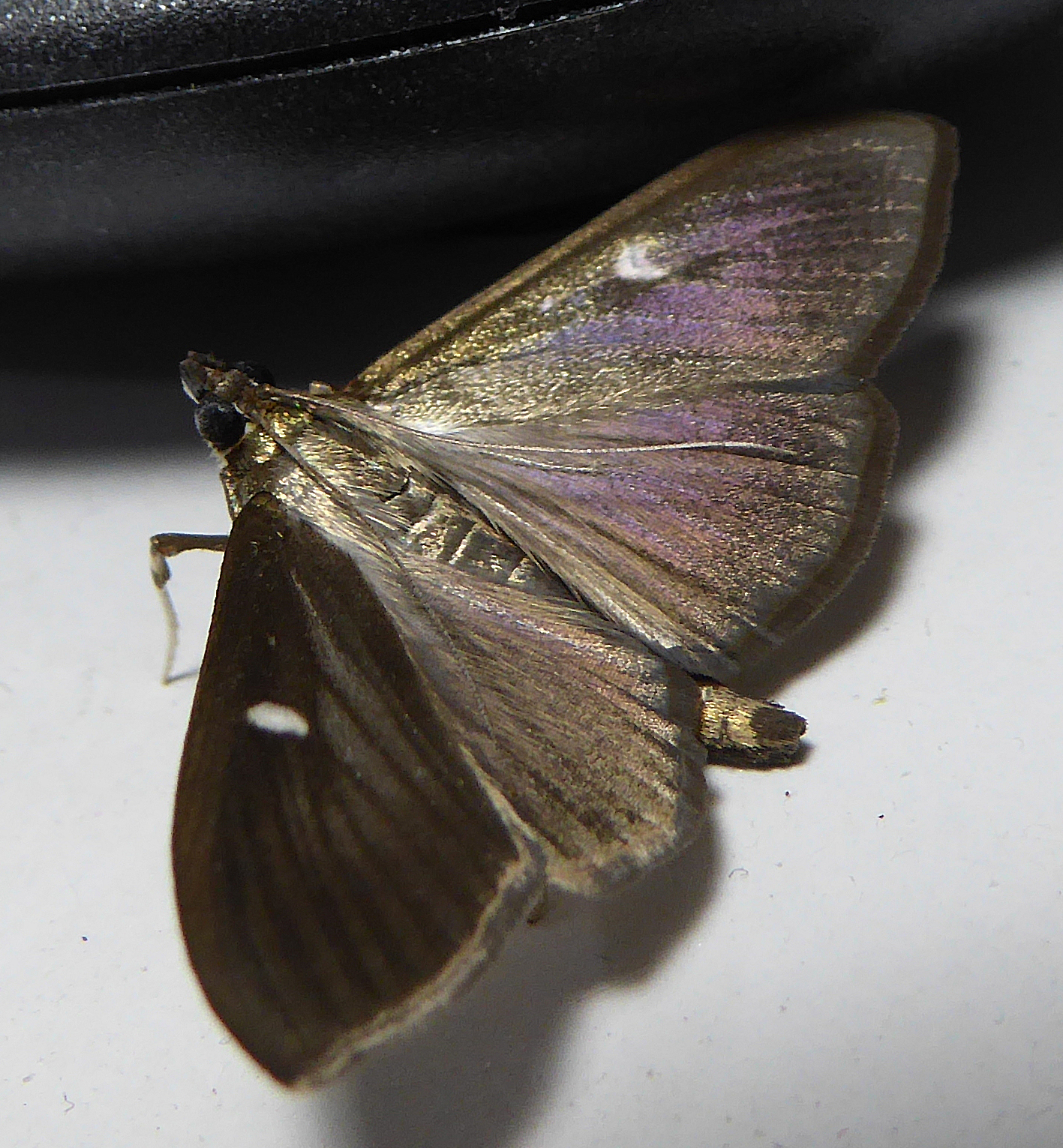
And then there’s the pestilence which is the Box Tree Moth (they destroyed our two boxes last year); but the other week I had a dark morph in the study – really quite pretty
We’ve remained in quarantine; and it seems we will be for the foreseeable future. This is not helping my depression at all; I’ve been especially struggling for the last couple of weeks.
Which is why I’m continuing to fail at writing letter (well, emails) to friends an family – some of which I should have done months and months ago. But then I never was a great correspondent.
Box Tree Moth, Dark Morph; Greenford; 6 September 2020
So what next?
Well I reckon we’ll still be in lockdown at Christmas, by which time the flu season will be in full swing and everyone will be going stir-crazy and morose at the thought of a miserable Christmas. But before that I’ll try to report again on day 250, which will be mid-November and we’ll have a much better clue as to what is actually happening.
Andrew Copson & Alice Roberts The Little Book of Humanism: Universal Lessons on Finding Purpose, Meaning and Joy
Piatkus; 2020
It’s a long time since I’ve written a book review here. That doesn’t mean I’m not reading, but it does mean I’ve not managed to finish enough books to make a review worthwhile: like always there are many books on the go, and most are cast aside at the arrival of something new.
I would never claim to be a humanist. I probably am one, but I don’t profess to know enough about humanism to feel that’s what I am. Besides I try to avoid anything which wants me to believe in some creed, however loose it may be.
So I was motivated to read the recently published The Little Book of Humanism.
Let me say straight away that this book does what it says on the tin: it is a very basic guide to many of the ideas and beliefs behind humanism. Sadly though I found it tediously wanting. It came across to me as a series of would-be-inspirational quotes strung together with some pieces of text made up of platitudes and the obvious. I don’t know Andrew Copson, but I expect more of Alice Roberts – this may not be an academic work, but Roberts can do better than this.
I expected the book to make me stop and think; to present me with deep ideas about humanism. It didn’t. All I seemed to get was a feeling I was being told things which are patently obvious. I expected something with more “bite”, and something rather more formally construed.
As so often though, that is probably very unfair of me as the book likely isn’t intended for someone like me who has spent many years thinking about what they really do believe and their personal morality. It is, I suspect, much more aimed at those who’ve maybe heard of humanism, but don’t know anything about it and who feel disillusioned with mainstream religion. For those people it is probably quite a good route into humanism, without being a dogmatic text full of formal beliefs (which humanism really shouldn’t be anyway).
What also disappointed me was the quality of the production. The copy I have, while hard-bound, looks as if it is glued rather than stitched with the cover also too lightly attached. The content is printed on very rough, off-white paper which resembles thin blotting paper – that’s commendable if the paper is recycled, but the lack of finish to the paper, and the lack of brightness, does make the book a less enjoyable read. The actual text uses a mix of serif and sans serif typefaces, in a variety of point sizes: again something which irritates. I’m also not sure “little” is the right adjective; yes the book is the size of a small paperback but it’s quite thick and chunky; I wouldn’t call it pocketable. This is partly down to the modern fetish for extraneous white space; to quote Ambrose Bierce “the covers of this book are too far apart”. Overall the production looks cheap and as such is possibly not a good advertisement for the humanist movement.
Overall I was disappointed, but maybe unfairly so.
So here we are, round to our monthly selection of recently encountered quotes.
We are a species poised between an awareness of our ultimate insignificance and an ability to reach far beyond our mundane lives, into the void, to solve the most fundamental mysteries of the cosmos.
[Katie Mack; The End of Everything]
Throughout history there have been non-religious people who have believed this life is the only life we have, that the universe is a natural phenomenon with no supernatural side, and that we can live ethical and fulfilling lives – using reason and humanity to guide us. These people have looked to scientific evidence and reason to understand the world. And they’ve placed human welfare and happiness – as well as the welfare of other sentient animals – at the heart of how they choose to live their life. Today people who hold these beliefs and values are called humanists. There are millions of individuals around the globe who share this way of living and looking at the world – even if they haven’t heard of the word “humanism” and realised that it describes what they believe.
[Prof. Alice Roberts at https://www.theguardian.com/books/2020/aug/31/alice-roberts-atheism-humanism]
The UK is the only country in the world apart from Iran that reserves places in its legislature for clerics, with 26 Church of England bishops sitting by right in the House of Lords. And yet we think of ourselves as a progressive nation!
[Prof. Alice Roberts at https://www.theguardian.com/books/2020/aug/31/alice-roberts-atheism-humanism]
A learned fool is more foolish than an ignorant one.
[Molière]
So convenient a thing is it to be a reasonable creature, since it enables us to find or make a reason for everything one has a mind to.
[Benjamin Franklin]
Patriotism is proud of a country’s virtues and eager to correct its deficiencies; it also acknowledges the legitimate patriotism of other countries, with their own specific virtues. The pride of nationalism, however, trumpets its country’s virtues and denies its deficiencies, while it is contemptuous toward the virtues of other countries. It wants to be, and proclaims itself to be, “the greatest”, but greatness is not required of a country; only goodness is.
[Sydney J Harris, journalist and author (1917-1986); h/t John Monaghan]
“Avocado” comes from the Aztec “ahuacatl”, which also meant “testicle”. The name was given to the fruit because of its shape.
[@susie_dent on Twitter]
On the subject of Scottish notes, you can often find a Scot attempting to pay with one in an English shop, informing the dubious cashier “I think you’ll find pal, that’s legal tender!” Well, I’m sorry to say that they are not. Scottish and Northern Irish notes are in fact not legal tender anywhere in the UK and do not have to be accepted.
[Tom Currie at Historic London Tours Blog; see also the Bank of England’s What is legal tender? page]
And now for today’s second preserving recipe. I was given a large bag of (mostly) windfall Bramley apples. They weren’t going to keep, and one can eat only so much apple crumble, so I decided to make some apple chutney. And as we have Scotch Bonnet chillies ripening on the plants in the study, I thought to make it a hot one.
Again this is infinitely adaptable and very easy. Depending on availability you could replace some or all of the apples with green or red tomatoes, pears, marrow, courgette, runner beans, plums, rhubarb, even carrots or aubergine.
Hot Apple Chutney
Makes about 8 1lb jars.
Ingredients
2.5kg apples (prepared weight)
600ml pickling vinegar
1tbsp salt
3cm piece fresh ginger (or 2tbsp ground ginger)
500g onions (I tend to double this)
3 cloves garlic
450g sugar
150g tomato paste (optional)
1 Scotch Bonnet chilli (or less hot ones if you prefer)
3tbsp pickling spice (to add more kick to the vinegar)
200g sultanas (optional)
Method
Peel, core and chop the apples, removing any damaged parts.
Chop the onion, chillies and garlic, and grate the ginger (if using fresh).
Throw everything into a large pan and simmer carefully stirring very regularly (so it doesn’t stick to the pan) until reduced and thick. (This may take a couple of hours!)
Spurred on by the season of fruitfulness, I’ve been indulging in some preserving over the last week or so. I thought I’d share a couple of recipes in this post and the next. Like all my recipes they are almost infinitely adaptable.
First off here’s a recipe for Crab Apple Cheese. We have an ornamental “ballerina” (ie. columnar) crab apple tree in the garden, which produces large (for a crab) red fruit which I’ve always assumed were of no use. It is over 30 years old and now getting quite tall, but before we decided to take it out in favour of something more useful, I figured we ought to see if the fruit were of any use. And they are! So this recipe has probably saved the tree from the axeman.
Now I can’t be bothered to faff around allowing cooked fruit to strain through a muslin bag overnight to make jelly, so I did the easy version and made a “cheese” – which is much the same as jelly except you get a cloudy product, and that’s fine by me.
Sweet & Spicy Crab Apple Cheese
Based on an original recipe by the late Mary Norwak.
Makes 5-6 1lb jars.
Ingredients
1.5kg crab apples (prepared weight)
300ml sweet cider
300ml water
1 lemon, cut into eighths [a]
white or light soft brown sugar
1tsp ground cloves
1tsp ground nutmeg
1tsp ground cinnamon
Method
Cut the washed apples into pieces (halves/quarters is fine) removing any damaged parts but without peeling or coring.
Put the apple into a pan with the water, cider and lemon.
Simmer until the fruit is very soft.
Press the cooked fruit through a sieve. You’re aiming to be left with only the dry fruit fibres, skins, pips and lemon peel [b].
Weigh the resulting puree and return it to the pan.
Add the same weight of sugar as there is puree (ie. for every 100gm puree add 100gm sugar).
Stir in the sugar over a low heat until all the sugar dissolves.
Add the spices and bring to the boil.
Reduce the heat; simmer and stir continuously until the mixture is thick [c].
Test the set as for jam [d].
Once you reach the set point, pour into sterilised jars [e] (a jam funnel helps here) and put on the lids immediately.
This should store in a cool dark place as long as home-made jam.
Notes
The lemon should ensure there is enough pectin in the mix to get a good set, but not too much that the flavour will come through.
This is arm-aching work as you need the residue as dry as possible. If you have more than one sieve try to engage a helper.
This is tedious as it may take quite a time, but you do not want the mix sticking to the bottom of the pan. And be careful as the thickening mix can spit, it is very hot and can stick to the skin.
If you have a sugar thermometer the jam should set well when the mix reaches 105°C. Otherwise use the saucer test. Put a saucer in the fridge at the beginning of your cooking time. Once you think the jam has reached setting point or has thickened, put a teaspoonful on the cold saucer and leave for a minute or so. Now push the test jam with your finger; if it wrinkles well it should set OK. Alternatively hold the saucer vertically; if it is set the jam will not run off the saucer (but the whole blob may glide downwards as a whole). For more see, for example, https://www.kilnerjar.co.uk/setting-points.
Sterilising jars. Wash, rinse and dry the jars and lids. 30 minutes before required put the jars in the oven at 140°C. If possible warm the lids. When needed put the jars onto a wooden board (the heat may damage your nice worktop). When filled put the lids on the jars as quickly as possible – you’ll need an ovenproof mitt/glove to hold the jars – and then go round again to ensure the lids are tight. As the jam cools a slight vacuum will be created in the jar which will help preserve the contents.
This is excellent for a sweet course or served with pork, ham, duck or cheese. Oh and if you make it too runny, then use as an ice cream topping. Indeed it is sufficiently sweet you could even use it as jam!
My cheese set solid. We had a small amount left after filling the jars and put it in a ramekin. Once cold you could turn the ramekin upside down and the cheese didn’t fall out! We road-tested it at lunch today with a good cheddar cheese, and it was universally acclaimed as “excellent”.
This year our Ten Things series, on the tenth of each month, is concentrating on things which are wackier than usual, if not by much. From odd road names to Christmas carols by way of saints and scientists. So here goes with September …
Ten Relatively Unknown Scientists
Robert Hooke (1653-1703)
John Flamstead (1646-1719)
Paul Dirac (1902-84)
Mary Anning (1799-1847)
Eric Laithwaite (1921-97)
Alice Hamilton (1869-1970) (right)
Paul Flory (1910-85)
Paracelcus (1493-1541)
Emmy Noether (1882-1935)
Grace Hopper (1906-92)
If you’re interested to know more, all have Wikipedia entries.
It’s been quiet round here recently. Nevertheless we’ve been collecting our usual list of links to items you missed the first time. And this month we have an edition packed with some good (long) reads …
Science, Technology, Natural World
Astronomer Martin Rees looks at how we’ve discovered that the universe is much bigger and weirder than anyone thought … [£££] [LONG READ]
… or as our favourite theoretical physicist, Katie Mack, points out: space is big and our planet a tiny porthole, looking over a cosmic sea.
Now to more mundane matters … here are two articles, one from the Conversation the other from the Guardian, on how vets identified Coronavirus in a cat.
A few weeks back, when the weather was nicely tropical, Diamond Geezer took a look at the technical definition of a heatwave – and it isn’t as simple as you might think.
Really tiny, but really cute: Leaf Sheep,
apparently the only animal that can photosynthesise.
The Somali Sengi (a species of elephant shrew) is a really cool critter: it mates for life, can race around at 30km/h and sucks up ants with its trunk-like nose – and having been thought extinct ecologists have recently rediscovered it in Djibouti.
Health, Medicine
A view from inside the NHS on what it was like trying to cope with a sudden deluge of Covid-19 patients. [LONG READ]
Covid-19 is here for the long haul: here’s how scientists predict the pandemic might play out over the next months and years.
Pace Richard Dawkins, it is suggested that humans aren’t inherently selfish, but hardwired to work together. (Until the ship gets overcrowded that is.)
The origins of modern humans get more complex with every new twist of DNA analysed. I have to ask whether we’re actually sure that Homo sapiens, Neanderthals, Denisovans, H. erectus (and maybe others) aren’t actually just one species with some very well-defined sub-species. [LONG READ]
It turns out that our medieval friends had a thing about sex with demons. [LONG READ]
And now to almost modern demons of a different kind. Here’s an old article about a potentially huge explosion lurking in a wreck off the Kent coast. [LONG READ]
There’s a Zoroastrian centre not far from here, so I’ve always wondered what they’re about. Here’s a look into the very closed world of a strange religion. [LONG READ]
Postcrossing has been around for a while. It’s an interesting idea involving swapping postcards with unknown people around the world as a way of building global friendship.
Our monthly collection of recently encountered quotes …
We as humans are built to ignore big problems.
[Katie Mack at https://www.syfy.com/syfywire/space-the-nation-katie-mack-the-mansplainer-slayer-on-getting-science-right]
It’s very hard to just tell someone, “This is a thing” and have that change their mind … just presenting facts, just throwing facts in people’s faces does not change their minds.
[Katie Mack at https://www.syfy.com/syfywire/space-the-nation-katie-mack-the-mansplainer-slayer-on-getting-science-right]
Almost all of ordinary matter (99.9999999% of it) is empty space. If you took out all of the space in our atoms, the entire human race (all 7 billion of us) would fit into the volume of a sugar cube.
“My dog does magic tricks.”
“Really? What breed is he?”
“He’s a labracadabrador.”
[Stolen from Twitter]
All political lives, unless they are cut off in midstream at a happy juncture, end in failure, because that is the nature of politics and of human affairs.
[Enoch Powell]
Vice, if you gild it lavishly enough, is always attractive … thoughts of the aftermath rarely intrude themselves on such occasions.
[Sidney Felstead]
“Si quis sederet super pellem leonis recedent ab illo emorroides”
If someone sits on a lion’s skin their piles will go away.
[Ortus sanitatis, 1499. “Description of the properties of lions”. Quoted by Katie Birkwood at https://twitter.com/Girlinthe/status/1290593981424902144]
We’ve become incredibly entomologically dumb. We just don’t distinguish the dangerous from the harmless from the helpful. The average kid can probably distinguish more makes of cars or superheroes than insects.
[Jeffrey Lockwood, University of Wyoming] In Maine, selling weed is illegal but it’s legal to have and use. So there are these guys who run a “psychic” location service and for a fee they will find your lost weed and deliver it to you.
[Twitter]
The best food ever is nonexistent or you will never find it. My reason for this, is that people create new food all the time. Also you have to try every thing that ever existed since the beginning of time. And the reason is that you would have [to] eat things, that you can’t eat, like dark matter. Even if you figured out how to fly around, eating every single quark and lepton you [would] eventually explode because you would contain the whole universe. So, in conclusion don’t try to find the best food in the world because you will explode.
[Anonymous 10-year old asked to write about the best food in the world; quoted on Twitter]
The cult of female modesty is as much part of ““patriarchy” as anything else – it gives men power to shame and demean women … As ever, that modesty cult claims to be in a woman’s own interest.
[Dr Victoria Bateman]
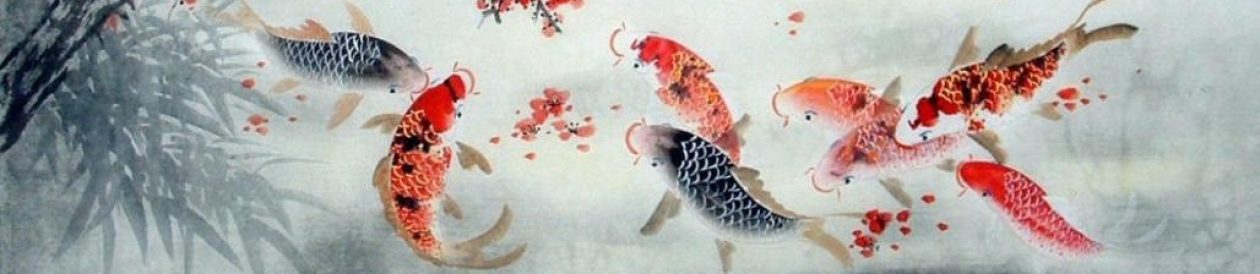
Orange and gold carp.
Living beneath the ice.
Uncaring of the world above,
sustained by the water below.
[Deng Ming-Dao]
There is no greater enemy to dictators than people actually being allowed to vote.
Eccentric looks at life through the thoughts of a retired working thinker

 Ingredients
 Ingredients