Recipe: Flat Cheese Tart

Yesterday was baking day again. It seems to come round every couple of weeks, and sometimes more often depending on mood and necessity. Sometimes it is entirely functional, but other times one indulge in the odd experiment. Yesterday was an experimental day – although I have little doubt I was reinventing some species of wheel.

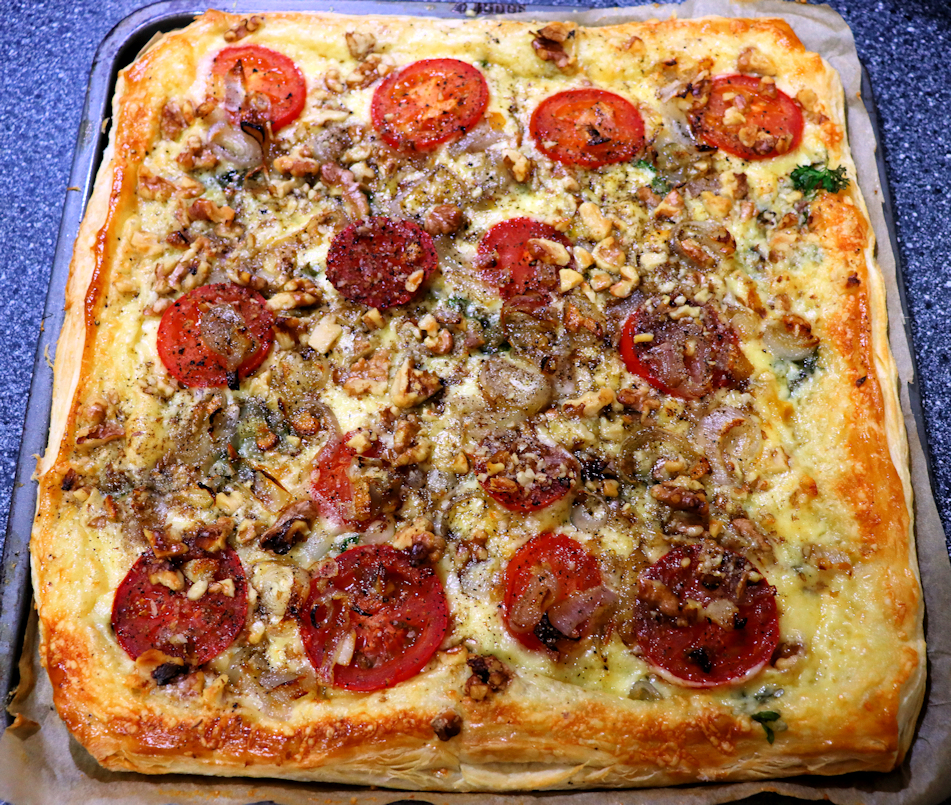
The first experiment was Flat Cheese Tart. It isn’t properly a tart, or a flan, or a pizza. I’m not giving exact quantities of ingredients as they will depend on the size you’re making but also your whim of the day; use more or less as you choose and vary the chose of additions to suit your tastes. Anyway, for me it went like this …

Flat Cheese Tart

This is what you’ll need …

  • A baking sheet – I used one about 30cm square with a small lip.
  • Baking parchment (optional)
  • Pastry – I used a 500gm pack of shop bought puff pastry
  • Grated Cheddar cheese
  • Large handful (or two) of fresh herbs torn into large pieces – I used basil and parsley
  • Onion, roughly sliced – I used two large Echalion Shallots
  • Garlic, as many cloves as you like, again chopped
  • 2 or 3 tomatoes, sliced – I used 2 large plum tomatoes
  • Good handful of walnuts
  • Large knob of butter
  • A beaten egg (optional)
  • Black pepper

This is what you do …

  1. Pre-heat the oven to 220°C/200°C fan/ Gas 7.
  2. Line the baking sheet with the baking parchment, or if you prefer grease the baking sheet well.
  3. Sauté the onion and garlic in the butter until soft and just beginning to brown.
  4. Meanwhile break the walnuts into rough pieces – put them in a plastic bag and smack a couple of times with a rolling pin; aim for something the size of a juniper berry or baked bean.
  5. Rollout the pastry to the size of your baking sheet, and having put it on said baking sheet ensure there is a small edge raised against the lip.
  6. I then brushed the pastry, including the edges, with beaten egg – partly as gaze (for the edges) and partly because I happened to have a bit of spare beaten egg.
  7. Sprinkle the herbs evenly over the pastry, followed by the cheese.
  8. Then top with the tomato slices, the onion, the walnuts and a good grind of black pepper.
  9. Bake for 20-30 minutes until the pastry is risen and everything is beginning to brown.
  10. Serve hot, warm or cold, with a glass or two of wine.

On Vaccine Logistics

Let’s think first about flu vaccination – not the vaccine itself but the logistics involved to get a needle stuck in my arm.

It is very tempting to ridicule the NHS and the UK government for failures to supply sufficient vaccines – especially flu vaccine – in sufficient quantity, and on time, when the requirements are apparently well understood. And indeed there have been supply failures in recent years. However it is salutary to consider the complexities of the logistics involved.

Somewhere around 30 million doses of vaccine have to be manufactured, packaged and shipped. Those 30 million are split between six different vaccines, made by five different companies. And there are tens of thousands of shipping endpoints (almost 10,000 GP practices in England alone, plus pharmacies, hospitals, …), all with differing requirements.

30 million doses can’t be manufactured, packed and shipped in the twinkling of a politician’s brain. It takes time, and the NHS isn’t the only customer of the manufacturers. So the supply from manufacturer to NHS warehouse will be phased; so the final shipping to the endpoint will also likely be phased. Which means at any time a given vaccine may not be available at every outlet, even if they did get their requirements correct the first time.

Keep in mind too that these vaccines are temperature sensitive and must be held in refrigerated storage at all times. That too complicates the distribution.

All of that is before one even thinks about the GP identifying, and calling those eligible for vaccination, and making enough clinic time (space, appointments, clinicians) available to actually stick needles in arms. Oh and chasing up those who don’t respond.

I know from experience of logistics at a much simpler level it is almost impossible to get this 100% correct every single time — hard though one might try! It’s almost inevitable that on this scale things will go wrong; and the further back in the chain the problem occurs the bigger the knock on effect out at the clinic.

(Incidentally it’s the same with supermarkets and getting things like loo roll on the shelves. Don’t just blame people for panic buying – although, yes, they do – but think about the logistics and supply chain involved.)

Amazingly this works the vast majority of times in developed countries. For instance, the UK currently has among the highest national coverage of flu vaccine in the world, vaccinating around 75% of the over-65s against flu every year; most countries either do worse or have no vaccination programmes for older people. But in places where the infrastructure and healthcare systems are more fragile, things break down quite quickly.

Now let’s extend this to vaccine(s) for Covid-19.

First of all let’s say that all of the above logistics still apply, but things get worse …

We don’t yet have a vaccine (or vaccines), so as yet we have no clue how many of what we are trying to deploy, or where, or how.

We don’t know if the vaccine(s) will require refrigerated storage, or actual cold storage. If cold storage (ie. freezer temperatures) is required – and this seems likely for many of the vaccines currently being trialled – this hugely complicates the distribution chain (and makes it pretty much impossible in developing countries).

How many shots of vaccine are required to provide immunity? Will just a single shot be enough? Or will patients need a booster (or two, or three, …). Again it looks as is many of the potential vaccines will need a booster shot after a few weeks. That doesn’t just double the amount of vaccine required; it doubles everything right down to ensuring patients get their booster.

And who is eligible for the vaccine? And when? Government is likely to plan on getting the vaccine to the most important people (eg. healthcare workers, food supply people) first, followed by vulnerable groups, and then everyone else. Ultimately they will want to catch everyone (barring the small number of nay-sayers): that’s 60+ million in England alone, with potentially two shots of vaccine – so four or five times the flu programme.

That’s a potential 120+ million doses of vaccine for England alone together with a huge amount of distribution and a great deal of clinical effort. That deployment will take time; maybe as much as an elapsed year! By which time the first recipients may need repeat vaccination if the immunity decays, as it well may.

All of that is before we even think about … How effective the vaccine(s) are (no vaccine is 100% effective). How many vaccines are available. Are particular vaccines (in)appropriate for particular groups of patients. How do we handle the case where the first vaccine available is followed up by one which is much more effective? – Do we revaccinate the first recipients now, or later, or not at all? What advertising campaign, or other incentives (maybe even legislation?), do we need to ensure the vast majority of people get vaccinated?

Of course, we don’t yet have a vaccine to deploy. The front runners are all still in Phase III trials which are unlikely to complete until at least the end of this year. Even if one (or more) of the candidate vaccines looks really good, it is very unlikely we’ll see an emergency approval much before next Spring. And then there may be the question of how that affects other ongoing trials.

Now you can be pretty sure that there will be people in the Department of Health and the NHS sweating blood to try to work all this out, now, even before we have a vaccine. And however well they do their job you can be sure they will get some of it wrong – because the problem is just too complex and contains too many risks and pitfalls. It isn’t at all easy, and it’s human nature to complain when things don’t work perfectly, but it helps to try to see the bigger picture.

So … (a) cut the healthcare system some slack when things don’t work 100% every time, but (b) do call the government to account if it’s their policies which cause the failures, and (c) don’t pin all your hopes on a Covid-19 vaccine being available to everyone (anyone?) real soon.


Further Reading

  1. Derek Lowe; “The Vaccine Tightrope”; Science Translational Medicine; 21 October 2020; https://blogs.sciencemag.org/pipeline/archives/2020/10/21/the-vaccine-tightrope
  2. David Salisbury; “If you’re pinning your hopes on a Covid vaccine, here’s a dose of realism”; Guardian; 21 October 2020; https://www.theguardian.com/commentisfree/2020/oct/21/covid-vaccine-immunisation-protection
  3. Jeremy Farrar; “Let’s get real. No vaccine will work as if by magic, returning us to ‘normal’”; Guardian; 6 September 2020; https://www.theguardian.com/commentisfree/2020/sep/06/lets-get-real-no-vaccine-will-work-as-if-by-magic-returning-us-to-normal
  4. Derek Lowe; “Cold Chain (And Colder Chain) Distribution”; Science Translational Medicine; 31 August 2020; https://blogs.sciencemag.org/pipeline/archives/2020/08/31/cold-chain-and-colder-chain-distribution
  5. Derek Lowe; “Preparing For the Vaccine Results”; Science Translational Medicine; 25 August 2020; https://blogs.sciencemag.org/pipeline/archives/2020/08/25/preparing-for-the-vaccine-results
  6. Megan Scudellari; “How the pandemic might play out in 2021 and beyond”; Nature; 5 August 2020; https://www.nature.com/articles/d41586-020-02278-5

Monthly Quotes

“All aboard for another round of monthly quotes! Room for one more on top.”
Ding, Ding!


Boris Johnson shared the medical education [2020 Ig Nobel] prize with Donald Trump, Vladimir Putin and a choice selection of other world leaders for demonstrating during the Covid-19 pandemic that politicians can have a more immediate effect on life and death than scientists and doctors can.
[From the Guardian]


We must not sacrifice our civilization for the greed of the few. Recent studies suggest that the world is getting close to exceeding its carbon budget. Therefore, this budget must become the most important currency of our time.
[Dalai Lama]


It is a damn poor mind indeed which can’t think of at least two ways to spell any word.
[Andrew Jackson, 7th President of USA]


Our entire bodies and brains are made of a few dollars’ worth of common elements: oxygen, hydrogen, nitrogen, carbon, enough calcium to whitewash a chicken coop, sufficient iron to make a two-inch nail, phosphorus to tip a good number of matches, enough sulphur to dust a flea-plagued dog, together with modest amounts of potassium, chlorine, magnesium and sodium. Assemble them all in the right proportion, build the whole into an intricate interacting system, and the result is our feeling, thinking, striving, imagining, creative selves. Such ordinary elements; such extraordinary results!
[James Hemmings]


Those who are always praising the past and especially the time of faith as best ought to go and live in the Middle Ages and be burnt at the stake as witches and sages.
[Stevie Smith]


Humans uniquely know that they have been born … and that they will die. We understand that we, as individuals, had a beginning, and that we will not endure for ever … [All] religion is, at its roots, at its foundations, concerned with giving us solace in the face of this frankly unimaginable – but at the some time, incontestable and unavoidable – fact.
[Prof. Alice Roberts]


People sometimes say to me, “Why don’t you admit that the hummingbird, the butterfly, the Bird of Paradise are proof of the wonderful things produced by Creation?” And I always say, well, when you say that, you’ve also got to think of a little boy sitting on a river bank, like here, in West Africa, that’s got a little worm, a living organism, in his eye and boring through the eyeball and is slowly turning him blind. The Creator God that you believe in, presumably, also mode that little worm.
[David Attenborough]


The closer you get to real matter, rock, air, fire, wood, the more spiritual the world is.
[Jack Kerouac]


What if some day or night a demon were to steal after you into your loneliest loneliness and say to you: “This life as you now live it and have lived it, you will have to live once more and innumerable times more; and there will be nothing new in it, but every pain and every joy and every thought and sigh and every thing unutterably mall or great in your life will have to return to you, all in the same succession and sequence – even this spider and this moonlight between the trees, and even this moment and I myself. The eternal hourglass of existence is turned upside down again and again, and you with it, speck of dust!”
Would you not throw yourself down and gnash your teeth and curse the demon who spoke thus? Or have you once experienced a tremendous moment when you would have answered him: “You are a god and never have I heard anything more divine.” If this thought gained possession of you, it would change you as you are or perhaps crush you. The question in each and every thing, “Do you desire this once more and innumerable times more?” would lie upon your actions as the greatest weight. Or how well disposed would you have to become to yourself and to life to crave nothing more fervently than this ultimate eternal confirmation and seal?

[Friedrich Nietzsche, The Gay Science, 1882]


We may regard the present state of the universe as the effect of its past and the cause of its future. An intellect which at a certain moment would know all forces that set nature in motion, and all positions of all items of which nature is composed, if this intellect were also vast enough to submit these data to analysis, it would embrace in a single formula the movements of the greatest bodies of the universe and those of the tiniest atom; for such an intellect nothing would be uncertain and the future just like the past would be present before its eyes.
[Pierre Simon Laplace, 1814]


Being a Humanist means trying to behave decently without expectation of rewards or punishment after you are dead.
[Kurt Vonnegut]


O God, I could be bounded in a nutshell, and count myself a king of infinite space, were it not that I have bad dreams.
[William Shakespeare, Hamlet]


How a government treats refugees is instructive – it shows how they would treat the rest of us if they thought they could get away with it.
[Tony Benn]


If we spent half an hour every day in silent immobility, I am convinced that we should conduct all our affairs, personal, national, and international, far more sanely than we do at present.
[Bertrand Russell]


Peace and quiet are the things a wise man should cherish.
[Taoist proverb]

Scary Thoughts

Now this is really worrying …

If she were still alive my mother would be 105 today.
My father would have been 100 earlier this year.
And, Fates permitting, I shall be 70 in just three month’s time.

This is unreal. I mean, how have I clocked up almost three-score years and ten? I’ve not done nearly enough to warrant that length of time! I have memories of being at primary school, grammar school, and my effectively 7 years as a student, plus large chunks of the last 20 years. However there are huge parts of my working life which are an almost complete blank. I have no day-to-day memories, images, or recollections of what I was doing – at least far fewer than for other periods. Perhaps because it was tedious and boring?
Unlike many people, my brain doesn’t store video reels of incidents in my life. All I have is the occasional blurry snapshot with no soundtrack. My brain just can’t get its head round how this constitutes a lifetime.

Just keep banging those rocks together as long as possible!

Ten Things: October

This year our Ten Things series, on the tenth of each month, is concentrating on things which are wackier than usual, if not by much. From odd road names to Christmas carols by way of saints and scientists. So here goes with October …

Ten Pieces of Femto Fiction

[Femto Fiction (or Micro-Micro Fiction) is that which, while looking like a short book title, with almost no imagination tells you the whole story. Genre of work in brackets.]
  1. Gothic Pricks [horror]
  2. Christmas Goose [erotica]
  3. Feel the Mistletoe [romance]
  4. A Strangely Beaked Bird [thriller]
  5. Educated Derelict [autobiography]
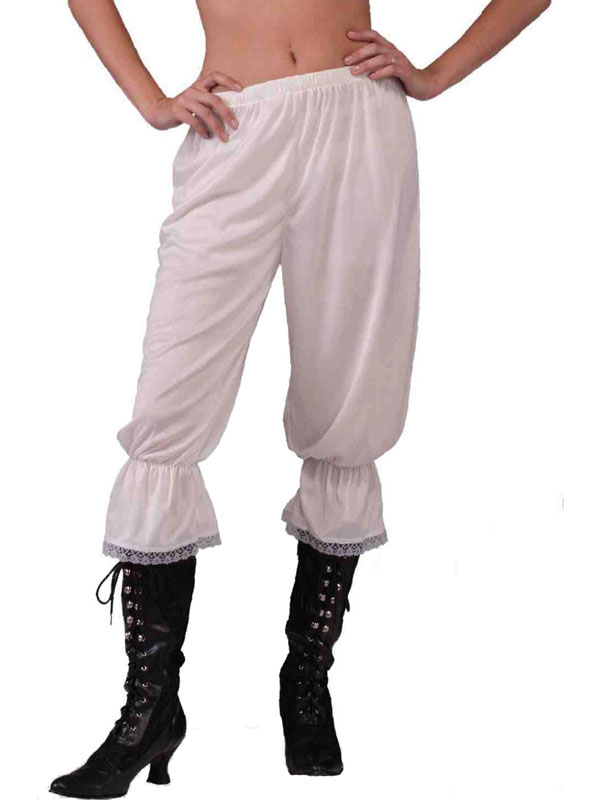
  6. Pubic Overtures [erotica] (right)
  7. Duck Shooting in Venice [autobiography]
  8. A Case of Yellow Haddock [detective]
  9. French Knickers [romance]
  10. Admiral Horatio Leftsmith [fiction]

Science Limerick

I’ve just come across this tetra-Limerick which I’d not seen before. It amused me today, in a science-y way …

It filled Galileo with mirth
To watch his two rocks fall to Earth.
He gladly proclaimed,
“Their rates are the same,
And quite independent of girth!”
 
Then Newton announced in due course
His own law of gravity’s force:
“It goes, I declare,
As the inverted square
Of the distance from object to source.”
 
But remarkably, Einstein’s equation
Succeeds to describe gravitation
As spacetime that’s curved,
And it’s this that will serve
As the planets’ unique motivation.
 
Yet the end of the story’s not written;
By a new way of thinking we’re smitten.
We twist and we turn,
Attempting to learn
The Superstring Theory of Witten!

Found at Brownielocks.

Monthly Links

Once more unto the breach, dear comrades, to bring you this month’s selection of links to items you may have missed the first time round. And an e-glass of e-ale to anyone who can knit the links into a coat of mail!


Science, Technology, Natural World

Let’s begin with another look at why wasps are so annoying, but yet so useful.

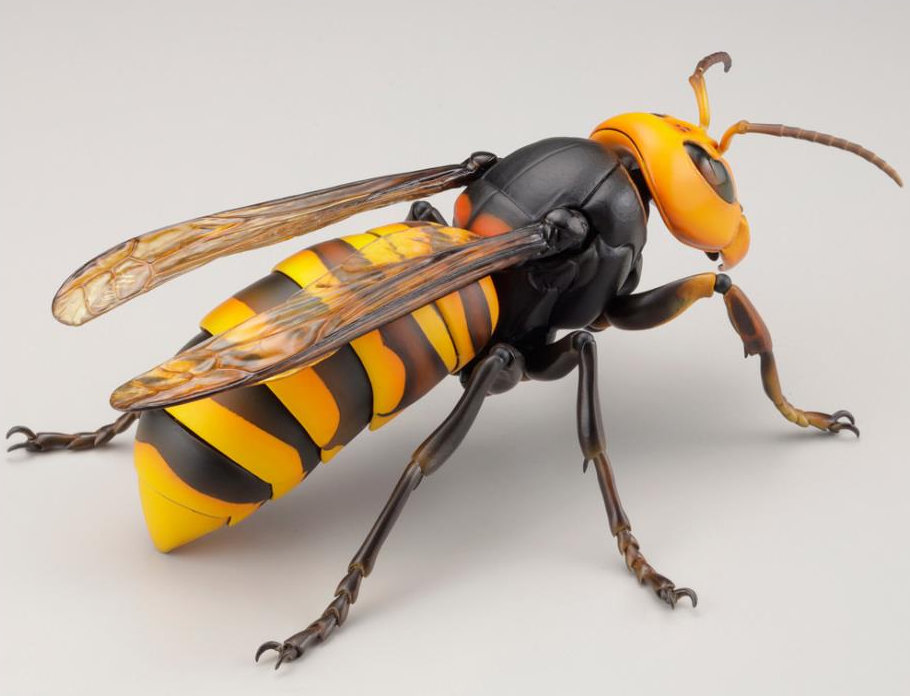
Oh and for anyone wanting to scare their visitors, you can buy a roughly five times life-size model of an Asian Giant Hornet (aka. “murder hornet”).

If you never understood why mathematics is so fascinating, take a look at odd perfect numbers. [LONG READ]

And changing topic again, scientists think they’ve found phosphine gas in Venus’ upper atmosphere, and say this could be a sign of life (albeit microbial life). Meanwhile Derek Lowe explains about phosphine but remains somewhat sceptical of the latest results.


Health, Medicine

The logistics around distribution of any vaccine (well any drug really) are complex, especially when one gets into the realm of Cold Chain Distribution.

But then we need to keep our feet in the real world as no vaccine will work by magic and return us to normality.

Girls: have you ever needed to pee standing up and envied us men our flexible hose? If so, the Shewee may be your friend.


Environment

Rewilding as an environment improvement method is taking time to get going, but not if one maverick Devon farmer has anything to do with it.


Social Sciences, Business, Law

So who thinks Scottish bank notes are legal tender in England? Spoiler: they aren’t! And what is legal tender anyway?


History, Archaeology, Anthropology

There’s some new archaeology at Pompeii which is uncovering more of its past.

Medieval sermons were one of the most effective and wide-reaching forms of propaganda, but that only works if they are in the vernacular. [LONG READ]

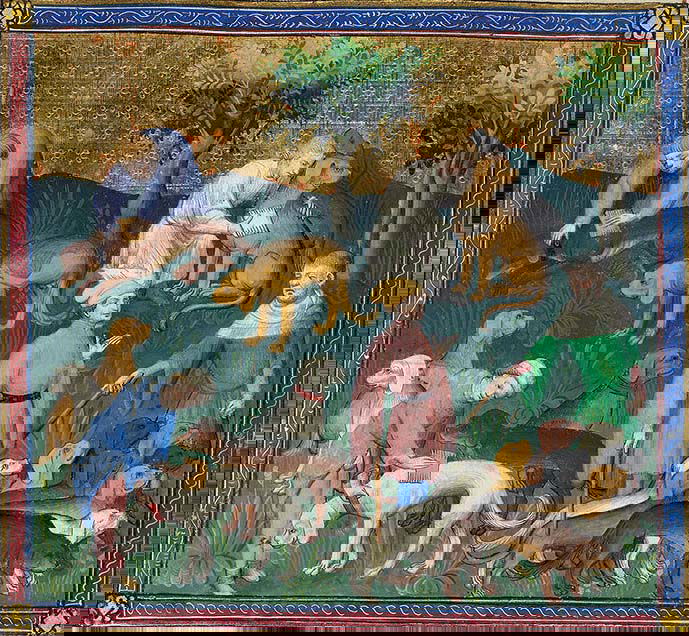
The people of medieval Europe were devoted to their dogs. [LONG READ]

Transport until the early part of the 20th century was largely dependent on the horse: either being ridden or pulling a wagon of some description. Here’s a look at horse transport in Victorian times.


Lifestyle, Personal Development, Beliefs

Oliver Burkeman, writing his last regular column for the Guardian, talks about his eight secrets for a fulfilled life.

If you’re dreading a long, dark winter lockdown, then maybe the Norwegians have something for you.

So what does your cat mean by “miaow”? A Japanese vet is apparently earning a fortune telling people what their cats are saying. Personally I thought we had a fairly good idea!


Shock, Horror, Humour, Wow!

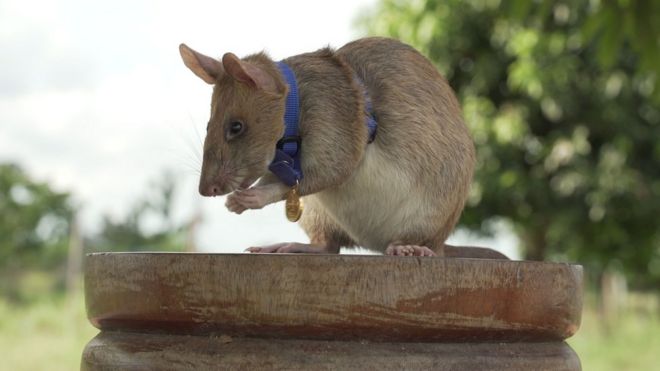
Magawa, an African giant pouched rat, has been awarded a gold medal for his work detecting landmines in Cambodia. I must say he’s a rather handsome animal, and well deserving of his apparently upcoming retirement.

And finally, what is the connexion between frozen shit and narcissists’ eyebrows? Yes, of course, it’s this year’s Ig Nobel prizes.


Nuclear Power

Although I’ve not written about nuclear power for a long while, long-standing readers will know my conviction that we have to invest in nuclear technology. I see no other way in which we can generate sufficient electricity, even for reduced demand, from renewable resources – important though these are.

Now I would never pretend that nuclear power doesn’t have it’s challenges. Regardless of what type of reactor is chosen, the technology is hard, decommissioning is hugely expensive, and there is the problem of what to do with the nuclear waste. However these are largely soluble problems: see for instance my posts Nuclear Power Redux and Better Nuclear Power.

One thing nuclear doesn’t have, though, is an excess of deaths compared with any other power source. In fact nuclear power is the gold standard to be beaten.

Estimates from Europe Union, which account for immediate deaths
from accidents and projected deaths from exposure to pollutants.
(And this does not include fatality rates in countries like China where
cheap coal and poor regulation cause considerably more fatalities.)

A large part of the reluctance to embrace nuclear power is down to the fact that people are generally scared of it. Why? Because they can’t see it and they don’t understand it – so it is very scary! Back in the day people were frightened of electricity because they couldn’t see it and it appeared to be magic – see, for example, this from America in 1900.

It’s a bit like being in a strange, unlit, house overnight and hearing a very odd, creaky, noise. We’d all find that a bit scary. But if we can see the bedroom door swinging on its hinges in the draught it isn’t anywhere nearly as frightening.

So a couple of days ago I was interested to see a BBC News piece by their Chief Environment Correspondent, Justin Rowlatt, under the headline Nuclear power: Are we too anxious about the risks of radiation?. [See also this article from Harvard University (from which the above graphic is taken).]

In the article Rowlatt makes the case that nuclear energy is nothing like as dangerous as we think it is, even when we account for Hiroshima, Nagasaki, Chernobyl and Fukushima. He ends by saying:

But here’s the thing: if we were a bit less concerned about the risks of low levels of radiation then maybe we could make a more balanced assessment of nuclear power.

Especially given that coal-fired power stations routinely release more radioactivity into the environment than nuclear power stations, thanks to the traces of uranium and thorium found in coal.

And, since we are talking about worrying about the right things, let’s not forget the environment.

Taking a more balanced view on the risks of radiation might help all those anxious climate scientists I mentioned at the start of this piece sleep a bit easier in their beds at night.

I’ll leave it up to you to read the rest of the article.