Monthly Links

Here’s this month’s collection of links to items you may have missed – with minimal reference to last week’s state funeral.


Science, Technology, Natural World

It’s that time of year when we celebrate the Ig Nobel Prizes. [LONG READ]

In yet another round of modelling calculations, based on detailed measurements, scientists are suggesting that Saturn’s tilt and its ring system may be down to a missing moon.

Palaeontologists have studied growth lines and elements preserved in fossil teeth of Pantolambda bathmodon (a sheep-sized mammal and one of the first to expand into large-animal niches left vacant by the extinction of the dinosaurs) to reconstruct its day-to-day life.
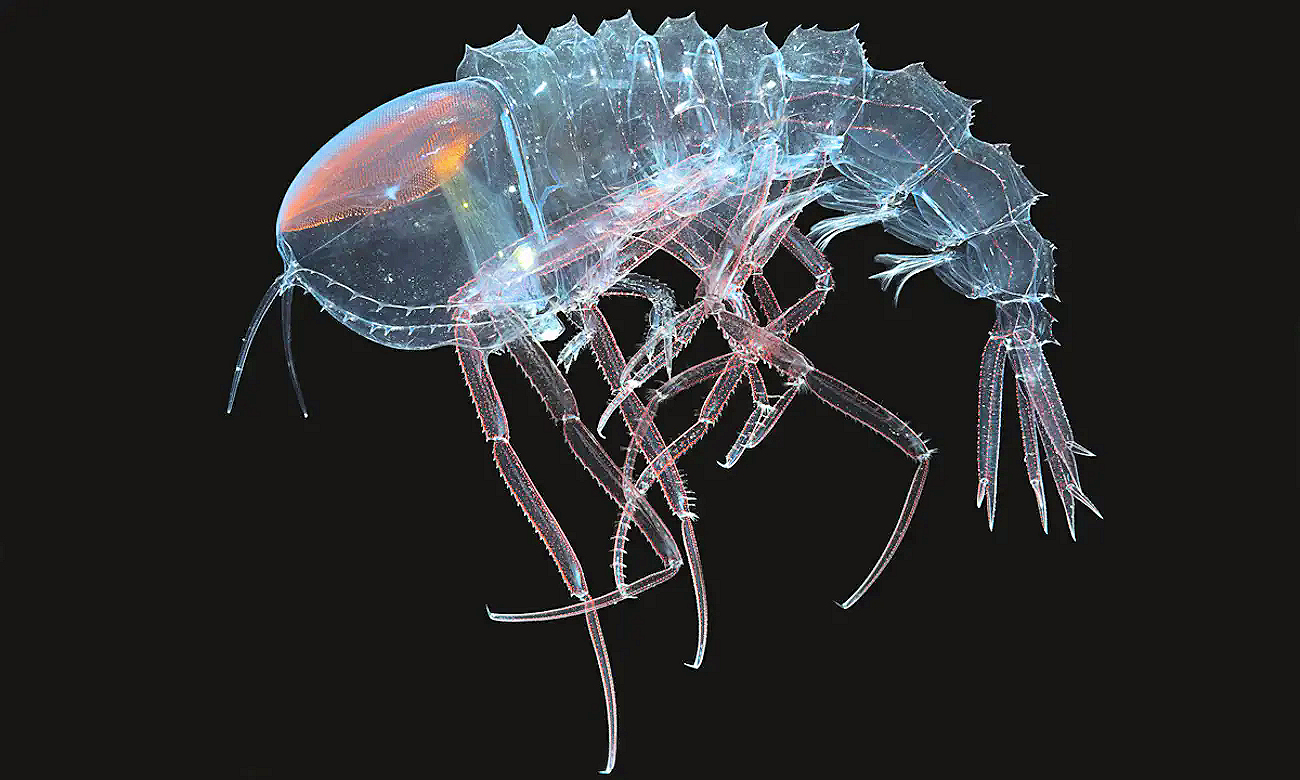
Image: Smithsonian

There really are some strange creatures in the ocean depths; here’s one with eyes for a head.

Returning from the depths, Japanese scientists have found that tweezers modelled on a crow’s beak outperform our traditional design. [£££]

It might surprise you to know that bees and ants are both descended from primordial waasps. While we like bees, we mostly dislike ants and wasps. But ants are interesting, and incredibly useful in their own right.


Health, Medicine

Good grief! Archaeologists in Borneo have discovered the remains of a youngster who had a successful foot amputation 31,000 years ago!

I think we’ve been told about this before, but there is a Scottish woman who can smell if people have Parkinson’s disease years before they have symptoms – and she’s helping scientists develop a test.

Good news for some of us! A study has found that drinking tea may be linked to a lower risk of early death.


Sexuality

Scientists in Japan appear to have shown that significant female emission at orgasm is release fluid from the bladder. I cannot get my head round who would do this experiment, and who would willingly consent to being one of the guinea pigs. [£££]


Environment

A camera trap in south west London appears to have captured images of a wild pine marten; the first spotted in London for over 100 years. And it’s a damn good walk from the nearest known population.


Social Sciences, Business, Law

We’ll have just these two items on the Queen’s funeral, both about The Queue. They’re from Prof. Steve Reicher, a specialist in crowd behaviour from St Andrew’s University.
First: Don’t be fooled that everyone queueing in London is mourning the Queen.
Second: How the wait to see the Queen’s coffin transformed people.
Expect a lot more sociology on this in months and years to come.


Art, Literature, Language, Music

Actually, I sort of fibbed to you! Here’s another item related to the late Queen. Five photographers recall what it was like photographing Her Majesty.


History, Archaeology, Anthropology

A fairly thin history section this month with just two items on the medieval.
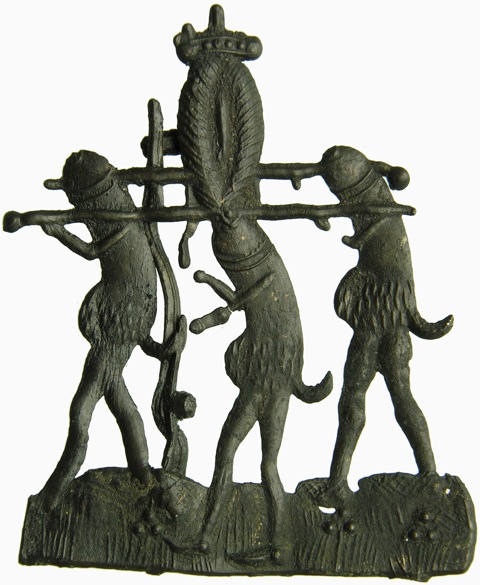
Medieval pilgrim badges were not always entirely wholesome: it seems the pilgrims often used bawdy badges as talismen to protect against plague an the like.

DNA analysis suggests that a significant find of Jewish remains in Norwich are the victims of a medieval pogrom.


London

Here’s one about my childhood stamping grounds. Bell Common, Upshire, Essex which is the alleged site of Boadicea’s last stand – except it isn’t; that obelisk is a conceit.

London blogger Diamond Geezer has been trying to set foot in every one of the 1463 1km grid squares within Greater London. And he’s down to the last few.
First he visits square TQ1575 and the Mogden Sewage Works in Hounslow.
Then he reported that he was down to two unvisited squares – no, make that one, and that last one was unvisitable as it’s in the middle of airside at Heathrow.
Oh but wait! Apparently it isn’t entirely airside, and you can legally set foot in that last square. Result: every one of the 1463 squares visited!
It’s nerdy perhaps, but that has to be some achievement!

Exeter Road


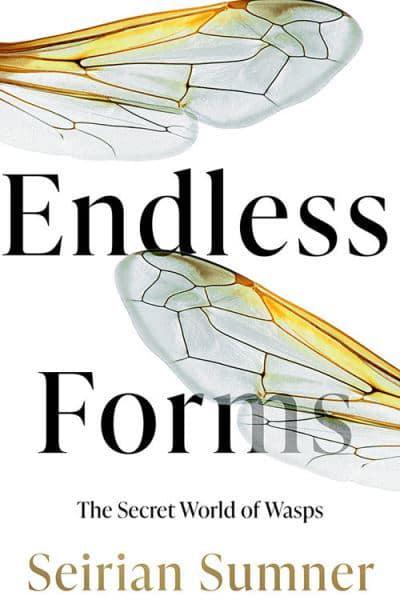
Book Review: Endless Forms

Seirian Sumner
Endless Forms: The Secret World of Wasps

Collins; 2022

This is a book about wasps. It isn’t a book of wasps; not a field guide; nor an academic description of the minutiae of wasps. But it is about wasps.
Prof. Seirian Sumner (full disclosure: I have met her) has devoted her academic life to studying wasps, and specifically (but not only) social wasps like our friendly picnic-bothering yellowjacket. So this could have been an academic tome, but it isn’t. Instead it is a very accessible 380 pages of description which takes us through the world of wasps: what they are, how and why they work – and indeed why some seem unreasonably interested in our picnics. All of that is held together with stories and anecdotes about often hair-raising research field trips; some successful, others a total disaster.

With around 100,000 known species in the world, wasps are important: as predators and parasites of other insects, and as pollinators. No, don’t panic as the vast majority of those 100,000 species are solitary wasps; many are tiny (2mm or less) and most don’t sting. There are only 74 known species of hornets and yellowjackets worldwide, and it is these yellowjackets which bother our picnics. This is something which Seirian stresses and explains: they may be after a share of your chicken or burger; or late in the summer a share of your strawberry jam. Give them a share, on the side, at the other end of the table and they’ll generally leave you alone. Oh and DO NOT go flapping around: that’s the surest way to annoy them and get stung as you’ll remind them of their arch-predator, the badger.

Most of the social wasps are hunters, after juicy morsels of meat (usually arthropods, but also carrion) to feed their brood. The solitary wasps hunt too: some are predators of a meat feast for their young; others lay eggs on the still living meat to parasitise them. Yes, Nature is gruesome, but without wasp pest controllers we’d be knee deep in creepie-crawlies. Seirian estimates that even in a bad year a social yellowjacket nest can get through almost 300,000 arthropods; it can be 8-10 times that in a bumper year. That’s a lot of caterpillars!

And to cap it all? Without the ancestral wasps, we would have neither ants nor bees for both groups are descendants of ancient wasps. Ants are wasps which (mostly) lost their wings. Bees are wasps which forgot how to hunt. Social wasps are unusual in that they too have learnt to live in colonies.

Seirian takes us through all of this. How did wasps develop such a multitude of forms. Their lifestyles and how the societies of social wasps work. Why they’re important. How scientists have managed to work all this out.

This is a fascinating book, well written, eminently readable, and almost chatty. I found it hard to put down and had to restrict myself to a couple of chapters a night in order to not burn too much (expensive) midnight oil. I guarantee you’ll come away with a totally different view of wasps.

Overall Rating: ★★★★★

September Quiz Answers

OK, so here are the answers to this month’s quiz questions. All should be able to be easily verified online.

September Quiz Questions: World Geography

  1. What’s the smallest country in the world? The Vatican
  2. Where is the lowest point on the Earth’s surface? Challenger Deep, at the bottom of the Mariana Trench, 11,034m below sea level
  3. Three world cities have longer metro systems than London. Name one of them. Seoul, Beijing, Shanghai
  4. In what country would you find Angkor Wat? Cambodia
  5. What is the largest desert in the world? Antarctica

Answers were correct when questions were compiled in late 2021.

Monthly Quotes

Another selection of recently encountered quotes.


His head was an hourglass; it could stow an idea, but it had to do it a grain at a time.
[Mark Twain]


I never forget a face – but in your case I’ll make an exception.
[Groucho Marx]


He has no enemies, but is intensely disliked by his friends.
[Oscar Wilde]


His mother should have thrown him away and kept the stork.
[Mae West]


The concept that the people running the Brexit campaign would care for the NHS is a rather odd one. I seem to remember Michael Gove wanting to privatise it. Boris wanted to charge people for using it. And Iain Duncan Smith wanted a social insurance system. The NHS is about as safe with them as a pet hamster would be with a hungry python.
[Sir John Major]


The United Kingdom is a friendly nation, regardless of its leaders, sometimes in spite of its leaders.
[Emmanuel Macron]


Never worry about criticism from somebody you wouldn’t take advice from.
[Prof. Chris Whittv]


This objective will be accomplished via provision of effective scientific and administrative leadership; development of efficient, innovative core facilities; recruitment of funded, committed investigators; promotion of interdisciplinary approaches and interactive projects; and promulgation of communication, education and training …
[Quoted by Derek Lowe at https://www.science.org/content/blog-post/novel-approach-new-types-novel-novelty]


On rare occasions I express an opinion here. These are for entertainment only. I do not suggest you adopt my opinions. In fact I caution against it.
[Brad Warner]


An Incomplete List of Things More Capable
of Running the Country than the new Prime Minister

A bollard. A thimble. A beef gravy granule.
A bilge pump. A plectrum. A Pokémon annual.
A doorknob. A chaffinch. A half-eaten carrot.
A footbath. A clothes peg. A Wine stain. John Parrot.
A ceramic spoon holder. A fruit polo mint.
A discarded tissue. A puddle. Some lint.
A used toner cartridge. Some musical socks.
A build up of silt. A stuffed startled fox.
A plimsoll. A wingnut. A set of false teeth.
A novelty wall clock with the face of Prue Leith.
A beetle. A drumlin. A short piece of string.
A packet of Wotsits. A plant pot. Most things.

[Brian Bilston]


Everyone is wrong about everything all the time. Even me. Even you.
[Brad Warner]


What I Did Done

Sometime in early August, Emma Beddington wrote an article in the Guardian under the title Ignore those lists of goals to hit by age 30 – here’s what you should have done by 47.

Well I’m a bit past worrying about either 30 or 47, but it did get me thinking. I wonder what achievements and landmarks I managed in each decade of my life so far? Well here’s a list. It’s all a bit frightening really, when written down like this …


0 to 10

  • Entered the world and was healthy
  • Learnt to read, write, do arithmetic
  • Learnt to ride a bike
  • Learnt to swim
  • Introduced to nudism
  • Introduced to lightweight camping

10 to 20

  • Passed 11+
  • Sung in school choir (including Messiah, Benjamin Britten’s St Nicholas, and HMS Pinafore; also at St Paul’s Cathedral)
  • Scout troop leader
  • Visited the Lake District with school (twice), and Scotland with scouts (twice)
  • School prize for A-levels
  • Went to university to study chemistry
  • Learnt computer programming
  • Played cricket and hockey for school & university
  • Treasurer, and briefly Chairman, of university radio station
  • Broken engagement

20 to 30

  • Somehow got a BA, MSc & PhD
  • Representative on various staff/student committees & similar
  • Resident Tutor
  • Met Prof. Sir George Porter (Nobel Laureate) at Royal Institution
  • Converted to Catholicism and lapsed
  • 3rd XI club cricket captain
  • Learnt to umpire cricket, properly (but never bothered to take the exams)
  • Met my handful of most influential friends
  • Unemployed for 3 months
  • Permanent job (at IBM)
  • School governor
  • Organised a tour for my cricket club
  • Finally moved away from home
  • Got my own rented flat
  • Appendix removed and a summer off work
  • Married

30 to 40

  • Bought the house
  • Got our first cats
  • Organised a tour for a different cricket club
  • Had a summer off work with glandular fever
  • Had an affair

40 to 50


50 to 60

  • Father died
  • Started this blog
  • Retired (from IBM)
  • Silver wedding
  • Conducted the funeral of a friend; gave the eulogy at her husband’s funeral two years later
  • Got a piercing (don’t ask, TMIA)
  • Visited USA
  • Ran five Anthony Powell international conferences
  • Had Sunday Lunch at the Ritz
  • Visited Eton College; and Balliol College, Oxford
  • Met Ian Rankin and Tariq Ali
  • Attended the Service of the Most Noble Order of the Garter in St George’s Chapel, Windsor
  • Diagnosed with Obstructive Sleep Apnoea and Type 2 Diabetes

60 to 70

  • Mother died
  • Became a state registered geriatric
  • Met the Earl of Gowrie; and Lady Antonia Fraser
  • Ran another four Anthony Powell international conferences
  • Had formal dinner (and informal lunch) in Masters Common Room of Eton College
  • Stood down as Secretary & Trustee of Anthony Powell Society after 18 years
  • Involved in founding GP’s patient group; appointed Chairman
  • Published (privately) a book of photographs
  • Bilateral knee replacements
  • Ruby Wedding
  • Attended Buckingham Palace Garden Party

Over 70

  • Appointed to my local council’s Community Review Panel

That includes a number of things I never dreamt I’d do, like visiting Eton College (and drinking their champagne); meeting an Earl who was also a former Cabinet minister; dining at the Ritz; attending a Buckingham Palace Garden Party.

So even if I exclude the things we all do – like reading, writing and losing parents – that’s still a somewhat mind-boggling list for a mediocre grammar school boy!

However I don’t really feel it is exceptional. Mostly because I’ve drifted; I’ve gone where the wind took me; none of this was a pre-planned long-term objective, because I’ve never had a life (or career) plan. I’ve done what was there at the time. If you’d asked me at 11, 18, or even 21, I couldn’t have predicted any of this (except the very obvious). And I find that somewhat scary.

Interesting Times

As I said yesterday, we do live in interesting times. In the last 5-and-a-bit years we’ve seen …

In the UK

  • Three Prime Ministers: Theresa May, Boris Johnson, Liz Truss
  • Two General Elections in 2017 and 2019
  • 2016 to 2020: just how are we going to leave the EU?
  • June 2017: Grenfell Tower fire
  • May 2018: Royal wedding of Harry & Megan
  • Prince Harry & Megan relinquish royal duties and abscond to California
  • January 2020: finally leave the EU
  • March 2020 to date: SARS-CoV-2 and Covid-19 (in UK) including lockdowns, an over-stressed NHS etc.
  • March 2021: census
  • April 2021: death of Duke of Edinburgh
  • Late 2021 to date: seriously escalating energy prices
  • February 2022: Queen’s Platinum Jubilee
  • February 2022 to date: discovery of polio in London’s sewage
  • May 2022 to date: monkeypox
  • September 2022: death of Queen Elizabeth II and accession of King Charles III

Worldwide

  • Three Presidents of the USA: Barak Obama, Donald Trump, Joe Biden
  • October 2017: ‘Oumuamua, the first known interstellar object, identified
  • November 2018: Gilets Jaunes protests in France
  • April 2019: fire almost destroys Notre Dame
  • May 2019: Naruhito becomes Emperor of Japan on the unprecedented abdication of his father Emperor Akihito (who had ruled for 30 years)
  • December 2019: US President, Donald Trump, is impeached
  • January 2021: US President, Donald Trump, is impeached for a second time
  • March 2021: container ship Ever Given blocks Suez Canal for a week, causing massive disruption to trade routes
  • December 2021 to January 2022: eruption of Hunga Tonga–Hunga Ha’apai volcanic island in Tonga, currently the largest eruption of 21st century
  • 2022: attempted invasion of Ukraine by Russia and resultant war

That’s what I can remember. And we haven’t even mentioned climate change, or a rash of celebs being arraigned for sexual abuse!

I challenge anyone to find me a more “interesting” 5 years, excepting around WWI and WWII.

Interesting times, indeed.

Ten Things: September

This year our Ten Things each month are words with particular endings. Clearly this won’t be all the words with the nominated ending, but a selection of the more interesting and/or unusual.

Ten Words ending with -u

  1. coypu
  2. tiramisu
  3. flambeau
  4. kinkajou
  5. jiujitsu
  6. parvenu
  7. caribou
  8. apercu
  9. haiku
  10. bijou

Your challenge, if you choose to accept it, is to write a story in at most three sentences using all these words correctly. Post your attempt in the comments before the end of the month and there’s an e-drink for anyone who I consider succeeds.

London Bridge

London Bridge is Down

Such apparently was the code to be used to announce Queen Elizabeth II’s death to court and government.

The Queen is dead!
God save the King!

OK, I’m not going to rehash any of the general outpouring of grief, reflection and remembrance that appears to be gripping the country – as regular readers know, such is not my style.

My comment is really just that this does feel somewhat surreal.

I’m old enough to have now lived in the reign of three monarchs. I was just a year old when George VI died, so although “I was there” I remember nothing of it. Nor do I remember QEII’s coronation in June 1953, when I would have been 2½ – although I’m told I was taken to a neighbour’s to watch the event on TV.

So effectively I have only ever known Elizabeth II as monarch. She was there; always; “part of the furniture” as it were. And it seemed she always would be there; like the Queen Mother before her she seemed immortal – and then suddenly she wasn’t.

What struck me as odd was how quickly it all happened. OK, so the Queen was frail, but on Tuesday she was meeting the outgoing and incoming Prime Ministers (admittedly at Balmoral, making them travel) and looking frail; and two days later suddenly she’s gone, with effectively no real warning. One had expected that her demise would be drawn out over maybe a week of final illness. So perhaps all was not as good underneath as it seemed, and her “mobility issues” were as much to do with (say) heart or cancer as just worn out joints. No doubt the truth will emerge – eventually.

There will, naturally, be a period of national mourning at least until the state funeral, which is unlikely before Monday 19 September (what a security nightmare that will be). Fortunately there are fairly advanced plans in place which can be rolled out – albeit with many final details to be resolved – the logistics are essentially already in place (this is one role of the Earl-Marshal and the College of Arms, qv. for items on protocol). It is going to be very interesting to see what gets cancelled, postponed or closed over the coming days.

So now we have King Charles III. I admit I thought until a year or so ago that he’d probably duck and we’d go straight to William, although I came to the conclusion that Charles wouldn’t pass. I’ve also come away from the view that Charles might abdicate in favour of William after 5 or 10 years; I now don’t think he will do that either, although he may reassess this if his health deteriorates.

Many thought Charles would not reign as Charles III, given the history of Charles I and Charles II. But I thought it unlikely he’d choose to be known as anything other than Charles (in the way his grandfather, Albert Frederick Arthur George aka. King George VI, had).

And so to a Coronation. It’ll be a few months away, they say. No, it will be many months away. The late Queen’s coronation took almost 18 months to arrange, and I can’t see Charles’s being any easier (if nothing else it will be an even bigger security nightmare). So it is very unlikely before this time next year, and they’d want to avoid the anniversary of the Queen’s death, as well as having left a suitably respectful period. They’ll also want to avoid the winter weather, as any coronation is a big display of pageantry. So my money is on Spring/early Summer 2024. We shall see.

A new monarch will mean a lot of work for quite a few businesses. All the printed copies of the national anthem have to be updated; potentially hymn books and prayer books; all government document formats and websites; all royal warrants; many flags (especially if the Royal Standard is changed). Not to mention commemorative merchandise, especially for a coronation. The list goes on and on and … That could well keep the country out of the otherwise impending recession – let’s not say the Queen didn’t always do her best for us!

And eventually our money and postage stamps will need to be updated. That though will take time; there’s no great rush as the precedent is for existing money to continue to be legal tender for years to come (basically until it has to be withdrawn through wear and tear). Stamps are likely to happen sooner; but again there’s no great rush and existing stocks can probably be used for some while – the challenge will be any upcoming commemoratives, including Christmas stamps.

Meanwhile …

RIP Queen Elizabeth.
God save the King!

We do indeed live in interesting times.

Culinary Adventures #91: Bread Pudding

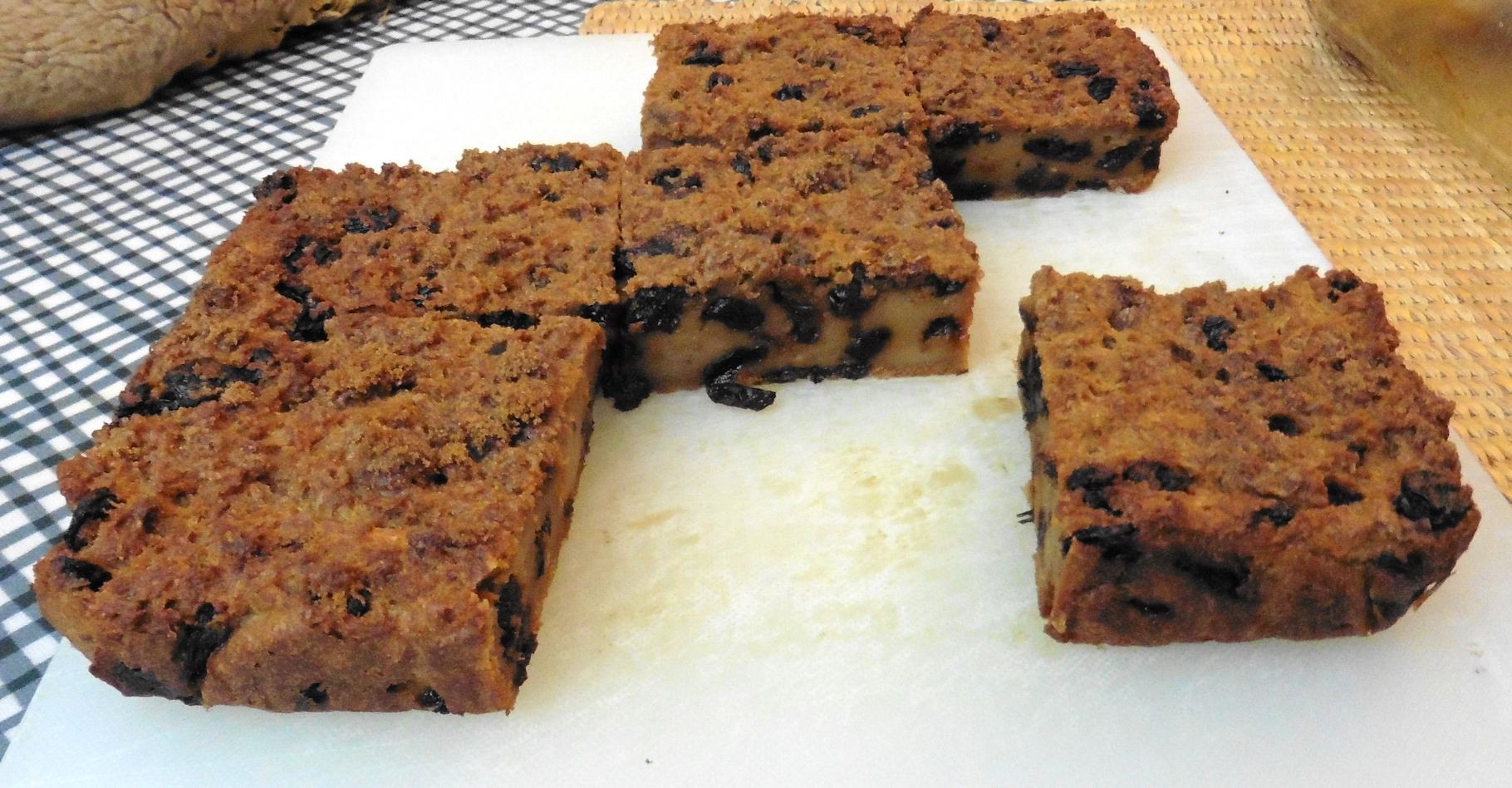
I don’t often do cake-y things – I don’t fancy myself as either a cake or pastry cook – but today was an exception. I tried making something really simple: Bread Pudding. No, not Bread and Butter Pudding, that’s something entirely different, where you cook buttered slices of bread with fruit and what is essentially a custard, and I’m not a fan.

Bread pudding also uses up an excess of bread, with dried fruit, but is effectively a cake. And it is very forgiving, which as regular readers know is something we like as we tend to make things up as we go along.

Still slightly warm but already being demolished!

This is (roughly) what I did.

Ingredients

  • 300g white bread (without the crusts)
  • 300g mixed dried fruit
  • 1tbsp mixed spice (be generous)
  • ½tbsp ground mace
  • 360ml milk
  • 2 large eggs, beaten
  • 90g soft brown sugar (or muscovado), plus a little for dusting
  • zest 1 lemon
  • 80g butter, melted
  • 50ml Amaretto or similar liqueur (again be generous)

Method

  1. Pour the liqueur over the dried fruit and leave to marinade.
  2. Tear the bread into pieces and put in a mixing bowl with the milk. Leave for 30 minutes.
  3. Meanwhile mix the sugar, spices and lemon zest. Beat the eggs.
  4. Butter and line a cake tin.
  5. Heat the oven to 180°/160° fan/gas 4.
  6. When the 30 minutes is up, melt the butter.
  7. Now mix all the ingredients into the bread, being sure to mix thoroughly. Pour the mix into the cake tin, smooth it over and dust with a little extra sugar.
  8. Bake for about 75-90 minutes until a skewer comes out hot, the pudding is firm but springy, and golden on top. (Cover with foil if the top is crisping too fast.)
  9. Leave to cool somewhat before lifting from the tin and dividing into portions. Dust with icing or caster sugar if desired.
  10. Eat hot or warm as a pudding with custard; warm or cold as cake.

Notes

  1. I used a 20cm square, shallow tin and this quantity only half filled it and came out about 3cm thick. Double the quantity if you want a thicker result, but it’ll probably need slightly longer in the oven.
  2. The 20cm tin size cuts into 9 acceptable portions.
  3. Use whatever spices you fancy or have to hand, although mixed spice is the right balance for me.
  4. The addition of 50-100g candied peel would be good.
  5. I’m going to experiment with adding some flaked almonds or walnut pieces to the mix for some variety of texture.
  6. The mix should be quite wet but not slushy; if you think it is too dry add a splash more liqueur or brandy.