Brownfield Wildlife

There was another interesting article in the Autumn issue of BBC Wildlife magazine on the importance of brownfield sites for wildlife.

We all think in terms of brownfield sites being derelict, dangerous and useless. But in fact it provides a whole range iof valuable, and often novel, habitat for wildlife. Indeed often brownfield sites are richer in wildlife than green belt land which tends to be managed and manicured by comparison.

Again the article isn’t online (although there is a short news report) so once more a few pertinent extracts.

Much has been made of the importance of brownfield for wildlife … there’s also an assumption … that it must be the priority for development in order to protect the countryside and the green belt

a conflict between the need for economic development and the conservation of wildlife habitats near where people live.

Often, though, the ideal solution is neither protection nor redevelopment but natural regeneration. Some of the pollutants in the soil and ground water of former industrial land can be broken down, neutralised and stored by microorganisms, fungi and plants … the environmental value of these natural decontaminants should not be taken lightly.

Brownfield land is full of contradictions. On the one hand, many wildlife-rich green spaces in our towns and cities are, ironically, brownfield. They provide the green networks on which these conurbations depend. And on the other, brownfield is far from an exclusively urban phenomenon.

There are countless brownfield sites … that may never become protected nature reserves, yet nonetheless are important refuges … landfill sites, scrapyards, car parks, skip depots, industrial estates and gravel pits.

in Britain, some species now depend on the ‘surrogate’ habitats provided by brownfield sites … shrill and brown-banded carder bees … both species of bee now depend on brownfield in the Thames Gateway

the last outpost of the silver-studded blue butterfly in the Midlands is a disused airfield at Prees Heath Common … the concrete runway, too expensive to remove, protects colonies of black ants that in turn protect the silver-studded blue caterpillars.

brownfield sustains as many Red Data and nationally scarce invertebrates as ancient woodland.

Dereliction is not the sole qualification for brown field land. Many other places don’t fit the official definition, because they are functioning as intended: railway-line cuttings and embankments, motorway verges, canal towpaths, retail parks and the open spaces backing onto housing estates and enterprise zones … because they are urban or industrial, they are still lumped together as brownfield, and all are of unintended wildlife importance.

Asphalt and piles of bricks are equivalent to heat-retaining heathland for basking slow-worms and common lizards. Warehouses and towers are like cliffs to nesting peregrines and kestrels. Railway ballast supports plants adapted to growing on limestone.

disturbance opens dormant seeds in the soil and gives the ‘seed rain’ falling from the air a chance to germinate. Moreover, in brownfield land not used for food production or recreation, there is little or no exposure to herbicides, pesticides, fungicides and chemical fertilisers.

The importance of small, inter-connected wildlife havens is very noticeable, and brownfield clearly contributes much to this.

Here in west London we are lucky. There is a string of open green land running from Richmond north-west through Ealing, Harrow and Watford right out to the farmland beyond the M25. No one piece is more than about half a mile from the next, even if that next piece is only a range of large gardens or a brownfield area. And it is especially noticeable the extent to which birds use these green corridors — a definite SE-NW axis to bird flights is noticeable from my study window.

We do not need more office bocks or airports. We need all the open space we can get, even if that is scrubland, bushes and hedges. Although trees and meadows are just as valuable. Planners please note.

Sparrers

That cheeky chappie of British cities, the House Sparrow is under threat. This much we knew. Numbers have been declining for some years, although the population around us having fallen some years back is now quite healthy again. But scientists are still trying to work out the cause of the decline.

Following up on this, and some recent research, there was an article in the Autumn 2012 issue of BBC Wildlife magazine. The article doesn’t appear to be online, so I bring you a few salient extracts.

The cockney ‘sparrer’ is falling quiet in our cities — and one problem may be too much noise.

a small, but significant, difference in the chances of their chicks fledging — 21 percent tor those in a noisy area, but 25 per cent for those elsewhere.

[Research suggests] noise interferes with communication between the patent birds and their offspring, which as a result are fed less often.

a shortage of invertebrate food in the sparrows’ diet limits nestlings’ chances of survival.

chicks raised in areas with high nitrogen dioxide levels — ie. close to busy roads — fledge at lower weights.

Despite its position on Britain’s Red List of threatened species, the house sparrow is not rare — though it has declined, there are about 6 million pairs in the UK.

Sparrows connect city-dwellers with nature

the downturn has been rapid. Over 15 years between 1983 and 1998 … sparrow numbers dropped by 90 per cent in one Edinburgh park.

the drive to renovate buildings and tidy up parks is more significant, depriving urban sparrows of places to nest, feed and take cover. Sparrows and other birds like bits of green space, evergreen cover, bushes … But we have lost a lot of scrub from parks in recent decades.

house sparrows are more likely to thrive in areas of high social deprivation, either because buildings are in poor repair or because gardens are less manicured, improving invertebrate and seed productivity

lead-free petrol has even been cited, with the additive MTBE being blamed for killing insects. Cats ate significant predators of house sparrows. Rising numbers of feral pigeons could be transmitting increasing levels of disease.

I don’t agree that domestic cats are the problem everyone makes out. Yes they do kill birds — so do sparrowhawks, kestrels, magpies and crows — but in my experience not that many. And in any event they are generally taking the weaker (who may have perished anyway), thus allowing the stronger a better chance of survival.

But the real lesson for me from this is that basically we don’t know. Or perhaps more accurately, there is no one factor for the decline, but many interrelated factors.

Our sparrows have bounced back despite a decrease in the number of easily accessed roofs in which to nest. But it is noticeable that they inhabit a small cluster of gardens, including ours, with a higher than normal number of bushes, hedges and trees. So the point about cover is well made. They like bird feeders too as they provide easy food, when the Greenfinches and Parakeets can be elbowed aside.

I like sparrows. There are days when you open our front door and all you can hear is three dozen sparrows all going cheep, cheep, cheep! Our front garden hedge is their local village pub. And that’s good.

Thoughts on England

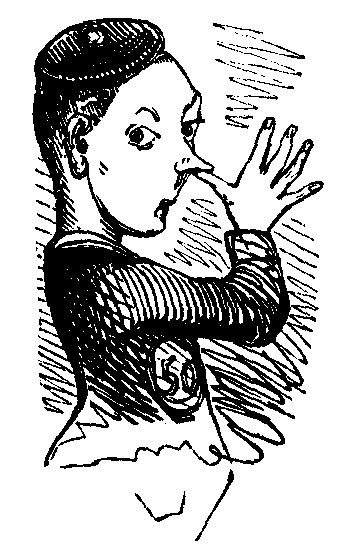
Despite all the business, I have found some time for reading. One of these indulgences has been Letters from England by Karel Čapek, first published in Prague in 1924. Against my expectations it is a delight and pretty nearly a laugh a page — which is likely what was intended. All interspersed with Čapek’s curious little drawings.

Čapek is best known for writing, with his brother Josef, two almost iconic plays: R.U.R. (1920) and The Insect Play (1921). I know the latter as the short scenes were a staple of my school’s “house plays” and we even did a complete staging in my final year at school as that year’s school play. Ants running amok in the auditorium! Dark and malevolent; but great fun.

But Letters from England is Čapek’s reportage on a visit he paid to Britain. First he sojourns in London:

[S]ince I have already been on this Babylonian island ten days, I have lost the beginning. With what should I begin now? With grilled bacon or the exhibition at Wembley? With Mr Shaw or London policemen? I see that I am beginning very confusedly; but as for those policemen, I must say that they are recruited according to their beauty and size: they are like gods, a head above mortal men, and their power is unlimited. When one of those two-metre Bobbies at Piccadilly raises his arm, all vehicles come to a halt, Saturn becomes fixed and Uranus stands still on his heavenly orbit, waiting until Bobby lowers his arm again. I have never seen anything so superhuman.

[A]t night the cats make love as wildly as on the roofs of Palermo, despite all tales of English puritanism. Only the people are quieter here than elsewhere.

But not as long as I live will I become reconciled to what is known here as ‘traffic’, that is, to the volume of traffic in the streets. I remember with horror the day when they first brought me to London. First, they took me by train, then they ran through some huge, glass halls and pushed me into a barred cage which looked like a scales for weighing cattle. This was ‘a lift’ and it descended through an armour-plated well, whereupon they hauled me out and slid away through serpentine, underground corridors. It was like a horrible dream. Then there was a sort of tunnel or sewer with rails, and a buzzing train flew in. They threw me into it and the train flew on and it was very musty and oppressive in there, obviously because of the proximity to hell. Whereupon they took me out again and ran through new catacombs to an escalator which rattles like a mill and hurtles to the top with people on it. I tell you, it is like a fever. Then there were several more corridors and stairways and despite my resistance they led me out into the street, where my heart sank. A fourfold line of vehicles shunts along without end or interruption; buses, chugging mastodons tearing along in herds with bevies of little people on their backs, delivery vans, lorries, a flying pack of cars, steam engines, people running, tractors, ambulances, people climbing up onto the roofs of buses like squirrels, a new herd of motorised elephants; there, and now everything stands still, a muttering and rattling stream, and it can’t go any further …

Amongst Capek’s perambulations of the country he visits the Lake District and makes this note on the sheep:

Pilgrimage to the Sheep. It is true that there are sheep everywhere in England but lake sheep are particularly curly, graze on silken lawns and remind one of the souls of the blessed in heaven. No-one tends them and they spend their time in feeding, dreaming and pious contemplation.

He also makes numerous observations on the English themselves, including thes delights:

I wouldn’t like to make overly bold hypotheses, but it seems to me that the black and white stripes on English policemen’s sleeves have their direct origin in this striped style of old English houses.

Most beautiful in England though are the trees, the herds and the people; and then the ships. Old England also means those pink old gentlemen who with the advent of spring wear grey top hats and in summer chase small balls over golf courses and look so hearty and amiable that if I were eight years old I would want to play with them and old ladies who always have knitting in their hands and are pink, beautiful and kind, drink hot water and never tell you about their illnesses.

Every Englishman has a raincoat or an umbrella, a flat cap and a newspaper in his hand. If it is an Englishwoman, she has a raincoat or a tennis racket. Nature has a predilection here for unusual shagginess, overgrowth, bushiness, woolliness, bristliness and all types of hair. So, for example, English horses have whole tufts and tassels of hair on their legs, and English dogs are nothing but ridiculous bundles of locks. Only the English lawn and the English gentleman are shaved every day.

It’s real reportage of the hastily concocted letter home variety. A sort of semi-structured stream of consciousness. And none the worse for that. As I say it is pretty much an amusement a page. A couple of evening’s bedtime reading or something to while away a train journey.

Word : Mendicant

Time for another nice word …

Mendicant

  1. [adj] Begging; given to or characterized by begging. Also, characteristic of a beggar. Espcially as applied to those religious orders which lived entirely on alms. The members of these orders were known as Friars; the most important were the Franciscans, Dominicans, Carmelites, and Augustinian Hermits. Also applied to Brahmin, Buddhist, etc. priests who beg for food.

  2. [n] A beggar; one who lives by begging.
  3. [n] A begging friar.

We nearly missed …

As I said in my previous post, it’s been another busy week when I’ve just not had either the time or the mental energy for blogging, despite there being many things I wanted to write about. So in summary form here are a few that I picked up, would have liked to write more about, and which you may have missed. Let’s start with the the cute …

Berlin Zoo have some adorable new, but very rare, Rusty-Spotted Cat kittens. I defy anyone not to like these kittens.


Squirrels, L to R: Grey, Red, Melanistic (black) morph of Grey, Brunette morph of Red
While in Britain there’s another colour way of our favourite nut guzzler. But don’t be deceived the brunette squirrel is just a colour morph of our now rare red squirrel — just as there are black, grey squirrels.

Still on things biological the Evopropinquitous blog writes about Things I Learned as a Field Biologist. It’s often interesting and sometimes a bit squeamish. One wonders though how these people actually do any work in the field!

Now here’s something for real science geeks. Make your own Particle Detector from things you have around the house. No, I haven’t tried it (I have far too many left thumbs for craft work) but it certainly looks as if it should work.

From particle detectors, to particle generators. Except they weren’t. In interesting short post from IanVisits about the early plans for an underground railway in London which came to naught.


And finally this week for something different. Mr Bean-Blackadder has been throwing the toys out of his pram and probably annoying the righteous in the process. The Daily Telegraph reported a nice tirade from Rowan Atkinson: we must be allowed to insult each other. Joining in the campaign former shadow home secretary David Davis said:

The simple truth is that in a free society, there is no right not to be offended. For centuries, freedom of speech has been a vital part of British life.

Precisely. It’s called freedom of speech.

Reasons to be Grateful: 49

Week 49 of the experiment, and it’s been another manic week. Indeed it has been so manic I’ve had to scrub a couple of things I wanted to do; one needs a certain amount of elbow room and breathing space. Anyway here are my five picks of things which have made me happy of for which I’m grateful.

  1. Productive Meetings. I’ve had several meetings this week and at least two have been really good and productive.

    Yesterday was the Anthony Powell Society AGM; as a charity we have to do things by the book. Like all these meetings it is seldom hugely well attended although, as yesterday, we normally get 20-25 members present (as well as a tranche of proxy votes). This makes for a productive meeting with some useful discussion and excellent ideas from the members to keep people like me on our toes. And somehow I always manage to find an interesting speaker; yesterday was no exception so thanks to John Blaxter.

    And on Monday I had a really good meeting with our doctor’s Practice Manager and his deputy working through how we’re going to organise and run the Patient participation group which I have now been fingered to chair. Another extremely productive hour.

  2. Cold Sausages. I love sausages. Almost every sausage from plain British bangers to Bratwurst in a bun. But cold sausage always goes down well in a sandwich for lunch.
  3. Adnam’s Ghost Ship. Naughty child that I am I’ve had a couple of pints twice this week. One of them was Adnam’s Ghost Ship, a very pale, light, beer with a delightful fragrance and a citrus-y flavour, almost like a clear Wheat Beer. Here is Adnam’s own description:

    This beer has good assertive pithy bitterness with a malty backbone and a lemon and lime aroma. Ghost Ship is brewed with a selection of malts – Pale Ale, Rye Crystal and Cara. We use Citra, and a blend of other American hop varieties, to create some great citrus flavours.

  4. Left-Overs Risotto. One evening during the week we had accumulated several bits of left-overs: the end of the beef joint, some dressed salad, some spare veg and a couple of steamed potatoes. Thrown together i n a p[an with some Arborio rice, some stock from the freezer and a good slug of red wine it made a really hearty rich risotto.

  5. St James’s Church, Piccadilly. As I mentioned above yesterday was the AP Soc. AGM which we held at St James’s Church, Piccadilly. But “Arrgghhhh!!!!!” there’s the TUC Anti-Austerity March going along Piccadilly exactly when we need to get the car there to deliver stuff; not a hope due to road closures. So we had to go early in the morning and waste time. I asked the church if I could leave our boxes there for the morning (we had the room from 1pm). Not only did they oblige but they let us have the room for most of the morning, to guard our valuables and set up at leisure. They even evicted the TUC stewards who were using another of there rooms as their coordination point and squatting in the adjacent room! Excellent service and way beyond what I’d even dreamt of. They are also extremely good value; room hire is so much cheaper than almost anywhere else in London; and it’s an historic church with many associations, which does good work and is well worth supporting. Oh and Tuesday through Saturday every week they have a super antiques and/or craft market in the churchyard — well worth visiting for those special presents.

They've never had it so bad?

The headlines are saying

Thousands of people took part in a demonstration in London on Saturday to protest against the Government’s austerity measures

And it’s true they did march in their thousands. In London. I saw some of them in Piccadilly.

But I have news for them.

If they think this is austerity they’re in for a very big shock; so are we all. GOK what they’re going to think when the real austerity hits. Which, unless I’m very mistaken, it surely will.

As a country we’re still living way beyond the means of our crippled economy. And printing more money ain’t going to fix it.

Just go and ask the Greeks. Or the Third Reich.

Quotes

Recent interest or amusement from my reading …

Education is the proper way to promote compassion and tolerance in society. Compassion and peace of mind bring a sense of confidence that reduce stress and anxiety, whereas anger and hatred come from frustration and undermine our sense of trust. Because of ignorance, many of our problems are our own creation. Education, however, is the instrument that increases our ability to employ our own intelligence.
[Dalai Lama]

Irrigation of the land with seawater desalinated by fusion power is ancient. It’s called ‘rain’.
[Michael McClary]

You may delay, but time will not.
[Benjamin Franklin]

Facts do not cease to exist because they are ignored.
[Aldous Huxley]

Everything is vague to a degree you do not realize till you have tried to make it precise.
[Bertrand Russell]

Common sense is like deodorant; those that need it don’t use it.
[Thoughts of Angel]

I ask her if she would like a cup of coffee. ‘Well, I wouldn’t want you to go to all that trouble.  I’ll just have half a cup.’
[Alan Bennett, The Lady in the Van; quoted by Katyboo]

Reasons to be Grateful: 48

At week 48 we’re now 80% of the way through my 60 week experiment documenting each week five things which have made me happy of for which I’m grateful.

Yet again it’s been a busy week, but a week crammed full of good things, so here are my top five picks fro the week …

  1. Lunch with Friends. All this really isn’t good for my waistline or my blood sugar levels. Twice this week we’re had lunch with friends. First on Monday we had one of our 3-ish times a year get-togethers with a few former colleagues. Then on Thursday we were in Norwich (again) to see my mother whose birthday was on Friday and we again had a superb gastro-pub lunch with a friend. All most enjoyable.
  2. Smoked Chicken. I think it must have been Wednesday evening we had smoked chicken breasts with salad. The Rannock Smoked Chicken comes from Waitrose. Surprisingly isn’t any more expensive than the regular stuff, but a whole lot nicer. In fact it’s so good we always keep a couple in the fridge.
  3. Online Shop. At last, after weeks of work an d endless head-scratching, I managed top get the Anthony Powell Society online shop up and live. It’s been a lot of work, not because it is inherently difficult but there was a lot of it and there was a coding bug I just could not find — but which I did find on the third minute read-through of the code. And it is already proving it value with a number of unexpected orders flowing in.

    Sunday Morning Lay-in

  4. Sunday Lie-in. With such a busy week we’ve had a number of early starts and I haven’t been sleeping well. How lovely then to not only sleep pretty well last night but also sleep late. I know I came to a couple of times in the night (that’s normal for me) but I didn’t even begin to surface properly until almost 9 this morning, and didn’t manage a vertical position until 10. All done naturally, without alarms etc., so I felt rested and relaxed (so relaxed I’ve done nothing much today).
  5. Roast Beef. One of the two major things I’ve done today is our roast beef dinner. A melt-in-the-mouth double rib of beef, nicely rare (actually a bit too rare for Noreen — sorry!) with jacket potatoes, and steamed cabbage, broad beans and fennel. Roasting beef never was one of my strong suits, but hopefully I now have it sorted, although I still can’t be bothered with the faff of doing Yorkshire puddings.

Word : Alectryomancy

OK, guys & gals, time for another unusual or interesting word. Today we have:

Alectryomancy

Divination by means of a cock (preferably a white rooster) with grains of corn, usually by recording the letters revealed as the cock eats kernels of corn that cover them.

From the Greek ἀλεκτρυών (alectryon) cock + µαντεία (manteia) divination.