
You may have missed …

Another selection of links to articles which interested me but which you may have missed …
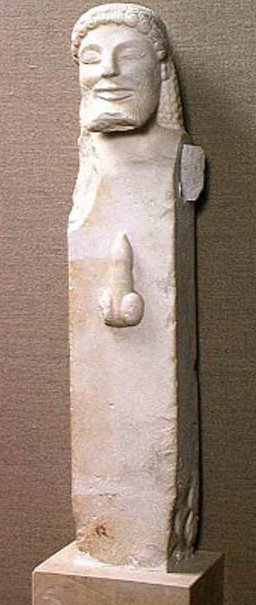
How the Greeks won the world.

The government’s former “Drugs Tsar”, Prof. David Nutt sets out to demonstrate that in banning qat, the government may as well ban cats. This simple analogy shows how absurd the basis for the home secretary’s drug prohibition plan really is.

More on government madness … why shouldn’t we re-nationalise the railways?

A scientist documents what it’s like to travel to the bottom of the ocean. It’s a bit short on the “wow” factor though.

Scientists discover a new bird species, exactly where they didn’t expect it: in urban Phnom Penh.

Tarmac, berry fruits and old socks … Proof, if such were needed, that wine-tasting is junk science.

More junk science … Why the myth of Bigfoot is so persistent.

Doubtless all you girls know about HPV and cervical cancer, but what about the incidence of HPV in men?

Seems that sperm like all that girly perfume.

On Caecilius’ willy.
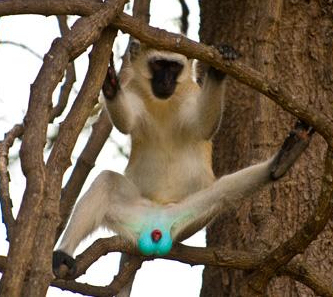


Sacks of nuts! Why all may not be what it seems in the scrotal regions.

Oh no! We’re descending into the nether regions of hell! Did you know that London once had a nude bus?

And finally … Why do we indulge in cunnilingus? Is there more to it than just having a good time? Scicurious lifts the kimono.

Word: Jarvey

Jarvey

1. A hackney-coachman. Now frequently applied to the driver of an Irish car.

2. A hackney-coach or jaunting car.

Pace Wikipedia, a jaunting car is a light two-wheeled carriage for a single horse, in its most common form with seats for two or four persons placed back to back, with the foot-boards projecting over the wheels. It was the typical conveyance for persons in Ireland at one time (hence the reference by the OED to an “Irish car”).

The Hackney Carriage (forerunner of the Hansom Cab, pictured) was first regulated in in London in 1654.


The OED gives the first use of jarvey (in the meaning of a coachman) in 1796. It is thought to derive as a by-form from the personal name Jarvis or Jervis.

Oh and forget the use of jarvey in Harry Potter. That’s just part of the fiction.

Five Questions, Series 4 #1

Sorry, it’s been too long since I posed the five questions of Series 4, and thus my answer the the first of the questions is long overdue. So here we go …


Question 1: What happens after we die?

Well wouldn’t we all like to know! However it seems to me that this is one thing we can, by definition, never know. That doesn’t mean that all the reports of “near death experiences” are meaningless or imaginary; they may well not be. But clearly, despite appearances, the people experiencing them aren’t actually dead, so they don’t (and in my view never can) tell us what happens after we die.

As a scientist the reality seems to me to be summed up in the words of Genesis 3:19:

In the sweat of thy face shalt thou eat bread, till thou return unto the ground; for out of it wast thou taken: for dust thou art, and unto dust shalt thou return.

and the Burial Service from the Book of Common Prayer:

Forasmuch as it hath pleased Almighty God of his great mercy to take unto himself the soul of our dear brother here departed, we therefore commit his body to the ground; earth to earth, ashes to ashes, dust to dust; in sure and certain hope of the Resurrection to eternal life …

(Isn’t that just so much nicer English than all this modern stuff?)

So yes, the scientist in me says that we disintegrate back into the environment for we are no more than a collection of chemicals: earth, dust and ashes.

However … our thoughts can go on: as books, music, art, whatever. In that sense we may be dead but our brains are never buried, never lost, ever immortal.

And yet. And yet there remains that nagging little doubt somewhere deep inside which says that there is some form of reincarnation. Not in the Biblical sense of a Day of Judgement. More perhaps our “soul” (whatever that is) gets chopped up in some way and distributed (with bits of others?) to future beings. Who knows? We can likely never prove it. But it would explain a lot. And it would be a whole lot more fun than earth, dust and ashes.

Weekly Photograph

This week I thought we’d have a couple of photos from our visit to Kew Gardens last week. For me one of the delights of Kew at this time of year is the Water Lily House which houses a collection of spectacular tropical water lilies. On a hot day, as it was when we visited, the Water Lily House has to be one of the best saunas in London. So this year it is also being used to grow a super display of chilli plants, some with enormous red fruits up to 6 inches long! But it is always the water lilies which I love; they are just so spectacular.


Click images for larger views on Flickr
Tropical Water Lily
Tropical Water Lily
Two of the many Water Lilies on show

Water Lily House
Water Lily House (Montage)
Kew Gardens, 8 July 2013


Although by Kew greenhouse standards the Water Lily House is small (that pond is just 36 feet in diameter) it is a delightful Victorian purpose-built greenhouse (it was completed in 1852). And that pond is also teeming with small fish which keep the algae and the mosquitoes at bay.

Word: Speleology

Speleology

1. The scientific study of caves, , especially in respect of their geological formation, flora, fauna etc.

2. The the sport or pastime of exploring caves; caving.

First coined, according to the OED, by EA Martel in the Report of the 6th Geographical Congress of 1895.

Hence speleological, of or pertaining to speleology; speleologist, a student of, or authority on, cave-research; an explorer of caves.

Buggered Britain 17

Another instalment in my occasional series documenting some of the underbelly of Britain. Britain which we wouldn’t like visitors to see and which we wish wasn’t there. The trash, abused, decaying, destitute and otherwise buggered parts of our environment. Those parts which symbolise the current economic malaise; parts which, were the country flourishing, wouldn’t be there, would be better cared for, or made less inconvenient.

Click the image for larger views on Flickr
Buggered Britain 17


These delightful properties are in Manor Park Road, London, NW10 — admittedly not one of the most salubrious areas of the city.

World Tin Bath Championships, 13 July

Anyone on the Isle of Man on 13 July should head to Castletown for the the World Tin Bath Championships.

Yes, this is what it sounds like: competitors paddle tin baths around Castletown’s Middle Harbour to raise money for local charities. There are men’s, ladies and team races.


There is also the Snake Race, which seems to consist of teams of six (four men, two women) competing as a team in some form of construction of type inner tubes.


If you like water (include me out!) it looks like fun.

As always there is more on the World Tin Bath Championships website at www.castletown.org.im/tinbaths/.

World Pea Shooting Championships, 13 July

If you were anything like the kids in my childhood, pea shooters were all the rage. So what better way to relive ones delinquent infancy than at the World Pea Shooting Championships which take place at Witcham on 13 July.

Witcham is one of those quiet villages in the Cambridgeshire fens a handful of miles west of Ely. They will be holding the 43rd World Pea Shooting Championships as part of their local festival and village fête which raises funds essential for the upkeep of facilities like the village hall.


As well as the World Chamionship there are ladies, juniors and team competitions. And yes,the championship is truly international: the 1996 and 1998 World Champion was an American!

There is more information n the World Pea Shooting Championships and the village of Witcham on their website at www.witcham.org.uk.