
The world’s shortest escalator is located in the basement of More’s Department store in Kawasaki, Japan. It has only five steps and is 32.8 inches (833 mm) high.
From Daily Telegraph.
Quotes
Another in our series of interesting, thought-provoking or humorous quotes recently encountered.
Don’t feel stupid if you don’t like what everyone else pretends to love.
[Emma Watson]
Goodness knows what may have changed since then. Worlds have turned, parallel universes have made and unmade themselves. People have been born. People have died. Stars have winked in and out of existence like the breath of God, leaving a transient mist on a universal car window where the Holy Spirit has drawn a giant knob with his finger.
[Katy Wheatley at katyboo1.wordpress.com]
In order for you to insult me I would first have to value your opinion.
[Unknown]
We need people in our lives with whom we can be as open as possible. To have real conversations with people may seem like such a simple, obvious suggestion, but it involves courage and risk.
[Thomas Moore]
Our lionisation of size zero, our aversion to pubic hair, even an increasing trend towards vaginaplasties are all symptomatic of a desire to take the female body back to its pre-pubescent state. The full Brazilian is a look that is borrowed from pornography — can there be a more damning style endorsement?
[Helen Walsh, So older women don’t have sex?, Observer, 13 April 2014]
Sacred cows make great hamburgers.
[Robert Reisner]
In the end only three things matter: how much you loved, how gently you lived and how gracefully you let go of things not meant for you.
[Buddha’s Little Instruction Book]
What we find in a soulmate is not something wild to tame, but something wild to run with.
[Robert Brault]
When I free my body from its clothes, from all their buttons, belts, and laces, it seems to me that my soul takes a deeper, freer breath.
[benudetoday.tumblr.com]
I will always remember what it felt like to have a little mermaid swimming in my belly.
[Leone Dawson]
Alcohol is the anaesthesia by which we endure the operation of life.
[George Bernard Shaw]
And finally …
Don’t forget: Jesus died for your sins in advance, so make sure you get your money’s worth.
[Girl on the Net; @girlonthenet]
Weekly Photograph
This week another photograph I took some years ago on a day trip to Dublin. These two young lady Garda officers were on duty outside the iconic O’Connell Street Post Office. No doubt they were keeping a weather eye out for the untoward but they seemed more intent on chatting.

Guarding O’Connell Street Post Office
Dublin, October 2006
Coming up in May
Some interesting events an anniversaries in the month ahead.
23 April to 21 June
British Asparagus Festival. The Vale of Evesham is the asparagus growing centre of the UK and each year they hold a 2 month-long festival during the asparagus season, starting with the first crop on St George’s Day. English asparagus is the best and has to be enjoyed during its short season, hence the festival. Find out more at www.britishasparagusfestival.org.
1 to 31 May
Local and Community History Month. The aim is to increase awareness of local history and promote history in general. There are activities across the UK which include trips, library exhibitions and local lectures. It is a great way for groups to highlight local history and for local people to get involved. Find a database of events at www.history.org.uk/resources/general_resource_1567_55.html.
1 May
May Day and the ancient Pagan festival of Beltane celebrate Spring in the northern hemisphere. This is a time when there will be ancient festivals taking place around the country, with maypoles, morris men and the like. If you are in London there is the Deptford Jack in the Green. See Wikipedia for a quick introduction to both May Day and Beltane.
4 May
International Dawn Chorus Day . This is a worldwide celebration of the daily miracle of birdsong. More details and a events in your area at www.idcd.info/.
6 May
On this day in 1954 Roger Bannister ran the first sub-4 minute mile.
8 May
Furry Day, Helston, Cornwall is a Spring festival to celebrate the end of winter and mark the arrival of the new vitality and fertility with the trees and flowers bursting into life. The houses and shops of the town are decorated with greenery and floral arrangements to express the spirit of renewal. From 7AM some eighty couples dance through the streets, entering houses and shops to drive out the darkness of winter and bring in the light of spring. Much more detail at www.helstonfloraday.org.uk.
10 & 11 May
National Mills Weekend. The annual festival of our milling heritage which provides great opportunities to visit mills — both windmills and watermills — many of which are not usually open to the public. Find out what’s happening near you at www.nationalmillsweekend.co.uk.
14 to 25 May
Be Nice to Nettles Week. We’re all familiar with the stinging nettle having experienced its ferocity. Unfortunately many see it as only a troublesome weed to be eradicated, whereas it is a valuable wildlife habitat and resource — you can even eat young nettle shoots! Find out more about the humble nettle at www.nettles.org.uk/.
14 May
On this day in 1264 the armies of Simon de Montfort, 6th Earl of Leicester, and King Henry III engaged at the Battle of Lewes which de Montfort’s men won and which was he height of his power. There is more about the battle on Wikipedia and at Simon de Montfort 1264.
22 May
World Goth Day is a day where the goth scene gets to celebrate and make its presence known to the rest of the world. Find out everything about the day at www.worldgothday.com.
25 May
Towel Day. The annual celebration of the life and work of Douglas Adams, author of The Hitch-Hiker’s Guide to the Galaxy. More about the day at towelday.org.

Oak Apple Day celebrations at Castleton, Derbyshire
29 May
Oak Apple Day. This day was established by Parliament in 1660 as a public holiday to commemorate the restoration of the English monarchy, it being the birthday of Charles II.
Parliament had ordered the 29 of May, the King’s birthday, to be for ever kept as a day of thanksgiving for our redemption from tyranny and the King’s return to his Government, he entering London that day.
[Samuel Pepys, Diary, 1 June 1660]
This is another day on which many ancient festivals take place; it is also kept as Founder’s Day by the Royal Hospital, Chelsea. Why is this not still a public holiday?
31 May & 1 June
Asparafest 2014. Held at Ashdown Farm, Evesham this is Worcestershire’s asparagus themed music and food festival and all part of the British Asparagus Festival. Full details at www.asparafest.co.uk.
Your Interesting Links
So soon already we have another instalment of links to items you may have missed. Although many of the links in these articles are scientifically inclined, I do try to steer away from heavy science in favour of things which are of more general interest and intelligible by intelligent non-scientists. And of course I do try to include items on history, pets and other interests as well as amusements. Anyway here is today’s collection.
So you don’t really need to know the science of how any of this works to appreciate these freaky chemical and physical reactions. [Animated GIFs]
No there isn’t soap in your mayonnaise! Why are we all so terrified of chemicals? Everything is a chemical! Gal Science shows how ridiculous these fears can be.

Garlic eating cows fart less methane, so could this save the world from climate change? Nice idea, but I suspect it will turn out to be a big definite “probably not” when the true effects are realised.
Changing tack, here’s an interesting piece on how IUDs work as contraceptives — and it mostly isn’t how you think!
Got a cold? Then take care who you spread it to, because we have a lot of delusions about when we are contagious — and it is more than you probably think!
While on things infectious, how much do pets bring bacteria into our homes? Answer, yes, just as much as you feared!
Every cat owner knows that, despite being inscrutable, cats think, but what do they think about and how intelligent are they really? Are you surprised that finding out was a real challenge?
Do animals give each other individual names, just as we do? It is hard to tell, although it seems that parrot parents do give their chicks names which stick for life.
Many many things have been used as a writing pad, but an ostrich egg?!

And remaining on things medieval, here are some wonderful blue maps of the medieval world. And they’re surprisingly accurate.
Next up, the history of food. How was tomato ketchup invented? Well, no, not originally by HJ Heinz although they had a finger in the jar.
Changing tack again, here’s a piece on the, to me scary, world of extreme cavers. Surely these guys are out of their trees! What is it about the human species that makes us have to do these things “just because they’re there”? [Very long read]
I’m not sure this is quite right but certainly the Awkwardness Zones should be bigger.
We’re always busy — busy, busy, busy. No wonder we’re always tired. We need to kill the culture of “always busy/always on”. Here are a few ways that will help at an individual level — and yes, these really do work!
Why is there such a resistance to nudity? Because we have this myth that nudity is sexual. But it is just a myth.
And finally an article from the Independent saying that the UK is too prudish and we should follow Munich’s example and legalise public nudity. Errr … actually public nudity isn’t illegal in the UK unless with intent to cause distress, alarm or outrage — although the Plod so often ignore this distinction.
Something for the Weekend
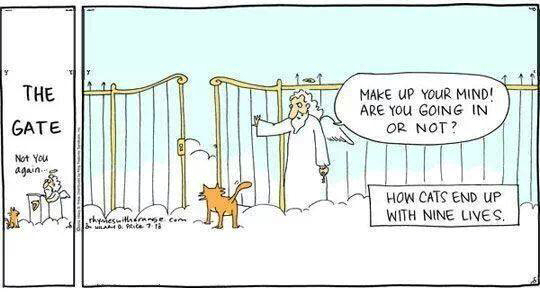
An old one, but it still makes me chuckle!
April Auction Oddities
Another of our occasional round-ups of the odd and amusing from amongst the lots at our local auction houses. As always I am amused by the strange things people sell, but even more by the weird combinations of items which are put together to make a lot.
Eight crowns and a tape measure in a silver plated mount.
A carton containing 125 boxes, each containing two necklaces in magnetic, hematite and freshwater pearls (ie. 250 necklaces, but this number has not been checked), ex shop stock from Harvey Nichols.
Two bisque figurines of children holding a cat and a dog, a further bisque figurine of a child with a wobbly head, three 1930’s lustre style figures of dolphins with scantily-clad maidens, and a risqué bisque figurine of a woman.
A cased mah-jong set, figurine of two cats in a basket, a Goebbel figurine of children … a Bossons head, Christopher Lawrence mushroom ornament, three silvered graduated vases and two military nose cones.
Royal Crown Derby box and cover, a Spode twin-handled mug commemorating the ruby anniversary of The Lords Taverners, two Swarovski oyster shells with simulated pearls, glass paperweight to celebrate the 125th anniversary of The Choral Society, a Royal Doulton character jug, WG Grace, limited edition No. 2701 … a cased set of cutlery and another of knives, cut glass decanter, a Bohemian glass decanters, six small wine glasses … two Portmeirion bowls, two Buckingham Palace mugs, silver plated tray, a large brass Davy lamp and a similar, smaller.
A small quantity of Wedgwood basalt china including neo-classical vase, dish and cover; also three blue and white Wedgwood jasperware pots and covers, seven Banbury Mint classic RAF plates, a pair of ebony elephant bookends, a metal casket for holding ashes, a Sylvac bunny planter, four glass Venetian overlaid coloured glasses, a pair of old skates, a pair of glass candlesticks and other decorative glass and ceramic items.
It was the Sylvac bunny planter that I think crowned this for me!
A large collection of Pendelfin rabbit figurines including a large figurine holding a baby, house figurines, rabbits and bears playing tambourines, etc.
A quantity of model boats including sailing, three decorative pistols, several old ashtrays, two stoneware hot water bottles, Kodak Brownie camera, a box of decorative ornaments, including dog and polar bear figurines, wooden globe, Yamaha keyboard, prints, commando magazines, decorative dagger, two decorative blunderbusses, and other decorative items.

Example illustration, not the item in the sale
A 19th century blue and white toilet pan, a black and gilt Arklow Pottery coffee service, boxed, Doulton jardinière and a large boxed timer.
A pair of carved hardwood Balinese winged deities, and a pair of Balinese spears.
An old leather doctor’s bag, an old leather briefcase and a wicker picnic basket and contents.
Fossilised Scotch Eggs anyone?
A large ceramic pig.
Every home should have one!
A large quantity of wooden curtain rings.
An American WWII bombsight sighting head type T-1-B by the AC Spark Plug Div. GMC, with E-1 roll-stabiliser by the Sperry Gyroscope Co Inc, retaining glass panel.
A Second World War British helmet stamped F&L C1466 and dated 1940, with camouflage net.
Two racing pigeon timing clocks: signed Toulet Imperator and Belgica, in wooden cases, and a photograph of Gay Tie, bred and raced by JW Brown.
Seven hand typed volumes dated 1940’s, with accounts of the Second World War, in Polish.
A stuffed and mounted magpie and a thrush (?) and a small circular stool on three animal hoof feet and legs.
A green revolving typist’s chair.
Yes, in my experience typists usually are revolving, but not always green.
Oddity of the Week: Coat-hanger Nests
Apparently Japanese Jungle Crows around Tokyo are building nests out of wire coat hangers!
And yes, it seems they really do as a Google search turns up quite a few reports and images.
Not St Shakespeare's Day
 Today is the feast day of St George in the Tridentine Calendar and he is celebrated on this day as the patron saint of, inter alia, England. Why a Palestinian-born, probably ethnically Greek, Roman soldier is patron saint of England is shrouded in mystery, although he has been celebrated since the 13th century.
Today is also celebrated as William Shakespeare’s birthday, with this being allegedly his 450th. But there is no evidence that he was born on 23 April 1564. We do know he was baptised on 26 April 1564, for such is recorded in the parish records of Stratford upon Avon. In Tudor times (and earlier) the date of birth was not generally recorded — it was baptism that counted — so birth records are rare.
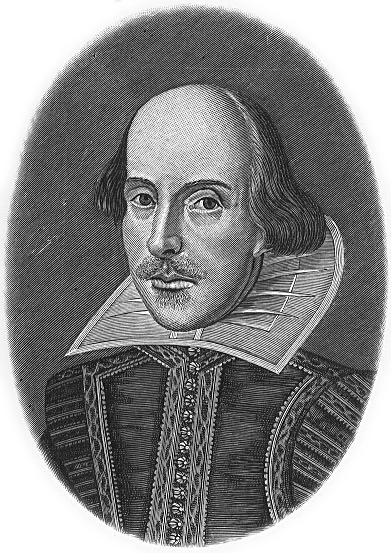 Yes, Shakespeare could have been baptised 3 days after his birth. Or three minutes. Or 3 months. We don’t know. Assigning 23 April as his actual birthday is merely a modern convention.
What we do know is that Shakespeare died on 23 April 1616. So in two years time we shall be celebrating the 400th anniversary of his death.
Pace Wikipedia, 23 April as Shakespeare’s birthday “which can be traced back to an 18th-century scholar’s mistake, has proved appealing to biographers, since Shakespeare died 23 April 1616”.
So, pedant that I am, I shall drink the bard’s health this Saturday (26th) and on St George’s Day in two years time.
Recipe: Roast Vegetable with Parmesan
Another dead easy winner from our kitchen. You can use this as a vegetarian main meal (as we have just done) or adapt it as a dish (or two) of a main course. Like most of what I do this is easy, quick, adaptable — and colourful! It can even be used to use up tired vegetables: it doesn’t matter if peppers or tomatoes are over ripe!
Roast Vegetables with Parmesan Cheese
You will need:
1 large baking potato (or equivalent) per person
A selection of vegetables; choose from:
— 2-3 shallots or a small onion per person
— 2 medium or 6 cherry tomatoes per person
— peppers
— aubergine
— courgettes
— fennel
— mushrooms
Several cloves of garlic (optional)
Bunch fresh herbs (optional)
Black pepper
Olive oil
This is what you do:
- Pre-heat the oven to 160-170°C with the fan.
- Wash and cut the potatoes into good sized pieces (about half the size of hen’s egg works OK) and steam them until just done.
- While the potatoes are cooking, prepare the vegetables by cutting them into pieces of the same sort of size as the potatoes. If you can use small shallot style onions these can stay whole, otherwise quarter larger onions. Leave cherry tomatoes whole or quarter larger ones lengthwise. Cut other vegetables into suitable pieces. Put all the veg in a large mixing bowl.
- Roughly chop the garlic and herbs and add to the veg.
- When the potatoes are just cooked, drain them and transfer to another mixing bowl, season with fresh black pepper and drizzle over some olive oil. Toss well so all the pieces are coated in oil.
- Transfer the potatoes to a baking sheet and arrange in an even layer before putting them in the oven.
- Now season the veg with black pepper and olive oil, tossing it to coat all the pieces and spread out on a baking sheet (or several). Put this in the oven too.
- Pour yourself a drink and go away for at least 30 minutes.
- The veg and potatoes should be nicely roasted after 30-40 minutes and can be taken to the table in serving dishes — mix everything together in a large tureen if you like!
- Serve with flakes of parmesan and a glass of wine.
Notes
- Root vegetables work OK too, but make a heavier meal and may take longer to cook unless treated like potatoes. Brussels spouts and leeks would work too.
- You can also use softer, more delicate vegetables like asparagus, but this will need careful handling and separate cooking as it will not need as long in the oven.
- Don’t have any parmesan? A good grated cheddar works well too.