Muselet
A wire cage that fits over the cork of a bottle of champagne, sparkling wine or beer to prevent the cork from emerging under the pressure of the carbonated contents.
The muselet was invented in 1844 Adolphe Jaqueson to improve the seal on champagne bottles. The design has been improved over the years with the use of twisted steel wire for added strength and a metal cap.
The word is derived from the French museler, to muzzle.
Oddity of the Week
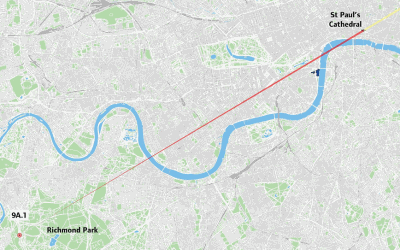
The view of the dome of London’s St Paul’s Cathedral from Richmond Hill, some 10 miles distant, is protected by legislation. As Diamond Geezer, visiting Richmond Hill, reports:
A protected line of sight exists to the northeast, with a narrow gap cut through Sidmouth Wood in the precise direction of St Paul’s. And this invisible beam from Richmond exerts considerable influence on planning policy in the City ten miles distant. Buildings along the viewing corridor must not interfere with this view of the cathedral, so there are no tall office blocks or skyscrapers either in front or behind within a margin of two dome widths. Richmond’s protected vista is the precise reason why the Cheesegrater retreats to a triangular point, and why Liverpool Street station is as yet undefiled by highrise development.
Weekly Photograph
This is from the break we had in Rye with our friend Katy and her three children, four years ago this week. OMG was it really that long ago!
There is sea kale growing in clumps like this everywhere across the shingle at Rye Harbour and on Dungeness. This was taken at Rye Harbour.

Sea Kale
Rye Harbour, August 2010
Something for the Weekend
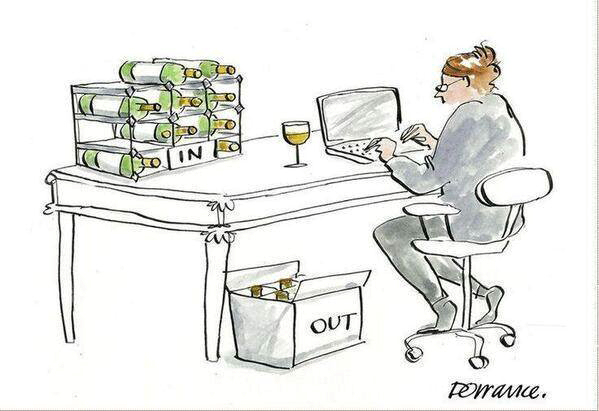
This will do me nicely for the weekend …
Coming up in September
Some of the events and traditions coming up during September. Everyone’s back from holiday (and in days of yore the harvest is almost done) so there is more happening this month.
1 September
On this day in 1914 the Passenger Pigeon become extinct when Martha, thought to be the world’s last passenger pigeon, died at Cincinnati Zoo.
3 September
Outbreak of World War II in 1939 when the UK declared war on Germany.
6 to 21 September
Scottish Food and Drink Fortnight. Discover and celebrate Scotland’s culinary heritage. No, not just whiskey and haggis, but a great deal more besides. There’s lots of information at www.scottishfoodanddrinkfortnight.co.uk.
9 September
This day in 1839 Sir John Herschel (son of astronomer William Herschel, discoverer of Uranus) made the first photograph on a glass plate. He made many other contributions to photography, astronomy and botany.
11 to 14 September
Heritage Open Days. Four days to explore more of England’s beautiful architecture when over 4000 buildings that are usually closed or charge for admission will open their doors free. Find more information at www.heritageopendays.org.uk.
15 to 21 September
National Cupcake Week. Many of my friends seem to be cakeophiles, so they’re going to love National Cup Cake Week — a chance to show off your baking skills and eat cake. What’s not to like? More over at www.nationalcupcakeweek.co.uk.
19 to 22 September
Great British Beach Clean. Organised by the Marine Conservation Society this is an opportunity to look after your local beach by helping clean it up. Find an event near you at www.mcsuk.org/beachwatch/events.
21 September
Autumnal Equinox. One of two days a year when we get exactly 12 hours of day and 12 hours of night, the Autumn Equinox marks the passage from summer to the dark days of winter.
22 September to 23 October
Seed Gathering Season. Through this autumn festival The Tree Council aims to inspire everyone, particularly school children and families, to gather seeds, fruits and nuts and grow the trees of the future. More information and events over at www.treecouncil.org.uk/Take-Part/seed-gathering-season.
29 September
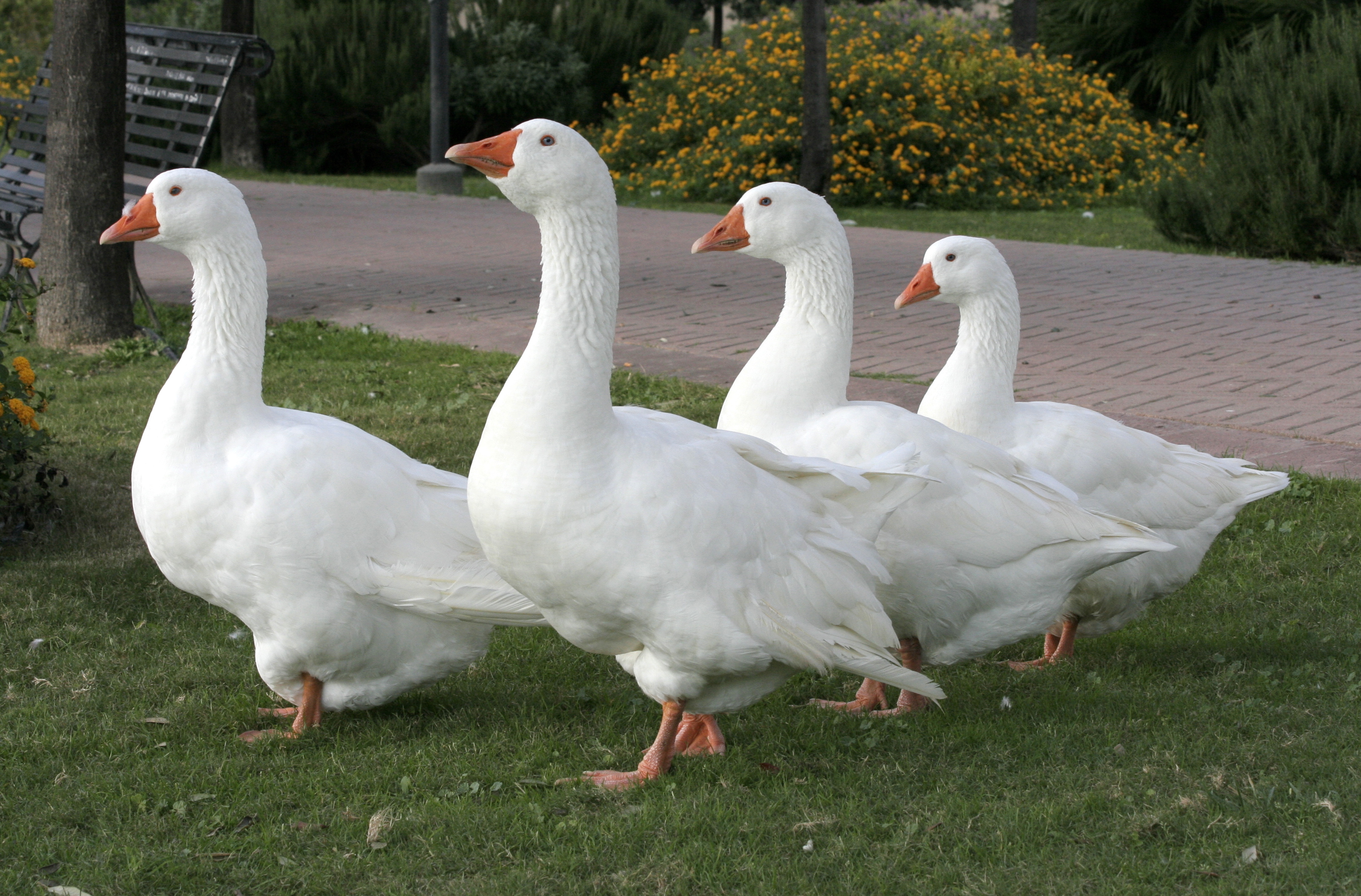
Michaelmas, the feast of Saint Michael the Archangel. Falling as it does near the equinox, it is associated in the northern hemisphere with the beginning of autumn and the shortening of days. In medieval England Michaelmas marked the ending and beginning of the husbandman’s year and was one of the English quarter days. The traditional food on this day was goose, nicely fattened on the grain it had gleaned amongst the fields of stubble.
Oddity of the Week
Novel reading … uterine derangement … gathering in the head … political excitement …
An absolutely amazing list of reasons why patients were admitted to a US lunatic asylum in 19th century.
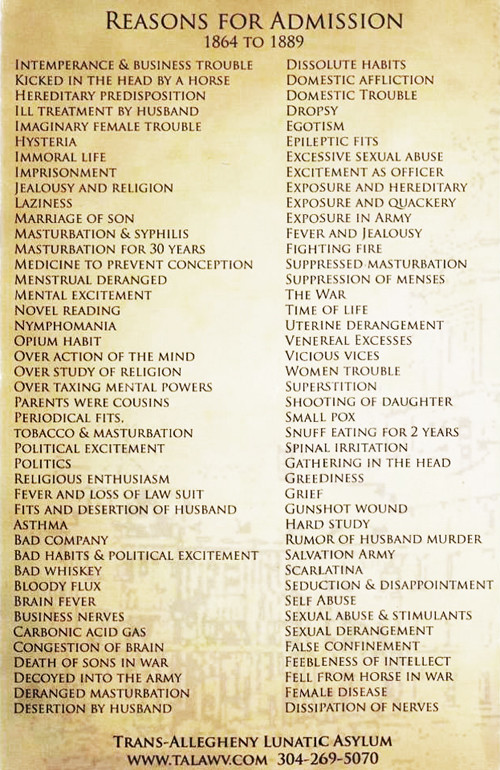
This has been circulating in the Intertubes for some years but is just too good not to share!
Using this as a set of criteria how many of us would not have been put away?
Five Questions, Series 6 #2
So here, at last, is the answer to the second of the five questions I posed back on 3 July.
Question 2: If anything is possible, then is it possible that nothing is possible?
Logically yes, of course. If anything is possible then naturally it is possible for nothing to be possible as we have to assume that the null set is a valid entity — just like zero is valid in our number system.
But then we have to ask whether nothing is possible in reality. And the answer would have to be that no it is not possible, because there are things all around us which are not nothing, so nothing cannot be possible.
Reductio ad absurdum then says that in our universe, as we understand it, anything cannot be possible, because we have just shown that nothing is not possible; whereas if anything is possible, nothing must also be possible.
Confused? Welcome to the world of the logician. Now go and read Alice in Wonderland for a gentler introduction.
More when you brain has had a chance to recover!
Quote: Fictions
they will believe wholeheartedly
in order to ignore the truth.
[Libba Bray, The Sweet Far Thing]
Quotes
Another collection of recently encountered quotes.
At Toulon there was a lot of sun and a breeze from the sea. The interior of the railway station appeared neatly arranged for the opening act of a musical comedy. Sailors with white trousers and red pom-poms in their caps wandered about pointing at Cocteau’s latest on the bookstalls, or watched the engines puffing up and down the line. Some Tonquinese infantrymen were entraining for the Buddhist temple at Frejus. Overgrown blacks from Senegal, with their waists pinched in by red cummerbunds and wearing high tarbooshes on their tiny heads, leant against the wall, finding perpetual amusement in the antics of the French. A Captain of Spahis in a scarlet tunic, baggy trousers, and a long cloak strode up and down as if he were about to sing the first number of the show.
[Anthony Powell; What’s Become of Waring]
What the human being is best at doing is interpreting all new information so that their prior conclusions remain intact.
[Warren Buffett]
Given the existence of the universe, all the molecules in it have been here for billenia or something. They just keep juggling around. So you’ve got three of Shakespeare’s molecules and you’ve got two of Himmler’s or whatever it is, you know. Part of your fingernail was part of St Joseph of Aramathea’s frontal lobe or something. And you know, large parts of you were once a daffodil in Nova Scotia or something. You know, your feet used to be Winston Churchill. The same things keep getting recycled. It could be that when we pass away our psyches dissolve into lots of sort of strips of feeling. All the things that comprised us that were held together by our bodies dissolve. You know, hence the line in the song ‘When I Was Dead’, “I wasn’t me to speak of just a thousand ancient feelings”. Feelings that have been around since the beginning of human time.
[Robyn Hitchcock]
From an evolutionary perspective, it makes sense that we are wired to seek fame, wealth and sexual variety. These things make us more likely to pass on our DNA. Had your cave-man ancestors not acquired some version of these things (a fine reputation for being a great rock sharpener; multiple animal skins), they might not have found enough mating partners to create your lineage. But here’s where the evolutionary cables have crossed: We assume that things we are attracted to will relieve our suffering and raise our happiness. My brain says, “Get famous”. It also says, “Unhappiness is lousy”. I conflate the two, getting, “Get famous and you’ll be less unhappy”. But that is Mother Nature’s cruel hoax. She doesn’t really care either way whether you are unhappy – she just wants you to want to pass on your genetic material. If you conflate intergenerational survival with well-being, that’s your problem, not nature’s. And matters are hardly helped by nature’s useful idiots in society, who propagate a popular piece of life-ruining advice: “If it feels good, do it”. Unless you share the same existential goals as protozoa, this is often flat-out wrong.
[Arthur C Brooks; “Love People, Not Pleasure”; New York Times; 20/07/2014]
The idea of one side suffering defeat while the other side triumphs is out of date. Instead we have to develop dialogue. We have to make an effort if we want a peaceful, more compassionate world. It requires education, based on patience, tolerance and forgiveness. Too often violence results from greed, so we also need contentment and self-discipline.
[Dalai Lama]
Teachers open the door; but you must enter by yourself.
[Chinese proverb]
Gossip is charming! History is merely gossip. But scandal is gossip made tedious by morality.
[Oscar Wilde; Lady Windermere’s Fan]
Human beings to me are as much a part of nature as trees or birds, and the unclothed body expresses this belongingness directly and powerfully.
[Wynn Bullock]
I hold a beast, an angel and a madman in me.
[Dylan Thomas]
(Or in my case just leave out the angel.)
No one on earth lives separated from angels and spirits.
[Emanuel Swedenborg]
And in the morning they shook their pillows violently, hoping all the dreams they lost that night would tumble out.
[Joseph Gordon-Levitt; The Tiny Book of Tiny Stories: Volume 2]
But then again, if you don’t imagine, nothing ever happens at all.
[John Green, Paper Towns]
Weekly Photograph
This week’s photo is just a silly diptych I made from a couple of boring shots taken in a restaurant earlier in the week.
Beginning & Ending
London; August 2014