When will the Western world understand that, by their actions, they are responsible for the terrorist attacks which are happening around the world? I’m thinking specifically of Paris last Friday but there are many many others.
By interfering — usually with military force — in the Arab nations all they are succeeding in doing is further radicalising those countries’ (potentially) disaffected youth and other (misguided) religious zealots.
And why are they surprised at this? If some set of foreigners, with a different culture and religion, were launching air strikes on us, wouldn’t we be sending anyone who would into their countries as insurgents? Especially if we had poorly organised and equipped military ourselves.
Of course we would — and we have. For starters, see the WWII French Resistance and other clandestine organisations like SOE. And we have officially sanctioned and organised terrorists called the SAS.
The more we meddle, and the more we retaliate, the worse we are going to make the problem. And it is a problem which is of our making! We started meddling in the Middle East way back at the time of the Crusades and it has escalated (on and off) ever since. In After the Victorians AN Wilson makes the point that one of the underlying causes of WWI was Britain trying to prevent Germany getting access to Arab oil which we had claimed. We’ve been interfering ever since. And it goes on.
None of these countries — in fact overall very few countries in the world — have a tradition of democracy. They are nearly all used to autocratic rule in one form or another. Just as we were, once upon a time. It has taken us 800 years, starting with Magna Carta in 1215, to get our democracy to its current (fragile) state. Some of the countries of our erstwhile empire have taken the English model on board. Other European countries have got there too by their own, often bloody, routes — see, for example, the French Revolution.
So how is it we expect to be able to walk into any country, tell them to embrace democracy and expect them to jump for joy and do so overnight? Why would they? How can they when it’s taken us 800 years? To them democracy is a revolution and a totally different culture. People don’t like change and they are mostly OK with what they have because at least they understand it. Nearly everywhere we’ve done this in the last 200 years we have ended up with, at best, a bloody nose.
The Arab countries are large enough and well enough orchestrated that they can bring their resistance to us. They have a religion which, by and large, transcends their tribal divisions and they aren’t confined to their own little enclaves like many African nations. Contrary to Christianity, when push comes to shove, the Arab religious beliefs will overcome any tribal animosities.
Why is it that politicians cannot learn from history? It isn’t that hard. If I, a mere scientist, can do so then so can anyone with more than six brain cells. (Oh, hang on, do politicians even have six brain cells?)
No I am not saying we should be soft on terrorists. Yes we have to deal with them on our territory according to our laws — just as they would if the tables were turned.
What I am saying is twofold: (a) stop meddling in other countries, except perhaps through diplomatic channels, and (b) stop bombing the shit out of them at any excuse. Unless, of course, your objective is to radicalise them.
Let me leave you with two final thoughts.
(1) Never lose sight of the fact that your enemy is a human being too. He (or she) has a mother, a sister, a child, a spouse who loves them. They eat, pee and lust the same as you. They were once that carefree child playing in the street. To lose sight of your enemy’s humanity is to lose all respect for others and yourself.
(2) And in the words of Abraham Lincoln:
Do I not destroy my enemies by making them my friends?

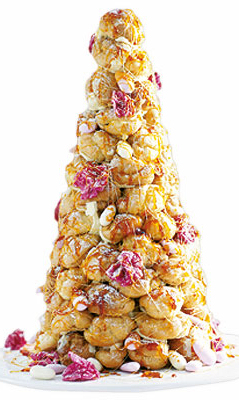 … it is important to remember, nothing about what these assholes are trying to do is going to work. France is going to endure and I’ll tell you why. If you are in a war of culture and lifestyle with France, good fucking luck. Go ahead, bring your bankrupt ideology. They’ll bring Jean-Paul Sartre, Edith Piaf, fine wine, Gauloise cigarettes, Camus, Camembert, madeleines, macarons, and the fucking croquembouche. You just brought a philosophy of rigorous self-abnegation to a pastry fight, my friend. You are fucked.