Cargo Cult Ethics

Yesterday I came across an article on the Farnham Street blog which talks about, and reproduces, Richard Feynman’s 1974 commencement address at Caltech entitled “Cargo Cult Science”.
As always with Feynman it contains good stuff, explained simply. Let me pick out a couple of quotes:

The first principle is that you must not fool yourself — and you are the easiest person to fool. So you have to be very careful about that. After you’ve not fooled yourself, it’s easy not to fool other scientists. You just have to be honest in a conventional way after that.
I would like to add something that’s not essential to the science, but something I kind of believe, which is that you should not fool the layman when you’re talking as a scientist … I’m talking about a specific, extra type of integrity that is not lying, but bending over backwards to show how you’re maybe wrong, that you ought to do when acting as a scientist. And this is our responsibility as scientists, certainly to other scientists, and I think to laymen …
One example of the principle is this: If you’ve made up your mind to test a theory, or you want to explain some idea, you should always decide to publish it whichever way it comes out.

This is about how to do good science — indeed any good investigation. What Feynman is saying in the article is that in doing an investigation one has to publish the full scenarios. Whatever the outcome, why could it be wrong. If the experiment didn’t work, why might this be. And importantly, show that you understand, have accounted for, and can reproduce any prior work and assumptions on which your work depends.
Being Feynman this is all explained quite simply with lots of examples, often drawn from his own experience.
But it is wider than this. It is something Feynman touches on but doesn’t highlight. It is essentially about being open and honest; being ethical. Feynman is applying it to scientific enquiry but, as you can see from the quotes above, it should apply equally to any enquiry, aka. life.
Feynman’s address is an interesting 10 minute read even for non-scientists.

Oddity of the Week: Sperm

There is a surprising diversity of size, shape and number of sperm produced by different species.


Just as an example, sperm length varies by several orders of magnitude, and in general the larger the animal the smaller the sperm. For instance porcupine sperm is just 0.0003 cm long. Compare that with the sperm of fruit flies which is 6 cm in size — that’s some 20 times the length of the fly! This only works because the fruit fly’s sperm is like a ball of string which only unravels once inside the female’s reproductive tract (which is longer than the sperm!).
For more amazing facts about sperm see The Biggest Sperm Come In The Smallest Packages – And Other Odd Facts About Male Sex Cells.

Your Interesting Links

So here we are then with another round of links to items you may have missed the first time round.
Science & Medicine
It seems that humans are not the only animals who have personal names, but we are probably the only ones who gossip.
Its well known that dogs will eat anything, but why are cats such fussy eaters?


The more we look at them, the smarter crows turn out to be. But are they smart enough to fall in love?
Talking of being smart, it appears that those of us who sleep late are smarter and more creative.
But then you die. Here’s what happens to your body after death.
Meanwhile it seems health experts are explaining drug-resistant bacteria so poorly that people aren’t believing them.
Sexuality
Just beware the rodeo! The sexual positions most likely to cause penis fractures.
But avoid that and researchers have worked out that the happiest people have sex just once a week — and it’s good.

This article on sex for the elderly shows just how tricky it is to maintain the well-being of people in care.
Environment
George Monbiot in the Guardian tells us there’s a population crisis, but it isn’t the one we usually think of.
Meanwhile one way round the population crisis would be to make humans smaller.
You’ve probably heard of guerilla gardening, well now here’s guerilla grafting — activists are grafting fruit-bearing branches onto ornamental city trees. Excellent idea!
Social Sciences & Business
The class system is dead; long live the class system. Apparently the UK is still class ridden, but in today’s society the classes are different.
Why the internet is like a series of lead pipes. Very interesting comparison.
From pipes to streets. Clever cartographers add fictitious trap streets to their maps. Here are some trap streets in London.
Art & Literature
[NSFW] A Japanese museum is aiming to confront the taboo of shunga head on. Is it art, is it pornography, or could it be both?
The British Library is celebrating the 150th anniversary of Lewis Carroll’s Alice in Wonderland with a new exhibition. IanVisits takes a look.
History
In another new exhibition the Wellcome Collection is featuring Lukhang Temple in Lhasa, Tibet’s Secret Temple. IanVisits again takes a look.
Returning home again, did you know that, once upon a time London was the motor manufacturing centre of the UK?
People

Nothing highly salacious to leave you with this time, so here’s the obituary for Roy Dommett (with accordion, above), a true British eccentric. The video is just excellent! [With thanks to Bruce for alerting me to this.]

Weekly Photograph

One from the archives this week. I spotted this some while back. This is the woodland burial park where my father (at the time) and subsequently also my mother are buried. My father would have been turning in his grave — which is only about 50m from this notice.

Dusk
Dusk
Norwich, January 2013
Click the image for larger views on Flickr

Thinking Thursday #3 Answer

This week on Thinking Thursday I asked you to come up with the answer to Lewis Carroll’s famous riddle:

Why is a raven like a writing desk?

Yes, it is a bit of a trick question because Carroll never intended there to be an answer; it was all part of Alice asking a serious question about the, to a child, mindless pursuits of adults.
However eventually Carroll did provide an answer:

Because it can produce a few notes, tho they are very flat; and it is nevar put with the wrong end in front!

The spelling of “nevar” is Carroll’s original, being “raven” backwards, but was lost in the printed version due to an over-zealous proofreader.
Of course this hasn’t stopped many other people providing clever answers, including “because Poe wrote on both” and “because they both come with inky quills”. You can find a longer explanation at, inter alia, wiseGEEK.
But I think the answer I like best is “because neither one is made of cheese“. Nor is either a helium balloon.

Thinking Thursday #3

This week on Thinking Thursday were going to look at one of the most famous riddles of all time, and see if you can come up with an answer.
The riddle I pose is one originally penned by Lewis Carroll in Alice in Wonderland:

Why is a raven like a writing desk?

As always there is no prize except the fun of the chase but if you wish to put your answer in the comments I’d love to read it.
Answer on Sunday evening, as usual.
Oh and no cheating on this one by looking it up on the intertubes. ☺

Paris

No I’m not going to start delving into all the recent mess; there’s too much uninformed and idle garbage being talked already. But I must just highlight what Brad Warner has said — he’s American, a Zen monk and talks much sense; unlike so very many Americans. Brad has written a ferociously forthright, and also in parts highly amusing, analysis on his blog.
His final sentences are:

The lunatics who think they can overturn all of [civilisation] are using technologies that could not possibly even exist at all if the rest of the world wanted to go back to life as it was in the seventh century. They will fail.
Greed, hatred and stupidity are universal human traits. But so are cooperation, love and intelligence.
And more people support cooperation, love and intelligence than will ever support greed, hatred and stupidity.

But what is brilliant, because even Brad admits it is funny, is what he quotes from a guy called John Oliver:

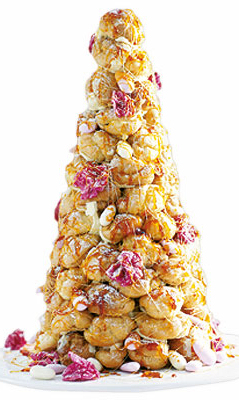
croc… it is important to remember, nothing about what these assholes are trying to do is going to work. France is going to endure and I’ll tell you why. If you are in a war of culture and lifestyle with France, good fucking luck. Go ahead, bring your bankrupt ideology. They’ll bring Jean-Paul Sartre, Edith Piaf, fine wine, Gauloise cigarettes, Camus, Camembert, madeleines, macarons, and the fucking croquembouche. You just brought a philosophy of rigorous self-abnegation to a pastry fight, my friend. You are fucked.

As Brad says: “It’s a funny rant, but it’s also deeply true”.
Go read the whole of Brad’s post here, it’s not very long.

Oddity of the Week: London's Fantasy Railway

In 1939 Punch published cartoons of a fanciful railway. But little did they realise that it would become a reality in the 1950s and that it would carry some 2 million passengers.
The reality was the Far Tottering and Oyster Creek Branch Railway — a narrow gauge railway created in Battersea Gardens by Rowland Emett for the 1951 Festival of Britain.


Being Emett it was one huge piece of whimsy, from the three locos, Nellie, Neptune and Wild Goose, and the two stations to the “Do Not Feed the Bats” notices at the tunnel entrance.

Sadly the original lasted only until 1953.
Read more at , The Far Tottering and Oyster Creek Railways of Roland Emett and IanVisits.

Word: Aposematic

Aposematic
A zoological term applied to usually bright colouring or markings designed to warn or alarm, and thus to repel the attacks of predators.
According to the OED the first recorded use was as late as 1890 and the word is derived from the Greek ἀπό apo away + σ̑ημα sema sign.
Wasps are a fairly classic example of aposematic marking.