
Carabiner or karabiner
An oblong metal ring with a spring clip, used in mountaineering to attach a running rope to a piton or similar device.
The word is a late introduction (1932 according to the OED) from the world of mountaineering; it is a shortened form of the German karabiner-haken, spring-hook.
Piton
A metal spike fitted at one end with an eye for securing a rope and driven into rock or ice as a support in mountain climbing.
A slightly earlier introduction (1898) which derives from the French mneaning a “ring-bolt”.
Category Archives: words
Oddity of the Week: George Borrow
[George] Borrow was a walker of awesome stamina and a linguist of almost inconceivable talent, who is said to have been able to speak twelve languages by the time he was eighteen and to have been competently acquainted with more than forty — including Nahuatl, Tibetan, Armenian and Malo-Russian — over the course of his life. In the winter of 1832—3 the British and Foreign Bible Society invited him at short notice to an interview in London, wanting to see if he could translate the Bible into a number of difficult languages. The society liked what they saw and commissioned Borrow to translate the New Testament into Manchu. What Borrow hadn’t told them was that he did not have any Manchu. No problem. Once the job was landed, he acquired ‘several books in the Manchu-Tartar dialect’, and Amyot’s Manchu-French (French!) dictionary. Then he travelled home (by coach, understandably) and shut himself up with the books. Three weeks later he could ‘translate Manchu with no great difficulty’, and fulfilled the society’s commission.
From Robert Macfarlane; The Old Ways: A Journey on Foot
Word: Bindlestiff
Bindlestiff
A hobo, especially one who carries a bedroll.

According to the OED a bindle (which is American slang) is “a bundle containing clothes and possessions, especially a bedding-roll carried by a tramp”. Hence a bindleman or bindlestiff, is a tramp who carries such a bundle.
Word: Xenodochium
Xenodochium
A house of reception for strangers and pilgrims; a hostel, guest-house, especially in a monastery.
From the Greek ξένος a stranger + δέχεσθαι to receive.
First recorded by the OED a in use as late as 1612.
Word: Griffonage
Griffonage
Scribble. Illegible handwriting.
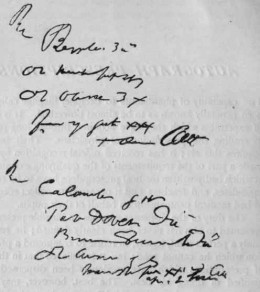
This is an affliction with which I have, according to my father, been blessed from the earliest age — my handwriting always did look like an arthritic spider had crawled out of the inkpot and it is still getting worse!
The derivation is from the French griffonage, griffonner, to write badly or scrawl. The OED records the first documented usage as 1832.
Word: Pinniped
Pinniped
1. Belonging to the Pinnipedia, a suborder of carnivorous aquatic mammals that includes the seals, walruses and similar animals having fin-like flippers for locomotion.
2. A mammal of the suborder Pinnipedia.

Like many such scientific terms the word is derived from the Latin and was first used in 1842.
Word: Aiguillette
Aiguillette
An ornamentation worn by certain military officers consisting of cords with metal tips.
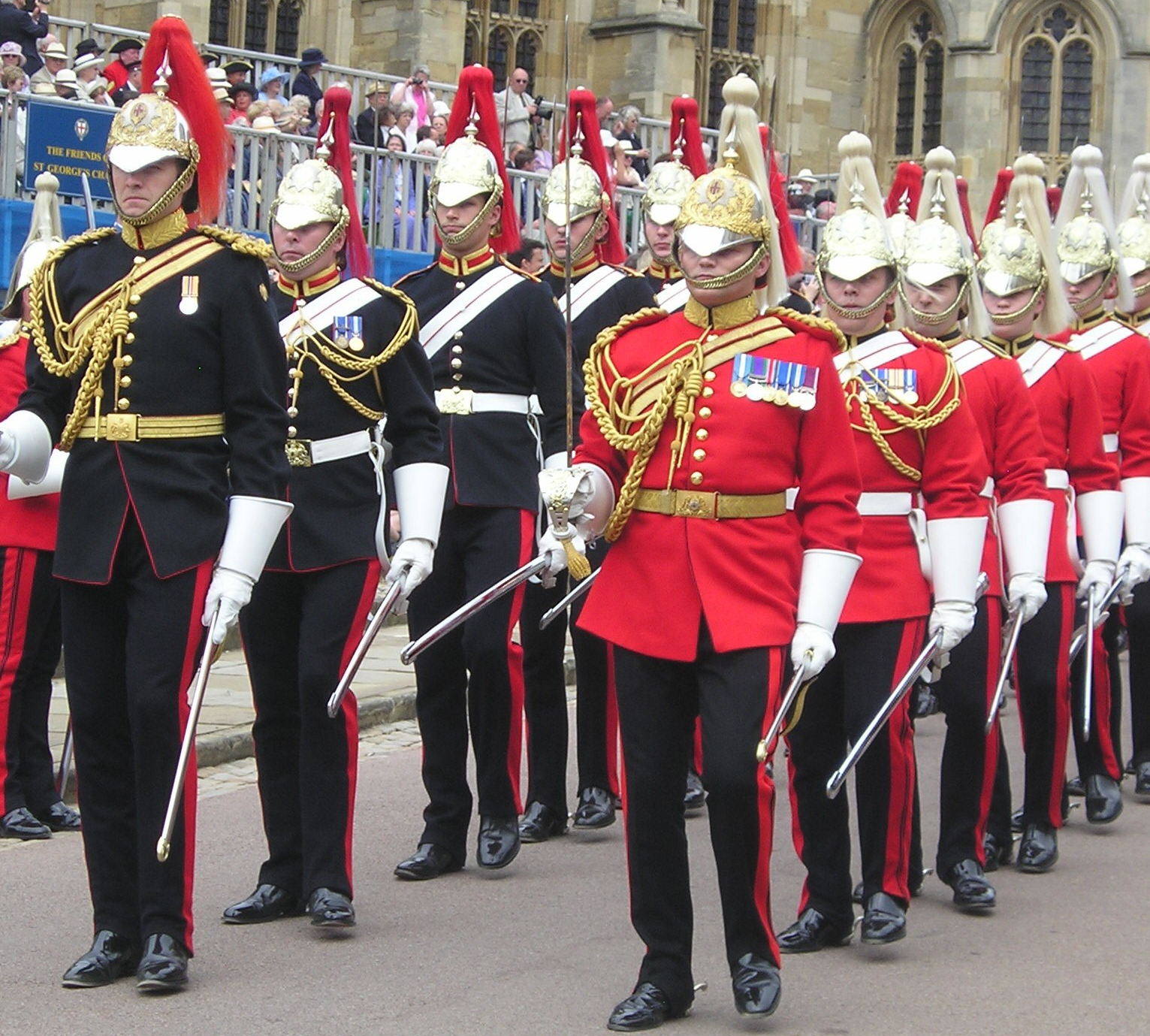
This is a surprisingly recent import from French, with the OED giving the first recorded English usage is 1816.
Word: Hypergamy
Hypergamy
In anthropology and ethnology …
1. A custom that forbids a woman to marry a man of lower social status.
2. Any marriage with a partner of higher social status.
According to the OED the term was first used by W Coldstream circa 1883.
Word: Grenade
Grenade
1. A pomegranate. (Now obsolete)
2. A small bomb or explosive missile that is detonated by a fuse and thrown by hand or shot from a rifle or launcher.
3. A glass container filled with a chemical such as tear gas that is dispersed when the container is thrown and broken.
The word is derived from the French grenade, and Spanish & Portuguese granada, a pomegranate, which the original grenades were supposed to resemble.
Hence grenadine, a syrup made from pomegranate, the island of Grenada, and the Grenadier Guards.
The OED records the first English use (with meaning 1) in 1532.
Oddity of the Week: Freelance
Sir Walter Scott coined the word “freelance” in Ivanhoe, using it to refer to a mercenary knight with no allegiance to one particular country and who instead offers his services for money.
From ‘A’ to ‘ampersand’, English is a wonderfully curious language; Guardian; 15/02/2014